Underdog Review: Pick'em And Best Ball Under One Roof, Weighed Against PrizePicks
Underdog sells pick'em entries from $1, drafts and best ball, and its own published results show most beginners lose. We weigh the all-in-one pitch against PrizePicks.
Our score
7.4/10Rated 7.4 out of 10
Verdict
Underdog is the better choice if you want drafts and best ball next to pick'em in one app, and its published results page is more candour than most rivals offer. It is not a better bet than PrizePicks on price, because the payout multipliers are the same kind of house edge, and the data it publishes shows most beginners lose money.
Pick'em, daily drafts, best ball and Streaks sit in one app with one balance
Entries start at $1, so the cost of learning the formats is small
Publishes an Average Results page with net winner and loser rates
Standard and Flex entries let you choose between higher payouts and a safety net
Funds a responsible gaming innovation programme called GuardDog
What held it back
Beginners with 50 or fewer contests lose money about 80 percent of the time, by its own data
Pick'em multipliers carry a built-in house edge you cannot see on the entry screen
Availability of each game changes by state, so the app you get may differ from the one reviewed
The 500x and 1000x headline payouts are marketing numbers that almost nobody reaches
The question on the table is simple: if you already know PrizePicks, does Underdog give you a reason to move? The answer depends on whether you play pick'em alone or also like to draft teams. For a pure pick'em player we see very little to switch for. For someone who wants best ball in the same wallet, Underdog is the stronger home.
What you actually buy
Underdog is a free account that sells entries. Nothing costs money until you enter a contest. The site lists pick'em, Streaks, daily drafts, best ball and tournaments, plus season-long fantasy. The company's own pages show a $1,000,000 prize on the front page, which is the sort of number built to draw you in rather than describe your odds.
That breadth is the whole case for Underdog. A bettor who wants a few player props on Tuesday and a draft on Sunday does not need two apps, two identity checks and two balances.
Pick'em: the price is in the multiplier
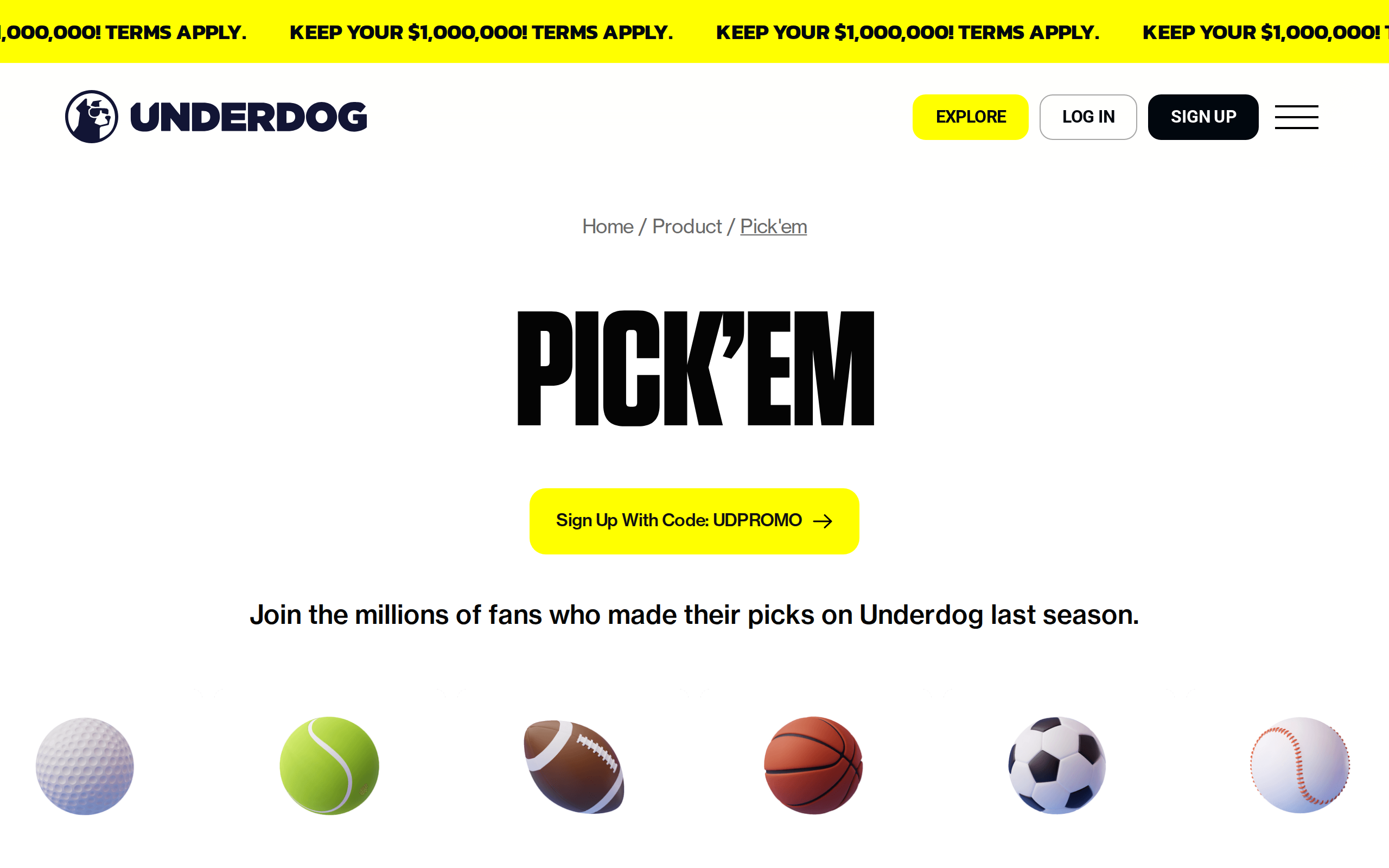
On the pick'em page, you choose higher or lower on up to eight player stats, with at least two different teams in the entry. The minimum entry is $1. The site says you can win up to 500x your money, and it shows both a Standard and a Flex payout on the entry screen.
The Pick'em page: higher or lower on player stats, entries from $1.
Standard needs every pick to land. Flex pays something even when you miss one or two, and in exchange the top payout drops. Neither version shows you the margin. A pick'em multiplier is a fixed payout on a combined chance, and the gap between the true chance and the paid chance is where the house earns. We cannot see inside Underdog's pricing, so we say only this: if you have no way to price a prop yourself, you cannot tell whether a given slip is fair, and you should assume it is not.
Streaks is a separate game where you go pick by pick for up to 1000x or cash out early. Treat that figure the way you treat a lottery jackpot.
Drafts and best ball are the real differentiator
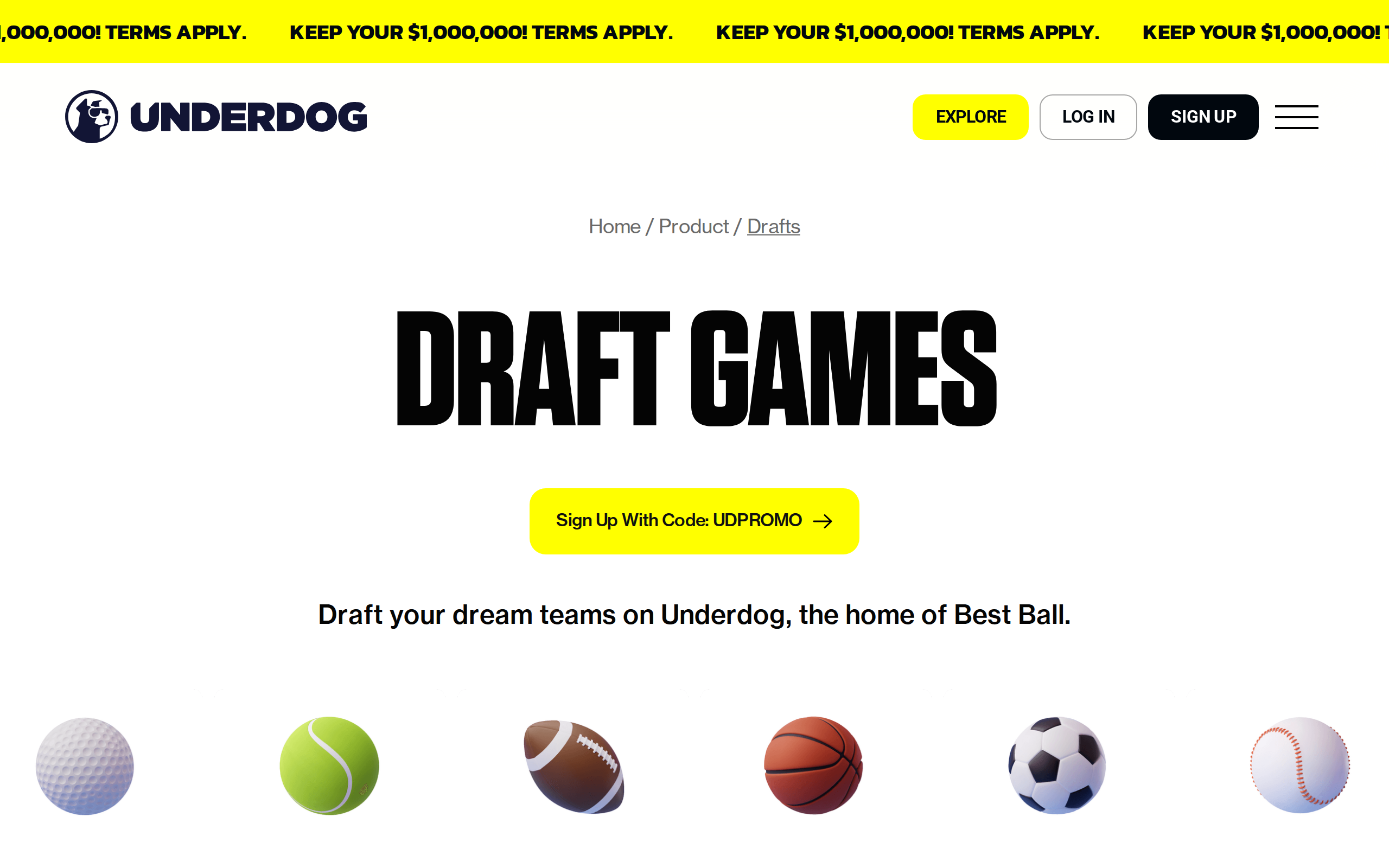
Underdog calls itself the home of best ball. The drafts page covers daily drafts, best ball and tournaments, and third-party reviews quote best ball entries from $1 up to $100 and daily contests of 3 to 12 players.
The Draft Games page, where best ball and daily drafts live.
Here skill matters more than in pick'em. You build a roster once and let the season play out. Rake exists, but it is a flat slice of the entry pool and you can see it. If your edge is reading draft position and stacking, this is the format where an edge can survive.
What the published results say
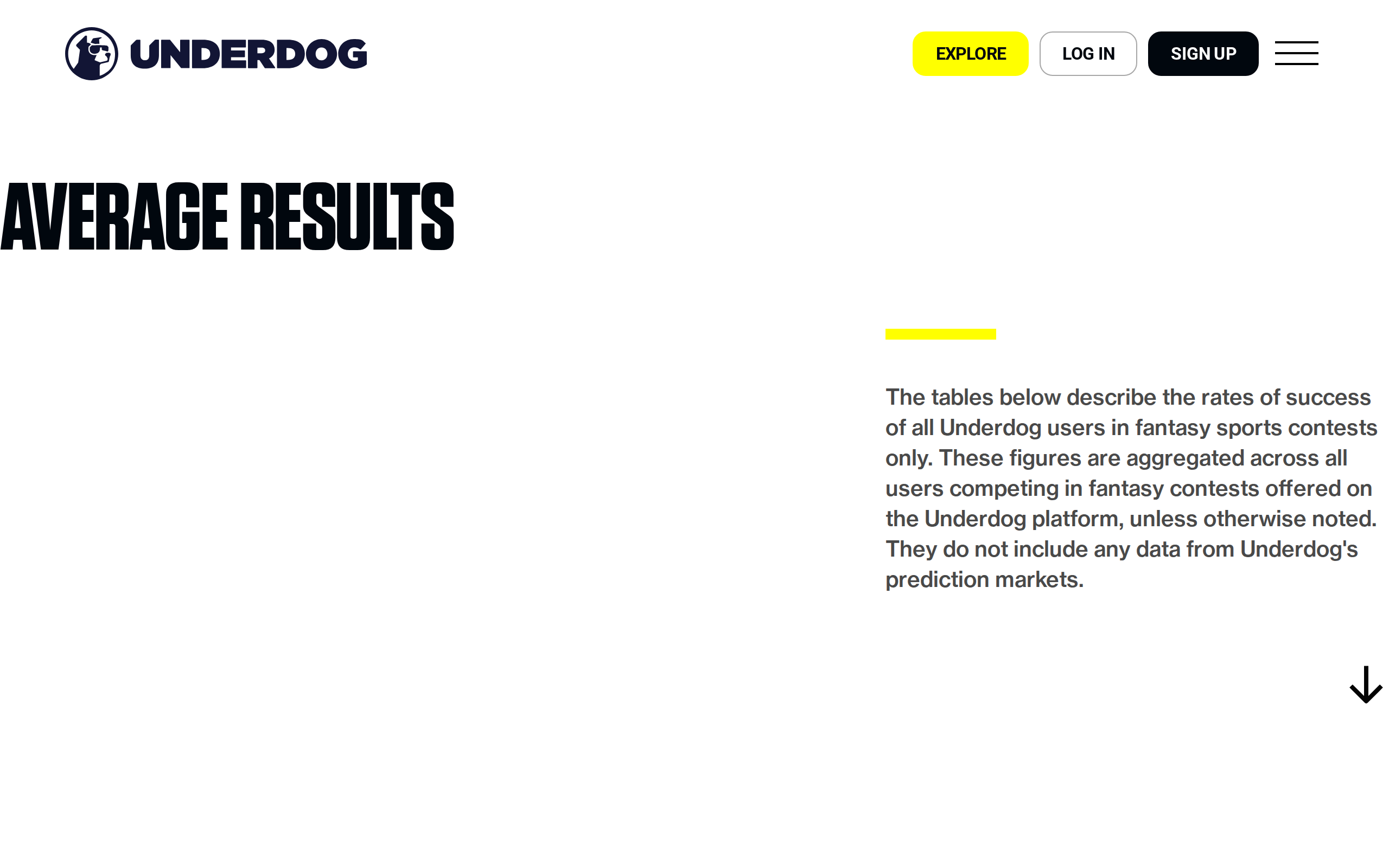
This is the most useful page on the site, and the one most rivals do not have. Underdog's Average Results page covers fantasy contests only (prediction markets are excluded) and is updated daily. For all users it shows average net winnings of minus $40 over 30 days and a median of minus $15.
The Average Results page publishes success rates for fantasy contests, updated daily.
For beginners with 50 or fewer contests entered, 80 percent were net losers over 30 days. We also noticed that part of the all-users table looks garbled on the page: three equal 16 percent figures that do not add up to 100. We do not lean on that table. The beginner line and the average loss are clear enough.
Read that as a warning, not an insult. Most people who play these games for a month lose a modest amount, and a few win a lot.
Responsible play
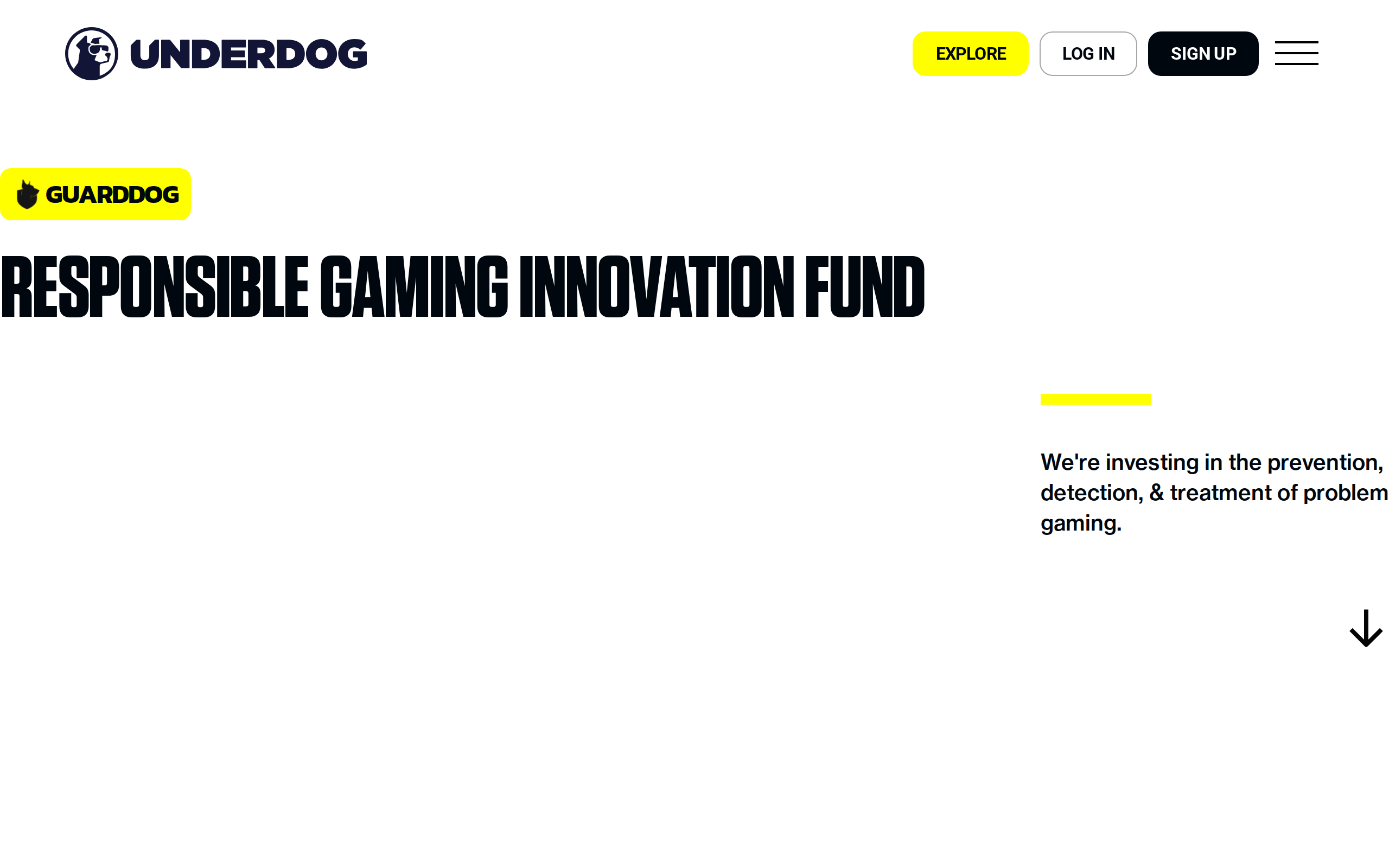
Underdog funds a Responsible Gaming Innovation Fund called GuardDog, aimed at prevention, detection and treatment of problem gaming.
The GuardDog page describes the fund's work on prevention, detection and treatment.
That is worth noting, and it is a funding commitment, not a safeguard inside your account. Set your own deposit limit before the first entry.
Versus PrizePicks
Both apps sell the same pick'em idea, with Flex-style payouts and the same player props. The differences are the extras. Underdog has the stronger draft and best ball product and the more open results data. We did not find a reason to expect better pick'em pricing here, so do not move for the multipliers alone. If you only ever play pick'em, stay where you are or hold both and take whichever line is softer on a given night.
The welcome offer is hard to pin down: sources we checked disagree on the size and terms, so read the offer inside the app and ignore the headline.
Verdict
Underdog earns a 7.4 for breadth and honesty about results, and loses points because the maths of pick'em still favours the house and the beginner numbers are poor. Who should use it: drafters and best ball players who also want a few props. Who should not: anyone chasing the 500x. Betting and paid contests carry a real risk of loss, and this review is not financial advice.