Robinhood Prediction Markets Review: Fees Per Contract
Robinhood Prediction Markets review: a one-cent fee that bites hardest on longshots
Robinhood puts event contracts, including sports, next to your stocks. We work through the reported $0.01 plus $0.01 per-contract fee and show where it beats a sportsbook margin and where it does not.
Our score
6.6/10Rated 6.6 out of 10
Verdict
Robinhood is the easiest place to hold an event contract if you already trade there, and a flat one-cent commission is simple to read. But the fee is a poor fit for cheap longshots, depth and market choice trail Kalshi's own app, and you give up the research tools bettors want. Convenient, not cheaper by default.
Best for
Existing Robinhood users who want occasional event contracts
Price
Reported $0.01 Robinhood fee plus exchange fee per contract
Contracts sit inside an account many US users already have and fund
Flat $0.01 Robinhood commission per contract is easy to predict
Contracts settle at $1 or $0, so the price reads as an implied probability
Fee on a 50 cent contract is far below a typical -110 sportsbook hold
What held it back
A $0.02 total fee is 20% of a 10 cent contract, a heavy toll on longshots
Market selection and information are thinner than on Kalshi's own app
Sports availability follows Kalshi and changes with state legal challenges
No parlay builder, prop research or line-shopping tools for bettors
A sportsbook hides its fee in the price. Robinhood shows it, one cent at a time. That sounds like a clear win for the customer until you do the division, which is why this review is mostly arithmetic.
What you are actually buying
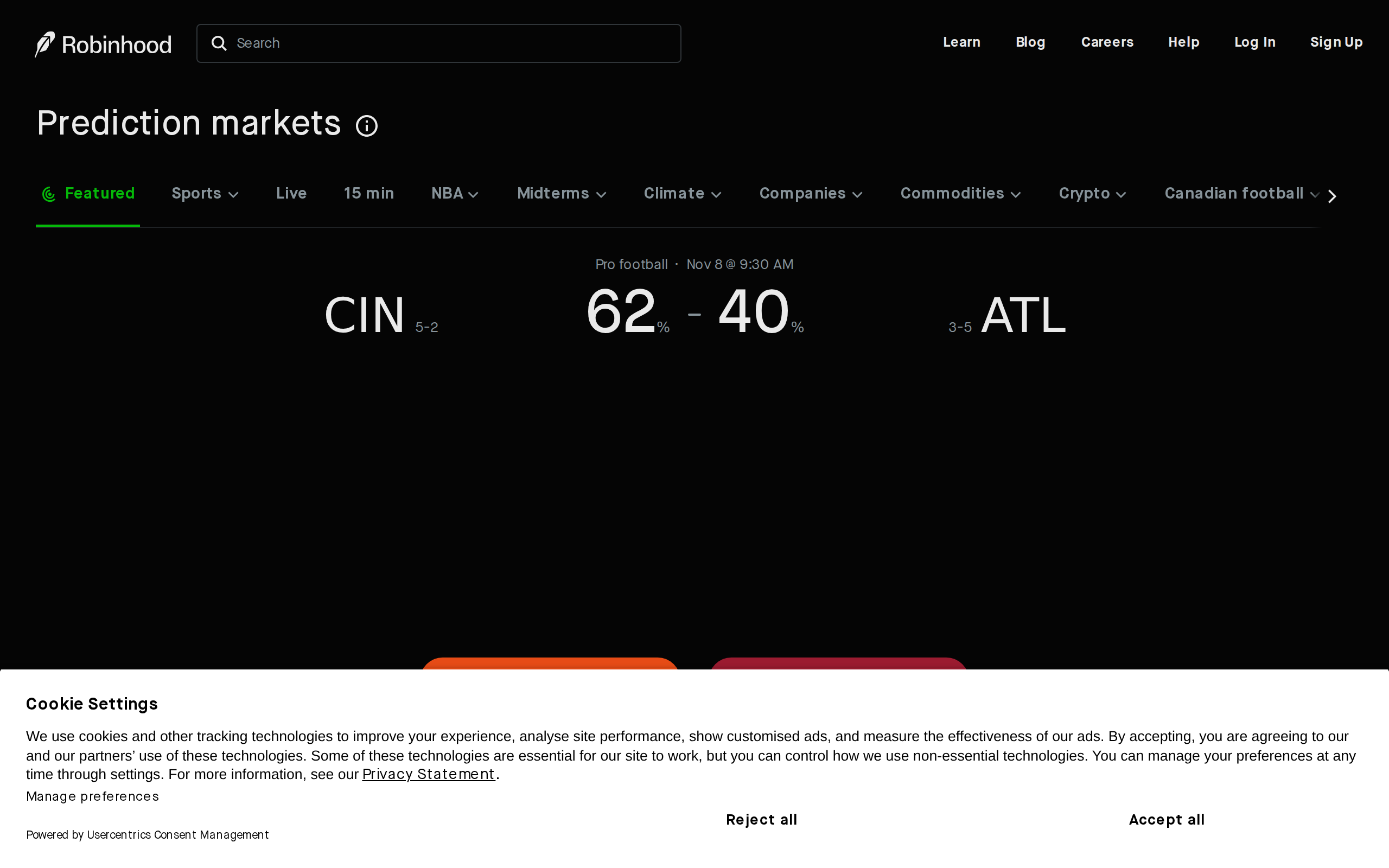
An event contract is a Yes or No share that pays $1 if the outcome happens and $0 if it does not. A contract trading at 62 cents says the market gives that outcome about a 62% chance. Robinhood does not run the exchange: it routes these trades through its partner Kalshi, and its sports menu generally follows what Kalshi lists, as The Lines reports. The Robinhood page is an app front door, with markets such as a Leeds United against Tottenham fixture in view.
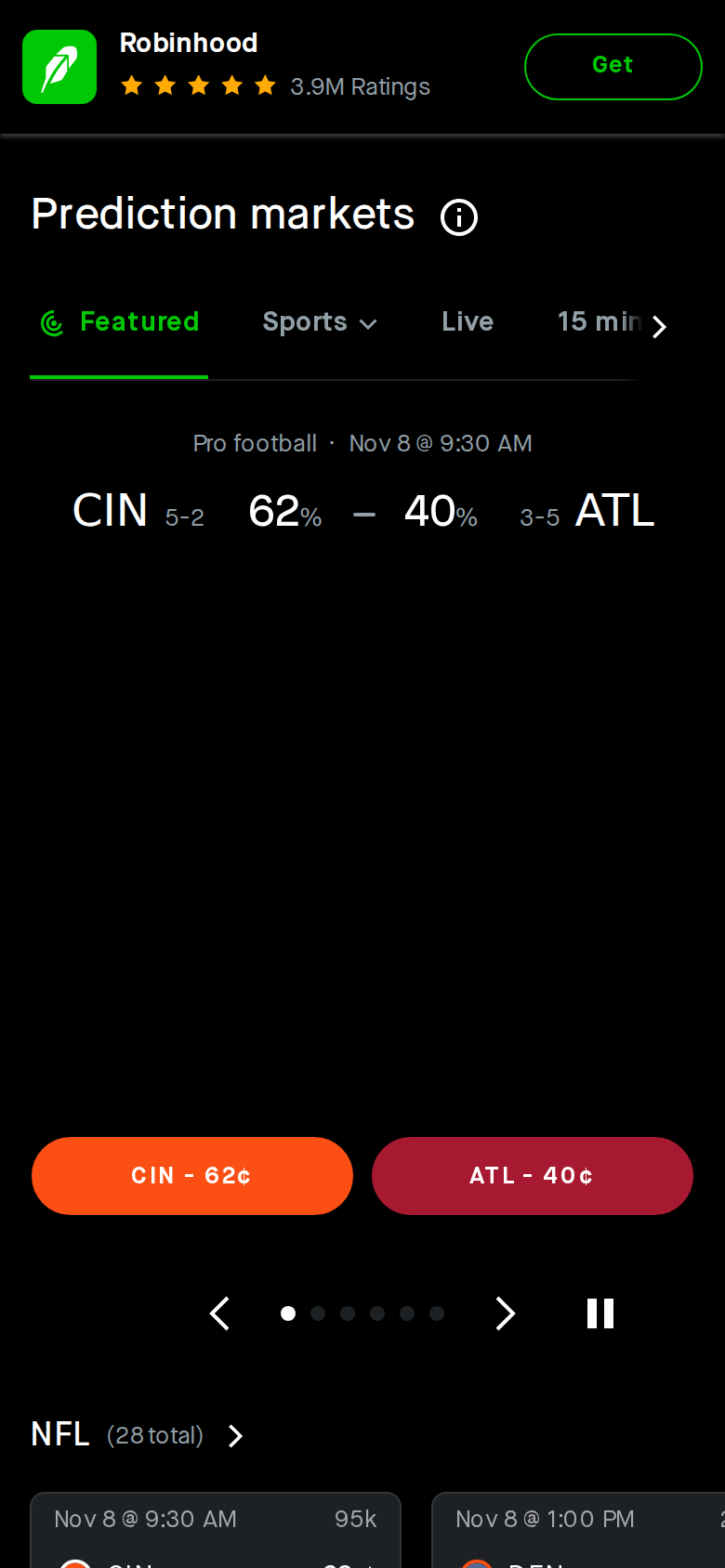
The mobile view of Robinhood's Prediction markets page: the same market list sits inside the brokerage app.
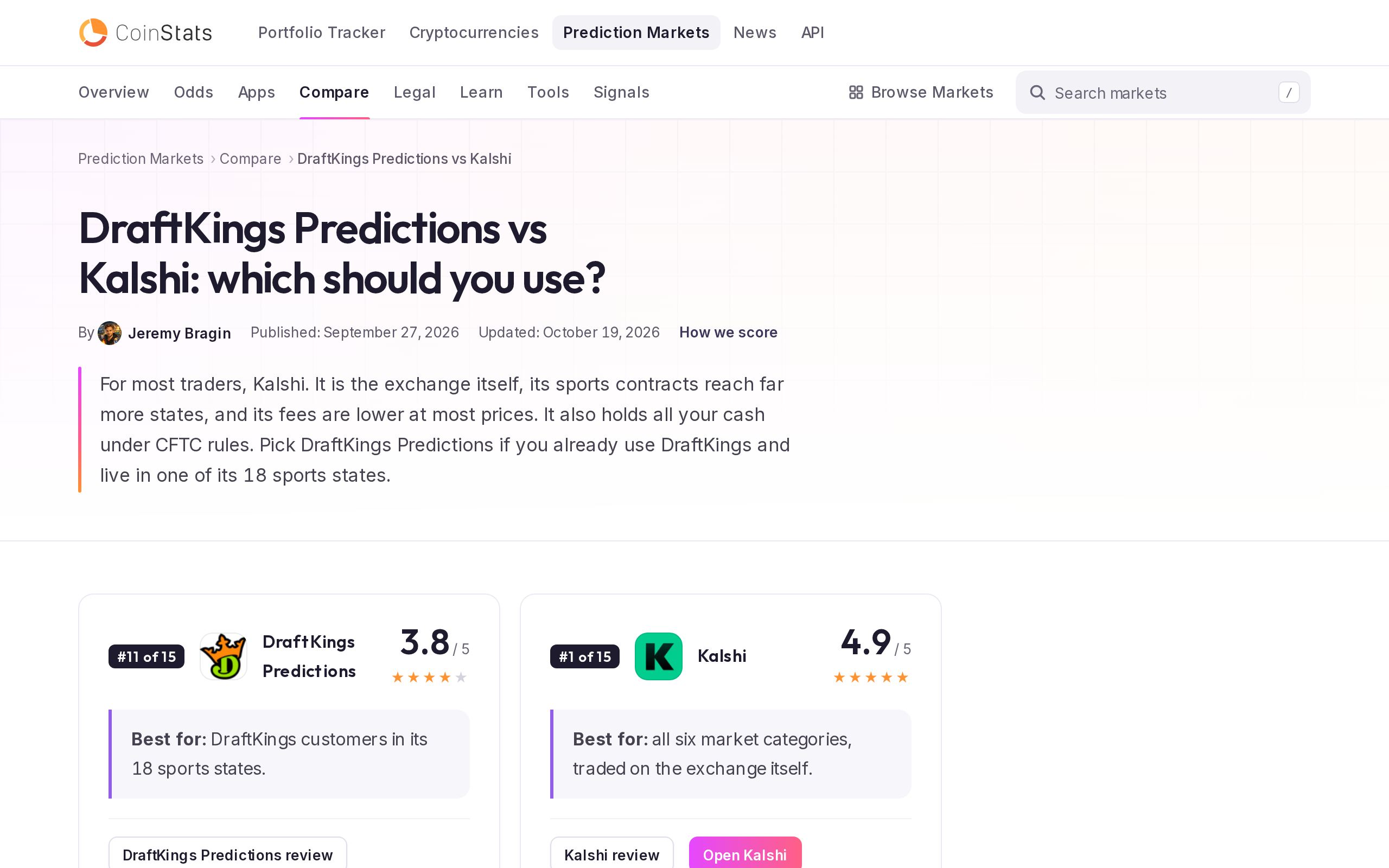
If you want the fuller picture of the exchange itself, our Kalshi review covers the pricing in cents and the contract rules.
The fee, divided by the price
Reported figures from comparison sites put Robinhood's commission at $0.01 per contract, with Kalshi's exchange fee at roughly another $0.01, so about $0.02 in total. Kalshi's own fee schedule is not flat: its taker fee is 0.07 times contracts times price times (1 minus price), rounded up to the next cent. The two descriptions do not match neatly, and the sources disagree on how the split works, so check the order ticket before you confirm a trade.
Take the flat $0.02 and see what it does at different prices:
At 50 cents, a $0.02 toll is lighter than the roughly 4.5% hold built into a standard -110 / -110 sportsbook line. That is the honest case for Robinhood. At 10 cents, the same toll is a fifth of your stake, and a longshot has to be mispriced by a wide margin before you are ahead. If your bets are the cheap, high-payout kind, a sportsbook's price can be the better deal even after its margin.
Held to settlement, you pay on entry only. Selling early adds a second fee. A trader who flips contracts three times in an afternoon at 50 cents has paid about 12% of one position's cost, and that is the situation where Robinhood's tidy interface does a bettor no favours.
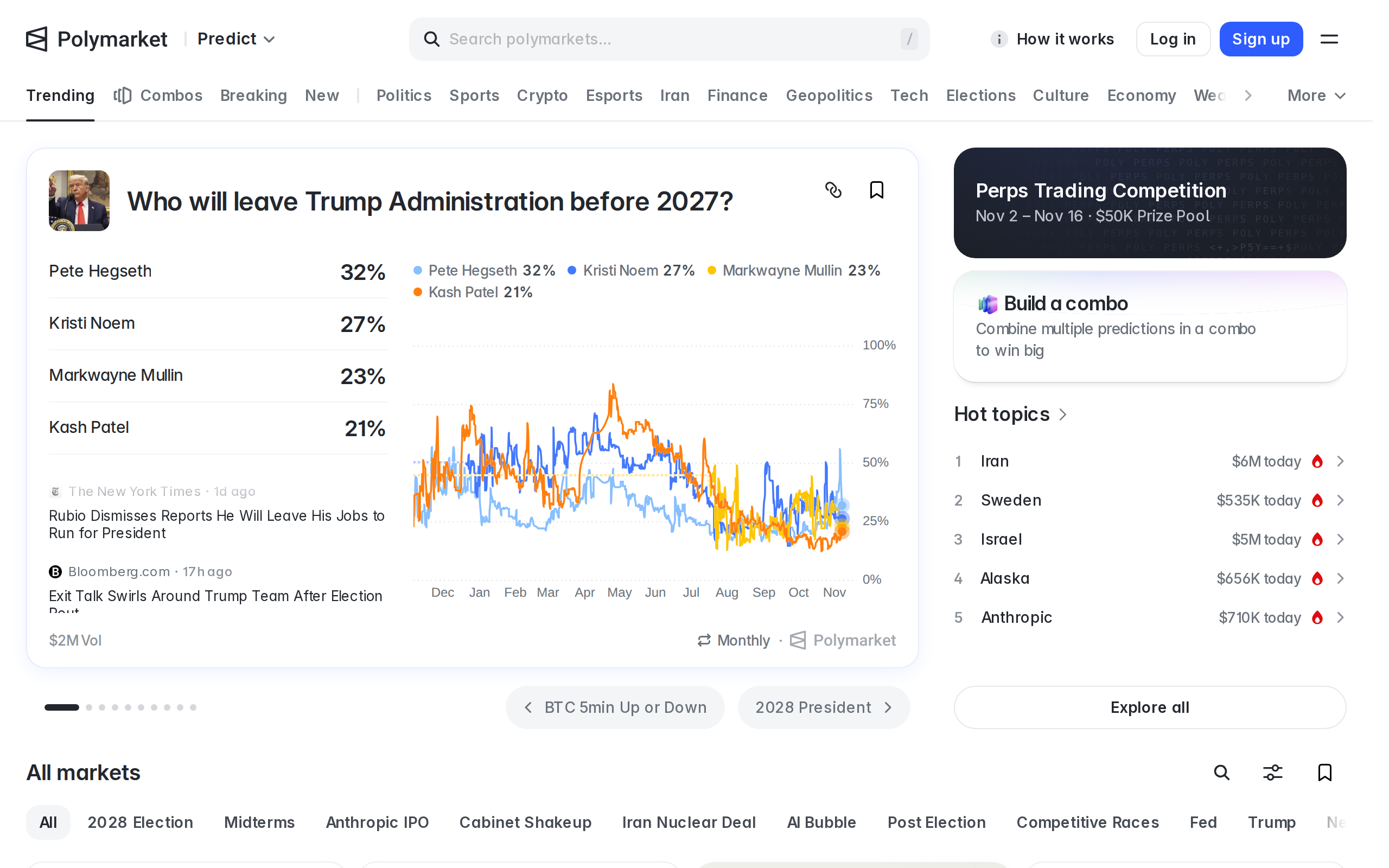
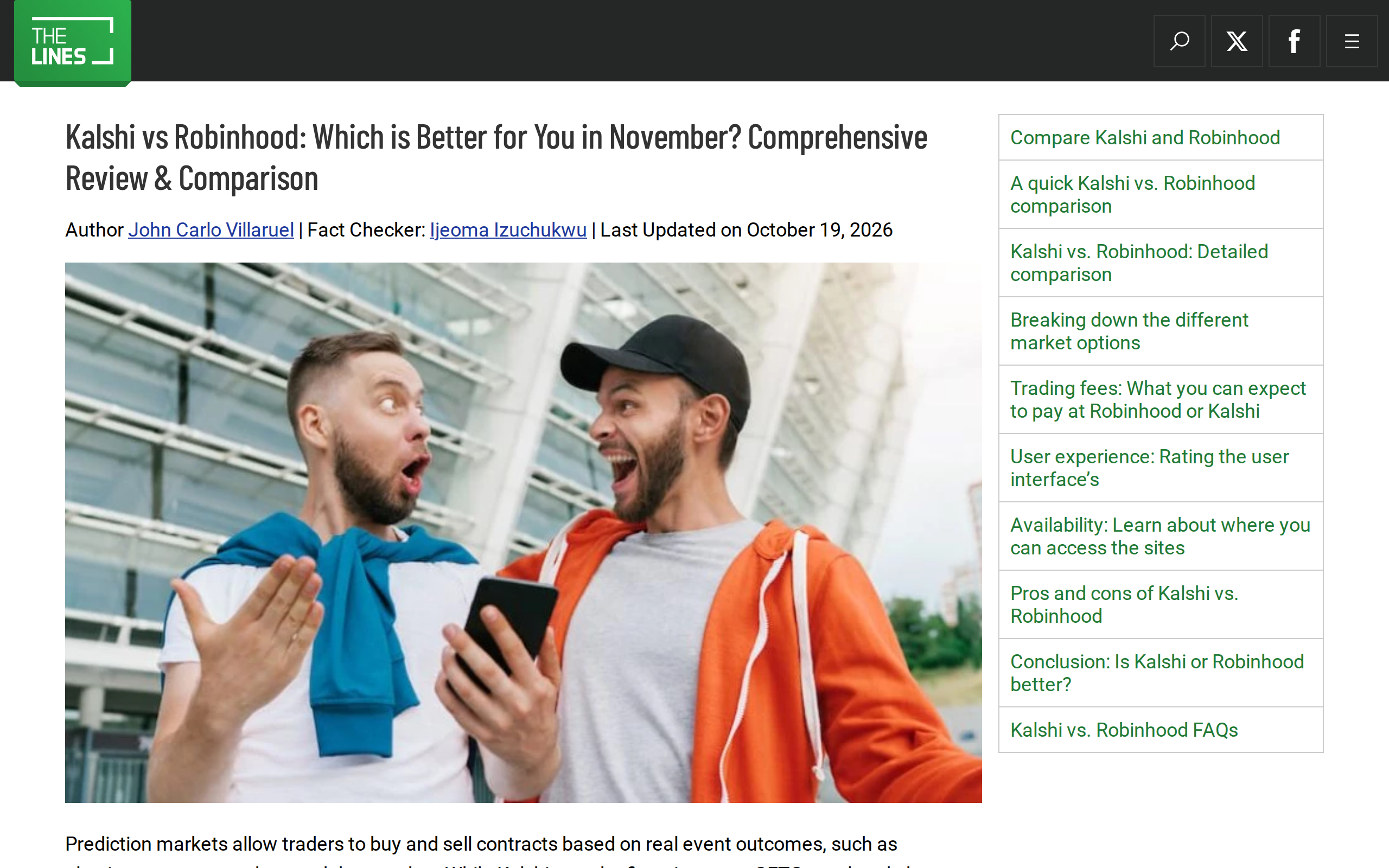
The Lines' Kalshi vs Robinhood comparison: its fee table is where the per-contract figures in this review come from.
A worked comparison
Say you like a team at even money. On a sportsbook that means +100, and a fair price would be 50 cents. Buy 100 Yes contracts at 50 cents and you risk $50 plus $2 in fees, a $52 outlay. A win returns $100, a profit of $48; a loss costs the full $52. Put the same $52 on a -110 line and a win pays about $47.27. Over a long run the contract is slightly ahead at this price, but only because the price is near the middle and the book you compare against is a typical one. Shop a sharper sportsbook and the gap narrows or reverses. Run this sum every time, with the actual price on your screen, not the one in your head.
Where the app falls short for bettors
Third-party comparisons agree on a pattern: Robinhood is a brokerage first, so the prediction side shows less information than Kalshi's purpose-built site, and some categories carry few markets. Its mix also leans toward crypto and finance, with sports one tab among several. There is no parlay builder, no prop research, no line-shopping across venues.
Legal ground matters too. Sports event contracts have faced challenges from state regulators, and availability can differ by state. The reported fee and the legal status can both change, so read them on the day you trade.
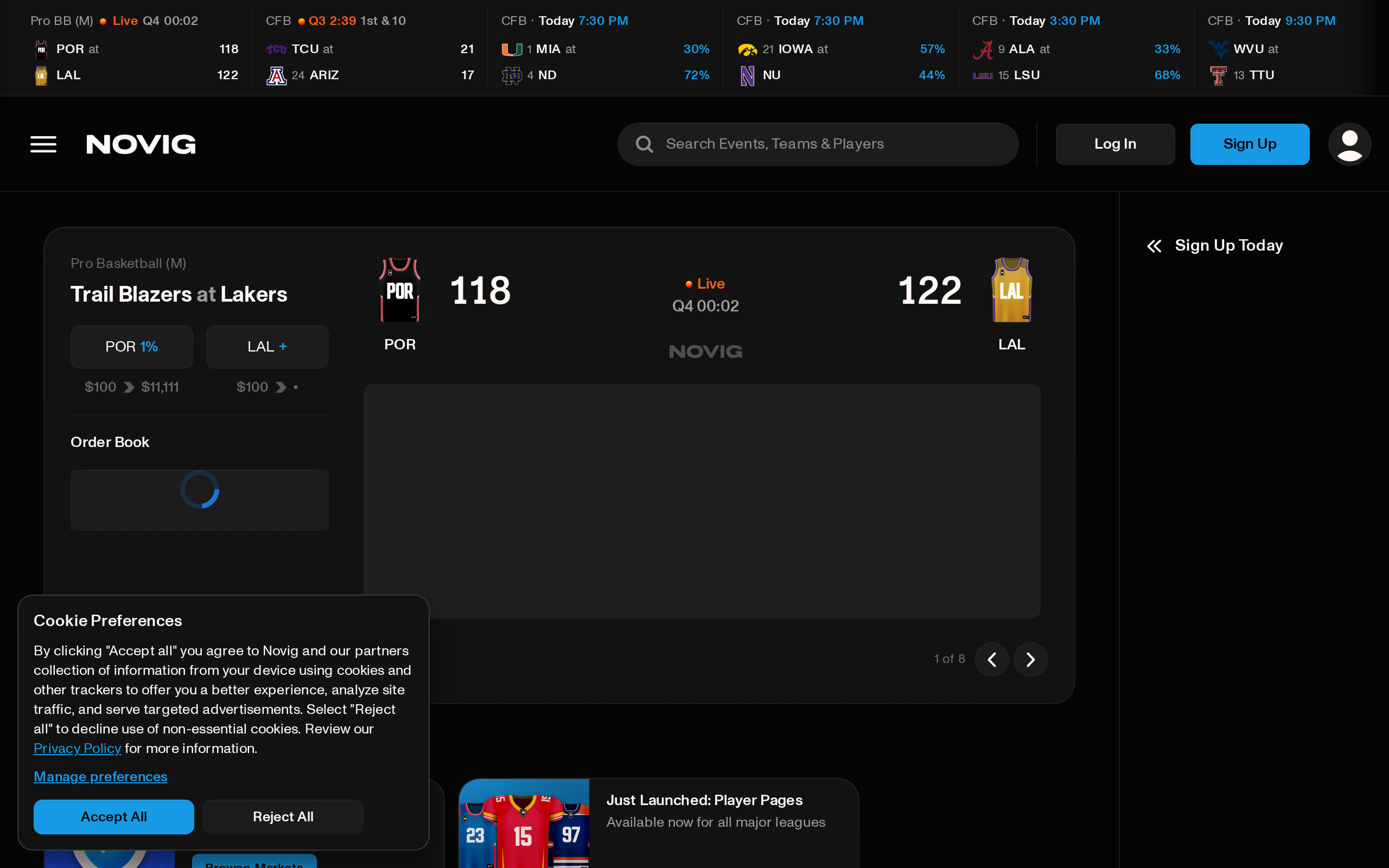
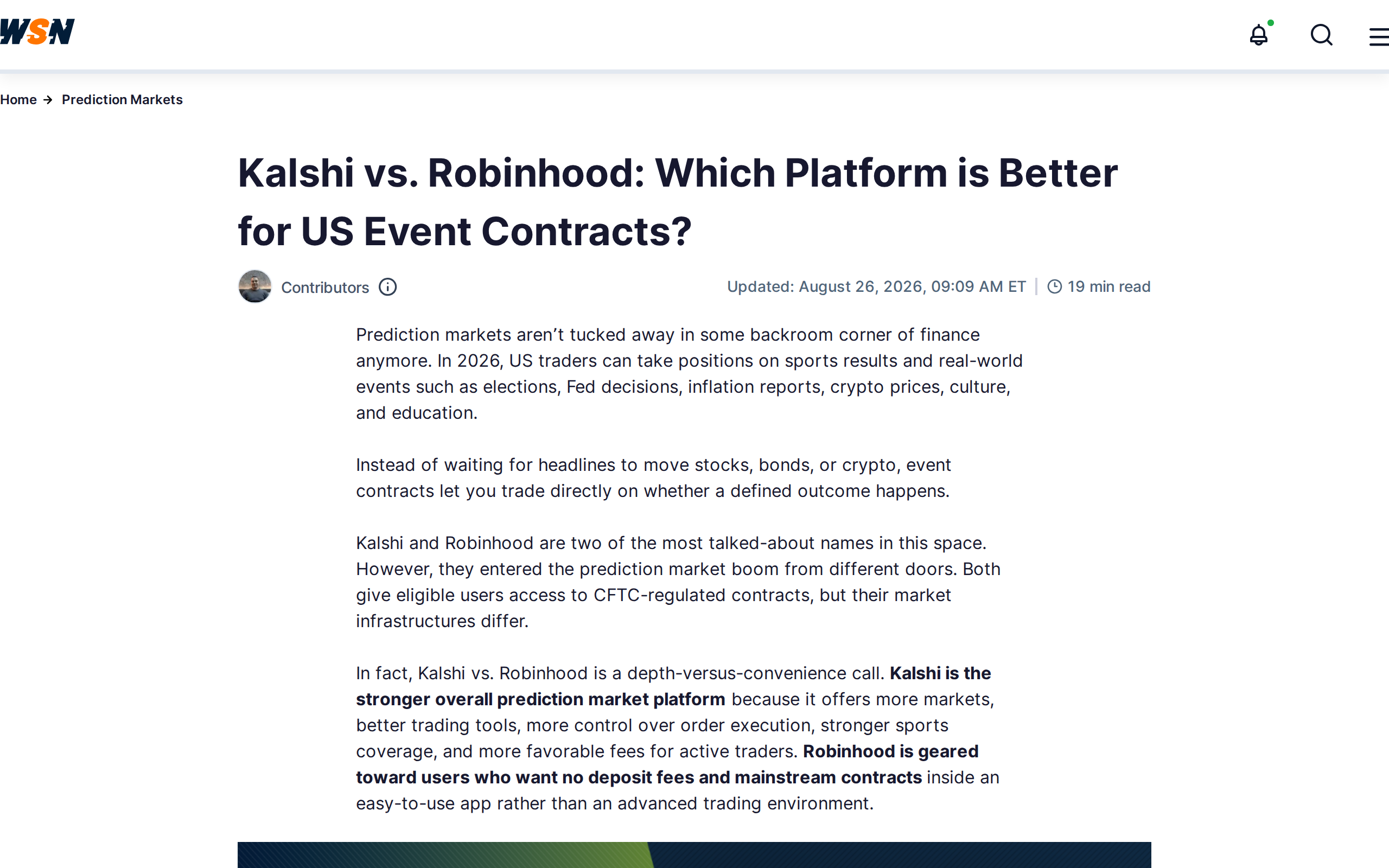
WSN's comparison of the two platforms: both route sports contracts through the same exchange, so choose on interface and fees.
Support is conventional brokerage support: a help centre, not a trading desk.
Robinhood's support centre is a general brokerage help page, not a prediction-market specific desk.
Who should use it
Use Robinhood if the account already exists, you trade mid-priced contracts between about 30 and 70 cents, and you hold to settlement. The flat fee is a modest cost there and the interface is familiar.
Look elsewhere if you buy longshots, trade in and out, or want to compare prices across a venue and a sportsbook. In those cases Kalshi's own app, an exchange, or a no-vig sportsbook line is the better comparison.
One last reminder from us: event contracts can go to zero, outcomes can turn on a single play, and a low price is not a safe price. This is not financial advice, and you should only trade money you can afford to lose.