Pikkit Review: Free Bet Tracker, Pro Cost and Sync Limits
Pikkit review: a free bet tracker that syncs 30+ books, and a $29.99 Pro tier with narrow appeal
Pikkit imports bets from more than 30 sportsbooks and DFS apps for free. We read what the $29.99 a month Pro plan adds and who would actually recover that cost.
Our score
7.6/10Rated 7.6 out of 10
Verdict
The free tier is the product for most people: BookSync pulls bets from 30+ books, and the calendar, graphs and line shopping cost nothing. Pro at $29.99 a month adds scenario analysis, alerts and hedging maths that only pay off if you stake enough that one avoided bad hedge covers the fee. Treat sync as convenient, not audited.
Best for
Bettors spread over several sportsbooks who want one ledger
BookSync is included in the free plan and covers 30+ books, DFS apps and prediction markets
Free tier keeps bet tracking, line shopping, calendars, graphs, search and filters
Closing line value tracking shows whether you beat the market, not just whether you won
Seven-day Pro trial lets you test the extras before paying
What held it back
Pro costs $29.99 a month, or $199.99 a year, which is steep for small stakes
Pikkit does not explain how login credentials are stored, only that they are encrypted
Sync runs when you open the app, so it is not a live feed
Stability complaints and missing-book requests appear in user reviews
Bettors with accounts at four or five sportsbooks tend to know the same small humiliation: asked how the year is going, they can only guess. Pikkit exists to end the guessing. You link your books, it imports the slips, and the profit figure is no longer a feeling.
What the free plan already does
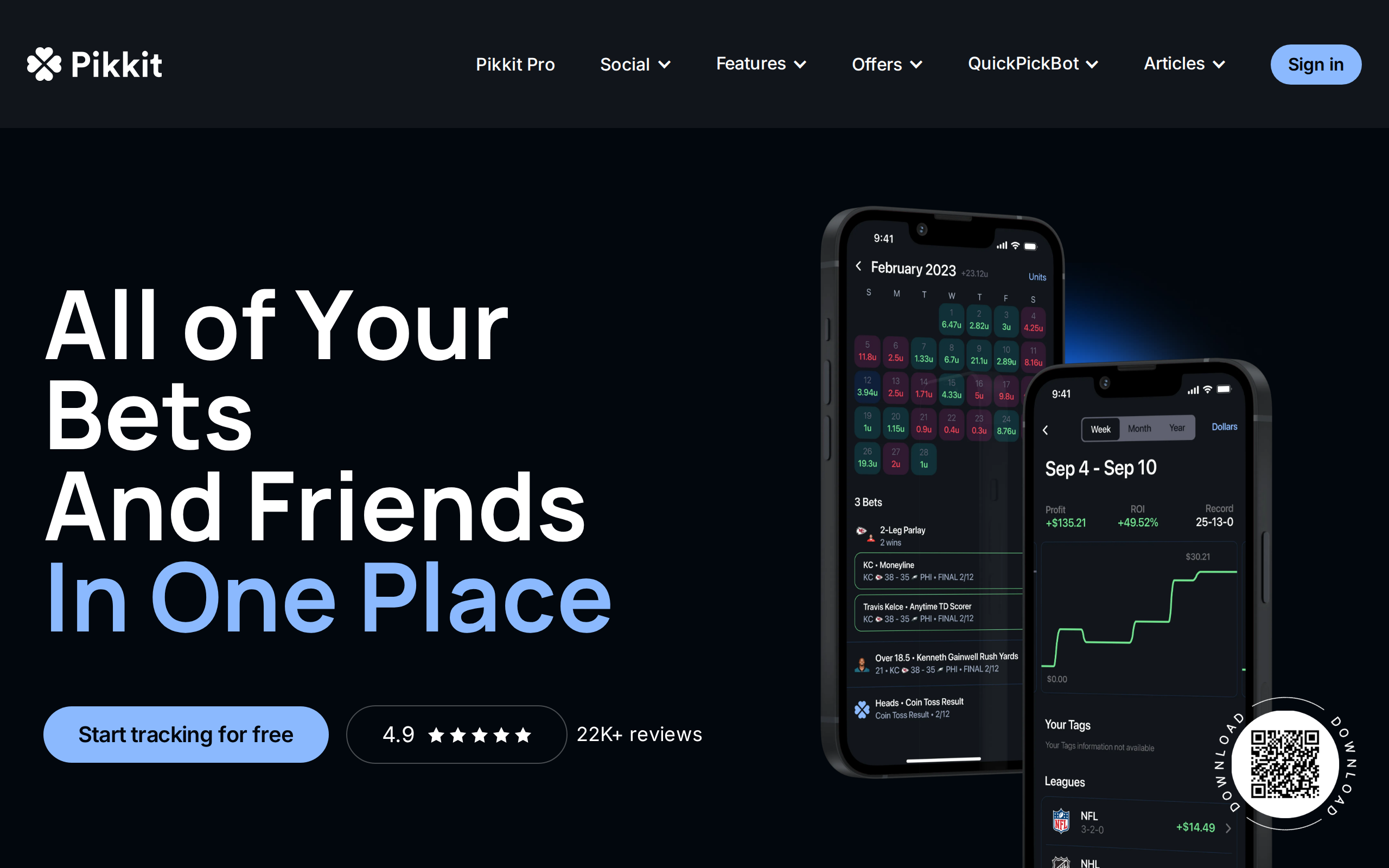
Most trackers hold the useful bit back. Pikkit does not. According to its Pro page, the free tier keeps bet tracking, line shopping, every social feature, historical calendars and graphs, bet searching and filtering. The sync engine, BookSync, is also free.
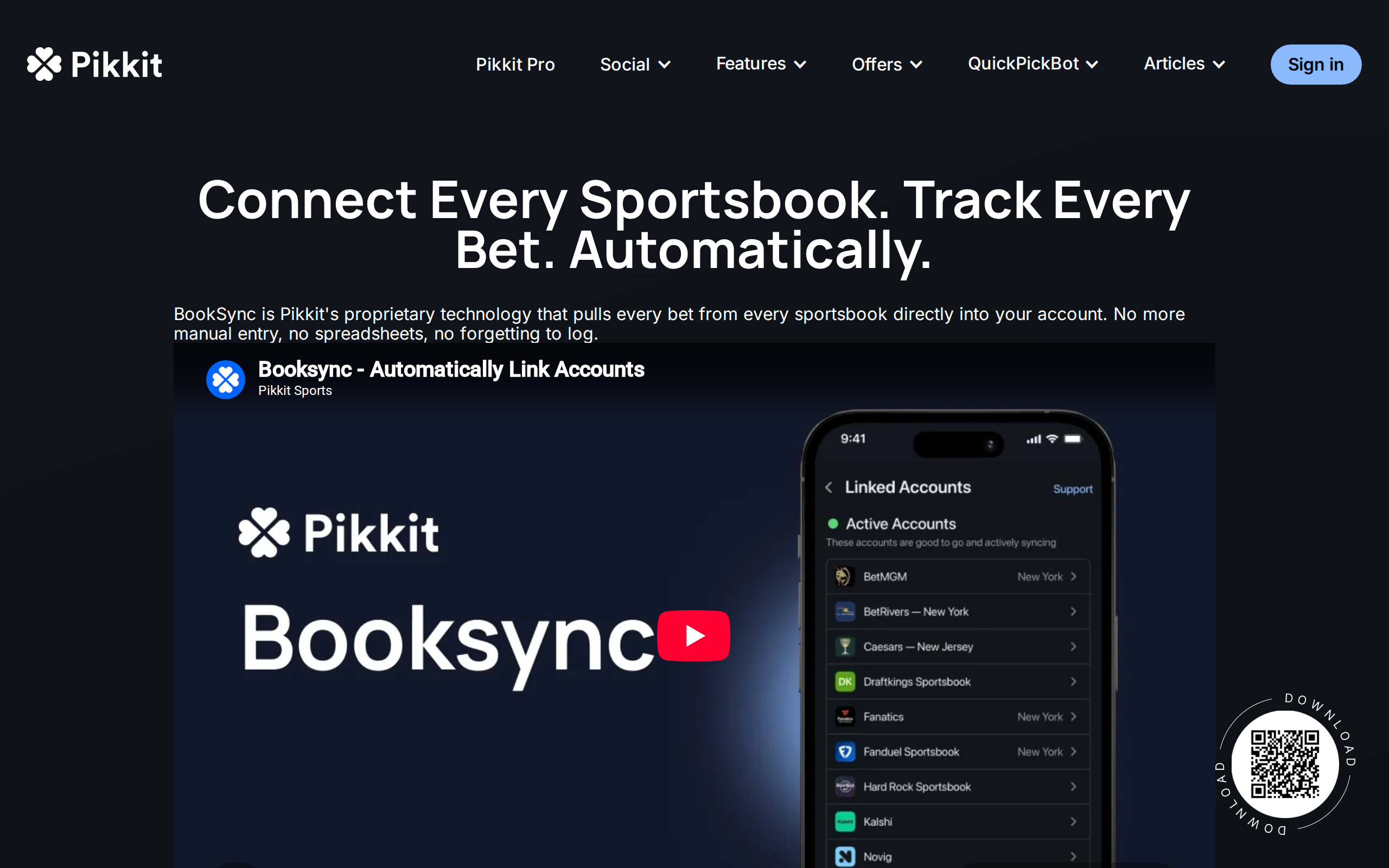
The BookSync page says you connect accounts inside the app, bet as normal, and the slips arrive when you open Pikkit. Named books include DraftKings, FanDuel, BetMGM, Caesars, theScore Bet and Fanatics, and the Pro page counts "30+ supported sportsbooks, DFS apps, and prediction markets." You can pull down to refresh at any time.
BookSync is the feature the free plan is built around.
The trust question
Pikkit says the connection is read-only: it can see bets and balance but cannot place wagers, move money or change the account. It also says the login is encrypted and the data is never sold. What it does not publish is where the credentials live or what token they become. We cannot verify that from the outside, so our advice is practical: use a password you use nowhere else, and switch on two-factor authentication at each book where it is offered.
Sync is also not instant. It runs when the app opens, and the company's own wording is that most bets sync "very quickly," with no fixed interval. A bet placed ten seconds ago may not be there yet. For a ledger that is fine. For live decisions it is not.
Where the analysis earns its keep
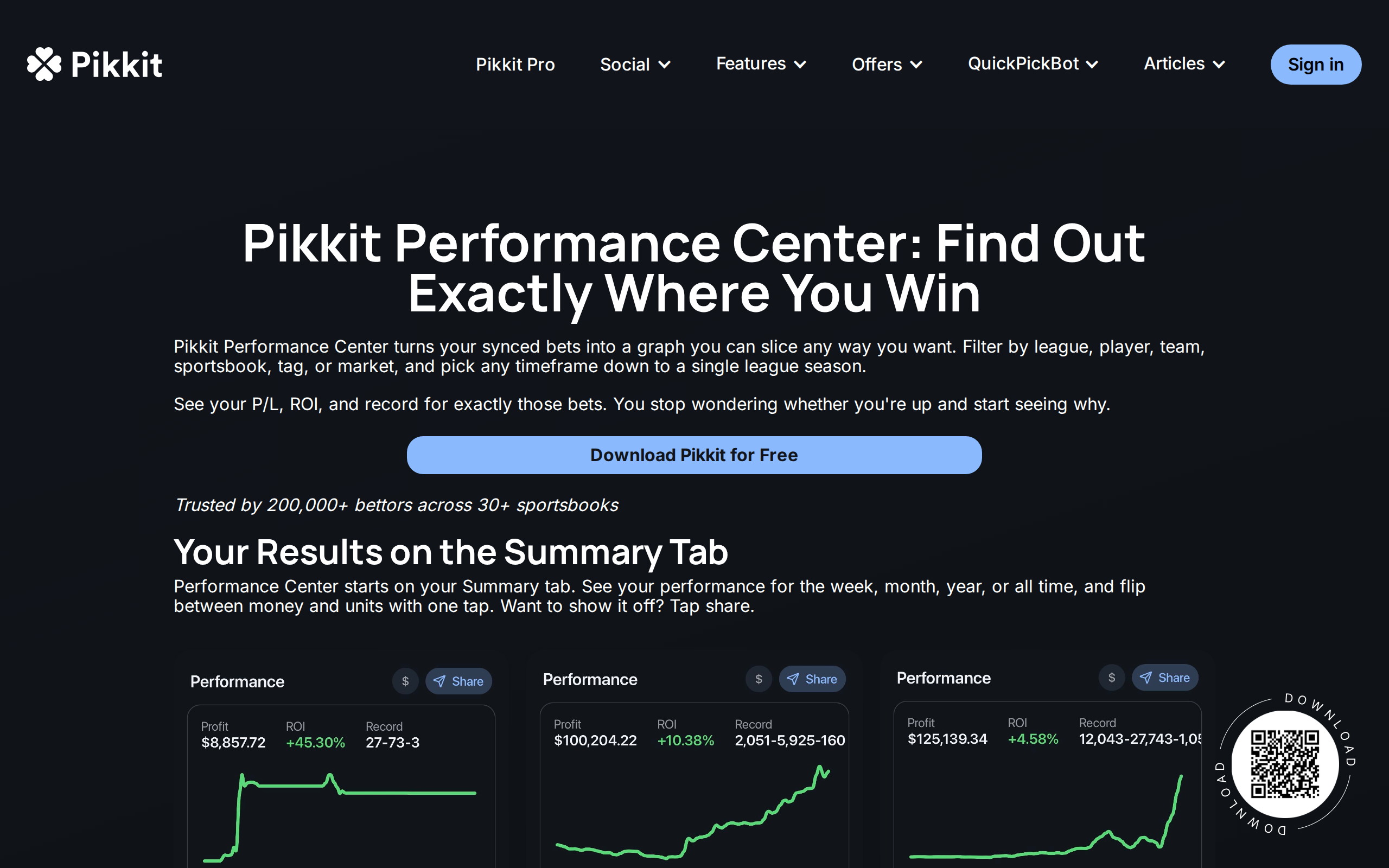
A ledger is only the start. The Performance Center opens on a Summary tab with profit by week, month, year or all time, switchable between money and units, with a graph of profit, ROI and record.
The Performance Center breaks results into money, units, profit and ROI.
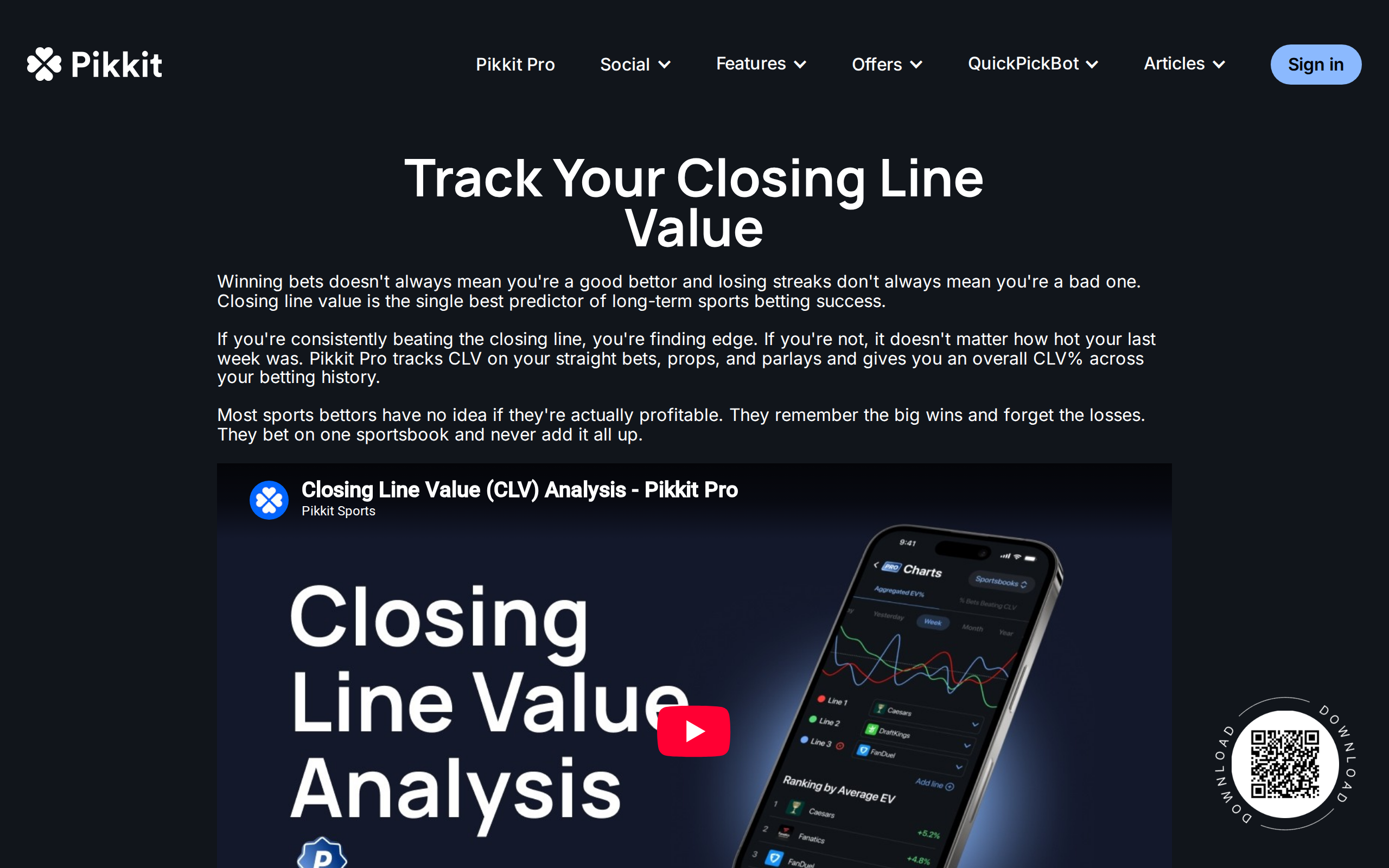
The more interesting number is closing line value. If you took +150 and the market closed at +130, you beat the price whatever the result, and over a few hundred bets that is a better signal of skill than a hot month. Pikkit's CLV tracker page puts that figure beside your results. It is the one metric we would tell a serious bettor to watch, because variance buries everything else for a long time.
Closing line value separates a good price from a lucky result.
Line shopping is free too. The lineshopping page compares prices across books, and the difference between -110 and -105 on the same side moves the break-even win rate from 52.4 percent to 51.2 percent. That is the cheapest edge in betting and the one most people ignore.
Line shopping is part of the free plan.
The Pro question: $29.99 a month
Pro is priced at $29.99 a month or $199.99 a year, with a seven-day trial. An App Store price tracker shows the same two figures. Some crowd-sourced pages quote higher numbers, so trust the in-app price on the day.
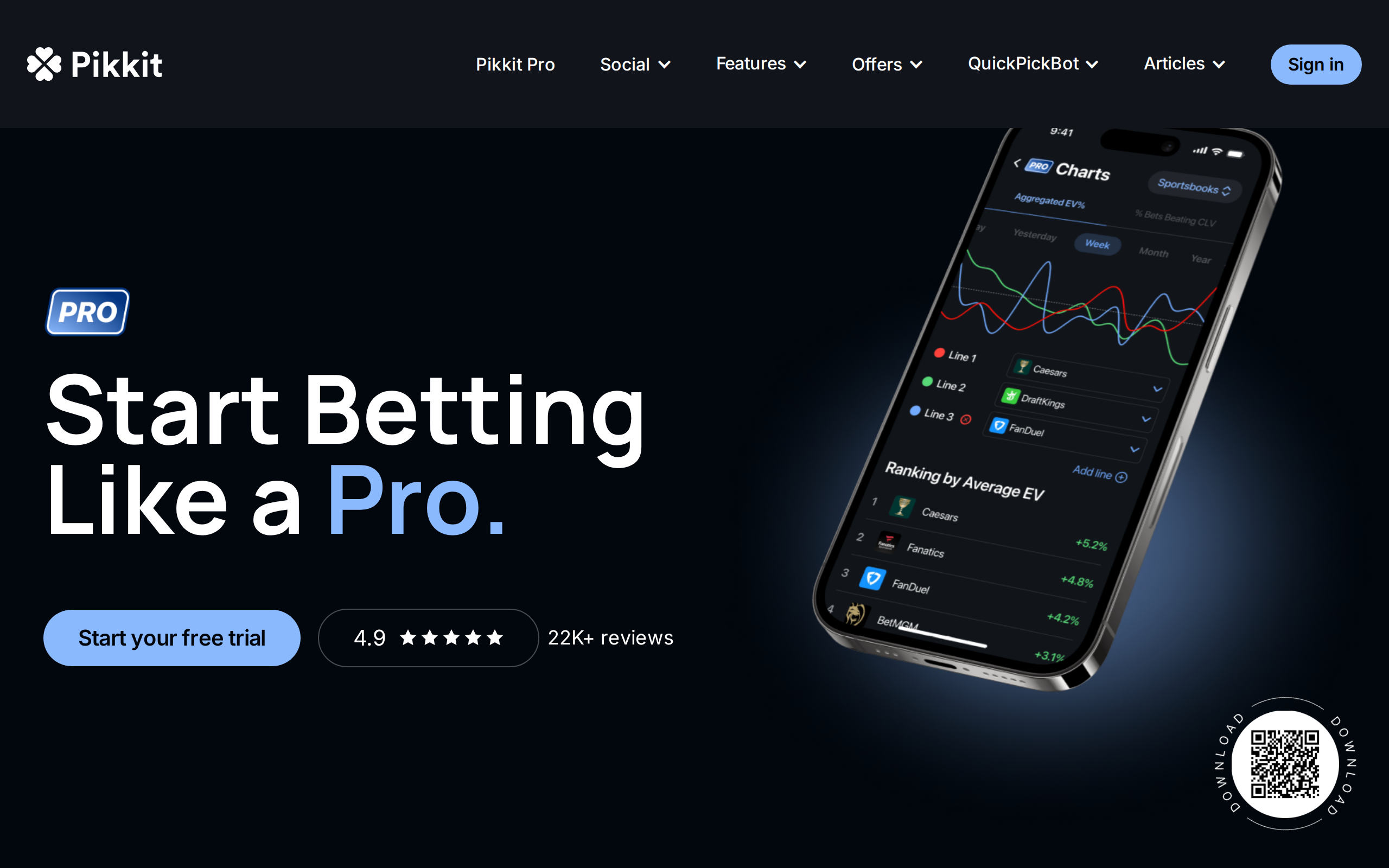
The Pro page sells expected value, alerts and hedging tools.
For that money you get scenario analysis, outcome analysis, odds alerts, market-open alerts, hedging and protection tools, projected profit, unlimited bet tagging, transaction export and premium support. One independent write-up, from a reviewer who also carries a Pro referral link, calls Pro "100% worth it" for serious bettors, which is a view we weigh with that in mind.
Our arithmetic is blunter. At $199.99 a year, Pro costs about $16.67 a month. If you stake $50 a bet, the annual fee is four bets lost outright. Pro only pays if its alerts and hedge calculations change your decisions on larger stakes or you run futures and promos that need careful tracking. A bettor risking $20 a game should stay on the free plan and not think about it again.
Who should and should not use it
Use Pikkit if you hold accounts at three or more books and currently track nothing. The free plan turns scattered slips into one record, and closing line value gives you an honest read on whether you are beating the market.
Skip Pro if your volume is modest. Skip the app altogether if you refuse to hand login details to a third party, since BookSync cannot work without them. User reviews also mention crashes and sync problems, and a supported-book list of 30 still means your regional book may be missing.
Betting carries a real risk of loss, and a tracker does not change the odds, only your view of them. Nothing here is financial advice. If gambling stops being fun, call 1-800-GAMBLER.