Novig Review: No-Vig Sports Trading After CFTC Approval
Novig review: no-vig pricing after the CFTC licence, minus the fee small print
Novig trades sports contracts bettor-to-bettor on an order book instead of selling you a priced line. We checked what the CFTC designation changes, what it does not, and where the savings depend on liquidity.
Our score
7.3/10Rated 7.3 out of 10
Verdict
Novig's idea is the cleanest pricing pitch in sports betting: you trade against other users on an order book, so there is no sportsbook margin baked into the line. The saving is real only when the book is deep, and we could not confirm a fee schedule from public sources, so check the live one before you size anything. Liquidity, a 21+ rule and fresh legal fights with several states keep it from a higher score.
Best for
Price-sensitive bettors who already compare lines across books
Price
Free to join; trading costs apply, check the live schedule
Order-book model means prices come from other users, not from a house margin
CFTC designated contract market status since June 2026 gives it a federal footing
Relaunched in 47 states in August 2026, a far wider footprint than most state-licensed books
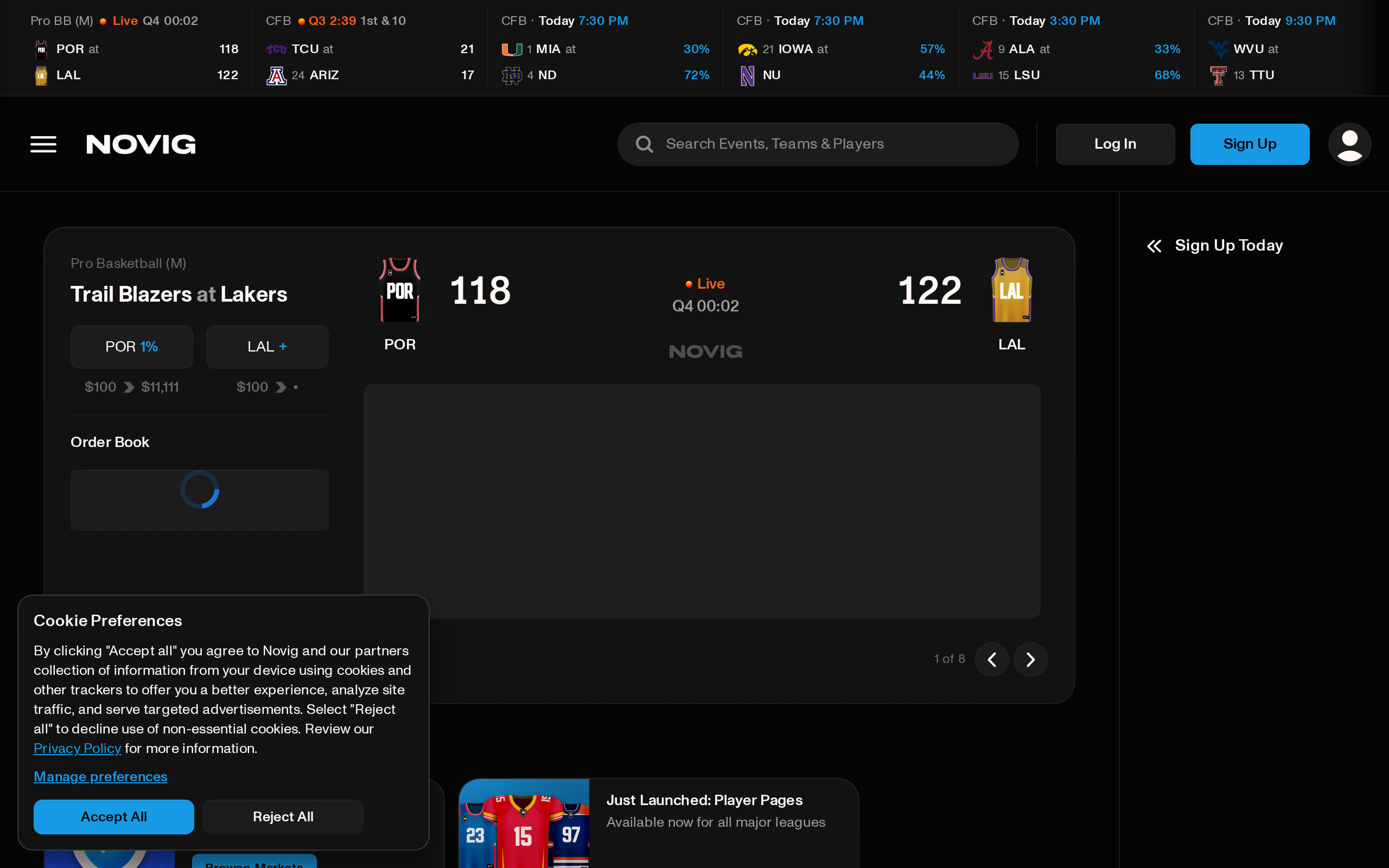
Live market pages show the order book and the score on one screen
What held it back
We could not confirm a public fee schedule, so true cost per trade is unverified
Finance press says liquidity is still the challenge: thin books mean wide gaps between buy and sell
Excluded from Arizona, Michigan and Nevada, and in court with New York and three other states
Minimum age is 21, higher than the 18 that some rival venues accept
The pitch is short enough to fit on a bumper sticker: no vig. A sportsbook sets a line and keeps a margin on both sides. Novig lets two bettors take opposite sides of the same contract and sits in the middle as an exchange. If that works as advertised, the margin you normally pay without noticing shrinks toward zero.
We think the pitch is honest about the structure and silent about the cost, and the gap between those two is the whole review.
What an order book changes
At a sportsbook, the price you see is the price on offer. At Novig the price you see is whatever another user has posted. You can post your own and wait, or take what is already there. That is how a stock exchange works, and it is why the company's regulator treats it as a financial exchange and not a sportsbook.
Percentages replace odds. A team shown at 57 percent is a contract that costs about 57 cents to win $1. The conversion to American odds is arithmetic, and the platform's front page lets you read the implied chance at a glance.
The benefit is simple to state. When the buy and sell prices sit one or two points apart, you pay roughly the spread and nothing else on the margin side. Compare that with a typical American book that quotes both sides of a spread at -110, which carries a margin of around 4.5 percent before you have picked a team.
The licence is the real news
Novig began in 2024 as a state-licensed betting shop in Colorado, then moved to a dual-currency sweepstakes model later that year. Neither route scaled nationally.
In January 2026 it applied to the CFTC to operate as an exchange, trading as Ludlow Exchange, LLC. The designation as a contract market arrived in June 2026, and the company says it was the fastest in the agency's history. That is the company's claim and we have not seen an independent count.
On 4 August 2026 Novig relaunched in 47 states. Arizona, Michigan and Nevada are excluded. A day later it sued New York in federal court, and within 72 hours it had filed similar suits in Massachusetts, New Mexico and Washington.
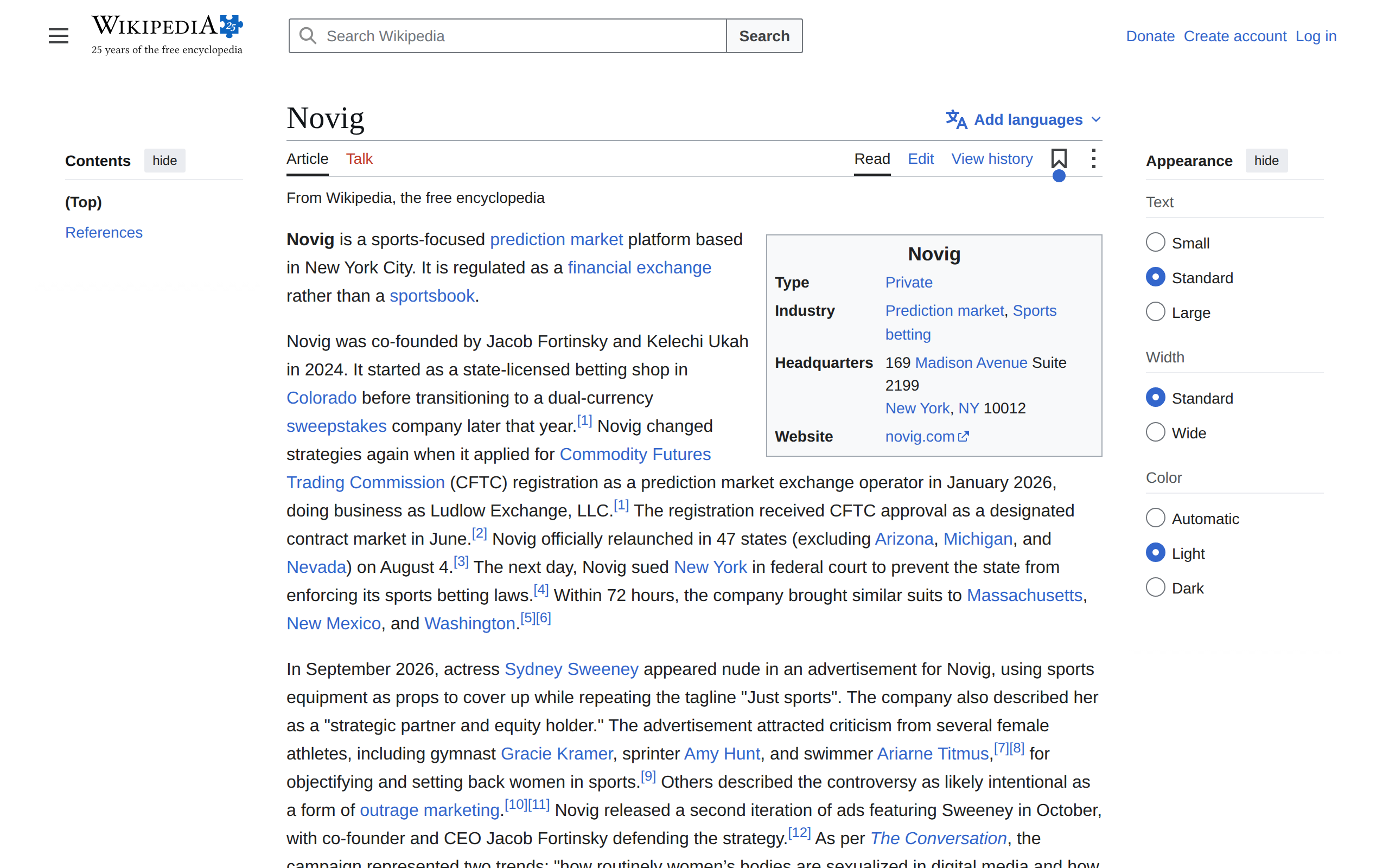
Wikipedia's Novig entry, which is where the dates in this section come from.
Read that sequence plainly. A federal licence does not end the argument with state gambling regulators. If you live in a state that is fighting these contracts, the rules around your account can change faster than they would at a state-licensed book.
Where the savings can disappear
Finance Magnates, writing about the approval, says liquidity is still a challenge and that the exchange model has to show it can attract activity at scale. Its piece also quotes Novig's own figure of more than $5 billion in cumulative trading volume, with no date attached.
Those two statements fit together. A large lifetime number tells you little about a Tuesday-night game between two mid-table teams. On a thin book the best buy and the best sell can sit several points apart, and a no-vig exchange with a wide spread is just a sportsbook with a different invoice.
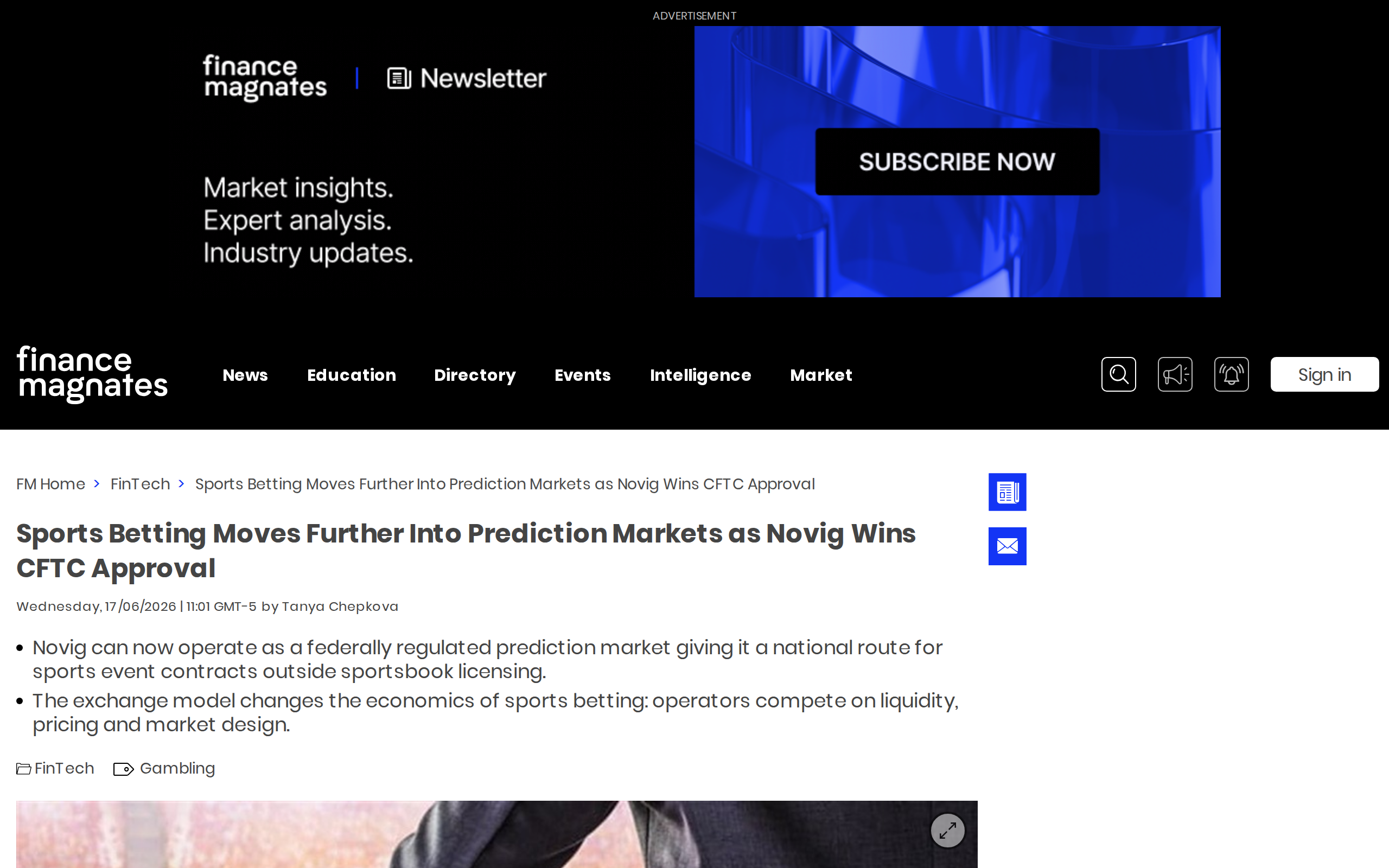
Finance Magnates' report on the June 2026 approval, the source for the liquidity caveat and the volume claim.
We looked for a published fee schedule in the public coverage and on the pages we could read, and did not find one we could cite. We are not going to guess a number. Before you fund an account, read the live schedule inside the product and work out what a round trip costs on a market you would really trade. Whatever you find is the number that decides whether Novig beats your current book.
Who it suits
Novig makes sense for someone who already shops lines across several books and thinks in implied probability. For that reader a visible order book is a real tool, because the spread is on the screen and nothing is hidden.
It makes less sense for a casual fan who wants a parlay and a promotion. There is no sportsbook-style bonus machine here, and the 21 minimum age shuts out some 18 to 20 year olds who can trade on other venues.
The company also draws attention in ways unrelated to pricing. A September 2026 advertisement with actress Sydney Sweeney drew public criticism from several athletes, and the company defended the approach. That is marketing, not product quality, and we mention it only because it is part of the record.
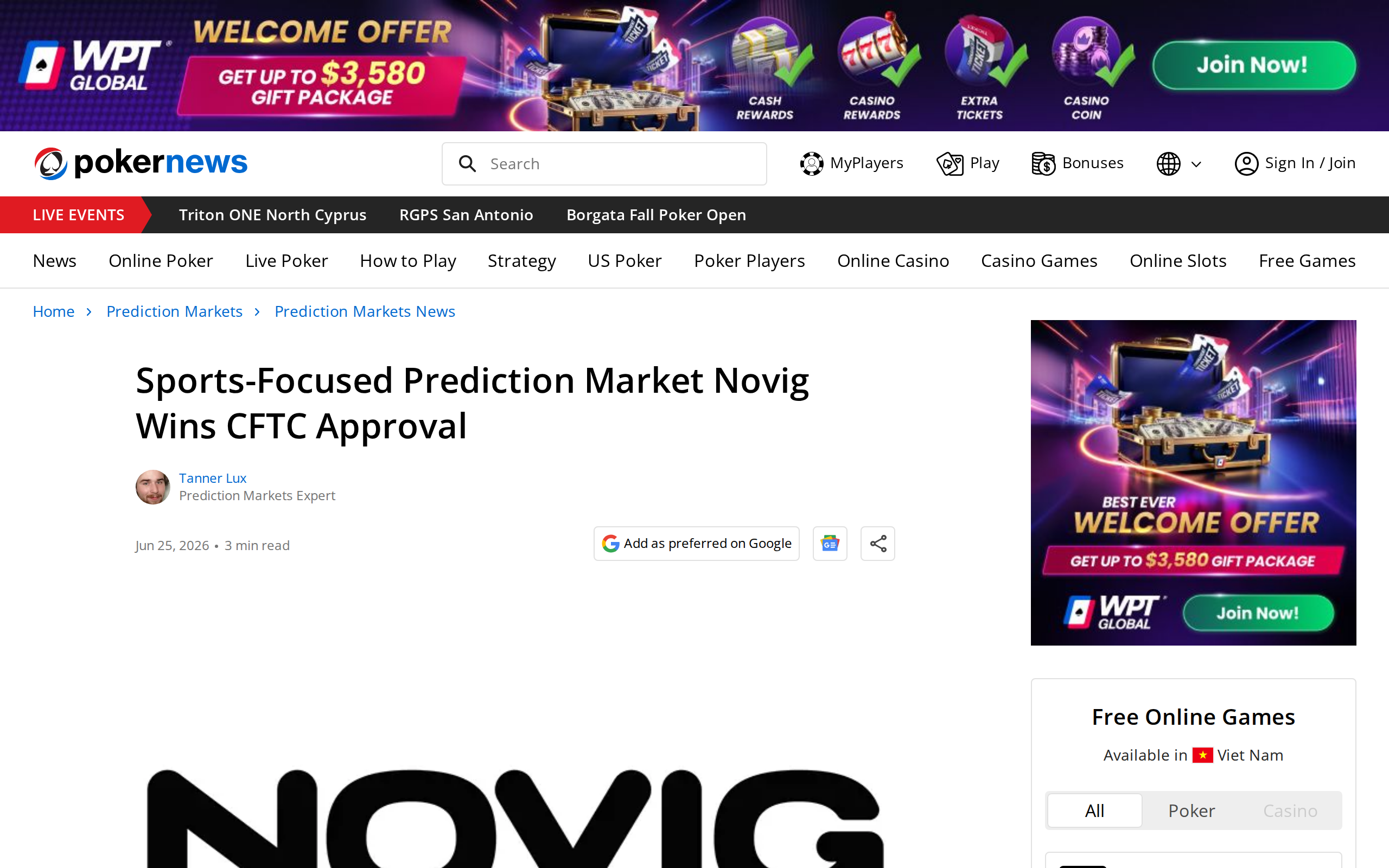
PokerNews' coverage of the approval, one of several independent reports of the June 2026 designation.
Our read
The model is good, the licence is a genuine step, and the footprint is wide. What holds the score back is that the one number a price-conscious reader needs, the all-in cost per trade, was not something we could verify from public sources.
Trading contracts can lose all of what you put in on any single market. This is not advice on what to buy or sell, and nothing here is a forecast. Only trade money you can afford to lose, and keep your own records for tax.