FanDuel Fantasy Review: Contests, Scoring And Rake
FanDuel Fantasy Review: The Beginner-Friendly Daily Fantasy Lobby, Set Against DraftKings
FanDuel Fantasy uses a flat $60,000 cap, simple lineups and beginner-only contests. We compared it with DraftKings on contest variety, scoring and the rake a casual player pays.
Our score
7.0/10
Rated 7.0 out of 10
Verdict
FanDuel Fantasy is the easier of the two big daily fantasy lobbies to learn: one salary cap, short lineups and contests that fence off new players. It is not easier to beat. The implied rake on head-to-heads and 50/50s sits near 10 percent, and the reported deepest fields sit at DraftKings. Pick it for a gentle start and small stakes, and treat every entry fee as money you expect to lose.
Best for
New daily fantasy players who want simple lineups and low stakes
A single $60,000 salary cap across contests keeps lineup building easy to learn
Beginner-only and single-entry contests limit how many lineups a rival can enter
Cash formats such as 50/50, Double Up and head-to-head pay out often for small stakes
Runs inside the same account family as FanDuel's sportsbook and racing apps
What held it back
Head-to-head and 50/50 payouts of about 1.8x imply a rake near 10 percent
Reported tournament payout structures are narrower than DraftKings' and top-heavy
Unavailable in Hawaii, Idaho, Montana, Nevada and Washington
Official pages block automated reading, so contest limits must be checked in the lobby
Most people who try daily fantasy do not quit because the game is hard. They quit because they entered a lineup against someone with a spreadsheet and a hundred entries. FanDuel's best idea is to know that, and to build part of the lobby around it.
Why FanDuel feels easier than its rival
Every contest uses one salary cap: $60,000. Each player carries a price, and you fill the roster without going over. Top End Sports lists the cap as fixed, and a lineup guide notes that an NFL roster is a quarterback, two running backs, three receivers, a tight end, a kicker and a defense, with no more than four players from one team.
That is a short list. You can finish a lineup in ten minutes and understand what you did. Compare that with a salary-cap game that asks for a captain pick, a flex slot and stacking rules, and the appeal to a first-timer is obvious.
Scoring is also plain. NFL contests pay half a point per reception, and the same source puts an interception at minus one point, where DraftKings charges two. Small differences, yes, but they tilt which quarterbacks and receivers look cheap.
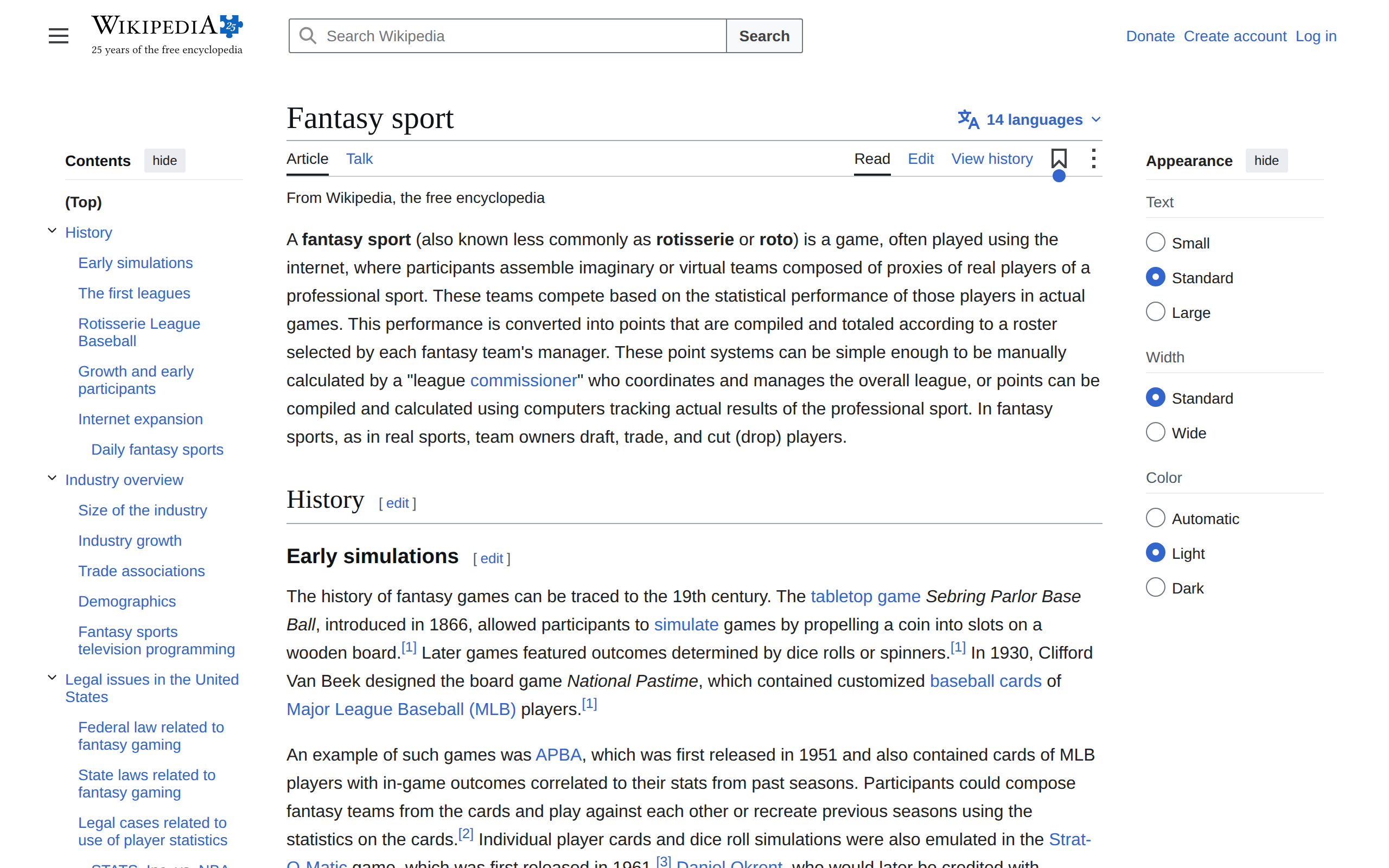
Wikipedia's fantasy sport entry traces the path from rotisserie leagues to the daily contests FanDuel and its rival sell.
The contest menu, and what each format costs you
The reported entry ranges are wide. Head-to-heads run from $1 to $200, 50/50s from $1 to $100, Double Ups from $2 to $50, multipliers (3x and 5x) from $1 to $25, and tournaments from $1 past $1,000. We could not read FanDuel's own lobby, because its site refuses automated visitors, so check the live stakes before you rely on any floor.
The honest cost is the rake. Head-to-head and 50/50 contests are reported to pay about 1.8 times the entry. Two players each put in $10, the winner takes $18 and the house keeps $2, which is 10 percent of the pool. The figure is our inference from published payouts, not a number FanDuel prints.
Tournaments pay the top 10 percent of the field, according to the same guide, and FanDuel is described as paying a smaller share than DraftKings does. That means a lot of near misses, and a long losing run is the normal experience, not a sign that you are doing something wrong. Budget for it before the first entry, not after the fifth.
The feature that matters most is the beginner-only contests. They limit entry to newer players, so you are not up against someone running 150 lineups. Single-entry tournaments do something similar, capping each person at one lineup.
This is the real answer to the beginner question. FanDuel is not cheaper than its rival. It is more careful about who sits across the table.
It still does not change the arithmetic. An older analysis, cited in Wikipedia's FanDuel entry, found that 91 percent of player profits at the two big sites went to 1.3 percent of players. Fences help for a while. Win a few beginner contests and you leave them.
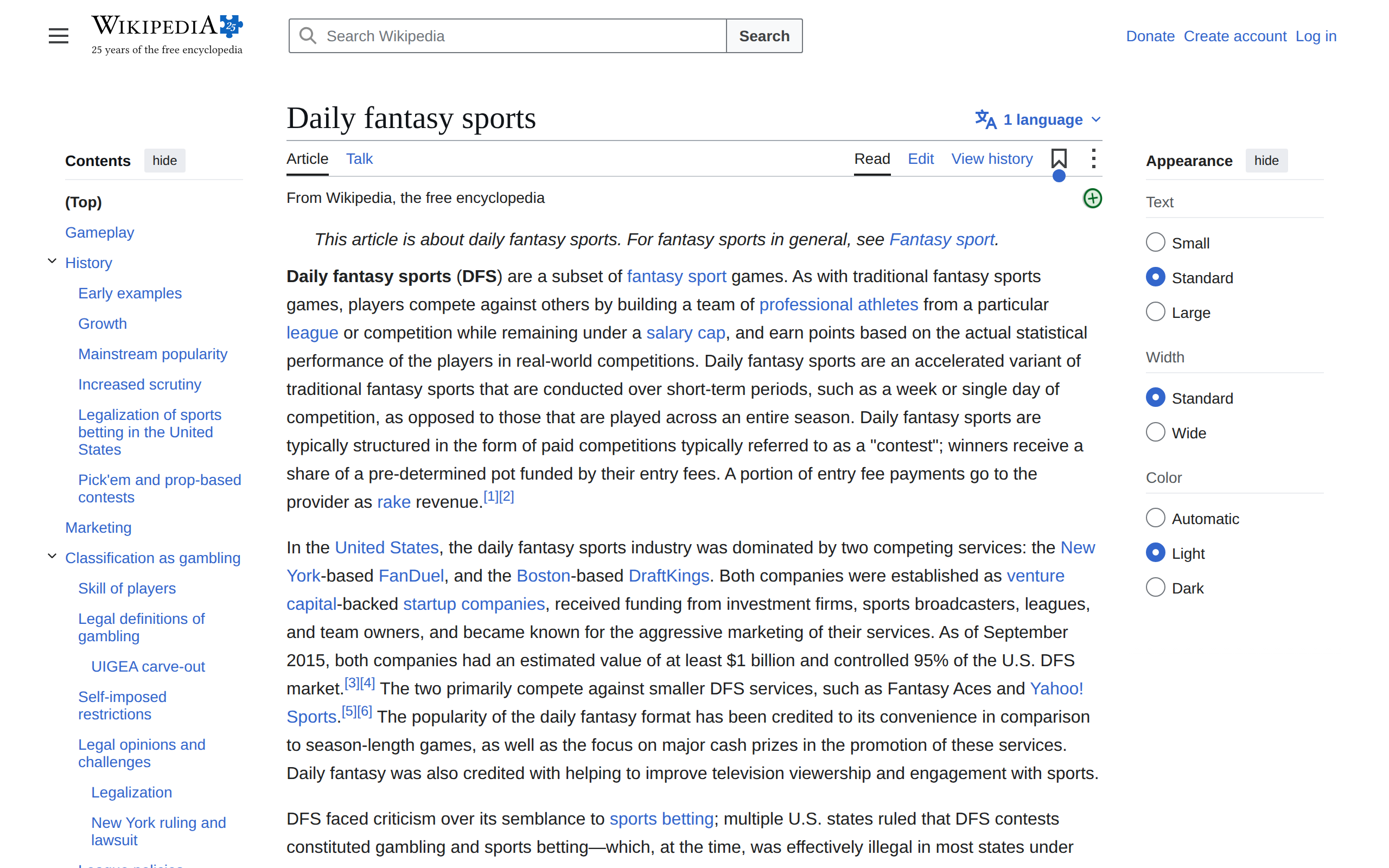
Wikipedia's overview of daily fantasy sports, including the shift toward pick'em and prop-based contests.
The company behind the lobby
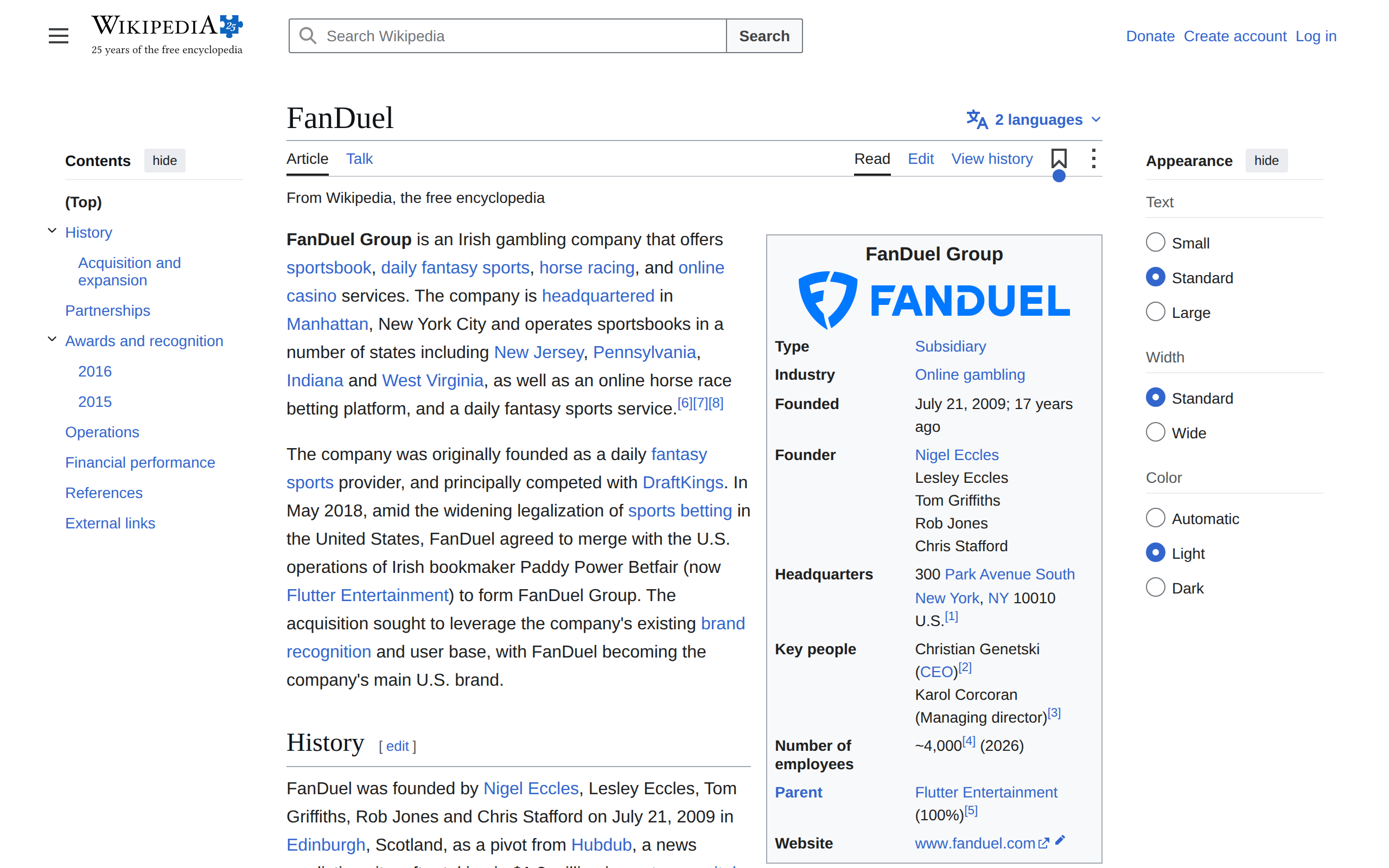
FanDuel began in Edinburgh in 2009 and merged with Paddy Power Betfair's US business in 2018, with Flutter taking a controlling stake. A planned merger with DraftKings was blocked after the Federal Trade Commission moved against it in 2017, so the two remain rivals.
That history matters to you in one way. Fantasy is now the smaller business under a sportsbook parent, and promotions and attention follow the sportsbook. If you also bet on games, the shared account is convenient. If you only want fantasy, expect the app to nudge you toward wagers.
Wikipedia's entry on Flutter Entertainment, which holds a controlling stake in FanDuel Group.
Who should play
Play if you are new, you want a rule set you can learn in an evening, and you will cap spending at an amount you would happily lose. Start in 50/50s and beginner contests, where one decent lineup can cash.
Skip it if you hope to grind a profit from tournaments. The reported payout structure is top-heavy, the rake is not small, and the people who win consistently are exactly the ones the beginner fences exist to keep you away from.
Daily fantasy is gambling in many states, and it carries real risk of loss. Nothing here is financial advice. Set deposit limits, never chase a bad slate, and use the help lines in your state if play stops being fun.