DraftKings Daily Fantasy review: salary-cap contests where a few high-volume pros take most of the profit
DraftKings DFS offers every contest type from $1 head-to-heads to $20 Millionaire Makers. We looked at the payout maths and the pro-concentration data to see if an average player can win.
Our score
6.8/10Rated 6.8 out of 10
Verdict
The product is excellent: every major sport, every contest shape, and a $50,000 salary cap that makes lineup building a real puzzle. The field is the problem. Research on the 2015 MLB season found 1.3 percent of players took 91 percent of profits, and nothing we found shows that has reversed. An average player can compete in small cash games and low-stakes contests, but should treat top-heavy tournaments as entertainment.
Best for
Casual players who stick to small-stakes cash games and free contests
Covers football, baseball, hockey, basketball, golf, tennis, soccer, NASCAR, MMA and more
Contest range runs from $1 head-to-heads to $20 Millionaire Makers with $1 million-plus top prizes
Showdown contests use one game, a 1.5x Captain and six players, which is easy to learn
Free-to-play contests exist, so you can learn the salary cap without risking money
What held it back
A 2015 study found the top 1.3 percent of players won 91 percent of profits
Double-ups that pay the top 44 percent return only 88 cents per dollar staked
Large tournaments pay only the top 15 to 20 percent, and most entries lose
Paid contests are unavailable in several states, including Hawaii, Idaho, Montana, Nevada, Oregon and Washington
The honest question about daily fantasy is not whether the product works. It does. The question is who is on the other side of your lineup, and whether an average player can beat them at anything except enjoying the game.
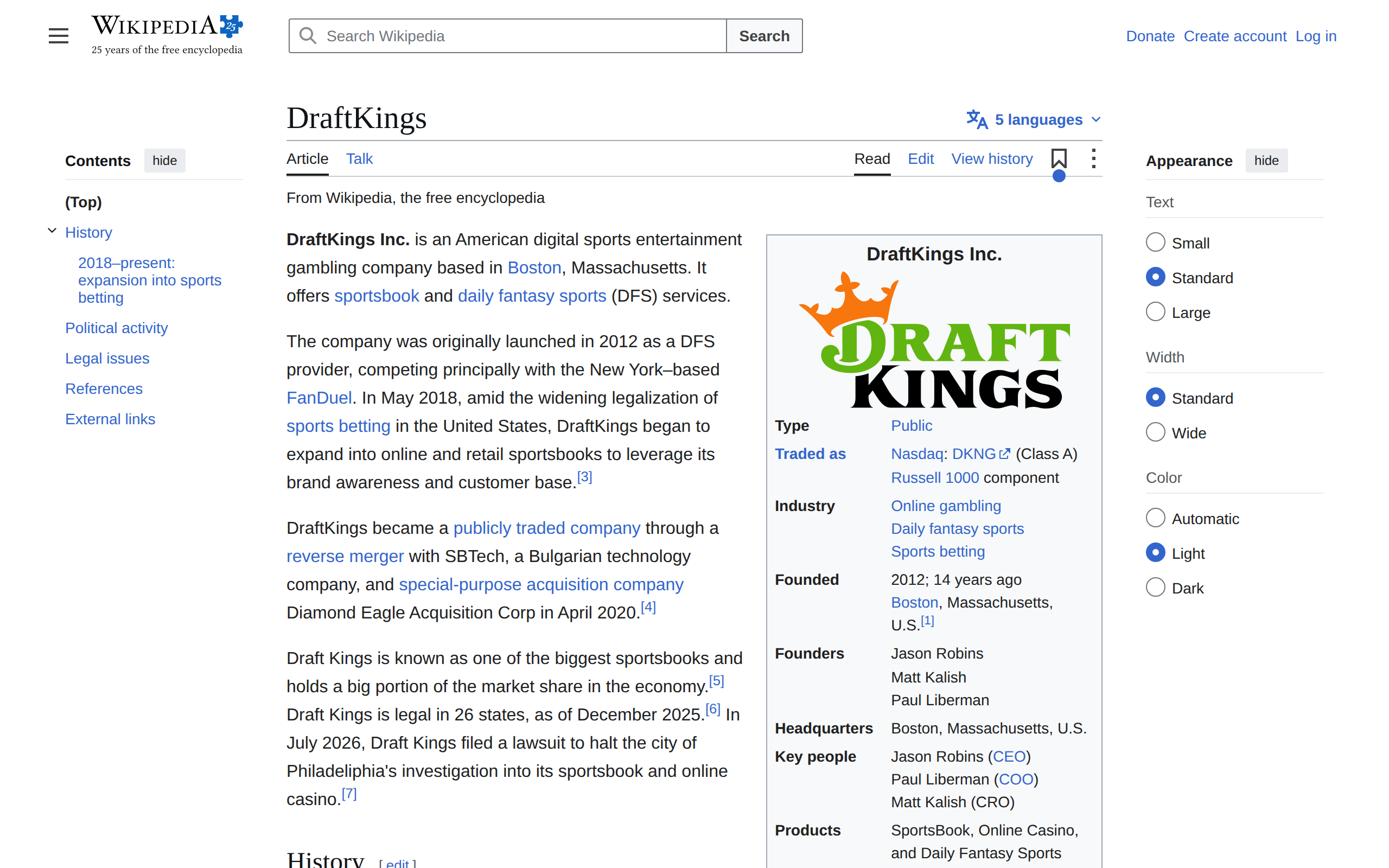
Wikipedia traces DraftKings from daily fantasy to a full sportsbook operator.
How a lineup is built
Every Classic contest gives you a $50,000 salary cap. In NFL contests that buys nine players: a quarterback, two running backs, three receivers, a tight end, a flex and a defense. Top End Sports lists six golfers for PGA slates, and Showdown contests use six players from a single game, one of them a Captain who scores 1.5 times the points.
The cap is the whole puzzle. You cannot buy only stars, so you hunt for cheap players whose role is bigger than their price. That is a skill, and it is why people with models and spreadsheets do well.
The contests, and what each one costs you
The same guide gives the range, and it is wide. Head-to-heads run from $1 to $10, 50/50s from $1 to $25, double-ups from $2 to $20, small tournaments from $5 to $25, large ones from $10 to $100, and Showdowns from $3 to $50. The Millionaire Maker costs $20, draws more than 150,000 entries and pays $1 million or more at the top.
Cash games pay roughly half the field. Tournaments pay the top 15 to 20 percent with steep prizes, so most entries return nothing. The page does not give a rake percentage, but the double-up numbers let you estimate. If a contest pays double to the top 44 percent, the field gets back 0.44 x 2 = 88 percent of the entry money. The other 12 cents of each dollar is the house cut.
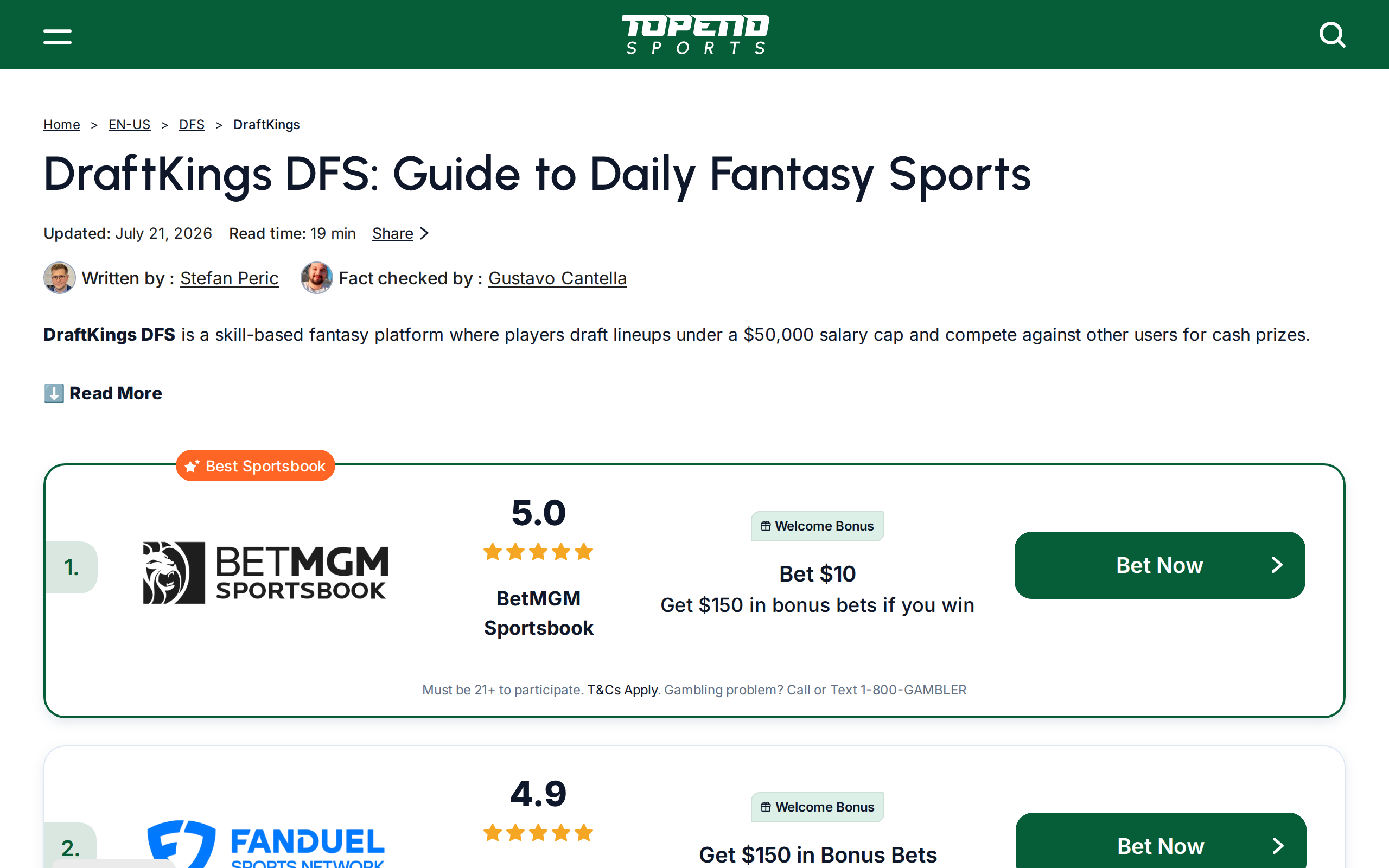
A DFS guide sets out the $50,000 cap and the contest ladder.
The pros, with the number that matters
Here is the figure we keep coming back to. In a study of the first half of the 2015 MLB season, McKinsey's write-up reports that 1.3 percent of players won 91 percent of the profits. Coverage of the same analysis says that group paid about 40 percent of entry fees, and the bottom 80 percent paid an average of $49 and lost about half of it.
That is a baseball sample from 2015, and we found nothing newer. We cannot say how the split looks today, but the incentives are unchanged: high-volume players enter many lineups, use optimisers, and grind small edges. An average player entering one lineup into a large tournament is competing against a field that includes those entries.
Can you still compete? In small cash games, yes, because the edge from a good lineup is shared by the winning half and the rake is modest. In large tournaments, the odds are against you by design.
How we would play it
Start with the free contests to learn the cap and the scoring. Move to head-to-heads or double-ups at stakes you can lose without noticing. Pick sports you actually watch, since reading a depth chart beats guessing. Avoid chasing the $1 million prize: a $20 entry in a field of 150,000 is a lottery ticket with a lineup attached.
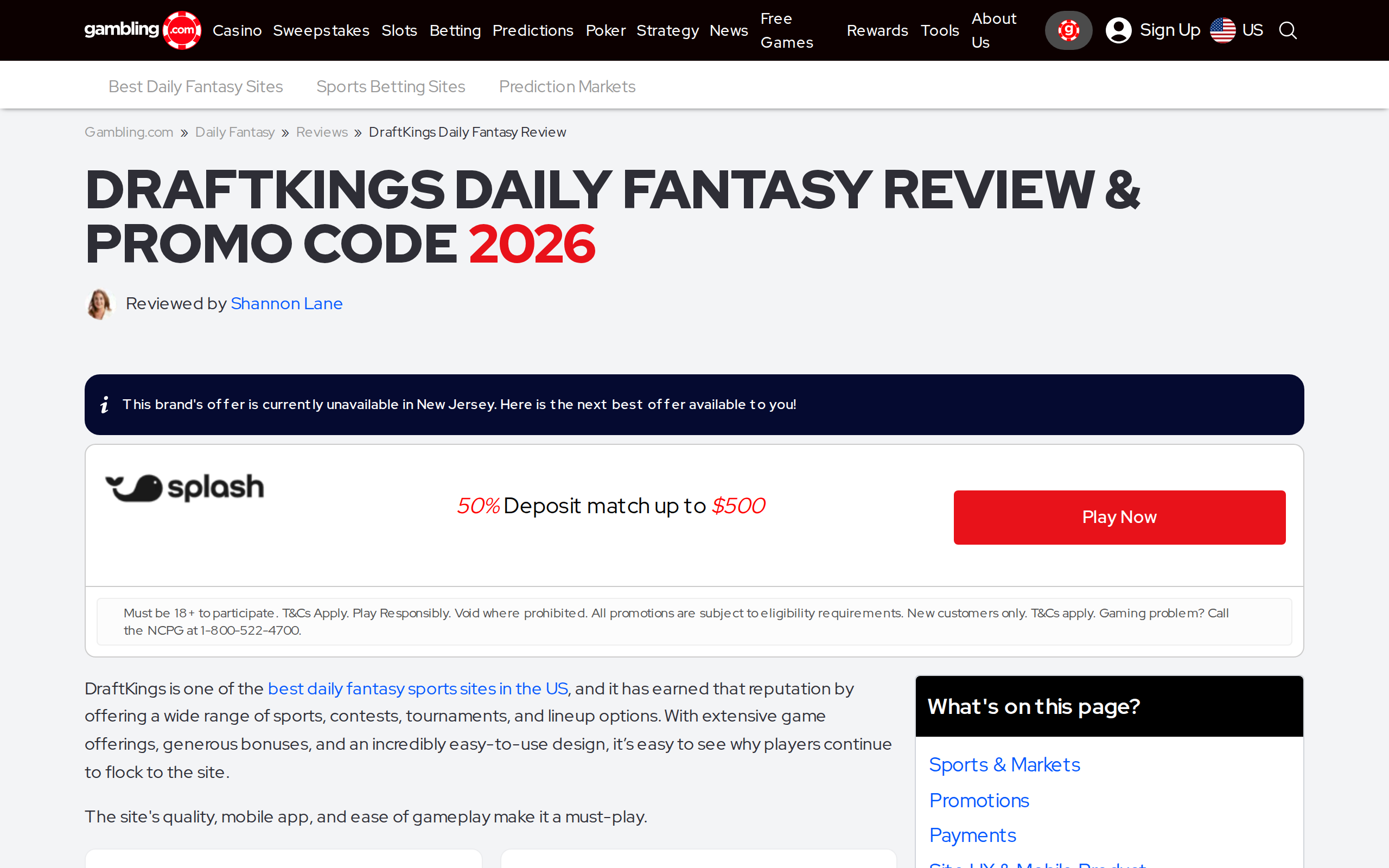
A reviewer headlines a 50 percent deposit match up to $500.
Gambling.com quotes a 50 percent deposit match up to $500. Treat any match as a deposit incentive with play-through terms, and read them before you add money.
Learning from the people who do this for a living
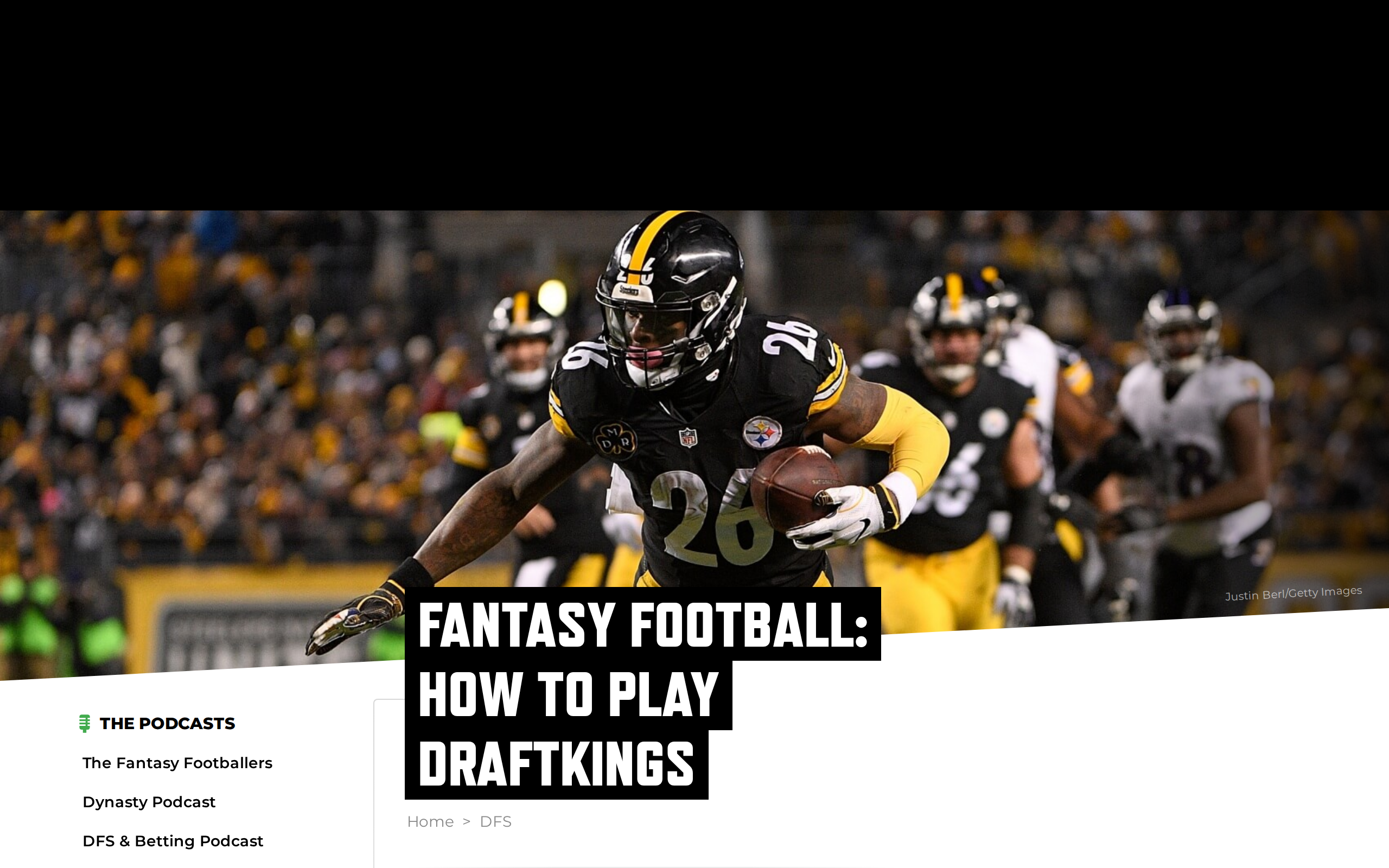
If you want a primer before spending anything, fantasy podcasts publish free walkthroughs of the lobby, the scoring and the cap. The Fantasy Footballers host a how-to-play guide aimed at newcomers. Their sponsors are in the business, so ignore the promotions and take the lineup-building basics.
A podcast guide walks beginners through the DraftKings lobby.
Availability
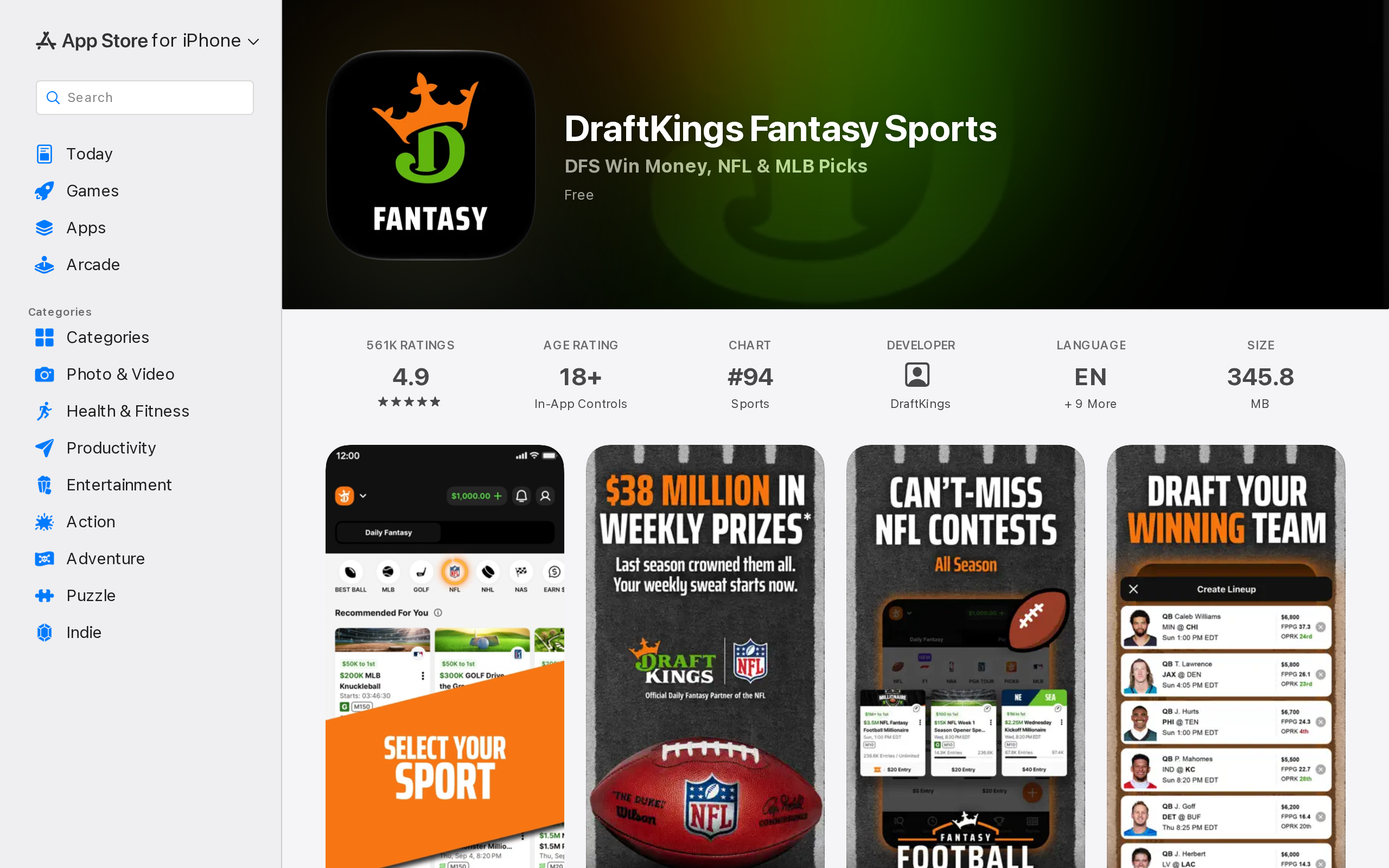
The App Store listing is rated 18+ and says paid contests are unavailable in Hawaii, Idaho, Louisiana (select parishes), Montana, Nevada, Oregon and Washington. It also says winning depends on knowledge and exercise of skill.
One practical habit helps more than any tool. Write down each contest you enter, with the fee and the result, and total it every month. Most casual players overestimate how they are doing, because wins are memorable and a string of $5 losses is not. A simple log, or a tracker such as the one reviewed in our Pikkit piece, shows whether your hobby is costing what you think.
Who it suits
Play DraftKings if you enjoy building lineups and can treat entry fees as entertainment spending. Do not play for income, and do not scale up after a win. Daily fantasy carries a real risk of loss, and this is not financial advice. If play stops being fun, call 1-800-GAMBLER.