Crypto.com Predict Review: Sports Contract Fees Worked Out
Crypto.com Predict Review: Sports Contracts Priced In Cents, With A Fee That Peaks At 50 Cents
Crypto.com Predict lists sports event contracts through a CFTC-regulated exchange. We worked through the fee formula, the cost of exiting early and who benefits if they already hold a Crypto.com account.
Our score
6.3/10Rated 6.3 out of 10
Verdict
Crypto.com Predict is a convenient place to trade sports contracts if you already hold funds on the exchange. The fee is fair at the extremes and pricey in the middle: a taker pays about 3.5 percent of the stake on a 50-cent contract, and a second fee if you exit before settlement. Funding by card or PayPal adds another 1.49 to 1.99 percent. Fee schedules are described differently across sites, so read the exchange's own contract page before sizing a trade.
Best for
Existing Crypto.com users who want sports contracts in one account
Sits inside an account many US crypto users already hold, with ACH funding at no charge
Maker orders are reported to cost a quarter of the taker fee
No settlement fee on winning $1 contracts, and cancelled or unfilled orders cost nothing
Operated through a CFTC-regulated exchange rather than as a sportsbook
What held it back
A taker fee near 3.5 percent of the stake at 50 cents is a real drag on small edges
Closing early triggers a second fee, so a round trip costs about twice as much
Card and Apple Pay funding costs 1.49 percent and PayPal 1.99 percent
Published fee schedules disagree across third-party sites and we found no single official fee page
The pitch is simple. You already keep money at Crypto.com, so why open a separate sportsbook or exchange account to trade a football game? The better question is what the convenience costs you per contract, and the answer depends heavily on the price at which you trade.
How a sports contract works here
Each contract pays $1 if the outcome happens and $0 if it does not. A contract trading at 60 cents says the market thinks the event is about 60 percent likely. Buy at 60 and you risk 60 cents to win 40 cents.
The product runs through Crypto.com | Derivatives North America, which BettingUSA describes as CFTC-regulated, and you must become a CDNA member before you trade. It is US only. This is not a sportsbook line with a house margin built into the odds: you trade against other participants, and the fee is the visible charge.
The fee formula, worked out
BettingUSA reports that a taker on a sports contract pays 0.07 x contracts x P x (1 - P), where P is the price in dollars. A maker, who rests an order that someone else fills, pays 0.0175 x contracts x P x (1 - P). The formula peaks at 50 cents and shrinks toward the ends.
Put numbers on it:
100 contracts at 50 cents, taker: $1.75 on a $50 stake, which is 3.5 percent.
The same trade as a maker: about $0.44, under 1 percent.
100 contracts at 10 cents or 90 cents, taker: $0.63. That is 6.3 percent of a $10 stake, but only 0.7 percent of a $90 one.
Open at 40 cents and close at 60 cents: $1.68 each way, $3.36 for the round trip, against a gross gain of $20.
The break-even is the useful figure. On a 50-cent contract you need the true chance to be about 51.75 percent just to cover the fee. If you believe a team has a 53 percent chance and the market says 50, you keep a thin edge. If you believe 51, you are paying for nothing.
Holding to settlement avoids the second fee. The source says winning $1 contracts carry no settlement fee, losing contracts cost only what you paid in, and cancelled or unfilled orders are free.
A warning about the fee numbers
We could not find one official fee page. Other sites describe a different structure. Casino.org lists a flat exchange fee plus a technology fee, with $0.10 on a $10 contract. Football365 gives yet another split. These cannot all be right, and fees may have changed over time, so treat the formula above as one reported schedule and check Crypto.com's own contract specifications before you place real money.
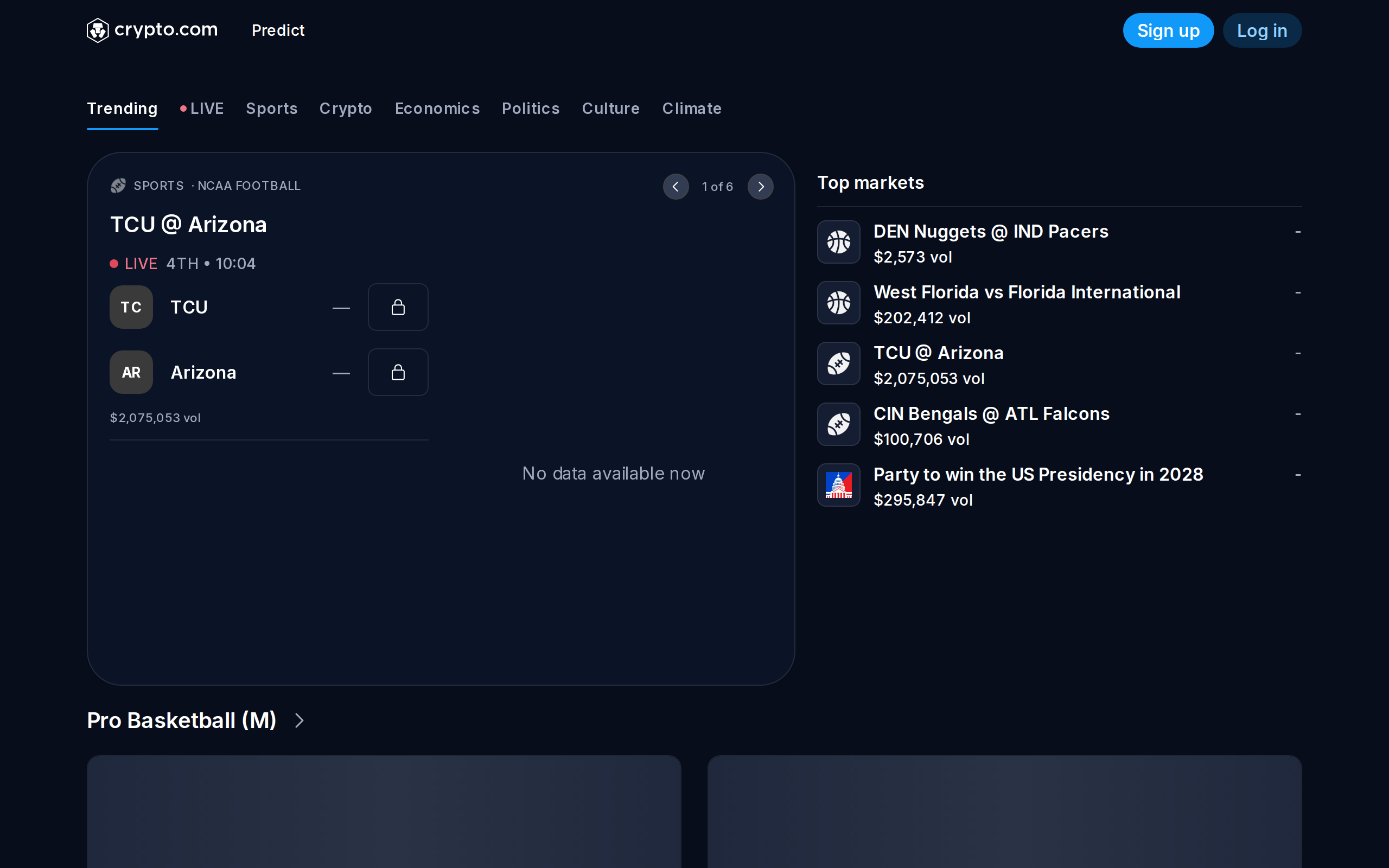
A sample of live markets: pro basketball, an NFL game and the 2028 US presidency, each with dollar volume shown.
Funding and cashing out
Moving money costs more than trading it. ACH deposits and withdrawals are free apart from any charge by your bank. Debit card, Apple Pay and Google Pay funding costs 1.49 percent, and PayPal 1.99 percent. A real-time withdrawal costs 1.5 percent, or 1.25 percent for Prime customers.
Add a card deposit at 1.49 percent to a taker fee of 3.5 percent and you are around 5 percent down before the game kicks off. Fund by ACH and be patient, or the edge you thought you found goes to fees.
Depth and who is on the other side
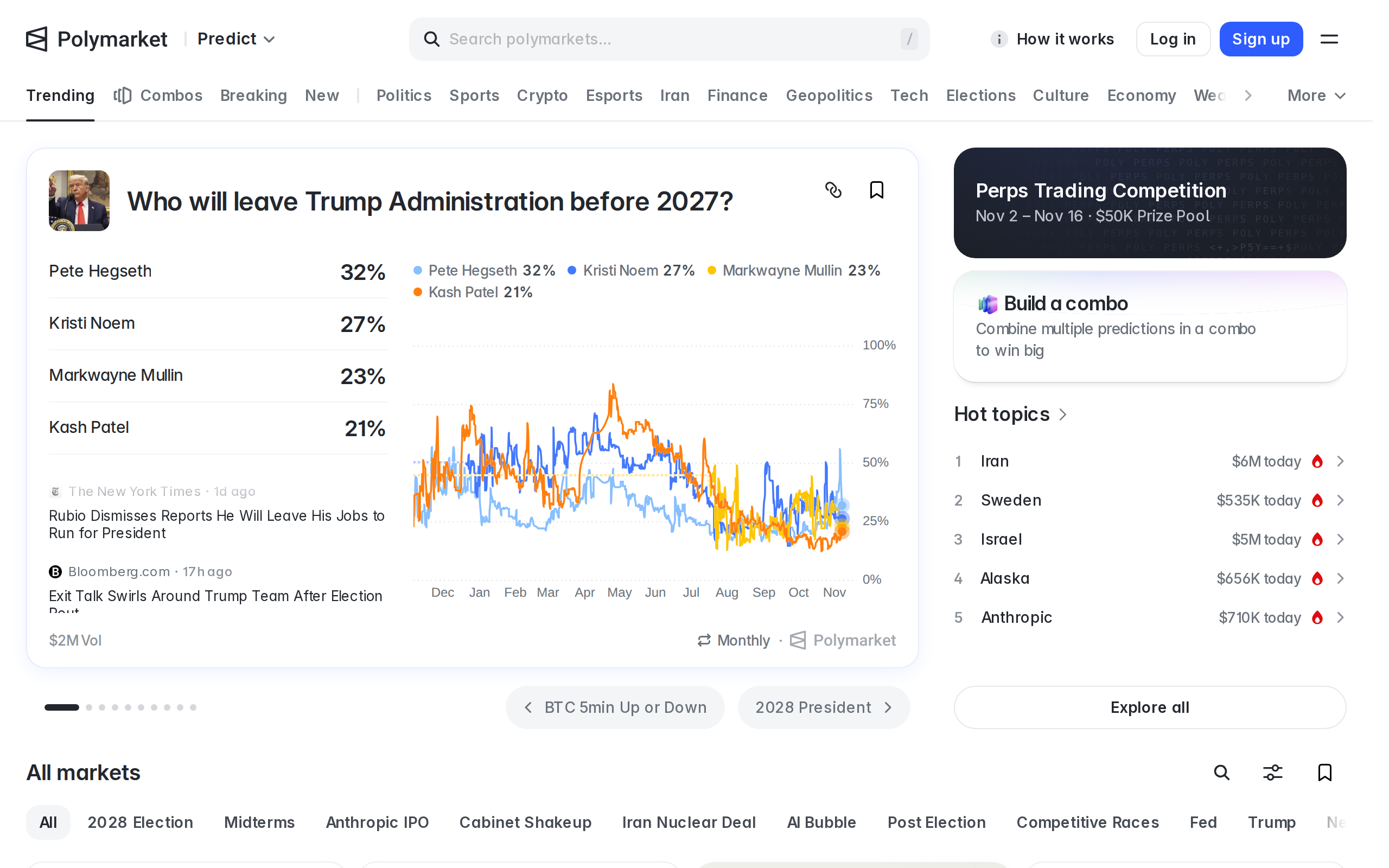
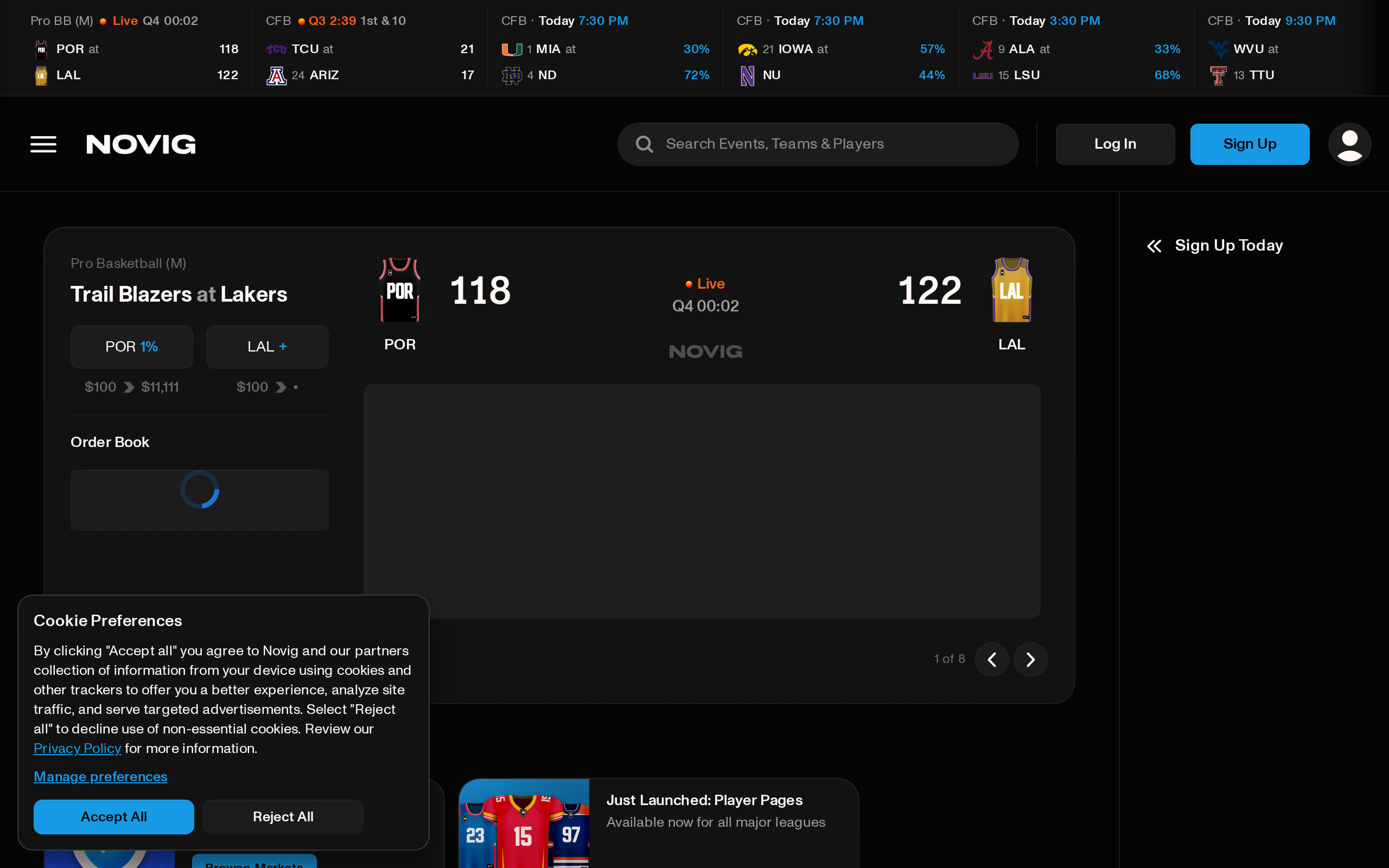
The market screen shows what you would expect from a young exchange: a few liquid headline events with seven-figure volumes and a long tail of games with little. A thin book makes the maker route unreliable, because nobody may fill you, and widens the gap between the price you see and the price you get. Compare the spread on any game against Kalshi before you commit.
The partner page shows the company wants other platforms to carry its contracts, so the product is built as infrastructure as much as an app.
Crypto.com's partner page, which invites platforms to offer its prediction contracts.
Who should use it
Use it if you already hold a Crypto.com account, fund by ACH, place resting orders rather than market orders, and hold to settlement. Skip it if you trade often, enter at 50 cents with small edges, or fund by card.
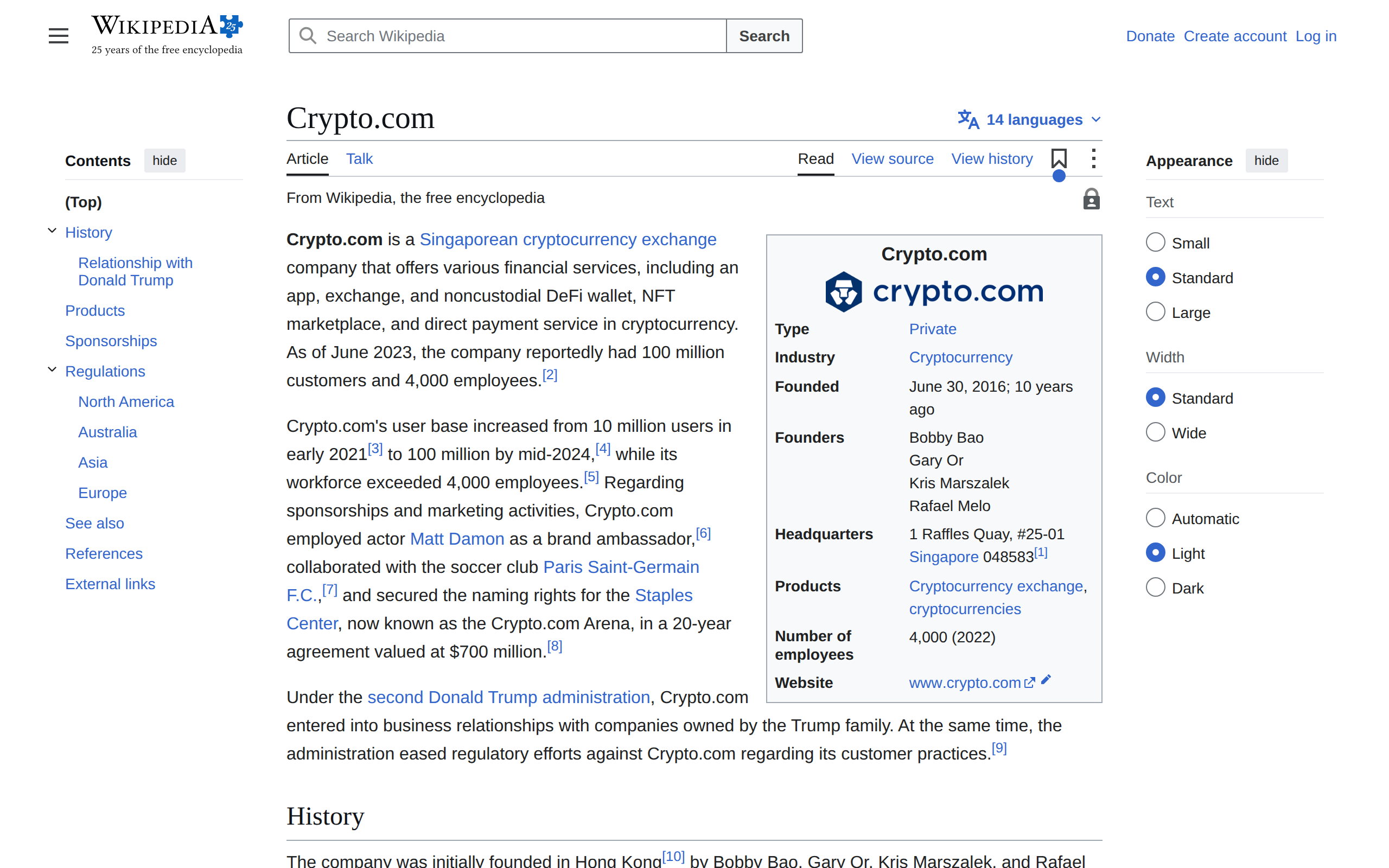
Wikipedia devotes a section to the company's regulation in North America, Europe, Asia and Australia, which is one more reason to keep only what you plan to trade on the platform.
Wikipedia's entry on Crypto.com, including history and regulation by region.
Event contracts carry a real risk of loss, you can lose the entire amount you pay, and this review is not financial advice.