
What works
- Very wide market list across politics, sports, crypto and culture
- Makers are never charged a trading fee
- No Polymarket fee to deposit or withdraw USDC
- Public leaderboard and documentation are easy to find
What does not
- Taker fee rate depends on the market category
- US and international versions differ in funding and access
- Contracts can lose their full stake if a bet is wrong
- Some sources disagree on current fees, so verify before trading
Polymarket spent years as the prediction market that American users could watch but not use. The US app that launched in early December 2025, sports contracts first, changed that. The question for a US reader is no longer whether you can get in but what it costs and how it compares with Kalshi.
The fee table is the product
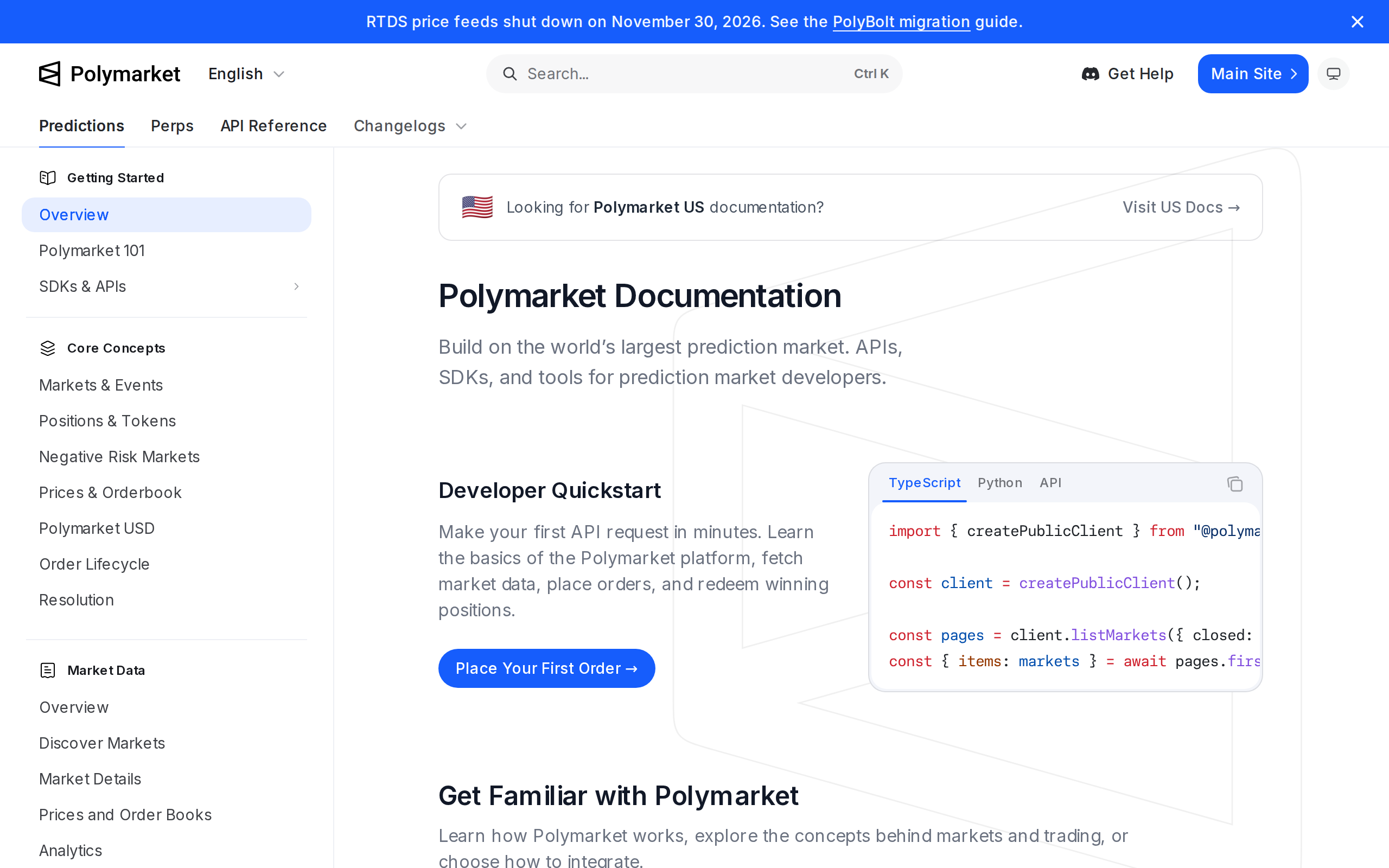
Most platforms advertise one number. Polymarket publishes a formula. Its documentation says makers, meaning orders that sit on the book and add liquidity, are never charged. Takers pay a fee of shares x rate x p x (1 - p), where p is the contract price.
The rate depends on the category. The page we read lists 0.07 for crypto, 0.05 for sports, economics, culture, weather and general markets, 0.04 for finance, politics, mentions and tech, and 0 for geopolitics. At 100 shares priced at 50 cents, the documentation works the fee out at $1.75 for crypto, $1.25 for sports and $1.00 for politics. Because of the p x (1 - p) term, the charge peaks at even odds and shrinks toward either end of the price range.
That is cheaper than it looks for long shots and favourites, and most expensive on coin-flip markets. It also means two traders on the same app can pay different amounts for the same dollar of risk. Several comparison sites we searched quote different coefficients, including 0.06 and 0.03 for sports, so check the page on the day you trade.
Deposits and withdrawals
The same documentation says Polymarket charges nothing to deposit or withdraw USDC, though intermediaries such as Coinbase or MoonPay may add their own charges. The page does not list the methods themselves. Coverage of the US app describes debit card, ACH and wire funding, with a daily cap of $50,000 on card and ACH, and one review says those deposits can take three to four business days to clear before withdrawal. We could not confirm that from Polymarket itself, so ask support or read the funding screen first.
Kalshi's bank-transfer route is more familiar to anyone who has used a brokerage. Polymarket's roots lie in USDC on a blockchain, which suits people who already hold crypto and feels like extra steps to everyone else.
What there is to trade
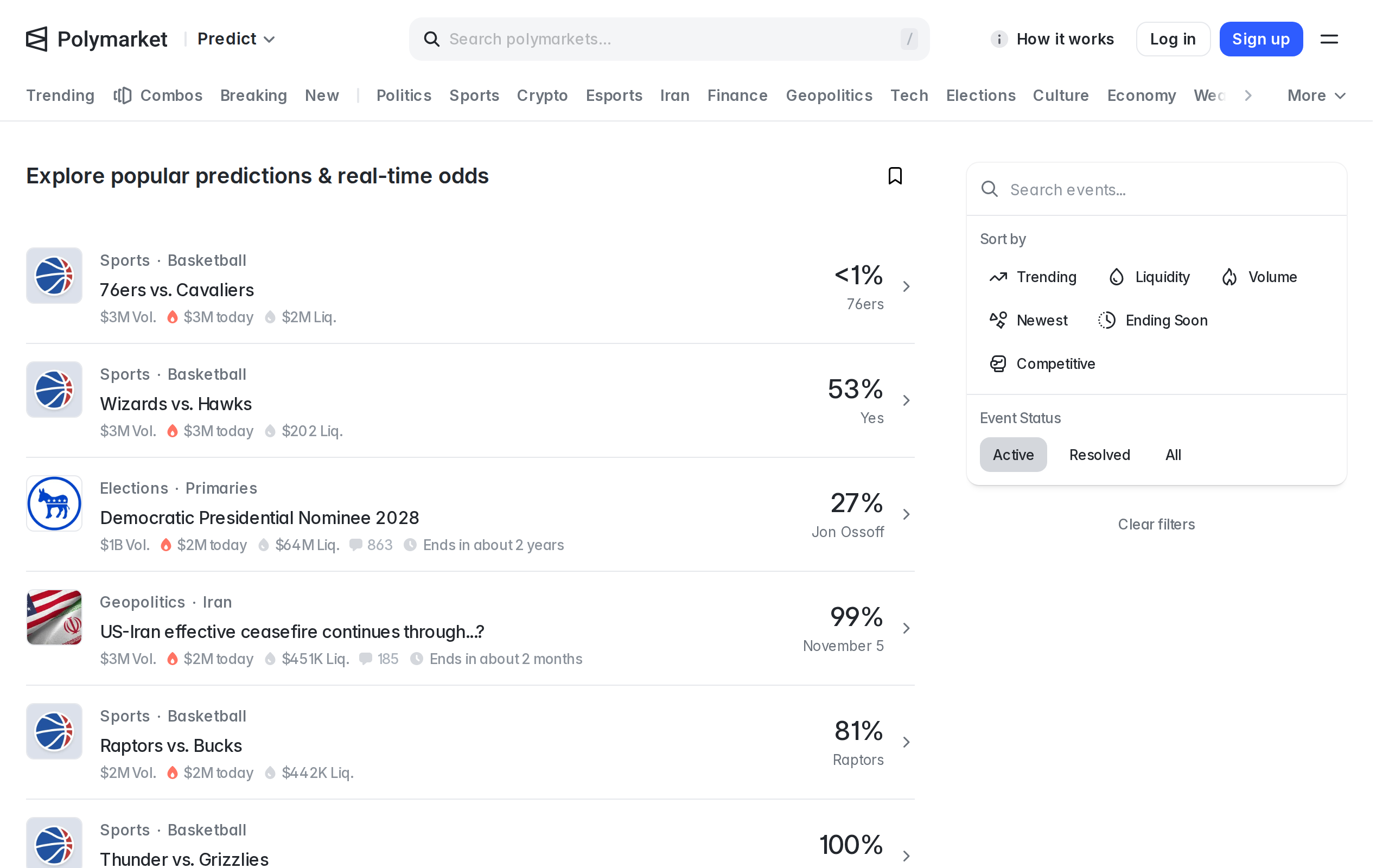
Open the homepage and you see political questions, a combo builder and a hot-topics feed. The markets page opens with a heading about popular predictions and real-time odds. Breadth is the draw: elections, economic data, crypto prices, culture and weather sit beside sports.
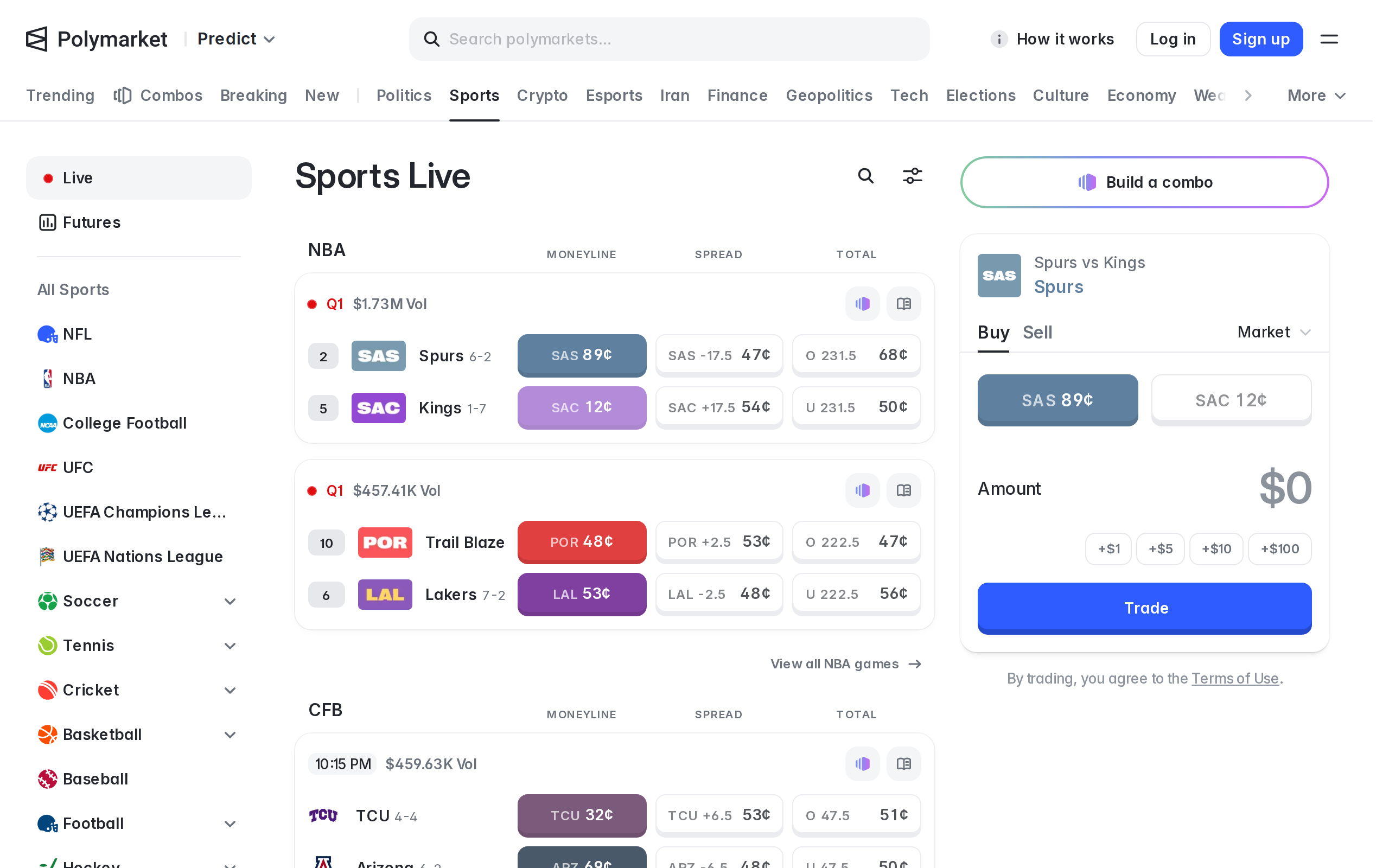
Sports are the area Kalshi has also pushed hard, and Polymarket's sports hub lists leagues such as the NBA with live pricing.
Liquidity and proof of activity
Deep order books mean tighter spreads, which matters more than headline fees on a thin market. The public leaderboard gives a sense of scale: on the day we captured it, the top monthly winner showed a gain of $4,560,954 on 4,136,787 of volume, and the next two showed more than $3.4 million each.
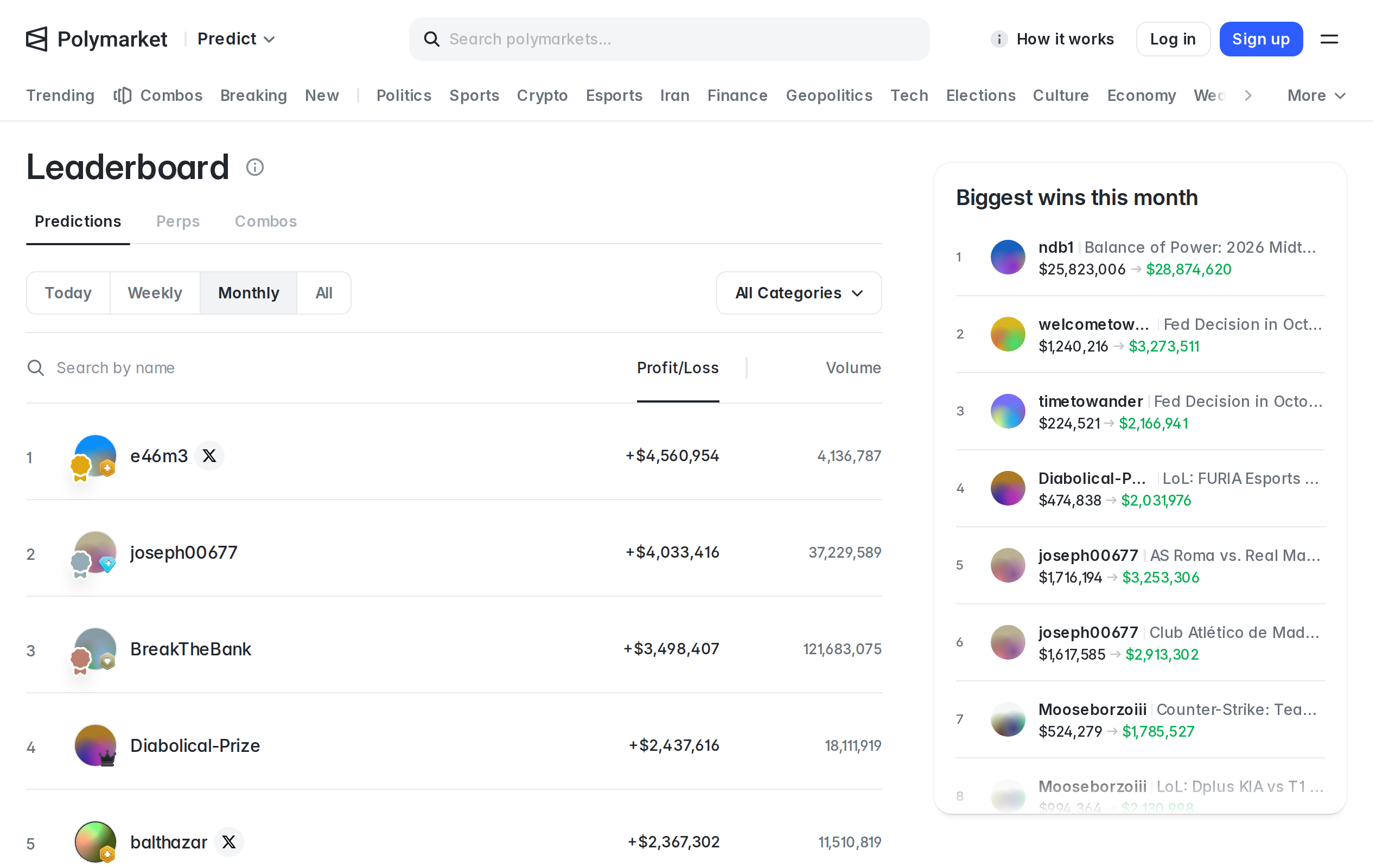
Read those numbers carefully. They show that large accounts trade here, not that an average user will profit. A leaderboard is a list of survivors, and every large gain has a counterparty who lost.
A worked cost example
Take a $50 stake at 50 cents on a sports market: that is 100 shares, and a taker pays about $1.25 in fees under the published formula, or 2.5 percent of the stake. The same trade as a resting maker order costs nothing. Over a hundred trades the gap between the two styles is the largest cost you control.
Polymarket against Kalshi
Kalshi is the simpler path for a US beginner: a bank link, a familiar regulated wrapper and a fee schedule that is easier to explain. Polymarket offers more choice, which is why comparison sites tend to favour it for scale and liquidity and Kalshi for ease. Neither makes a prediction market a reliable way to earn, and every contract can end at zero.
The verdict
Choose Polymarket if you want the longest market list, trade often as a maker and can tolerate checking a fee table. Stay with Kalshi if you want one flat concept and a plain bank link. Both are for adults only: you must be 18 or older, and some US states restrict prediction-market access. Only trade money you can afford to lose, and use account limits if trading stops feeling like a choice.
Polymarket: the facts
- Type
- Prediction market exchange
- Maker fee
- None
- Taker fee, sports
- 0.05 x shares x p x (1 - p)
- Taker fee, crypto
- 0.07 coefficient
- Taker fee, politics
- 0.04 coefficient
- Geopolitics fee
- 0
- Deposit and withdraw fee
- None from Polymarket for USDC
- US app launch
- Early December 2025, sports first
18+ only. Odds, offers and terms change; check them on the operator's site before you deposit. If betting stops being fun, take a break: BeGambleAware (UK) 0808 8020 133, 1-800-GAMBLER (US).