
What works
- No bookmaker margin in the price, and no one to limit a winning account
- Taker fee peaks near 1.75 cents per contract and shrinks toward the extremes
- Resting limit orders fill fee-free on most sports markets
- App Store rating of 4.82 from roughly 670,000 ratings
What does not
- Wide bid-ask spreads on thin markets can cost about 5% on a coin-flip price
- Fee rounding hits small orders, so a one-contract trade pays up to 3.6%
- Fee schedule and withdrawal details sit deep in the help centre
- Legal status of sports contracts is contested by some state regulators
Kalshi does not look like a sportsbook, and that is the point of it. There is no bookmaker setting a price and keeping the margin. You buy a contract that pays $1 if something happens and nothing if it does not, at a price set by whoever is on the other side. The price is the probability: 56 cents means the market thinks 56%.
We wanted to know whether that structure beats a licensed sportsbook for ordinary sports bets once you count what it actually costs. The answer depends on how you place the order.
A sportsbook margin versus a Kalshi fee
A -110 line on both sides of a spread carries a built-in margin of about 4.5%. Kalshi has no such margin. It charges a fee when your order is matched as a taker. The formula quoted by several fee guides is 0.07 times the number of contracts, times the price, times one minus the price, rounded up to the next cent. The cost peaks at 50 cents, where it is about 1.75 cents per contract, near 3.5% of what you put in. At 90 cents it is under 1%. At 25 cents it is closer to 5.3%.
A worked example from the Stokastic analysis (prices from August 11, 2026): 100 YES contracts on a baseball team at 56 cents cost $56 plus about $1.73 in fees. Break-even moves from 56% to 57.7%. That is cheaper than a typical spread bet at -110, but not by much, and the rounding bites small orders. A single contract at 56 cents pays a 2-cent fee, or 3.6%.
Two things offset it. Resting limit orders, where you wait for someone to hit your price, fill with no fee on most sports markets, and holding to settlement means no exit trade and no settlement fee. Maker fees, though, are a moving target: fee guides disagree about which sports series carry one. We could not reach Kalshi's own fee schedule (the page returned HTTP 429 when we asked, and its help article was missing), so confirm the live schedule before you size a trade.
The cost that is not on the fee schedule
Liquidity is the other half of the bill. On a thin market, the gap between the bid and the ask is the real rake. Stokastic's example is a baseball game quoted 47 bid and 52 ask. Crossing that gap costs about 2.5 cents each way against the midpoint, close to 5% on a coin-flip price. Add the fee on both entry and exit and a quick in-and-out trade costs more than a sportsbook bet.
The lesson we took: on headline games with deep books, Kalshi can be cheaper than a sportsbook. On props, small leagues and late-night markets it often is not.
What you can trade
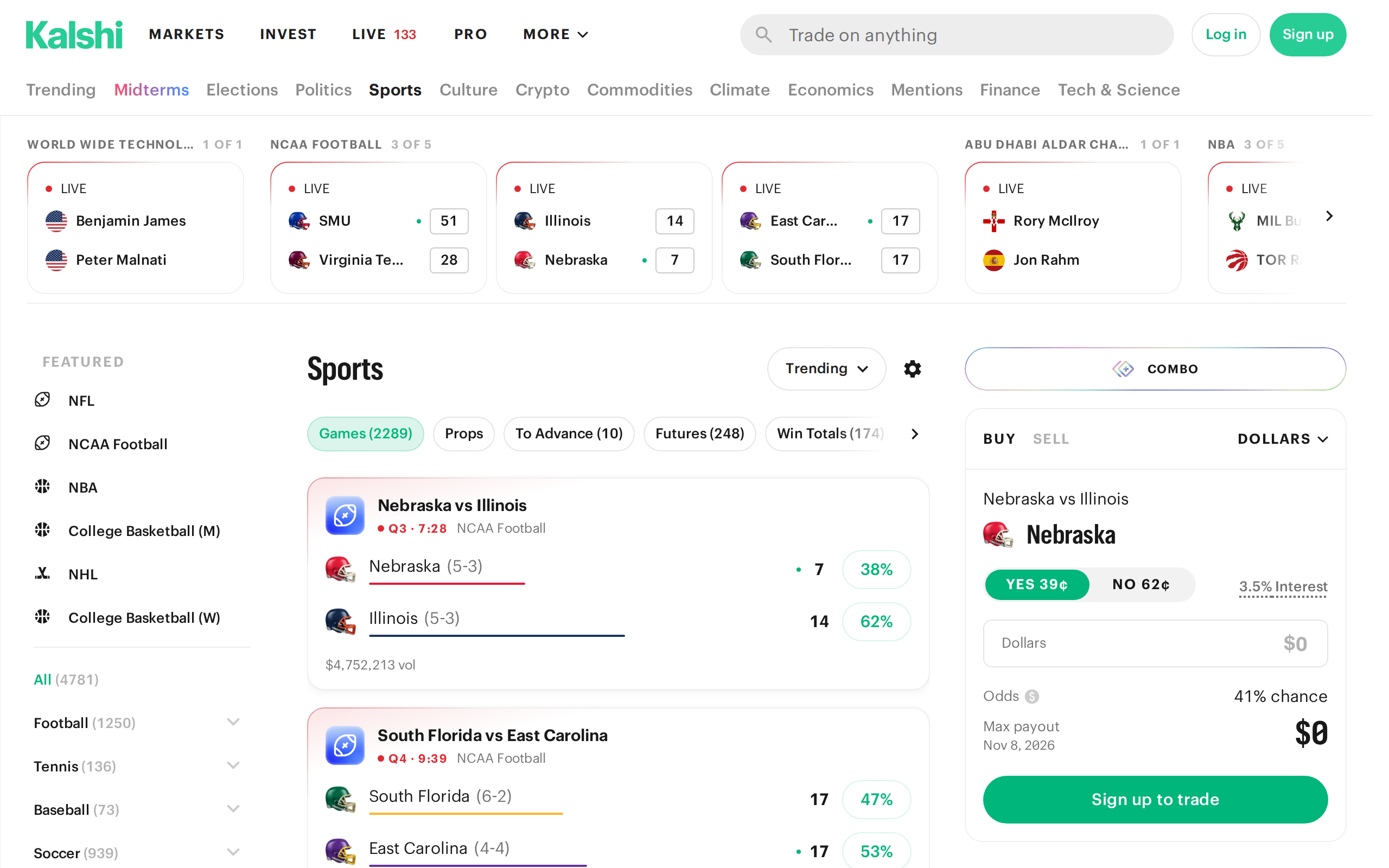
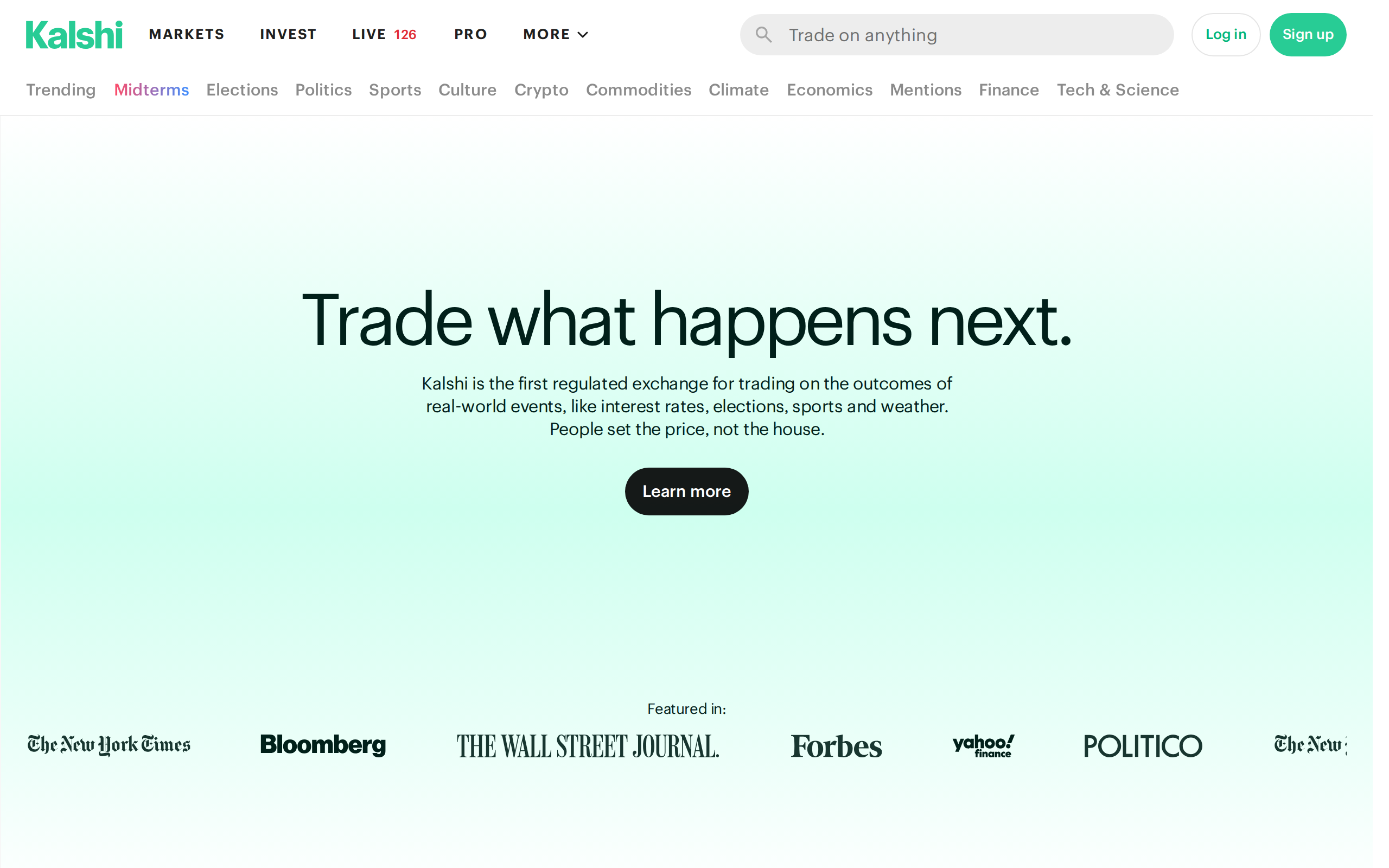
Kalshi's App Store description says it covers football, basketball, hockey and other sports, plus crypto, economics (interest rates, CPI, jobs reports, GDP), weather and culture. The maker calls itself the largest federally regulated prediction market app in the US and claims over ten million users. The About page describes it as the first regulated exchange for trading on real-world outcomes. Both are the company's words, not an audit.
That regulatory point has two sides. A CFTC-regulated exchange is a different legal animal from a state-licensed sportsbook, and some state regulators have contested sports contracts. Rules on who can trade, and whether gains are treated as gambling or as trading, differ by place. Check your own state and speak to a tax adviser.
Using it day to day
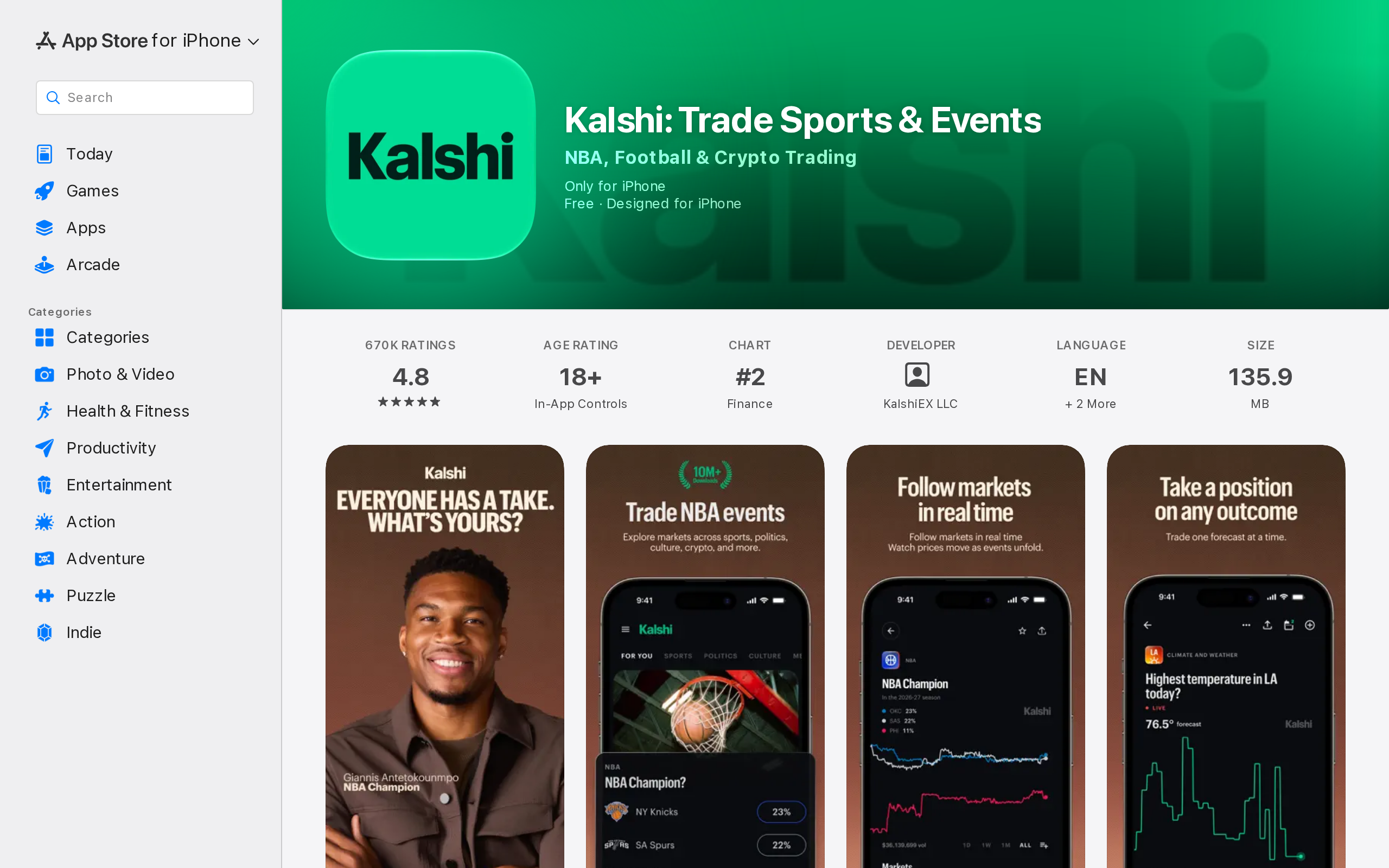
The app is free, about 136 MB, and was on version 9.10.34 when we pulled its listing. It holds 4.82 stars from roughly 670,000 ratings, a high score for a financial app. Account setup follows the exchange model: verify identity, fund, then trade.
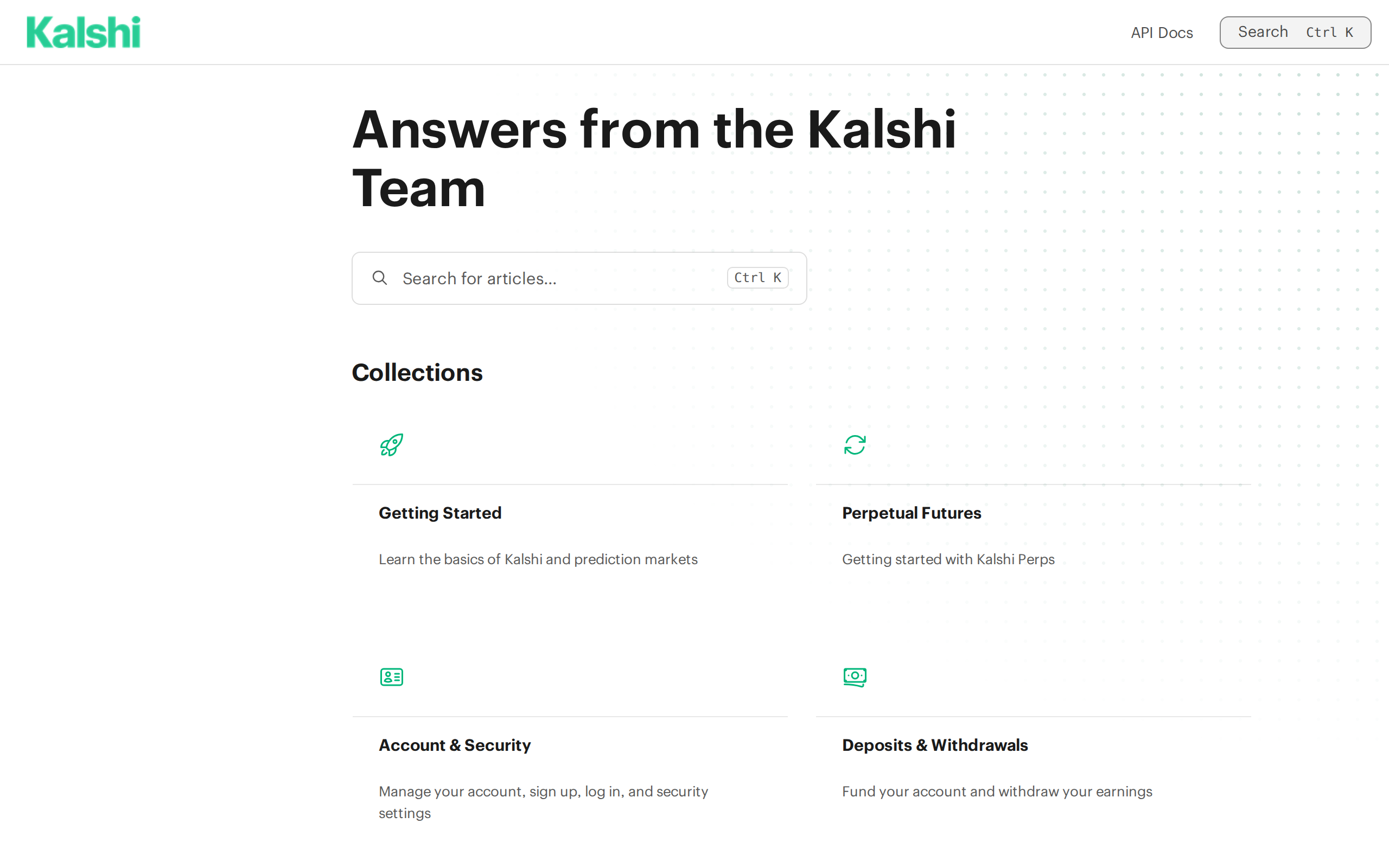
The help centre is sensible, but fees and deposit and withdrawal timings sit a click or two deep, not on the front page. The interface asks you to understand order types, which a sportsbook hides. Beginners will make mistakes here that cost real money, such as market orders on thin books.
Who it suits
Kalshi suits bettors who already think in probabilities, who will use limit orders, and who bet mostly on well-traded events. It suits people who dislike a bookmaker deciding who gets limited, since your counterparty is another trader. It does not suit anyone who wants a simple bet slip, parlays priced for fun, or bonuses.
Contracts can lose their full price, and an unfamiliar fee structure is easy to underestimate. Only trade what you can afford to lose, set a monthly cap, and call 1-800-GAMBLER if it stops being a pastime. 18+ and not available everywhere.
Kalshi Inc.: the facts
- Contract
- Pays $1 if the event occurs, $0 if not
- Taker fee
- 0.07 x contracts x price x (1 - price), rounded up to the cent
- Peak fee
- About 1.75 cents per contract at a 50 cent price
- Maker orders
- Fee-free on most sports series; check the schedule
- Markets
- Sports, economics, crypto, weather, culture and politics
- Regulator
- CFTC-regulated exchange, per Kalshi
- App
- Free, iOS version 9.10.34, about 136 MB
- App Store rating
- 4.82 from about 670,000 ratings
- Minimum age
- 18+
18+ only. Odds, offers and terms change; check them on the operator's site before you deposit. If betting stops being fun, take a break: BeGambleAware (UK) 0808 8020 133, 1-800-GAMBLER (US).