Robinhood Prediction Markets ReviewConvenient Contracts, Real Legal Risk
Robinhood sells sports and event contracts inside its brokerage app. We worked through the fee formula, the Rothera exchange link and the state restrictions to see if the convenience is worth it.
- Our score
- Price
- Free to join
- Made by
- Robinhood Markets
- Official site
- robinhood.com
Verdict: A tidy way to trade event contracts if you already hold a Robinhood account. Mid-price contracts cost about 4% of stake in fees, close to a -110 sportsbook line, there is no SIPC cover, and state rules keep shifting. Fine for occasional use, a weak sportsbook replacement.
Best for: Existing Robinhood users trading a few big events
Visit siteRobinhood did not build a sportsbook. It put a "Yes" and "No" button for a football match next to the screen where people hold index funds, and routed the trade to a regulated exchange. That is convenient, and it is also the problem: a contract that pays $1 or nothing sits two taps from a retirement account. This review is based on Robinhood's published help pages, fee formula and newsroom posts, plus independent reporting on the legal fights, not on a funded test account.
What you are actually buying
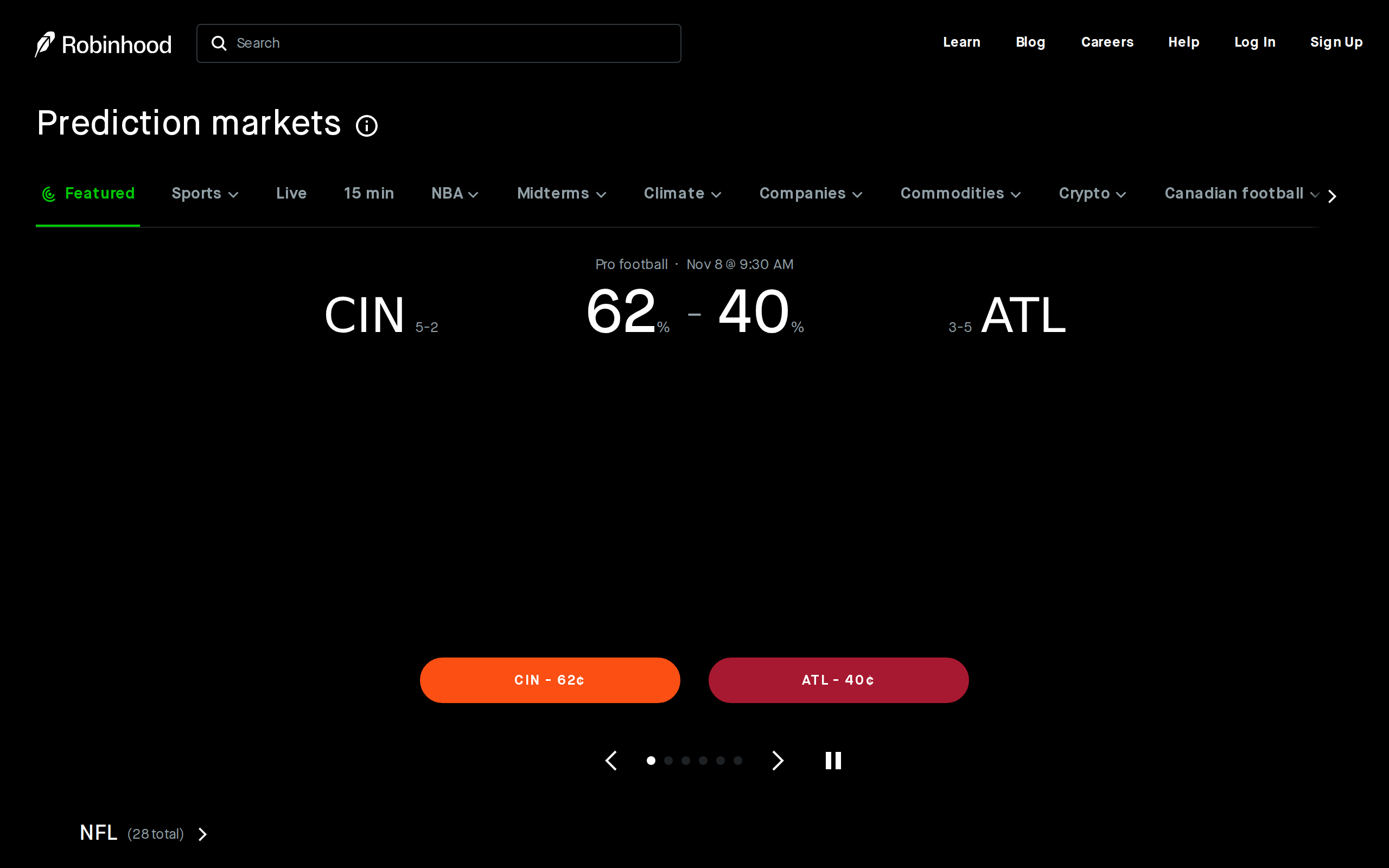
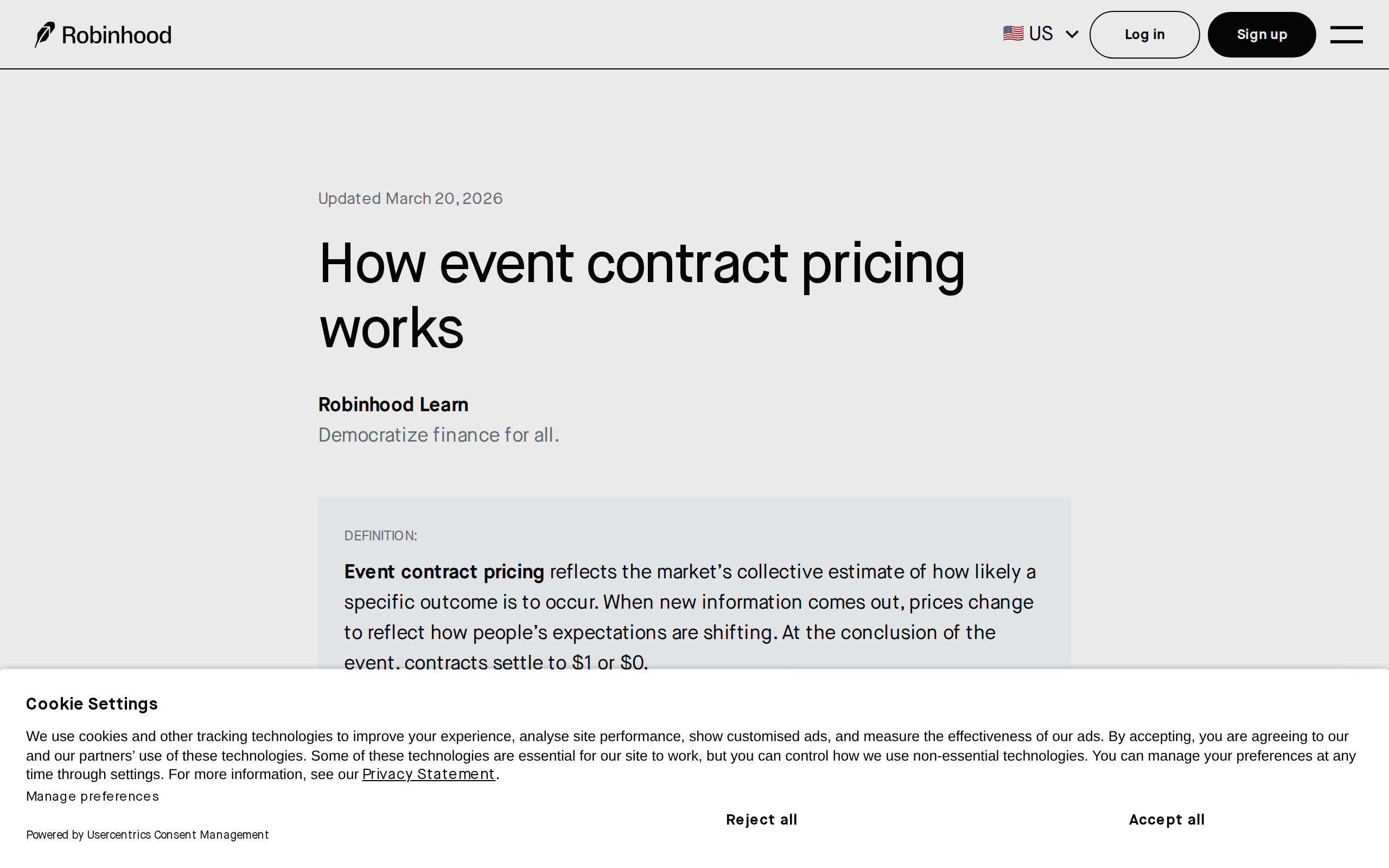
Each contract is a binary derivative. The price runs from $0.01 to $0.99 and reads as a probability, so a Yes at $0.70 implies a 70% chance. If the outcome happens, the contract pays $1. If it does not, it pays nothing. You can sell before the event at whatever the market will pay.
Robinhood explains this clearly in its own pricing guide, including an uncomfortable detail: a Yes at $0.51 and a No at $0.50 add up to $1.01, and that extra cent is the cost of trading.
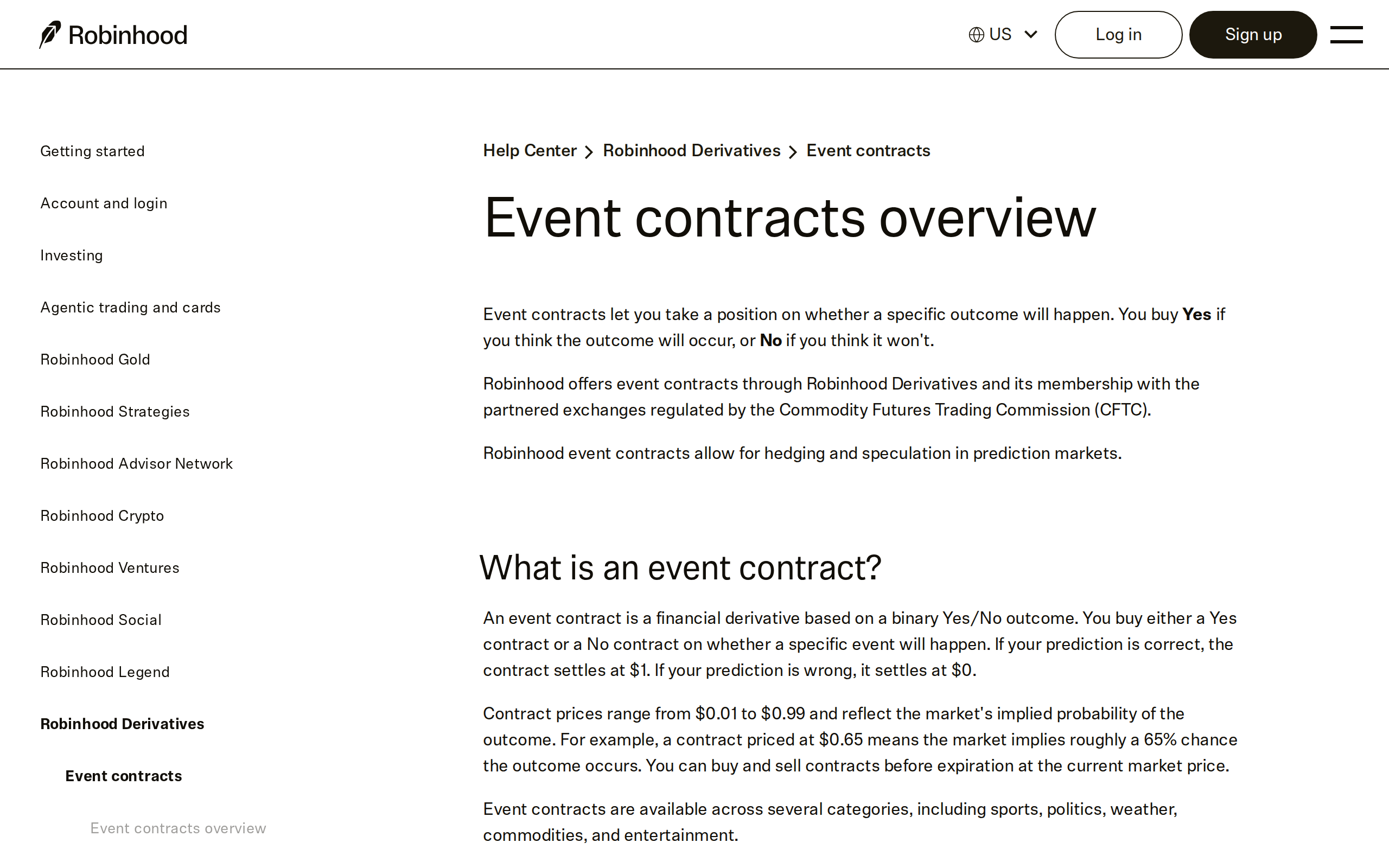
The contracts are not Robinhood's. Its help page says Robinhood Derivatives offers them through KalshiEX, ForecastEX, Crypto.com Derivatives North America and, newer, Rothera Exchange and Clearing. Robinhood is the broker; the exchange sets the market.
Rothera, and why the fee page changed
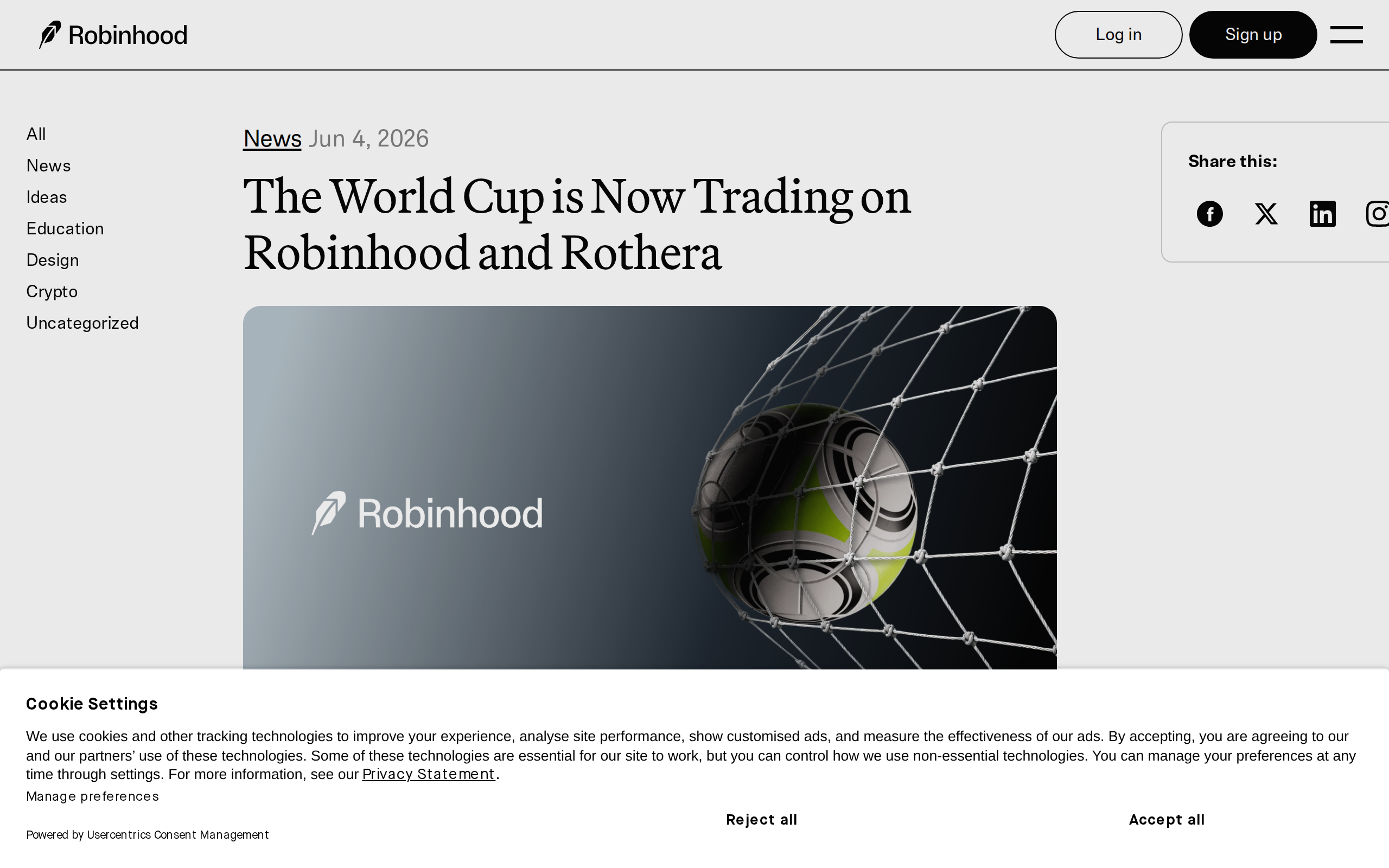
On 1 June 2026 Robinhood changed how it charges. Its newsroom post says commissions now depend on contract price and order size, and never exceed $0.01 per contract. It also introduced Rothera, a joint venture managed by Robinhood and Susquehanna International Group, which at first received only a selection of World Cup and baseball contracts.
A Robinhood-owned venue taking order flow from the Robinhood app is a conflict worth knowing about. It is disclosed, and the exchange is CFTC-licensed, but you should not read "affiliate exchange" as "independent price".
The fee maths, done on a real contract
The help page gives the commission as k x p x (1 - p) x contracts, with k at 10% for standard accounts and 5% with Gold (the $5 a month tier), rounded up and capped at $0.01 a contract. On top sits an exchange fee of up to $0.01 a contract.
Run it for 100 contracts. At $0.90 the page's own example shows a $0.90 commission without Gold and $0.45 with it. At $0.50 the formula would give $2.50 without Gold, but the cap holds it to $1.00. Add up to $1.00 of exchange fee and you pay roughly $2 to stake $50, or about 4%.
That is close to what a standard -110 point-spread bet costs in hold, which is about 4.5%. So at the middle of the price range this is no bargain. At $0.90 the arithmetic is nicer: about $1.90 on a $90 stake, near 2%. The cost shrinks as the favourite shortens, and a sportsbook's hold does not.
Where it is convenient, and where it is not
The honest convenience case is simple. You may already have the account, the funds settle in the same app, and the market list is broad: sports, politics, elections, climate, crypto, economics and entertainment. Match, totals, spread and player contracts exist for the big events.
The weaknesses stack up.
No SIPC cover. The help page states Robinhood Derivatives is not FDIC insured or SIPC protected. Your stock holdings do not make your event-contract balance safer.
No instant deposits for event contracts.
Eligibility is narrow. You must be 18 or older, a US resident, hold an individual brokerage account and be approved for a derivatives account. Residents of Maryland, Michigan and Nevada cannot trade sports contracts, and the list of restricted states has been moving.
Thin extras. We found no deposit bonuses or sportsbook-style parlay builder in the documentation, only referral offers.
The legal risk is the real cost
Sports contracts have drawn cease-and-desist letters in states including New Jersey and Connecticut, and court fights in Nevada and Massachusetts that mostly involve Kalshi but name Robinhood too. Robinhood paused sports contracts in New Jersey and Nevada in March 2026, resumed them and sued the regulators. Reporting in September 2026 says the Nevada fight is still being appealed.
For a user, the practical risk is that a market you hold can be restricted by your state. A sportsbook licensed in your state does not have that exposure.
Who should use it
Use it if you already trade on Robinhood, understand that a 90 cent favourite loses 90 cents when it fails, and want to trade a major event in a state where it is offered. Skip it if you want promotions, a deep prop menu or any protection from an account regulator you can complain to.
It is not a way to make money. You can lose the whole stake on every contract, and a low per-contract fee can encourage the volume that makes losses larger. If betting stops being fun, the National Problem Gambling Helpline (1-800-GAMBLER) is free and confidential.
What we liked
- Fees shrink on heavy favourites, near 2% of stake at 90 cents
- Clear published fee formula with a worked example
- Broad menu across sports, politics, crypto and economics
- Regulated CFTC exchanges handle the contracts
What fell short
- Mid-price fees run near 4% of stake, close to a sportsbook's hold
- Not FDIC insured or SIPC protected, unlike your stock balance
- Sports contracts barred in Maryland, Michigan and Nevada
- Robinhood co-manages Rothera, one of the exchanges it routes to