Polymarket ReviewCheap Prices, Uneven Liquidity and a Legal Question First
Polymarket prices sports and news in cents, with a sports spread near 2 cents and taker fees on top. We checked the fee formula, the order book and who can legally trade.
- Our score
- Price
- Free to join
- Made by
- Polymarket
- Official site
- polymarket.com
Verdict: Good prices for people who read an order book: a 2-cent sports overround plus a small taker fee beats a standard -110 hold. Liquidity is strong on headline events and weak elsewhere, props are thin, and you must confirm legal access before depositing.
Best for: Order-book readers trading politics and major sports games
Visit siteMost people hear about Polymarket during an election, when its odds are quoted on the news. Fewer know that it now runs two different products under one name, and that which one you can touch depends on where you are standing. We read the fee schedule, priced live sports markets against a sportsbook line and checked the access rules. The short answer: the prices are good, the liquidity is uneven, and the legal position is the part you must settle first.
Two Polymarkets, one name
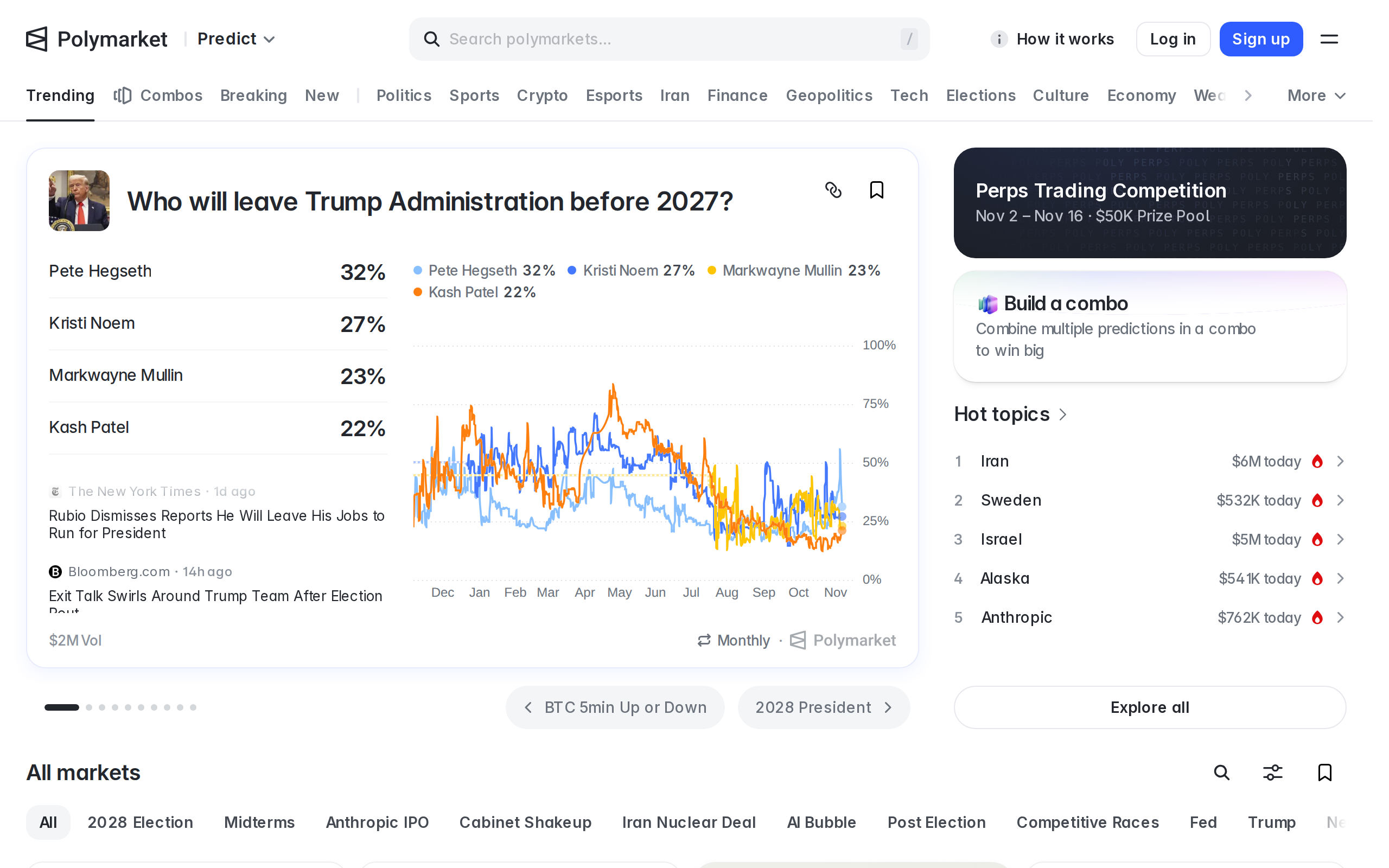
The original platform is an offshore, crypto-settled exchange: you deposit USDC, trade yes/no shares, and each share pays $1 if it is right. It is not open to US residents, and the company settled with the CFTC in 2022 over unregistered event contracts before it later bought a licensed US exchange. The newer US app runs under CFTC oversight, launched with sports first, and opened to people through a waitlist according to trade press coverage (Finance Magnates).
That split is why we will not give a single clean answer to "can I use it". Your location when you trade decides which product applies, and the rules have moved several times. Check the current terms inside the app before you fund anything, and do not use a VPN: that is a breach of the terms and can freeze your balance.
How the prices work
A share costing 62 cents pays $1 on a win, so the market is saying roughly 62%. The price is a probability, with no bookmaker margin written into it. The market page lets you read the order book, so you see what you would actually pay rather than an advertised line.
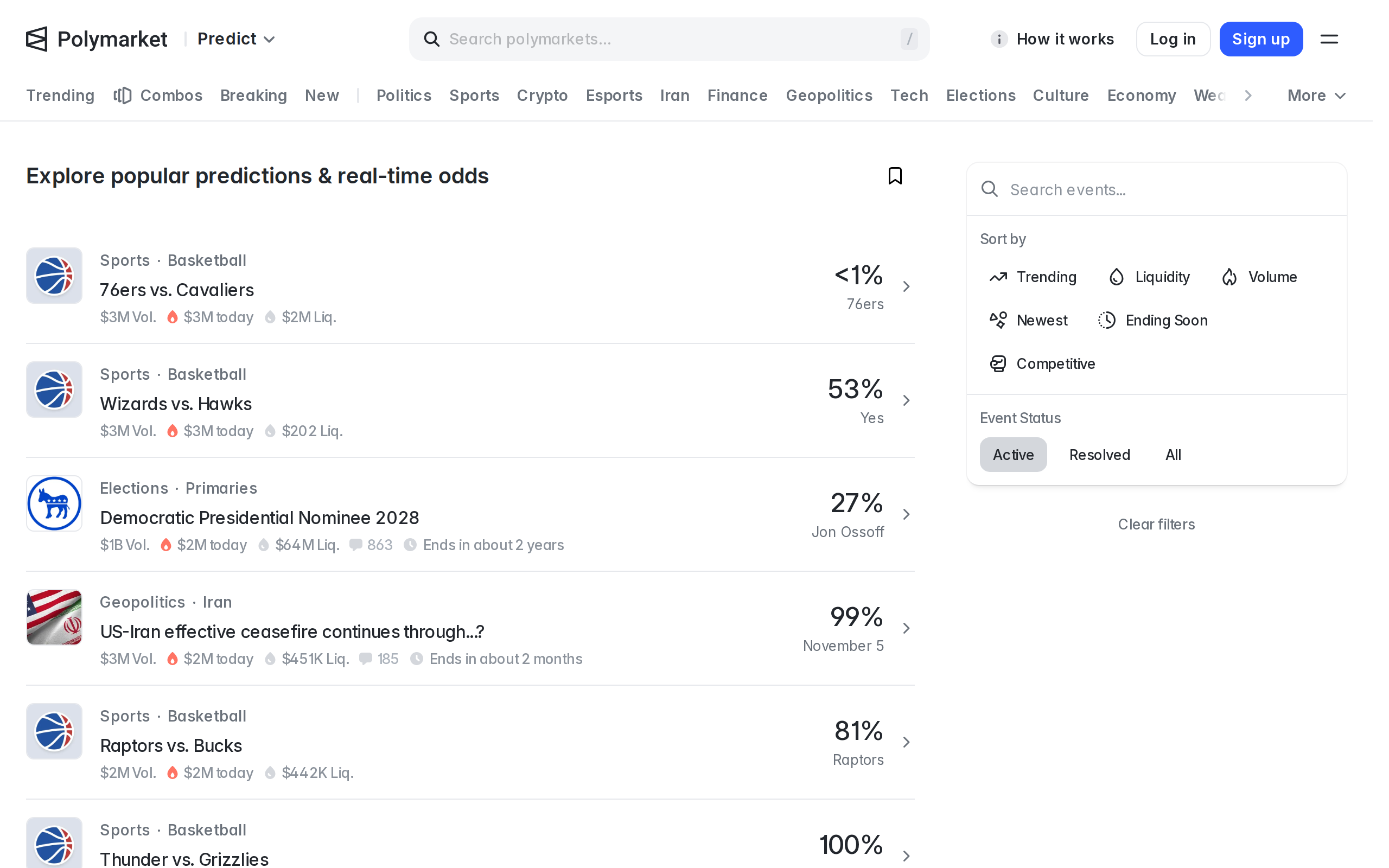
On the political and geopolitical side we saw plenty of depth on headline questions, such as the 2028 nominee markets, and noticeably less on obscure ones. That is normal for any order book. A market with a few thousand dollars behind it will move several cents on one order.
Sports: the number that matters
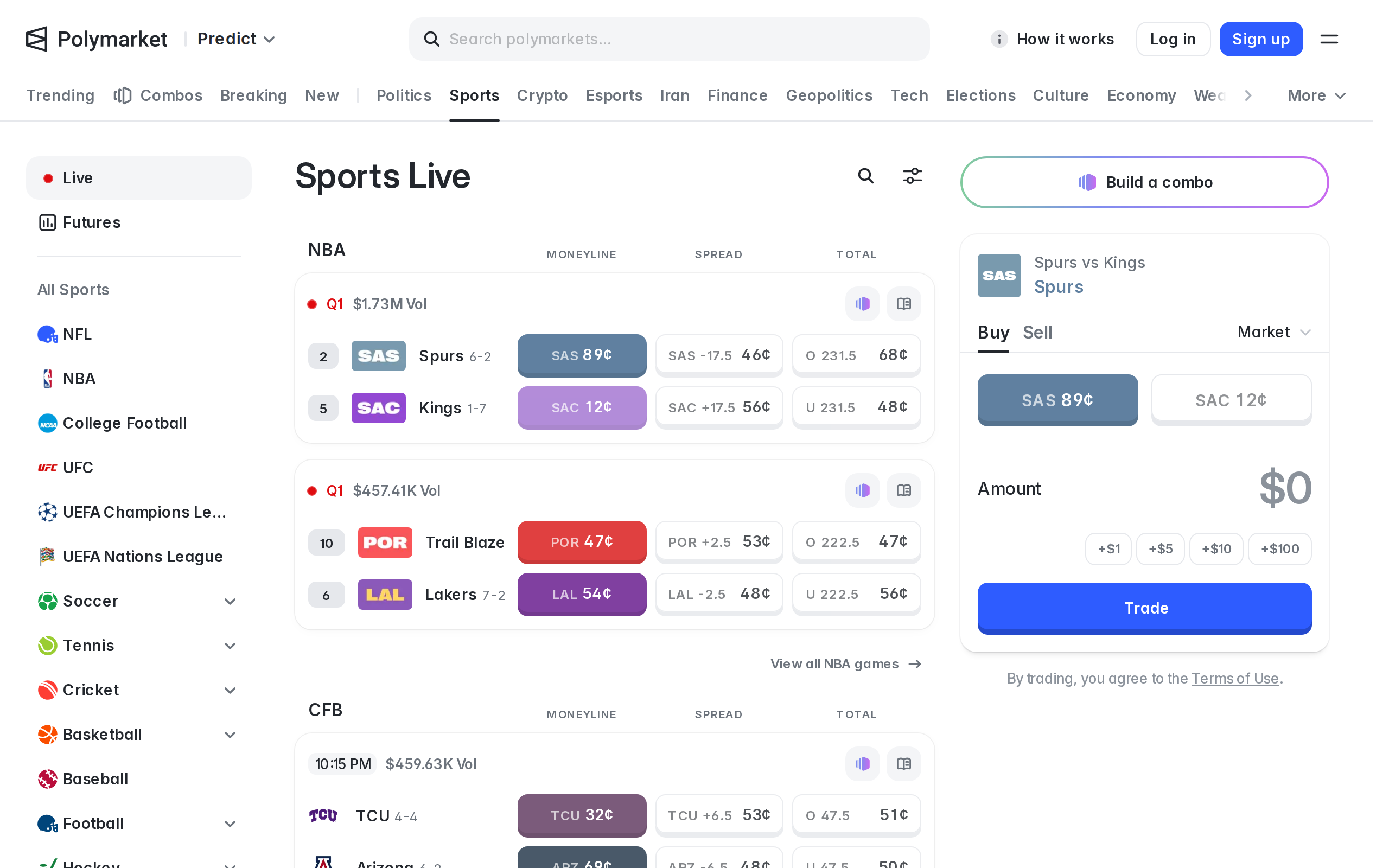
Sports are where bettors compare Polymarket with a sportsbook, so we looked at the live page. One NBA game showed the favourite's spread at 46 cents on one side and 56 cents on the other, which adds up to 102 cents. That 2-cent gap is the overround you pay to cross the book, and it is about half the 4.5% hold built into a standard -110/-110 line. A total of 231.5 showed the over at 68 cents.
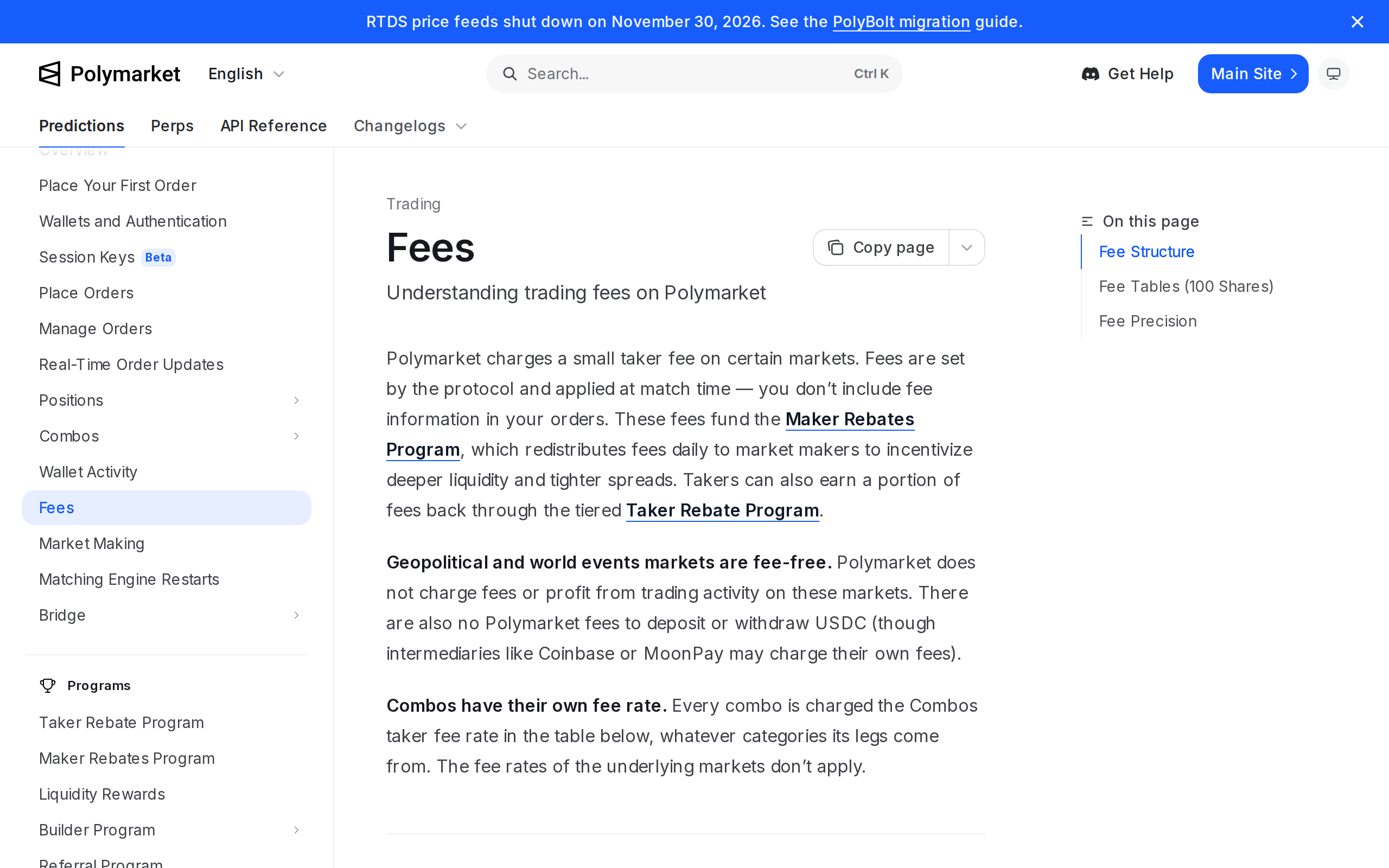
Then fees come on top. Polymarket's documentation says only takers pay: the fee is shares x rate x price x (1 - price), with a rate of 0.05 for sports and 0.07 for crypto, and geopolitical markets carry no fee. On 100 sports shares the fee is $1.25 at 50 cents and $0.45 at 10 cents. Makers who post resting orders pay nothing and earn a 15% rebate on sports. Deposits and withdrawals are free from Polymarket itself, though a card processor or exchange may charge you.
Work it through for a 50-cent bet of $50: $1.25 fee is 2.5% of the stake, plus whatever spread you paid. Together that is usually cheaper than a sportsbook on a coin-flip game, and clearly cheaper on lopsided ones where a book shades the favourite harder. The saving disappears if you buy thin markets with a wide spread.
Where it falls short
Limited prop menu. If you want same-game parlays with six legs, or a deep range of player props, a sportsbook still wins. A combo builder exists, but it carries its own 0.05 taker rate.
Liquidity builds slowly. Reviewers describe the US sports markets as still developing, with tighter books on marquee games and wide ones elsewhere. Independent sources gave us no hard depth figure, and we will not invent one.
No customer comfort blanket. A sportsbook can void a bet or refund a stake. An exchange only matches orders. Disputes over how a market resolves go through a resolution process, and a few have caused anger even among traders who know the rules.
Wallet friction offshore. The crypto version needs a wallet and USDC. That is simple for experienced users and a barrier for everyone else.
Who should use it
Use Polymarket if you already understand that a price is a probability, you like to see an order book, and you mostly trade news, politics or big sports games where depth exists. Skip it if you want promotions, parlays and a support desk that will rescue a mistake. Skip it entirely if you cannot confirm it is legal where you live.
Prediction markets can lose money just as quickly as a bookmaker can. A cheap fee does not give you an edge, and the market's price is often right. Never stake money you cannot afford to lose, and use the deposit limits and self-exclusion tools if betting stops being a pastime. This review is a report on a product, not a recommendation to trade.
What we liked
- No margin in the price, only an explicit taker fee
- Sports taker rate is 0.05, peaking near $1.25 per 100 shares
- Makers pay no fees and earn a rebate on resting orders
- No deposit or withdrawal fee charged by Polymarket itself
What fell short
- Access depends on location and the rules have changed repeatedly
- Thin books on lesser events mean wide spreads and price slippage
- Few player props and no real equivalent of a six-leg parlay
- Offshore version needs a crypto wallet and USDC to use