Novig ReviewNo-Vig Pricing Is Real, but Fees and Thin Books Remain
Novig is a peer-to-peer sports exchange with no maker fees and fee-free pregame trades. We checked its fee formula, state limits and its own comparisons with BetMGM and FanDuel Predicts.
- Our score
- Price
- Free to join
- Made by
- Novig
- Official site
- novig.com
Verdict: Novig's model removes the house margin on pregame straight trades, and makers never pay a fee. The catch is that live taker trades carry a fee, parlay costs are hidden inside prices, and liquidity thins out in smaller markets. The best evidence for it is Novig's own comparisons, which are hypothetical. A fair choice for pregame price shoppers, weaker for live bettors.
Best for: Pregame bettors who compare prices across several books
Visit siteA sportsbook earns money by shading every price against you. Novig says it does not, because it is not the one taking your bet. It is a place where users trade against each other, and it charges fees in a few narrow cases instead. That is a real structural difference, and it is worth testing against the odds you see elsewhere.
We have not traded on Novig ourselves for this review. The figures below come from Novig's own pages and from independent write-ups, and we say which is which.
How a Novig price differs from a sportsbook price
On Novig you buy a contract that settles at $1 if your side wins and $0 if not, so a price of 52 cents is a 52% implied chance. Other users post the offers, and you either take one or post your own limit order and wait. There is no house line to shade.
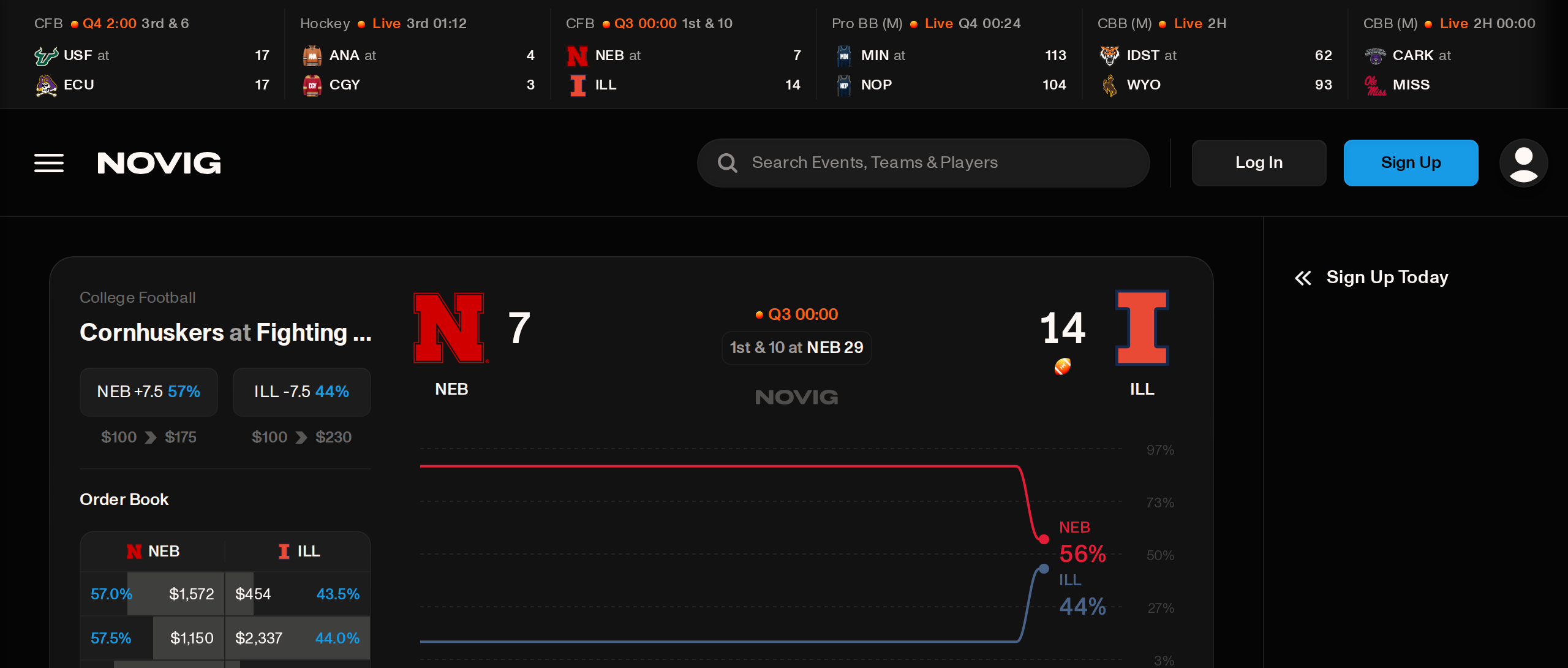
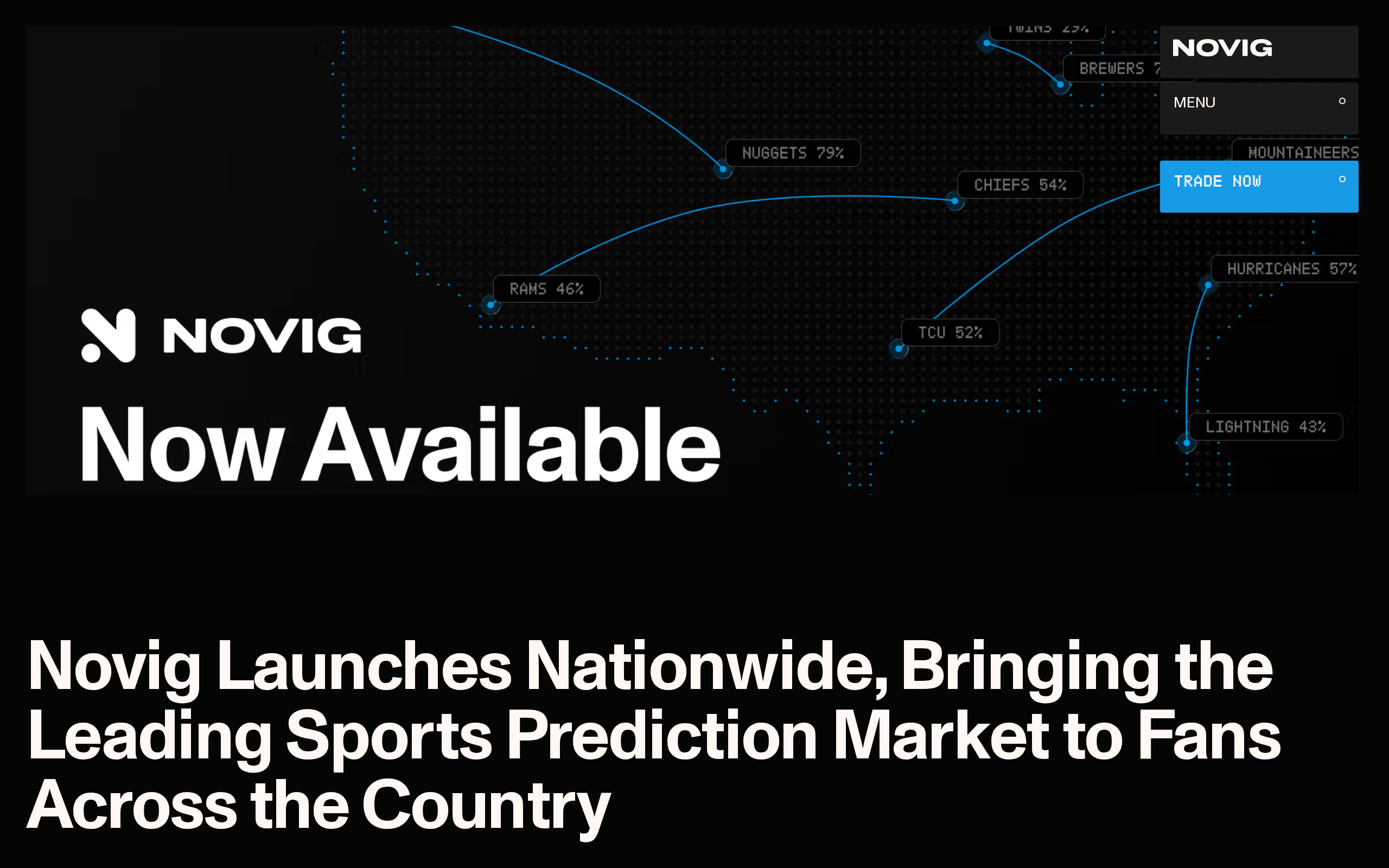
The Novig front page card shows a payout under each side, for example $100 turning into a larger figure if the pick wins. That is the exchange logic in one line: you see the implied chance and what a $100 stake returns.
Where the margin goes
A standard -110 sportsbook line needs you to win about 52.38% of the time to break even. Novig's own comparison with BetMGM works through a hypothetical: a spread at 52 cents on Novig against -110 at BetMGM. In that example, 96 contracts cost $49.92 and return $96 on a win, against roughly $95.45 for a $50 bet at -110.
The post itself concedes the limits. The prices are hypothetical, not simultaneous quotes, and BetMGM's Odds Flash example of -105 would reverse the result. Treat the exercise as arithmetic, not proof that Novig is always cheaper.
What Novig charges
Fees are narrow, and that is the strongest part of the case. Per Action Network's page:
Pregame straight trades: no fee for makers or takers.
Maker orders: no fee on any trade type.
Live, in-game straight trades (takers): a fee that follows Coefficient x Price x (1 - Price) x Contracts, with a 0.06 coefficient, which the same page says rose from 0.03 in mid-October 2026. On 100 contracts at 50 cents that is $1.50.
Parlays: a 0.10 coefficient, built into the quoted price, so you do not see a separate line.
Card and Apple Pay deposits: a 3% charge through Coinflow; bank transfers and crypto have none.
Novig's FanDuel Predicts comparison makes a similar point. It says a 100-contract pregame trade at 50 cents costs $50 on Novig and $52 at FanDuel Predicts, where a fee of 2 cents per dollar of potential payout applies. That is Novig's claim about a competitor, and FanDuel would put it differently.
The figure to remember is the live-trading fee. A bettor who lives in in-game markets pays it on every taker trade, so the headline "no fees" applies mostly to pregame bettors.
Regulation, states and who is behind it
Novig says it is a federally regulated sports prediction market, designated by the CFTC as a contract market, and that it launched nationwide on the strength of that status. Action Network says the operator is Ludlow Exchange, LLC, designated on June 16, 2026, and that the regulated exchange replaced the earlier sweepstakes platform on August 4, 2026. Novig also says it keeps a 21+ age rule.
Availability is the part to check yourself. Action Network lists the product as available everywhere except Arizona, Nevada and Michigan, and warns access may change as legal challenges develop. Other write-ups we saw give state counts from 22 to 47, so the older or newer product may be what they describe. That page also carries internal date oddities, so we leaned on its structural facts only.
Money in, money out
The same page lists debit card, bank transfer through Aeropay or Trustly, and crypto for deposits, with a $10 minimum for most methods and $1 for bank transfers. Withdrawals go to debit cards, banks and Venmo, with a $10 minimum. Credit cards cannot be used for withdrawals. Most cash-outs clear within minutes, with a manual review that usually takes up to 24 hours and occasionally 24 to 48.
Help articles, rulebook and member agreement live in a separate support site.
Where it is weaker
Liquidity is the cost of the model. Action Network flags thinner books in smaller sports and niche props, and an exchange only gives a fair price if someone is on the other side. Limit orders can sit unfilled. The interface asks you to think about order books, which suits some people and puts off others. And Novig covers only sports: no politics, no culture markets.
It is also worth knowing the fee design means the best prices are pregame. If you want a fast cash-out button and boosted odds, a sportsbook is still easier.
Who should try it
Try Novig if you already bet pregame sides, totals and props across a couple of books and want to compare prices without paying the margin. Start with the smallest deposit, check that your state is covered, and compare a few lines against your usual book before trusting the model.
Skip it if you mainly bet live or want a one-tap parlay with a bonus. This is real money at risk: most people lose, and nothing here is a route to income. In the US, help is available at 1-800-GAMBLER.
What we liked
- No fee on pregame straight trades for makers or takers
- Makers pay no fee on any trade type, per Action Network
- Bank and crypto deposits carry no transaction fee
- Withdrawals mostly clear within minutes, per Action Network
What fell short
- Live taker trades pay a fee that rose from 0.03 to 0.06 coefficient
- Parlay fees are built into the quoted price, so they are hard to see
- Thinner liquidity in smaller sports and niche props
- State coverage claims conflict between sources and may change