Kalshi ReviewA Regulated Event Exchange Versus Your Sportsbook
Kalshi trades yes/no event contracts under CFTC oversight. We worked out the fees against a standard sportsbook margin and looked at the state lawsuits that decide whether you can rely on it.
- Our score
- Price
- Free to join
- Made by
- Kalshi
- Official site
- kalshi.com
Verdict: A credible alternative to a sportsbook for people who understand order books and favourites. Fees are cheaper than a sportsbook margin away from 50 cents but slightly worse at the midpoint, props are thin, and state lawsuits make access uncertain.
Best for: Traders comfortable with order books and event contracts
Visit siteKalshi does not take your bet. It matches you with someone on the other side of a contract that pays $1 if an event happens and nothing if it does not. That one difference changes what you pay, who regulates the venue, and what can go wrong. Whether it changes enough to replace a sportsbook is the question we worked through, mostly with a calculator and the fee schedule.
What you are actually buying
Every Kalshi market is a yes/no contract priced between 1 and 99 cents. Buy "yes" at 62 cents and you receive $1 if the event happens, a gain of 38 cents per contract; if it does not, you lose the 62 cents. The price is the market's probability estimate, and nobody builds a margin into it. The venue earns money from fees.
The company was founded in 2018 by Tarek Mansour and Luana Lopes Lara, received a CFTC licence as a designated contract market in November 2020, and opened to the public in July 2021. Its regulator is a federal commodities body, not a state gaming board. That is both its biggest selling point and the source of nearly every legal fight it faces.
The fee arithmetic, done properly
Kalshi's fee schedule lists standard trading fees that follow a curve: 0.07 multiplied by contracts, by price, by one minus price, rounded up to the next cent. The page's own range for a 100-contract order, $0.07 to $1.75, matches that formula at its extremes.
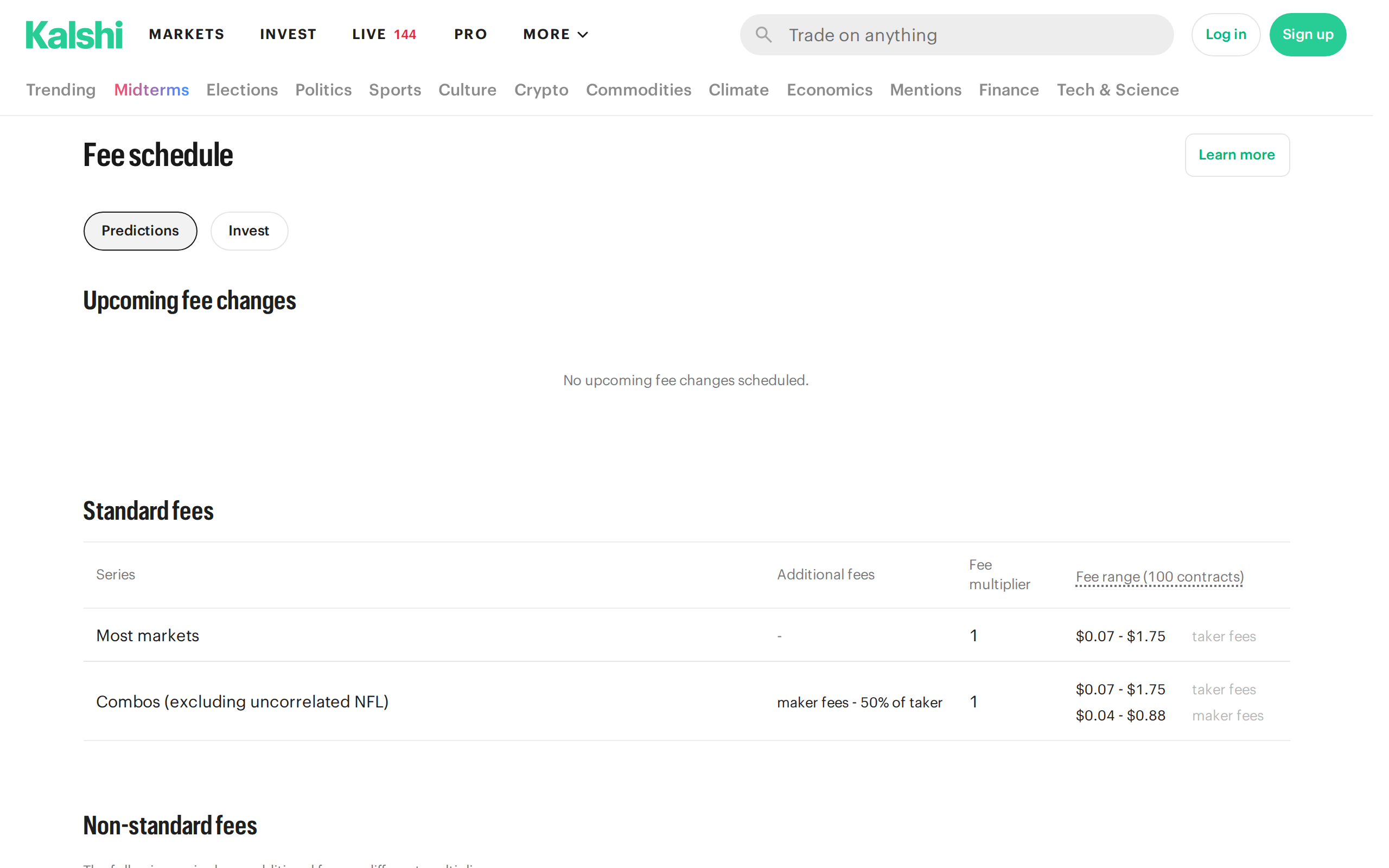
We worked out what that costs per contract at different prices:
At 10 cents: 0.63 cents per contract, 6.3% of the stake.
At 50 cents: 1.75 cents per contract, 3.5% of the stake.
At 80 cents: 1.12 cents per contract, 1.4% of the stake.
At 95 cents: 0.33 cents per contract, 0.35% of the stake.
Compare that with a standard -110 point spread, where the book's margin works out to roughly 4.5% across both sides, or about 2.4% against fair value on each. At the 50-cent midpoint, Kalshi's fee is a little worse than a sportsbook's built-in vig. Away from the midpoint, it is much better: a 90-cent favourite costs you a fraction of a cent. That makes Kalshi cheaper for heavy favourites and long shots held to settlement, and no cheaper for coin-flip games.
Makers who post resting orders pay less. The schedule shows combos with maker fees at half the taker rate, and the order book's spread is a second cost the formula does not capture.
Where the sports markets stand
Sports are the business. Per the company's recorded history, more than 90% of activity and about 89% of 2025 fee revenue came from sports contracts.
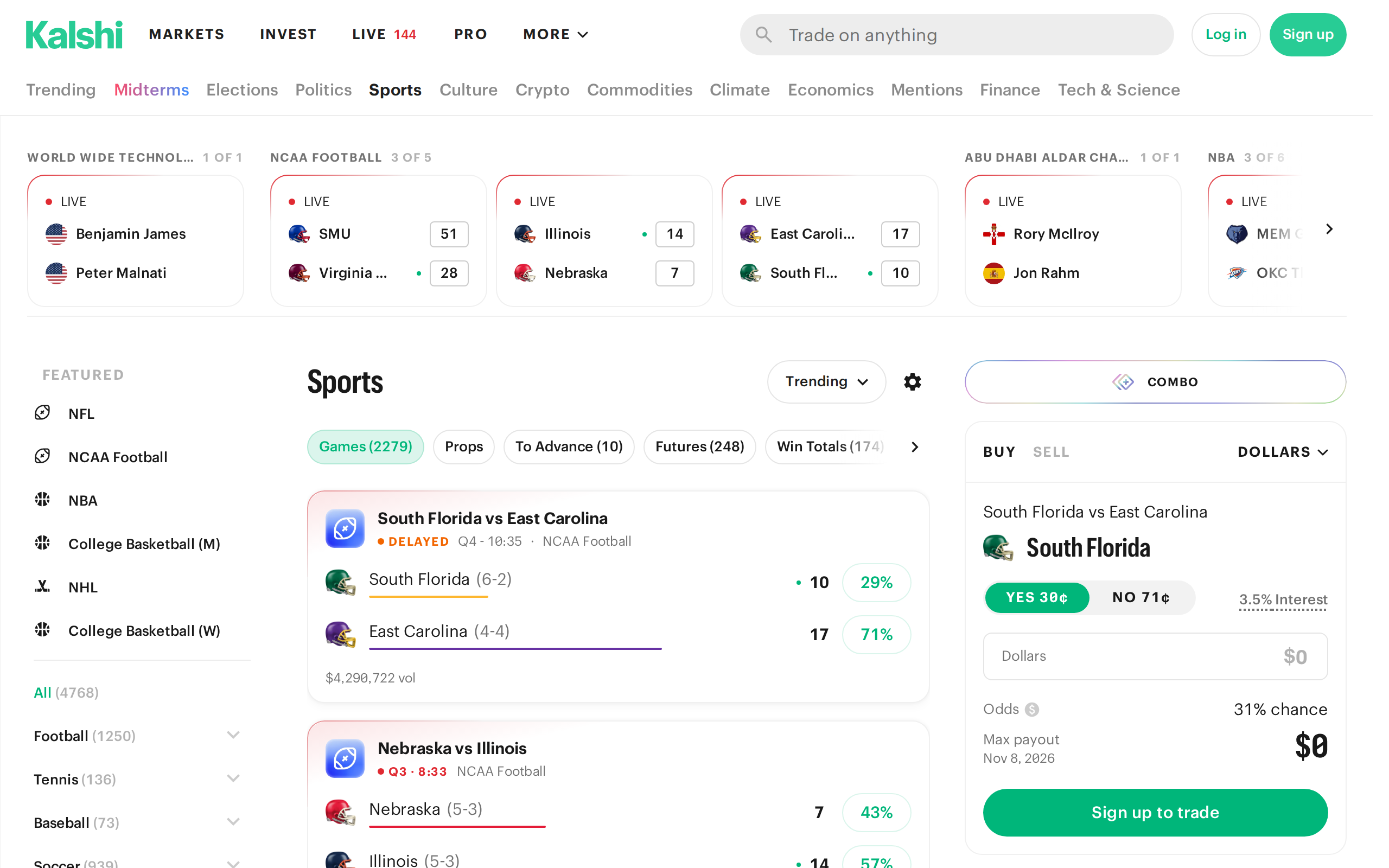
The catalogue is narrower than a sportsbook's. You get winners, spreads and totals on major leagues, plus a large non-sport menu of elections, economics and entertainment. You do not get the long tail of player props, same-game parlays and promotions that a US book will push at you. For a bettor who wants a specific prop, that is a real gap.
The legal risk is not theoretical
Kalshi argues federal law preempts state gambling rules. States disagree, and the picture changes by the month. As of the latest account we found, Arizona's criminal charges were dismissed in May 2026, but Ohio's federal judge ruled the products were gambling, Washington's state court granted an injunction, Massachusetts required geofencing, and New York's attorney general sued in July 2026. A Minnesota ban was halted by a federal judge.
Practically: availability and rules for sports contracts depend on where you live, and an adverse ruling could restrict your access or force you to close positions. Do not assume a position is safe because the venue is federally regulated.
Trust, and the record so far
Some problems are about conduct, not law. In January 2026 NFL winners were initially paid only their stakes until public criticism led to full payouts. Insider-trading cases surfaced during 2026, and a roughly $54 million contract on a leader's death was frozen and later settled at pre-event odds, with about $2.2 million in reimbursements. Kalshi itself says there are 2.9 unprofitable users for every profitable one.
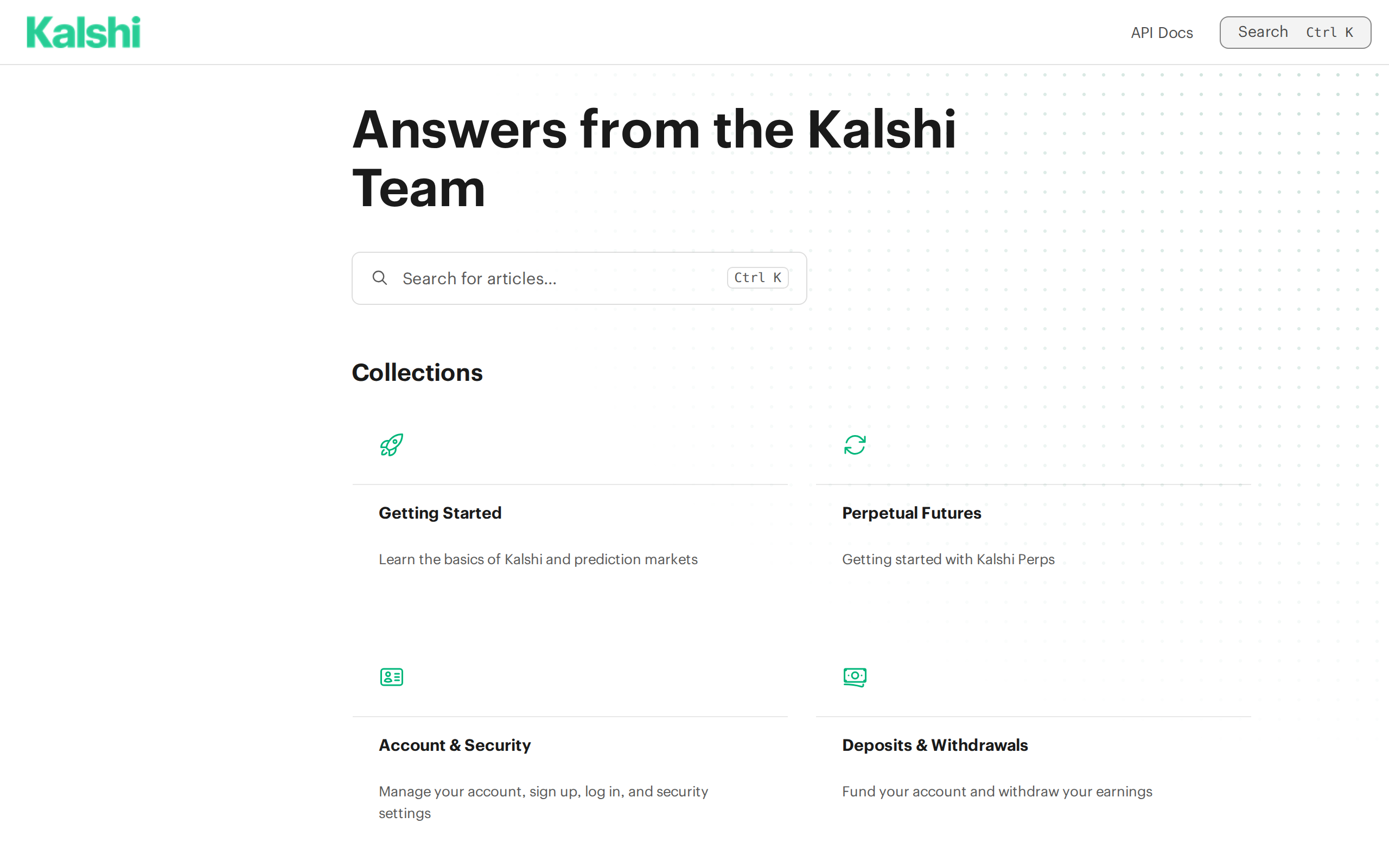
Support is documented in an online help centre, which we browsed, though we have not tested its response times.
Our verdict
Kalshi is a real alternative for a specific kind of bettor: one who is comfortable reading an order book, trades favourites and long shots, and accepts regulatory uncertainty. It is not a better sportsbook, because it lacks props and bonuses, and it is not cheaper at the midpoint. It carries real risk of loss, as every wager does, and it is not a way to make money.
What we liked
- No built-in margin in the price: the venue charges an explicit fee
- Fees fall sharply on heavy favourites and long shots
- Federal CFTC-designated contract market since November 2020
- Huge non-sport menu on elections, economics and entertainment
What fell short
- Fee at 50 cents is about 3.5% of stake, no cheaper than a -110 line
- Few player props and no same-game parlays or sportsbook promotions
- Multiple state suits and injunctions make access uncertain
- Conduct issues on record, including delayed NFL payouts in January 2026