Betfair Exchange ReviewDoes Commission Still Beat Bookmaker Prices?
The Betfair Exchange charges about 5% commission on winnings instead of a bookmaker margin. We work out the break-even price, explain the Expert Fee that replaced the Premium Charge, and say who should use it.
- Our score
- Price
- Free to join
- Made by
- Flutter Entertainment
- Official site
- betfair.com
Verdict: The best place to find a price on football and racing and the only major venue that never restricts you for winning. A 5% commission needs an exchange price about 2.5% above a 2.00 bookmaker price to break even. Liquidity is thin outside major markets.
Best for: Price-sensitive football and racing bettors outside the US
Visit siteA bookmaker sets a price and keeps a margin. An exchange lets you set the price yourself and charges a commission only when you win. In theory that makes the Betfair Exchange cheaper for anyone who can read a market. In practice the saving depends on three things: how much commission you pay, how liquid your market is, and whether you are willing to take the unfamiliar side of a bet.
The break-even number that decides everything
Betfair's headline commission is 5% of net winnings on most sports markets, per the sources we read, with higher rates in some countries, notably 7% to 10% on Australian racing. The commission is taken from profit, never from stake, and only on winning markets.
Here is the sum that matters. Suppose a bookmaker offers 2.00 on a team. To match it on the exchange after a 5% commission, you need an exchange price of about 2.053, because 1 + (1.00 / 0.95) = 2.053. Anything above that, you are better off on Betfair. Anything below, you should stay with the book.
The company says its odds are on average 20% better than traditional bookmakers. Treat that as marketing: it is a claim from the operator, and a 2009 UK ad regulator ruling found a "40% better returns" statement applied to only a small slice of the bets in the calculation. But the maths of a 5% commission is sound, and a bookmaker's built-in margin on a match-odds market is usually of the same order, so the comparison is close enough that you must check prices market by market.
What the exchange screen looks like
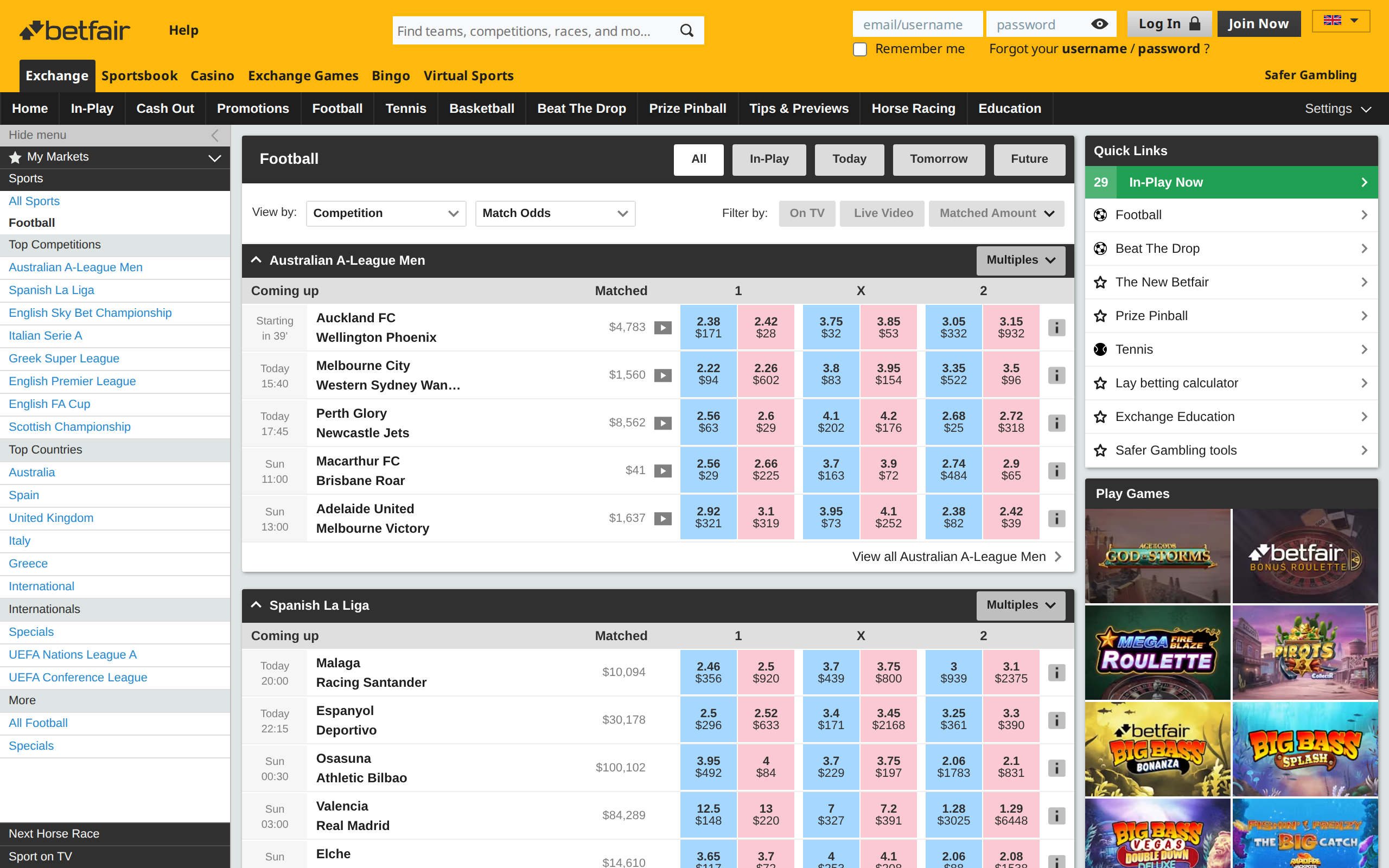
Football is the deepest market. The competitions list above is typical of what the exchange covers, and the biggest matches carry real money on both sides of every price. Smaller leagues, minor sports and exotic markets are another story: a thin book means you cannot get matched at the price you want, and the spread between back and lay can wipe out the commission saving entirely.
The Expert Fee, and why it matters if you win
Until recently, Betfair's Premium Charge could take up to 60% of gross profits from its most successful customers. According to Racing Post, it was dropped from January 2025 and replaced with an Expert Fee based on 52-week gross profit:
Under £25,000: no Expert Fee.
£25,000 to £100,000: 20%.
Over £100,000: 40%.
Betfair says 80% of customers see lower fees and 50% pay nothing extra. We could not confirm from the sources whether the tier rates apply to all profit or only the portion above each threshold, so read the terms before you scale up. Still, this is the key difference from a bookmaker: a bookmaker that dislikes your results restricts your stakes, while an exchange charges you more. You are never banned for being right.
Where it gets awkward
Betfair has a record of trouble that a careful reader should weigh:
2011: admitted concealing a 2010 data theft affecting 3.15 million usernames.
2011: voided winning bets on a Leopardstown race, reportedly refusing more than £23 million in winnings to about 200 customers.
2014: acknowledged paying dividends in 2011 to 2013 without sufficient reserves.
2023: a coroner's inquest criticised the company for missing chances to intervene before a customer's death in 2021.
These are old and some are contested, but they sit on the file.
The US question
Betfair is a British company, owned by Flutter Entertainment since merging with Paddy Power in 2016. It opened a horse-racing exchange in New Jersey in May 2016, charging much higher commission, and it later stopped accepting those bets; one source gives a 12% rate for the New Jersey customers. If you live in the US, check what is on offer before registering.
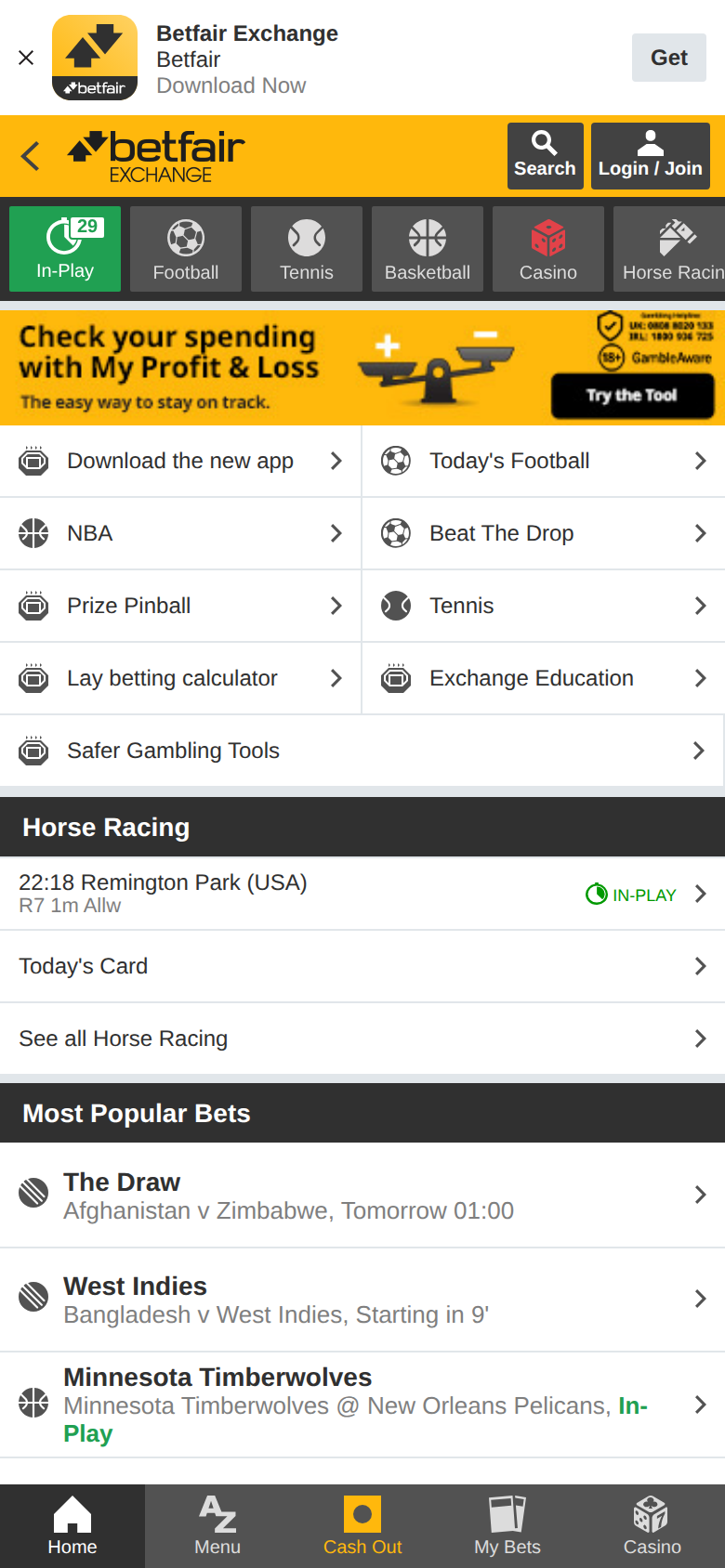
The mobile layout is tidy for browsing, and the tools menu includes a lay betting calculator, which beginners will need, because laying a selection means your liability is the stake multiplied by the odds minus one, not the stake itself.
Should it be your main account?
For a bettor in the UK, Ireland or Australia who bets mainly football and racing, yes, as one of two or three accounts, and as the first place you look for a price. For someone betting niche markets, or for anyone who needs to size up fast without learning how laying works, the learning cost is real. We would keep a bookmaker for promotions and a second for props, and use the exchange for prices and for hedging.
Betting carries risk, and commission does not change that. It is not a way to make money.
Verdict
Cheapest place to back a favourite, never restricts you for winning, and rewards patience. It penalises the impatient and the large winner, and its history has blemishes.
What we liked
- Commission around 5% of net winnings on most sports markets
- No stake limits for winning, only an Expert Fee above £25,000 profit
- Back and lay both available, which allows hedging
- Deep liquidity on major football and horse racing markets
What fell short
- Thin liquidity and wide spreads outside major markets
- Expert Fee takes 20% to 40% of large 52-week profits
- Laying carries liability that beginners often misjudge
- US exchange has been withdrawn; availability depends on location