WhiteBIT review: a European altcoin exchange with a 0.10% fee
WhiteBIT charges a flat 0.10% on spot trades, lists 360+ coins, and now has a MiCA authorisation from Austria. We weigh its fees, reserves audit and limits against offshore rivals.
Best forEuropean altcoin traders who want low fees and a regulated base
Full fee ledger
- Price
- Free to join; 0.10% spot trading fee
- Operator
- WhiteBIT
- Spot fee
- 0.10% maker and taker
- Futures fee
- 0.01% maker, 0.035% taker
- Margin borrowing
- 0.0585% per day
- Bitcoin withdrawal fee
- 0.00025 BTC
- Coins and pairs
- 360+ coins, 750+ pairs
- Fiat currencies
- EUR, USD, GBP, TRY, UAH, PLN, KZT, CZK
- Cold storage
- 96% of assets, per the exchange
- Insurance fund
- $30 million, per the exchange
Our verdict
WhiteBIT is a credible European alternative to big offshore exchanges: a flat 0.10% spot fee, 360+ coins, and an Austrian MiCA authorisation for its EU entity. Its 2024 reserve audit showed 238% cover overall but only 101% on Solana. It is closed to US users, and the best discounts need its own WBT token. This is reporting, not personal financial advice.
What works
- Flat 0.10% maker and taker spot fee, per independent reviews
- 360+ coins across 750+ trading pairs, plus margin and perpetual futures
- Austrian MiCA authorisation announced for WhiteBIT EU
- Hacken audit in November 2024 showed a 238% overall collateral ratio
What does not
- Not available to US customers
- Audit cover was only 101% on Solana and 108% on USDT
- Largest fee discounts require holding its own WBT token
- KYC can be slow and may need several submissions
WhiteBIT sells itself as the European answer to the big offshore exchanges, and on paper the case is decent. Spot trading costs a flat 0.10% for makers and takers, more than 360 coins trade across 750 or more pairs, and a Lithuanian base is now joined by a MiCA authorisation from Austria's regulator. Against that, it is not open to US customers, and its independent proof of reserves shows thin cover on some assets. We read its fee pages, its own statements and independent reviews for this verdict. Nothing here is personal financial advice.
Who is behind it
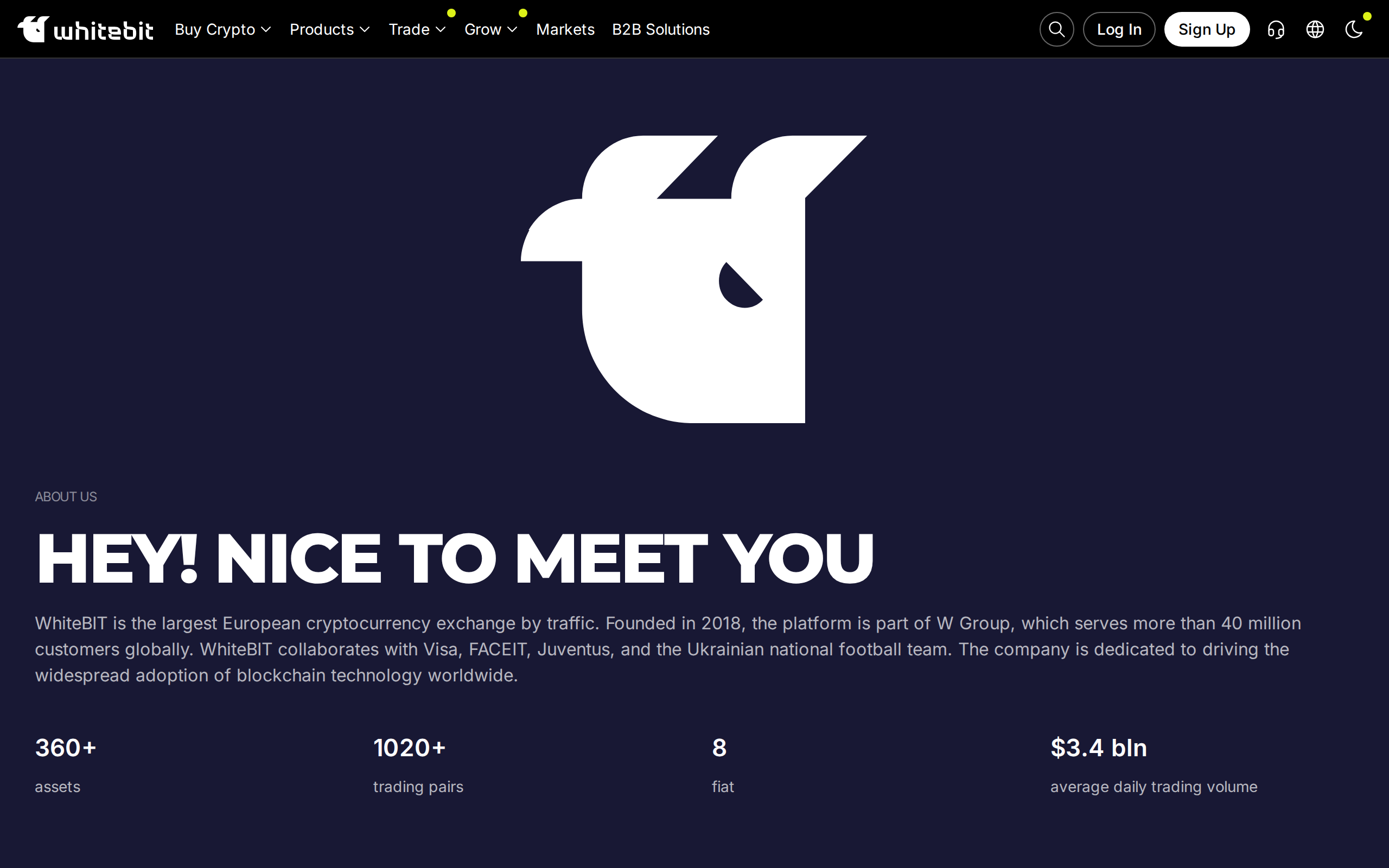
The company says it is the largest European crypto exchange by traffic, founded in 2018 as part of W Group. Its About page claims an average daily trading volume of $3.4 billion. The founder, Volodymyr Nosov, built it in Ukraine, and its headquarters moved to Vilnius, Lithuania after the full-scale invasion in February 2022.
Those numbers are the company's, not an audit. Volume on any exchange can include wash trading, so treat the figure as a marketing claim and not a measure of depth.
The fee, and how to shrink it
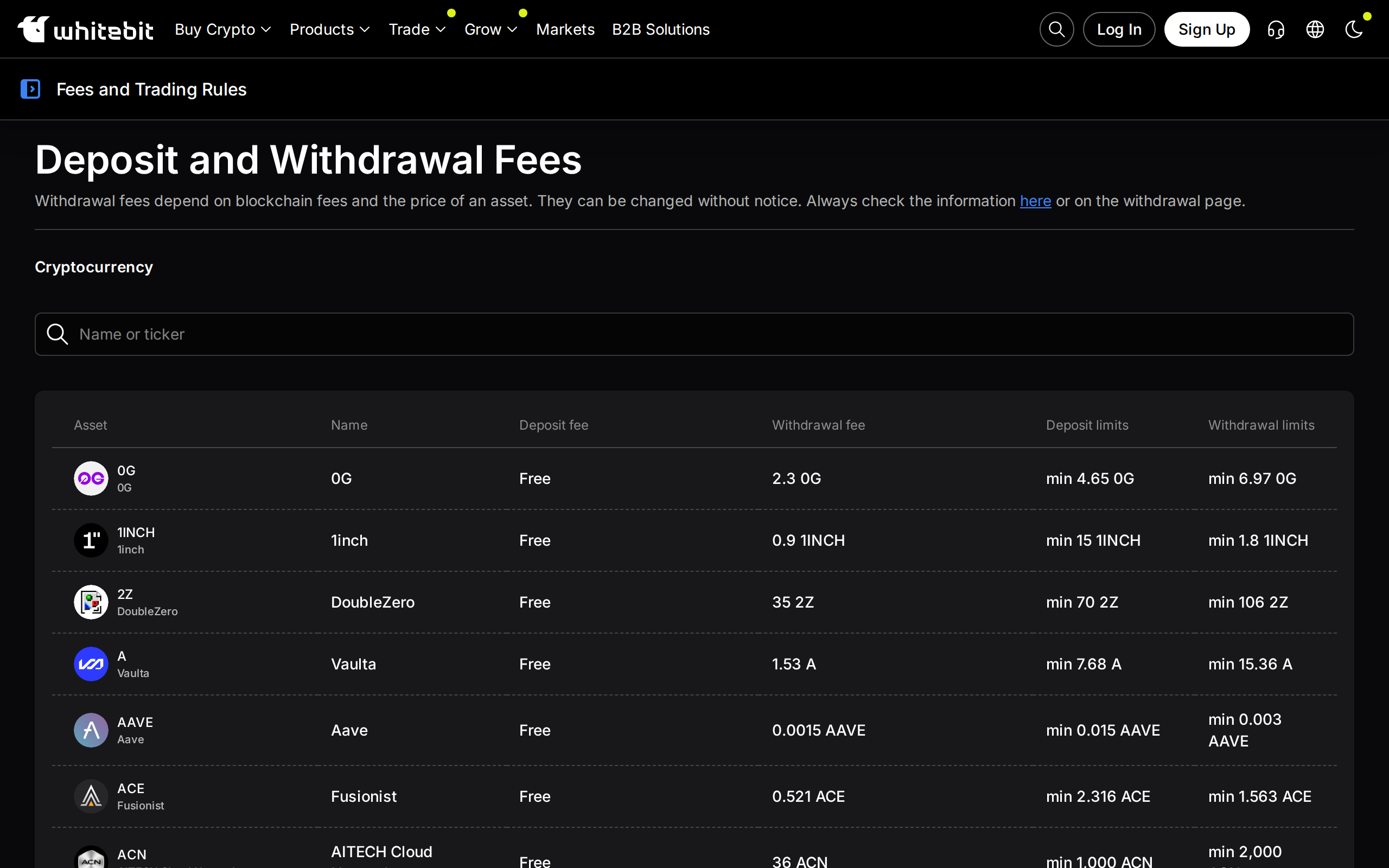
Default spot fees are 0.10% for both sides, which sits between the cheapest offshore venues and the pricey app brokers. Coin Bureau's review also lists futures at 0.01% for makers and 0.035% for takers, and a margin borrowing cost of 0.0585% a day. Withdrawal fees depend on the coin; for Bitcoin the figure quoted is 0.00025 BTC.
Withdrawals are where the flat fee stops being flat. WhiteBIT's own page warns that withdrawal fees follow blockchain costs and asset prices, and that they can change without notice.
The discount mechanism is WhiteBIT Coin (WBT). Holding it can cut maker fees, up to 100% at the top level according to independent coverage, and the exchange's own page says holders get privileges and discounts.
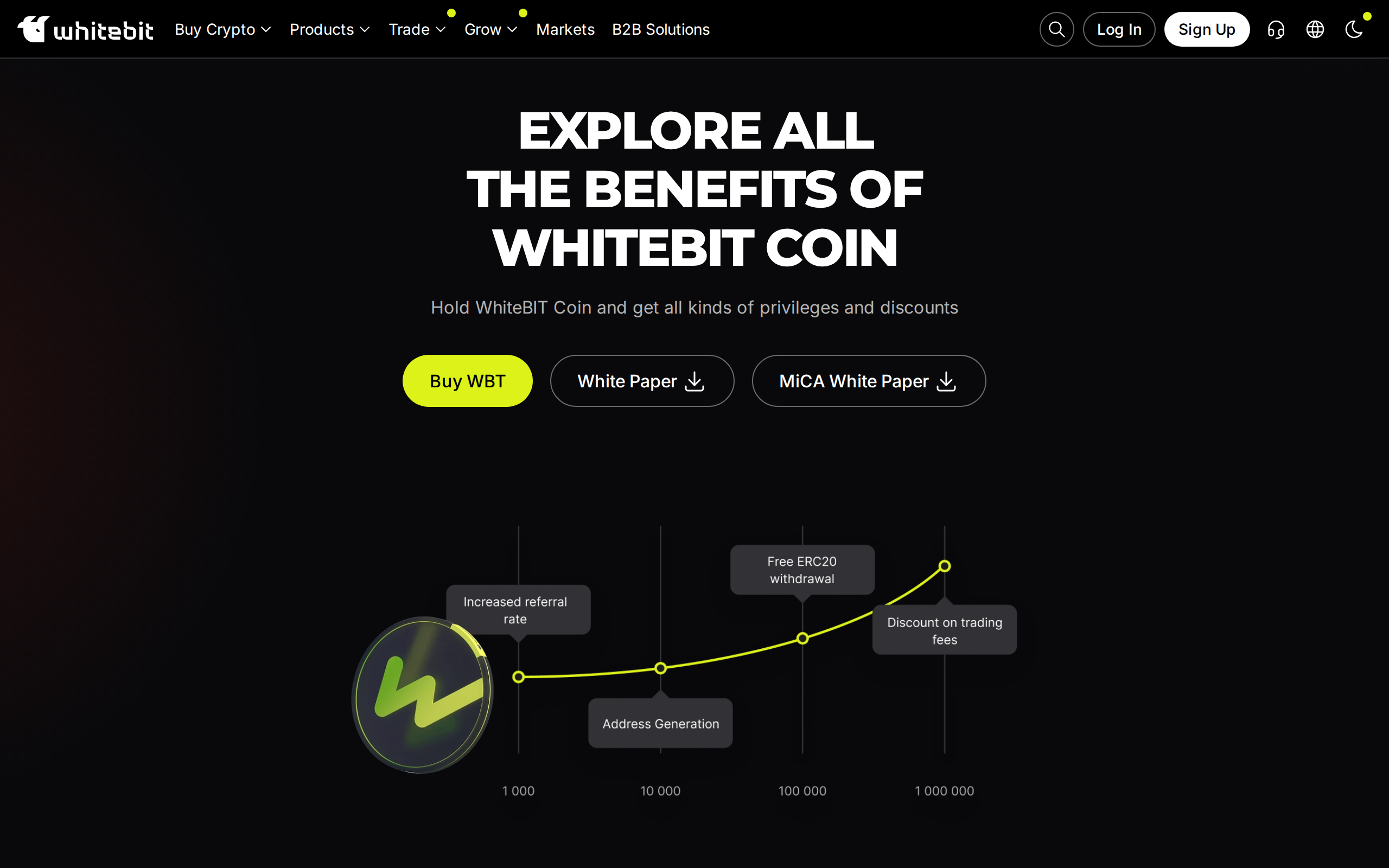
The catch is plain: to earn the discount you must buy and hold the exchange's own token, which is a price risk on top of the trading risk. For a small account the saving is tiny. For a trader doing six-figure monthly volume it is real money, and worth the calculation.
A long list, with caveats
The coin list is the draw. WhiteBIT says it covers more than 360 assets on spot, margin (10x) and perpetual futures (up to 100x). Eight fiat currencies are supported: EUR, USD, GBP, TRY, UAH, PLN, KZT and CZK, with card, Apple Pay, Google Pay, SEPA and SWIFT among the rails.
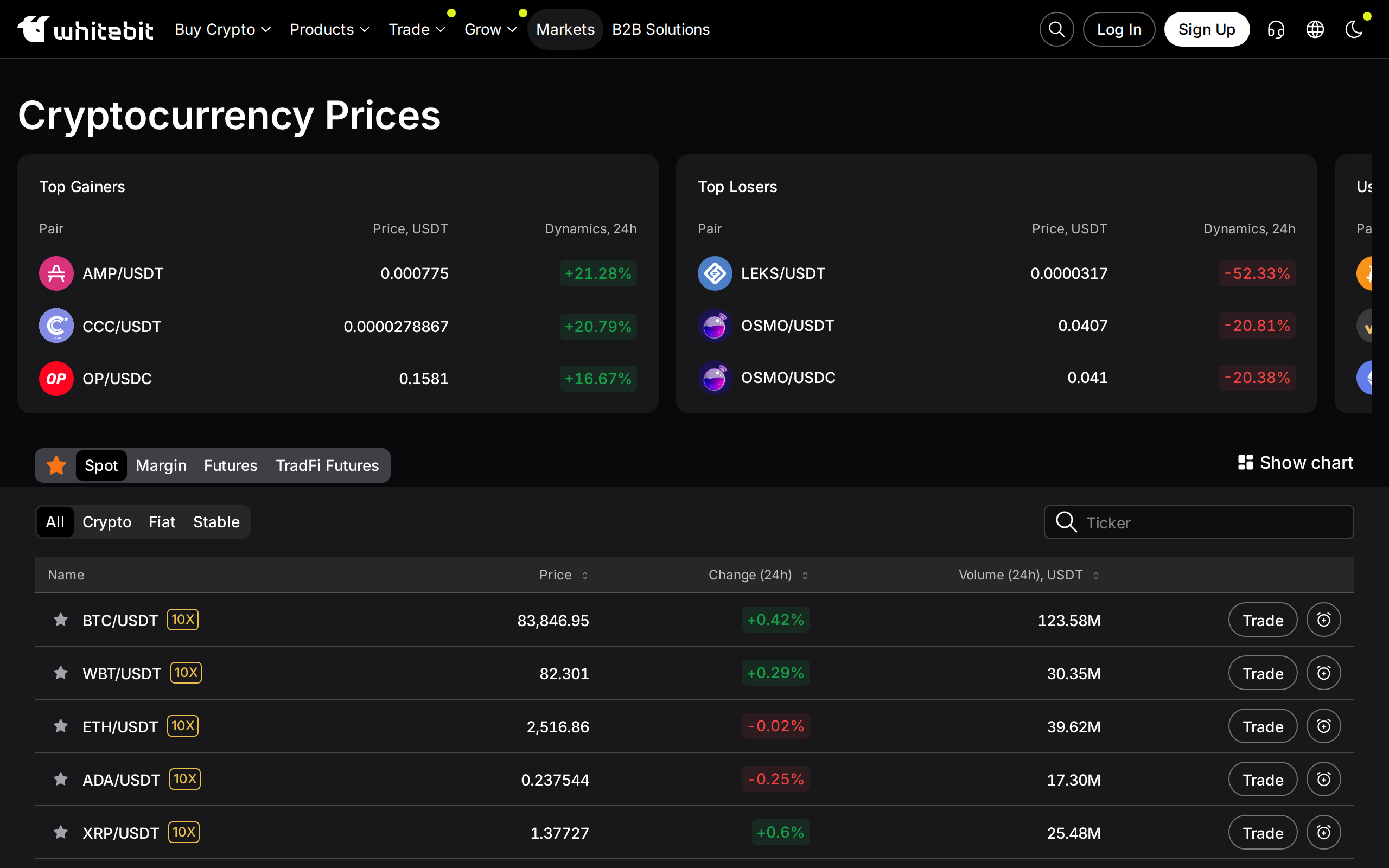
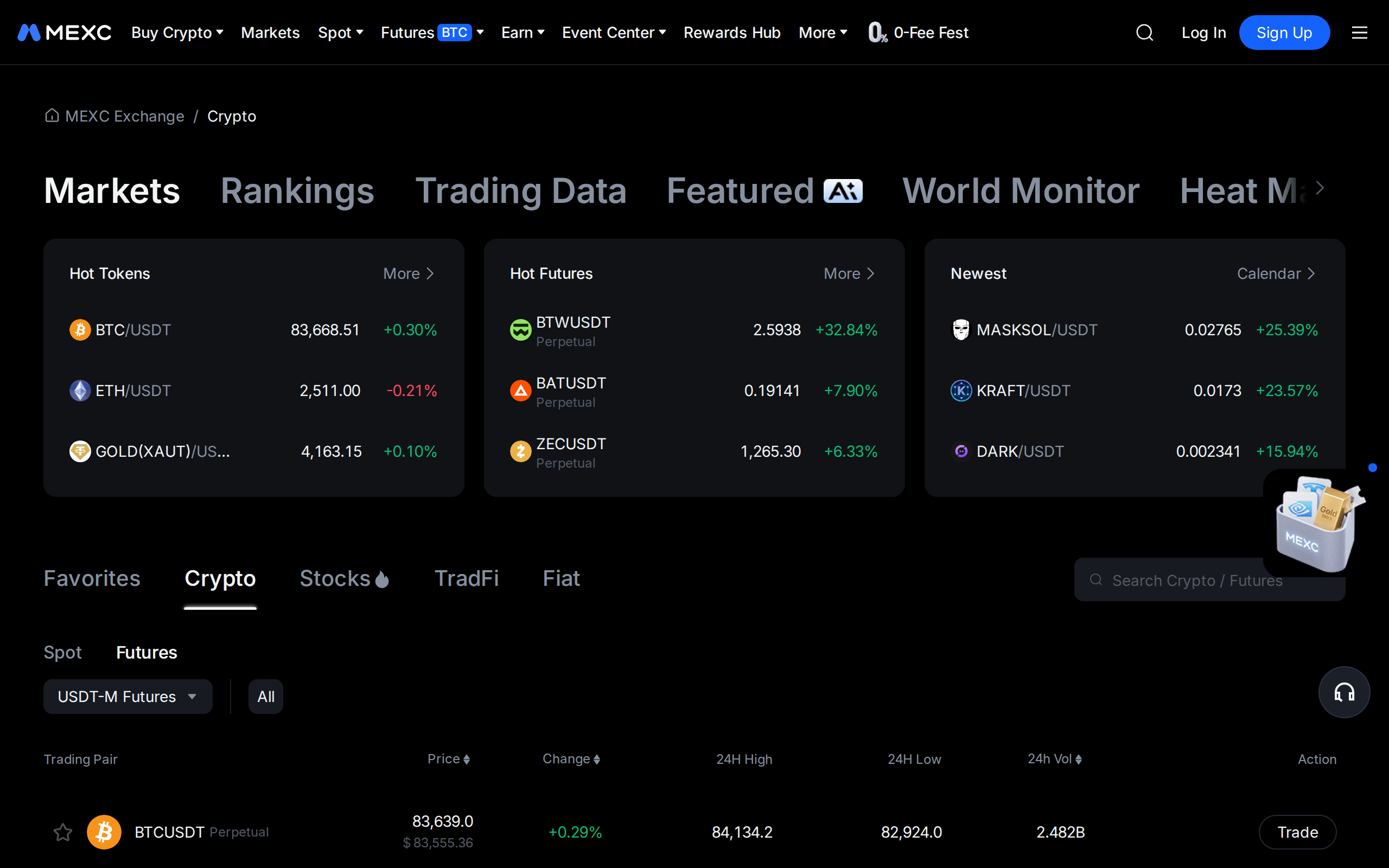
A wide list brings the usual problem of small tokens with thin books. When we looked at the markets page, the top movers were small coins gaining over 20% in a day. Those are the pairs where slippage hurts, so a 0.10% fee is not your real cost.
Regulation, reserves and the Russia problem
WhiteBIT holds VASP registrations in a dozen or more jurisdictions, including Spain, Lithuania, Poland, the Czech Republic and Bulgaria. WB-Shield Innovations GmbH, operating as WhiteBIT EU, announced a MiCA authorisation from Austria's Financial Market Authority on 19 June 2026, to support a European platform at whitebit.eu. That is the strongest answer to the question of whether it is credible in Europe.
On safety, the exchange says 96% of assets sit in cold wallets and that it keeps a $30 million insurance fund. A Hacken proof-of-reserves audit in November 2024 reported an overall collateral ratio of 238%. Per-asset cover was uneven: Bitcoin at 507%, Ethereum at 269%, but Solana at 101% and USDT at 108%. Cover just above 100% leaves little margin. WhiteBIT also reported CCSS Level 3 certification in December 2024.
There is a political edge too. WhiteBIT stopped registering new Russian users because of sanctions screening, and Russian authorities have designated it and W Group as undesirable organisations. Whether that matters to you depends on where you live.
The verdict
For a European user who wants low fees and a long coin list, WhiteBIT is a credible alternative to the large offshore exchanges, mainly because of the Austrian authorisation and the published reserve audit. KYC can be slow and sometimes needs more than one submission, according to independent reviewers. It is closed to US users, and the WBT discount ties you to its own token.
Our score is 7.2. Use it if you are in the EEA and trade altcoins regularly. Avoid it if you are in the US, need a deep list of fiat rails, or want the biggest order books for large size.