Uphold review: anything-to-anything trading, and the 2% spread you pay for it
Uphold swaps any asset for any other in one step, but BTC and ETH carry a 2.05% to 2.2% spread and altcoins up to 3.8%. We read its fee page, reserve report and staking cuts.
Best forOccasional multi-asset swaps, not regular bitcoin buying
Full fee ledger
- Price
- Free to join; spread shown before each trade
- Operator
- Uphold
- BTC and ETH spread
- 2.05% to 2.2% (US, UK, Europe)
- Altcoin spread
- 2.85% to 3.8%
- Major FX spread
- 0.3%
- Precious metals spread
- 2.35% to 3.40%
- USD to USD stablecoins
- 0% on the first $20,000 a month
- Quote validity
- Price held open for 18 seconds
- Staking commission
- 35% boosted (from 15 Oct 2026), 50% flexible
- Reach
- 140+ countries, 300+ currencies and commodities
- Reserve figure
- 100.5% shown on its transparency page
Our verdict
Uphold is a convenient switchboard for moving between crypto, stablecoins, currencies and metals, with a clear all-in price and a live reserve figure. The cost is a 2.05% to 2.2% spread on BTC and ETH and up to 3.8% on altcoins, far above an order book. This is reporting, not personal financial advice.
What works
- Price on the Preview Trade screen is the price paid, with no extra fee at confirmation
- 0% spread on USD to supported USD stablecoin conversions, up to $20,000 a month
- Publishes a live reserve ratio, which read 100.5% when we looked
- SOC 2 Type 2, ISO 27001 and PCI DSS certifications listed on its security page
What does not
- BTC and ETH spreads of 2.05% to 2.2% cost roughly five times a 0.40% taker order
- Altcoin spreads run from 2.85% to 3.8%, higher on small-cap tokens
- Boosted staking commission is 35% from 15 October 2026, and flexible staking 50%
- Registered in the Bahamas, with fees and assets varying by jurisdiction
Put $1,000 into bitcoin on Uphold and, on the rates published on its fee page, around $20 to $22 of it goes to the spread before you hold a single satoshi. The same order as a taker on an order-book exchange at 0.40% costs $4. That gap is the whole Uphold question: you pay for being able to turn any asset into any other asset in one tap. Whether it is worth it depends on how often you actually need that. This is reporting, not personal financial advice.
What "anything-to-anything" really sells
Uphold says "millions of customers" trust it with crypto, currencies and metals in one balance. Its about page says it serves 140+ countries and 300+ currencies and commodities, and has been running since 2015. You can swap a stablecoin for gold, or XRP for a foreign currency, without first selling into dollars and buying again.
On an ordinary exchange that trip takes two orders and two fees. On Uphold it is one, which is the real convenience. The catch is that the price is a quote, not an order book.
The price list, in plain numbers
Uphold has no maker and taker ladder. Its service fees page, last updated 21 September 2026, lists typical spreads for the US, UK and Europe:
US dollars and supported USD stablecoins: 0% (1:1), on the first $20,000 of such conversions per rolling month.
Other stablecoins: under 0.25%.
Major FX: 0.3%.
BTC and ETH: 2.05% to 2.2%.
Altcoins: 2.85% to 3.8%.
Precious metals: 2.35% to 3.40%.
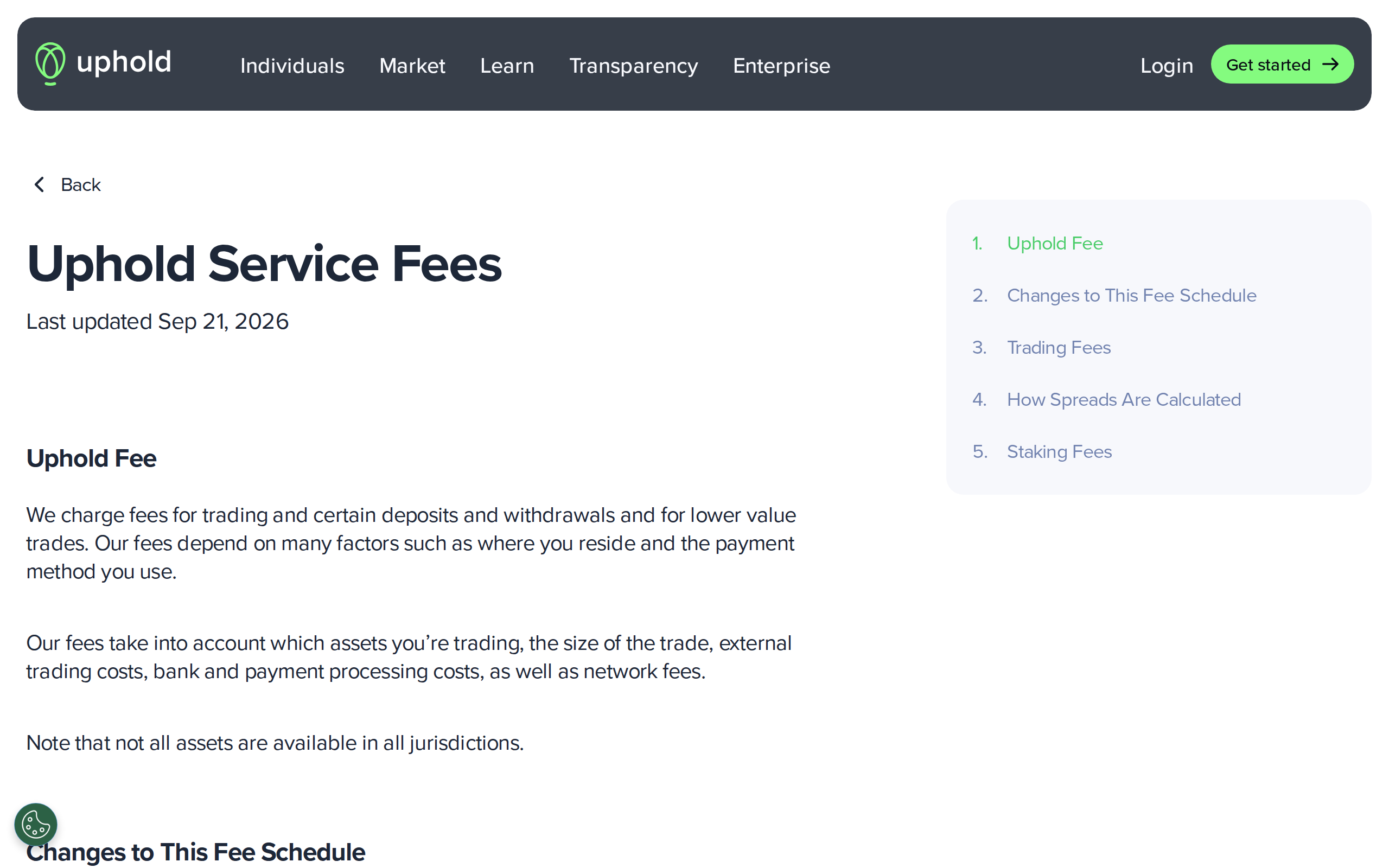
Two rules in the small print deserve a flag. When you trade across two asset types, the higher of the two rates applies, so an altcoin into a stablecoin is charged at the altcoin rate. And each price is held open for 18 seconds, with an in-app warning if the spread passes 4%.
To its credit, the page says the price on the Preview Trade screen is the price you pay, with no extra fee between preview and confirmation. We found that clear, and it is more honest than the "zero fee" banners elsewhere.
Where the 0% is real
The free lane is dollars to dollar stablecoins. If you move money between USD and a supported USD stablecoin, Uphold is cheap. Past the $20,000 monthly cap, or when the coin drifts more than 0.2% from $1, the standard stablecoin spread returns.
Proof it holds the money
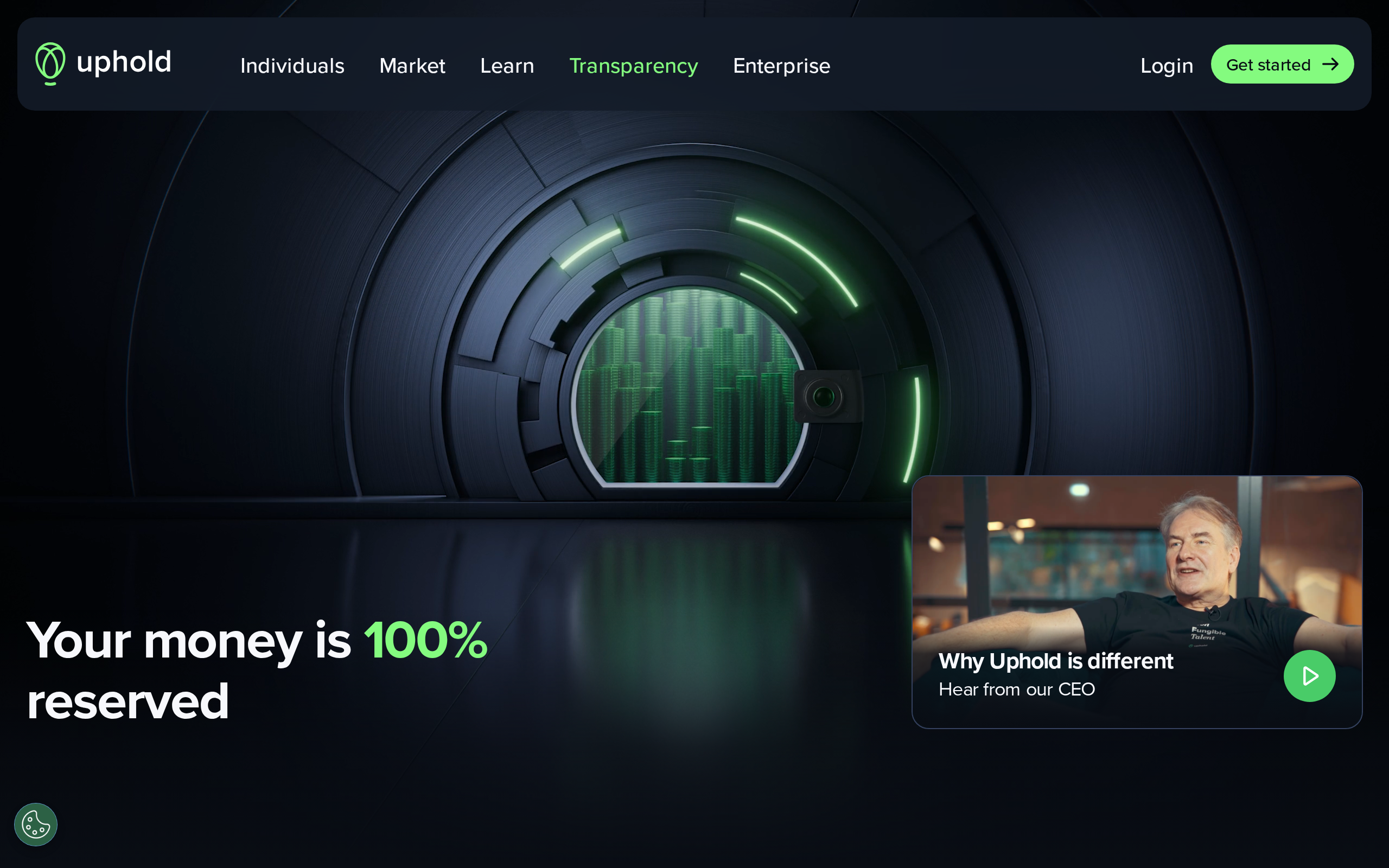
Uphold publishes its reserve figures on a live page, which few rivals do. The transparency page headline reads "Your money is 100% reserved", and the page showed a reserve status of 100.5% when we loaded it. Uphold says it posts assets and liabilities in real time, and that it never loans out customer assets.
The security page lists SOC 2 Type 2, ISO 27001 and PCI DSS certification, a security operations centre and independent audits of its Reserveledger tooling. Certifications show process, not immunity, so keep your own two-factor login on. The company is registered in Nassau, Bahamas, which tells you its home regulator is not the one you would pick for deposit protection.
The 300-asset catalogue, and the markup that comes with it
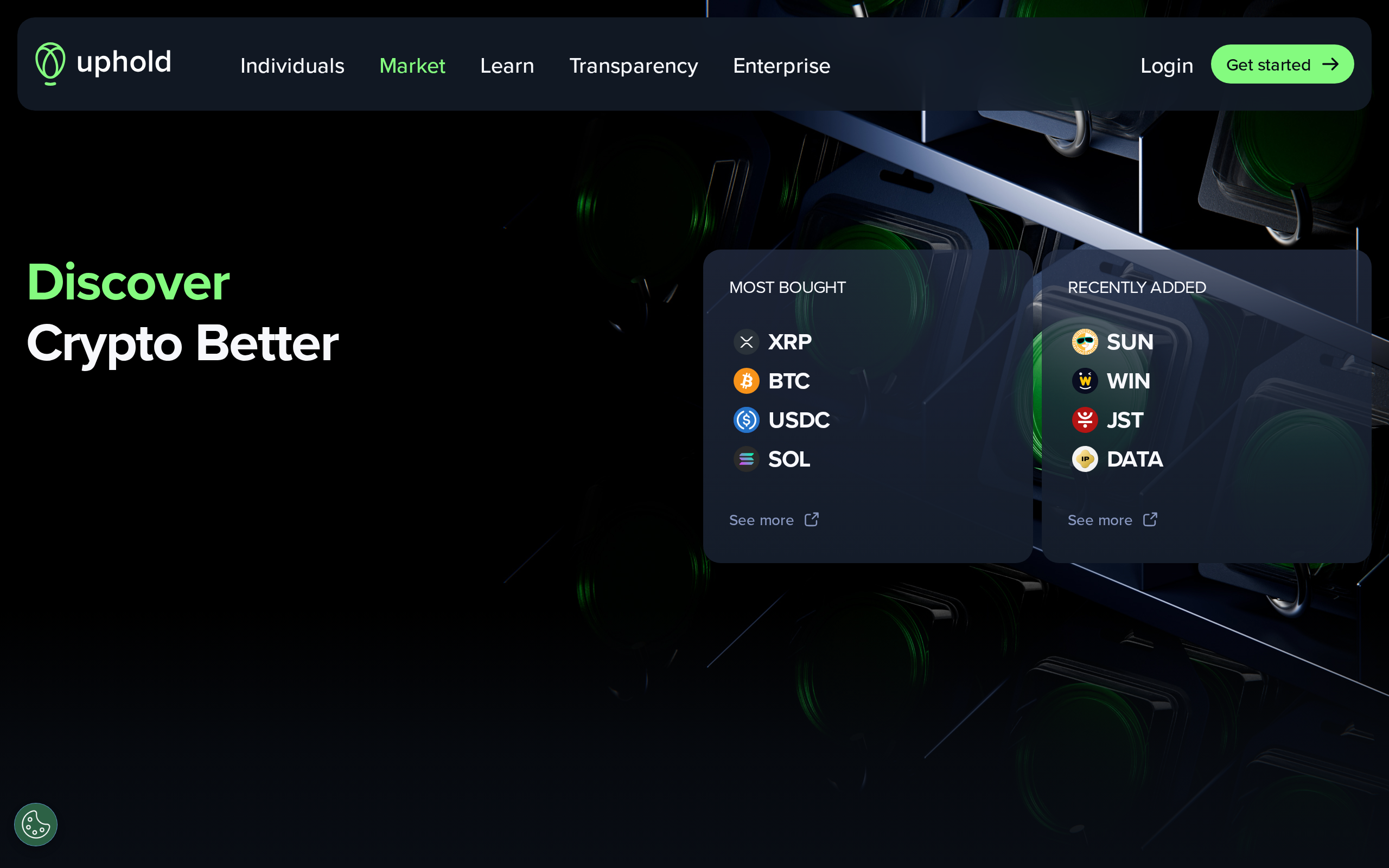
Third-party reviews put the catalogue at 300+ cryptocurrencies plus equities and metals, and the prices page is a browsable list of them.
Small, newly listed tokens carry the widest spreads. The fee page itself says "newly-supported or small cap tokens are typically less liquid and incur higher fees". Buying a thin altcoin at 3.8% and selling it later at the same rate costs you around 7.6% round trip, before the market moves at all.
Staking got more expensive
Staking commissions are 35% on boosted staking, effective 15 October 2026, and 50% on flexible staking, per the same fee page. A commission of a third or a half is steep, and it should be weighed against the headline yields in the app.
Verdict: use it as a switchboard, not a shop
Pick Uphold if you move between currencies, stablecoins and metals, you value a visible reserve figure, and trades are occasional. The all-in price shown before you confirm is easy to understand.
Skip it if you buy bitcoin or ether on a schedule, trade altcoins, or want to grow volume to lower your cost. A plain exchange with a maker and taker schedule will beat it by a wide margin once your orders are larger than a few hundred dollars. We rate Uphold as a useful tool with a high toll.