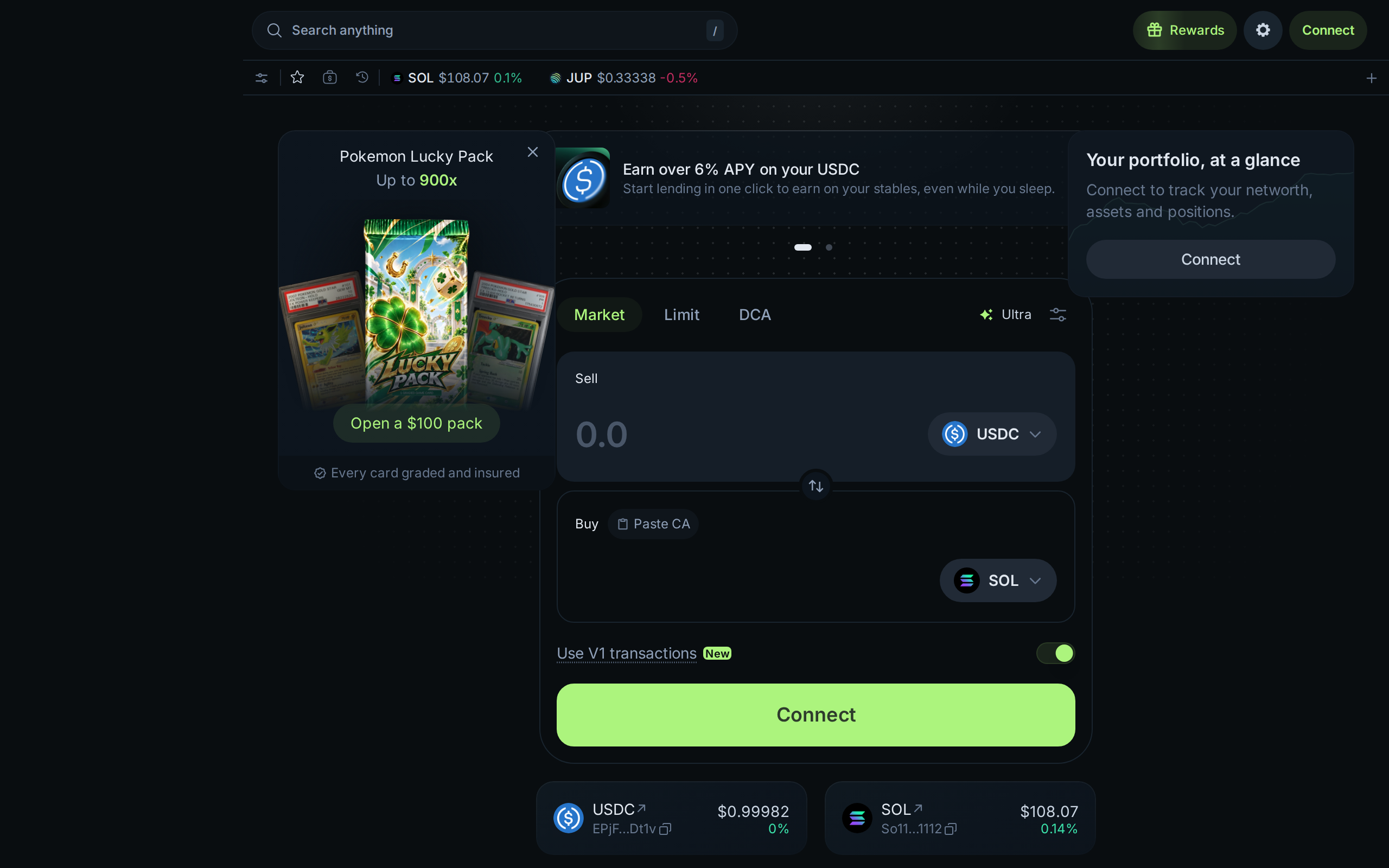
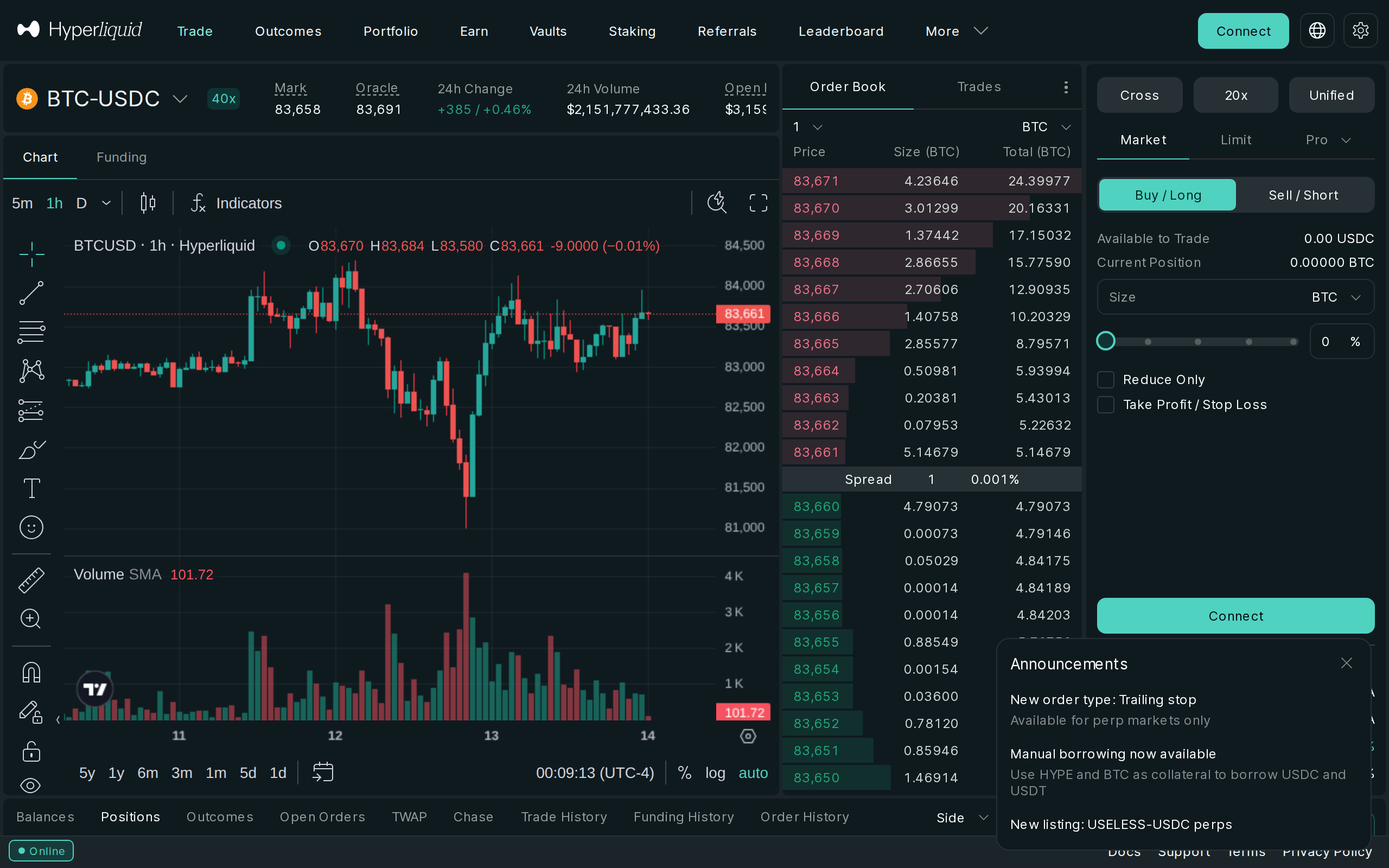
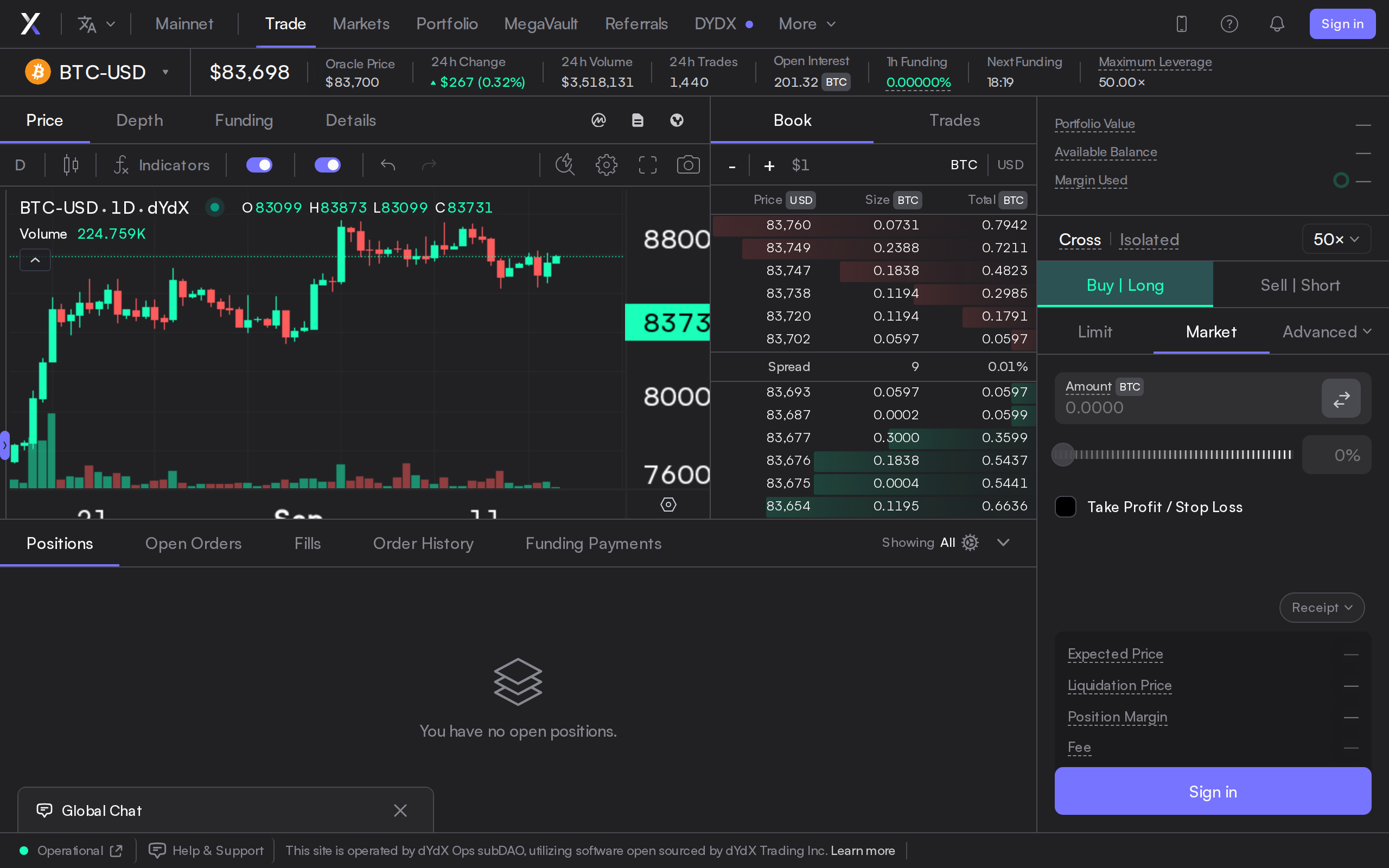
Uniswap review: when a swap beats a centralized exchange
Uniswap has no sign-up and no withdrawal queue, but you pay pool fees from 0.05% to 1% plus network gas. We worked out when that beats an exchange and when it costs you more.
Best forSelf-custody users swapping tokens that centralized exchanges do not list
Full fee ledger
- Price
- Free to use; pool fees and network gas apply
- Operator
- Uniswap Labs
- v3 pool fee tiers
- 0.05%, 0.30% and 1% (standard)
- v4 pool fees
- Any fee from 0% to 100%, set by the pool creator
- v2 protocol fee
- 0.05% (one sixth of the 0.30% swap fee)
- Custody
- Non-custodial: you sign from your own wallet
- Account required
- None; connect a wallet
- Costs outside the pool
- Network gas on each transaction
- Maker
- Uniswap Labs; protocol governed by UNI holders
Our verdict
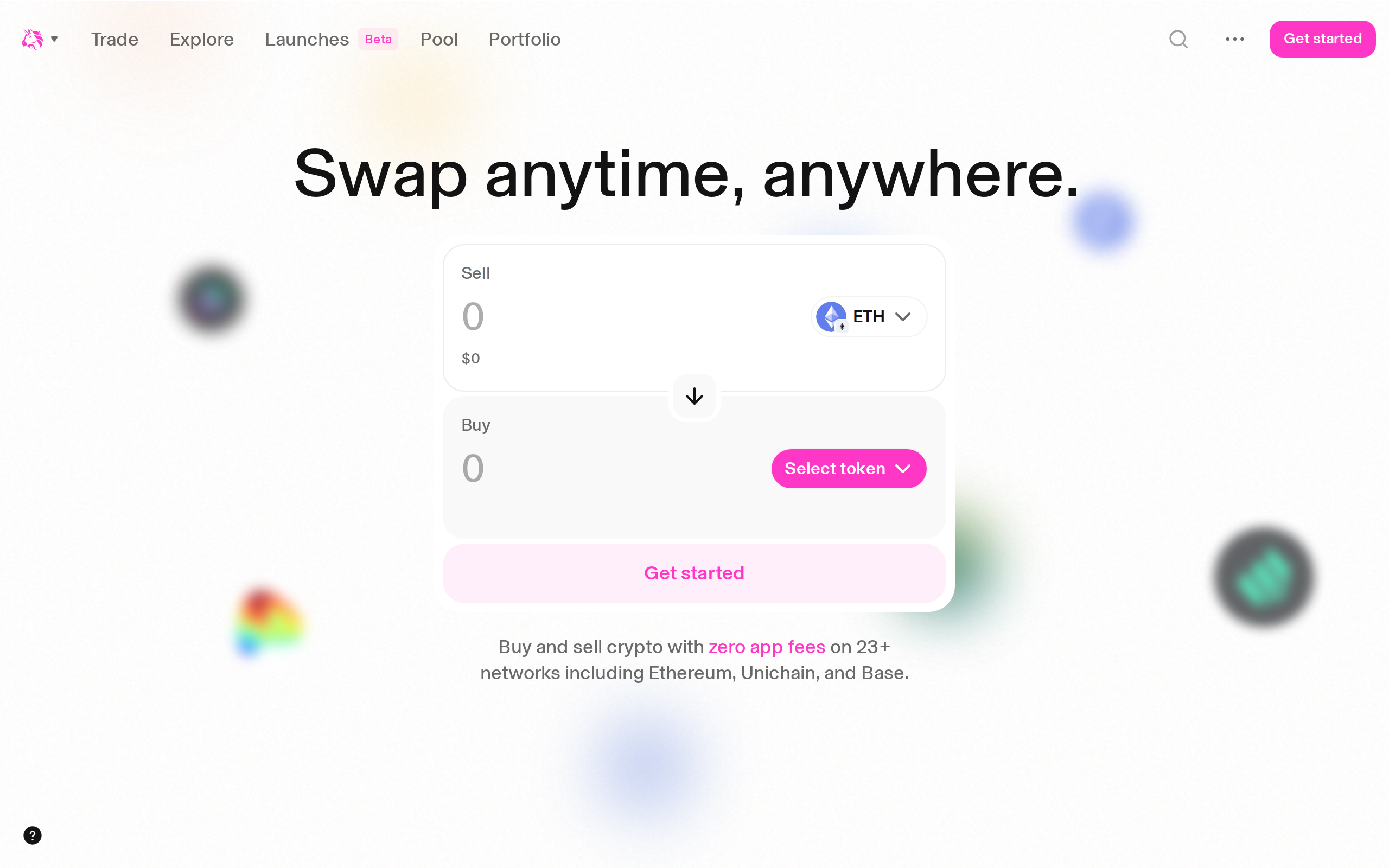
Uniswap is the best-known on-chain swap venue. You keep custody, there is no account to freeze and long-tail tokens appear here first. It costs a pool fee of 0.05% to 1% plus gas, and it will happily swap you into a scam token. It beats an exchange for self-custody and new tokens, and loses for large sizes of major coins. Not financial advice.
What works
- No account or identity check to use the web app
- You keep custody of your coins until the swap executes
- Standard v3 pool fee tiers of 0.05%, 0.30% and 1%
- Tokens often trade here before any centralized exchange lists them
What does not
- Network gas is paid on every swap and varies by chain
- Anyone can create a pool, so fake and scam tokens are common
- Slippage on thin pools can cost more than the fee
- No customer support to reverse a mistaken transaction
The honest comparison is not Uniswap against Coinbase. It is a swap you sign yourself against a deposit, a trade and a withdrawal on somebody else's platform. For some tokens, Uniswap is the only door. For Bitcoin and Ether in size, it is almost never the cheapest one. We lay out when each wins, using the protocol's own fee documentation. This is not personal financial advice.
What a swap actually costs
Every Uniswap swap pays a fee to the liquidity providers whose capital fills your order. The fee documentation puts it plainly: in v3, the standard tiers are 0.05%, 0.30% and 1%, with the right tier depending on how volatile the pair is. In v4, a pool creator can set any fee from 0% to 100%, in steps of one hundredth of a basis point.
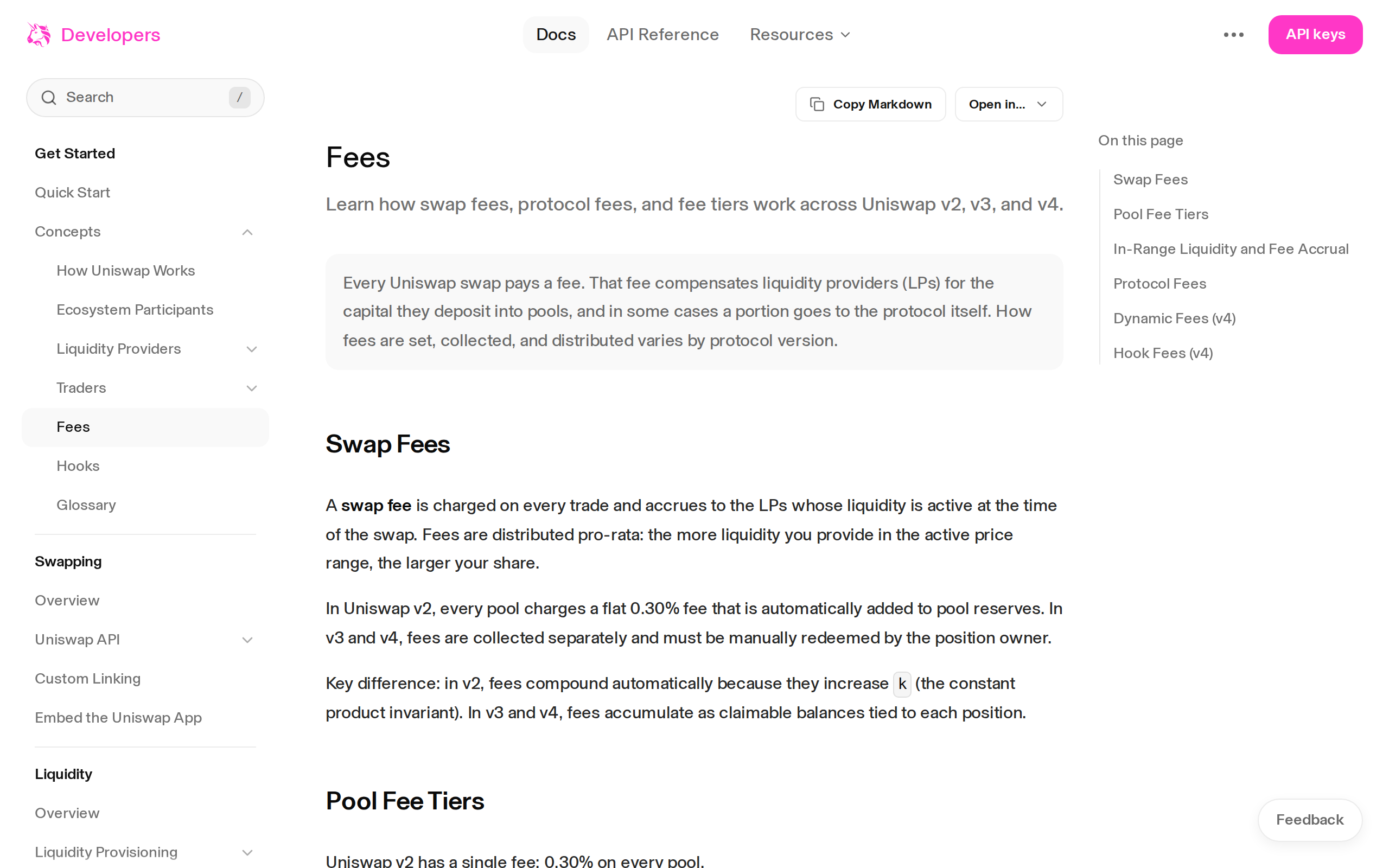
Then there is gas, the network fee, which you pay in the chain's native coin on every transaction, whether the swap succeeds or not. On Ethereum mainnet it can exceed the pool fee on a small order. On layer-2 networks it is usually small. Because gas does not scale with order size, a $50 swap and a $50,000 swap cost similar amounts to execute, which is why small swaps on mainnet are poor value.
Protocol fees arrived
Protocol fees are now active on all v2 pools and select v3 pools after a December 2025 governance vote, per the documentation. On v2 that means 0.05%, one sixth of the 0.30% swap fee. On a v3 pool at 0.30% it is 0.05%. Collected fees pile up in onchain contracts, and searchers claim them by burning UNI. For you as a trader, the headline fee is what matters and the split between providers and protocol is background.
When Uniswap is the cheaper, safer choice
The token is not listed anywhere else. New tokens appear in pools first. A centralized exchange can take weeks.
You hold your own coins. Nothing sits in an exchange account, so there is no withdrawal queue and no freeze.
You trade a stable pair in a 0.05% pool. Two dollar-pegged tokens at 0.05% cost $0.50 per $1,000, plus gas.
You sit in a jurisdiction where exchanges refuse you. An on-chain swap needs a wallet, not an account, though local law still applies to you.
When it is not
Large sizes of Bitcoin or Ether. Deep centralized books will beat a single pool on slippage.
Small amounts on a high-gas chain. A $40 trade that costs $6 to execute has paid 15% before the fee.
Tokens you have not researched. Anyone can make a pool, so a fake token with a real-looking name can sit one search away from the real one. Check the contract address from the project's own site every time.
The product around the swap
The explore section of the app splits into Earn, Tokens, Auctions and Pools.
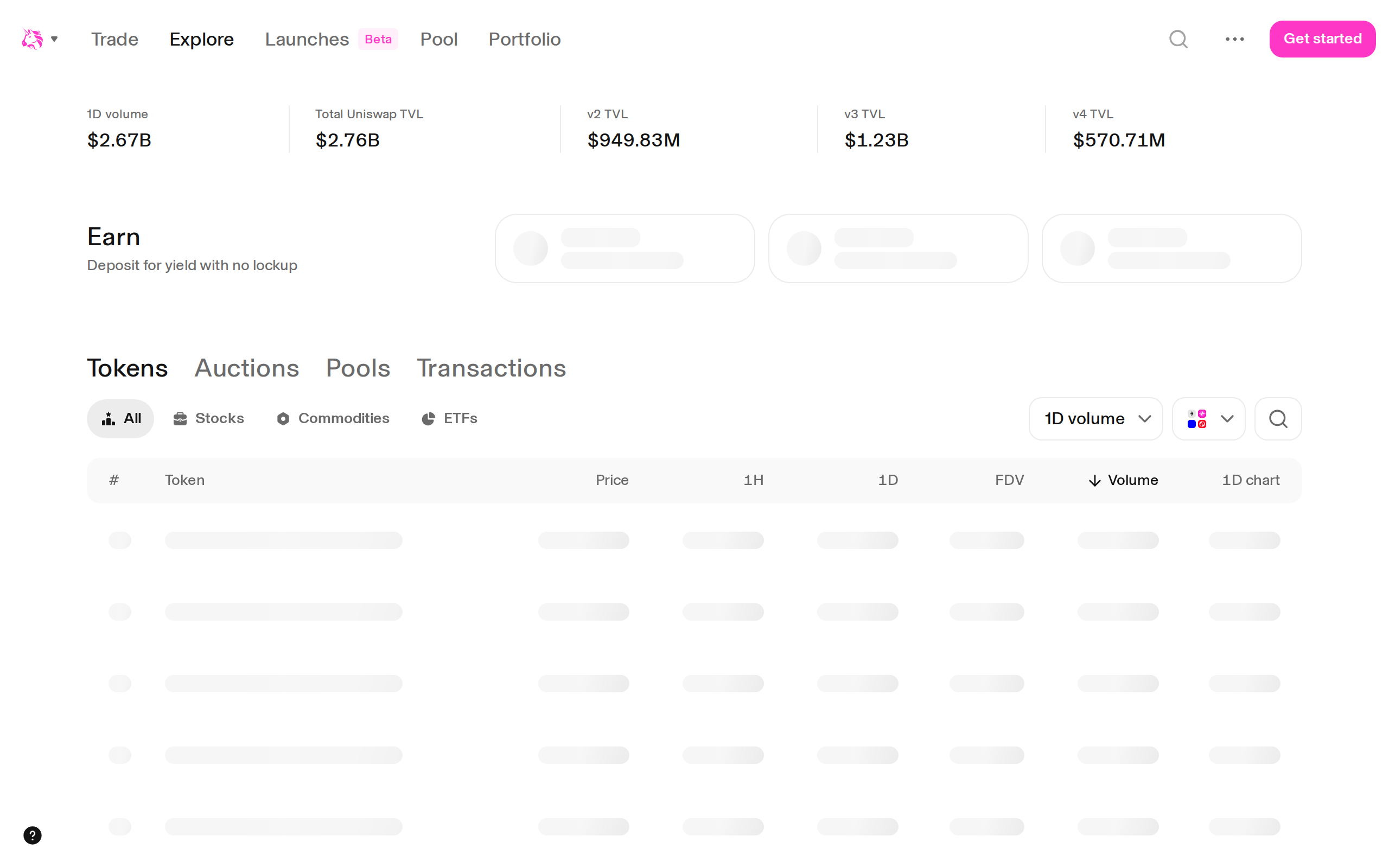
Pools is where liquidity providers work, and that is a different risk from swapping: impermanent loss can leave a provider with less than if they had simply held. We reviewed the trading side here, not the provider side.
Support, and what it cannot do
The support centre offers an FAQ with the top ten questions, getting-started guides, and separate help for the Uniswap Wallet and the web app.
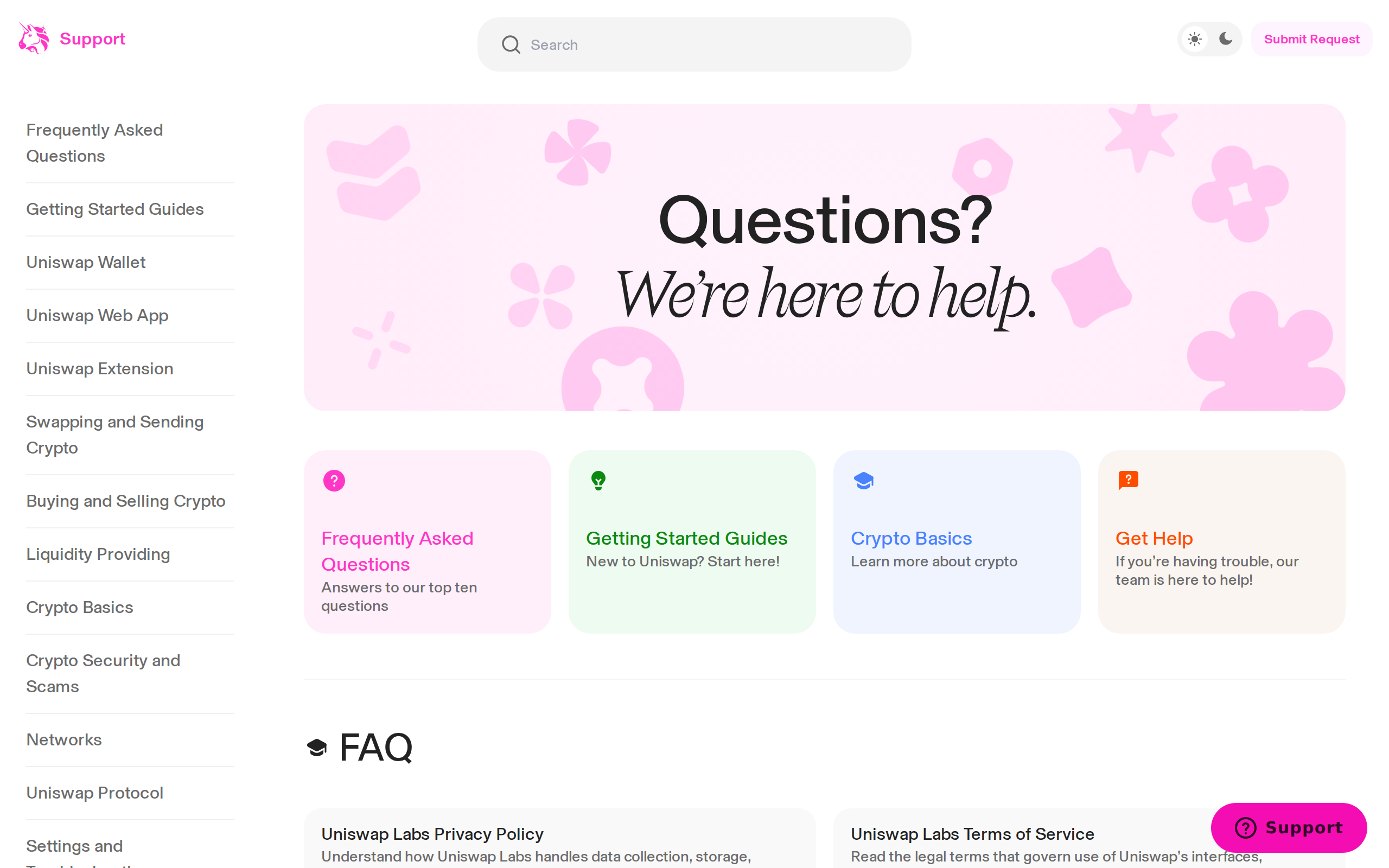
It can explain a failed transaction. It cannot reverse a signed one. A swap sent to the wrong token or with a bad slippage setting is final, and no help desk will get the money back.
What we did not test
We read the fee documentation, captured the app and help pages, and did not sign swaps on mainnet for this piece, so the gas figures above are descriptions and not measurements. Uniswap Labs has also charged its own interface fee on some swaps in its apps. We could not load its fee article, so read the quote screen before you sign: it lists the network cost and any extra charge ahead of confirmation.
Our verdict
We give Uniswap a 7.4, the highest among the venues in this batch, because it does one job transparently and charges for it in numbers you can read. It loses points for the scam-token problem and for gas on small orders. Use it with a wallet you control, verify every contract address, set slippage low, and keep your large positions on a venue with deeper books.