Robinhood crypto review: is 'commission-free' really cheap?
Robinhood sells crypto with no headline commission, then adds a spread and a new fee tier of up to 0.95%. We counted the real costs, the short withdrawal list and who the app still suits.
Best forCasual US buyers who already hold stocks in the app
Full fee ledger
- Price
- Commission-free; spread applies
- Operator
- Robinhood Markets
- Commission
- None on standard orders; spread applies
- Fee tiers
- 0.00% to 0.95% by 30-day volume
- Instant cash-out fee
- 1.75%, min $1, max $150
- Standard bank transfer
- No fee
- Assets
- Roughly 45 coins in 2026 (32 in late 2025)
- Withdrawals
- BTC, ETH, DOGE, SOL and USDC on supported networks
- Regulation
- Robinhood Crypto, LLC, NYDFS licensed
Our verdict
Robinhood is the easiest way to buy a little Bitcoin next to your stocks, and the app is clean. It is not the cheapest: the spread is hidden in the price, only a handful of coins can be withdrawn, and the advanced-fee tiers still start well above exchange rates.
What works
- Clean, simple app with stocks and crypto in one place
- Fee tiers fall to 0.00% for high-volume traders
- Robinhood Wallet offers separate self-custody
- Operated under a New York BitLicense, NMLS ID 1702840
What does not
- Spread is embedded and never shown as a line item
- Withdrawals limited to a few coins such as BTC, ETH, DOGE and SOL
- Instant bank withdrawals cost 1.75%, minimum $1, maximum $150
- Far fewer coins than Coinbase or Kraken
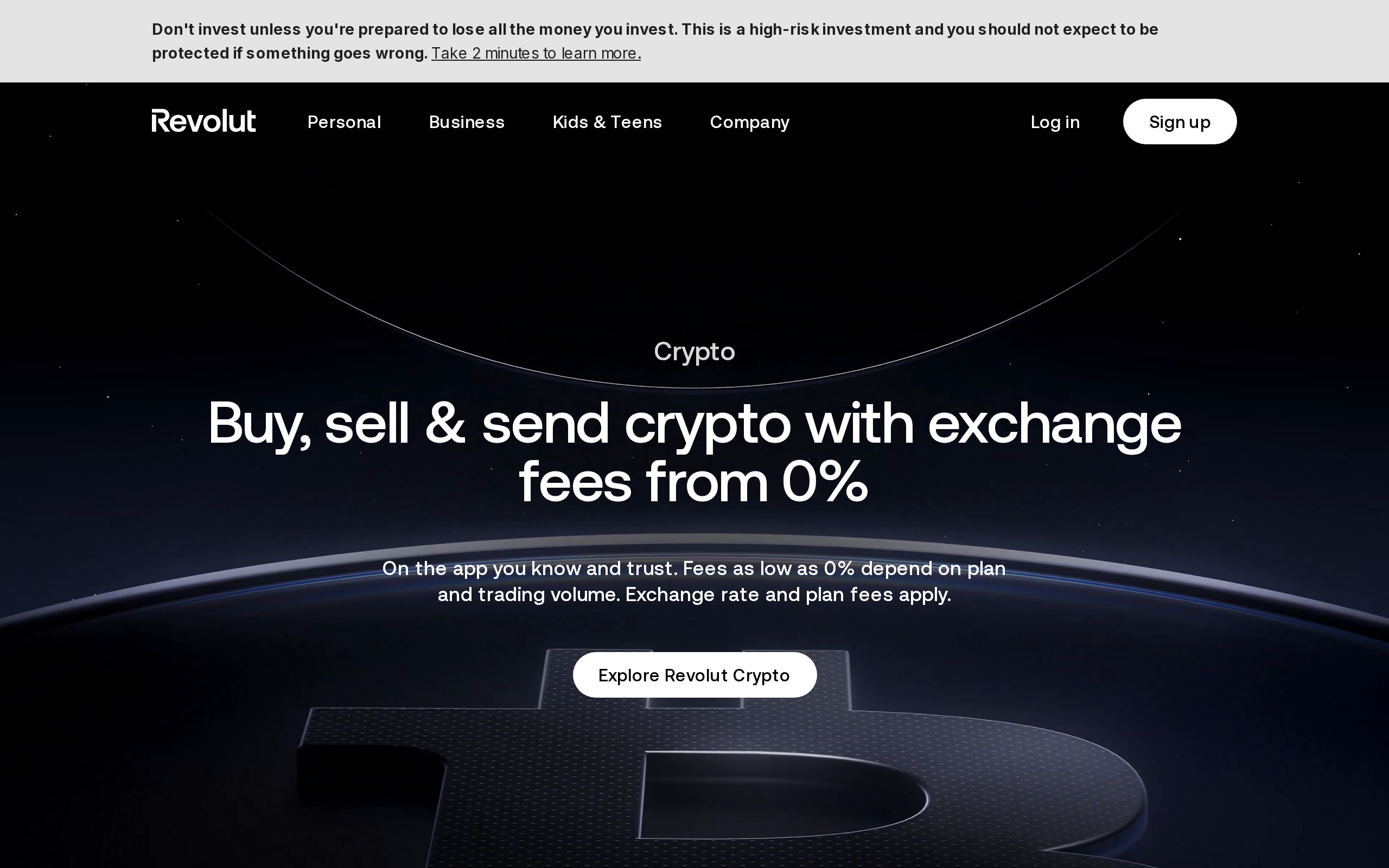
The headline on Robinhood's crypto page says you can trade at "one of the lowest costs on average." That is a claim about an average, and the word "commission-free" next to it does a lot of work. We read the fee pages, the disclosure library and independent comparisons to find out what a US buyer actually pays, and the answer is: more than zero, less than a casino, and not always visible. Nothing here is personal financial advice.
Where the money actually goes
Robinhood does not charge a separate commission on a standard market order. It earns on the spread, the gap between the price it quotes you and the market price. Coin Bureau's comparison puts the embedded spread at roughly 0.1% to 1%, undisclosed up front, against about 0.5% for Coinbase's retail screen.
So a $1,000 Bitcoin purchase might carry anywhere from $1 to $10 in cost, and you cannot read it off the confirmation screen. On a calm day it can be small. On a fast one it widens.
Robinhood has also started rolling out maker and taker fees. Its fee tier page says rates range from 0.00% to 0.95%, set by your trailing 30-day volume, with market orders always taker and resting limit orders eligible for the lower maker rate. The page also warns the rollout is gradual, so not every account sees it yet.
The useful comparison is with an exchange that shows its fee. Coinbase Advanced lists 0.40% maker and 0.60% taker at the entry level, per the same comparison, which is not cheap either, but you can read it before you click. A casual investor placing small orders on Robinhood will sit near the expensive end of its own range.
Getting your crypto out
This is the hidden cost people meet later. Per the same Coin Bureau piece, on-chain withdrawal is limited to a handful of assets: Bitcoin, Ether, Dogecoin and Solana, with USDC free on supported networks. Most of the roughly 45 coins on the app can be bought and sold, but not sent to your own wallet.
Cashing out to a bank is fine if you wait: a standard transfer has no fee. If you want it immediately, an instant withdrawal to a bank or debit card costs 1.75%, with a $1 minimum and a $150 cap, according to CryptoSlate's 2026 comparison. On a $2,000 sale that is $35 for impatience.
A second app for self-custody
Robinhood also offers a separate non-custodial product, Robinhood Wallet, covering Ethereum, Bitcoin, Solana and several layer-2 networks. It is a different thing from your brokerage crypto balance: you hold the keys, and nobody can freeze it, including you if you lose the phrase.
For anyone who wants coins off the platform, the wallet is the workaround for the narrow withdrawal list, though it adds a step and a second app to understand.
Support, legal and learning
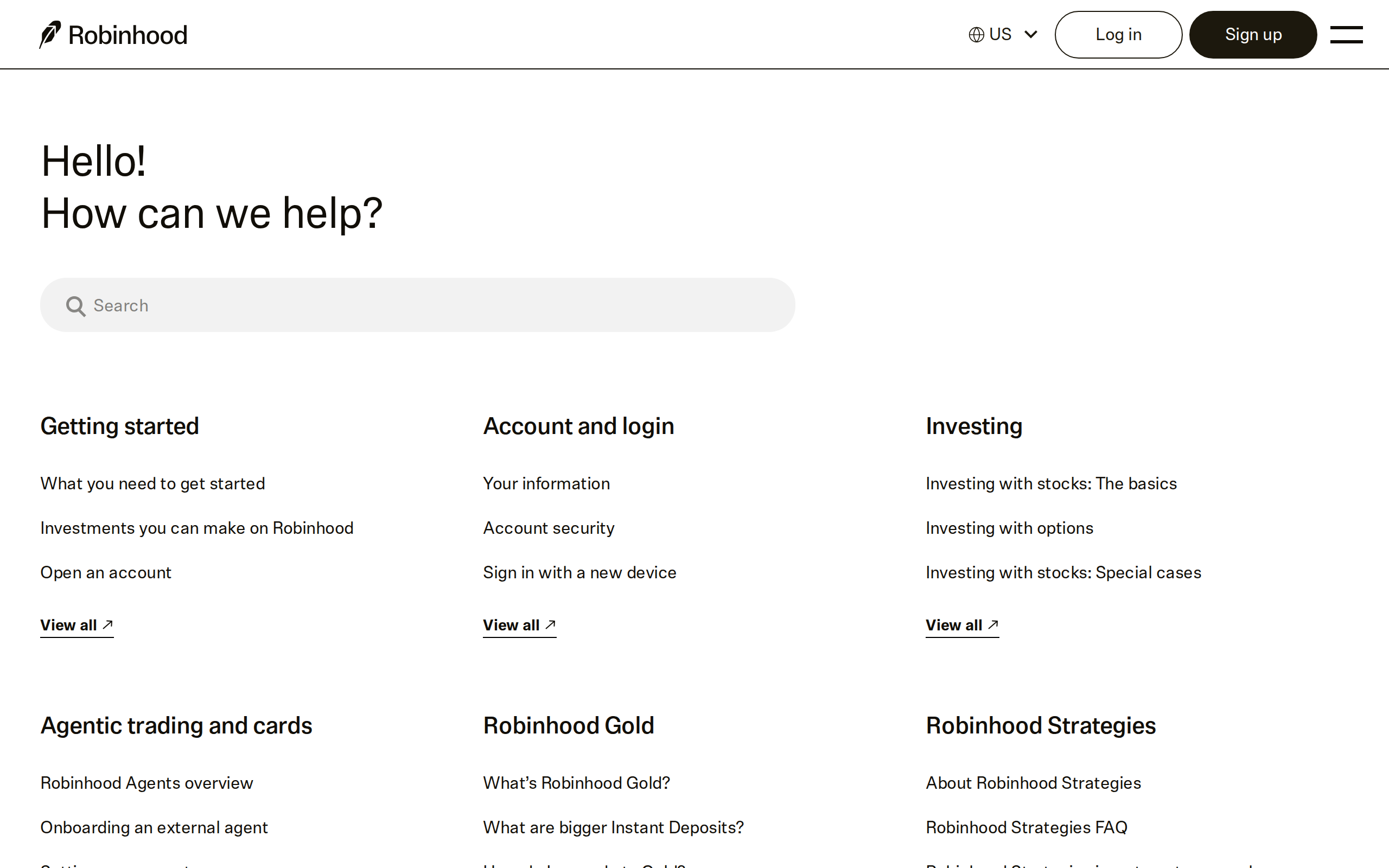
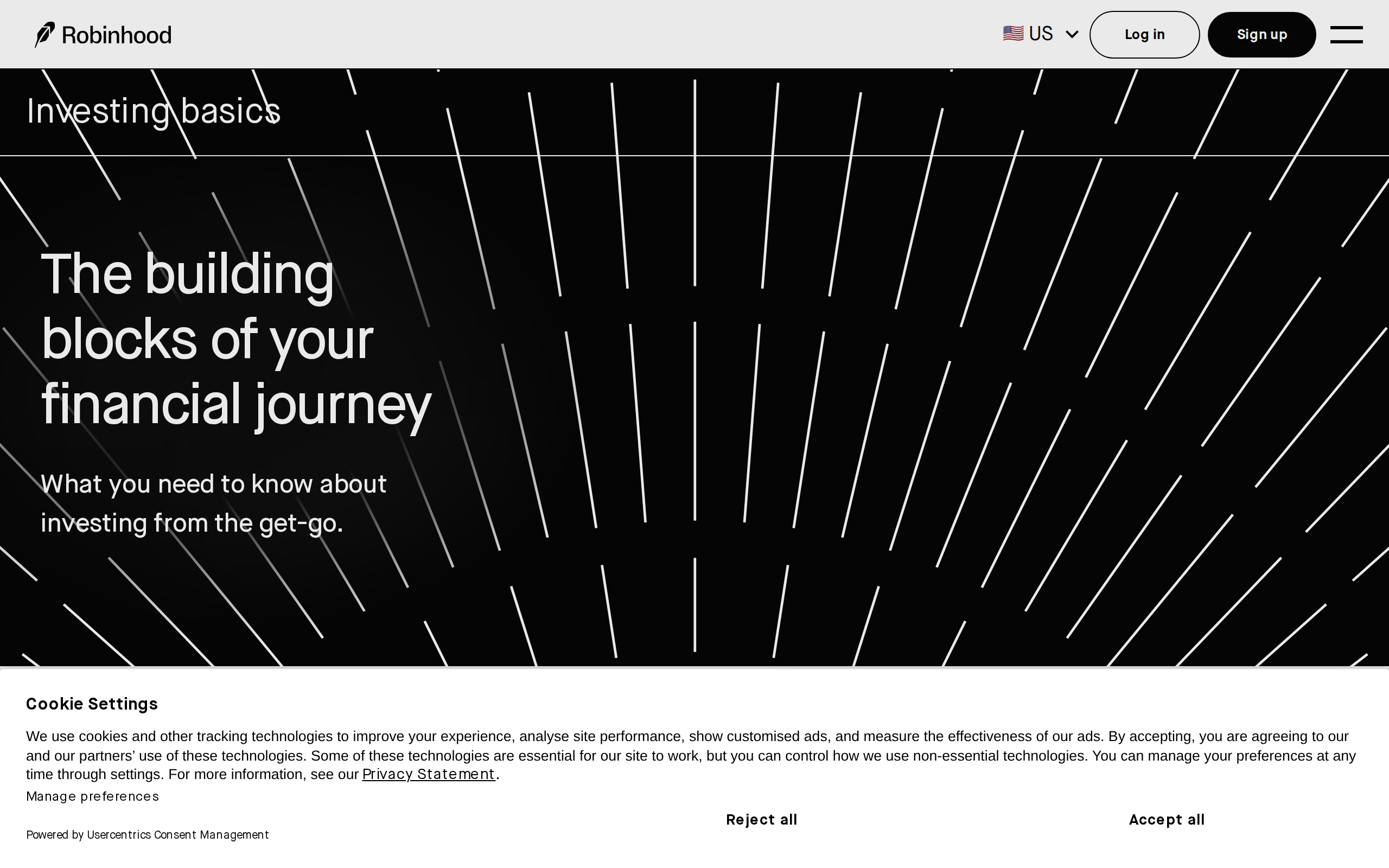
The support site is plain and searchable, and the learning hub is written for absolute beginners.
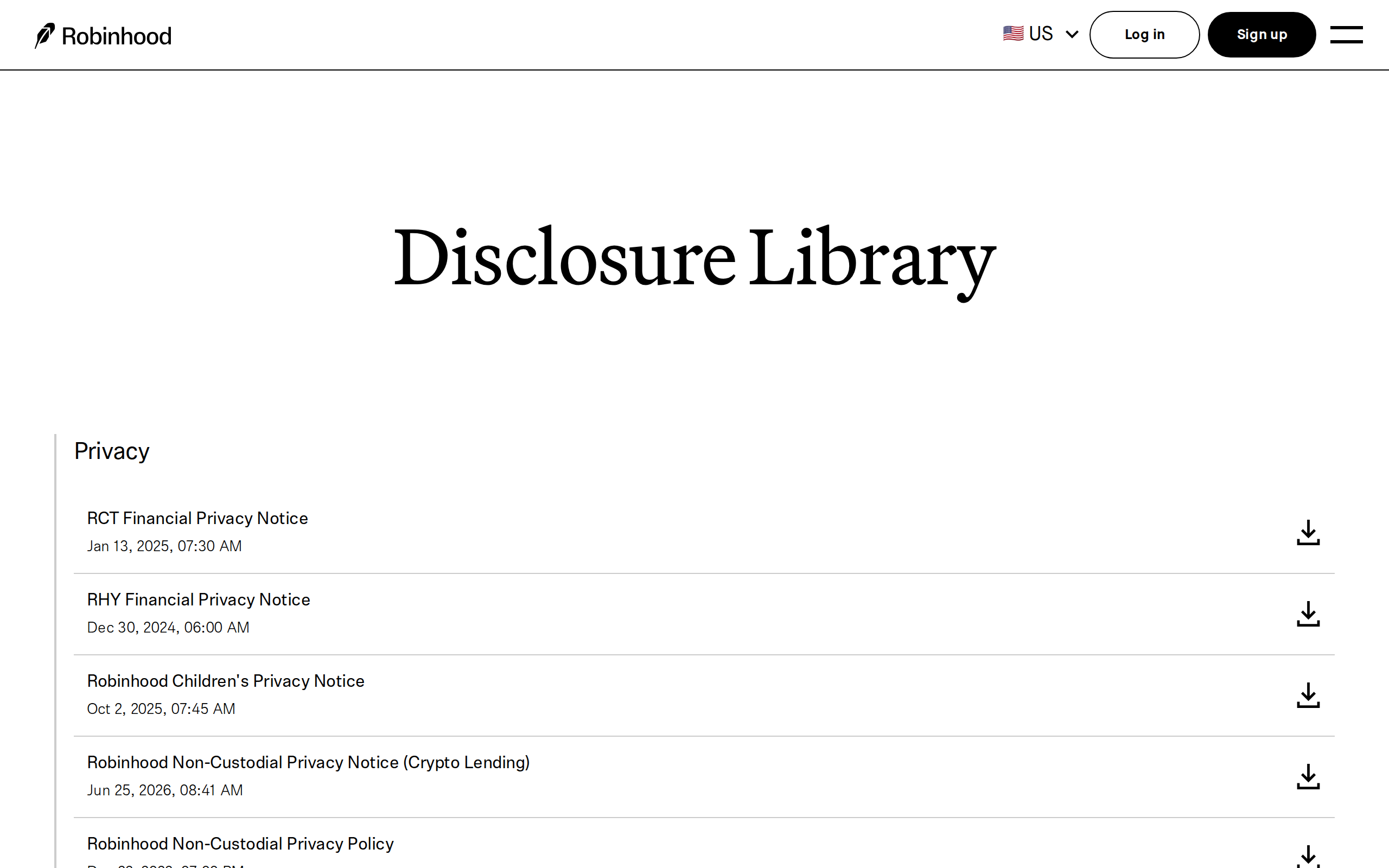
On regulation, crypto services run through Robinhood Crypto, LLC (NMLS ID 1702840), licensed by the New York State Department of Financial Services. Crypto is not covered by SIPC protection the way stock holdings are, so read the disclosure library before you fund it.
What to read before you fund it
Staking is the other gap. The same comparison found it limited to EU customers when it was written, with a reward fee of about 25%, while New York customers were due to get it in 2026. Check your own state's status in the app.
Crypto held in the main app is custodial, which means Robinhood holds it for you. The company publishes its crypto terms and risk disclosures in one place, and a quick read is worth the ten minutes. Look for how it handles outages, how it routes orders, and what happens to your holdings if the company fails.
Who this is for
Pick Robinhood if you are a US resident who wants a few hundred dollars of Bitcoin or Ether in the app you already use, and you value a quiet interface over the best price. Skip it if you trade often, want hundreds of altcoins, plan to move coins between wallets, or care about seeing every fee. For those jobs, an exchange built for crypto costs less and does more.
We rate it 6.6. The app is the best part and the pricing disclosure is the weakest part.