Phemex review: low futures fees and live reserves, but a $70 million hack still counts
Phemex charges 0.01% maker and 0.06% taker on futures at the standard tier and shows per-coin reserves above 100%. We weigh that against its January 2025 hot wallet hack and thin regulation.
Best forExperienced derivatives traders keeping only trading capital offshore
Full fee ledger
- Price
- Free to join; 0.10% spot trading fee
- Operator
- Phemex
- Futures fee, standard
- 0.0100% maker / 0.0600% taker (under $8M 30-day volume)
- Futures fee, Star VIP
- 0.0000% maker / 0.0300% taker (above $380M)
- Spot fee
- 0.10% maker / 0.10% taker per third-party reviews
- PT token discount
- 20% off spot, 10% off futures
- Leverage
- Up to 100x on BTC and ETH perpetuals, per independent reviews
- BTC reserve ratio
- 103.13% on the live page
- ETH reserve ratio
- 123.79% on the live page
- 2025 hack
- More than $70M from hot wallets, 23 January 2025
- Products
- Spot, futures, copy trading, earn, onchain
Our verdict
Phemex has patched what users can see: it repaid the 2025 hack losses, lists reserve ratios above 100% per coin and charges just 0.01% maker on standard futures. Regulation is still thin and the breach stays on its record. Suitable for experienced traders with limited capital. This is reporting, not personal financial advice.
What works
- Standard futures fee is 0.01% maker and 0.06% taker, falling to 0.03% taker at Star VIP
- Proof of Reserve page lists ratios per coin, such as BTC 103.13% and ETH 123.79%
- Paid back user losses and reopened withdrawals in stages after the January 2025 hack
- PT token discount takes 20% off spot fees and 10% off futures fees
What does not
- Lost more than $70 million from hot wallets on 23 January 2025
- Independent reviews describe limited regulation, with no major-market licence to rely on
- Reserve ratios are self-published, not audited: the USD line was only 100.60%
- Homepage leads with a $50,000 futures lucky draw that rewards trading volume
On 23 January 2025 attackers drained Phemex's hot wallets of more than $70 million. Phemex paid users back and reopened withdrawals within days. The useful question, nearly two years on, is whether the exchange you can open today looks different from the one that was robbed. Partly. The reserve page is better than most, the futures fee is low, and the regulatory footing is still thin. Reporting, not personal financial advice.
What happened, and what Phemex says it changed
The Block reported that analysts pointed at North Korea's Lazarus Group, and other coverage put the haul at about $73 million across sixteen blockchains. Withdrawals came back in stages: ETH and the main stablecoins first, then Solana, then Arbitrum, Optimism, BSC, Polygon and Base. Independent reviews say the exchange moved to Fireblocks MPC custody afterwards.
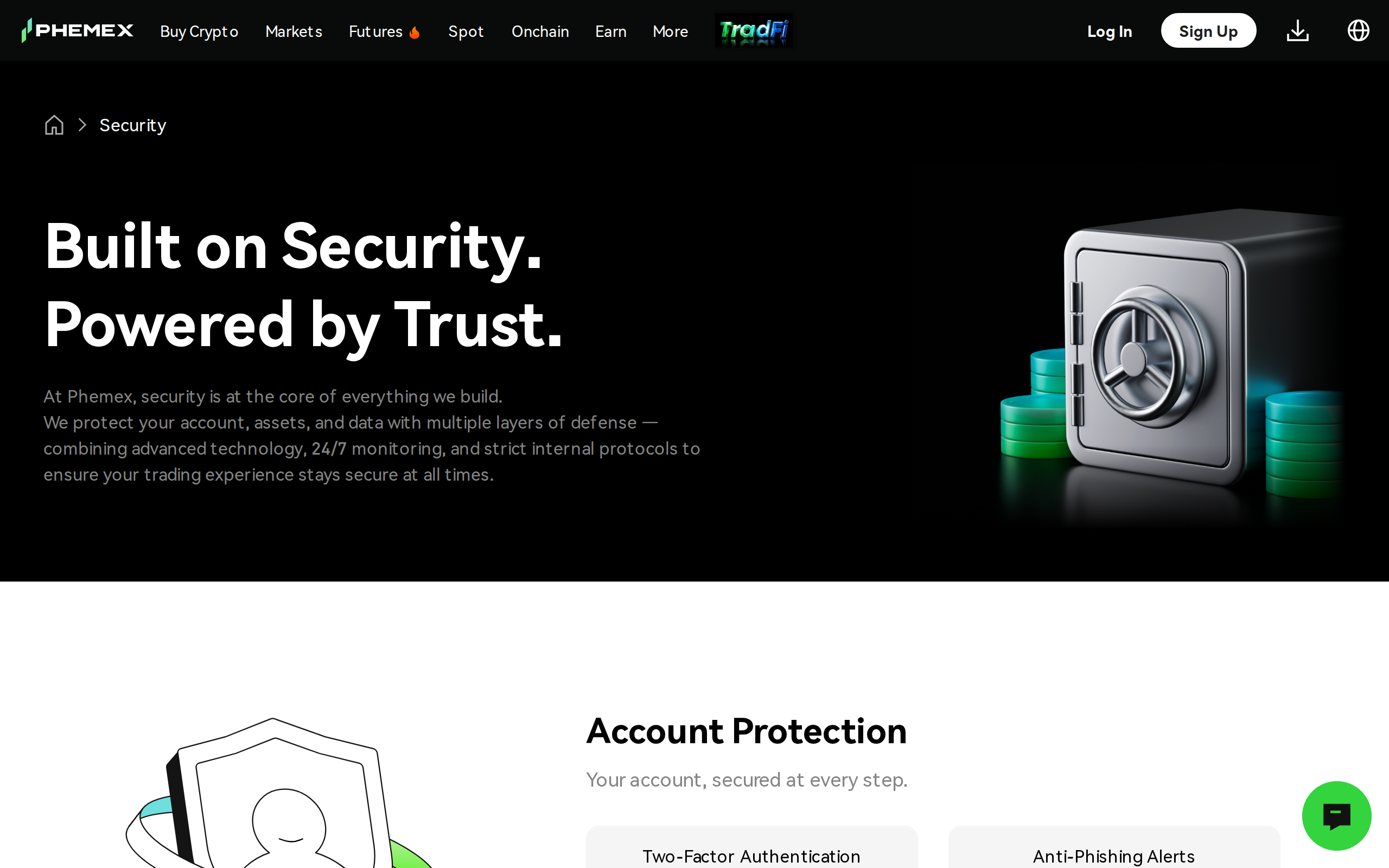
That last point comes from third parties, not from the exchange. What we can read ourselves is the security page, headed "Built on Security. Powered by Trust."
It names a cold-warm-hot wallet system, multi-signature security, 24/7 monitoring, data isolation and independent audits. Those are the right ingredients, but a list of features is not evidence. The hack hit hot wallets, which is why the next page matters more. Note what the page does not say: it names no audit firm and no date for the last review, so every claim on it is Phemex describing itself.
The reserve page is the best thing on the site
The Proof of Reserve page shows customer assets against wallet assets, coin by coin. When we loaded it, BTC read 103.13% (1,265.889 owed, 1,305.601 held), ETH 123.79%, SOL 141.42% and XRP 157.03%. The USD line, at 100.60% on about $120.4 million of customer assets, was the thinnest.
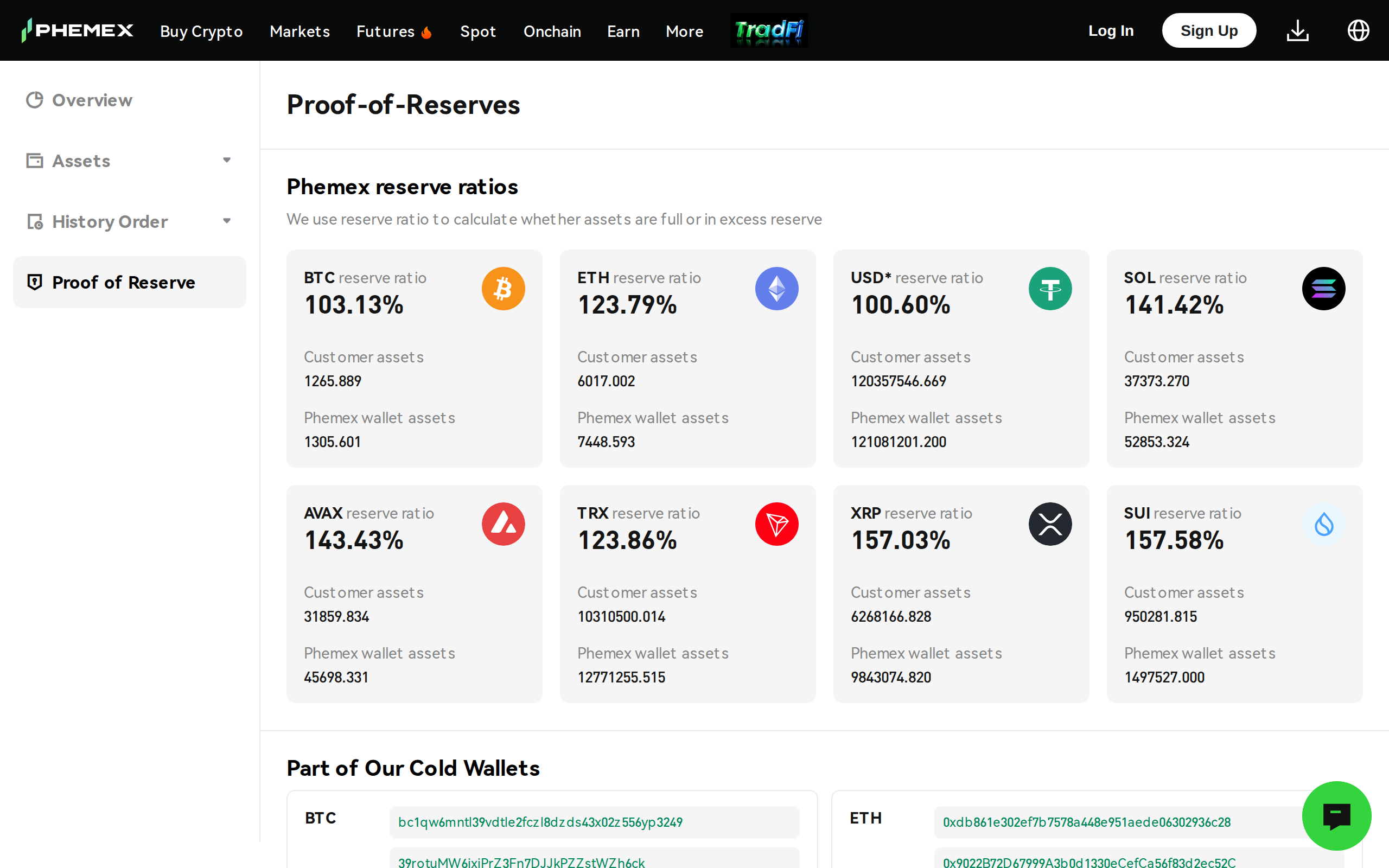
Everything we saw sat above 100%. It is a self-published figure, so it proves less than an audit would, but it is checkable against listed cold wallet addresses, and few offshore rivals show their ratios per coin.
Futures fees: low at the bottom, flat at the top
Phemex built its name on derivatives, and its fee page lists the futures schedule by 30-day volume:
Standard (under $8M): 0.0100% maker, 0.0600% taker.
VIP1 ($8M to $18M): 0.0080% maker, 0.0550% taker.
VIP3 ($45M to $85M): 0.0040% maker, 0.0450% taker.
Star VIP (above $380M): 0.0000% maker, 0.0300% taker.
A 0.01% maker fee for an ordinary account is lower than the 0.02% that independent reviews give for the larger venues, though the 0.06% taker side is ordinary. Holding the PT token takes a further 10% off futures and 20% off spot, per the same page. Spot sits at 0.10% maker and taker in third-party reviews, and we did not verify it on the fee page itself.
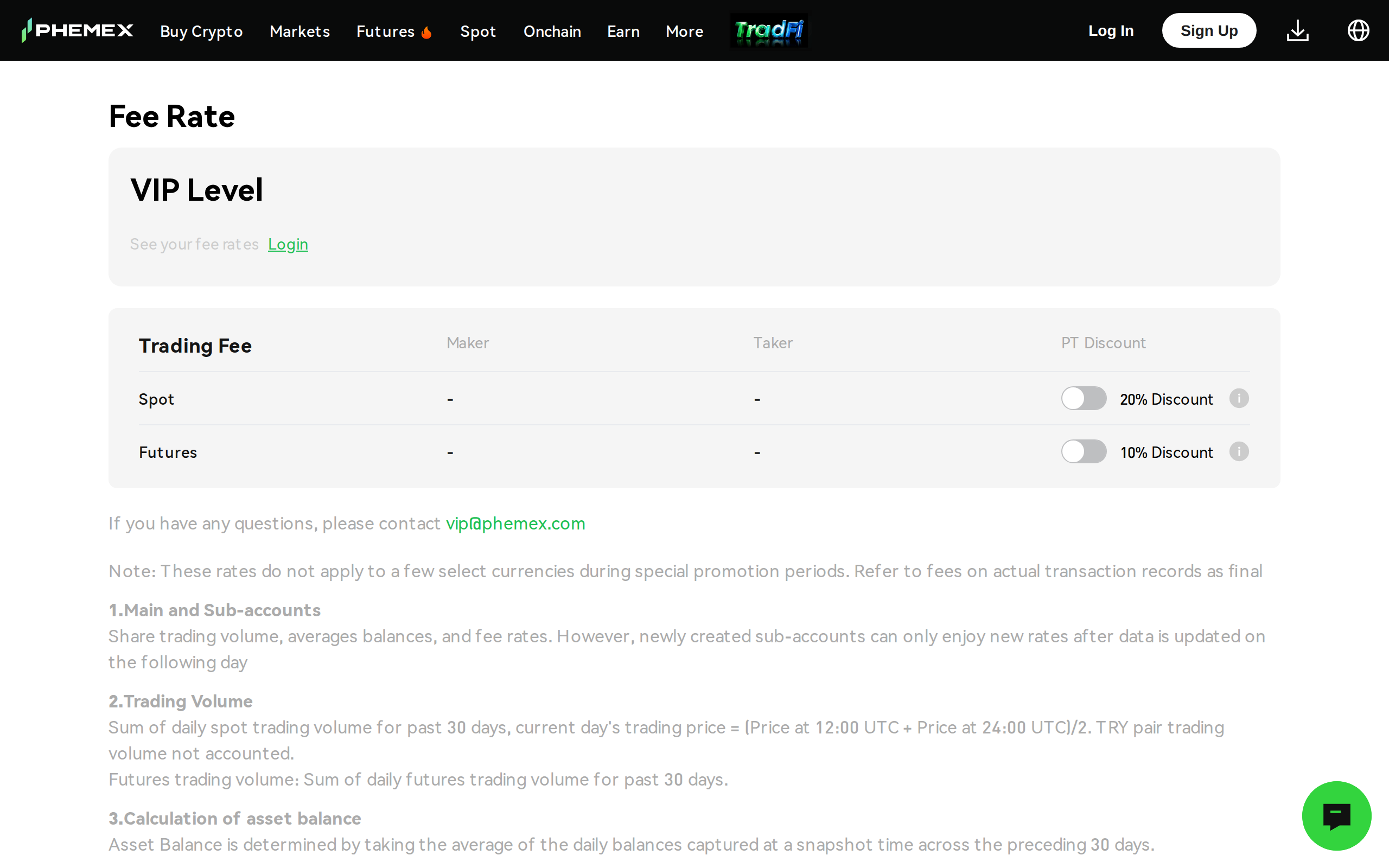
The fee page also carries a warning that rates do not apply to a few currencies during promotions. Read the transaction record, not the headline.
Trading on the product
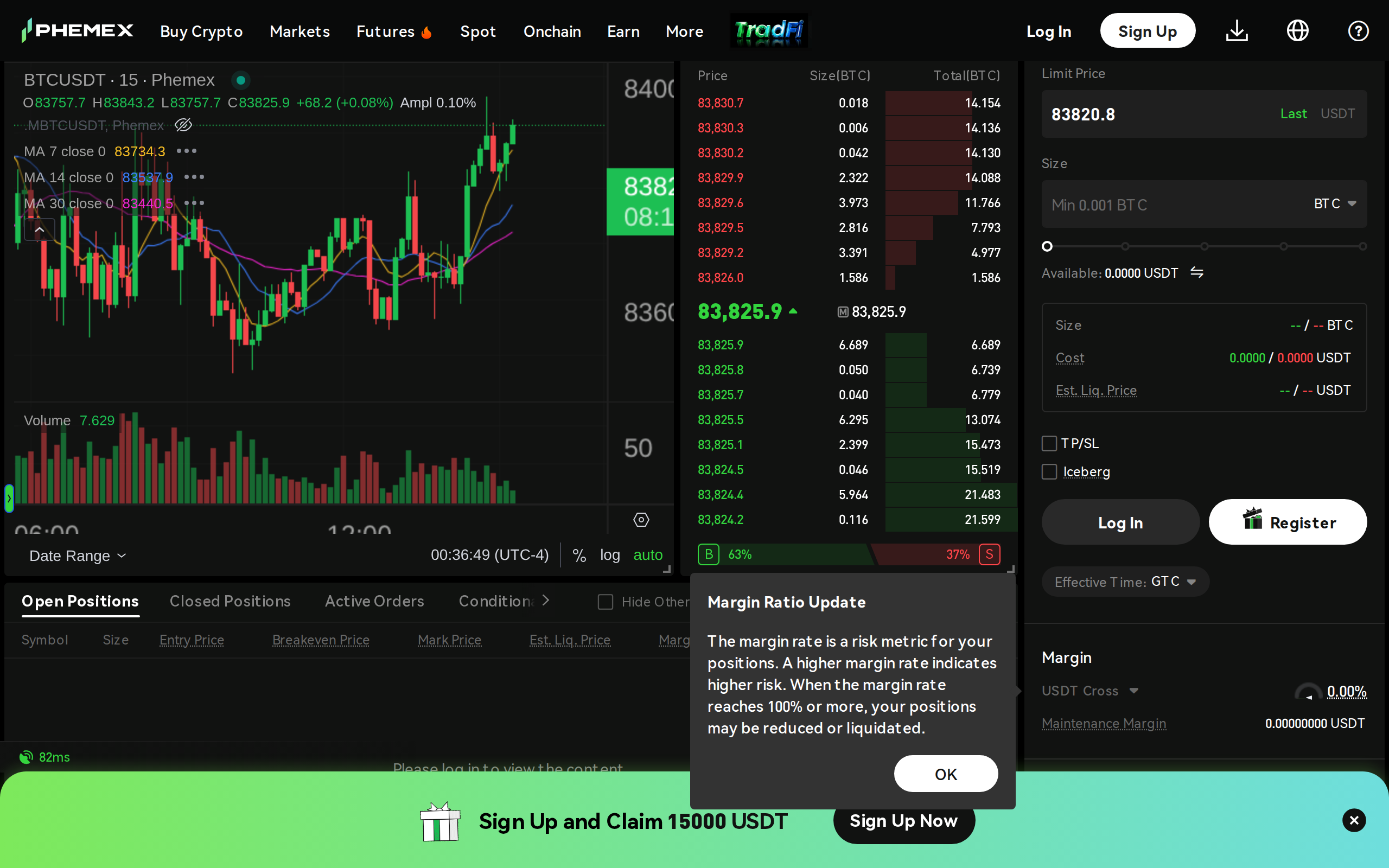
The BTC-USDT futures page is a conventional perp terminal, with a chart, order book and margin panel. Independent reviews credit up to 100x leverage on BTC and ETH perpetuals, a level we would not touch with money we cannot lose.
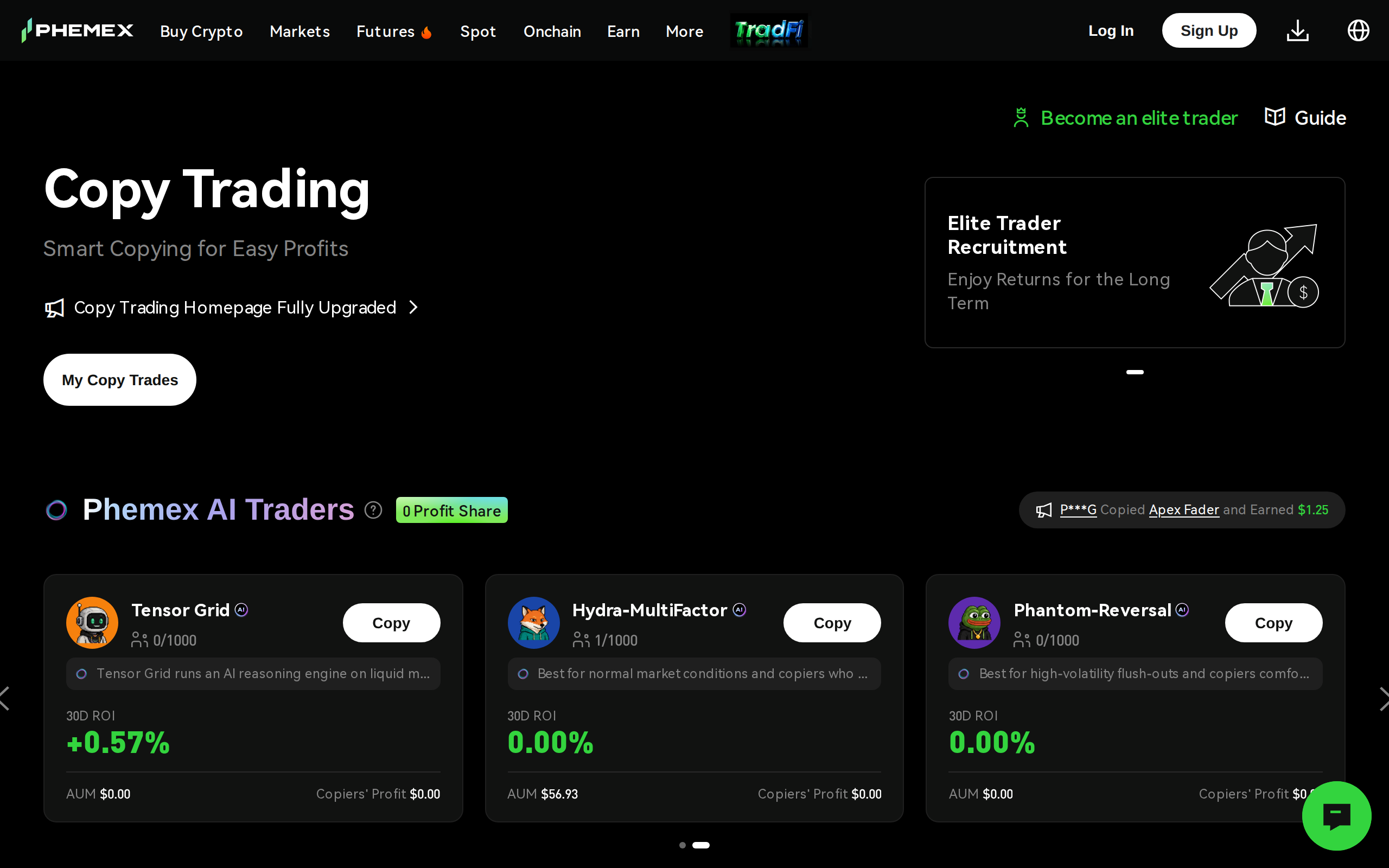
Copy trading is the other pillar, including a section called "Phemex AI Traders". Copying a stranger's leveraged book is how many retail accounts get liquidated, so treat the leaderboard as marketing.
The front door is a promotion
The homepage we captured led with a "$50,000 Phemex Futures Lucky Draw" banner.
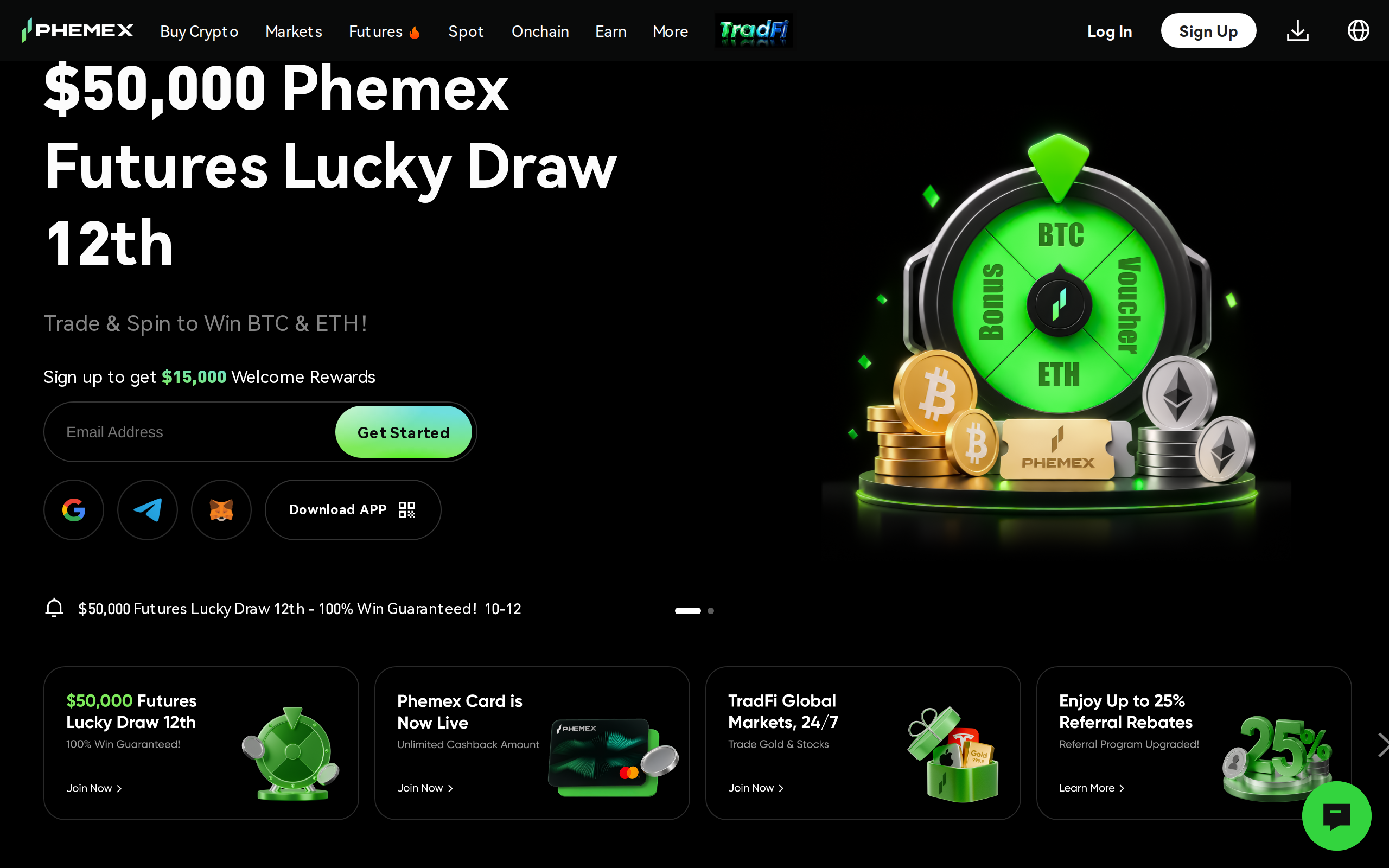
Promotions are normal in this sector, but a lucky draw that rewards futures turnover pushes people to trade more, which is exactly the behaviour that loses retail money.
How it compares with the exchanges we rate higher
Against a regulated venue such as Bitstamp, whose entry spot fee is 0.30% maker and 0.40% taker, Phemex is cheaper on paper and far lighter on supervision. You get lower fees and you give up a licence you can name. That is a fair trade for a trader who understands it and a poor one for anyone who expects a regulator to step in after a failure. Compensation after January 2025 came from the company's own decision to pay, not from a statutory scheme.
Verdict
Phemex has repaired the part we can see: it paid out, it publishes per-coin reserves above 100%, and a standard account pays only 0.01% to make. It has not repaired the part we cannot: independent reviews agree regulation is limited, and the hot-wallet breach is a fact of its record.
Use it if you are an experienced derivatives trader who keeps only trading capital on any offshore venue and withdraws profits regularly. Skip it if you need a licence you can point to, or you are new to leverage. We would not hold savings here.