OKX review: exchange and Web3 wallet in one app, with a US-sized asterisk
OKX pairs a 0.08% maker / 0.10% taker spot exchange with a wallet covering 130+ native chains. We checked the fee page, the trade screen and the 2025 US guilty plea behind it.
Best forActive non-US traders who also use DeFi and on-chain tokens
Full fee ledger
- Price
- Free to join; spot from 0.08% maker / 0.10% taker
- Operator
- OKX
- Spot fee (entry)
- 0.08% maker / 0.10% taker
- Fee levels
- Regular and VIP, by 30-day volume or deposited assets
- Web3 wallet
- 130+ native chains
- Earn
- Daily rewards on 100+ tokens
- Reserves claim
- 1:1 on all account assets
- 2025 US penalty
- 504 million USD (420.3M forfeiture, 84.4M fine)
- Entity
- Seychelles-based operator, per US DOJ reporting
Our verdict
OKX is the strongest single app for active traders outside the US: a full exchange and a Web3 wallet that signs on-chain trades from the same login. Its 2025 US guilty plea and 504 million USD penalty are the cost of that growth. Check local licensing first; this is not personal financial advice.
What works
- Spot fees from 0.08% maker and 0.10% taker, tiered by 30-day volume or assets
- Built-in OKX Wallet supports 130+ native chains from the same login
- Earn page lists daily rewards on 100+ tokens
- Proof of Reserves page states a 1:1 reserve on account assets
What does not
- Pleaded guilty in February 2025 to running an unlicensed US money business
- Fee page text does not show rate tables without clicking into levels
- Product and feature availability varies by country
- Broad product range makes the interface heavy for new users
OKX makes one argument: you should not need two apps. One login opens a centralized exchange with spot and derivatives, and a separate Web3 wallet that signs on-chain transactions. For an active trader outside the US that is a real convenience. It sits beside a fact we put up front: in February 2025 OKX pleaded guilty to operating an unlicensed money transmitting business in the United States. Reporting only, not personal financial advice.
The record before the features
According to Fintech Futures, OKX agreed to pay about 504 million USD: 420.3 million in forfeiture and an 84.4 million fine. The Justice Department said US customers used the platform between 2018 and early 2024 despite an internal 2017 policy against it. Finance Magnates reports the exchange also agreed to keep a compliance consultant through 2027.
That is a lighter case than Binance's, but it is still a guilty plea. If you live in the US, skip OKX's global site. If you live elsewhere, look up which entity serves your country and which licence it holds before depositing.
What the app opens with
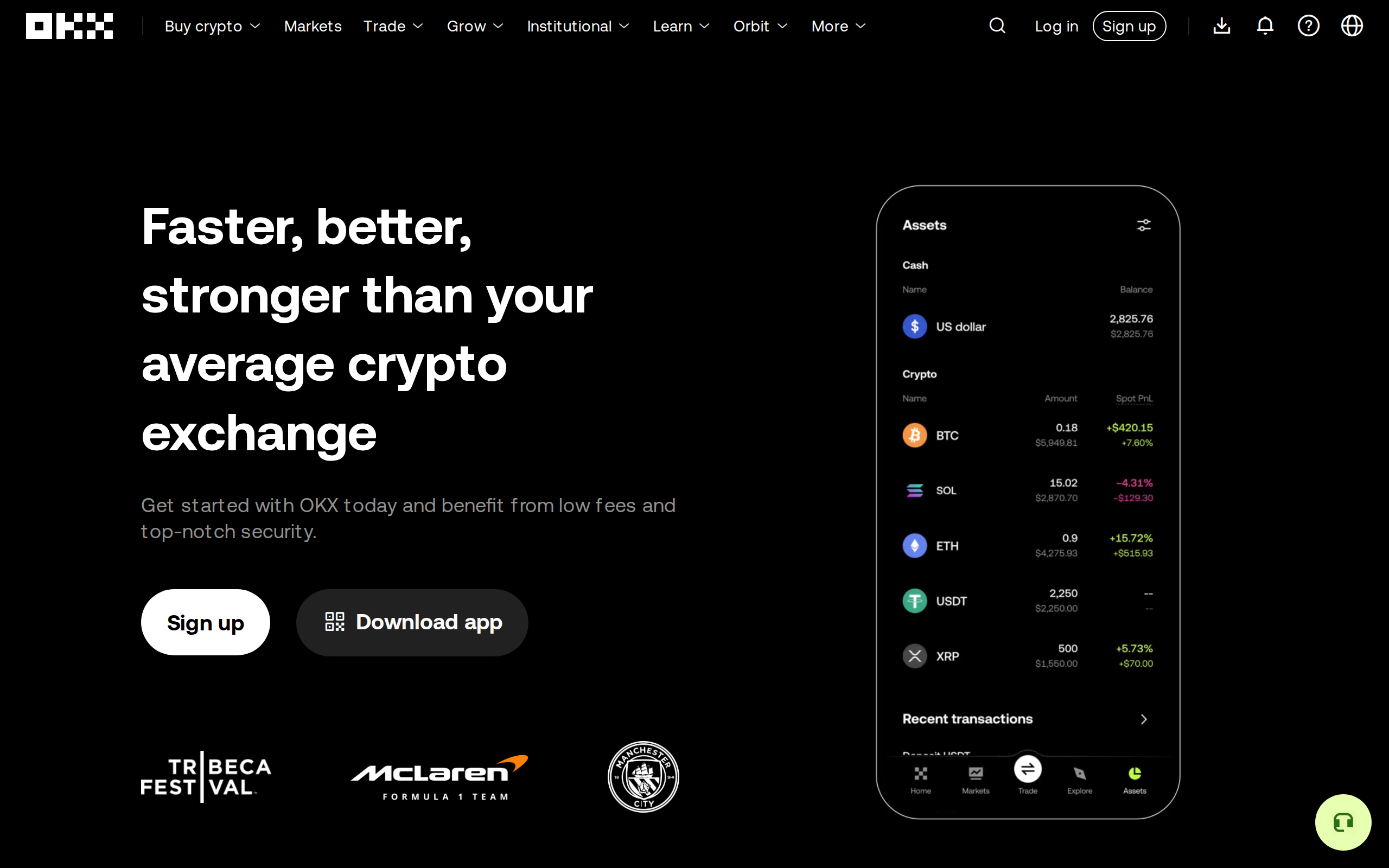
The homepage promises something "faster, better, stronger than your average crypto exchange", with "low fees and top-notch security".
Those are adjectives, so we checked the numbers behind them. The fee page says users are sorted into regular and VIP levels based on deposited assets or trading volume over the past 30 days. The entry spot rate we used is 0.08% as maker and 0.10% as taker; the page text we could read did not print the table, so confirm the number in your own account. At that level a maker order is cheaper than Binance's flat 0.10%, a taker order matches it, and both sit far below the 0.40% and 0.60% Coinbase asks for Advanced trade.
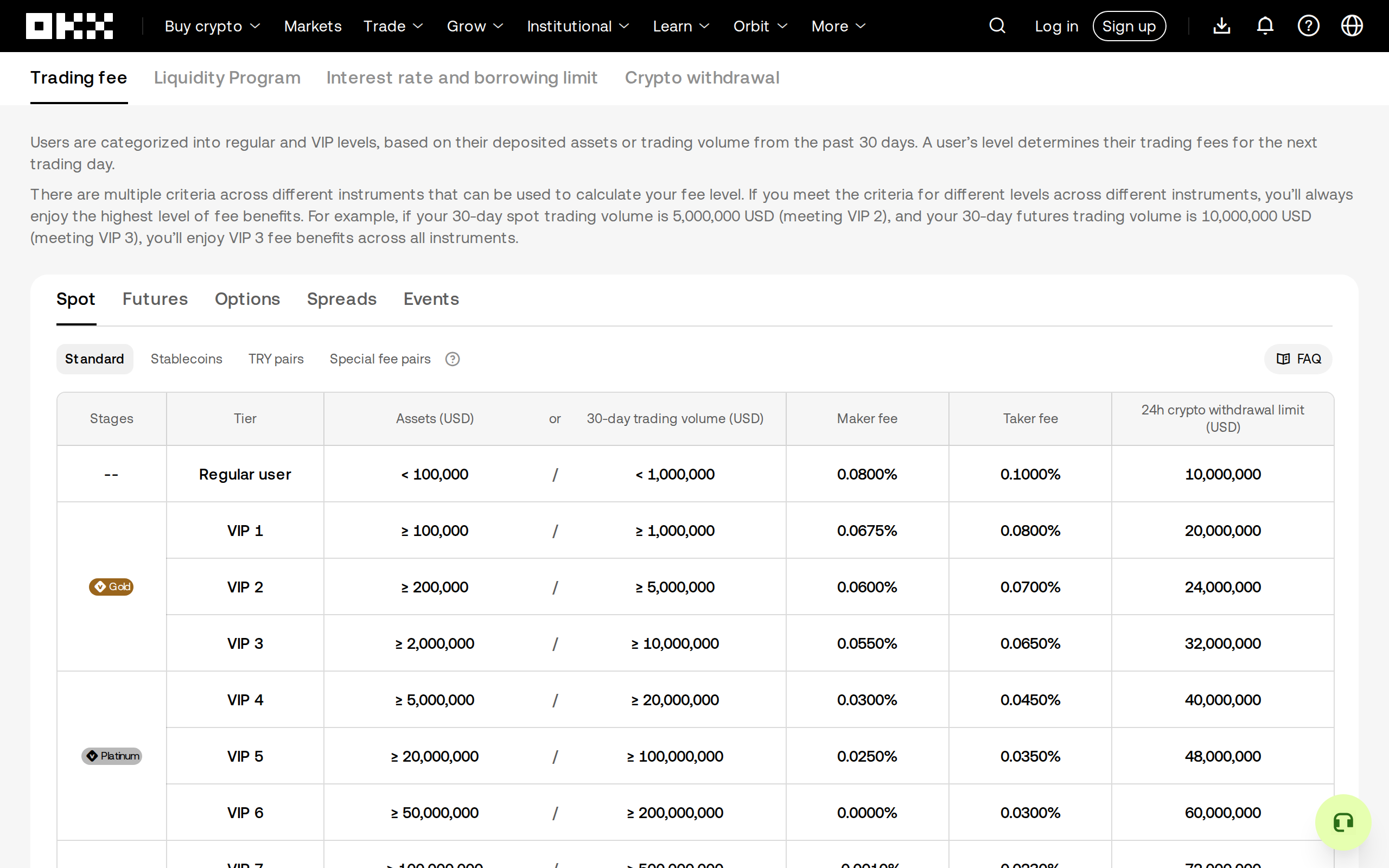
On 5,000 USD of taker volume, 0.10% is 5 USD. Hold more assets or trade more and the level, and the rate, improves.
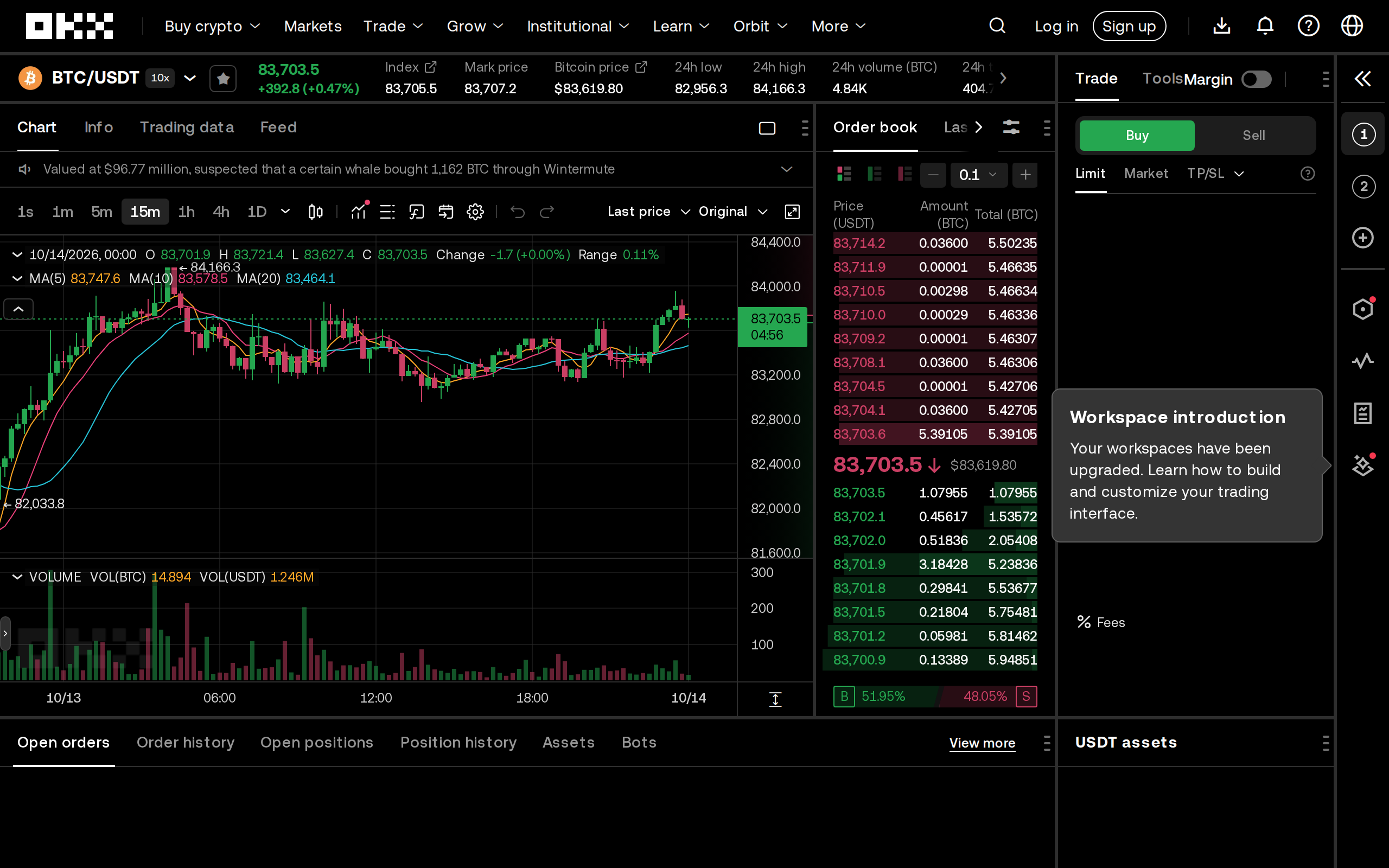
The spot ticket itself is standard: chart on top, book beside it, order form below. Nothing about it will surprise a trader who has used any other exchange, which is a compliment.
The wallet is the reason to pick OKX
Most exchanges treat on-chain trading as someone else's job. OKX ships a Web3 wallet headlined "One crypto wallet, 130+ native chains". Its menu lists portfolio, market, meme, pump and strategy tabs, plus watchlists and the option to follow top traders.
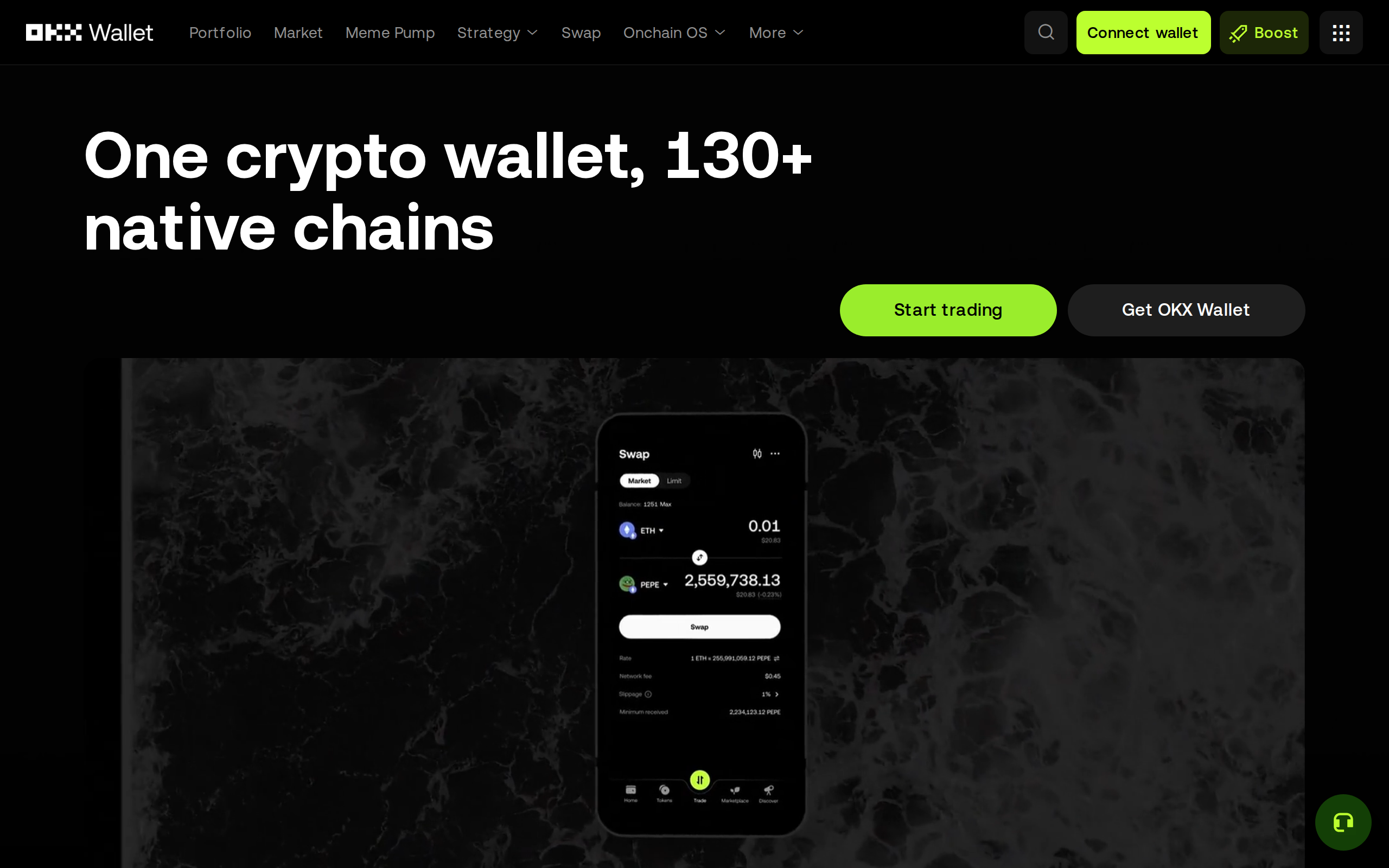
The upside is real: you can move from a centralized order book to a decentralized swap without leaving the brand. The downside is also real. The meme and "pump" tabs push you toward the riskiest tokens on any chain, and a wallet transaction you sign yourself has no exchange protection. Treat the wallet as a tool for people who already know how approvals and contract risk work.
Earning, reserves and trust claims
The Earn page says "Put your crypto to work" and promises daily rewards on 100+ tokens including USDT, USDC and ETH.
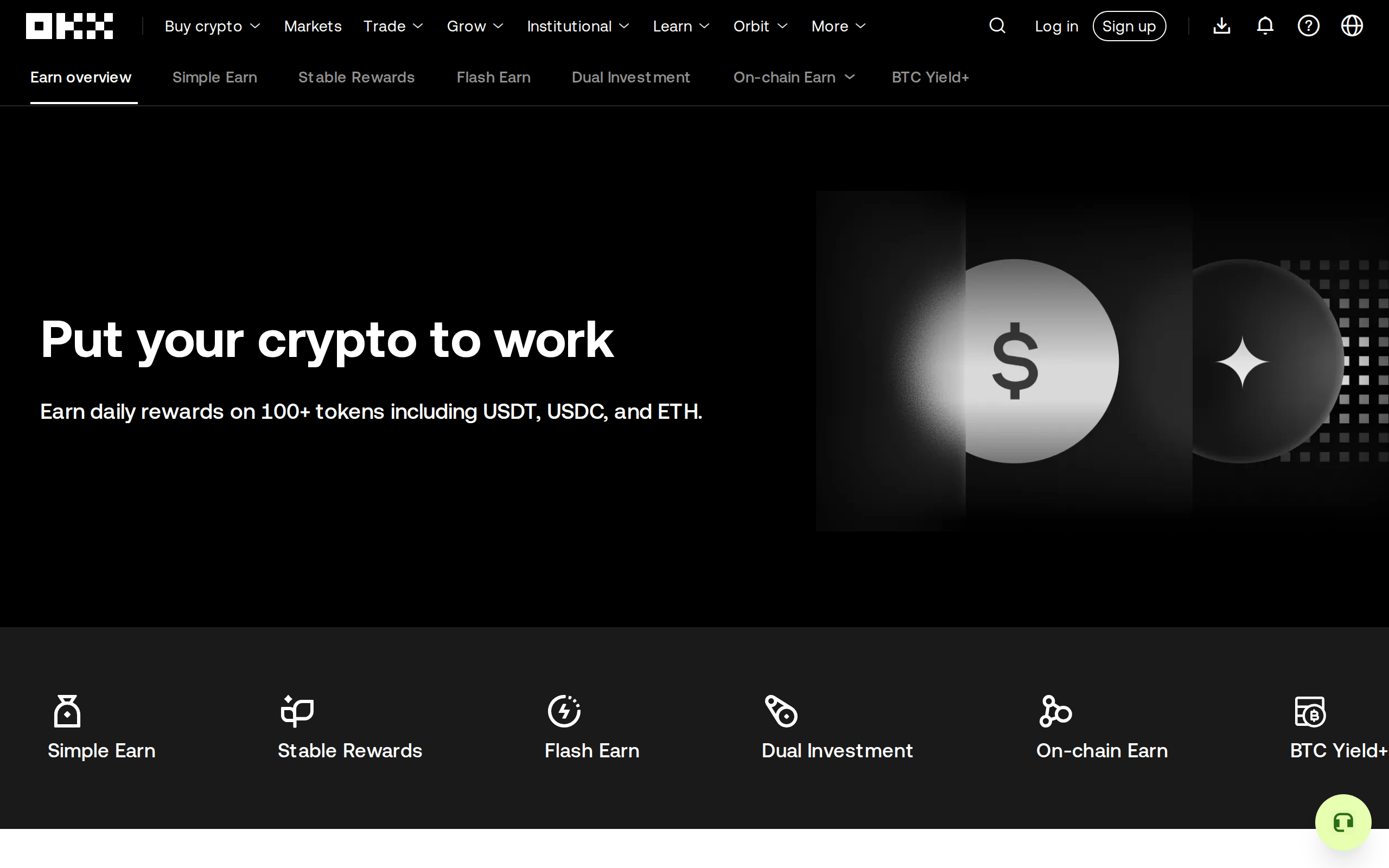
Rewards come with lock-ups and counterparty exposure, so read each product's terms. On safety, OKX's Proof of Reserves page states that it maintains a 1:1 reserve of all account assets and publishes periodic reports.
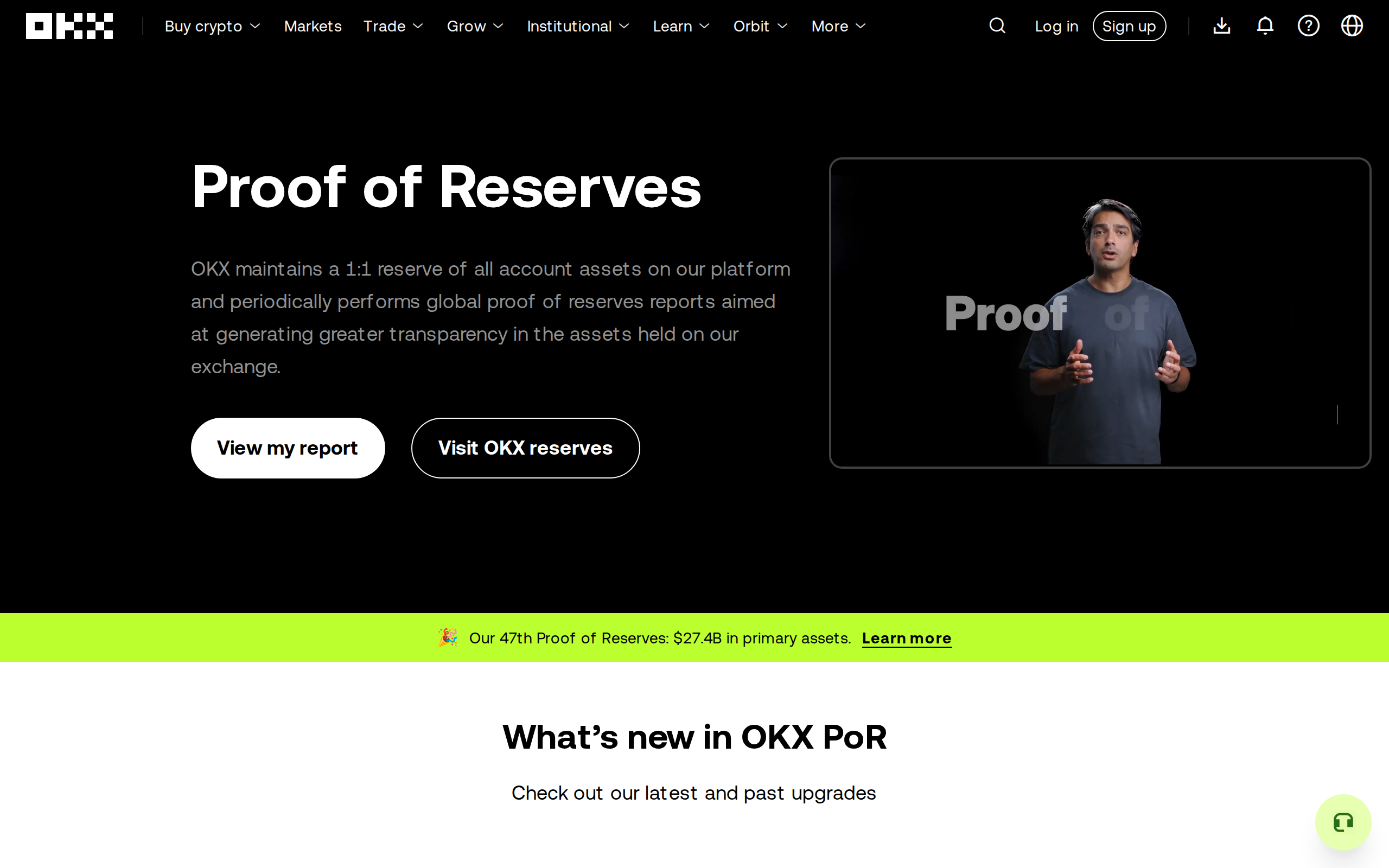
That is a claim we could read, not one we could audit. Reserve reports show assets at a point in time; they do not show every liability. Withdraw what you do not trade.
What we would check before funding it
Three short checks take ten minutes and cost nothing. Confirm which legal entity serves your country and that it appears on a local regulator's register. Read the withdrawal limits for a new, unverified account before you move anything in. Then enable two-factor authentication and an anti-phishing code, because exchange accounts and wallets are the usual targets of fake support messages.
Our position
Choose OKX if you trade several times a week, hold on-chain assets, and want one account for both. The fee level is competitive, the product range is wide, and the wallet is the best extra we have seen on a major exchange.
Avoid it if you live in the US, if you want a calm interface, or if a past guilty plea is a dealbreaker. Beginners are better served by a simpler regulated app. Our score is 7.7 out of 10.