Lighter review: zero-fee perps on a ZK rollup, and the 300 ms catch
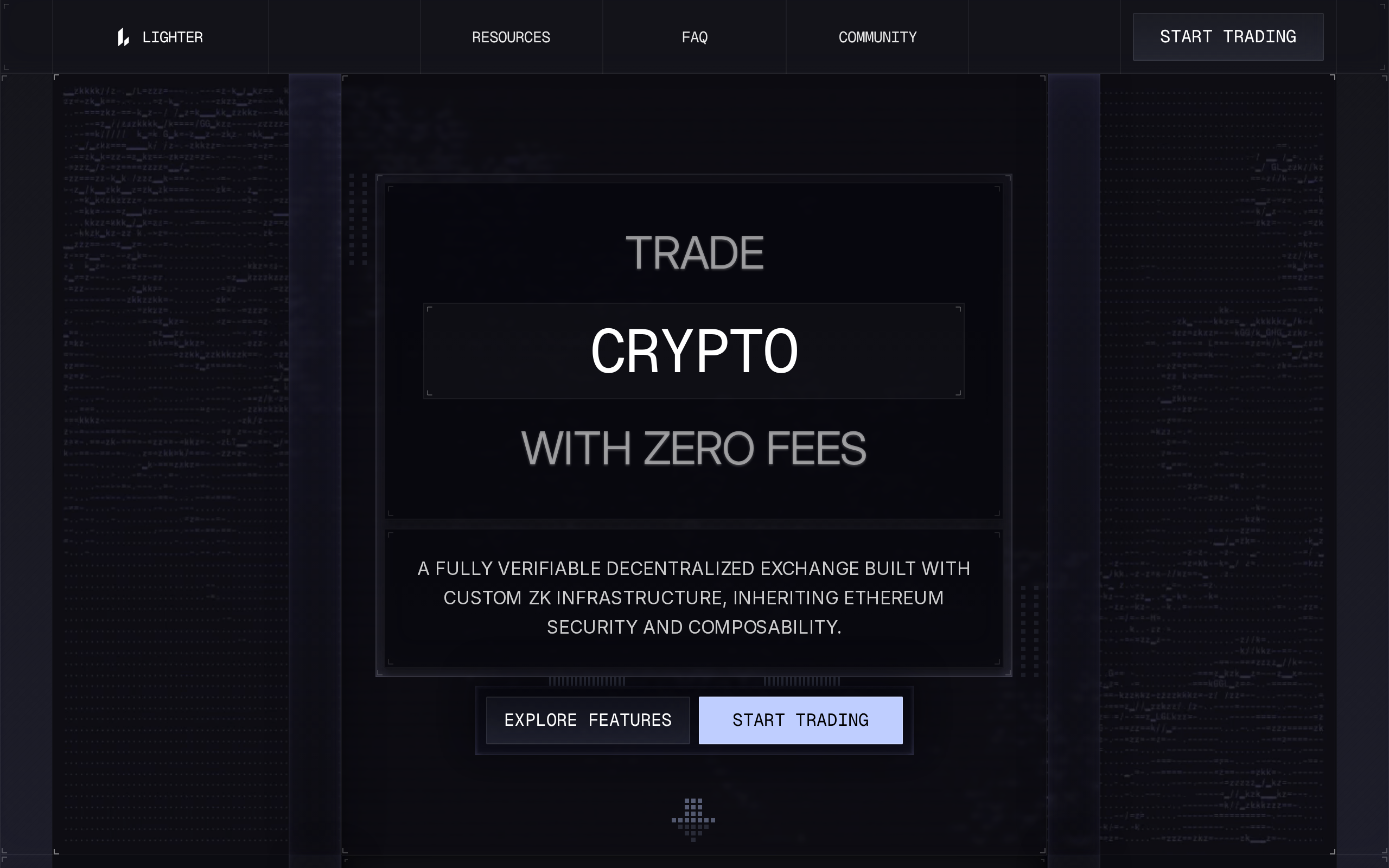
Lighter charges standard accounts nothing to trade perps and proves its order book with zero-knowledge circuits. The price is a 300 ms taker delay, a Stage 0 rollup rating and withdrawal hiccups after its token launch.
Best forRetail perp traders who value zero fees over speed
Full fee ledger
- Price
- Zero fees for standard accounts
- Operator
- Lighter
- Standard fee
- 0% maker, 0% taker, 300 ms taker latency
- Plus fee
- 0.5 bps maker and taker, 300 ms taker latency
- Premium fee
- 0.004% maker, 0.028% taker, 140 ms taker latency
- Premium staking cut
- 30% off at 500,000 LIT staked
- Proof system
- Custom Plonky2 circuits, per L2BEAT
- L2BEAT stage
- Stage 0 appchain
- Escape hatch
- Desert mode after 14 days of operator failure
- Upgrade control
- 3 of 5 multisig, delay can be bypassed
- Founder
- Vladimir Novakovski, ex-Citadel quant
Our verdict
Lighter is the cheapest way we know to take a perp position onchain: standard accounts pay 0% maker and 0% taker, and every match is backed by a zero-knowledge proof. The trade-off is a 300 ms taker delay, a rollup that L2BEAT rates Stage 0 with instant-upgrade risk, and a launch-week withdrawal backlog. Good for patient retail traders, risky for large balances. This is reporting, not personal financial advice.
What works
- Standard accounts pay 0% maker and 0% taker on perps and spot, per Lighter's docs
- Matching and liquidations are verified by zero-knowledge proofs, with state diffs posted to Ethereum
- A desert mode lets users exit with proofs if operators stop for 14 days or more
- Premium accounts drop to 0.004% maker and 0.028% taker with 140 ms taker latency
What does not
- Standard accounts wait 300 ms on taker orders, an edge given to faster paid tiers
- L2BEAT rates it Stage 0 and warns that code upgrades carry no delay under a 3 of 5 multisig
- About $250 million left within 24 hours of the December 2025 airdrop, with withdrawal errors reported
- L2BEAT logged multiple 2 to 3 hour outages from database growth in a 30 day window
Free is rarely free on an exchange, so the first question about Lighter is who pays. The answer is in its docs, and it shapes everything else. Standard accounts pay nothing, and that includes takers. The cost shows up as time: a retail market order waits 300 milliseconds, while accounts that pay get 140. Add a rollup that independent analysts still rate Stage 0, and you get a product that is excellent for small, patient trades and a poor home for a large balance. We say so up front, and none of it is personal financial advice.
Zero fees, three account types
Lighter's fee page lists three tiers:
Standard: 0% maker, 0% taker, 300 ms taker latency, up to four sub-accounts.
Plus: 0.5 bps maker and taker, still 300 ms on takers, with higher rate limits (4,000 transactions a minute).
Premium: 0.004% maker and 0.028% taker at base, 140 ms taker latency, with staking cuts that reach 30% off at 500,000 LIT.
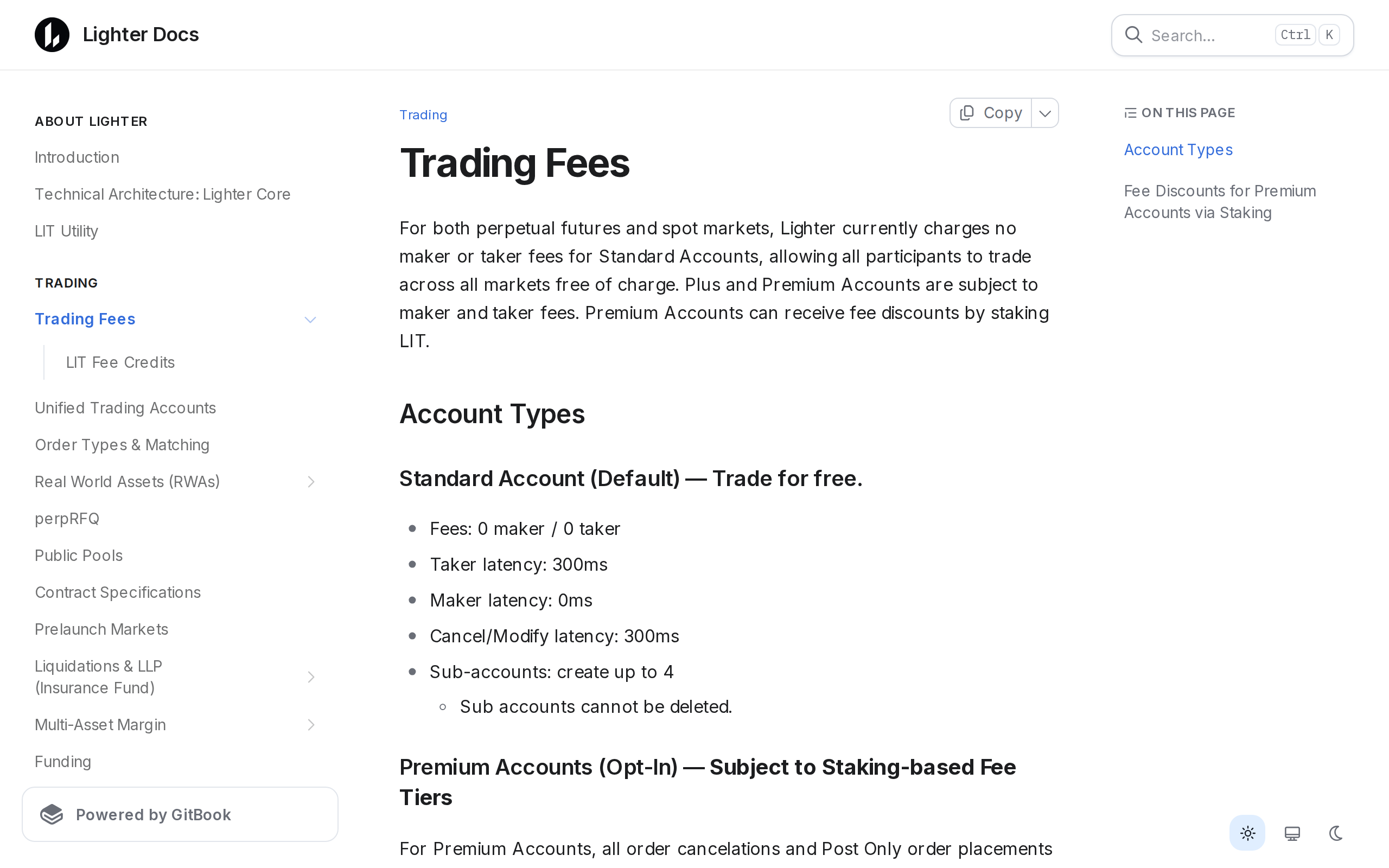
Read that again from a market maker's side. The accounts that quote prices are the ones paying fees, and the ones that take prices get in free but slower. Retail flow is the product being sold to professionals, and the 300 ms is the toll. On a calm day in BTC it hardly matters. When the price jumps, 300 ms is a long time to hold an order in a queue.
Why the ZK part is not decoration
Most perp exchanges ask you to trust their matching engine. Lighter publishes proofs. Its introduction describes a decentralized exchange built on custom zero-knowledge infrastructure, and L2BEAT says the circuits are Plonky2 with validity proofs and no execution delay. State diffs are posted to Ethereum as blobs.
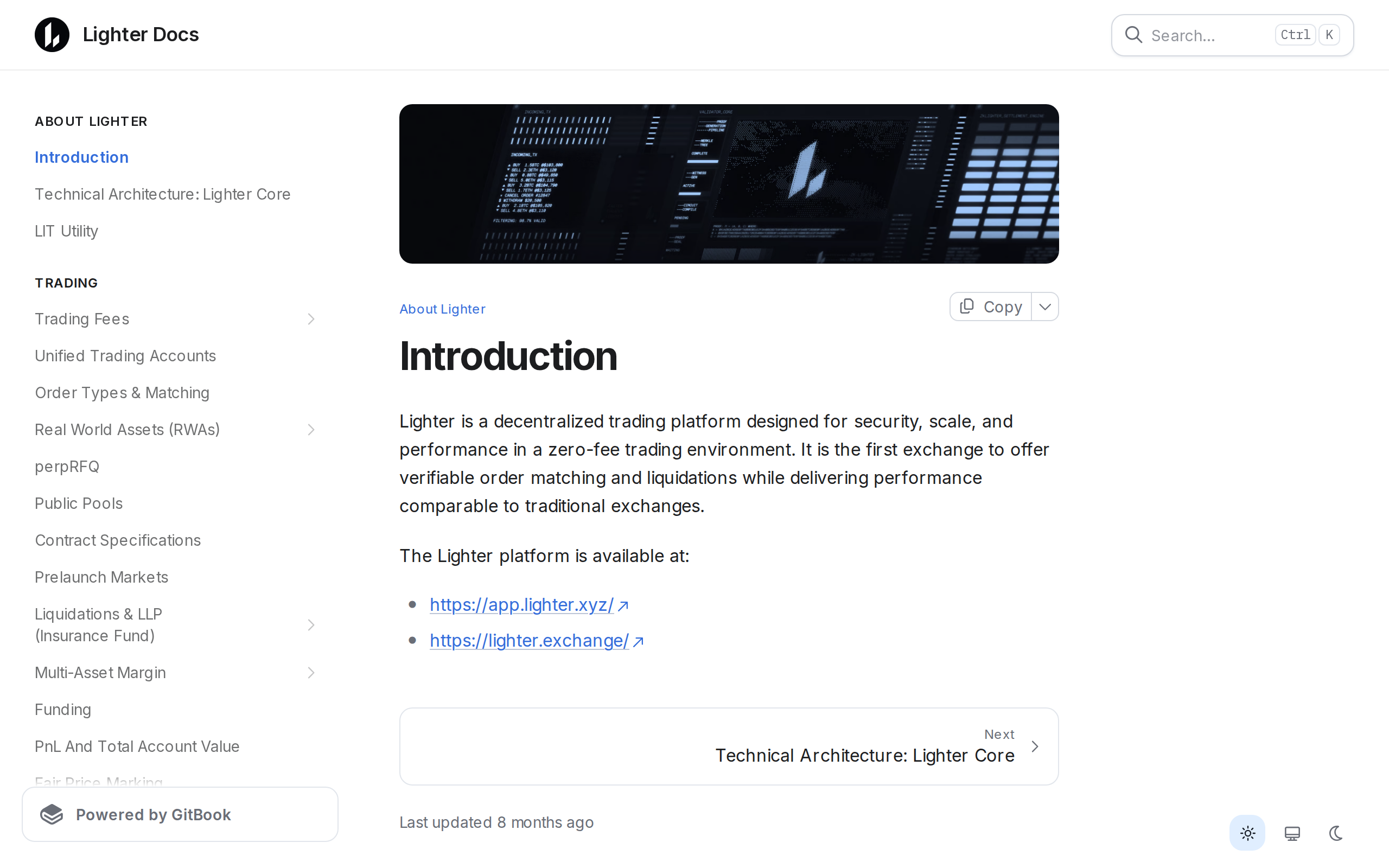
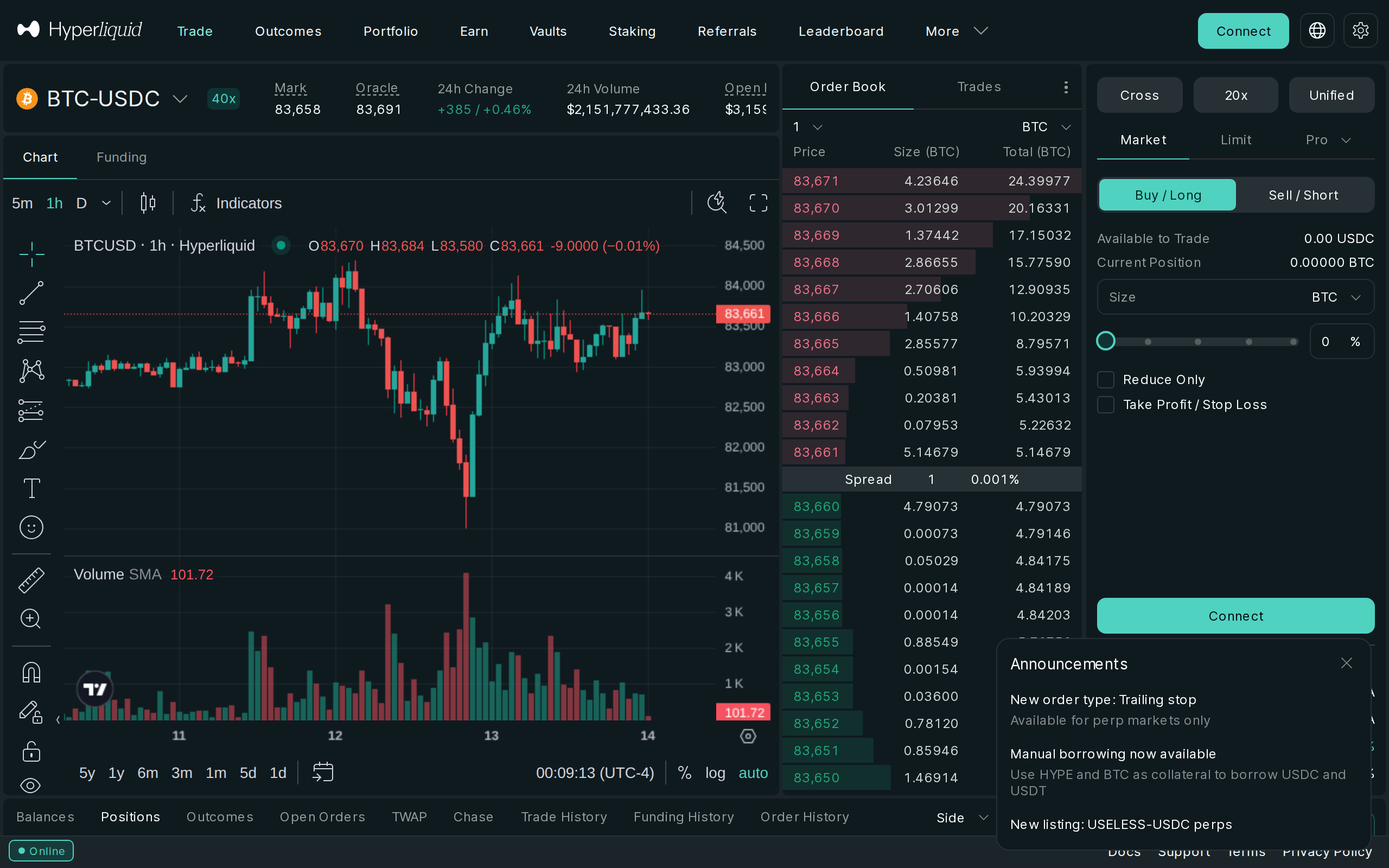
In plain terms: if the operator tried to match an order unfairly or fake a liquidation, the proof would fail. That is a real property, and Hyperliquid, the venue most readers compare it with, does not prove its matching with zero-knowledge circuits. We covered that rival in our Hyperliquid review. Hyperliquid wins on depth and track record. Lighter wins on verifiability.
The risks that the headline skips
L2BEAT's page is the sober read, and it is worth ten minutes.
Stage 0. The rollup meets the five basic requirements but not the bar for Stage 1, blocked by centralization: three EOAs control batch validation.
Upgrades. L2BEAT says funds could be stolen by a malicious code upgrade with no delay. A 3 of 5 multisig controls upgrades with a nominal 21 day delay that it can zero at once, and recent upgrades have skipped it.
Escape hatch. Desert mode lets users withdraw through proofs if the operators fail for 14 days or more. That is a real safeguard, and a long wait.
Liveness. The same page cites multiple 2 to 3 hour outages in the last 30 days, tied to database growth.
On top of that comes the history. Around the LIT airdrop on 30 December 2025, users reported withdrawal errors such as "Too many L2 Withdrawals," and CoinDesk reported about $250 million pulled in the 24 hours after the token generation event. Roughly 20% of the value locked left in a day. A backlog under that stress is understandable. It still tells you what an exit looks like when everyone wants one.
Using the app
The trade screen is a standard perp ticket with a chart and an order book.
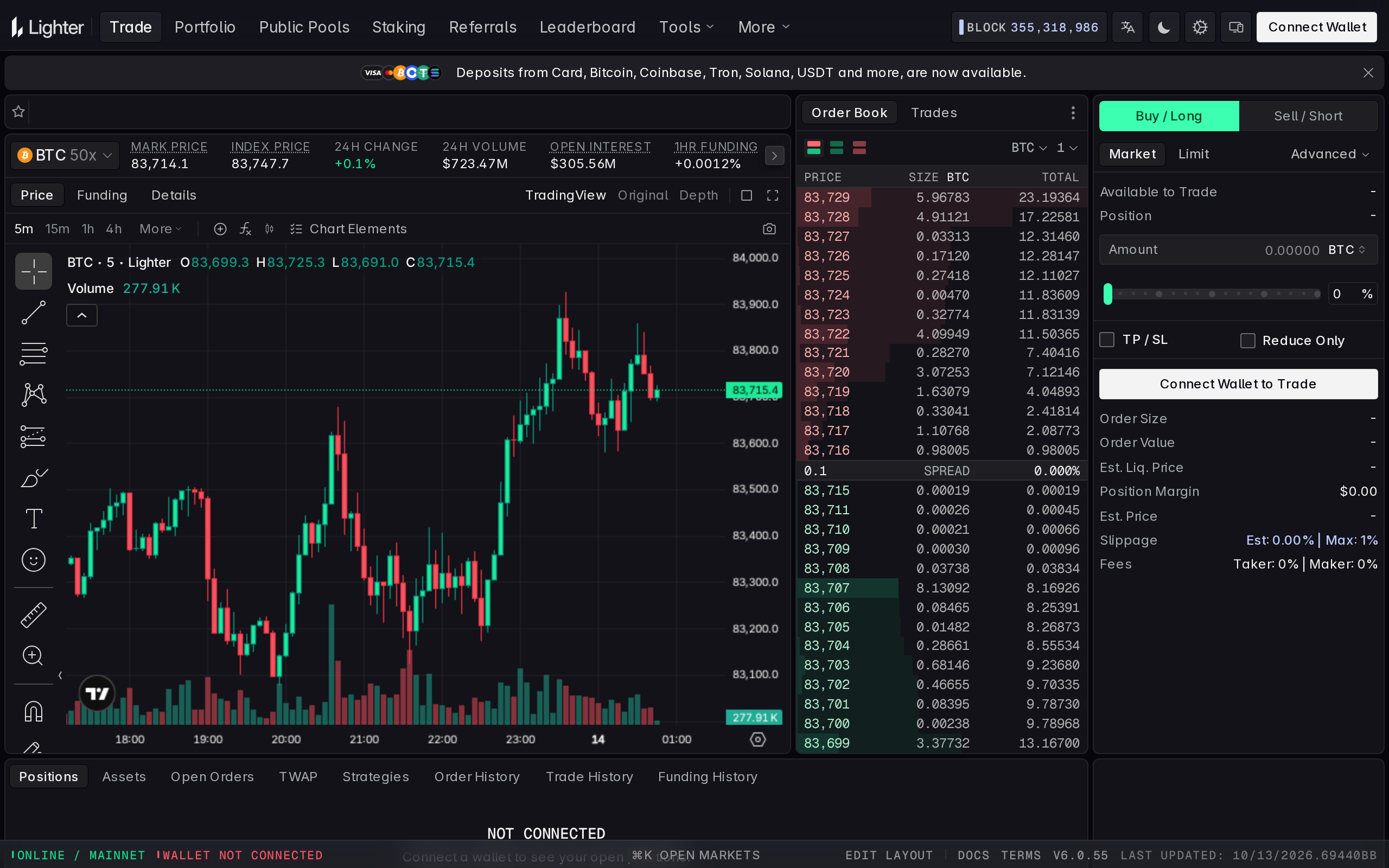
You connect a wallet, deposit, and trade from a margin account. Everything runs from your own wallet, so if you have never held a self-custody wallet, start there before you start here.
Who should use it
A reader who wants to try perps with money they can lose, wants no per-trade fee, and is happy to wait a third of a second will find Lighter tough to beat on cost. A trader who scalps, who needs deep books for size, or who keeps six figures on an exchange should weigh the Stage 0 rating and the instant-upgrade path first. Keep a small balance, and take profits out on a schedule.
We rate it 6.8. The fee model is the most honest zero we have seen, because the delay is written into the docs. The infrastructure still has to earn the next stage of trust.