HTX review: low fees and a long coin list, weighed against two hacks and opaque reserves
HTX charges 0.20% spot at the base tier and falls to 0.0126% maker at the top, but its 2023 hacks, reserves heavy in lent USDT and Justin Sun's unclear role keep it well below the leaders on trust.
Best forActive traders who want low fees and obscure altcoins, with small balances
Full fee ledger
- Price
- Free to join; trading fees vary by tier
- Operator
- HTX
- Base spot fee
- 0.20% maker and taker
- Prime 1 spot fee
- 0.16% maker, 0.17% taker
- Prime 4 spot fee
- 0.08% maker, 0.10% taker
- Prime 11 spot fee
- 0.0126% maker, 0.0218% taker
- Markets
- Spot, futures, stock-linked perpetuals
- Claimed users
- 60 million over 13 years
- Unverified BTC withdrawal limit
- About 0.06 BTC per day
- Restricted
- United States, China, Hong Kong and others
Our verdict
HTX is cheap and has deep altcoin markets, but we cannot call it safe enough to hold money on. It was hit by two incidents in 2023, a proof-of-reserves report showed most of its USDT lent out on Aave, and ownership and control remain murky. Keep balances small and short-term if you use it at all. This is not personal financial advice.
What works
- Base spot fee of 0.20% falls to 0.08% maker at Prime 4 and 0.0126% at Prime 11
- Spot, futures and stock markets in one exchange with a long altcoin list
- Publishes Merkle-tree proof of reserves, reportedly with ratios above 100%
- Holds a Dubai VARA licence in select regions
What does not
- A hot wallet hack of about $7.9 million and a roughly $100 million bridge exploit in 2023
- Proof of reserves showed about 92% of USDT lent on Aave, a risk to withdrawals
- Justin Sun calls himself an advisor but has been described as HTX's leader
- Not available to US users, and large withdrawals need KYC
- Unverified accounts reportedly cap withdrawals near 0.06 BTC a day
HTX, formerly Huobi, is the exchange you pick for the fee table and avoid for the paper trail. Our verdict goes first because it matters more than the numbers: we would not leave a meaningful balance there. It was hacked twice in 2023, it has been criticised over how it holds its reserves, and the influence of Justin Sun over the business has never been stated plainly. None of that is personal financial advice, but it is the context for every number below.
The case for HTX is the fee ladder
Standard spot trading costs 0.20% for both makers and takers, which is middling. The attraction is the VIP programme, called Prime, which has 11 levels. According to a fee comparison published by Forklog, Prime 1 drops spot fees to 0.16% maker and 0.17% taker. Prime 4 reaches 0.08% maker and 0.10% taker, and the top level, Prime 11, gets to 0.0126% maker and 0.0218% taker.
The ladder is steep for ordinary users. Prime 4 needs at least $3 million of spot volume or $20 million of futures, a $100,000 balance, or $20,000 worth of HTX tokens, and Prime 11 asks for $1.8 billion a month on spot. Most readers will pay something close to the base 0.20%, which is no cheaper than many rivals.
Coins and products
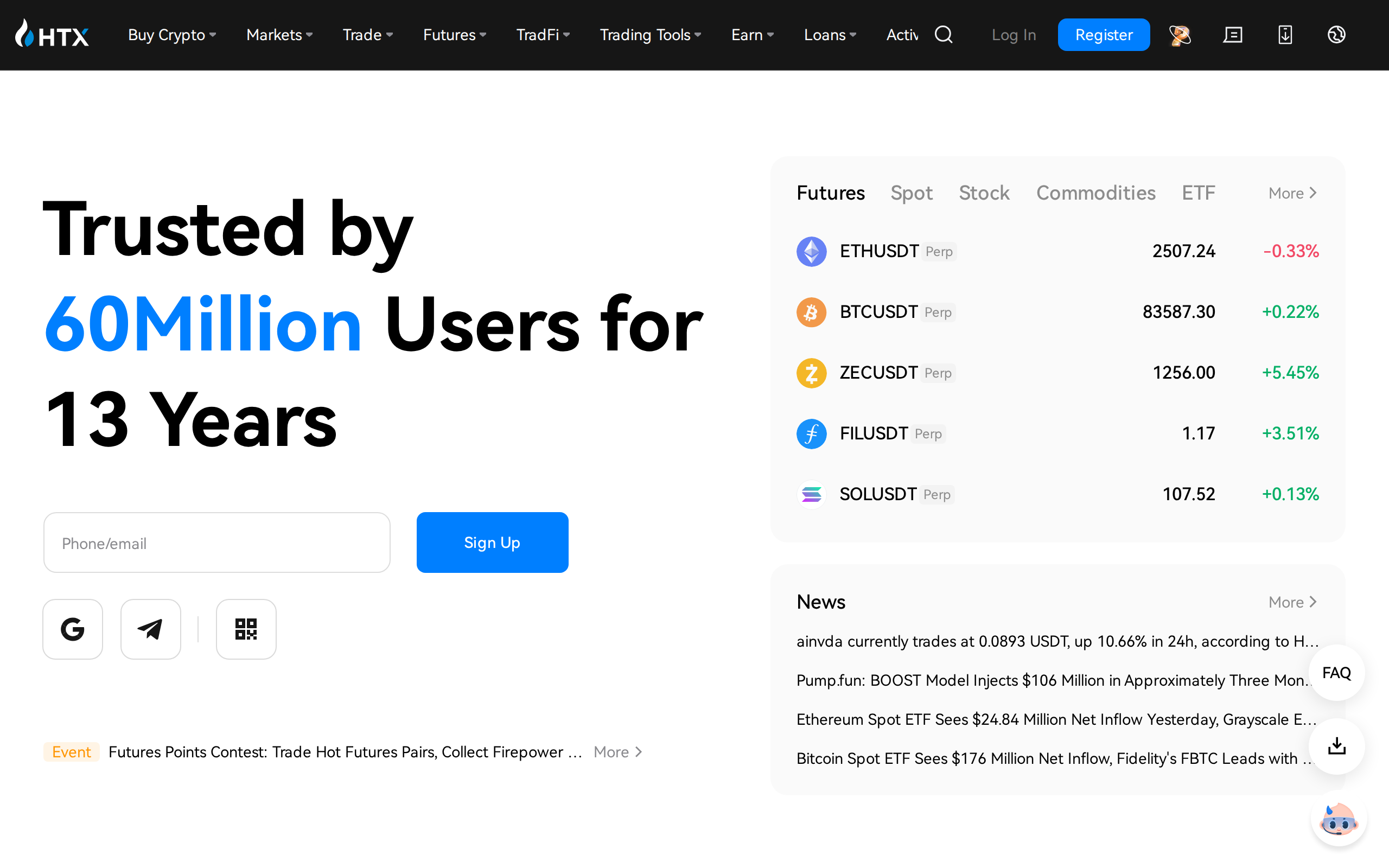
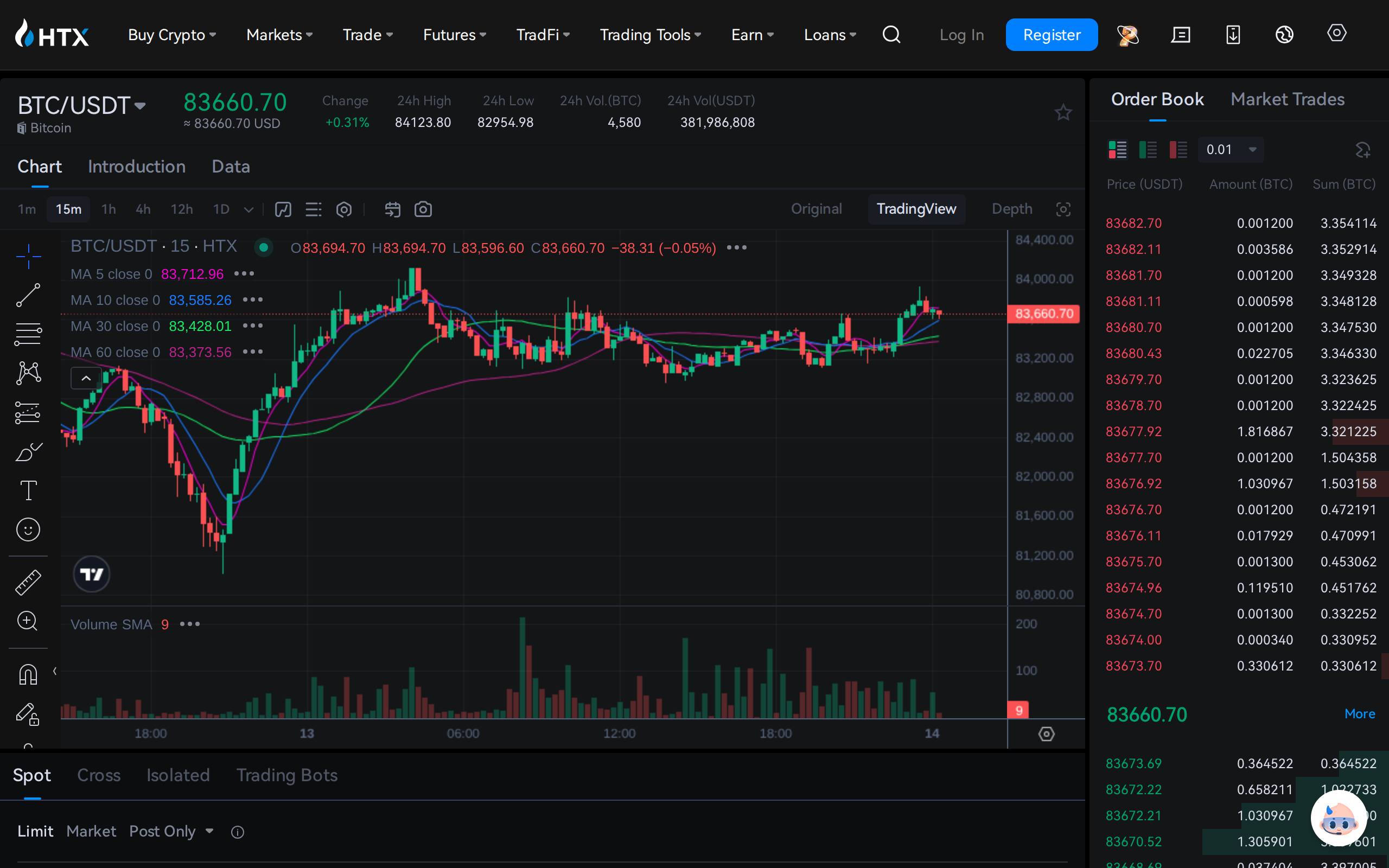
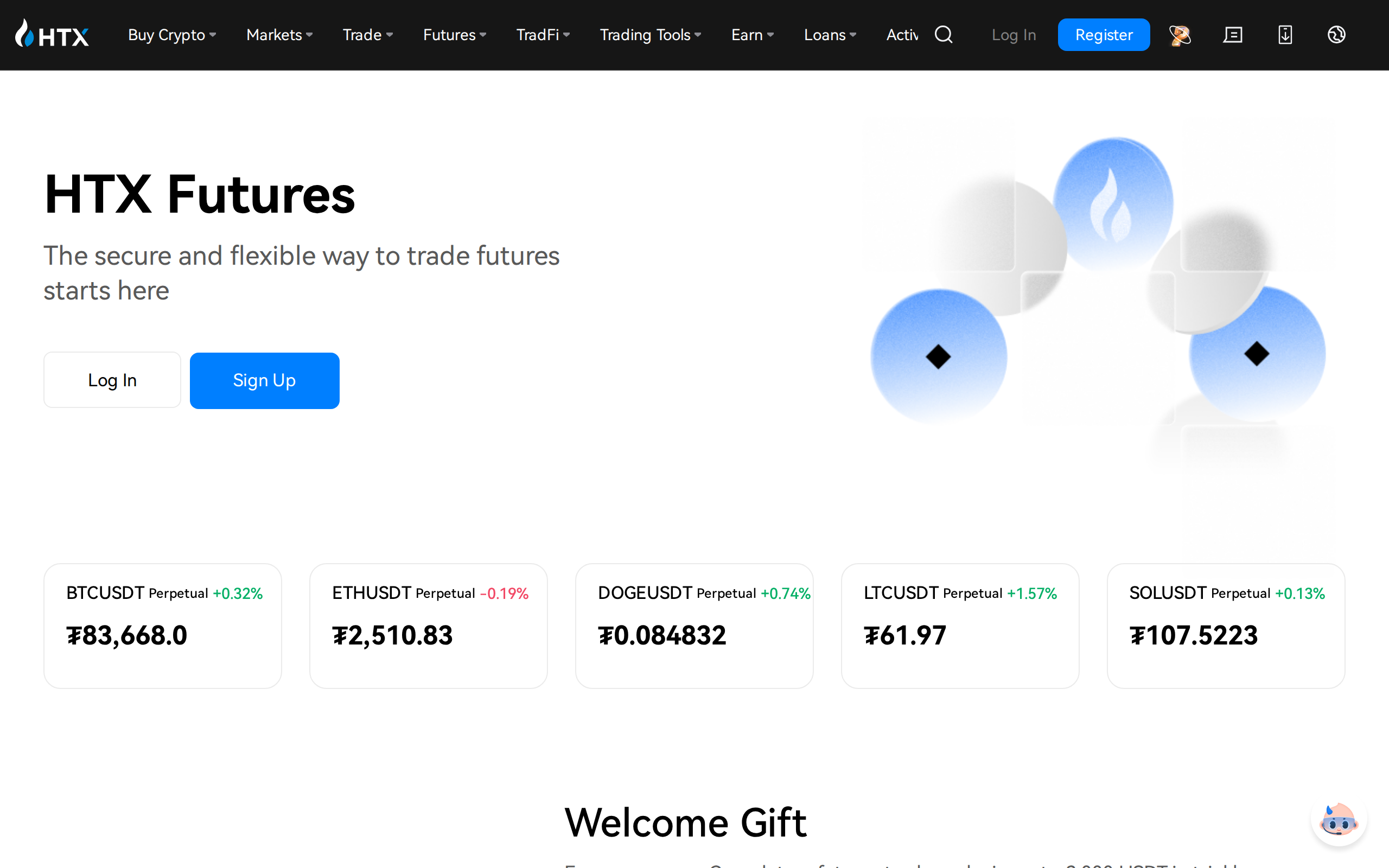
Breadth is real. The exchange lists spot, perpetual futures and a stock-linked tab, and the homepage shows long lists of contracts, including small names you will not find on regulated venues. For traders hunting early altcoins, that is the draw. It is also where the danger sits: thin books on small tokens, and promotions that push volume on hot coins.
The two 2023 incidents
A hot wallet breach in September 2023 took about $7.9 million. In November 2023, an exploit on the HECO chain bridge was reported at more than $100 million. Reports say some affected users were reimbursed. We count both against it because two incidents in three months show gaps in operational security, and users should price that in.
The reserves question
Merkle-tree proof of reserves is a good practice, and HTX publishes it, reportedly for 28 consecutive months with ratios above 100%. The detail is what worries us. A September 2025 report from Protos found HTX had lent about 92% of its USDT, close to $1.6 billion, on Aave, and that most BTC reserves were TRON-based tokenised BTC from Poloniex, which could not supply its own proof of reserves. Justin Sun's reply was that high yields on offer came from group subsidies. Lending customer stablecoins is not unusual, but it adds a dependency: in a run, those deposits are not sitting in a wallet.
Access and limits
HTX restricts the United States, China and Hong Kong among other places. KYC unlocks higher limits, and reported figures put unverified withdrawals near 0.06 BTC a day against up to 5 BTC at Level 1. It holds a Dubai VARA licence for certain regions but lacks major licences in the US or UK.
If you use it anyway
A few habits reduce the damage. Complete KYC before you need a withdrawal, not after. Enable every security option the account offers, including multi-device login alerts. Send a small test withdrawal to your own wallet before any large one, and watch how long it takes. Then keep only what you plan to trade this week on the exchange.
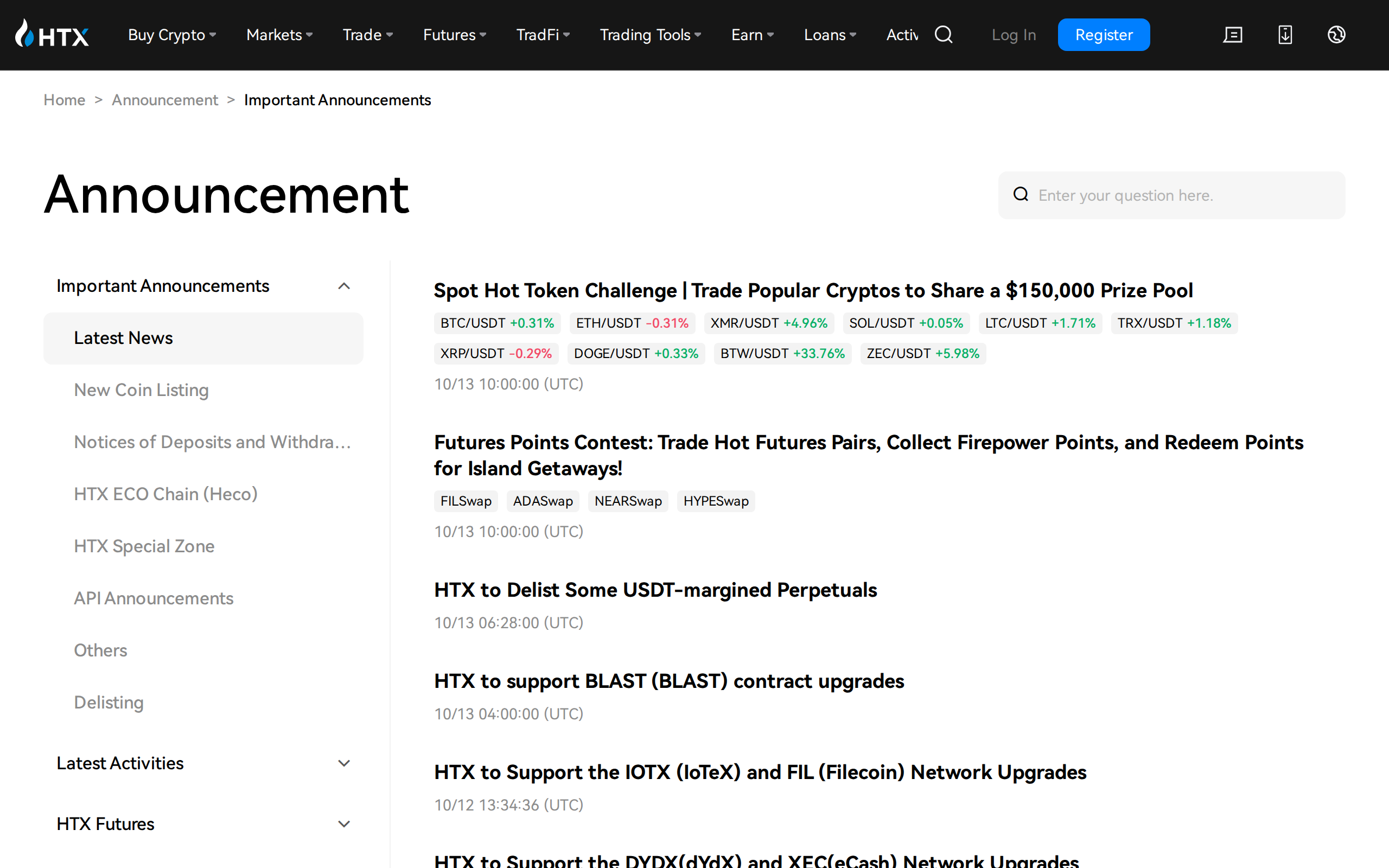
The comparison most buyers make is with other global exchanges that list many altcoins, such as KuCoin or MEXC, both of which we have reviewed separately. HTX does not stand out on fees or range against them at the base tier, so the case for choosing it rests on the VIP ladder or one specific listing. If a coin is available elsewhere, trade it elsewhere. Also read the promotions with care: contest prize pools and points schemes exist to raise trading volume, which raises your fees and your exposure, not your return.
Who should use it
Use HTX, if at all, as a short-term trading venue with a small balance, and withdraw profits to your own wallet. Avoid it for savings, for large holdings, or if you are in a country where it is restricted. We rate it 5.4 out of 10: competitive tiers and a wide market, pulled down by security history and reserve concerns.