GMX review: pool-based perps after the $42 million exploit, and why volume moved on
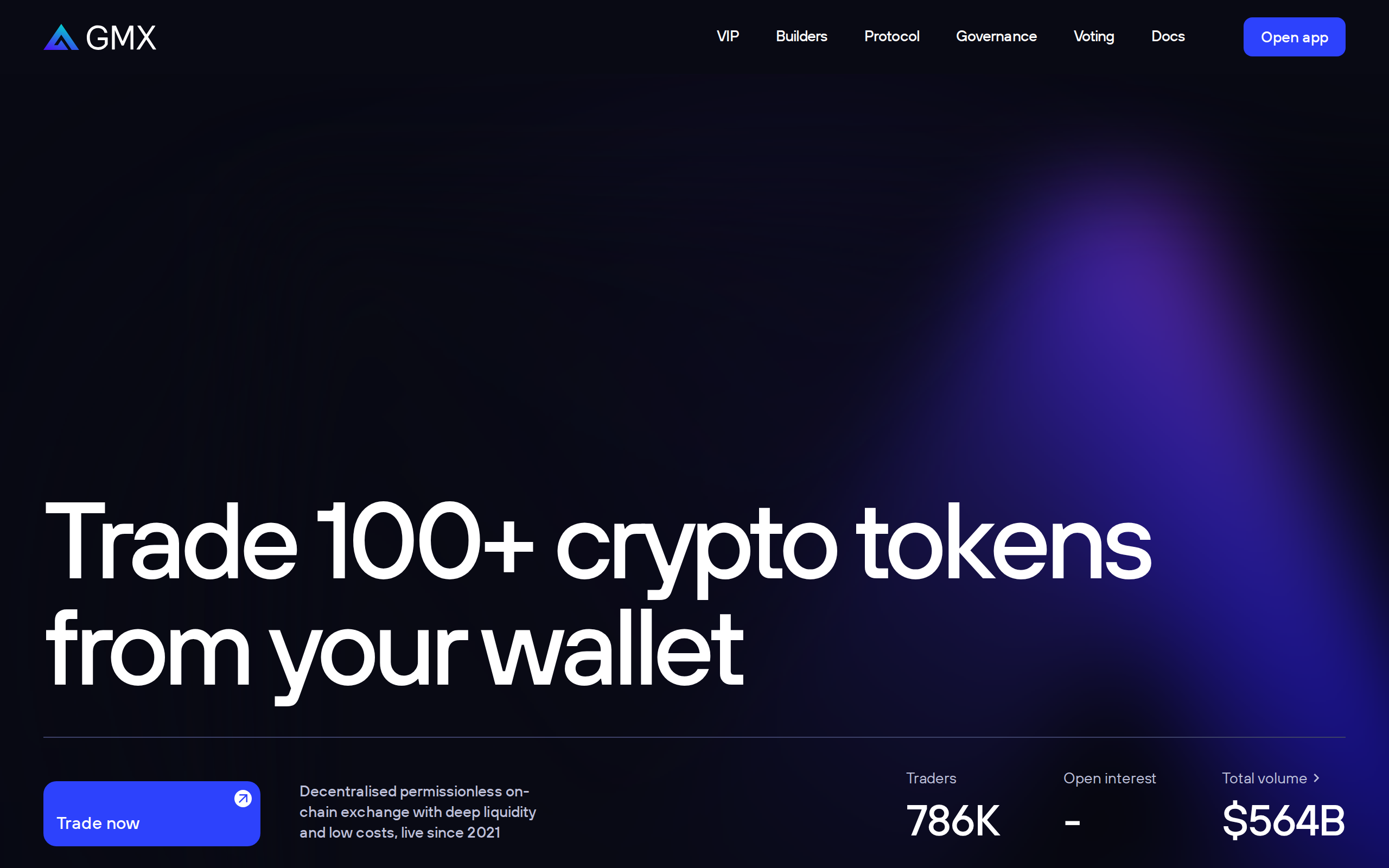
GMX charges 0.04% or 0.06% to open or close a perp, trades against pooled liquidity and lets you connect a wallet instead of opening an account. We weigh that against its July 2025 exploit and a roughly 1% share of perp DEX volume.
Best forSelf-custody traders who want transparent perp fees and no account signup
Full fee ledger
- Price
- Free to use; position and network fees apply
- Operator
- GMX
- Chains
- Arbitrum, Avalanche, MegaETH
- Max leverage
- Up to 100x
- Markets
- 100+, crypto plus gold, silver, oil, gas and US equity indices
- Position fee
- 0.04% or 0.06% on open and close
- Standard swap fee
- 0.05% or 0.07% of input
- Stablecoin swap fee
- 0.005% to 0.02% on Arbitrum
- Liquidity
- GM and GLV pools, oracle index pricing
- Custody
- Non-custodial, wallet connection
- Past incident
- 9 July 2025 V1 exploit, about $42M, funds mostly returned
Our verdict
GMX is a legitimate, long-running non-custodial perps venue with transparent fees: 0.04% or 0.06% per open or close, leverage up to 100x and 100+ markets, including gold and US equity indices. But the pooled model has costs, the July 2025 V1 exploit was a real hit, and rivals with order books now carry nearly all the volume. Use it for self-custody and simplicity, not for the tightest prices. This is not personal financial advice.
What works
- Position fee is a flat 0.04% or 0.06%, set by whether you cut or widen the long/short imbalance
- Non-custodial: trade from your own wallet, with no username or password
- Over 100 markets, including TradFi products such as gold, oil and index trackers
- Open docs spell out liquidation thresholds of 0.25% to 1% of position size
- Stablecoin swap fees as low as 0.005% on Arbitrum
What does not
- The July 2025 V1 exploit drained about $42 million before most funds came back
- Only about 1% of perp DEX volume, far behind Hyperliquid, so less depth and attention
- Borrow and funding fees accrue and move your liquidation price over time
- Pool-based pricing adds price impact on large orders, on top of the fee
- Leverage up to 100x can wipe out collateral within minutes
Most perpetual-futures venues ask you to trust a company. GMX asks you to trust a set of contracts. You connect a wallet, post collateral and trade against a shared pool, with no signup and no custody by anyone but you. That is the whole appeal, and in 2026 it has to compete with order-book DEXs that are far bigger. Our view: GMX is a fair-priced, transparent venue with a real incident on its record and a shrinking audience. We read its documentation and the public incident reports rather than staking our own capital on 100x positions, and nothing here is personal financial advice.
How trading works: a pool is your counterparty
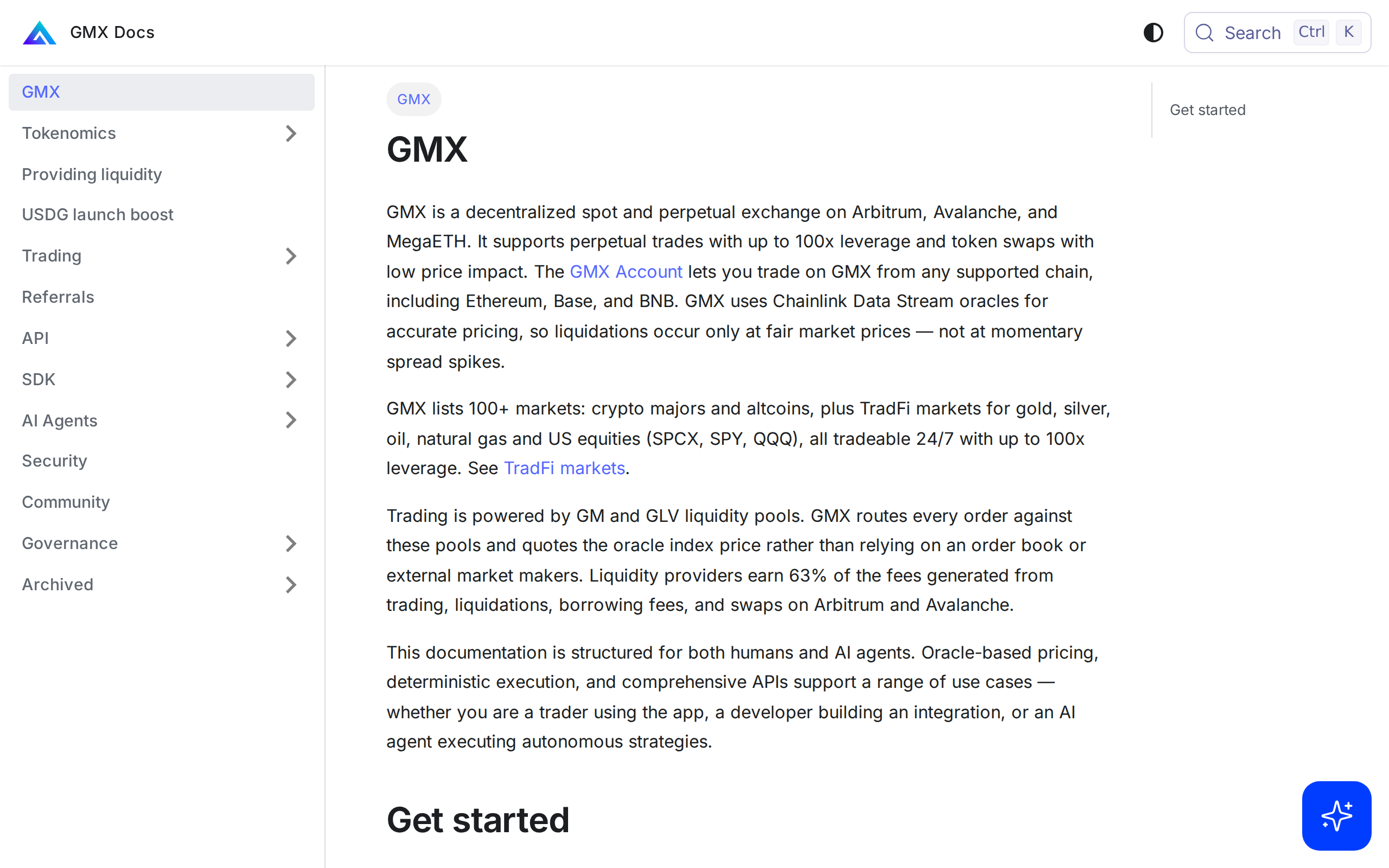
On an order-book exchange you trade against other traders. On GMX you trade against GM and GLV liquidity pools funded by depositors, and the price comes from an oracle, not from a matching engine. The docs list 100+ markets: majors and altcoins, plus gold, silver, oil, natural gas and US equity trackers.
For the trader this means two things. Prices are quoted from aggregated exchange data, which the docs say reduces liquidation risk from brief price spikes. And depth does not depend on who is posting orders, though a large order still moves the pool and pays price impact on top of the fee.
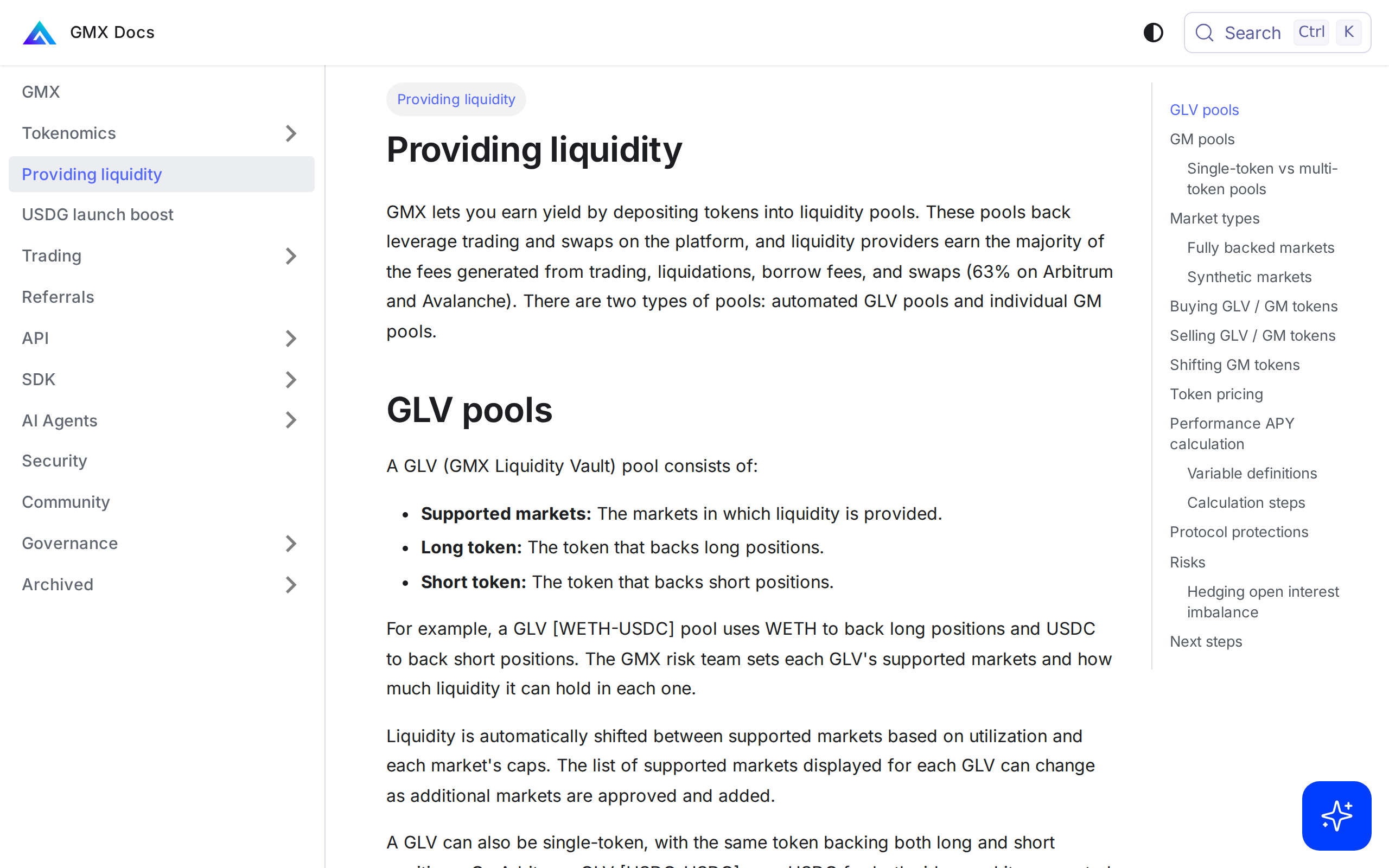
Those depositors earn the fees, and they also take the traders' profit and loss. That is why the pool, and not a company balance sheet, is where the risk sits.
The fee schedule, in numbers
The fees page is short and unusually clear:
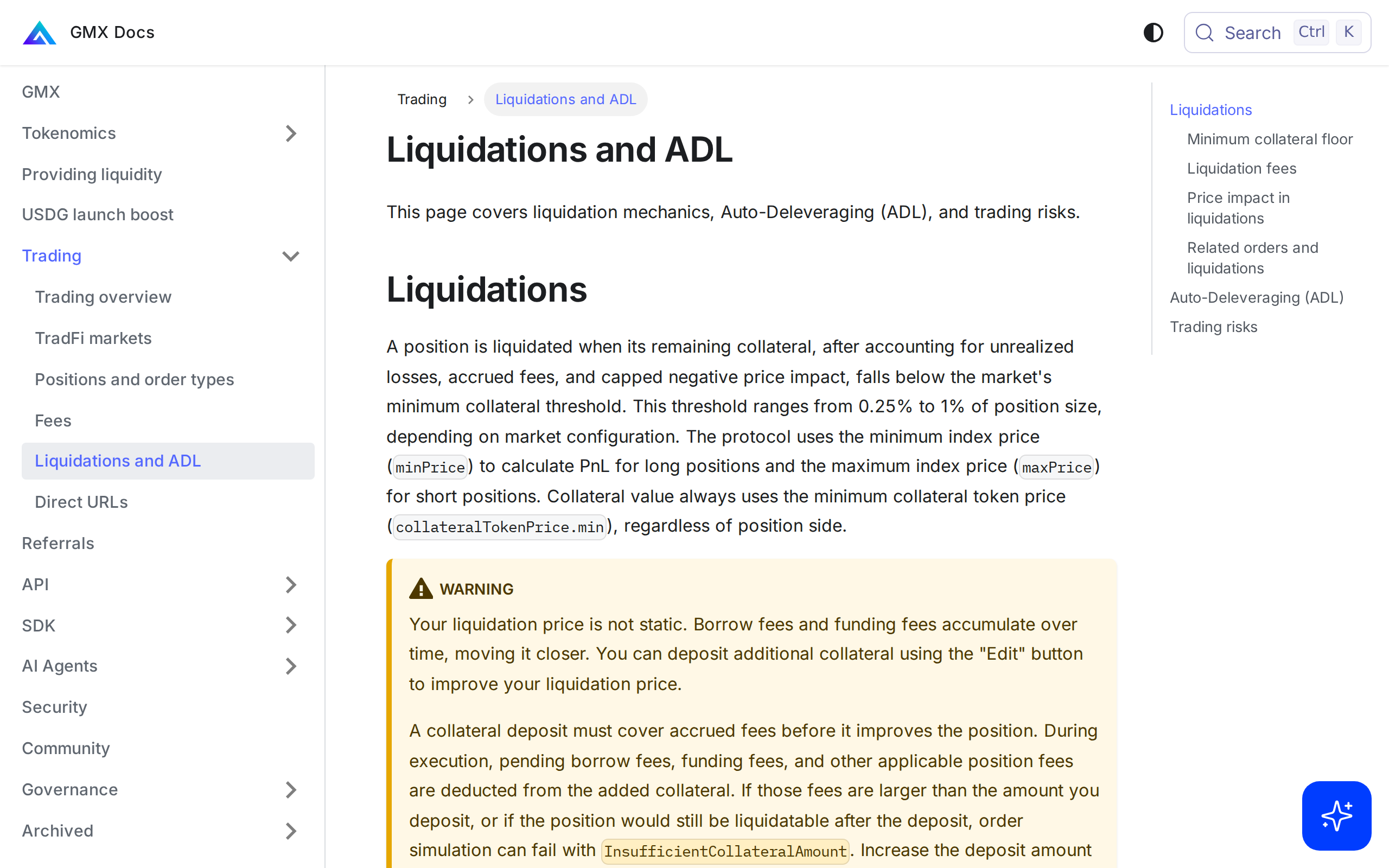
Open and close: 0.04% if your trade reduces the gap between long and short open interest, 0.06% if it widens it.
Swaps: 0.05% or 0.07% of the input on standard pairs; 0.005% to 0.02% on stablecoin swaps on Arbitrum.
Borrow and funding fees: accrue while a position is open and are not covered by referral discounts.
Network fees: gas on the chain you use, which is why the docs promote an Express Trading mode for people without the gas token.
A $10,000 position therefore costs $4 or $6 to open and the same to close. That beats most centralized retail apps by a wide margin, though large centralized venues quote maker rebates and lower takers at high volume. The part to watch is borrow and funding, which the liquidation page warns will move your liquidation price closer over time.
Liquidations are rule-based, not discretionary
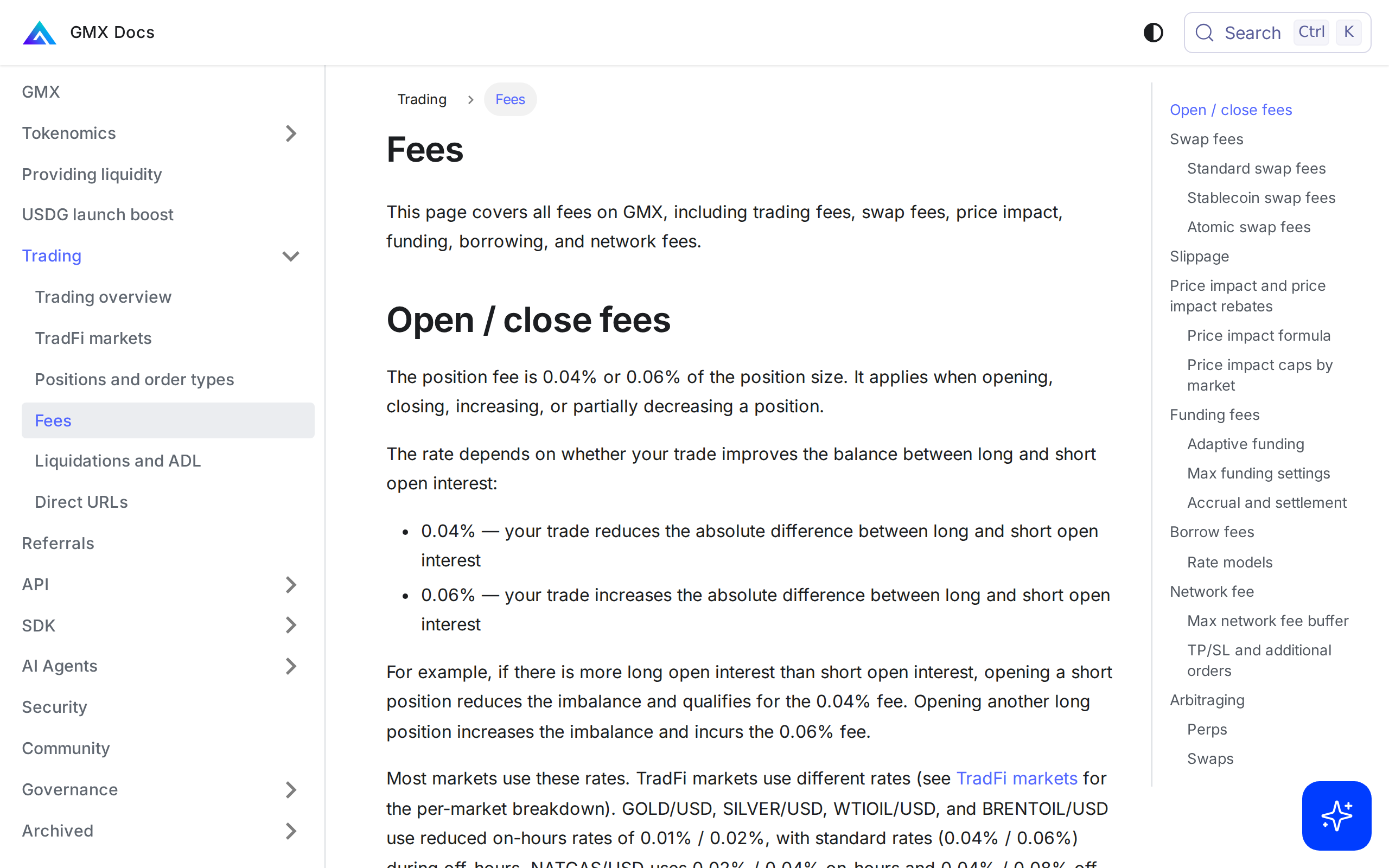
A position is liquidated when collateral, after losses and fees, drops under a threshold between 0.25% and 1% of position size, depending on the market. Leftover collateral goes back to your wallet. On commodity markets the rules tighten when the underlying market is closed: for gold and oil the threshold moves from 0.5% to 0.8% off-hours, which the docs equate to a shift from 200x to 125x. Your position can sit closer to liquidation while the price has not moved at all.
The July 2025 exploit
On 9 July 2025 an attacker drained about $42 million from the older V1 GLP pool on Arbitrum. Halborn and others traced it to a reentrancy-style flaw in order execution combined with a mispriced short position average, which let the attacker inflate the pool's value and redeem against it. Funds were later returned in exchange for a 10% bounty, about $5 million.
That ending is better than most hacks, and the V2 design is separate. But a bounty is a negotiation, not a guarantee, and anyone depositing into a pool carries smart-contract risk that no fee table captures.
Where it sits against newer venues
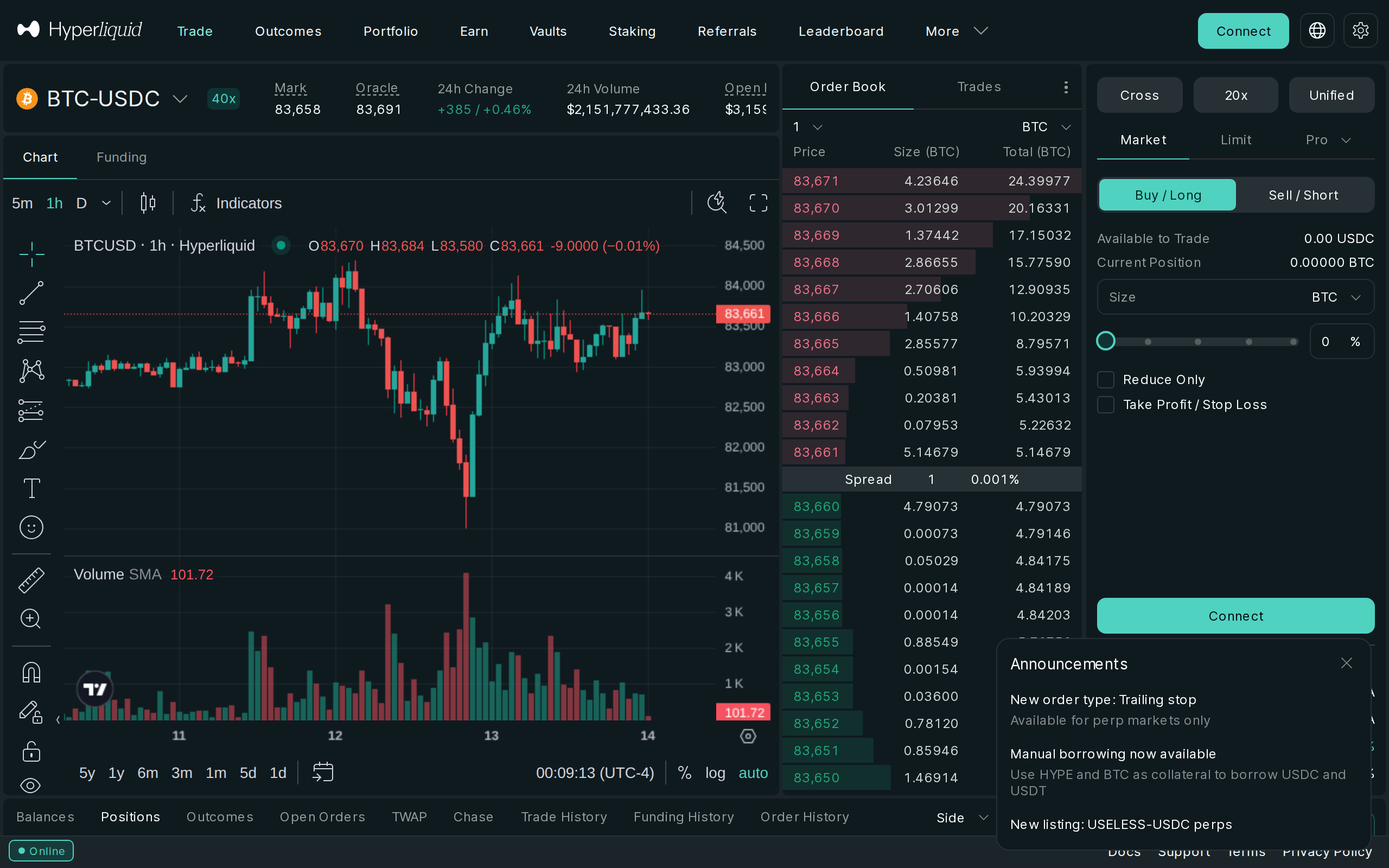
DefiLlama figures reported in mid-2026 put Hyperliquid at about $178 billion of 30-day derivatives volume and roughly 68% share, with GMX near $2.5 billion and 1%. See our Hyperliquid review for the order-book alternative. Thin volume means fewer people watching, less depth for big size and a smaller community if something breaks.
Who should use it
Pick GMX if you want a self-custody venue with posted fees and no account, and you will trade modest size at low leverage. Skip it if you need the tightest spread at scale or you cannot afford smart-contract risk. We rate it a solid mid-table choice: honest pricing, a scar from 2025, and a smaller crowd than its history deserves.