CoinDCX review: India's tax bite, the 2025 hack and the INR verdict
CoinDCX charges 0.20% on spot trades, then India adds 1% TDS on sells and a 30% tax on gains. We weigh its tax reporting, its 2025 hack and its fees against rivals.
Best forIndian residents who trade against the rupee and want tax paperwork handled
Full fee ledger
- Price
- Free to join; trading fees vary by market
- Operator
- CoinDCX
- Base spot fee
- 0.20% maker and taker
- Futures fees
- 0.025% maker, 0.070% taker at base
- INR deposits
- Free by IMPS and NEFT
- Peer-to-peer fee
- 0.17% fixed
- Coins listed
- 500+ standard, 1,000+ via Web3 mode
- India tax
- 30% on gains plus 1% TDS per sale
- Security certification
- ISO 27001:2022
- Registered users
- About 14 million

Our verdict
CoinDCX is a sensible default for Indian residents trading against the rupee: free IMPS and NEFT deposits, a 0.20% base spot fee, and tax reporting that shows the TDS. The 2025 hack, about $44 million from an internal account that the company absorbed, is a mark against its controls. Nothing here is personal financial advice.
What works
- Free INR deposits by IMPS and NEFT, per CoinCodeCap
- Order details show the fee, GST and TDS breakdown
- Absorbed the full $44 million July 2025 loss, with no customer funds lost
- Publishes proof of reserves and holds ISO 27001:2022
What does not
- Base spot fee of 0.20% is higher than several global rivals
- 1% TDS on sells applies even when a trade loses money
- A hot-wallet breach in July 2025 drained about $44 million in five minutes
- Main website returned HTTP 403 to our test machine, so we could not use it
CoinDCX is the Indian exchange most Indians have heard of, and it is hard to judge without India's tax law in the room. Every sale of a crypto asset there carries a 1% tax deducted at source, and gains are taxed at a flat 30%. No exchange can remove either charge. What CoinDCX can control is what it charges on top, how it handles the paperwork, and what it does when something goes wrong. In July 2025 something did. We could not open coindcx.com from our test machine (the site answered every request with an HTTP 403), so this review rests on its help centre, its published fee tables, its terms for API users and independent reporting. Nothing here is personal financial advice.
The tax is the product
Start with the rules, because they decide who this exchange is for. India's Budget for 2026-27 left the 30% tax and the 1% TDS untouched, according to Decrypt's report, and added reporting penalties of 200 rupees a day for non-filing and a flat 50,000 rupees for wrong disclosures. CoinDCX's own chief executive has said the TDS pushed most Indian volume to offshore venues.
CoinDCX's help centre has a whole section on it, with questions such as "Why is TDS charged on both sides of Crypto-to-Crypto (C2C) trades?" and "Why was TDS deducted even though I incurred a loss?". Those two headings tell you the real experience: a trade that loses money still has tax withheld, and a swap between two coins can be taxed on both legs.
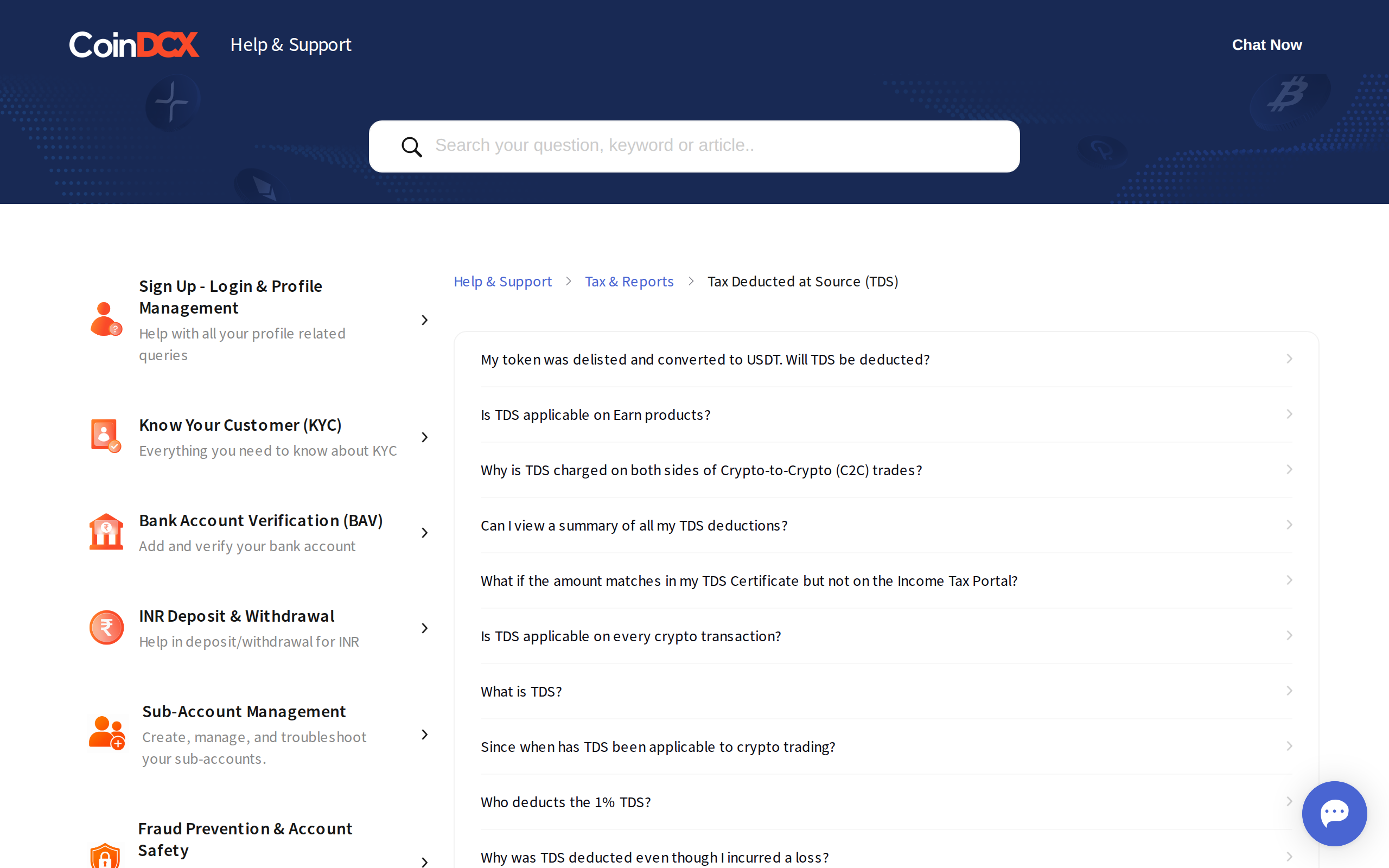
Credit where due: CoinDCX shows the fee, GST and TDS split in its order details, and it works with the KoinX tax tool for reports. For a user who trades in rupees, that is the useful part of an Indian exchange. You cannot avoid the tax, but you can see it.
What a trade costs
The base spot fee is 0.20% for makers and takers, per CoinCodeCap's review, falling to roughly 0.03% to 0.04% for accounts that trade above 5 crore rupees a month. Futures start at 0.025% for makers and 0.070% for takers, with lower rates at VIP levels. Peer-to-peer trades are a fixed 0.17%. INR deposits by IMPS or NEFT are free.
Add the 1% TDS on sells and GST on the fee, and the all-in cost of a round trip is dominated by tax, not by CoinDCX. That is why a 0.20% fee is a fair headline here. It is not the cheapest on offer worldwide, but the gap to rivals is small next to a 1% levy.
The catalogue is wide for an Indian venue: 500 or more coins on the standard exchange and, according to CoinCodeCap, more than 1,000 through its Web3 mode. Derivatives are there too, plus options.
The July 2025 hack, read carefully
On 19 July 2025 CoinDCX said attackers took about $44 million. The money came from an internal operational account used to provide liquidity on partner exchanges, not from customer wallets. Business Standard reported that the chief executive, Sumit Gupta, said the company would absorb the whole loss on its own balance sheet, equal to three to four months of revenue. Investigators from Sygnia, zeroShadow and Seal911 were engaged, and a recovery bounty of up to 25% of recovered funds, about $11 million, was offered. Some analysts pointed to the Lazarus Group; that remains an attribution, not a finding.
Two readings are fair. The favourable one: customers lost nothing and the company paid. The unfavourable one: a server compromise drained a hot wallet in about five minutes, which says something about internal controls at an exchange of this size.
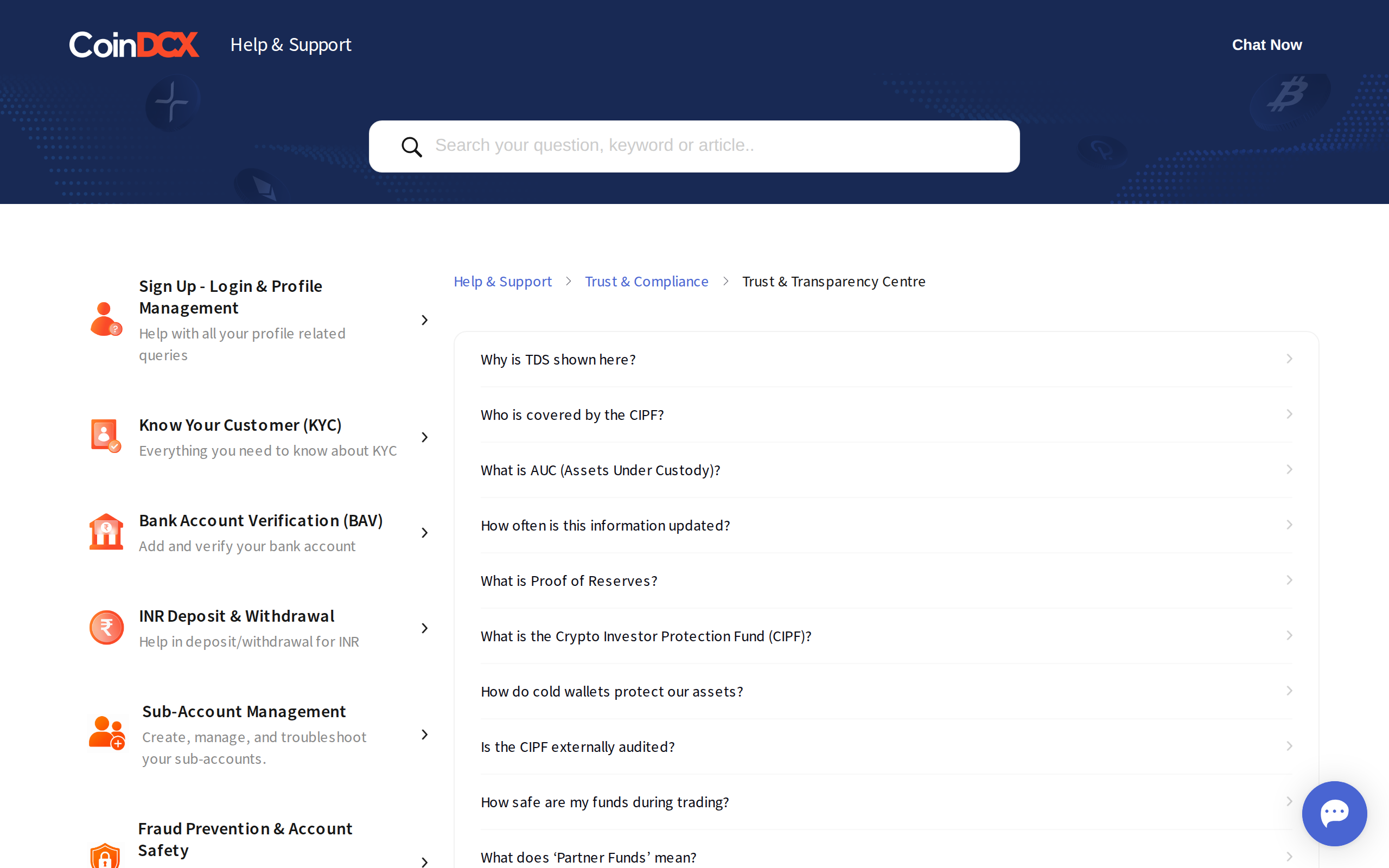
The company's own trust claims are worth reading next to that: ISO 27001:2022 certification, quarterly proof of reserves (the January 2025 report showed reserves 1.48% above customer holdings), custody through BitGo with multi-signature controls, and a registration with India's Financial Intelligence Unit. Those are claims we took from its disclosures and CoinCodeCap, and we did not audit them.
Developers and heavy users
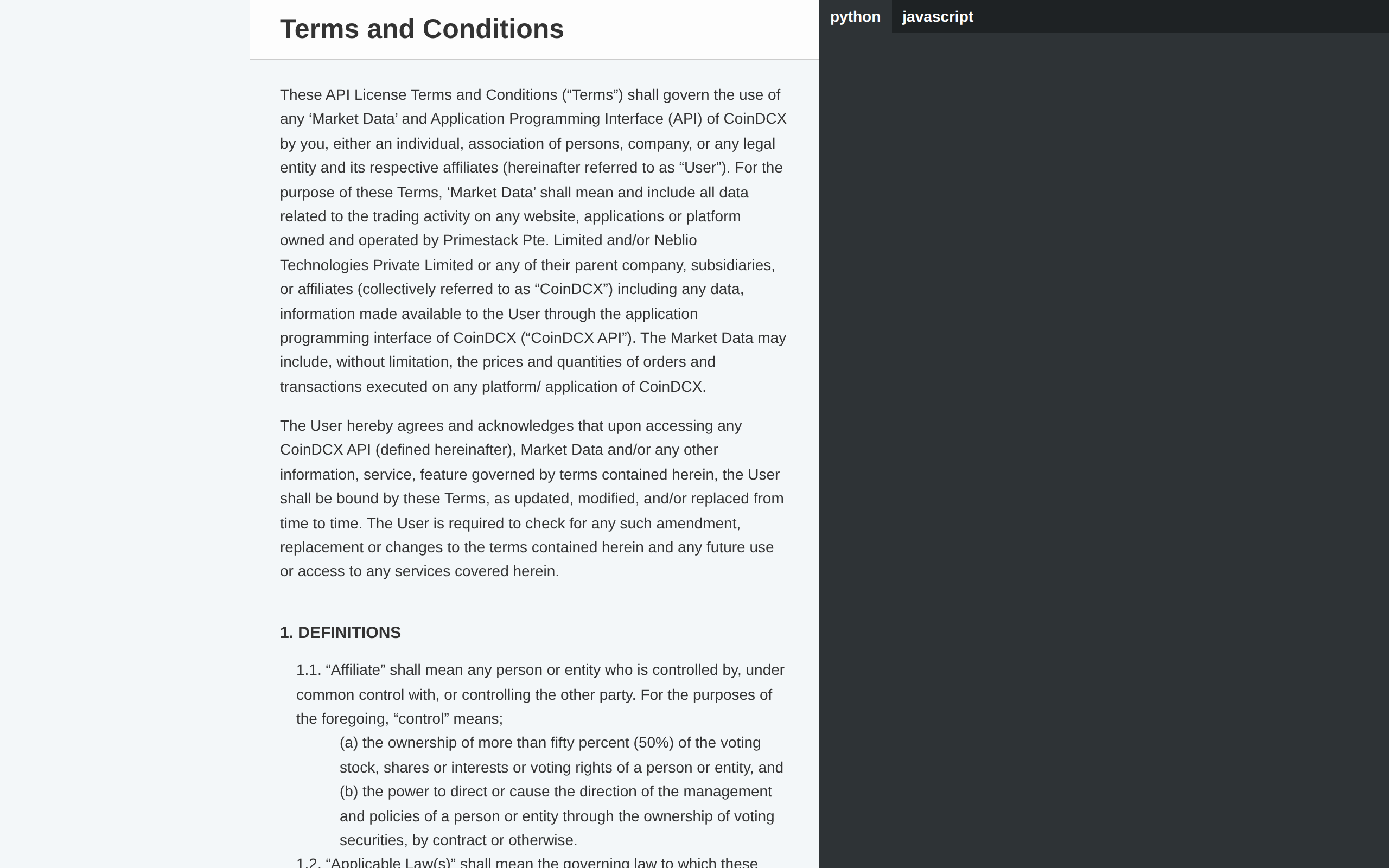
CoinDCX publishes an API with its own licence terms, which a developer must accept before using market data. That is more structure than many regional exchanges bother with, and it suits someone building a tool or a bot against INR pairs.
Is it the best INR exchange now?
It is a safe default, not an exciting one. It has scale (14 million registered users by CoinCodeCap's count), clear tax reporting, free INR deposits and a hack it paid for. Against that: a 0.20% fee that bigger global exchanges undercut, TDS that bites on every sell, and a security lapse in 2025 that the company has explained only in outline.
Who should use it: Indian residents who want to buy and sell against the rupee, keep KYC and tax paperwork in one place, and accept that they will pay the government a cut on every exit. Who should not: anyone outside India, who cannot rely on this exchange, and active traders who judge by fee alone. Check the app for current terms before depositing.