Coinbase review: paying for safety, and how Advanced Trade cuts the bill
Coinbase is a US-listed exchange that charges a spread on its simple app and 0.40% / 0.60% on Advanced. We compared the screens, the fee schedule and the trust claims to see what the premium buys.
Best forUS and EU beginners who value regulation over the lowest fee
Full fee ledger
- Price
- Free to join; Advanced trade from 0.40% maker / 0.60% taker
- Operator
- Coinbase
- Joining fee
- Free
- Advanced base fee
- 0.40% maker / 0.60% taker
- Simple app cost
- Spread of roughly 0.5% to 2%, plus a flat fee (third-party estimate)
- Spot pairs
- 550+ on Advanced, per Coinbase
- Leverage
- Derivatives up to 10x, region dependent
- Stock listing
- Publicly traded company (ticker COIN)
- Education
- Free Crypto basics guides
Our verdict
Coinbase is the easiest regulated place to start, and its US listing gives it more public scrutiny than most rivals. The simple app costs several times more than it appears, so use Advanced from day one. This is reporting, not personal financial advice.
What works
- Advanced trade starts at 0.40% maker and 0.60% taker, with no hidden spread
- Listed on a US stock exchange, so it files public financial reports
- Advanced page advertises 550+ spot pairs and derivatives up to 10x
- Free learning library explains basics without pushing a trade
What does not
- The simple app bakes a spread into the price on top of a flat fee
- Base Advanced fees are far above Binance's 0.10% per side
- Some products, such as stocks and prediction markets, are blocked by region
- Account locks and slow support are the common complaint in independent reviews
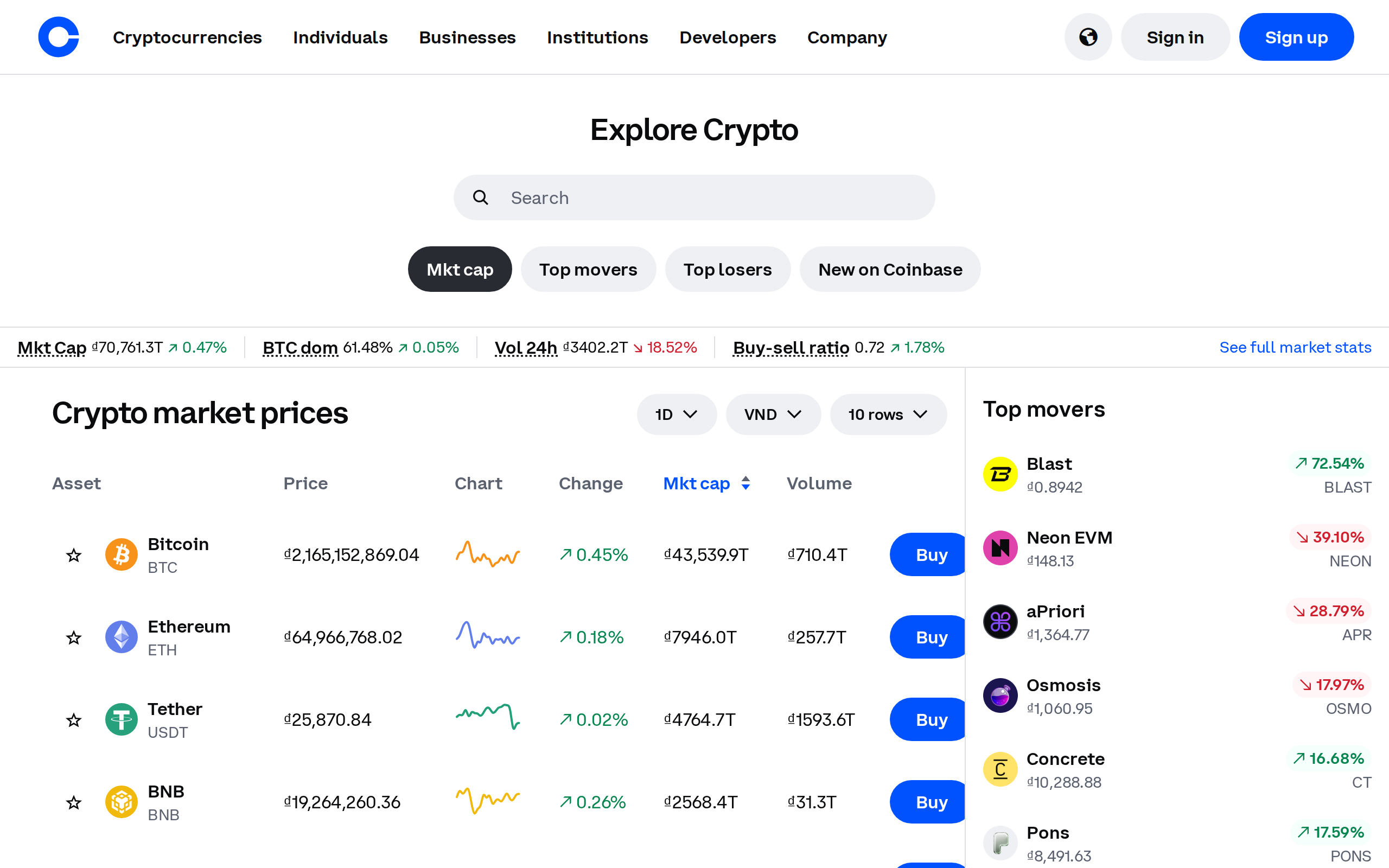
The price of Coinbase's reassurance is easy to measure. On the simple buy screen you pay a spread built into the quote plus a flat fee. On Advanced trade you pay 0.40% as maker or 0.60% as taker, shown up front. Both are dearer than Binance at 0.10%. What you get for the difference is a listed US company, a long public record and an interface that rarely lets you do something silly. This is reporting, not personal financial advice.
Start where the costs are visible
Open the Coinbase homepage and the pitch is trust: "Trade crypto and more on a platform you can trust."
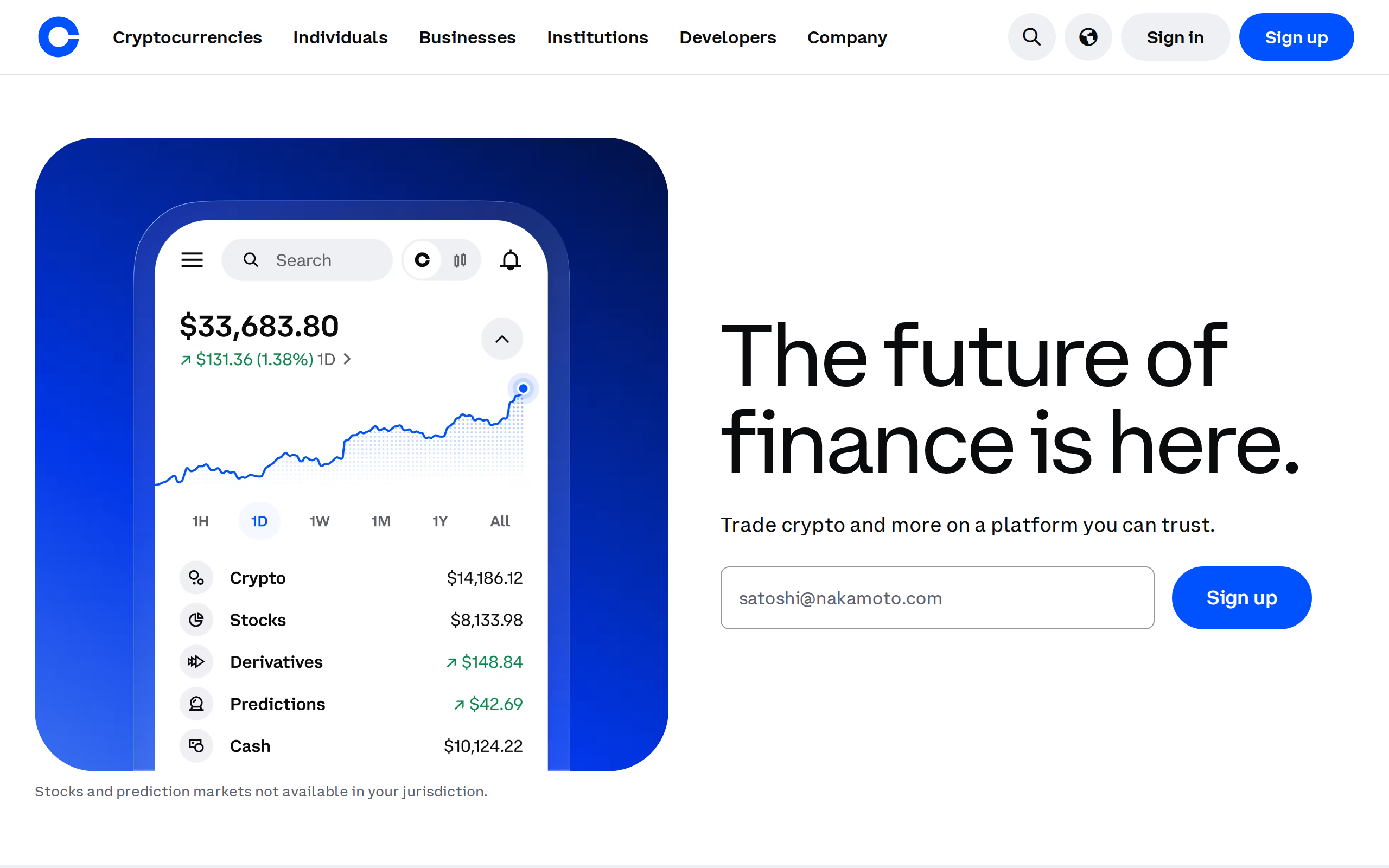
That notice matters. Coinbase shows different products to different countries, and what you read in a review may not be on your screen. Check your own account before you plan around a feature.
The simple app is where most newcomers begin, and it is the most expensive route. Independent trackers such as BrokerChooser describe a spread of roughly 0.5% to 2% on the quoted price plus a flat fee, which on small orders can push the total to several percent. We did not run a basket of test orders ourselves, so treat those ranges as third-party estimates and compare the quote with the live market before you confirm.
Advanced trade is the answer, not an upgrade
The fix is on the same account. The Advanced trade page says it offers "more derivative markets, new tools, faster execution, and lower fees", 550+ spot pairs, and derivatives with up to 10x leverage.
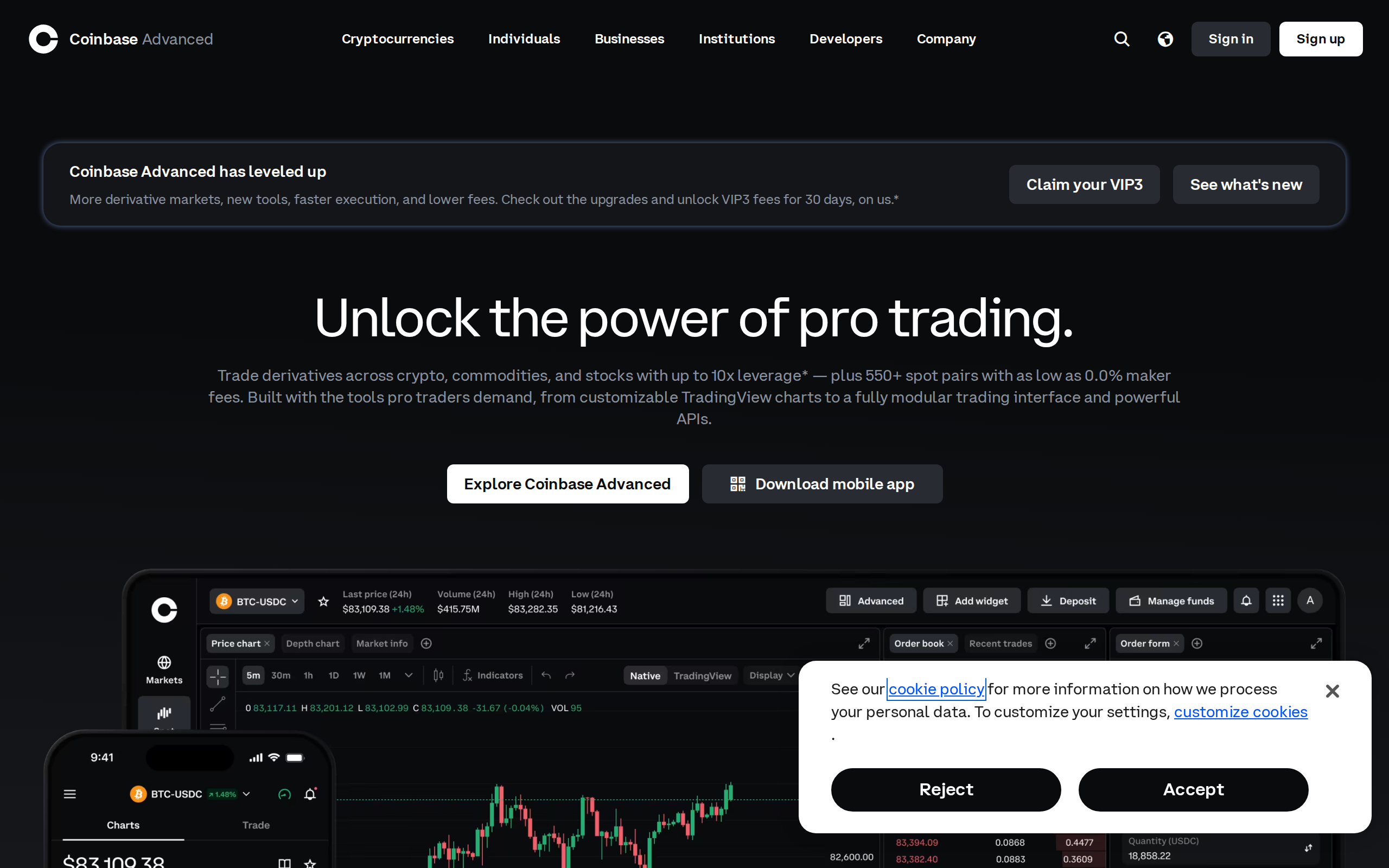
At the base tier a maker order, which rests on the book, costs 0.40%. A taker order, which hits the book, costs 0.60%. On 1,000 USD that is 4 USD or 6 USD. The same trade at Binance's base rate costs 1 USD. The promotion on the page, VIP3 fees for 30 days, is worth reading only if your volume would reach that tier anyway.
Two habits keep the bill down:
Place limit orders so you pay the maker rate.
Make fewer, larger purchases instead of many small ones, because a flat fee hurts small trades most.
Leverage is the part we would leave alone. A product advertising 10x belongs in the hands of people who already know how liquidation works, and the rate you pay compounds on borrowed size.
What the trust claim rests on
Coinbase sells itself as "the most trusted crypto exchange", and its security page leads with that line.
We read that as marketing, not proof. The concrete support is structural. Coinbase is a publicly traded company, so it publishes audited financial statements and answers to securities rules. That is a different standard from a private offshore exchange. It does not remove risk: the platform still holds your coins in custody, and an exchange failure would still land on customers.
Independent reviewers, including NerdWallet, keep returning to the same complaint. Support can be slow when an account is locked, and fees on the simple screen are not obvious. Keep your identity documents in order and withdraw long-term holdings to a wallet you control.
A good place to learn first
One feature that rivals underplay: Coinbase's Crypto basics library is free and written for newcomers.
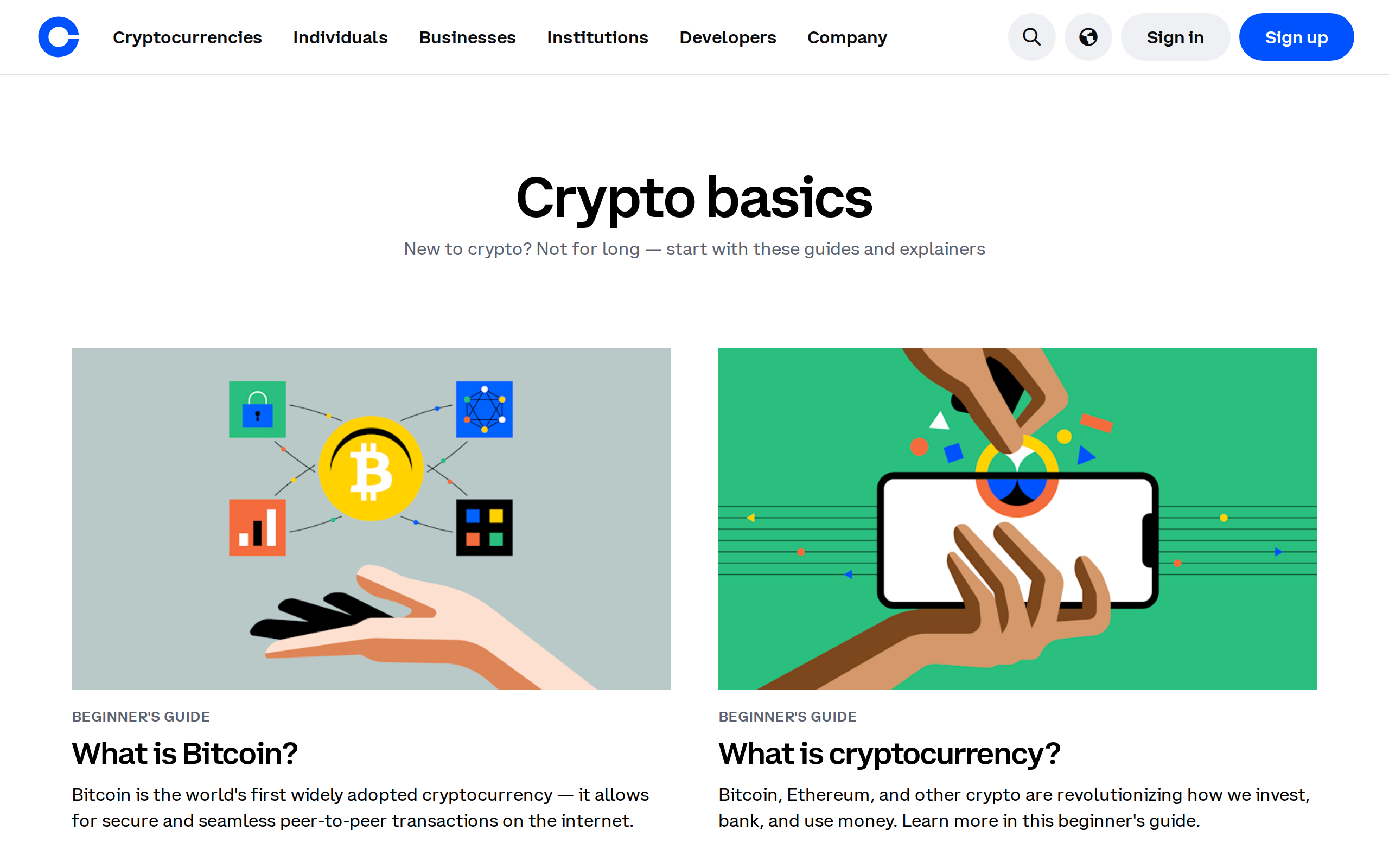
It will not teach you to trade. It will teach you what a wallet, a seed phrase and a network fee are, which is more useful than a promotion.
The staking pitch deserves a footnote
Coinbase also promotes yield. Its Earn page says "Earn up to 12% APY on your crypto with staking", with a footnote that the rate is an estimated protocol rate and can change.
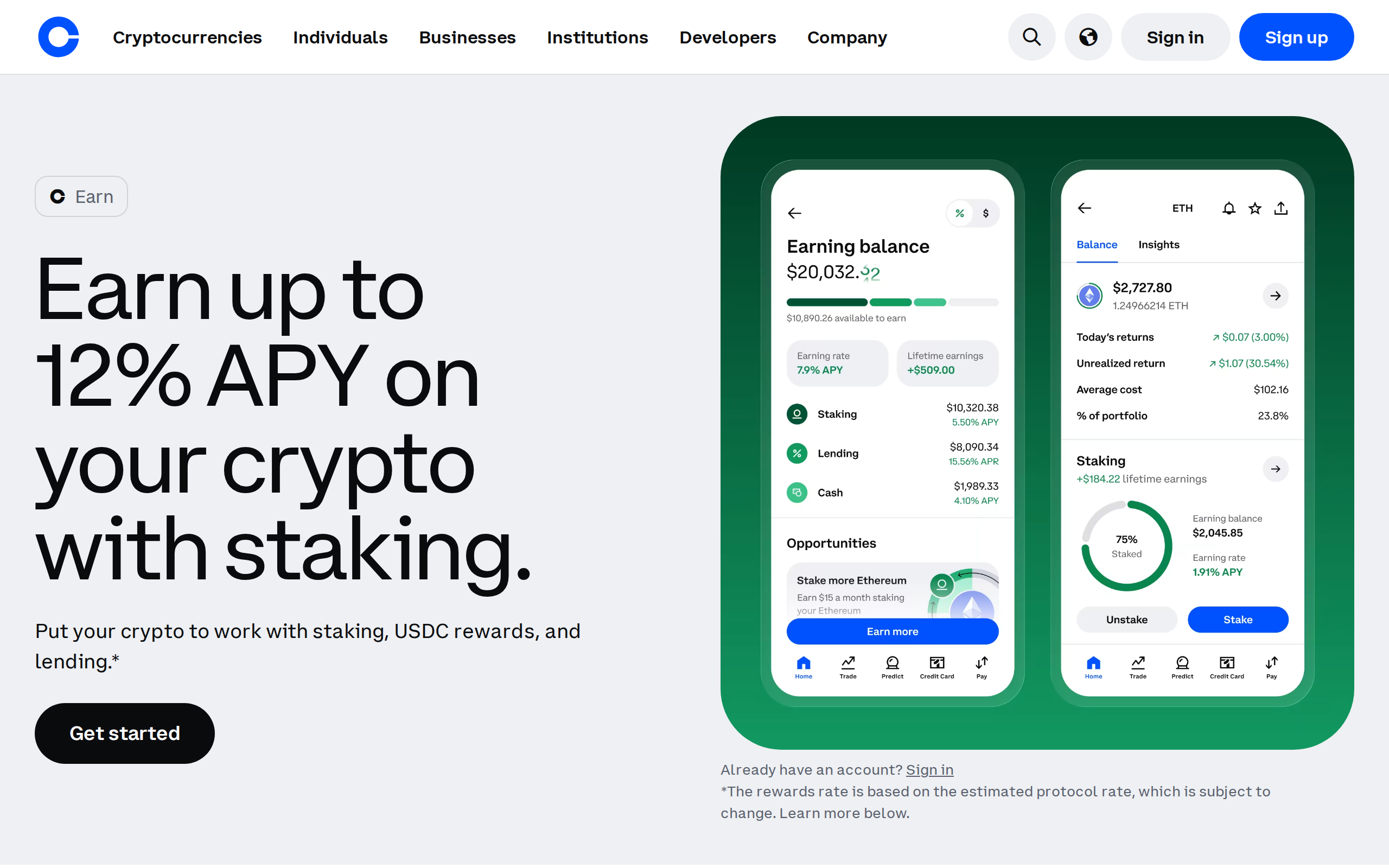
Read the word "up to" literally. The top figure belongs to one asset, and the commission Coinbase keeps comes out of what you would otherwise receive. Staking also locks or delays access to coins, which matters if you need to sell fast.
Who it suits
Pick Coinbase if you live where it is fully supported, want a regulated name on your tax records, and are willing to accept 0.40% and 0.60% for that comfort. Use Advanced, not the simple screen, from the first purchase.
Look elsewhere if fees are your priority or if you trade often. A trader doing 50,000 USD a month at taker rates would pay about 300 USD at Coinbase's base tier, against roughly 50 USD at Binance's base rate. That gap is the entire price of the premium.
We score it 7.8 out of 10: strong on clarity and scrutiny, held back by cost on the screen most people use first.