Bitunix review: low futures fees, 125x leverage and a licence story we could not confirm
Bitunix charges 0.02% maker and 0.06% taker on futures at the entry tier, but its registration, reserve proof and KYC rules are hard to pin down. We read the fee page and the Proof of Reserve page.
Best forExperienced futures traders outside restricted countries who want low fees
Full fee ledger
- Price
- Free to join; futures from 0.02% maker / 0.06% taker
- Operator
- Bitunix
- Futures fees (VIP 0)
- 0.02% maker / 0.06% taker
- Spot fees (VIP 0)
- 0.08% maker / 0.10% taker
- Top-tier futures fees (VIP 8)
- 0% maker / 0.026% taker
- Maximum leverage
- Up to 125x on major pairs (third-party reports)
- Reserve proof
- Merkle-tree Proof of Reserve for BTC, ETH, USDT; no named auditor
- Founded
- 2021 (third-party reports)
- Restricted jurisdictions
- About 23, including the US, Canada, China and Singapore
- Other products
- Copy trading, P2P, card purchase via providers, earn
Our verdict
Bitunix is a cheap futures venue whose price is its main argument: 0.02% maker and 0.06% taker at the entry tier. The weak points are an unclear registration country, a Proof of Reserve page with no named auditor, and a restricted list that includes the US and Canada. Fit for experienced offshore futures traders only. Not personal financial advice.
What works
- Entry-tier futures fees of 0.02% maker and 0.06% taker, published openly
- VIP 8 futures reach 0% maker and 0.026% taker
- Spot, futures, copy trading and P2P in one account
- A public Proof of Reserve page covering BTC, ETH and USDT
What does not
- No licence we could verify that gives a user a regulator to complain to
- Proof of Reserve page names no outside auditor
- Not available to residents of the US, Canada, Singapore and others
- Sources disagree on KYC and withdrawal limits for unverified accounts
Bitunix is a cheap, fast futures venue with a licence story we could not pin down, and that is the whole review in one line. Base futures fees of 0.02% maker and 0.06% taker sit in the normal offshore range, and leverage reaches triple digits. What you do not get is a regulator you can complain to. Read this as reporting, not personal financial advice, and treat any account here as money you can afford to lose.
What the front page promises
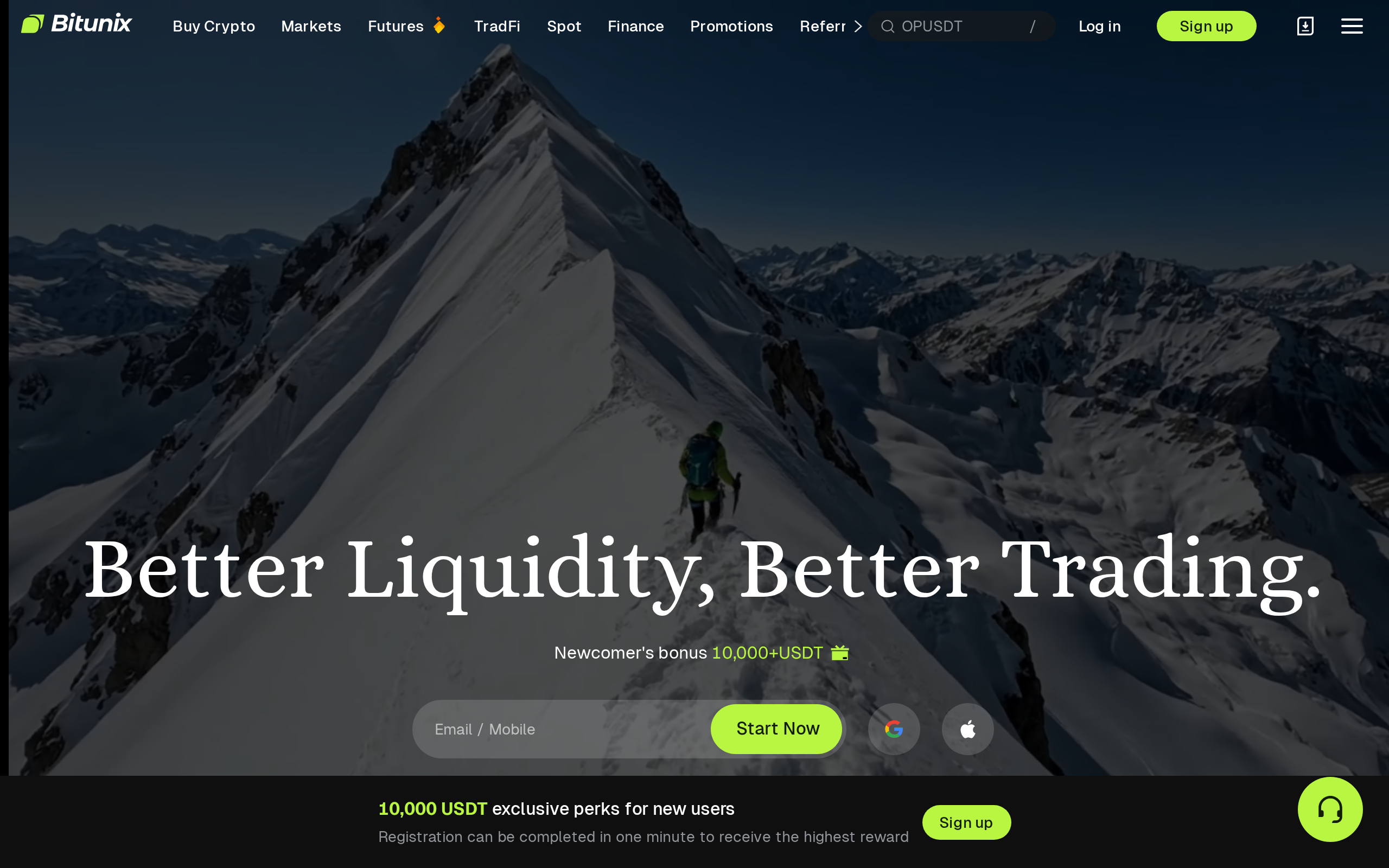
The homepage opens on "Better Liquidity, Better Trading" and describes a derivatives exchange for BTC and altcoins, with spot, futures, copy trading, earn products, P2P and a card on the navigation bar. The pitch is speed and low cost, aimed at people who already know what a liquidation price is.
Third-party reviews date the exchange to 2021 and put its leverage ceiling at 125x on major pairs. We could not find a single official page that states the registration country; sources we read disagree between Saint Vincent and the Grenadines and Seychelles. That sounds like a small detail. It is the first thing to settle before you send money anywhere.
The fee table, tier by tier
The fee page lists the schedule openly. At the entry tier (VIP 0) spot costs 0.08% maker and 0.10% taker. Futures cost 0.02% maker and 0.06% taker. Climbing the VIP ladder trims this: VIP 1 futures is 0.02% / 0.05%, VIP 7 is 0.006% / 0.030%, and VIP 8 reaches 0% maker and 0.026% taker.
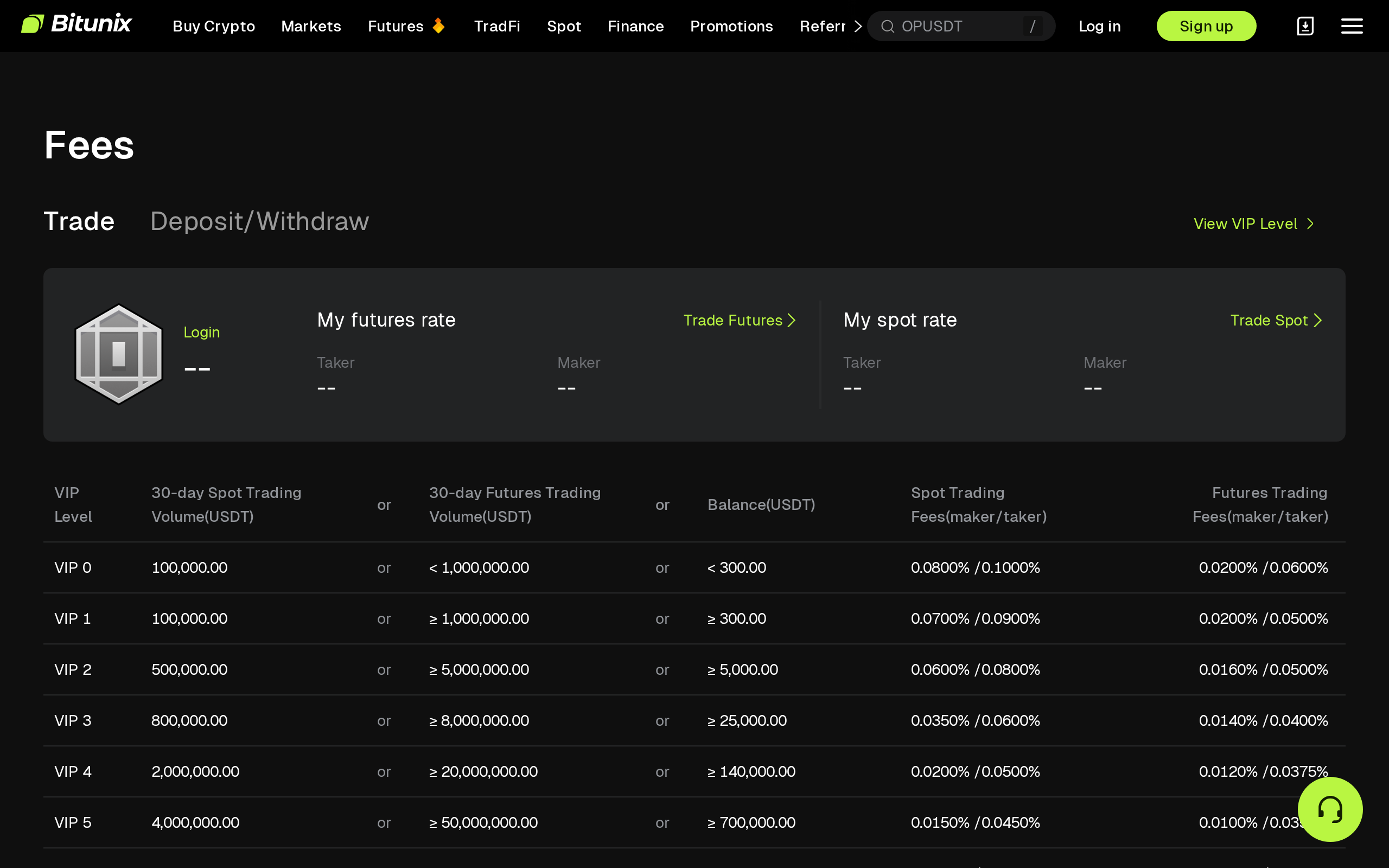
For a trader who opens a $10,000 position with a market order, the entry-tier taker charge is $6 each way, so $12 round trip before funding. That is cheaper than Coinbase's retail screens and in line with Bybit and Bitget, which we cover in their own reviews. It is not a reason by itself to pick a venue, because fees are the easy part to compare and the hard part is whether you can withdraw.
Trading screen and what sits around it
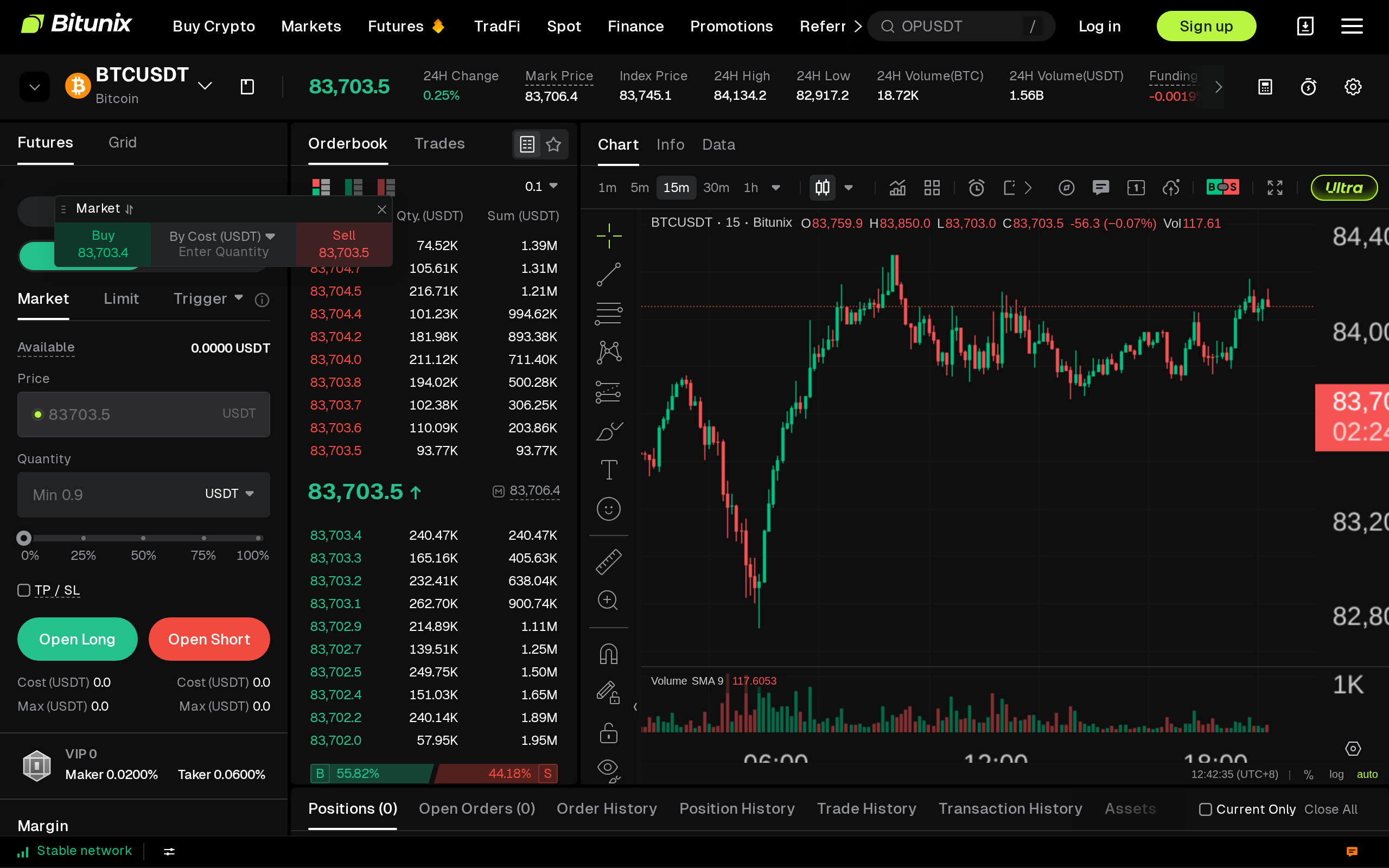
The futures screen for BTCUSDT is a standard layout: chart in the middle, order book and trades on the right, the order form below. Gold perpetuals (XAUUSDT) are linked from the home page, and there is a "chart trading" mode for placing orders from the chart itself.
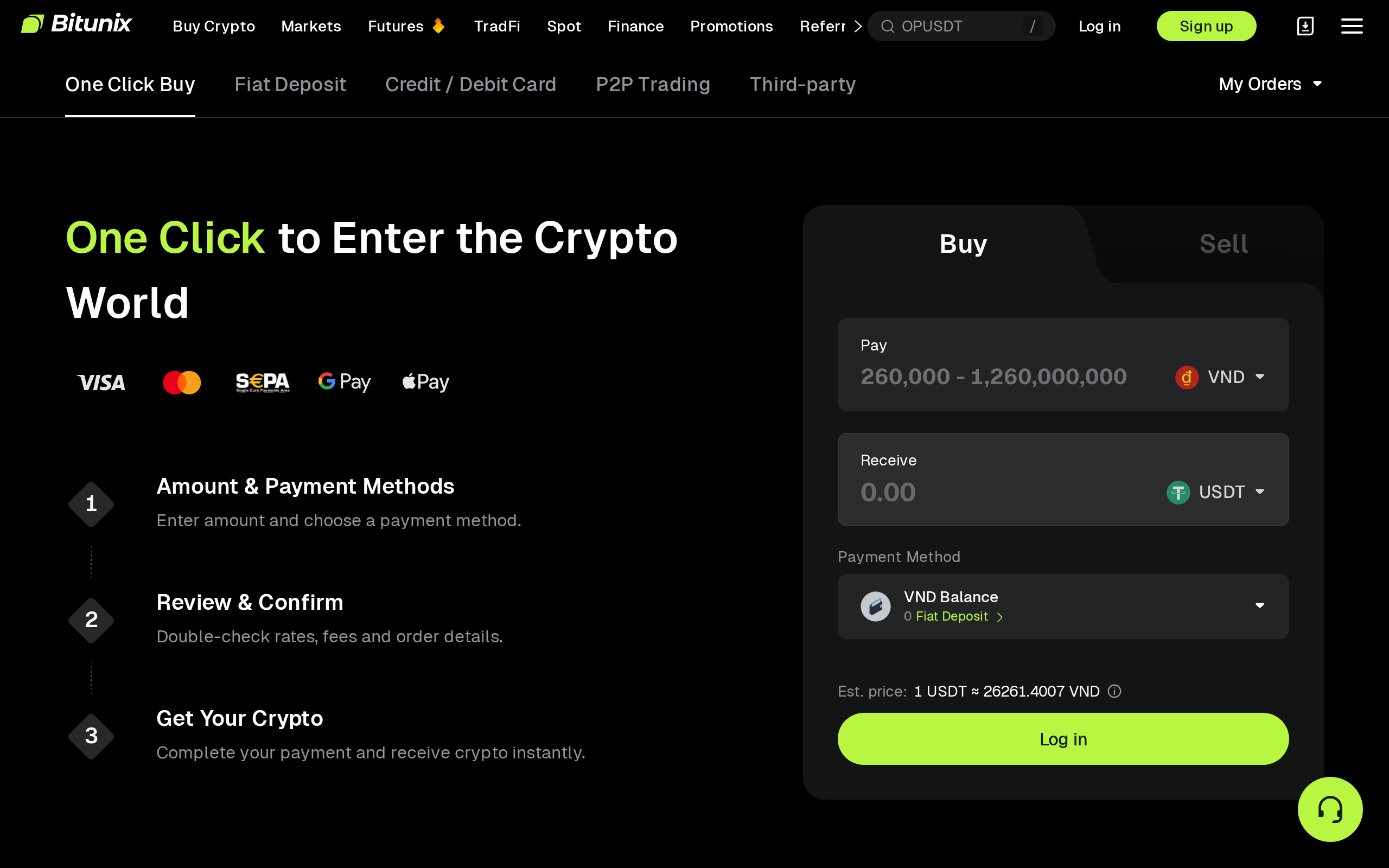
There is also a buy-crypto page headed "One Click to Enter the Crypto World", which routes card purchases through third-party providers. Those providers set their own spreads, so the 0.10% spot figure does not apply there.
Proof of reserves, and what it does not prove
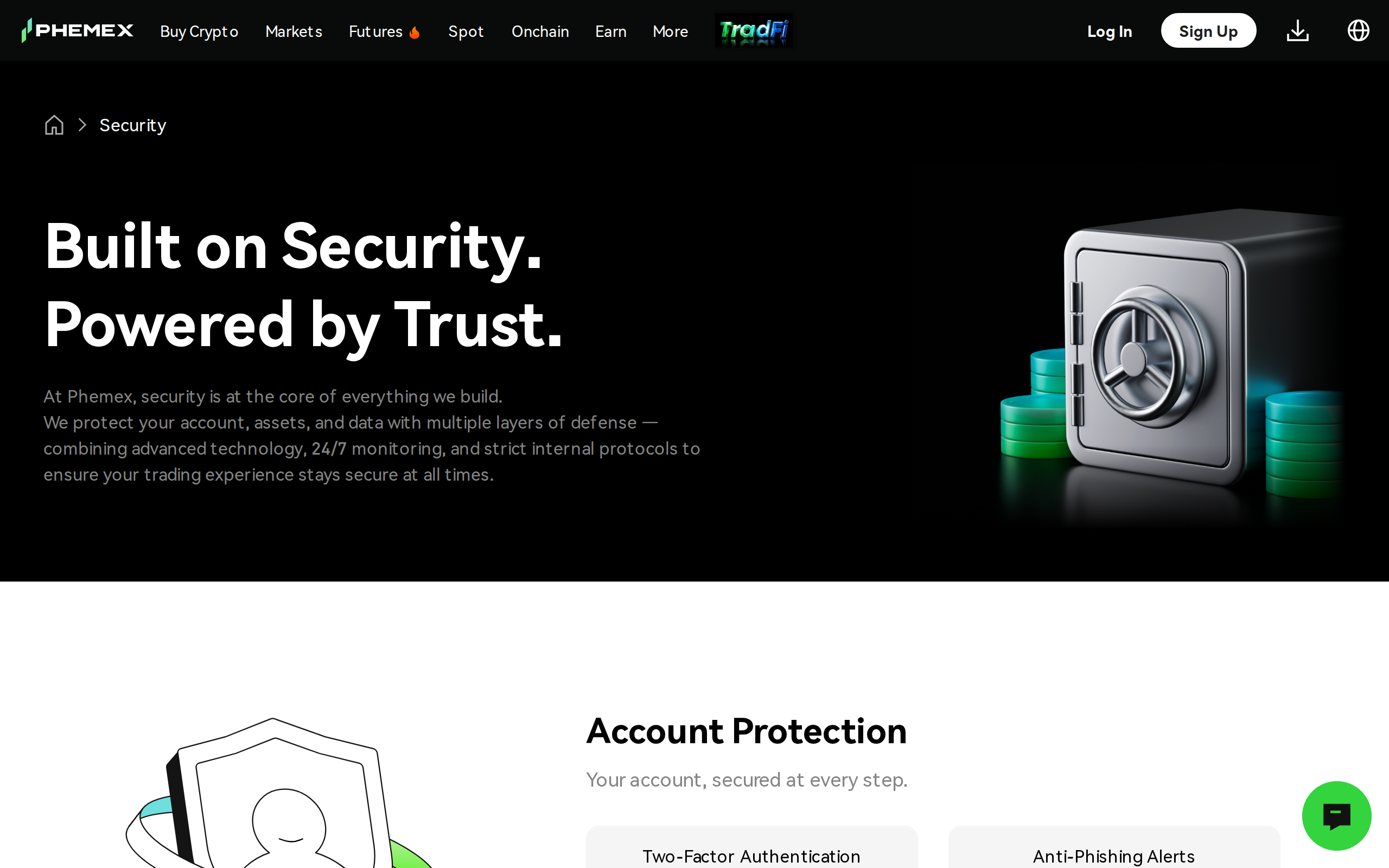
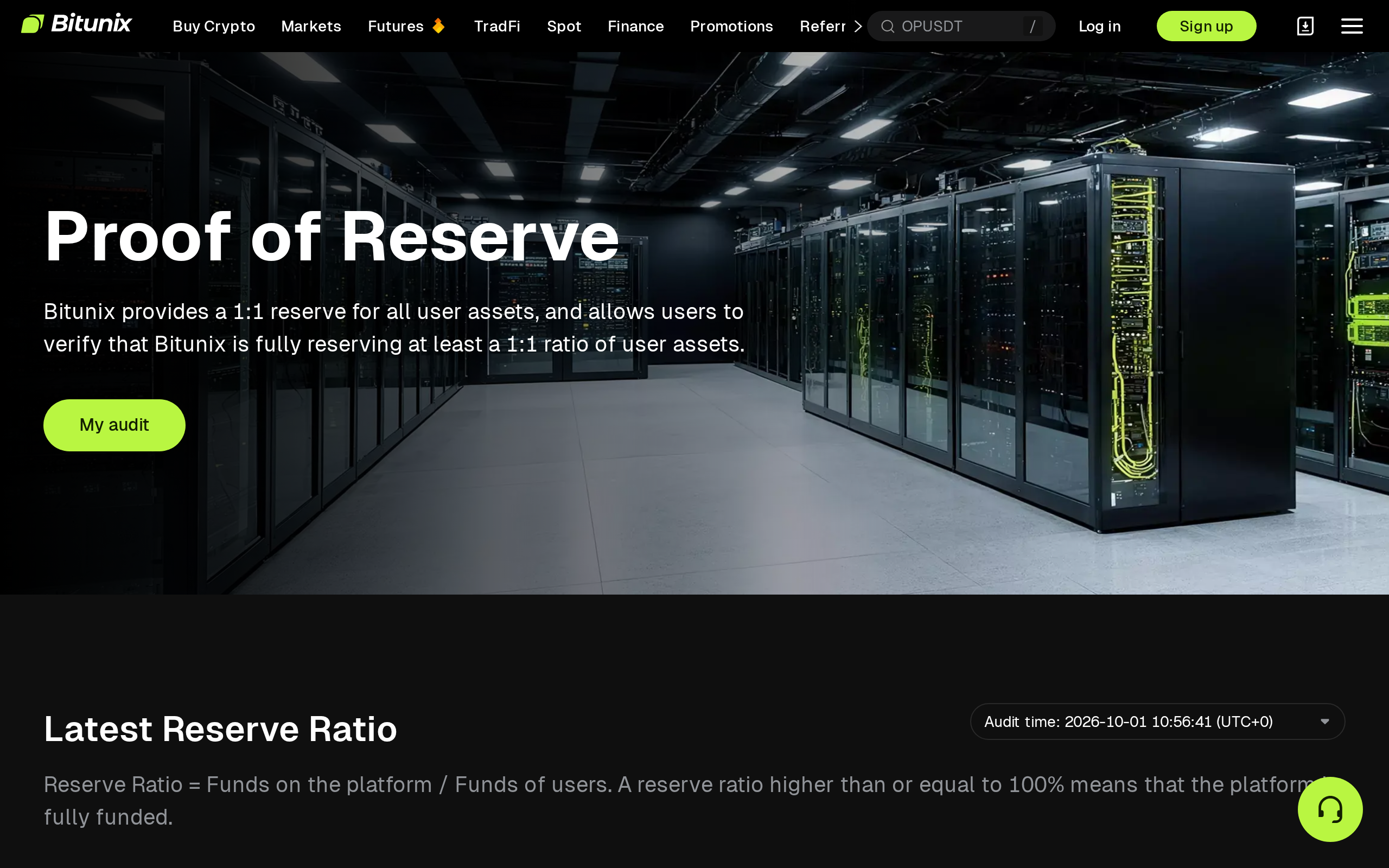
Bitunix runs a Proof of Reserve page. It defines the ratio as funds on the platform divided by funds owed to users, calls 100% or higher fully funded, and tracks BTC, ETH and USDT. It says it uses a Merkle tree and publishes the root hash. The page does not name an outside auditor, and in our capture the ratio cells for each asset showed placeholders rather than numbers.
Third-party write-ups mention a "Care Fund" of $30 million in USDC. We did not find that figure on the pages we opened, so we pass it on as a claim from outside reviewers, not a verified number. A Merkle proof shows your balance was included in a snapshot. It does not show that the exchange has no other debts.
Licences, KYC and who is shut out
Reviewers cite registrations in the United States, Canada and the Philippines. Registration with a money-services office is a filing, not a licence to operate a derivatives exchange, and the same trackers list the United States and Canada among about 23 restricted jurisdictions. Both claims cannot help you at once: if you live in either country, you are not meant to be here.
On identity checks, sources disagree. One says email sign-up is enough to trade and cites a $500,000 daily withdrawal cap for unverified accounts. Another says KYC is required to withdraw. Check the in-app limits before you deposit, and assume they can change. On the regulator side there was one real wobble: Upbit restricted deposits and withdrawals involving Bitunix in South Korea, then lifted that on 22 January 2026 after a review.
Who should use it
Bitunix suits an experienced futures trader outside the restricted countries who wants low fees and is willing to size the account as risk capital. It is a poor fit for beginners, for anyone in the US, Canada or Singapore, and for anyone who wants a licence they can name and a complaints route. For that last group, Kraken and the other regulated venues cost more in fees and less in worry.
We rate it 6.2 out of 10: good price, thin accountability. Withdraw profits on a schedule rather than leaving a large balance parked, because the protection here is only as strong as the company's word.