Bitfinex review: zero trading fees, margin funding and a heavy past
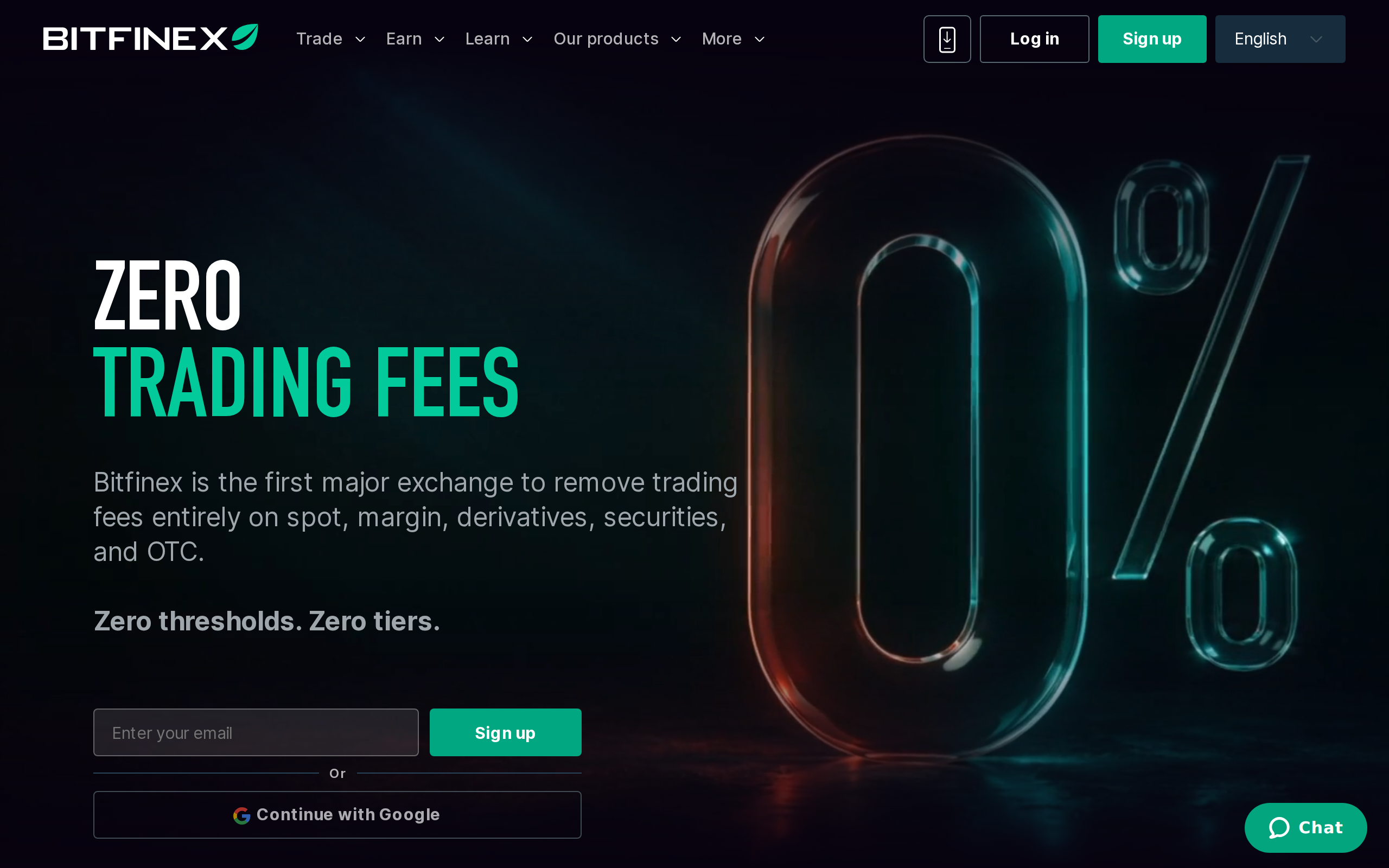
Bitfinex removed maker and taker fees on 17 December 2025, and still runs a peer-to-peer margin funding market. We read the fee schedule, and set it against its 2016 hack and US exclusion.
Best forExperienced non-US traders who use margin and want zero trading fees
Full fee ledger
- Price
- Free to join; trading fees vary by volume
- Operator
- iFinex
- Spot and margin fees
- 0% maker and 0% taker
- Derivatives fees
- 0% maker and 0% taker
- Margin funding cut
- 15.0% of lender interest, 18.0% for hidden offers
- Bank wire deposit
- 0.100%, minimum 60 USD or EUR
- Crypto deposits
- Free
- Token recovery fee
- 150 USD for deposits missing a tag or memo
- Spot markets
- 180+
- Maximum leverage
- Up to 100x on derivatives
Our verdict
Bitfinex now charges 0% maker and taker fees on spot, margin and derivatives, which is the cheapest trading among major exchanges. Its margin funding market is a genuine edge for experienced users. It is not open to US customers, offers little for beginners, and carries a 2016 hack history. This is reporting, not personal financial advice.
What works
- 0% maker and taker fees since 17 December 2025, with no tiers or token needed
- Peer-to-peer margin funding market with a 15% house cut on lender interest
- 180+ spot markets and derivatives with up to 100x leverage
- Crypto and stablecoin deposits are free per the fee schedule
What does not
- Not available to US individual customers since 2017
- Bank wire deposits cost 0.100% with a 60 unit minimum
- A 2016 hack took 119,756 bitcoin, and recovery took until 2022
- Interface assumes experience, with no beginner flow
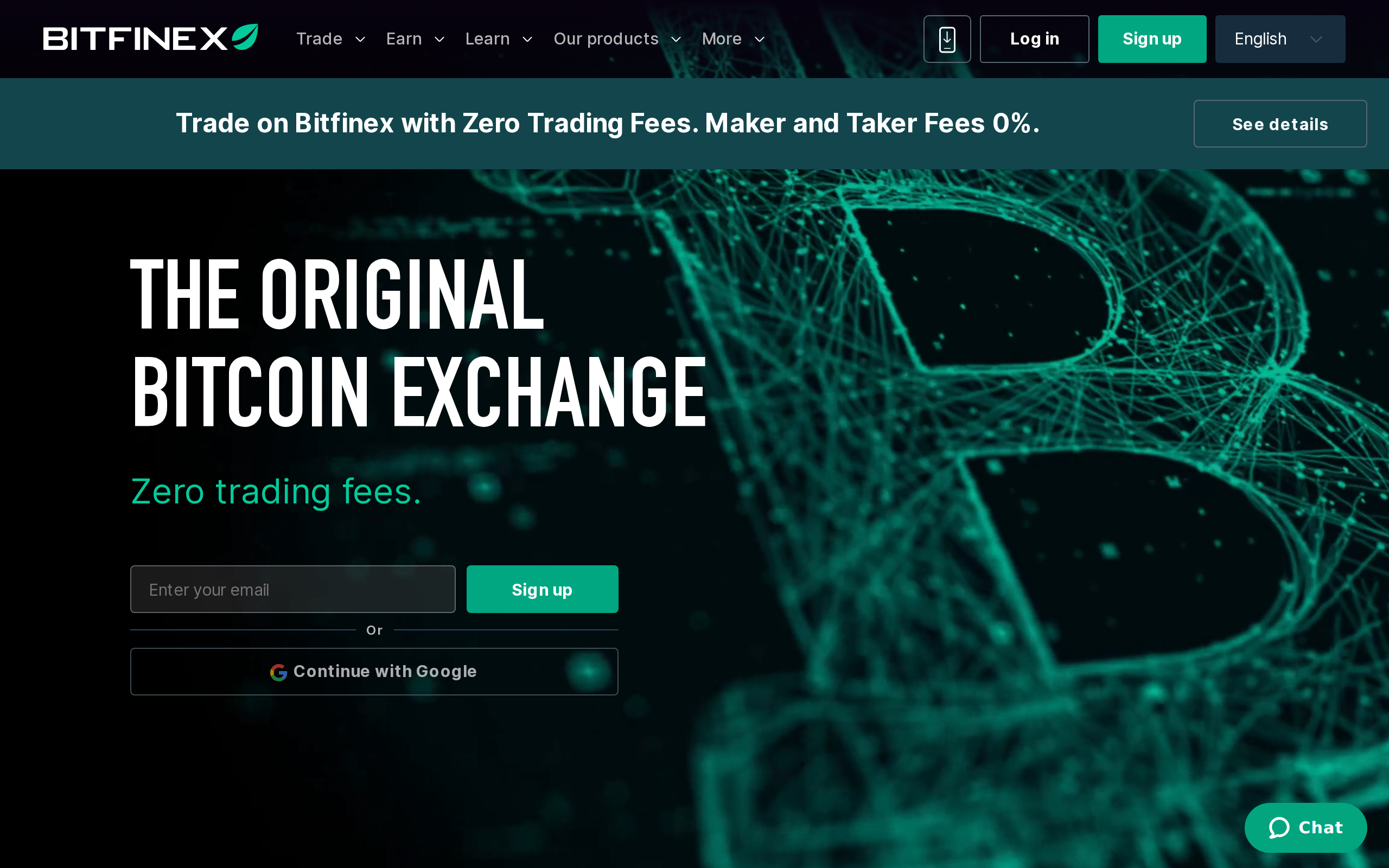
Bitfinex has done something no large rival has: it charges nothing to trade. Since 17 December 2025, maker and taker fees are zero on spot, margin, derivatives, securities and OTC trades, with no tiers, no volume thresholds and no token to hold. That changes the question this review has to answer. A pro exchange with free trading is easy to like. The harder part is what Bitfinex charges elsewhere, who may open an account, and whether its history is one you accept. We worked from its fee schedule, product pages and independent reporting. Nothing here is personal financial advice.
What "zero" covers, and what it leaves out
Bitfinex's own page is plain about the scope: zero maker and taker fees on spot and margin trading, on Bitfinex Derivatives, on eligible products at Bitfinex Securities, and on OTC block trades. It also says other fees remain, including lending fees and withdrawal charges.
So the money moves to other places. The fee schedule we captured lists crypto and stablecoin deposits as free and a bank wire deposit at 0.100% with a 60 USD or euro minimum. A bank wire through OpenPayd is 5 euros or pounds per transaction at 10,000 or less. A token deposited with a missing tag or memo carries a 150 dollar recovery fee, and Bitfinex warns that recovery can take months.
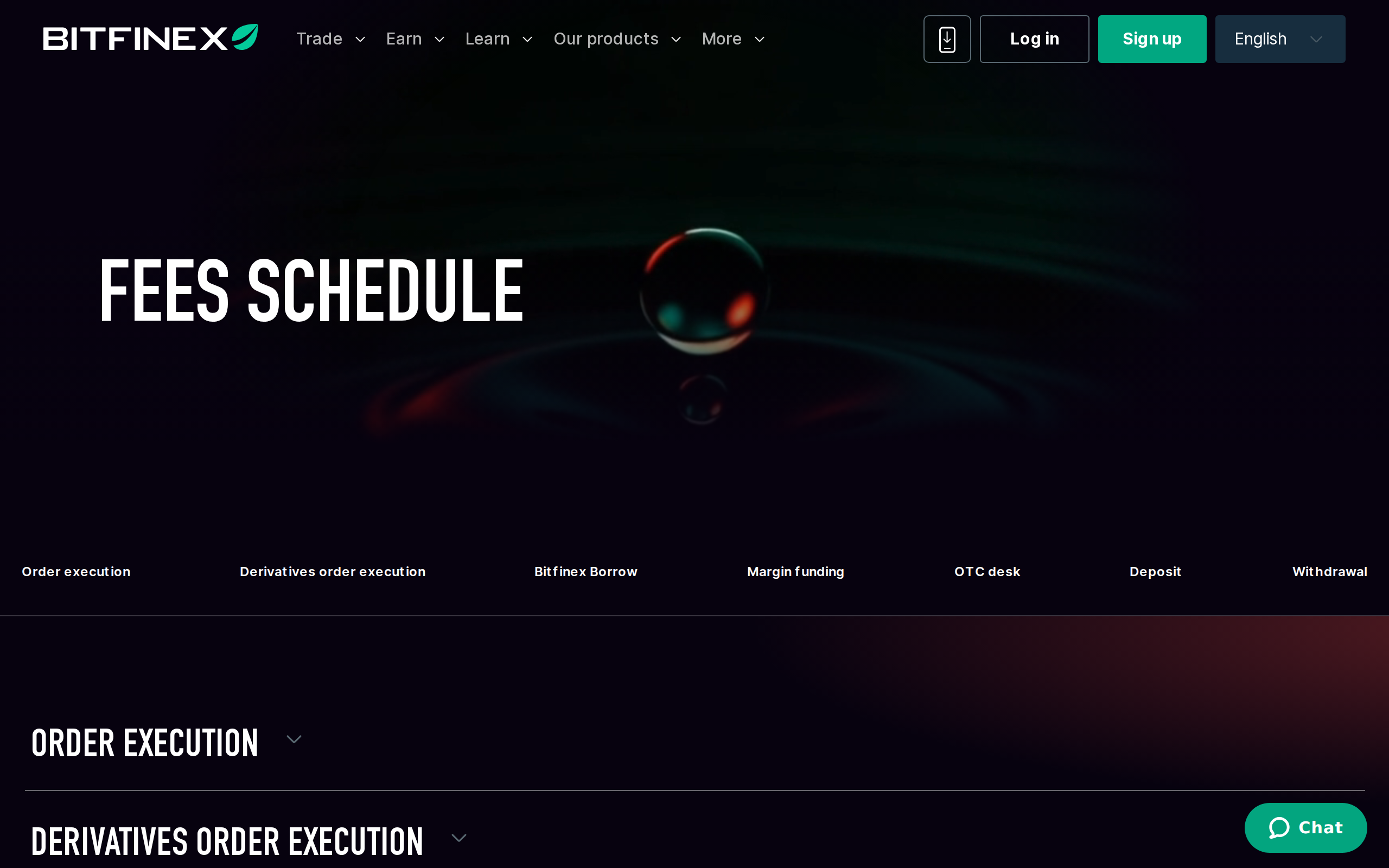
For most people, the difference is simple: if you trade a lot and move coins rarely, this is the cheapest pricing among major exchanges. If you wire money in and out in small amounts, read the deposit and withdrawal lines first.
Margin funding is the old reason to come
Before zero fees, the reason to open an account was margin funding. Bitfinex runs a peer-to-peer market where users lend to margin traders and set their own rates. The fee schedule shows the house cut: 15.0% of the interest earned by a lender, or 18.0% when the offer is hidden, with discounts of up to 5 percentage points for holders of its LEO token.
A borrower on Bitfinex Borrow pays no funding fee to the platform, though the interest rate itself is set by the market. That is a real feature. Lenders earn a yield that moves with demand, and borrowers see a rate and not a fixed menu. It is also a risk, because lending can lose money when a borrower is liquidated badly, and Bitfinex's help pages devote an article to the risks of offering funding.
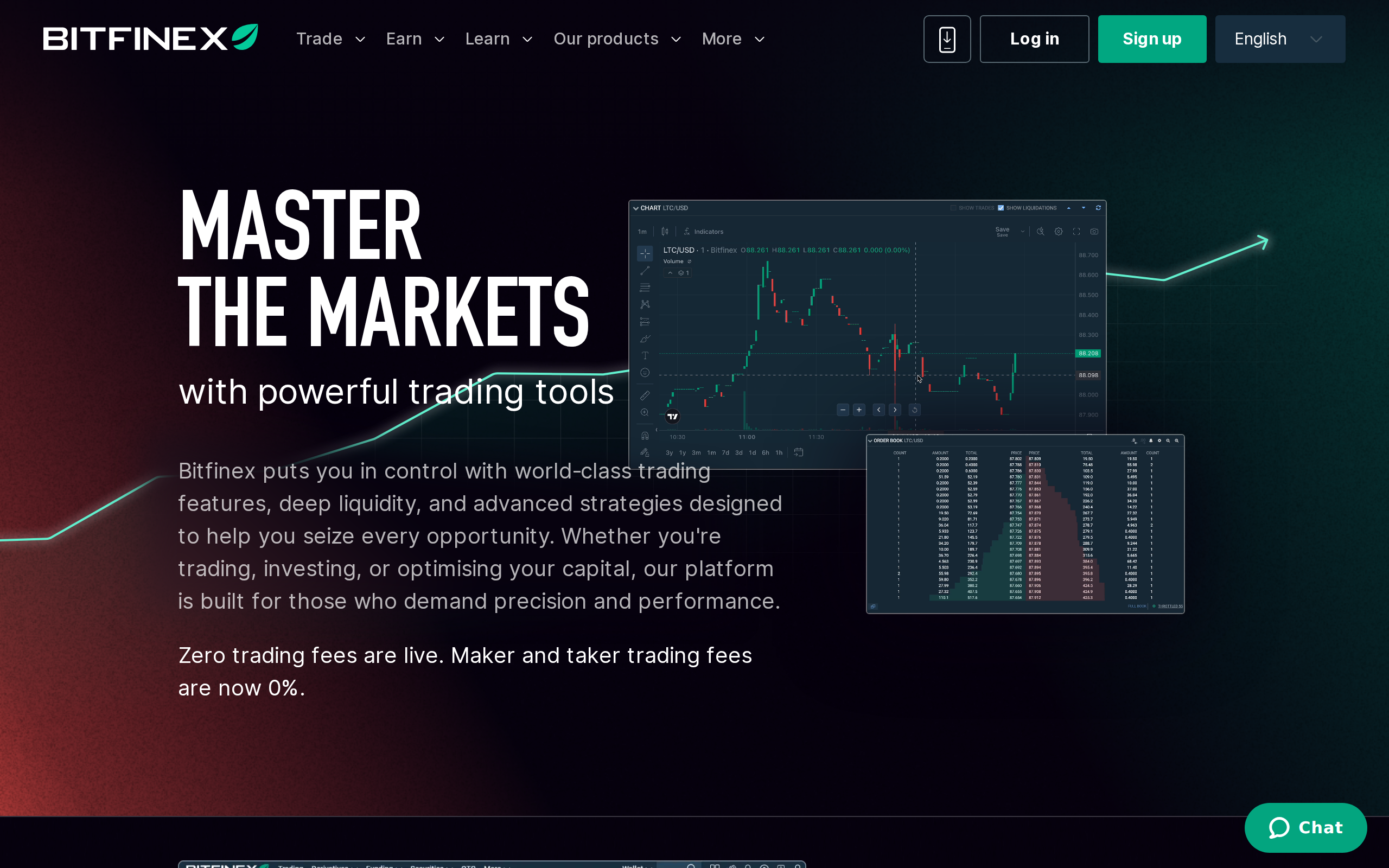
The platform also lists more than 180 spot markets and leverage of up to 100x on derivatives, per Bitfinex's own pages. We treat leverage at that level as a hazard, not a benefit.
Reading the free offer sceptically
A venue that charges no trading fee still has to pay for its servers, staff and security. Bitfinex says it relies on revenue beyond trading fees without listing the sources, and our read of the fee schedule suggests where some of it comes from: the cut on margin funding, withdrawal charges, wire fees, and the token-recovery fee. None of those is hidden, and none is unfair. They do mean that "zero" describes one line of the schedule, not your total bill. Before you commit, work out your own mix of trades, deposits and withdrawals.
The history you have to weigh
Bitfinex's homepage calls it "the original Bitcoin exchange", and it carries the history of one. In 2016 attackers took 119,756 bitcoin. In February 2022 the US Justice Department said it had recovered about 94,000 BTC, worth about $3.6 billion then. Customers were repaid through a token scheme, and the court record is long.
The more practical limit is geography. Bitfinex announced in 2017 that it would stop serving US individual customers, and that position stands. Parent company iFinex is also linked to Tether, which is a concentration of risk some users prefer not to hold.
Who gets an account worth having
An experienced trader outside the US, comfortable with margin and with the idea that a free venue has to earn money elsewhere, will find a lot here. Deep books, no trading fee at any tier, and a funding market that few other exchanges run. Bitcoin withdrawals reportedly take about two hours in practice, though the posted minimum wait is 12 hours.
A beginner should skip it. The product is built around order books and funding rates, and it assumes you already know what those are. A US resident cannot use it at all. And anyone who needs a clean regulatory record in their own country should read the terms carefully before sending money, because we found no licence of the kind a European regulated exchange publishes.
We score it 7.3. The zero-fee move is real and generous. The history and the narrow audience hold it back.