BingX review: the copy trading plaza against the big derivatives venues
BingX built its name on copy trading, with profit shares of 10% to 32% and a futures fee of 0.02% maker. We weighed the social layer against deeper books at Binance, Bybit and OKX.
Best forTraders who want to copy futures strategies from a public leaderboard
Full fee ledger
- Price
- Free to join; spot 0.10%, perps 0.02% / 0.05%
- Operator
- BingX
- Founded
- 2018
- Users claimed
- More than 40 million (BingX About page)
- Spot fee
- 0.10% maker and taker (base tier)
- Perpetual futures fee
- 0.02% maker / 0.05% taker (base tier)
- Copy trading profit share
- 10% to 32% by trader tier, settled weekly
- Copy trading sections
- Futures, spot and CFD
- Proof of reserves
- Published by BingX; auditor named by the exchange
Our verdict
BingX is a good fit if you want to follow other traders without building a strategy yourself, and its futures fees are in line with the big venues. It is not the place for deep order books or for regulated protection, and copy trading can lose money as fast as any leveraged position. Not financial advice.
What works
- Large copy trading hub with spot, futures and CFD sections
- Perpetual futures at 0.02% maker and 0.05% taker
- Flat 0.10% spot fee for makers and takers
- No extra platform surcharge on copy trading itself
What does not
- Profit share of 10% to 32% goes to the lead trader
- Thinner order books than Binance, Bybit or OKX
- No licence from a top-tier financial regulator
- Promotion-heavy front page pushes bonuses and prize pools
The question with BingX is not whether it can match Binance on depth. It cannot. The question is whether following other people's trades, which BingX has built its whole identity around, is worth giving up the deepest books in the industry. For some readers it is. For many it is a way to lose borrowed money in someone else's style. This is a read of the product and its published terms, not personal financial advice.
What the front door tells you
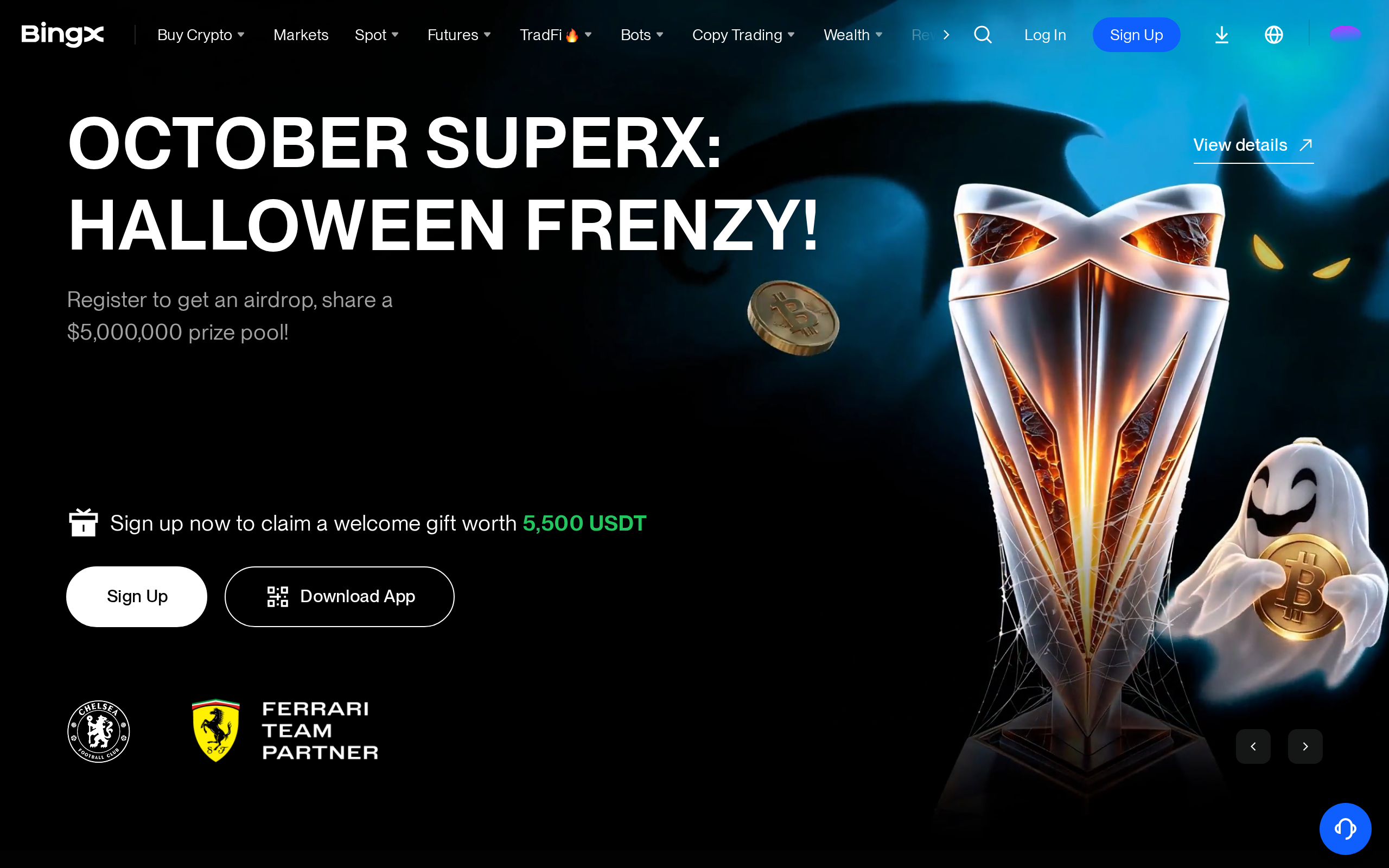
Open the BingX homepage and the first thing you meet is a campaign: an October "SuperX" event with a $5,000,000 prize pool and a welcome gift of up to 5,500 USDT for new sign-ups.
Bonuses are not a reason to pick an exchange. They are a reason to read the terms, since volume requirements usually sit behind them. We would treat the front page as marketing and judge the product on the pages underneath.
The Copy Trading Plaza is the real product
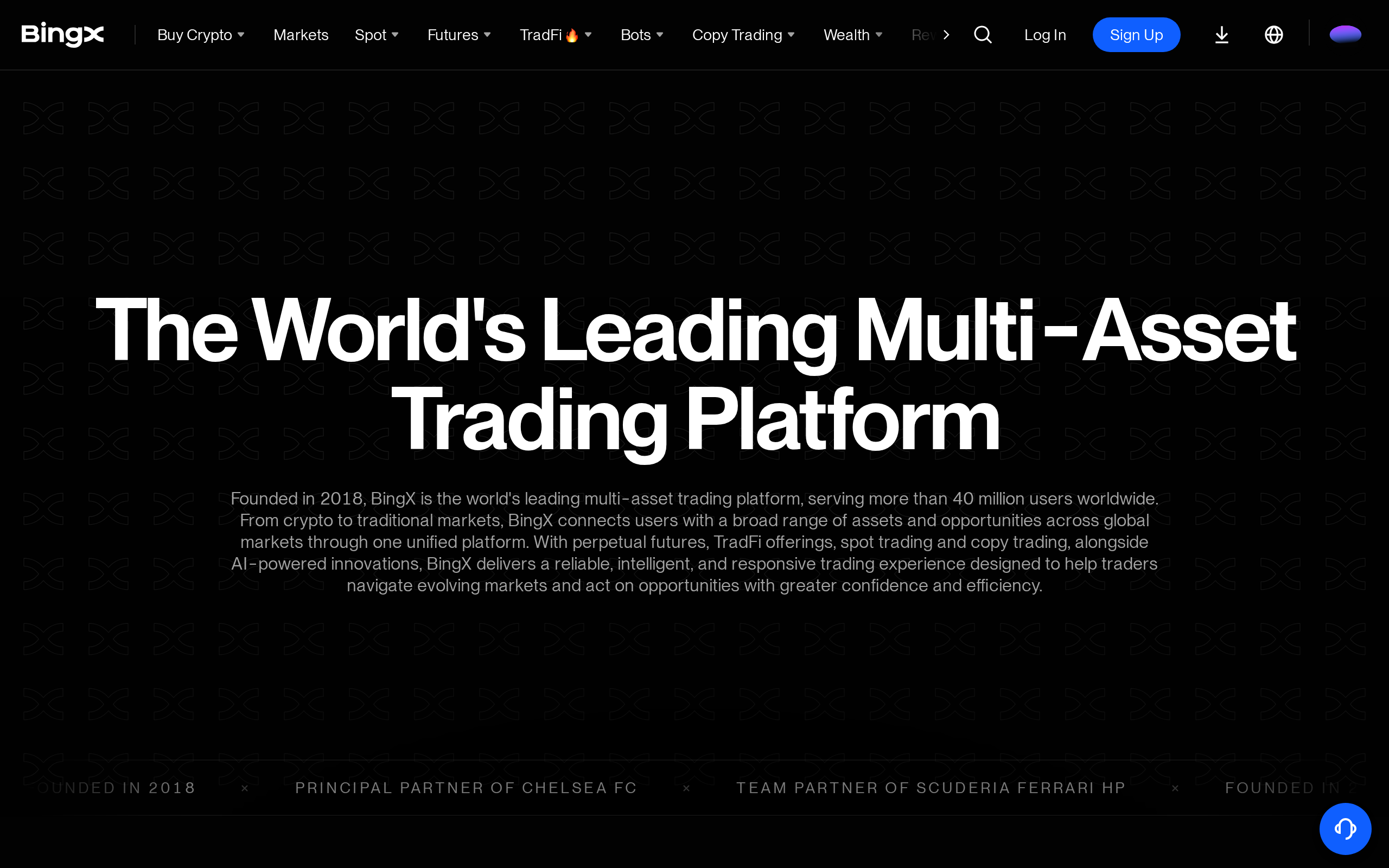
BingX describes itself on its About page as a multi-asset platform founded in 2018 that serves more than 40 million users, a figure we cannot verify and that counts registrations, not active traders.
What we can inspect is the Copy Trading Plaza, which opens with a "New Traders" strip and splits into futures, spot and CFD copying.
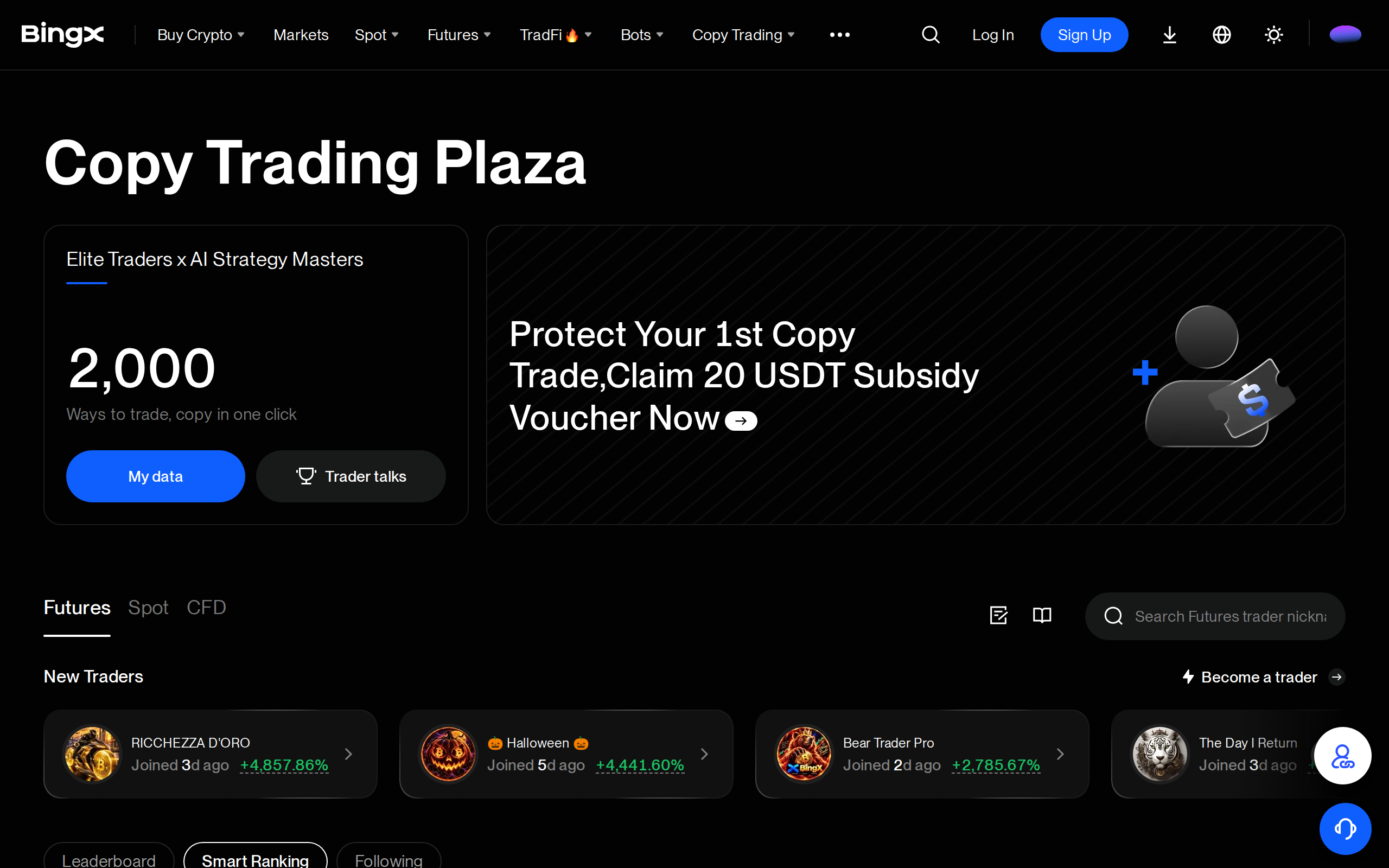
The mechanics are written down in BingX's own guide to reading performance. Lead traders keep a profit share of 10% to 32%, depending on whether they sit at Bronze, Silver, Gold or Diamond rank. It is settled weekly, on Monday at 00:00 UTC+8, and it is taken only from closed positions that finished in profit. Copiers pay no platform surcharge for copying, but they do pay normal maker and taker fees on each mirrored order.
Read that twice. Your lead trader takes a cut of the wins and carries none of your losses. A trader who wins five small trades and then loses one large one is paid for the five. BingX says open floating losses are not counted against the share, which is why the guide warns that your balance and your lead's reported profit can disagree for days.
Who this suits
Copy trading is for a reader who understands that a leaderboard is a list of survivors. Pick leads with long histories and low drawdown, size each copy small, and never copy a lead whose profit comes from a single leveraged bet.
Fees against the big three
The base spot fee is 0.10% for both sides, which independent review sites report and which matches what most large exchanges charge new accounts. Perpetual futures cost 0.02% maker and 0.05% taker, again at the base tier. Those are close to the headline futures rates at the biggest venues, so you are not paying extra for the social layer. You pay for it in the profit share instead.
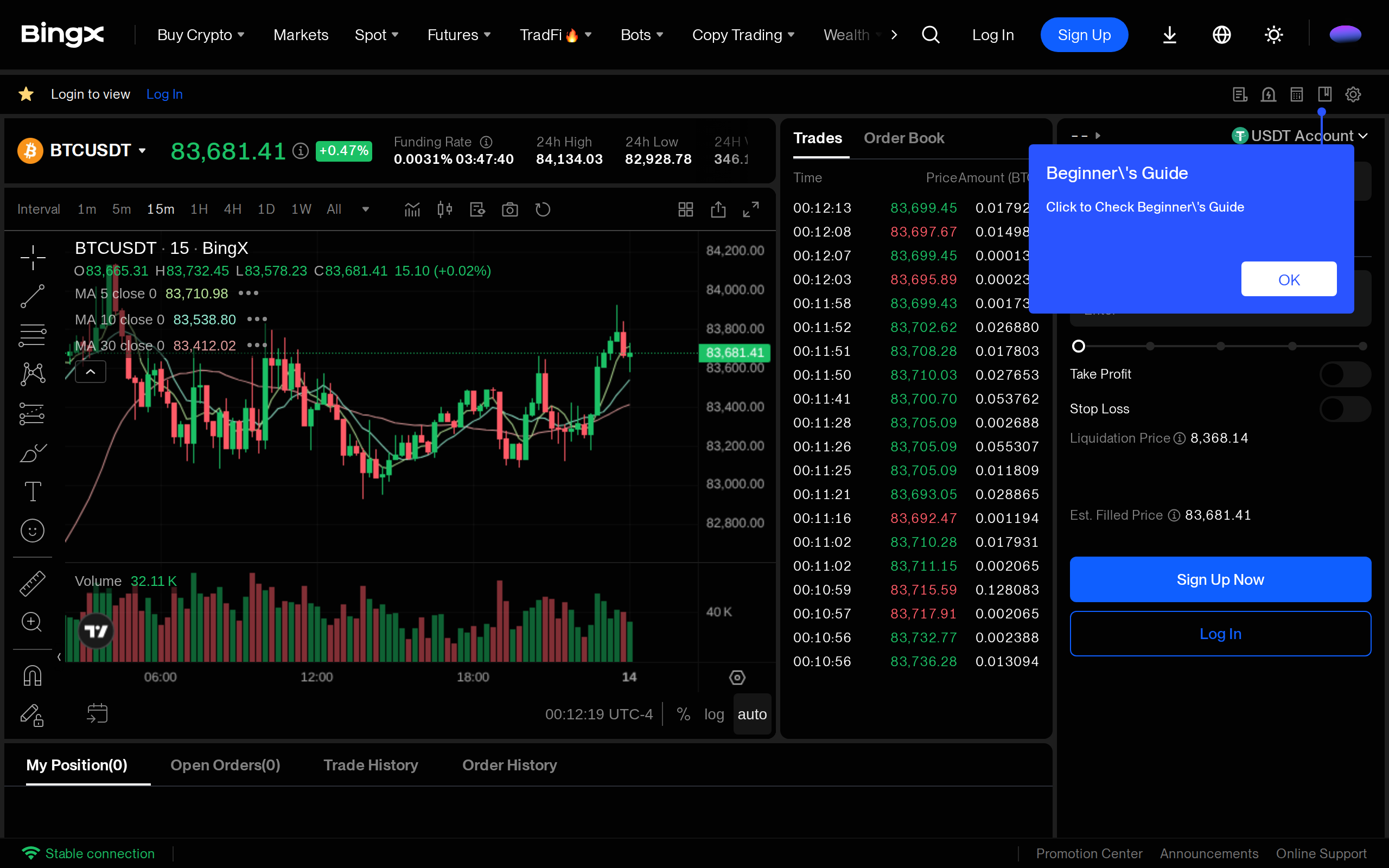
A BTCUSDT screen like this one looks familiar to anyone who has used Bybit or OKX: chart, order book, a beginner's guide link and a stop-loss liquidation price field. That familiarity is useful. It also means the leverage is the same, and leverage is where accounts die.
Where it falls short
Depth is the first gap. On majors the difference is small. On mid-cap pairs, a market order of any size will move the price more than on Binance. That cost never shows up in a fee table.
Regulation is the second. BingX is an offshore exchange. We found no licence from a top-tier financial regulator on the pages we read, so you should assume the protection you would have at a regulated broker is absent. The exchange publishes proof-of-reserves reports and names an auditor, but it does not disclose the size of its protection fund, according to the independent summaries we checked.
Third is the marketing. Prize pools, airdrop banners and a "welcome gift" are signs of a business that grows by acquisition, and promotions are the thing most likely to change after you sign up.
Our verdict
BingX earns a 7.0. The copy trading hub is the most complete we have looked at in this category, the futures fees are normal, and spot is simple. It loses points for thinner books, a missing top-tier licence and a social model that shares the upside and not the downside. Use it with a small account, keep leverage low, and withdraw profits rather than leaving them on any offshore exchange.