Aster review: 1001x leverage and stock perps, a tool for pros and a trap for most
Aster is a non-custodial perpetuals DEX with 1001x leverage on BTC and stock perps up to 50x. Fees are low, but the profit caps, dynamic closing fee and liquidation math are risks retail traders should read first.
Best forExperienced perp traders who want on-chain custody and unusual markets
Full fee ledger
- Price
- Free to use; trading fees vary by mode
- Operator
- Aster
- Type
- Non-custodial perpetuals DEX
- Max leverage
- 1001x on BTC/USD (Degen Mode)
- Pro mode perp fees
- 0% maker, 0.04% base taker (VIP tiers vary)
- Group B pair taker fee
- 0.1% base
- Leverage under 500x
- 0.08% open/close fee on 1001x markets
- Degen Mode
- 0 open fee, 0.01% slippage, dynamic closing fee
- Stock perps
- US and HK stocks, up to 50x, USDT-settled
- Chains supported
- BNB Chain, Ethereum, Solana, Arbitrum
Our verdict
Aster is a capable on-chain derivatives venue with low fees and unusual products, but its headline feature is a hazard for most people. At 1001x a tiny move liquidates you, profit is capped near 300%, and a dynamic fee is taken when you close. It suits experienced traders who size positions small. Beginners should avoid Degen Mode entirely. This is not personal financial advice.
What works
- Non-custodial: you trade from your own wallet rather than depositing with a company
- Pro mode perps charge 0% maker and a 0.04% base taker fee, varying by VIP tier
- Stock perpetuals on US and HK stocks settle in USDT with up to 50x leverage
- Documentation is detailed on liquidations, mark price and fees
- Shield mode offers a simpler, hidden-strategy trading flow
What does not
- 1001x leverage means liquidation on a very small adverse move
- At 500x and above, net profit is capped near 500% or 300%, and margin cannot be added
- Dynamic closing fee in Degen Mode makes true cost hard to predict upfront
- Smart-contract risk, oracle dependence and incentive-driven liquidity are all on the user
- Some pairs sit in a Group B tier with a higher 0.1% taker fee
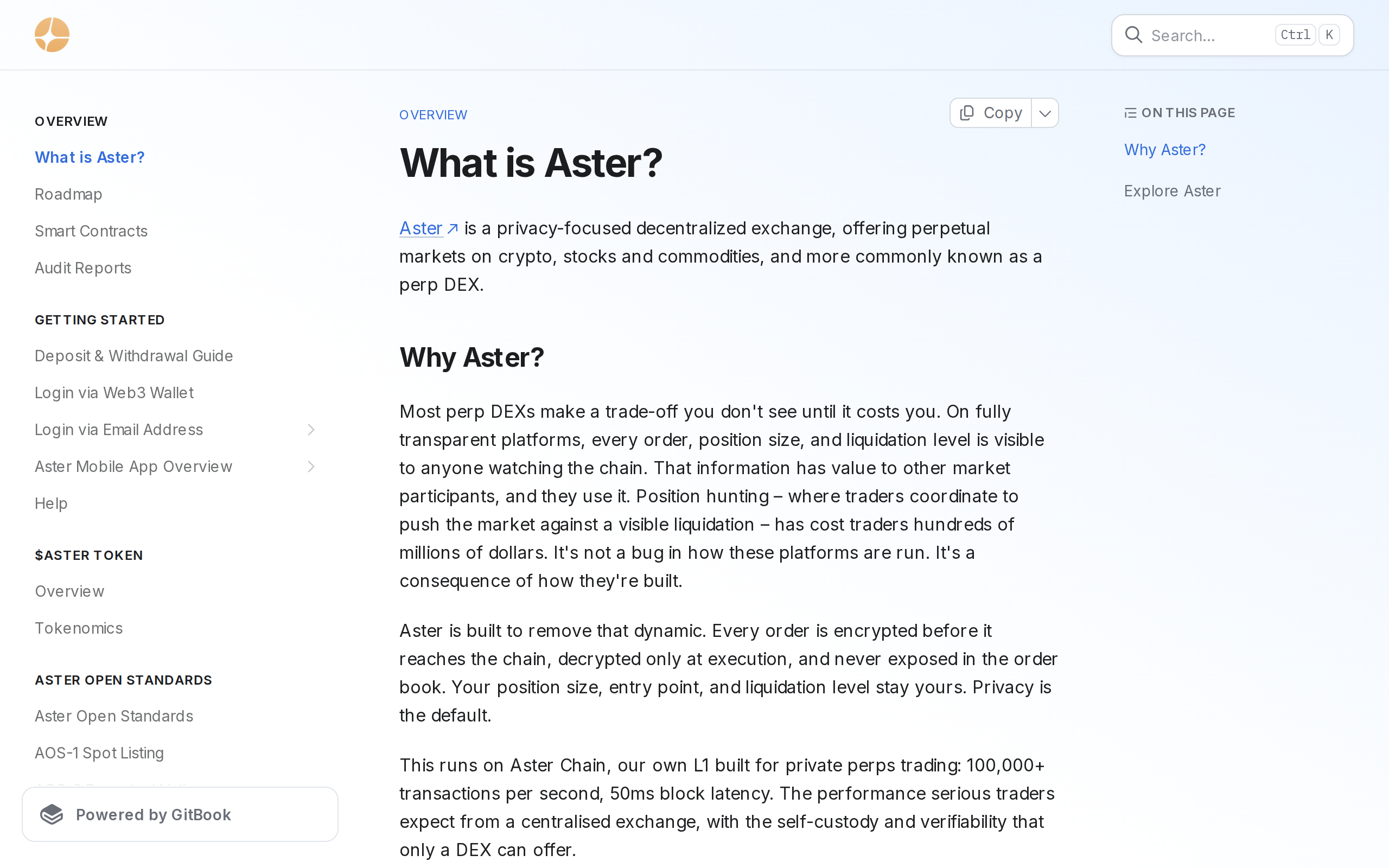
Start with the number everyone remembers: 1001x. Aster's documentation says BTC/USD can be traded at up to 1,001 times leverage. We read the same documentation line by line, and our answer is that the feature is real, the fees are low, and almost nobody who is new to derivatives should touch it. Aster is a legitimate tool for a narrow type of trader. For most retail users it is a faster way to lose a deposit. This is not personal financial advice.
What Aster is
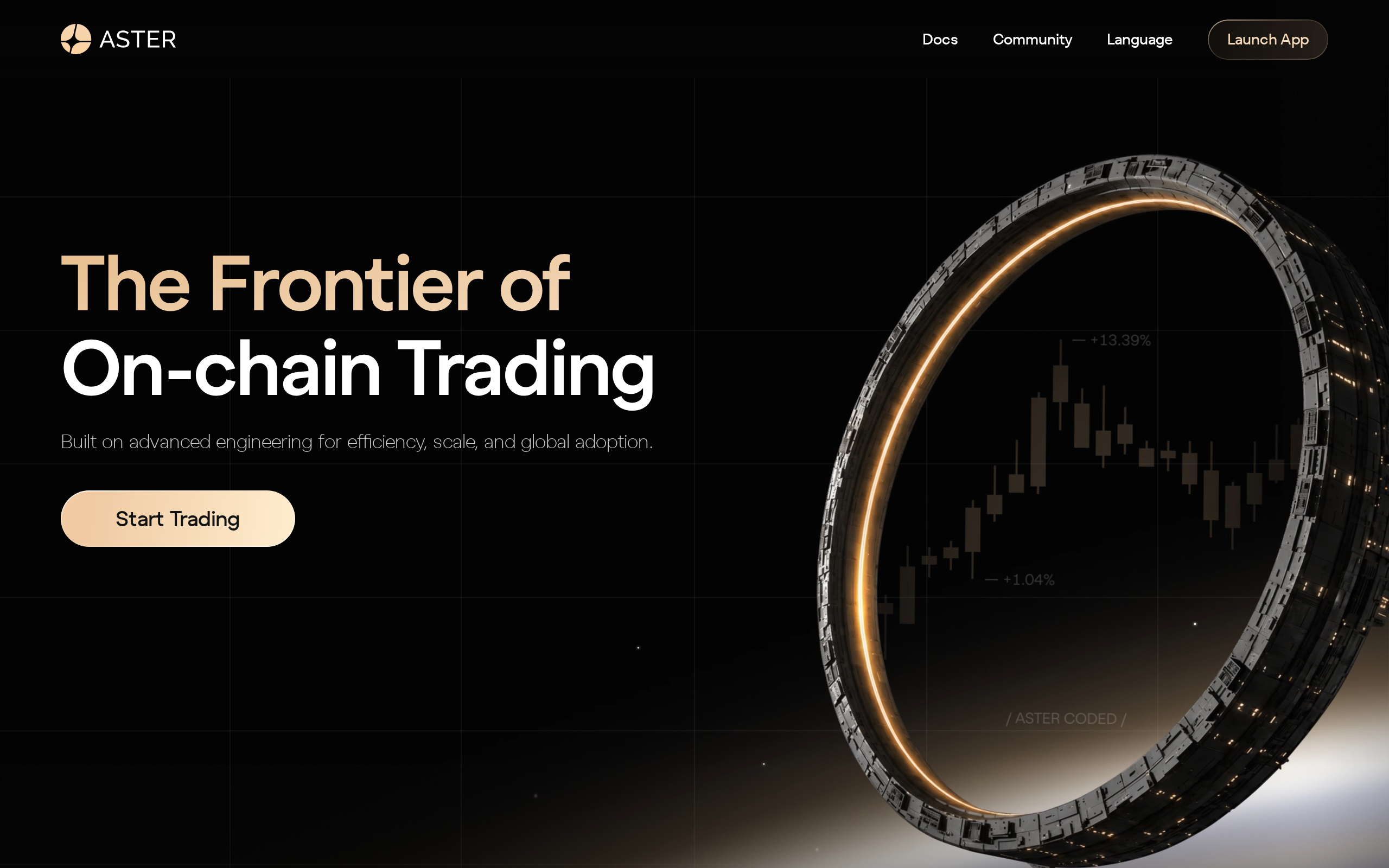
Aster is a non-custodial perpetuals exchange: you connect a wallet, post collateral and trade perpetual futures without handing funds to a company. Support spans BNB Chain, Ethereum, Solana and Arbitrum. That custody model is the attraction. There is no company account to freeze and no withdrawal queue run by a support team. The flip side is that smart-contract bugs, oracle errors and bad liquidation logic are your problem.
The fee schedule is genuinely low
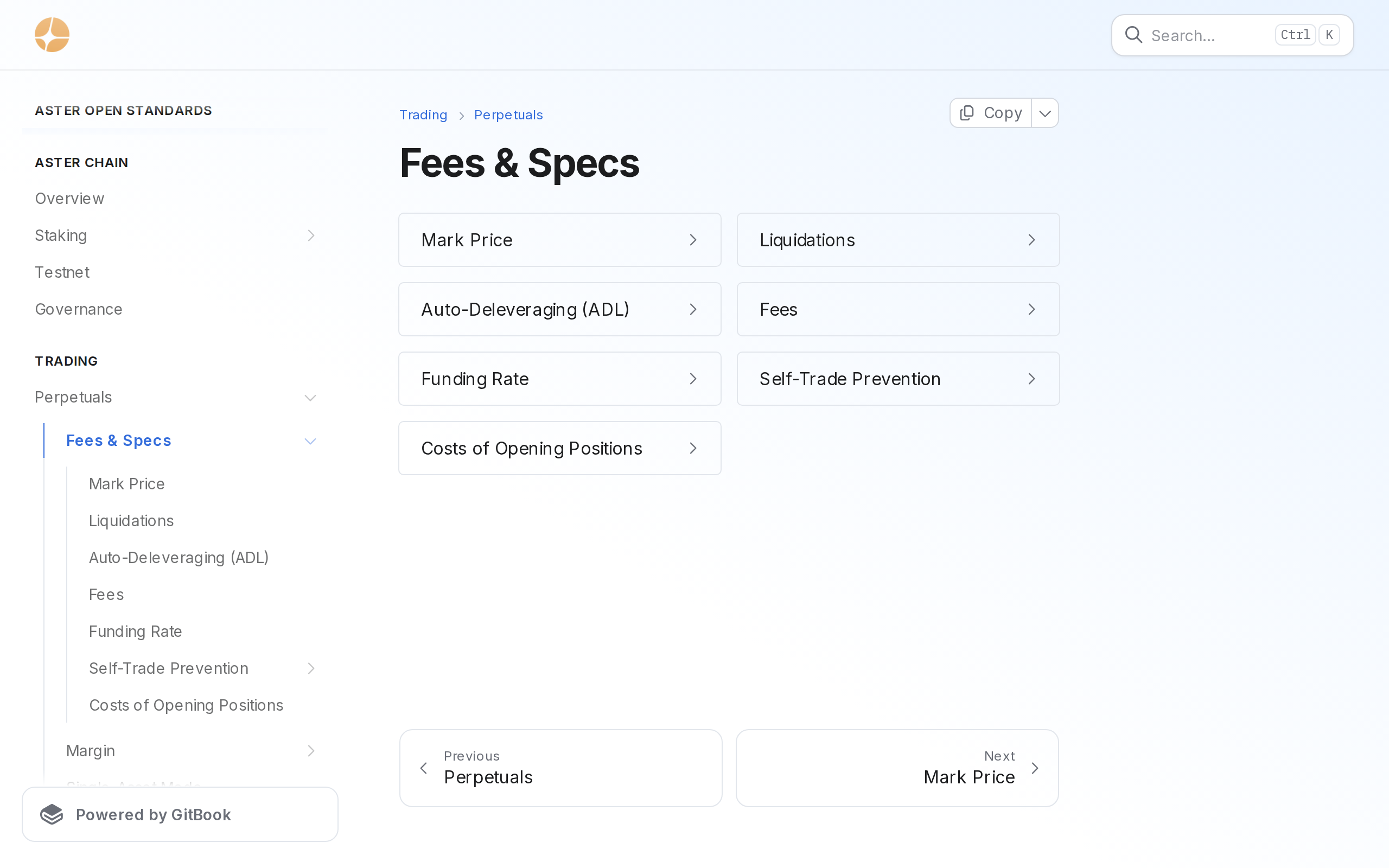
On the standard order-book mode, the documentation lists a 0% maker fee and a 0.04% taker fee at the base tier, varying by VIP level. A group of newer pairs, called Group B, charges 0.1% taker. Real-world asset pairs carry a fixed taker fee across all VIP levels.
Those are competitive numbers against centralized derivatives exchanges. Cost is not the issue with Aster. Risk is.
Why 1001x is the problem
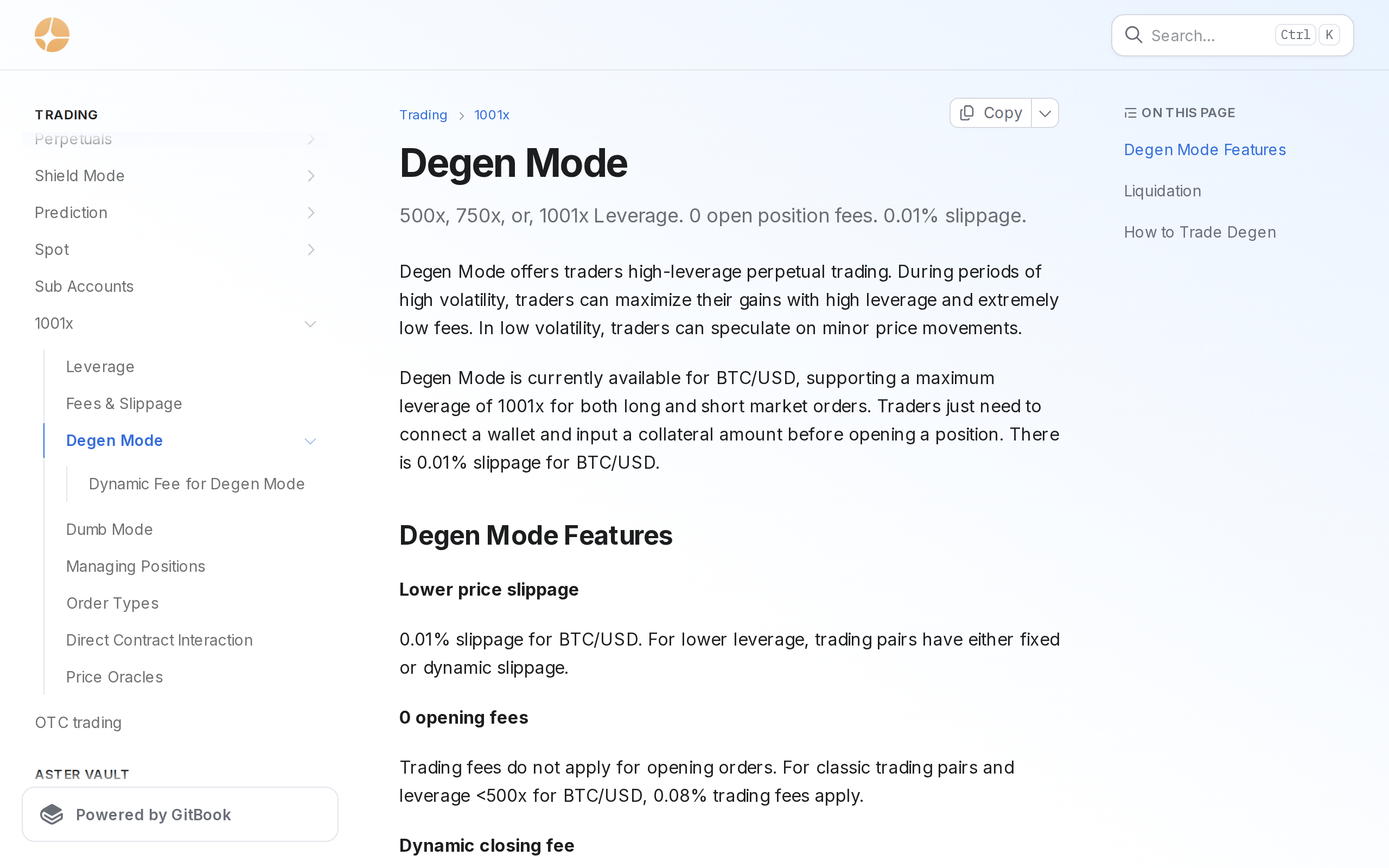
Degen Mode offers 500x, 750x or 1001x on BTC/USD with no opening fee and 0.01% slippage. Read the conditions before the marketing:
Margin cannot be added to a position at 500x and above.
Net profit is capped: about 500% at 500x and 750x, and about 300% at 1001x.
A dynamic PnL-based fee is charged when you close.
Below 500x on the same market, a 0.08% open and close fee applies.
Think about what 1001x means arithmetically. A move of roughly 0.1% against you consumes the whole margin, and the documented liquidation formula uses a 60% liquidation loss rate by default, so the liquidation point sits even closer to entry than the naive figure. Bitcoin moves more than 0.1% in minutes on an ordinary day. The profit cap makes the bet lopsided: you can be wiped out by a small move, but your upside stops at 300%.
We are not saying nobody should use it. A professional hedging or scalping with tiny size and tight discipline may find a use. We are saying a retail trader reading a headline should assume it is a trap until proven otherwise.
Stock perpetuals: useful, with limits
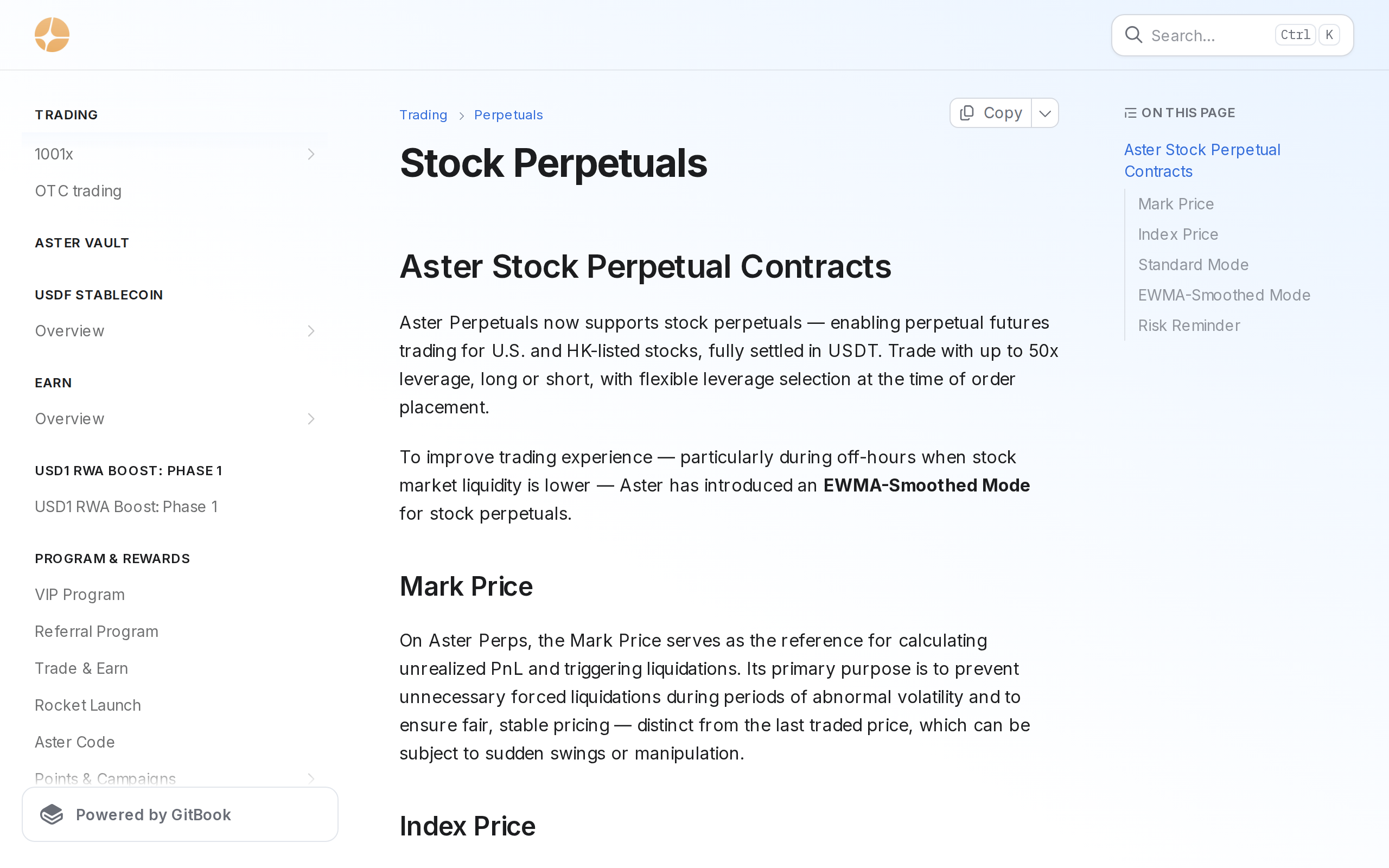
The more interesting product is stock perpetuals. Aster supports perpetual futures on US and Hong Kong listed stocks, settled in USDT, with up to 50x leverage. Index prices come from several providers including the Pyth oracle. Because stock markets close, Aster applies an EWMA-smoothed mark price overnight, at weekends and on holidays to reduce spikes from thin trading.
That is a thoughtful design for an awkward problem, and it gives crypto users a way to express a view on equities without a brokerage. Still, a perpetual on a stock is not a share: funding payments run, oracles can lag a fast gap at the open, and 50x on a volatile name liquidates quickly.
Liquidations and who carries the risk
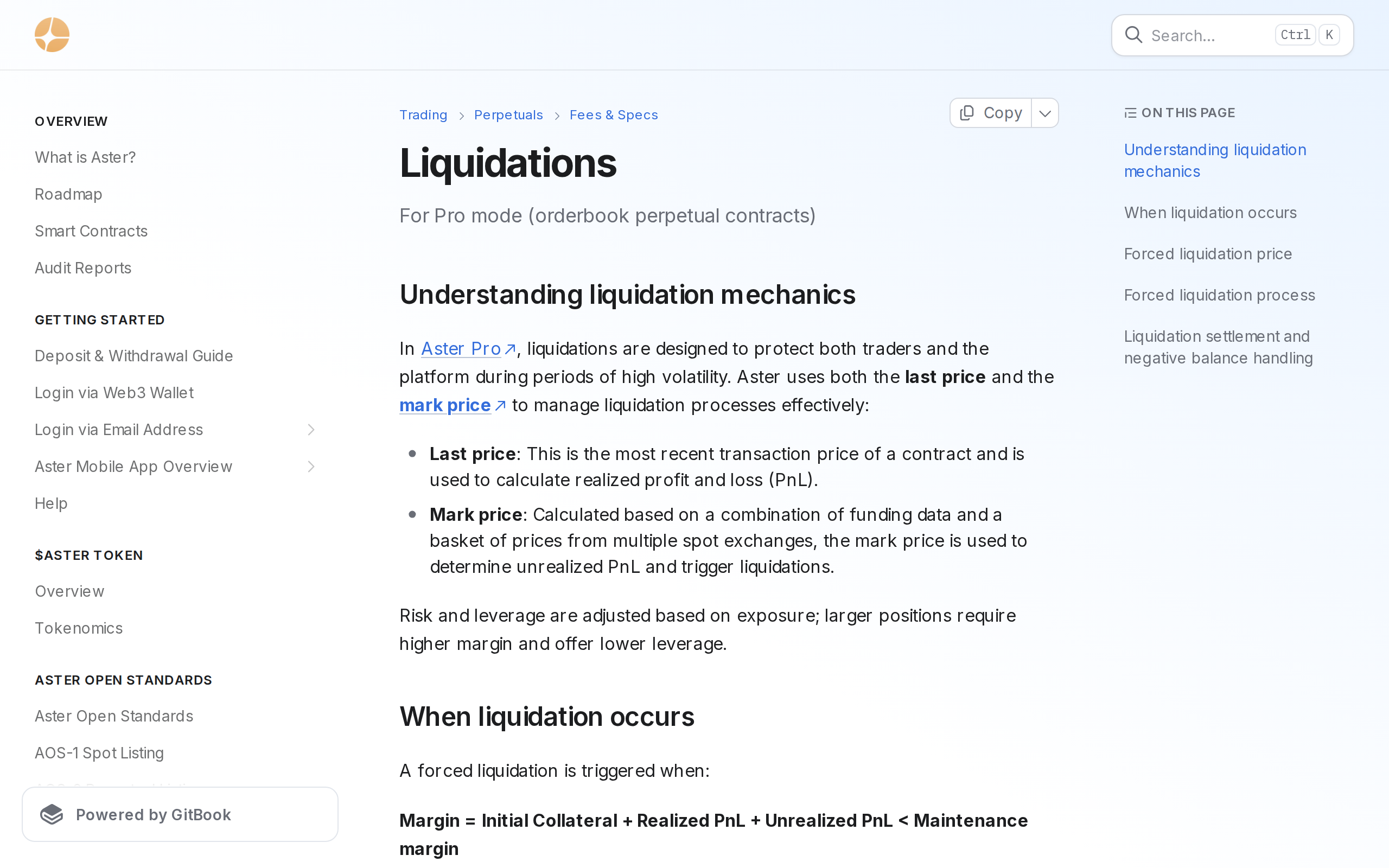
The documentation has a dedicated liquidations page, which is a good sign, and we recommend reading it before funding anything. It explains when a position is closed and how the mark price, not the last trade, triggers it. Audit reports are listed for several Aster contracts and tokens, including AsterVault, AsterEarn and asBNB. An audit lowers risk. It does not remove it.
Shield mode and the simpler flow
Not everything on Aster is about extreme leverage. Shield mode is a second trading experience, described in the docs as quicker and more streamlined than the order book, with its own fee page, dynamic slippage and a profit-share and flat-fee model. It covers RWA, stock and forex markets. We would treat the promotional zero-fee periods mentioned in the docs as temporary and check the live terms before relying on them. The tradeoff is the usual one: a simpler screen hides more of the mechanics, so read the slippage and liquidation pages even if the buttons look friendly.
Verdict
Use Aster if you already trade perpetuals, want self-custody and will keep leverage low, ideally in single digits. Use Pro mode and its 0% maker fee, not Degen Mode. Avoid it if you are new to leverage, cannot watch positions, or are drawn by the 1001x banner. We rate it 5.9 out of 10: low fees and open documentation, pulled down by an extreme-leverage product with capped upside and by on-chain risks you carry alone.