The short version
Uniswap is cheaper and safer than an exchange in one situation: you hold a self-custody wallet and want a token that only trades on-chain, or a major pair on a low-fee network. Uniswap Labs charges no interface fee, so you pay pool fees and gas. For small trades on Ethereum mainnet, or for unvetted tokens, an exchange is the better and safer tool.
Best for: Self-custody users swapping on-chain tokens
Our score: 8.4 out of 10
Pros and cons
What works
- No Uniswap Labs interface fee since December 27, 2025, per its support page
- Fee tiers from 0.01% for stable pairs, up to 1% for exotic tokens
- You keep custody: no deposit, no account, no withdrawal queue
- Clean swap screen with limit orders, plus public docs and open-source contracts
What does not
- Network gas can exceed the fee on small swaps, especially on mainnet
- Price impact and slippage rise fast on thin pools and new tokens
- Any token can be listed, so fake and scam tokens are your problem to spot
- Sandwich-attack risk depends on the interface and slippage you allow
Most "Uniswap versus an exchange" arguments fail because they compare one fee. A swap has four costs, and an exchange hides some of them in a spread. We read Uniswap's fee documentation and support pages, walked through the swap interface and token explorer, and went through the research on slippage and sandwich attacks to answer one question: when does swapping win?
The four costs of a swap
First, the pool fee, paid to liquidity providers. Second, a protocol fee that governance can switch on. Third, network gas, paid to the chain whatever the trade size. Fourth, price impact, which grows as your trade takes a bigger bite of the pool.
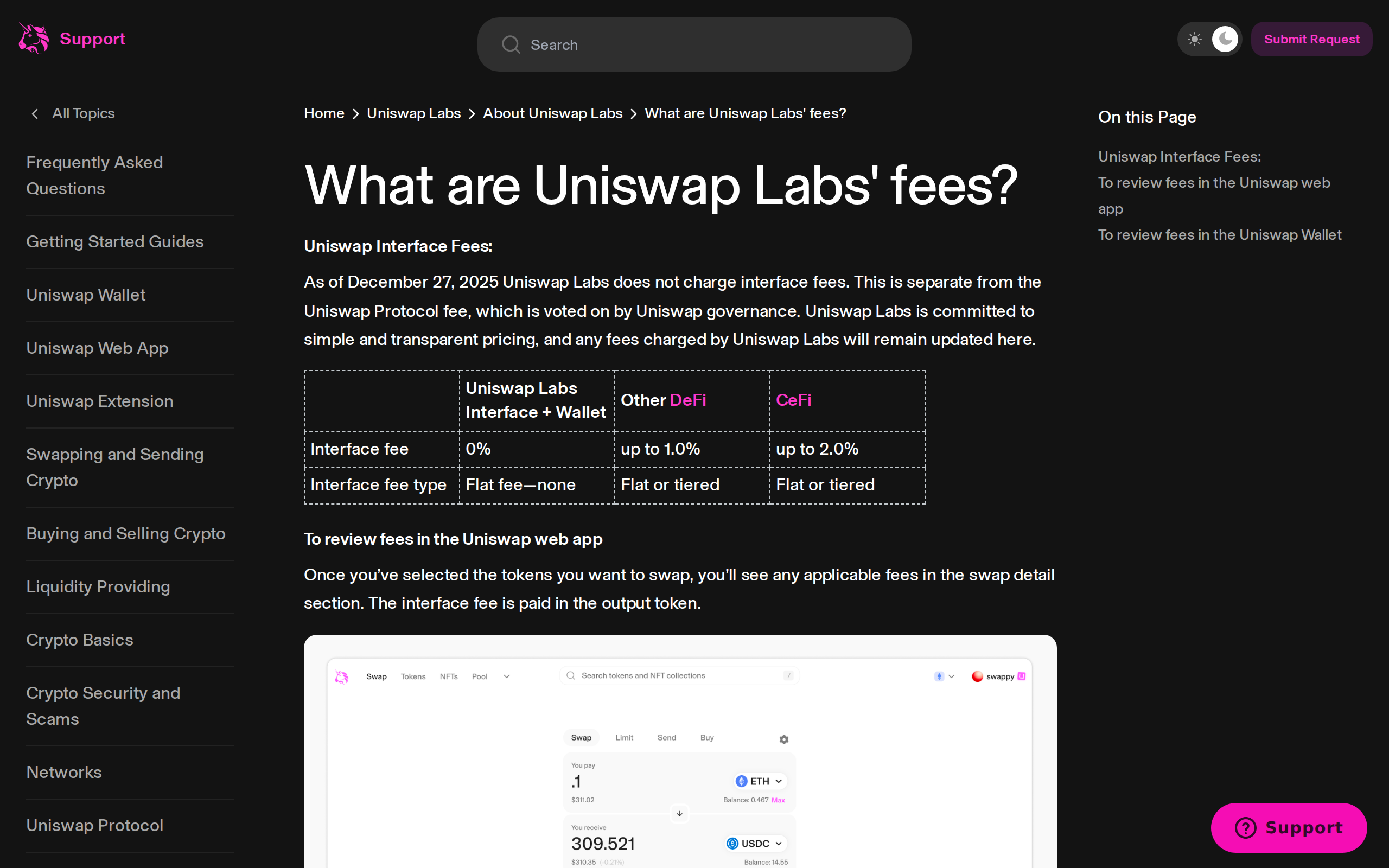
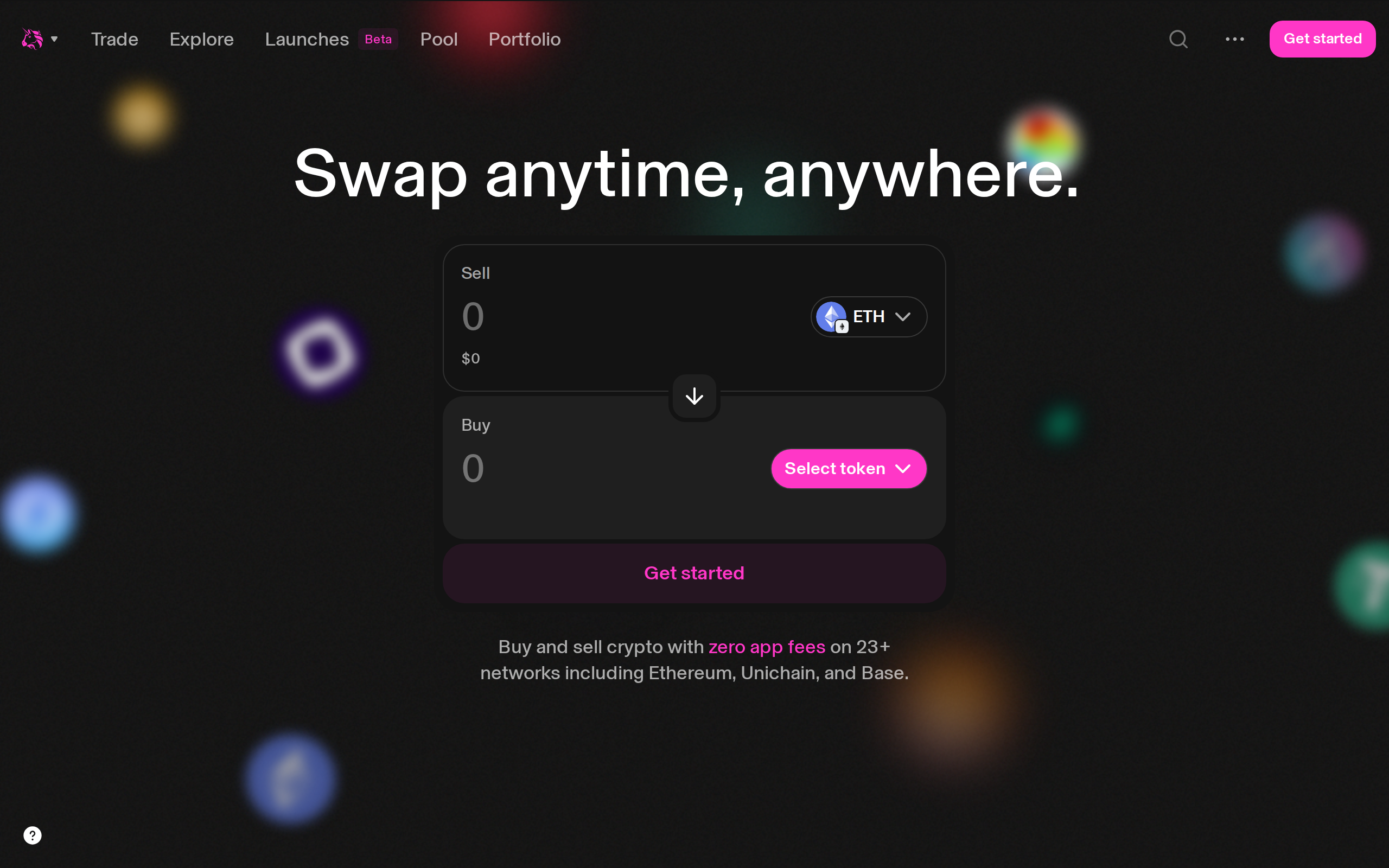
The good news is the line Uniswap Labs prints on its support page: as of December 27, 2025 it does not charge interface fees, and that is separate from the protocol fee voted by governance. So the app itself takes nothing extra on top of the pool.
Pool fees: from a hundredth of a percent
On v3, pools come in four tiers: 0.01%, 0.05%, 0.30% and 1%. Stable pairs live in the cheap tiers, major pairs in the middle, odd tokens at the top. On v4, the docs say creators can set any rate from 0% to 100%, with hooks allowing dynamic fees, so the rate you see is the pool's choice.
Governance has also turned on a protocol fee on some pools. The developer docs list it at roughly one-sixth of the swap fee, so a 0.30% pool pays 0.25% to providers and 0.05% to the protocol. You still pay 0.30% in total; it is only split differently.
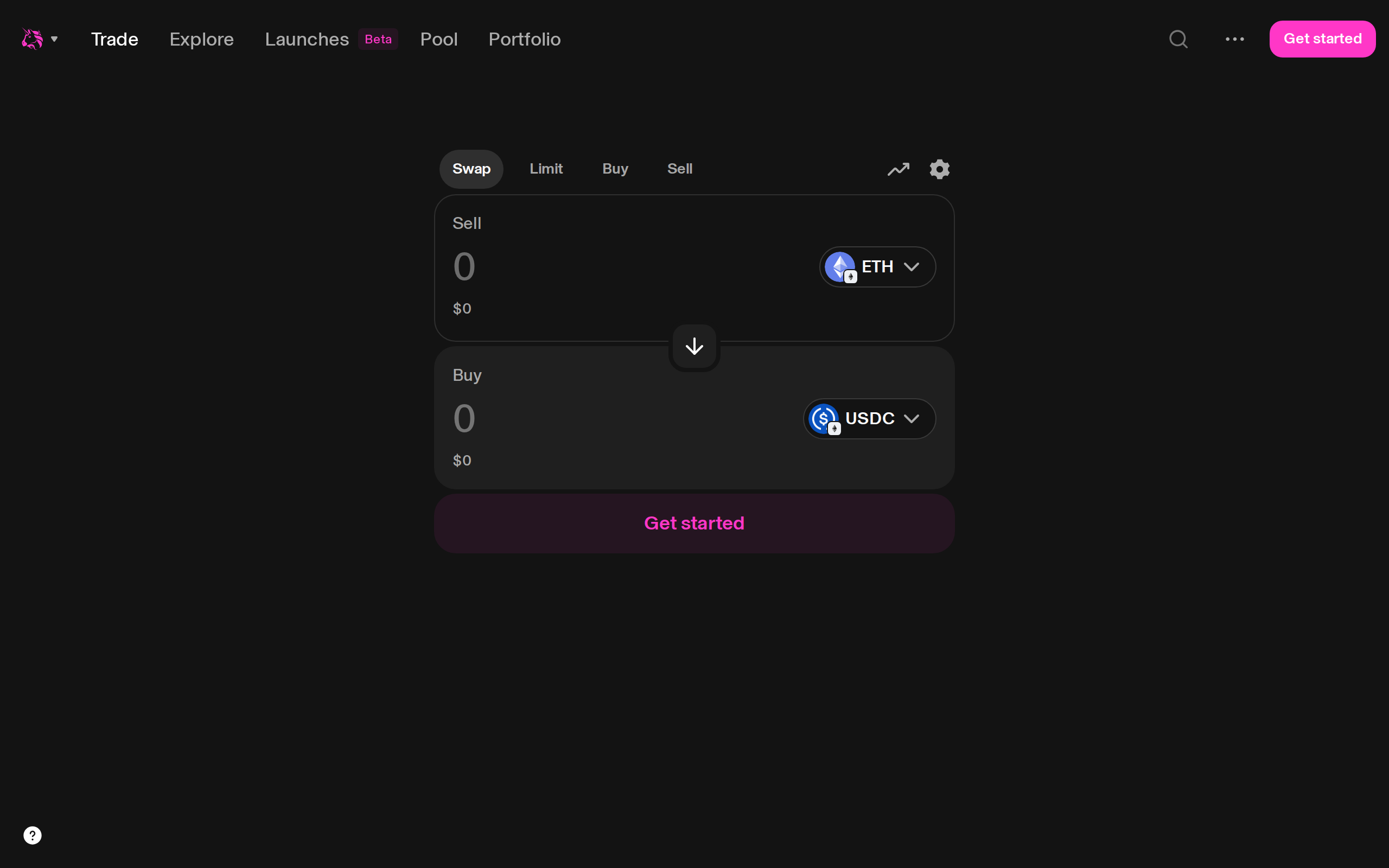
The interface is plain. You pick a sell token, a buy token, and an amount, then sign from your own wallet. There is no account, no verification and no deposit step, which is the whole appeal.
When it beats an exchange
Swapping wins in three cases. One: the token is not listed on a regulated exchange. Two: you want to avoid moving funds onto a platform, with its deposit, withdrawal and custody risk. Three: you are trading a major or stable pair on a low-fee network, where gas is cents and a 0.01% or 0.05% pool is cheaper than an exchange's spread plus fee.
For a large swap of two big tokens through a deep pool, the all-in cost can come in below a retail exchange's rate. We say that with care: the number depends on the pool, the chain and the hour, so compare the live quote with the exchange's order screen before you commit. The Limit tab also lets you wait for a price instead of paying whatever the pool offers right now.
When it loses
Small trades on Ethereum mainnet are the classic loss. Gas is a fixed cost, so on a $100 swap it can exceed the percentage fee many times over. Check the quote screen before you sign.
Thin pools are the next problem. A research paper on swapping on Uniswap, listed on arXiv, argues price impact dominates for large orders and gas for small ones, and memecoin pairs are far more exposed to adverse slippage than USDC. Uniswap's own interfaces route through a private pool to blunt sandwich attacks, but that protection depends on the front end, so a third-party app may not offer it. Keep slippage tolerance low.
Safety, which is on you
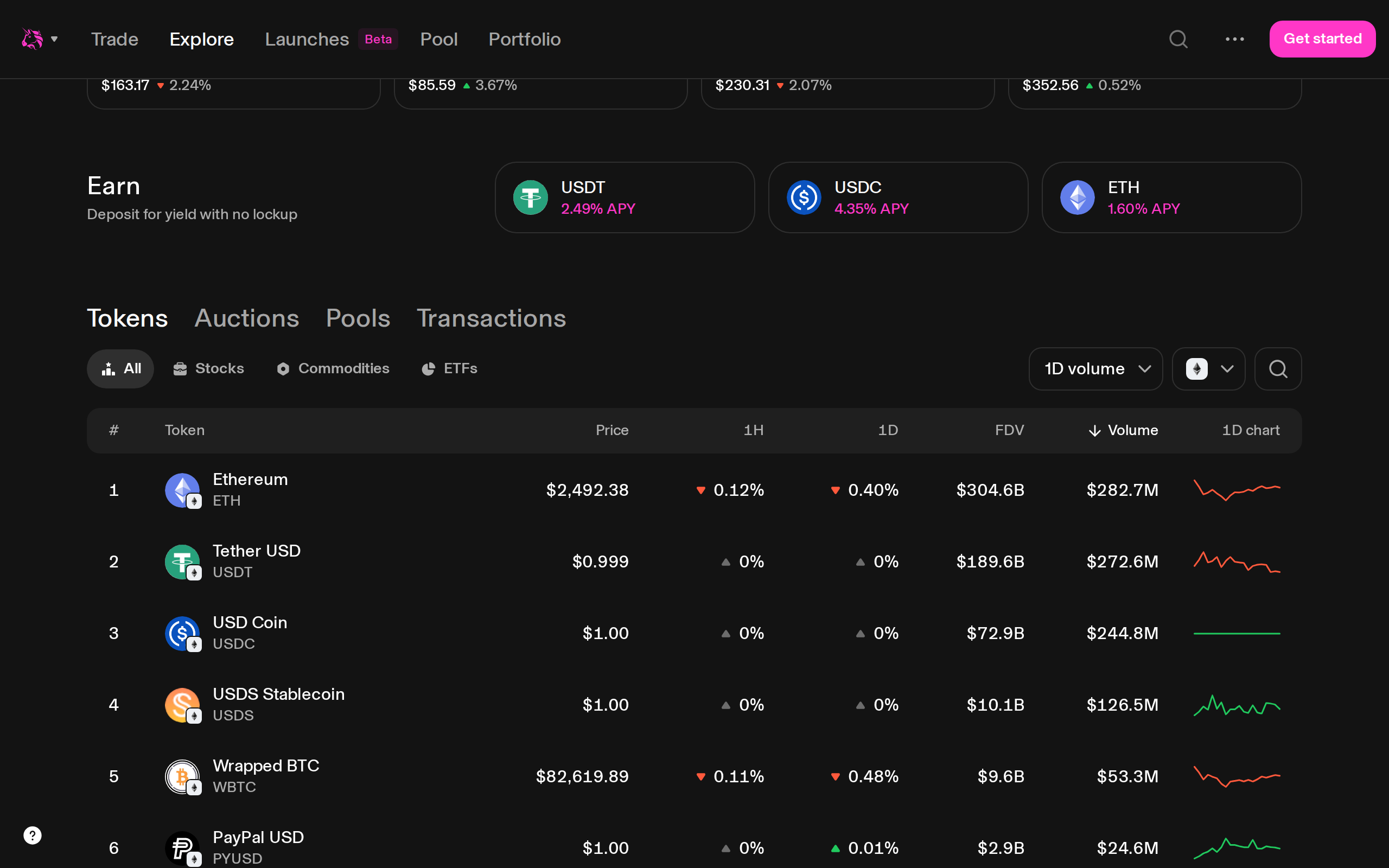
On an exchange, a listing team vets a token. On Uniswap, anyone can create a pool for any token. The explorer is useful, but a high rank or a familiar logo is not proof that a contract is the real one. Verify the contract address from the project's own site, and be wary of token approvals you do not need: revoke the unlimited ones.
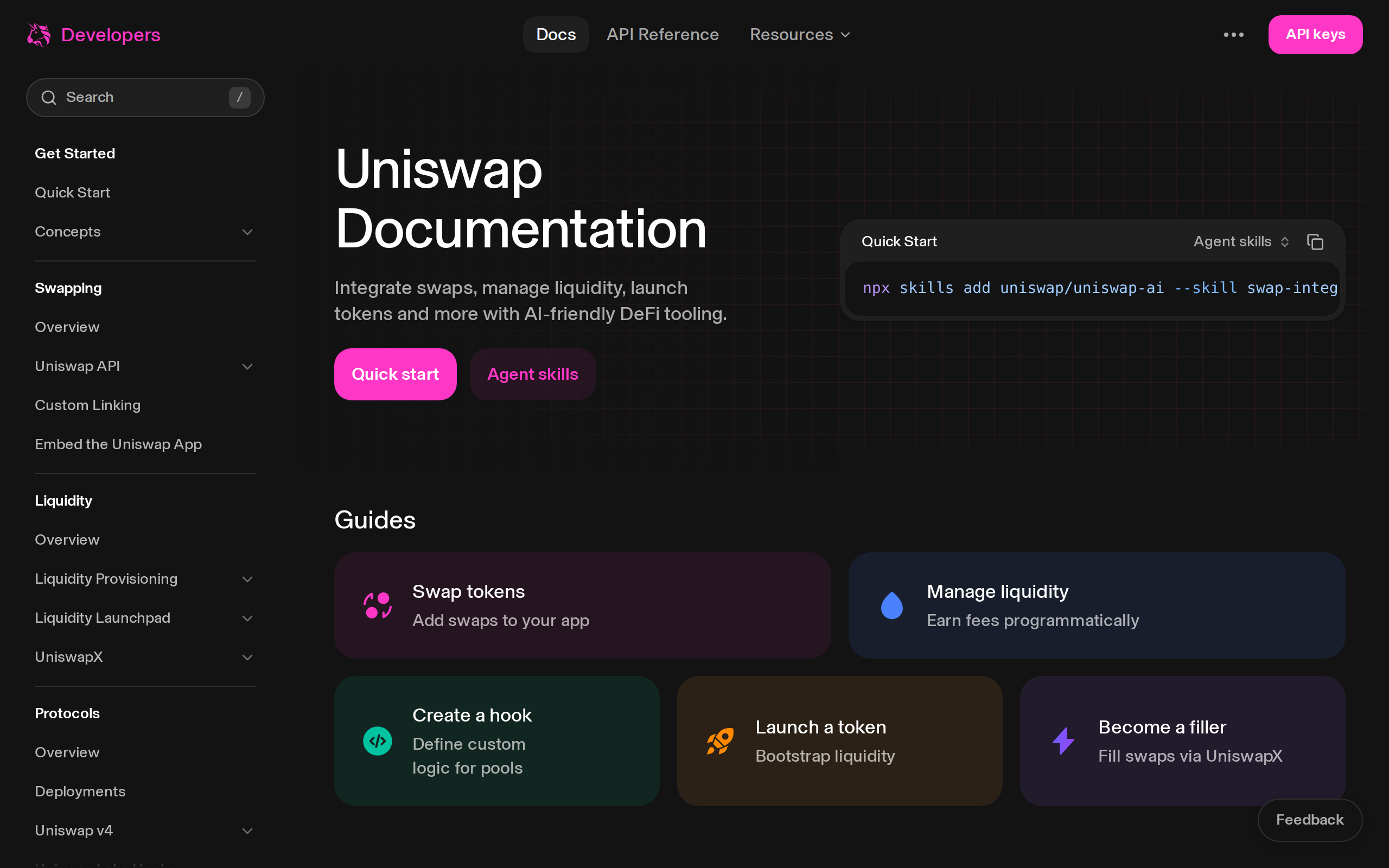
The contracts are open source and the developer documentation is thorough, which is a strength of this product over many closed ones.
Verdict
We rate Uniswap highly as a tool and conditionally as a recommendation. If you already run a wallet and understand gas, it is the best-documented, deepest DEX. If you are new, buy on a regulated exchange first, learn the mechanics with small amounts, and treat every unknown token as hostile.
This review is not financial advice. Fees, governance parameters and gas change often, so check the live quote before every swap.
Specifications
- App fee
- No Uniswap Labs interface fee (as of Dec 27, 2025)
- v3 fee tiers
- 0.01%, 0.05%, 0.30%, 1%
- v4 fees
- Any rate from 0% to 100%, set per pool
- Protocol fee
- About one-sixth of swap fee on enabled v3 pools
- Custody
- Non-custodial, you sign from your own wallet
- Order types
- Swap, limit, plus buy and sell with fiat
- Platforms
- Web app, wallet app, developer docs