The short version
Tangem is the simplest way to get a private key off your phone: a bank-card-sized device you tap, no cable, no battery and no words to copy. The cost is a different recovery model. Lose every card without a backup and the funds are gone for good. Best for beginners who will keep the cards in separate places. Not for people who want a screen to check every transaction detail.
Best for: Beginners who want cold storage without a seed phrase
Our score: 7.9 out of 10
Pros and cons
What works
- Two-card set from $54.90, three-card set at $69.90, cheap for a hardware wallet
- Tap-to-sign over NFC: no cable, no battery, no seed to write down
- Backup cards are cloned from the same key, so one loss is not fatal
- Audited by Kudelski (2018), Riscure (2023) and Cure53 (2026), per the maker
What does not
- Lose every card with no seed phrase set up and nobody can recover the funds
- No screen: you confirm on the phone, which is a weaker check than a device display
- Backup cards must be stored apart, and that discipline is entirely yours
- Optional 24-word seed import exists, but it brings back the phrase you wanted to avoid
Most hardware wallets begin by handing you a piece of paper and telling you never to lose it. Tangem begins by removing the paper. That is the whole proposition, and it deserves a careful look, because it moves the risk rather than deleting it.
How a wallet with no seed phrase works
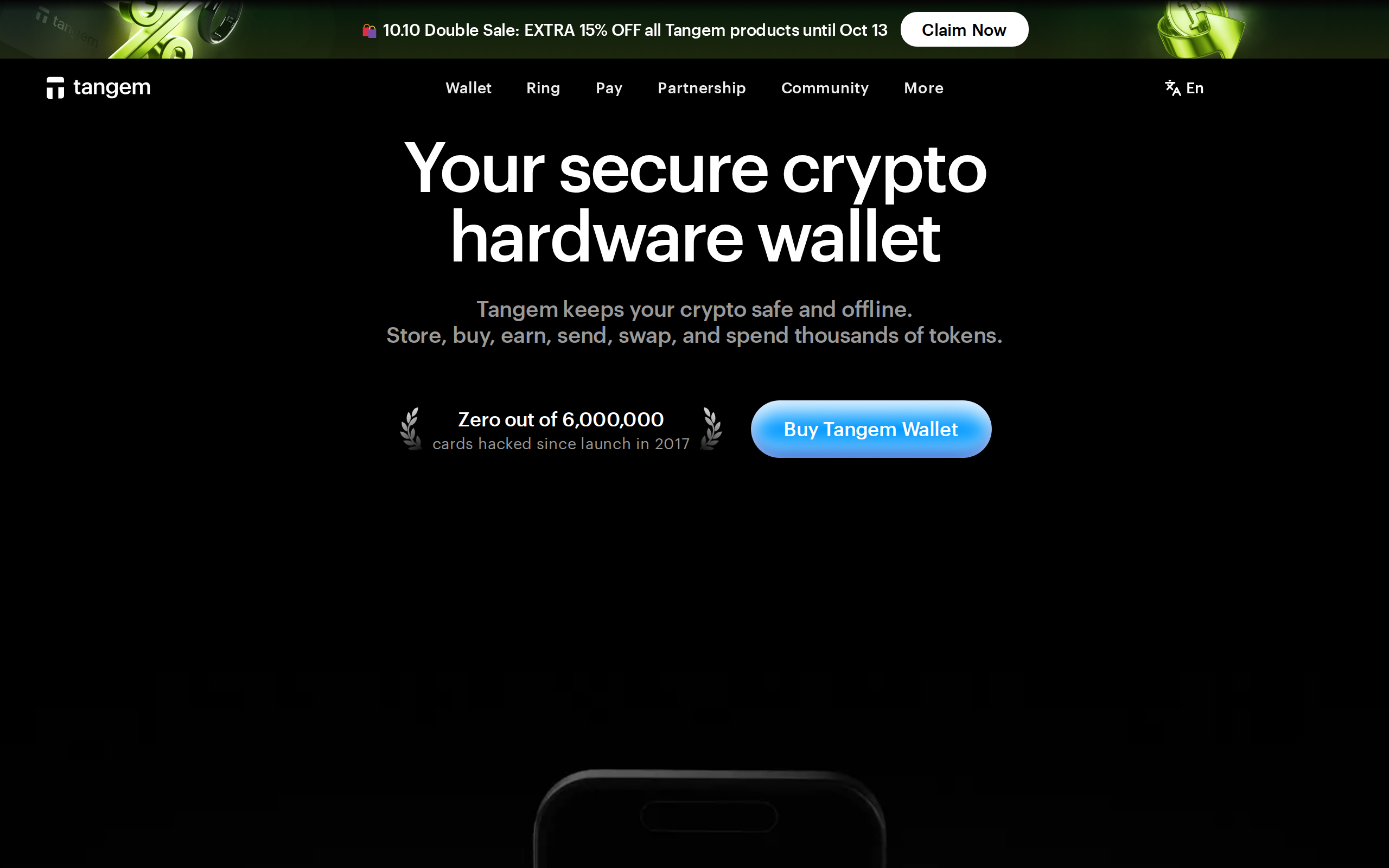
Each Tangem card holds a secure chip that generates the private key inside itself. The key never leaves the card, and you approve a transaction by tapping the card against your phone. The maker's own line is that private keys are generated on the card and stay on the card.
Backup works by cloning. When you set up a two-card or three-card set, the cards are paired so each one holds the same key. Lose one, and the others still sign. Third-party reviews put the chip at a Samsung EAL6+ secure element, the class used in passports and bank cards.
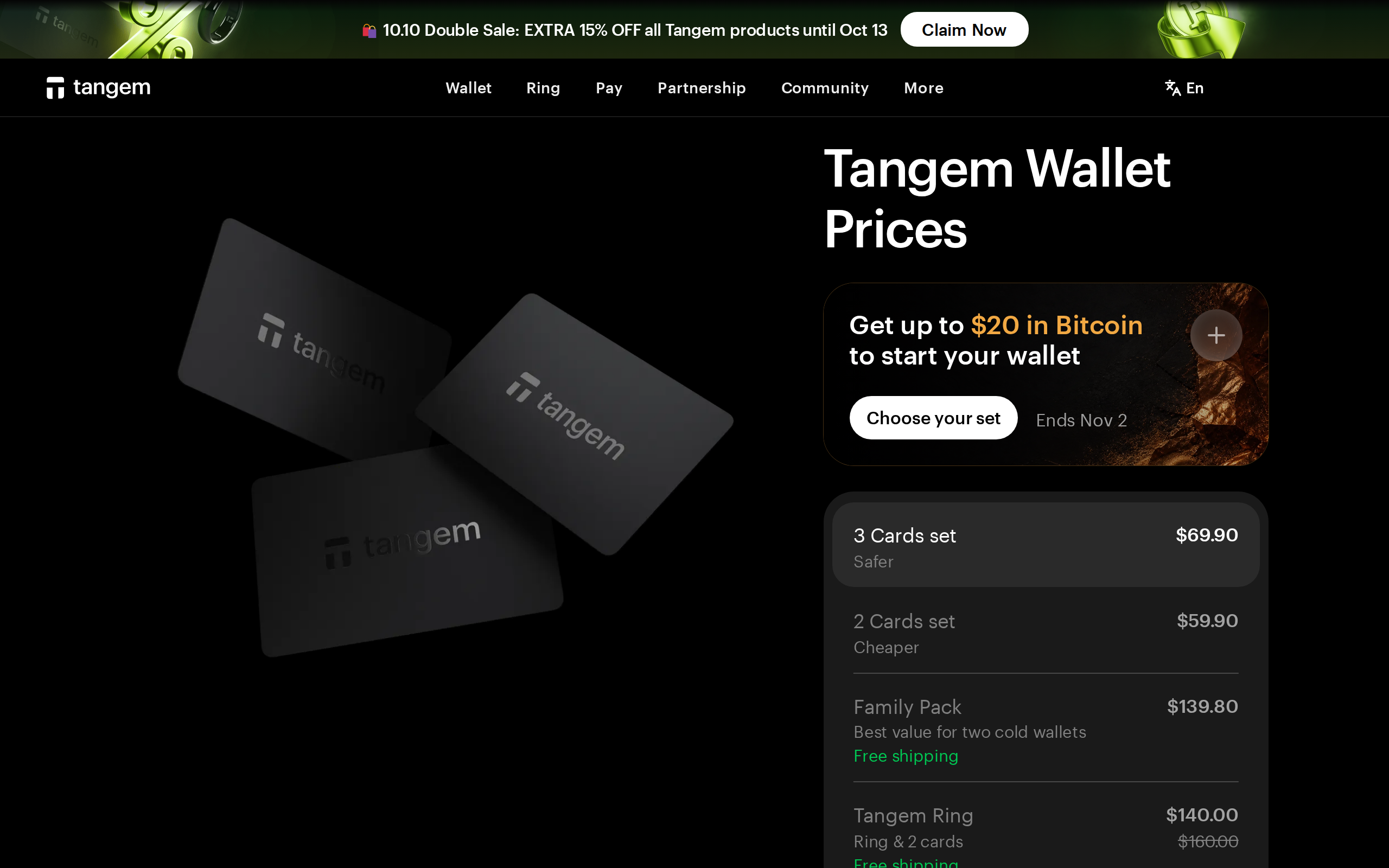
Prices, and what they buy
The pricing page lists a two-card set at $54.90 and a three-card set at $69.90. A family pack of two cold wallets is $129.80, the ring with two cards is $160, and the Pro kit is $180. Standard shipping is free over $100 before VAT, and duties may apply.
Every order also carries up to $20 in Bitcoin, credited to a wallet you control within 14 days of activation. We would treat that as a small rebate, not a reason to choose the product. At these prices a Tangem set undercuts most screen-equipped hardware wallets by a wide margin, and the three-card set at $15 more is the one we would buy, for reasons below.
The risk that replaces the phrase
If you lose every card and never created a recovery phrase, the funds are unrecoverable. There is no forgot-password path, and the company cannot help. A competitor's analysis, which we read with its own bias in mind, makes the same point, and it is simply true.
So the real risk is physical and behavioural. Two cards in one drawer are one backup, not two. A fire, a burglary or a house move takes both. We would store at least one card in a different building, and we would pick the three-card set so that spreading them is practical.
The security page also notes that wallets can be created with a 24-word seed phrase and imported with a passphrase, a feature added in version 5.9 in May 2024. That is a useful escape hatch if you want a conventional backup. Using it, however, brings back exactly the written phrase you chose Tangem to avoid.
What the audits cover
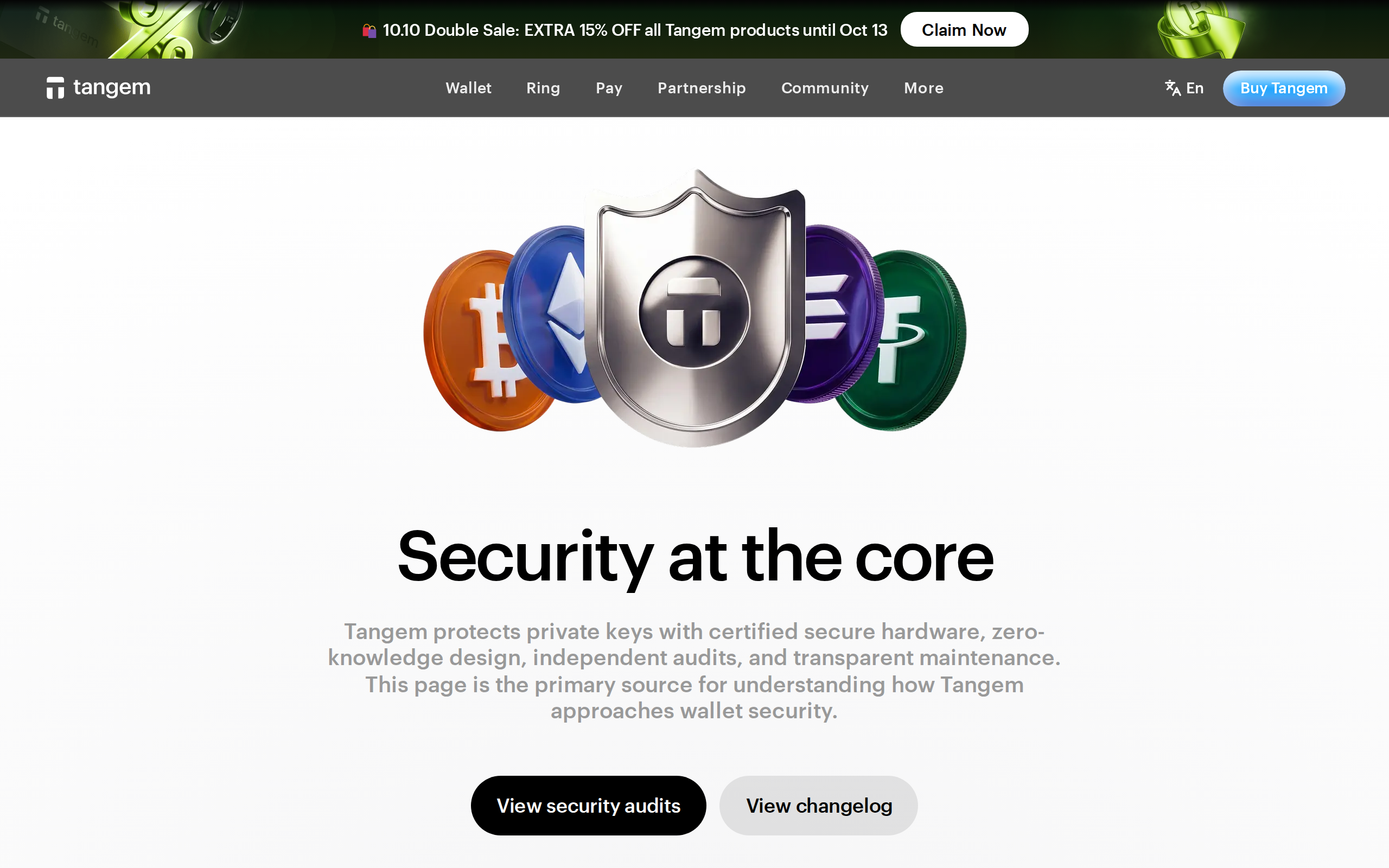
The security page lists three independent audits: Kudelski Security on the smartcard code in 2018, Riscure on the mobile hardware wallet and firmware in December 2023, and Cure53 on the mobile wallet in March 2026. The maker says all three found no critical vulnerabilities. Those are the maker's summaries, and we have not read the full reports, so read them yourself if the decision matters.
The missing screen
Tangem has no display. You tap the card and approve in the app on your phone, which means you trust the phone to show the right address and amount. Devices with their own screens let you verify the destination on a separate display, an advantage when a phone has malware. For modest balances this is a fair trade for the simplicity; for a large holding, it is a real argument for a screen-based wallet.
Ring and the wider range
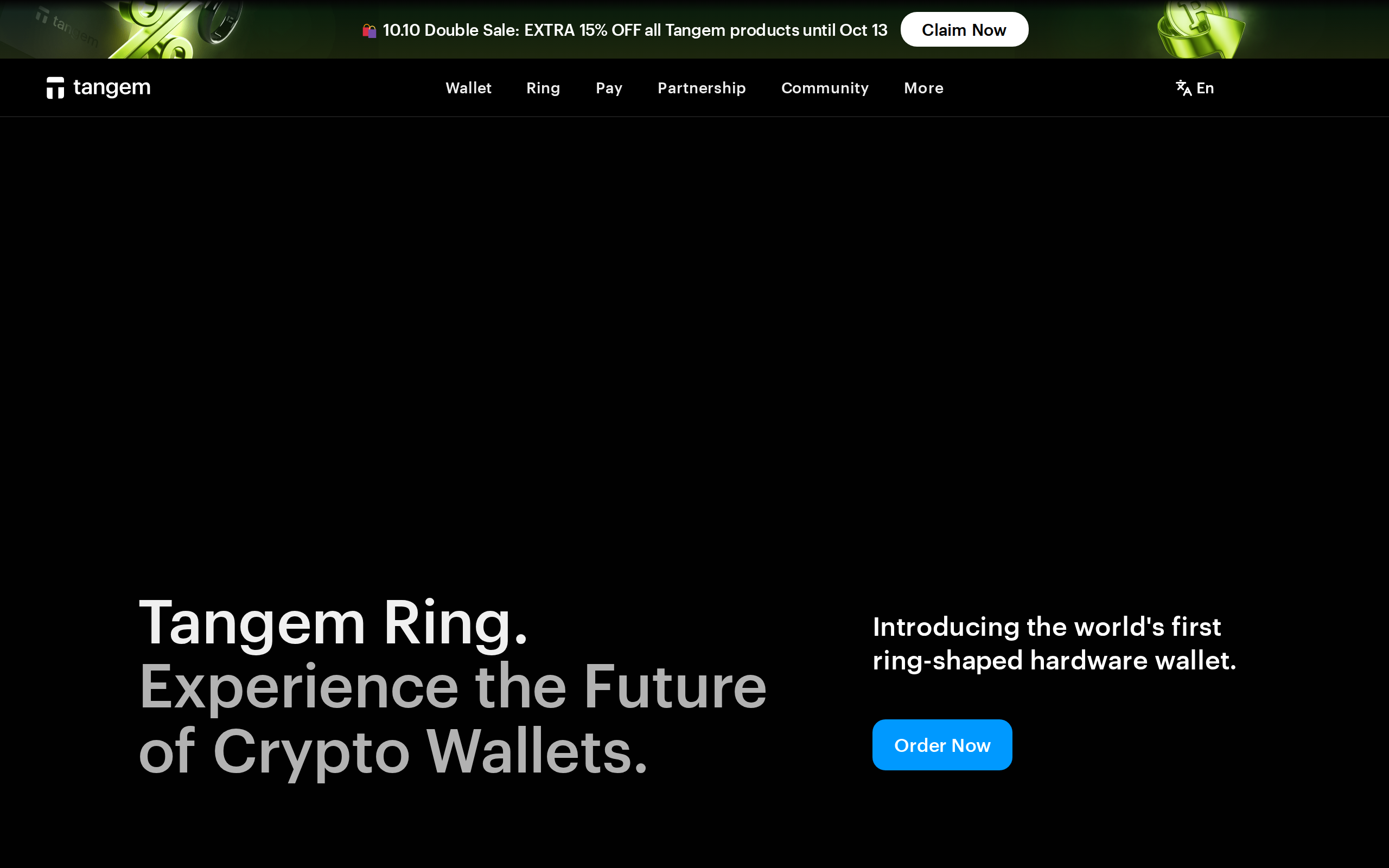
Tangem also sells a ring-shaped version, described on its page as the first ring-shaped hardware wallet, at $160 with two cards. It is a novelty with a use: you always have it on your hand. We would not pay the extra over a card set unless you like the idea.
Who should buy it
Buy a three-card set if you are new to self-custody, you hold a sum you would not like to lose but not a fortune, and you will actually separate the cards. Skip it if you want to verify every transaction on a dedicated screen, or if you cannot trust yourself to store backups in more than one place. This is a product review, not guidance on how much to keep in any wallet.
Specifications
- Maker
- Tangem
- Form factor
- NFC card; also sold as a ring
- Price (2 cards)
- $54.90
- Price (3 cards)
- $69.90
- Other bundles
- Family pack $129.80; ring plus two cards $160; Pro kit $180
- Connection
- NFC to iOS and Android phone, free app
- Secure element
- Samsung EAL6+ chip, per third-party reviews
- Recovery
- Backup cards; optional 24-word seed on newer setups
- Launch reward
- Up to $20 in BTC credited within 14 days of activation