Schwinn IC4 Review: The Bike for Riders Who Bring Their Own Screen
By The Ironnook Test Desk ·
8.1
schwinnfitness.com
The verdict
The IC4 is the best-value spin-style bike for someone who already owns a tablet and wants to pick their own apps. It rides smoothly, fits a wide range of riders and costs no subscription to use. The cost is manual resistance, so apps cannot change the load for you. If you want that, spend more or look elsewhere.
Best for: Riders who want to use their own tablet and apps
What we liked
No subscription is needed to ride the bike
100 magnetic resistance levels run smooth and near silent
Dual-sided pedals take SPD cleats or ordinary trainers
Works with JRNY, Peloton, Zwift and Kinomap over Bluetooth
Ten-year frame warranty and a 330 lb user limit
What could be better
Resistance is a manual knob, so apps cannot adjust it for you
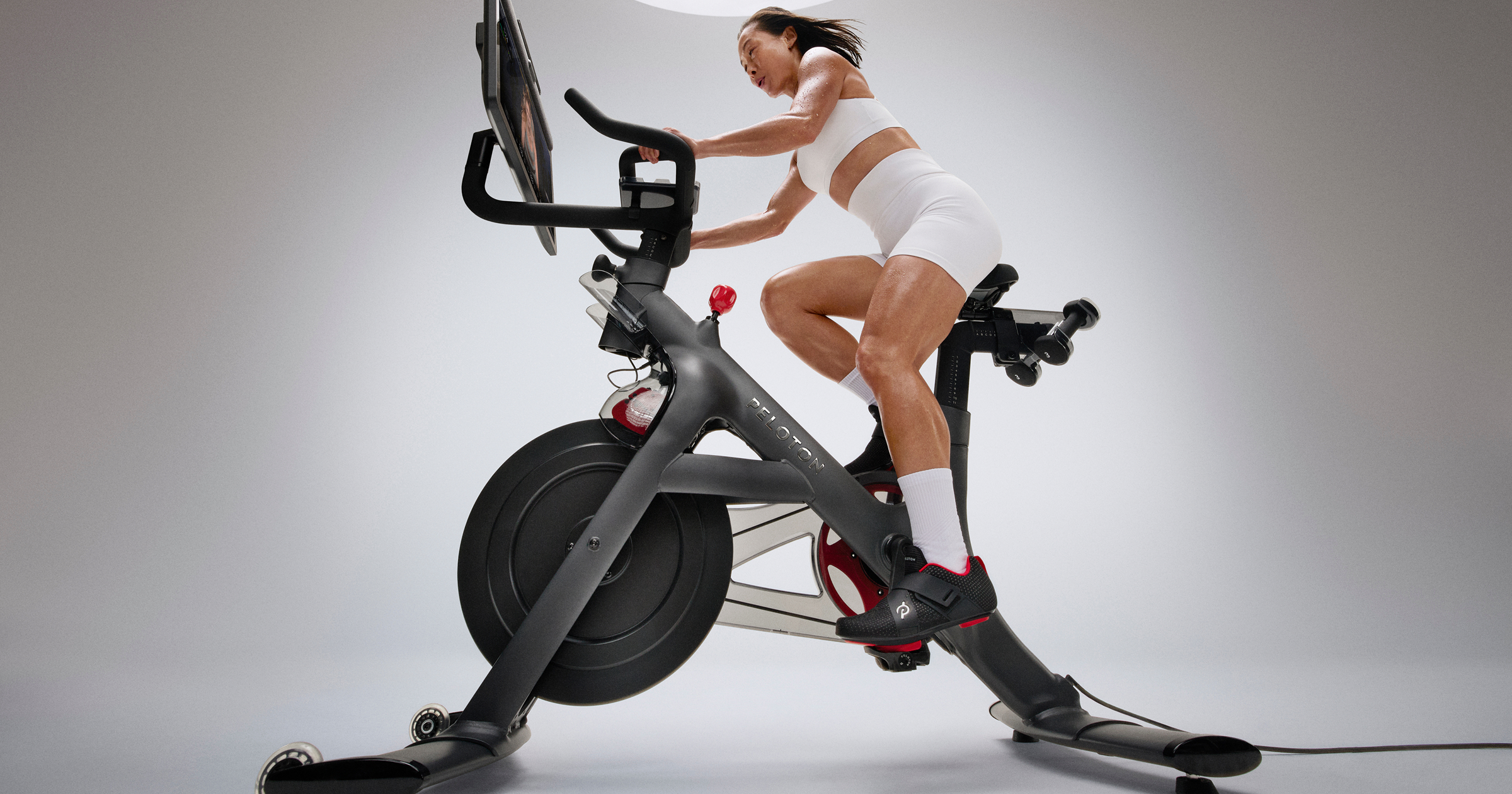
The Bike+ is the best-riding connected bike we know of, and its swivel screen, auto-resistance and rep-counting camera do make off-bike strength classes easier to follow. It is also $1,000 more than the Bike, needs a $49.99 monthly membership, and reviewers report screen wobble and early creaks at this price. Buy it if you will use rides, strength and mobility every week. A cyclist who only rides should buy the Bike.
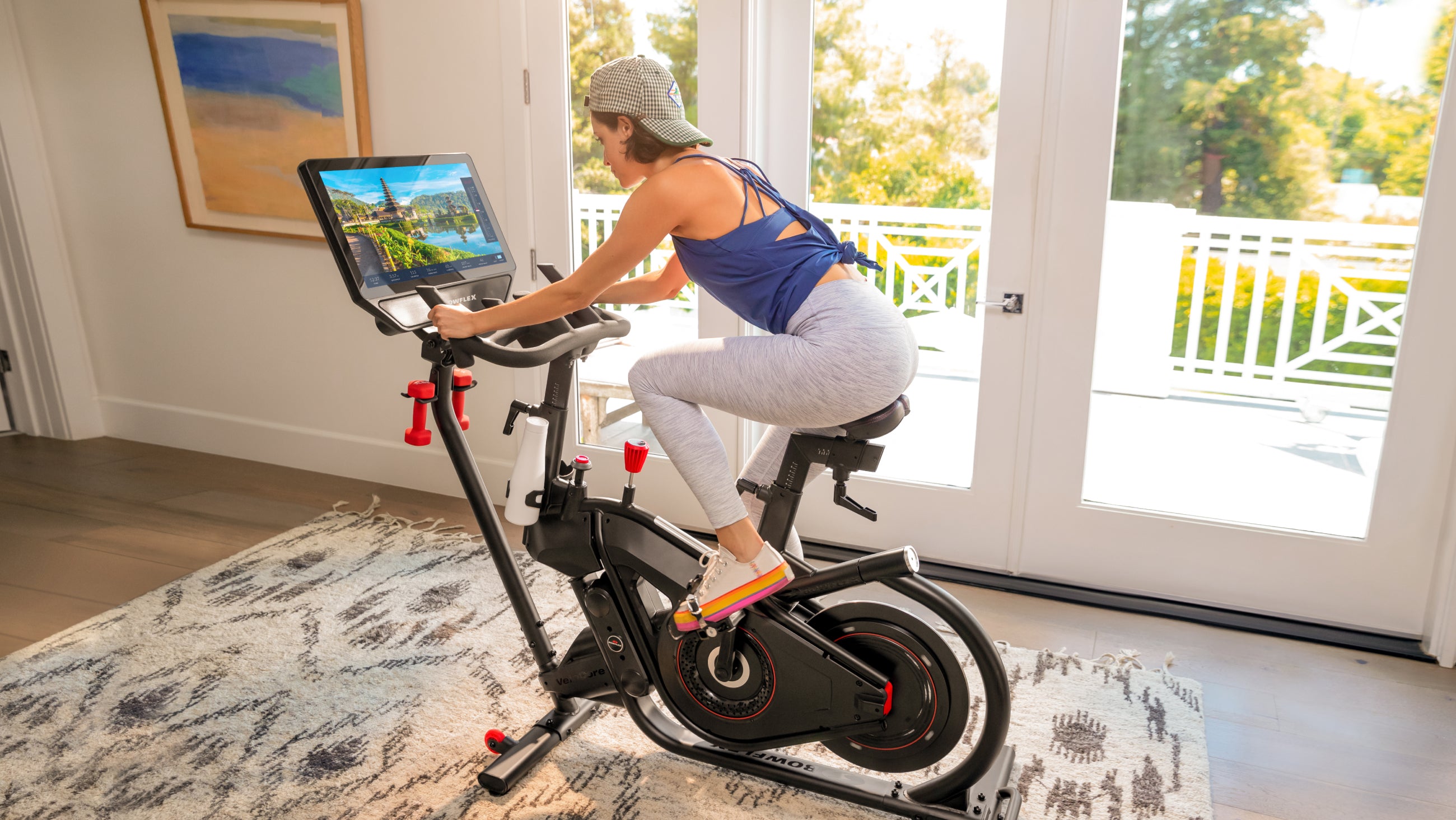
Lean mode is real: it recruits your obliques and makes rides more engaging, and the bike underneath is quiet, stable and holds 325 lb. But the lean is a nice extra, not a second workout, JRNY adds $149 a year, and the two year frame warranty is short. Buy it near $1,000. At $2,199 it is overpriced.
7.4$2,199 list ($999 on sale when checked)
Exercise Bikes
No built-in screen; the tablet, phone and app plan are yours to buy
The 3 lb dumbbells and armband are throwaways, not features
At 113.6 lb it is awkward to move across carpet
Free JRNY trial is only 2 months, after which it bills monthly
The IC4 costs $899, has no built-in screen, and works with JRNY, Peloton and Zwift over Bluetooth. We weighed the manual resistance knob against the freedom of having no required subscription.
Most people shopping for a Peloton alternative are really shopping for the same bike without the bill. The Schwinn IC4 is the nearest thing to that. It has a heavy flywheel, a proper saddle and a tablet holder in place of a screen. What you do with that holder is up to you.
A bike that leaves the software to you
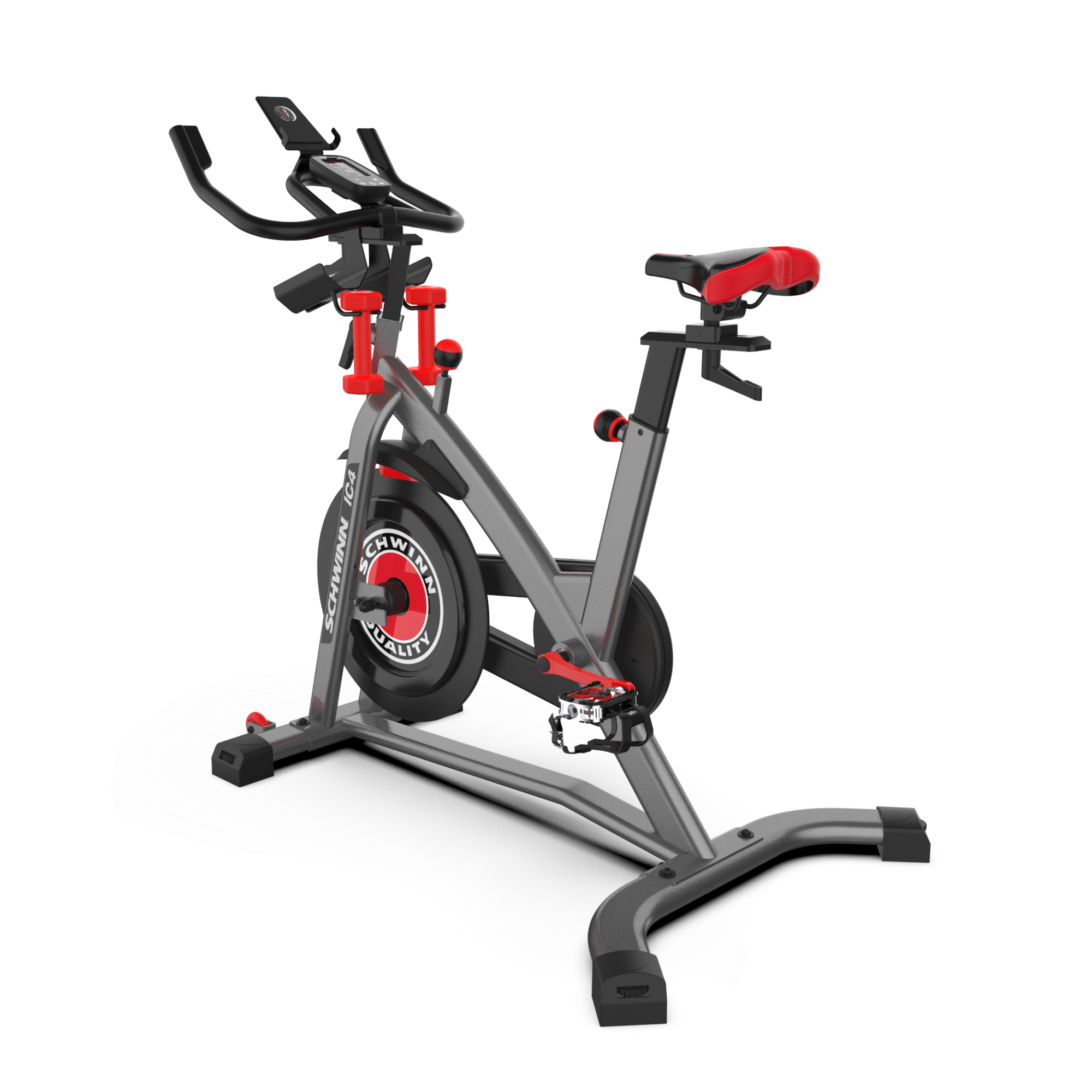
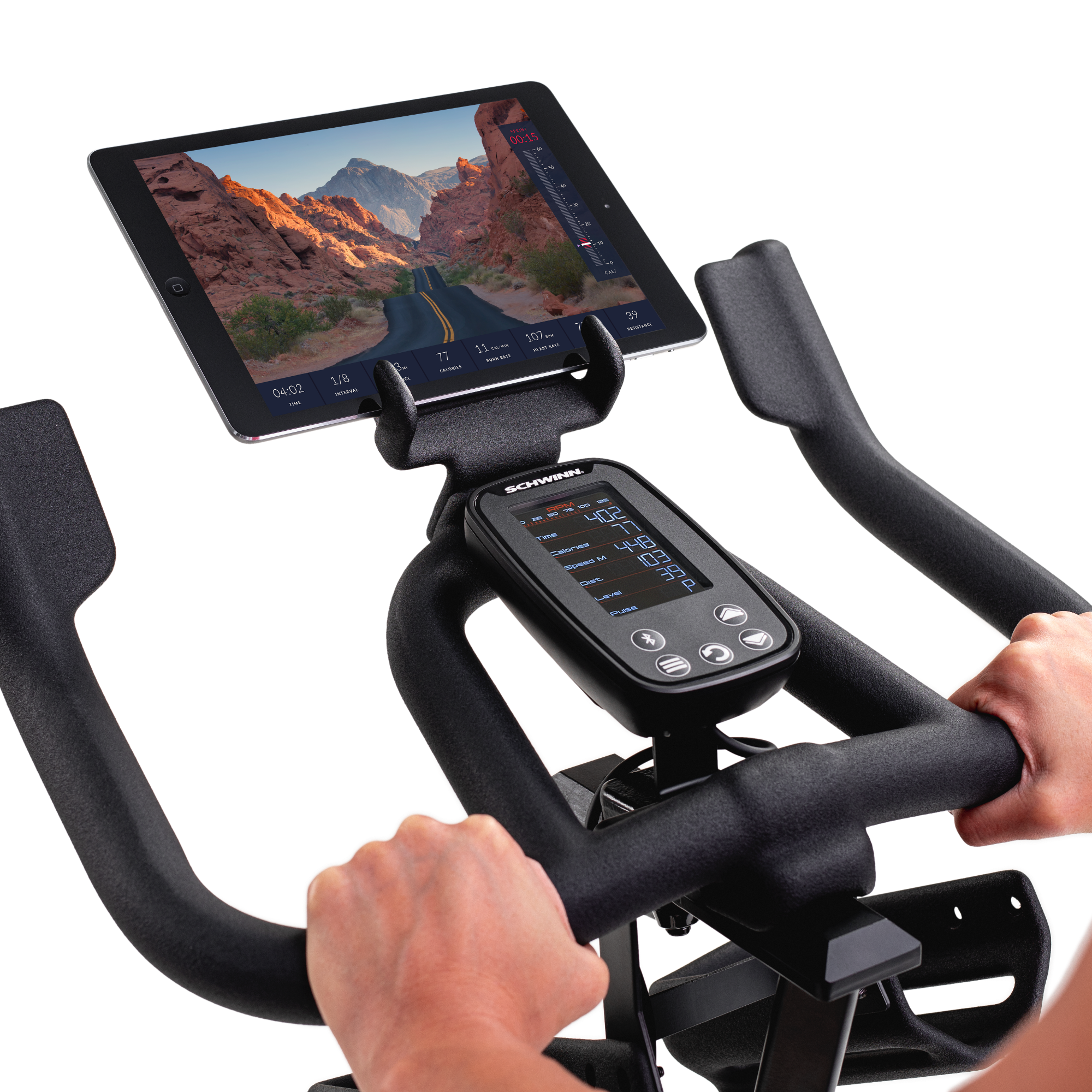
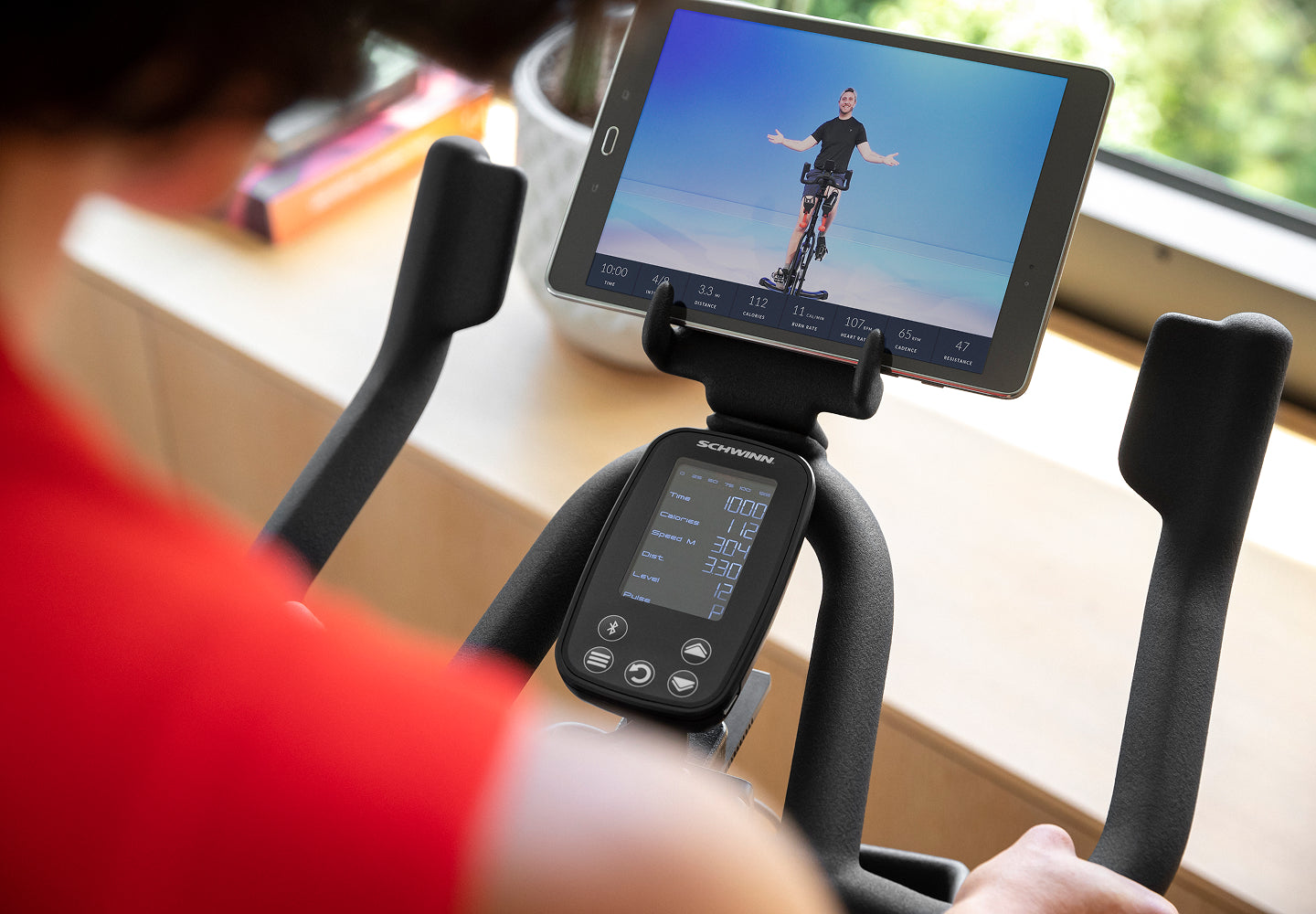
The IC4 lists at $899 at Schwinn. It has no built-in display. Instead the handlebar carries a small console for cadence, time and distance, and a holder where your own tablet or phone sits.
The IC4's console with a tablet in the holder: the screen is yours, not Schwinn's.
That one choice sets the price and also sets the rules. Schwinn's own JRNY app is on offer with a 2-month free trial for new members, and one subscription covers up to three riders. After that it is a paid plan. But the bike pairs over Bluetooth with the Peloton app, Zwift and Kinomap too, and it rides just fine with none of them. You can watch a film, read, or ride to a playlist.
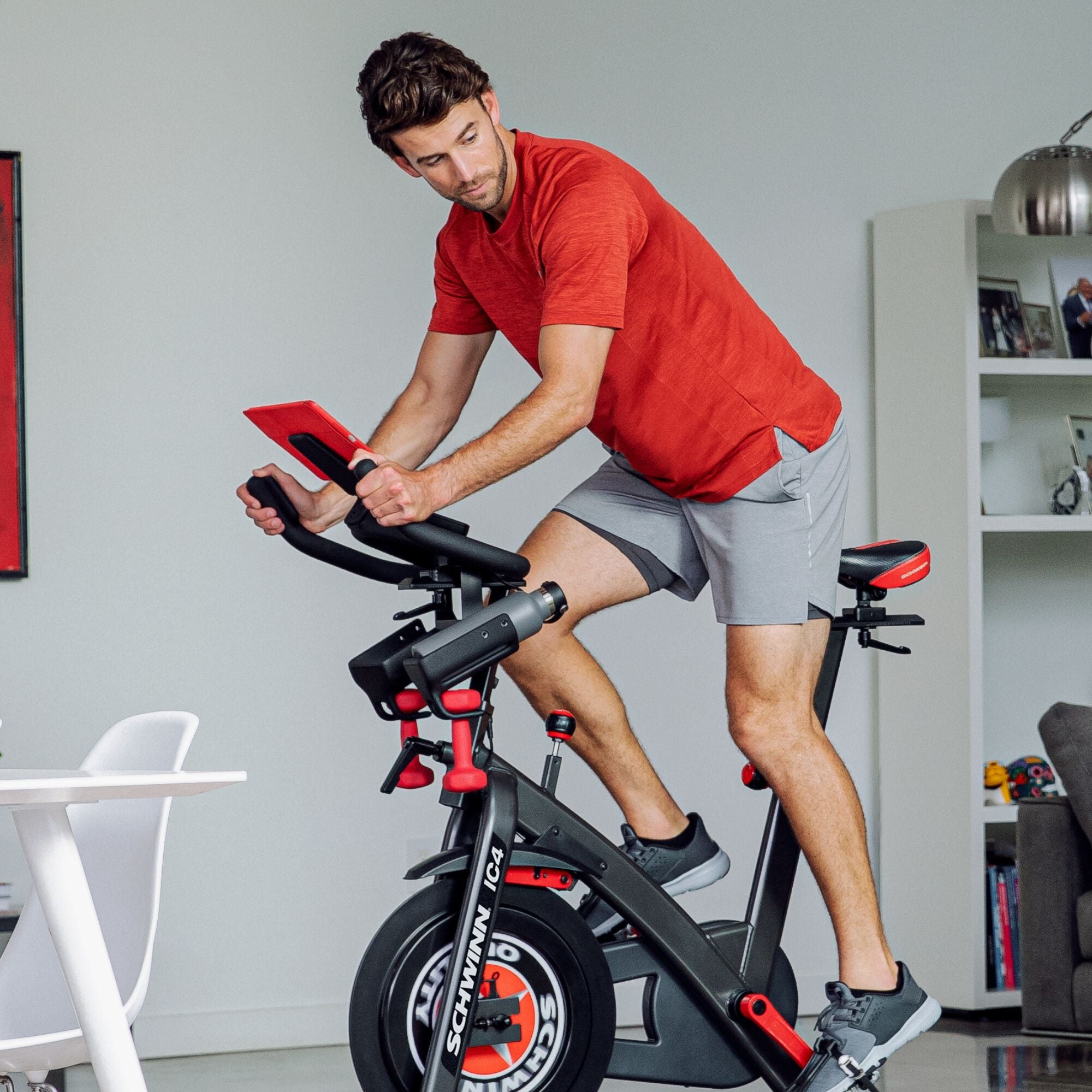
The IC4 in a living room: rider, bike and a device on the handlebar.
The knob is the trade-off
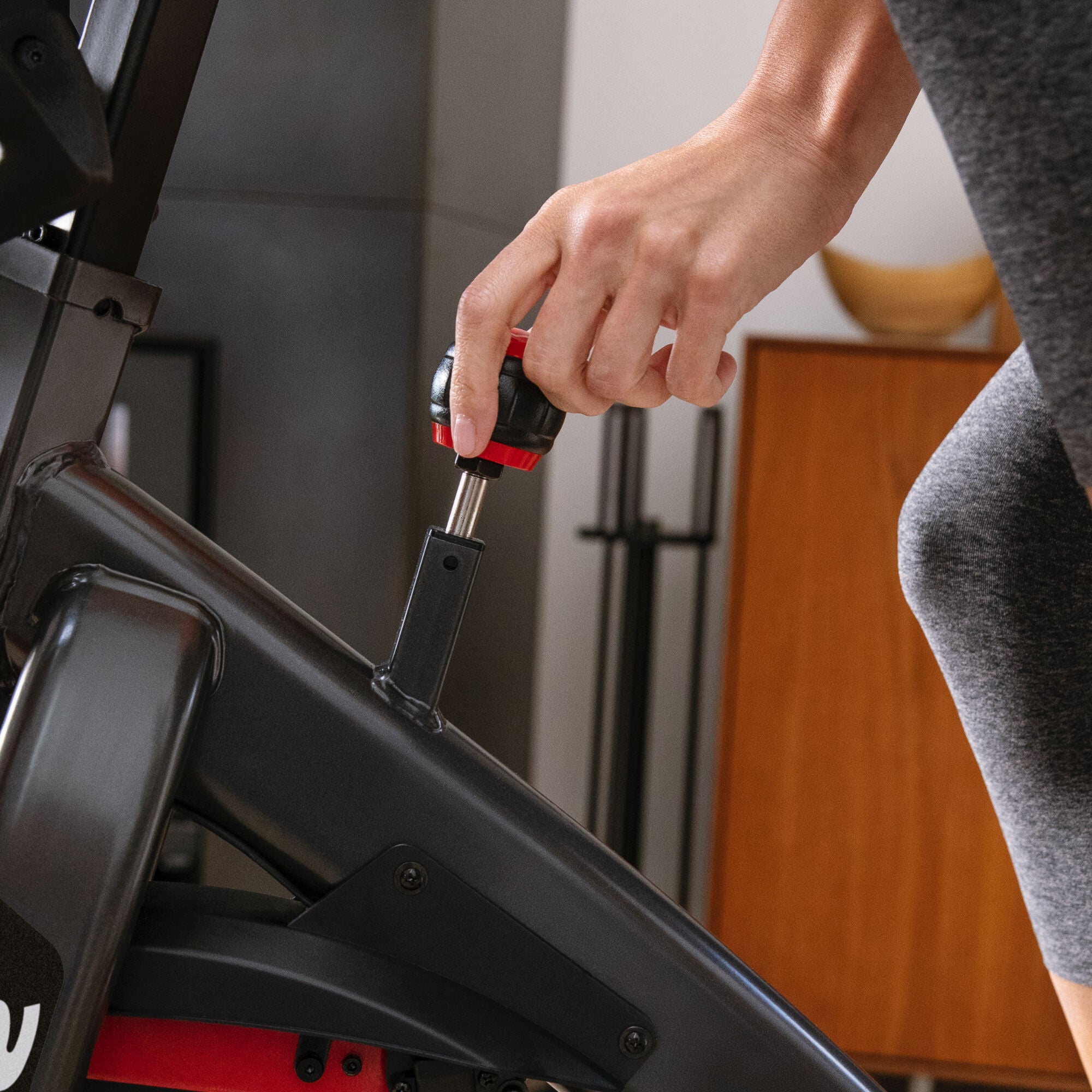
Resistance runs through 100 magnetic levels, set by a turn knob below the handlebar. Independent testers describe the ride as smooth and almost silent, closer to a high-end bike than the price suggests. We agree with that read of the spec: a magnetic brake has no pad to squeal.
The resistance knob, which sets all 100 levels by hand.
The drawback is that nothing talks back. Peloton's classes and Zwift's hills cannot push resistance to you, so you turn the knob when an instructor says "add a turn". That is fine for steady rides and fine for interval classes, where you hear the cue and respond. It is frustrating on a rolling Zwift course, where the road changes every ten seconds and you spend them reaching for the knob.
If automatic resistance matters to you, this is the wrong bike. Look at models with a motorised brake and expect to pay more.
Fit, pedals and floor space
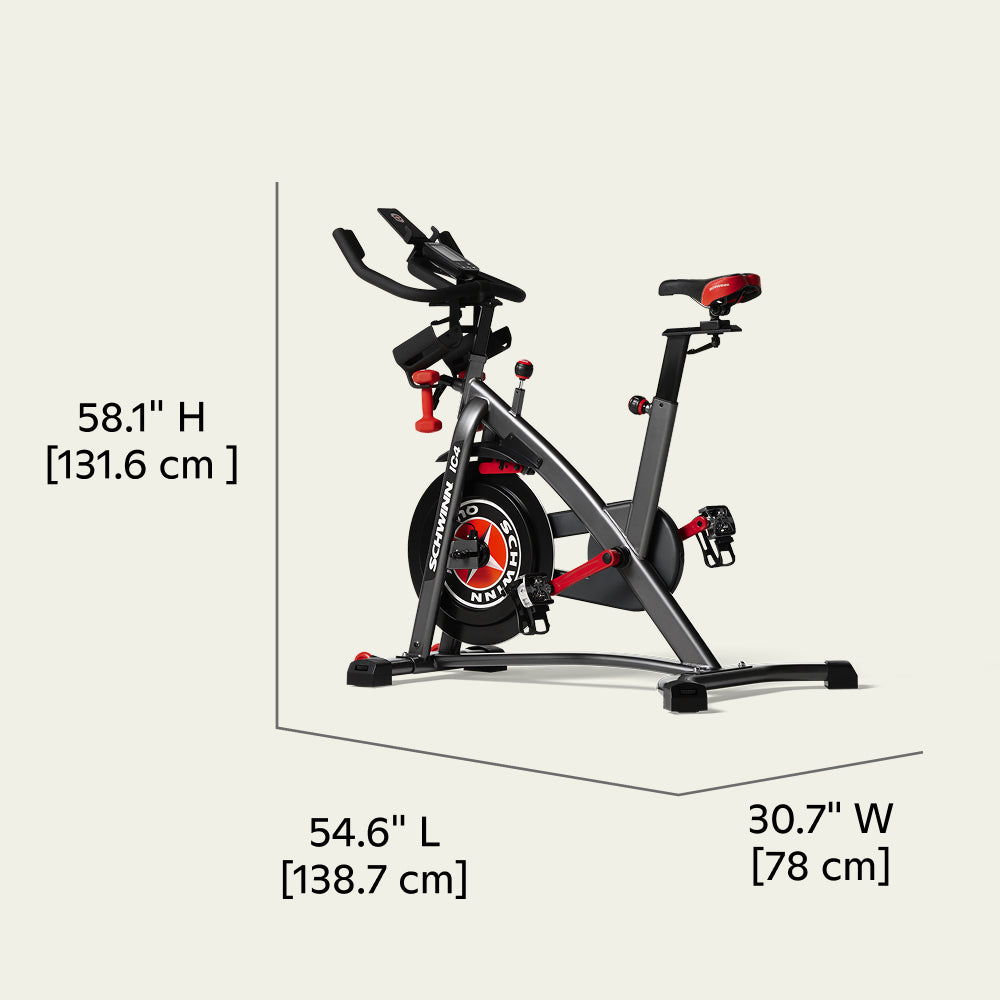
The footprint is 54.6 inches long and 30.7 inches wide, which is smaller than most treadmills and about the size of a narrow desk. It weighs 113.6 lb, enough that a flat floor and a mat make sense.
Schwinn's dimension graphic for the IC4: 58.1 in high, 54.6 in long, 30.7 in wide.
Schwinn lists riders from 5 ft 1 in to 6 ft 4 in, with a 330 lb weight limit, and the saddle and handlebar both adjust. Riders outside that range should test before buying.
The pedals are dual-sided: SPD cleats on one face, a toe cage on the other. So you can clip in with road shoes or ride in trainers. Anyone who plans to use Peloton-style Look cleats will need new shoes or adapters.
Included extras are minor. A pair of 3 lb dumbbells and a Bluetooth heart rate armband come in the box. We would use the armband and leave the dumbbells in the cradle.
What a third-party app costs you
Bringing your own apps is only cheaper if you count honestly. Peloton's app, Zwift and JRNY each bill their own monthly fee after any trial, and you pay for the one you choose. The IC4 never demands one. A rider who sticks with free videos and a playlist pays nothing past the bike, and a rider who wants three apps pays three bills. Check each service's current price before you commit, because all of them change it.
There is one more hidden cost: the tablet itself. A phone is too small for a class, so budget for a 10 inch screen if you do not own one.
Warranty and the running cost
Schwinn covers the frame for 10 years, mechanical parts for 3 and labor for 1. That is stronger than the one-year terms on many bikes at this price.
A rider in a red top watches a tablet in the holder, with an on-screen cyclist above the IC4 console.
The yearly cost is simple. Buy the bike, add a tablet if you lack one, and pay for an app only if you want classes. Compared with a connected bike that locks its screen without a plan, that is a real saving over three years.
Who should buy it
Buy the IC4 if you want a sturdy bike, own a tablet and prefer to choose your apps. It is a strong first bike and a fine long-term one.
Skip it if you want automatic resistance, a large built-in screen, or a polished all-in-one setup. This is a tool, not a showroom.
We give the IC4 an 8.1: the best value among bikes that let you choose your software, held back only by the manual knob.
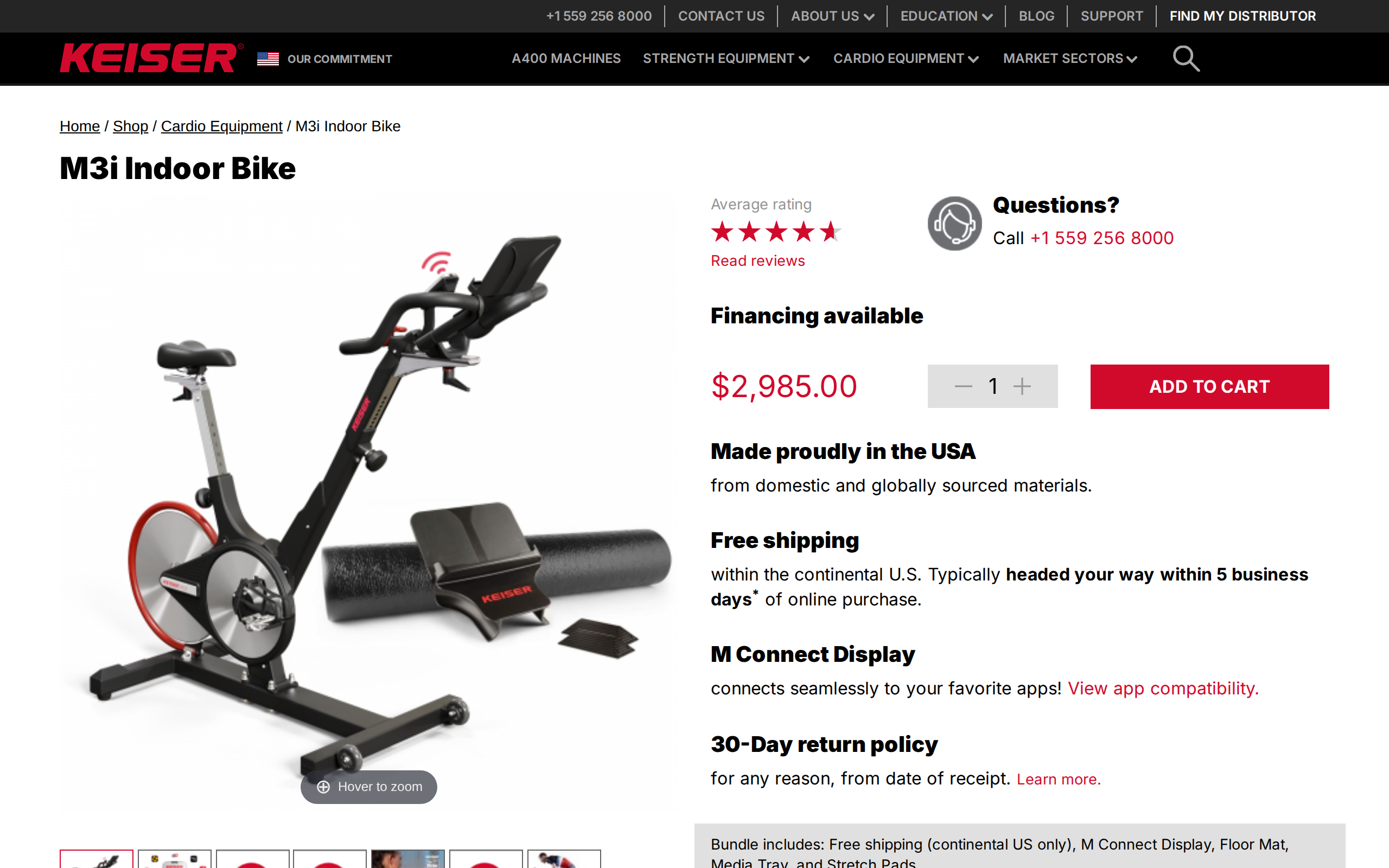
The M3i is the bike for riders who already own a tablet and a favourite app and want the sturdiest, quietest, lowest-maintenance machine to pair with it. Power readings are consistent and the build is commercial. But resistance is manual, there is no screen or content, and $2,985 is a lot to pay for what a $1,000 smart bike partly does for you.