REP Arcadia Functional Trainer Review: The Cable Machine to Buy Before a Rack
By The Ironnook Test Desk ·
8.4
repfitness.com
The verdict
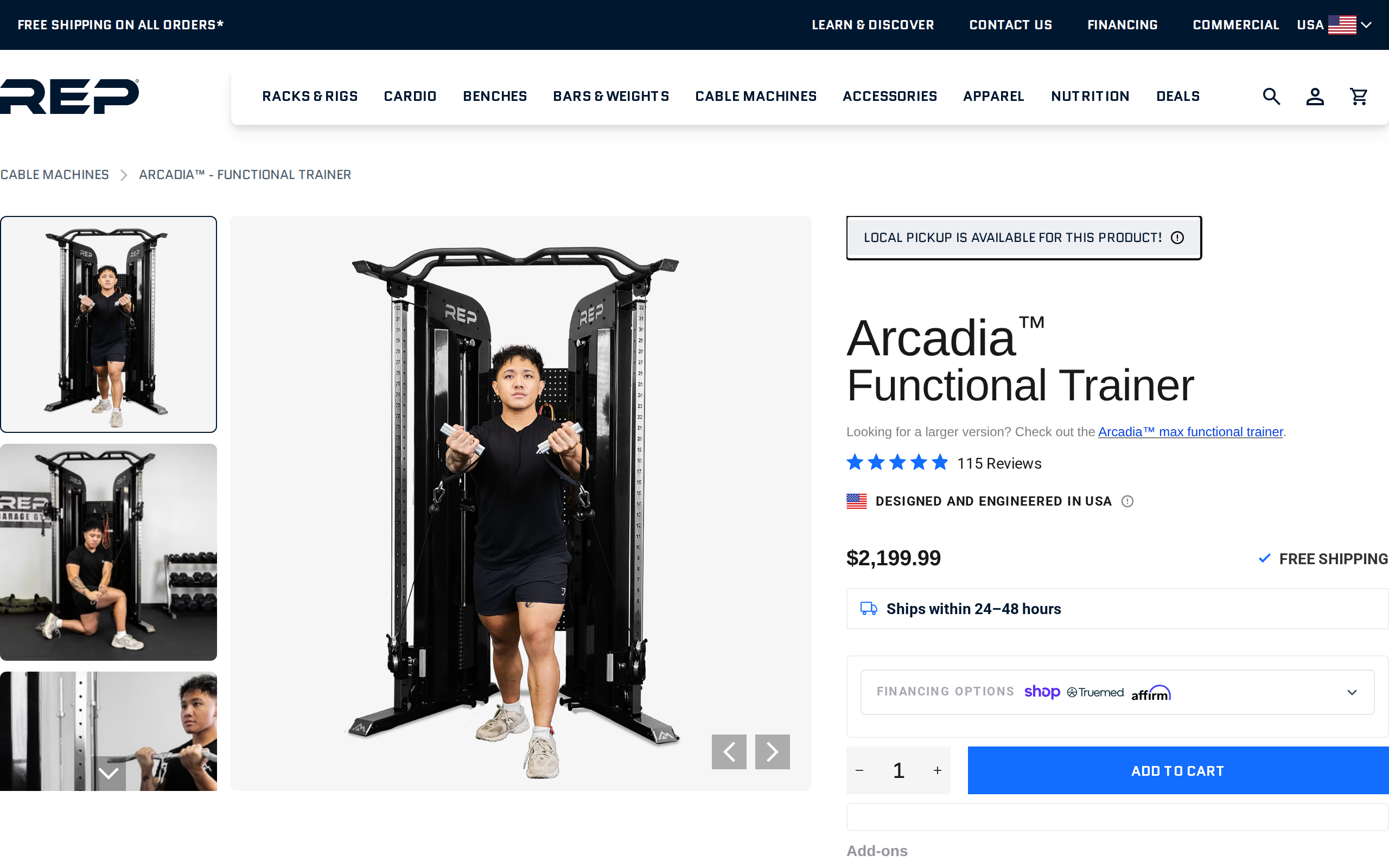
The Arcadia is a very smooth, very compact dual-stack cable machine, and it is the one we would pick over a power rack for anyone who prefers cables to barbells. You get 32 height positions, 81 inches of travel and a built-in pull-up bar for $2,199.99. The catch is its 2:1 ratio: the 170 lb stacks feel like 85 lb at each handle, so strong lifters will want the $324.99 upgrade. It is not a squat station.
Best for: Cable-first lifters who do not want a barbell rack
What we liked
Very smooth cables with aluminium pulleys and brass bushings, per independent testing
81 inches of cable travel and 32 adjustment holes cover most movements
Built-in multi-grip pull-up bar adds a vertical pulling option
Occupies about 36 by 55 inches, small for a dual-stack machine
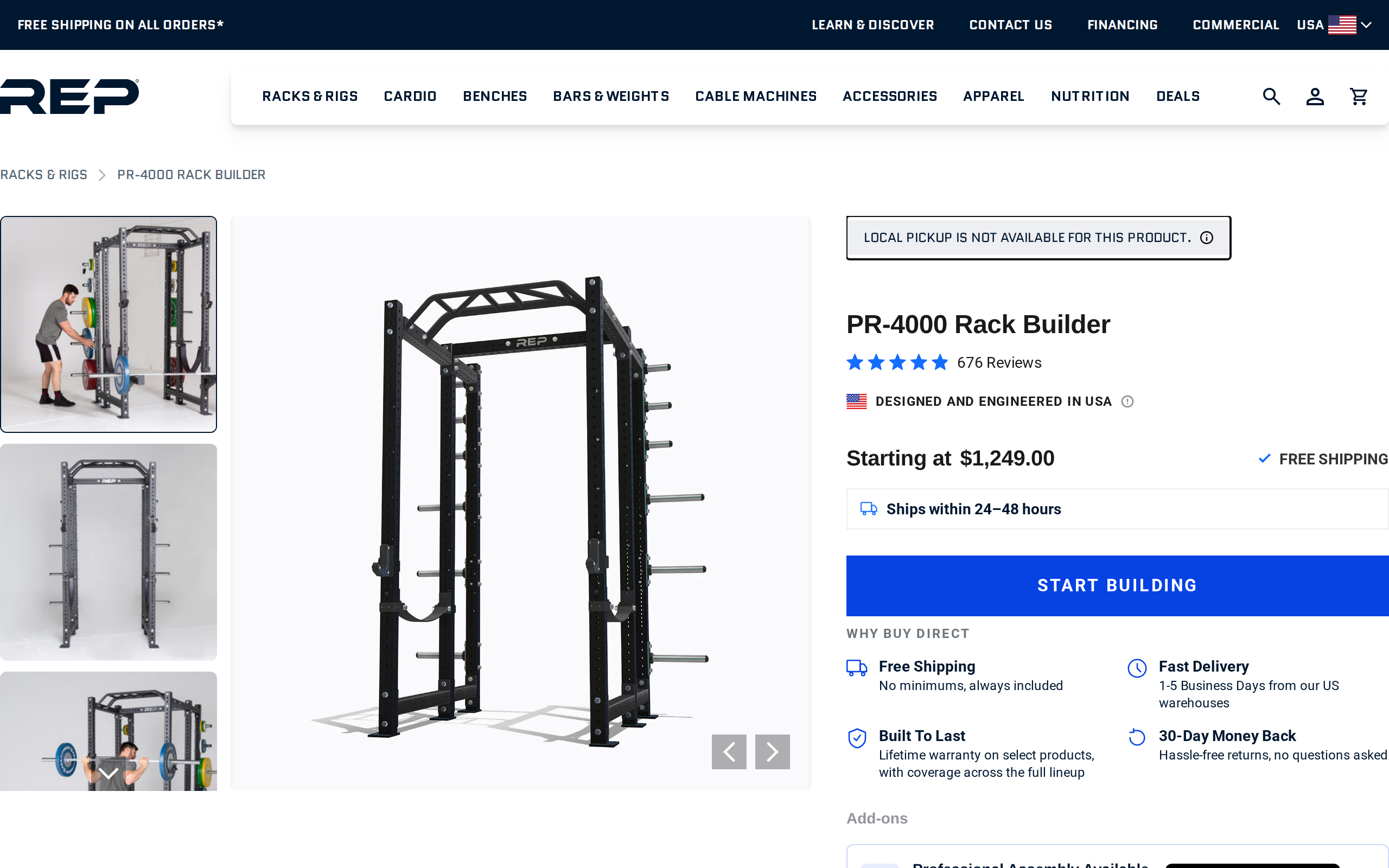
The PR-4000 is the rack we point most garage gym builders to. It uses the same 3 by 3 inch, 11-gauge steel and 5/8 inch hardware as the premium names, adds 1 inch Westside spacing through the bench zone, and costs less than a comparable Rogue. The trade-offs are a hammertone finish that is not perfectly smooth, numbering on one side only, and a four-post build that must be bolted down. Choose the PR-5000 only if you want 1 inch holes everywhere.
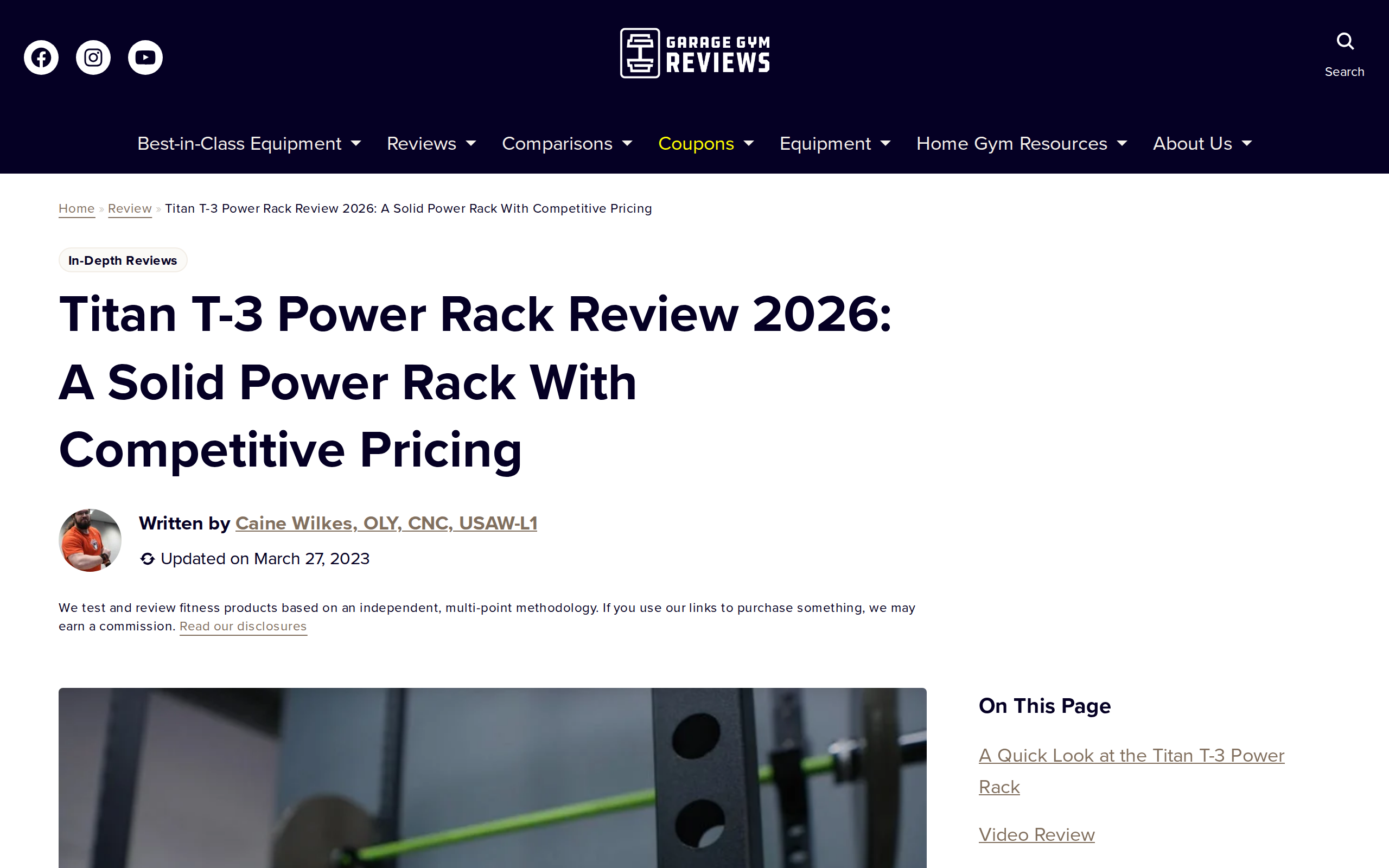
The T-3 is the budget power rack most home lifters should buy. The 2x3 inch, 11-gauge uprights, Westside hole spacing, 1,100 lb bar capacity and two pull-up bars are what a $700 rack gives you at around $520 on sale. The J-cups are average, the bolts are ordinary, the holes are not numbered and the warranty is only one year. Buy it if price decides. Pay more for a REP rack if finish and long-term support matter.
7.9From $519.97
2:1 ratio means each 170 lb stack gives only 85 lb at the handle
Cannot replace a rack for squats, bench press or heavy barbell work
Roughly 4 hours of assembly with two people, and freight delivery
42 inches between uprights is tight for wide cable crossovers
The REP Arcadia costs $2,199.99 and gives you two 170 lb stacks, 81 inches of cable travel and a pull-up bar in about 36 by 55 inches. We asked whether a dual-stack trainer beats a power rack at home.
Everybody builds a home gym around a power rack, because that is what the forums say. If you lift mostly with cables, that advice can cost you space and money you never use. The REP Arcadia is a dual-stack functional trainer, and it asks a plain question: what if the barbell is the optional part?
What cables do that a rack does not
A rack gives you squat, bench and overhead press, and then a pile of plates to store. A functional trainer gives you rows, presses, flys, curls, face pulls, woodchops and lat pulldowns from one frame, with weight that changes by moving a pin. Nothing falls on you, so you can train alone to failure without safety arms.
The Arcadia has two independent 170 lb stacks, 81 inches of cable travel and 32 holes to set the trolley height, from 13 inches off the floor up to 68. REP's page also lists a multi-grip pull-up bar built into the frame, and two steel D-handles with nylon straps in the box.
The 2:1 ratio is the number to understand
The Arcadia uses a 2:1 pulley ratio, so each 170 lb stack gives about 85 lb at the handle, and the lightest setting, 20 lb, feels like 10. Increments are 10 lb on the stack, which is 5 lb at the handle. That ratio is what makes the cables so smooth and gives long travel. It is also why a strong lifter may run out of weight on rows and pulldowns.
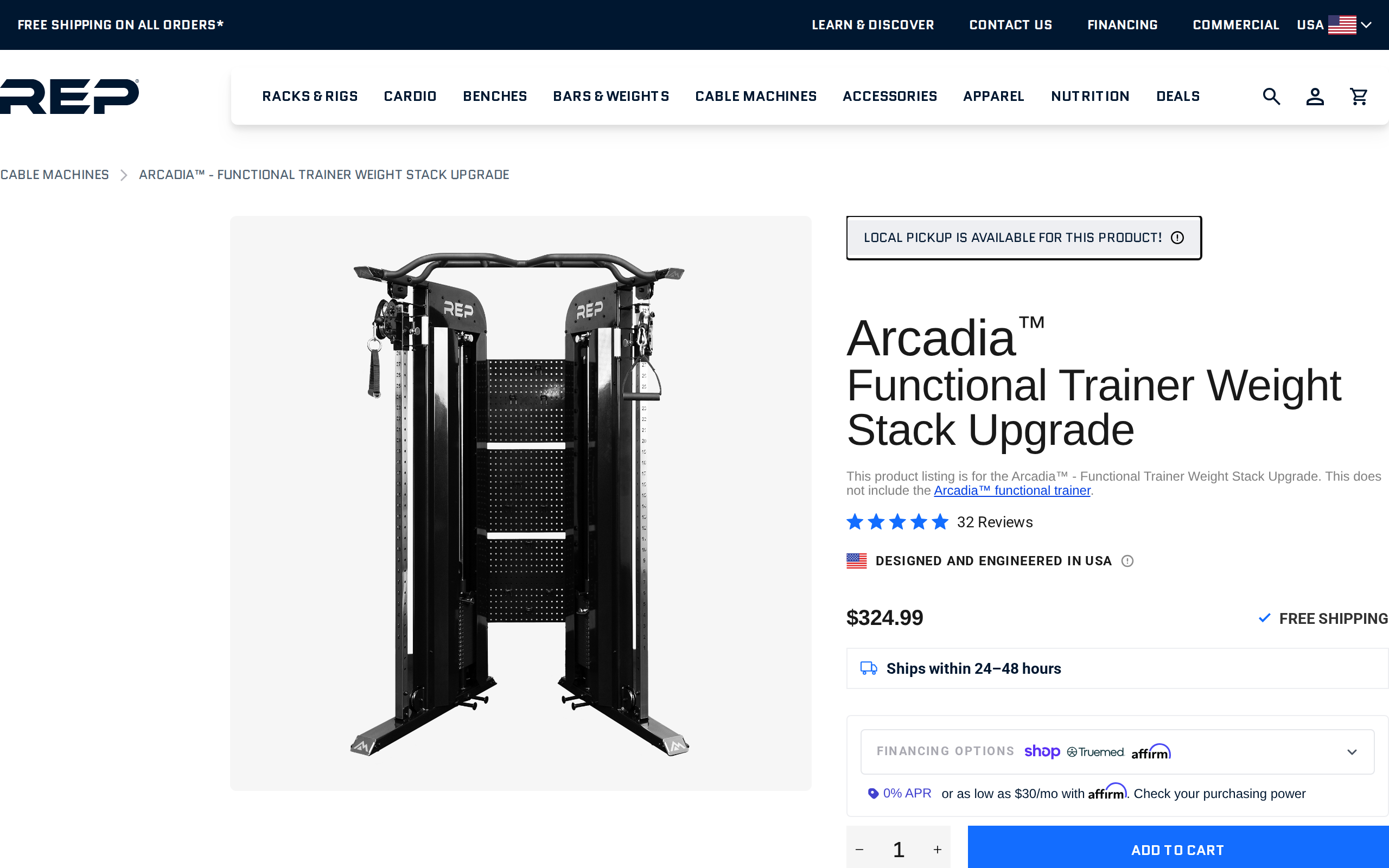
REP sells a stack upgrade to 220 lb for $324.99, which lifts the handle load to about 110 lb per side. If you are a beginner or intermediate, the standard stacks last for years. If you already row 120 lb with one arm, buy the upgrade at the start or consider the larger Arcadia Max at $2,699.99.
The stack upgrade page: moving from 170 lb to 220 lb stacks costs $324.99.
How it feels, according to people who tested it
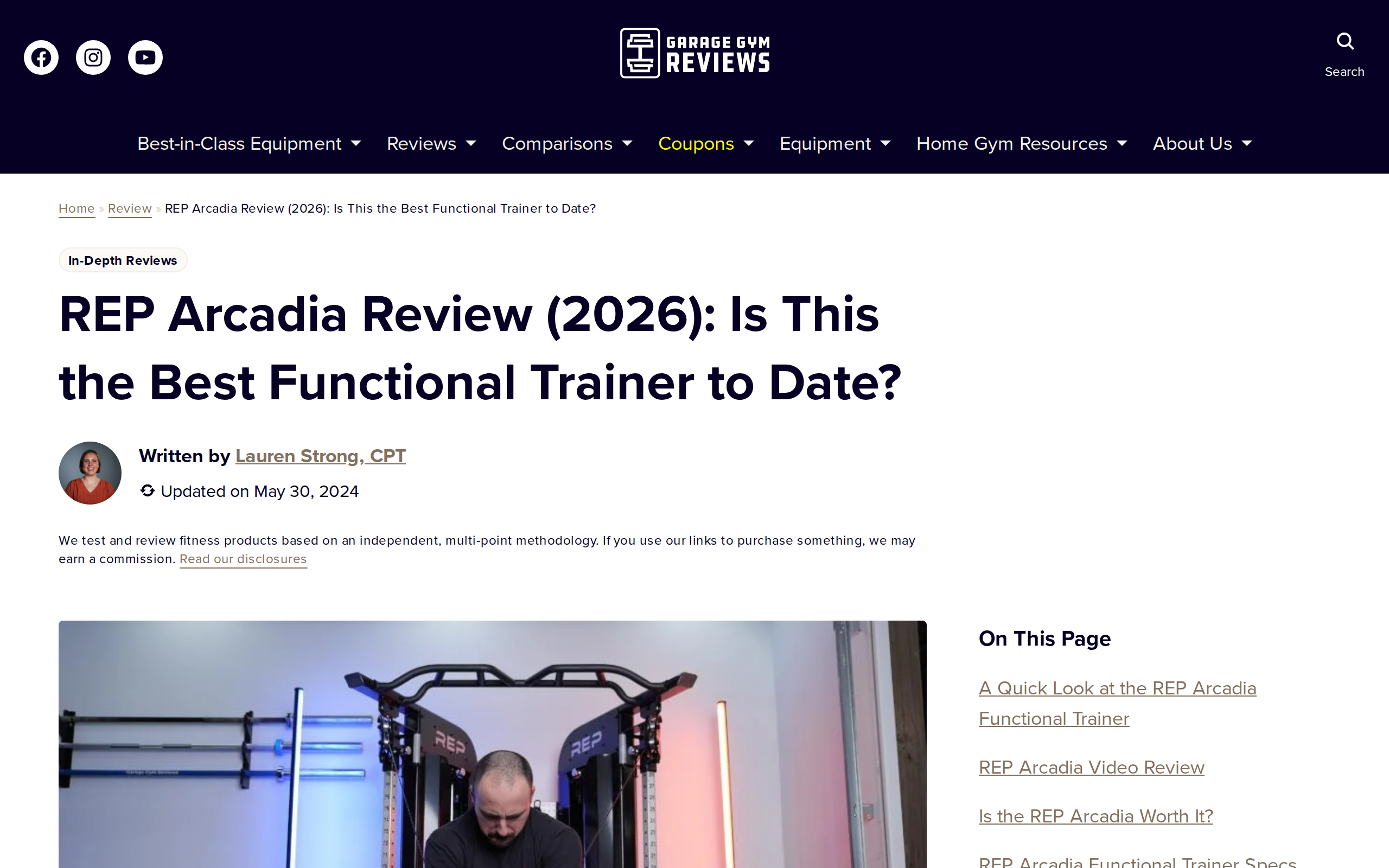
Garage Gym Reviews gave the Arcadia 4.6 out of 5, with 5 out of 5 for smoothness, stability, versatility and value. Its tester described the cables as aluminium pulleys on brass bushings with no sticking points and called the feel "I Can't Believe It's Not Butter". Smooth cables matter more than they sound: they are the difference between a machine you enjoy and one you tolerate.
Garage Gym Reviews' Arcadia review: a lifter performing a chest fly on the trainer.
The same review gives the footprint as 35.8 by 55.3 inches, with a height of 80.8 inches, which is shorter than most racks and fits under many basement ceilings. Assembly took about four hours with two people, and the unit ships by freight in a single crate, so clear a path.
Where a rack still wins
This is not a squat station. You cannot load a barbell, bench press safely or unrack a heavy bar from it. If your goal is a heavy squat or a bench press, buy a rack and bench instead.
The other limit is room to move. There are 42 inches between the uprights, and that is tight for crossovers with a long stride or for tall lifters. Wider machines exist, but they cost more and take more floor.
What else you will spend
The box includes only two D-handles. A lat bar, a rope, ankle straps and a short bar are what turn a trainer into a full gym, and they are extra. REP says the Arcadia takes all of its functional trainer attachments, so budget a few hundred dollars. A bench is worth adding, since many of the best moves, including seated rows and flys, are better with one.
Floors are the other cost. Two weight stacks add up to a heavy machine, so it should stand on a firm, level surface. A mat under it protects the floor and quiets the plates.
Buying advice
At $2,199.99 with free shipping, the Arcadia is not cheap. A comparable setup of rack, bench, barbell and plates costs less, but it will not give you the same variety of cable work. If you prefer pulling to pushing, or want a gym your family can use without learning barbell technique, the Arcadia is the better buy.
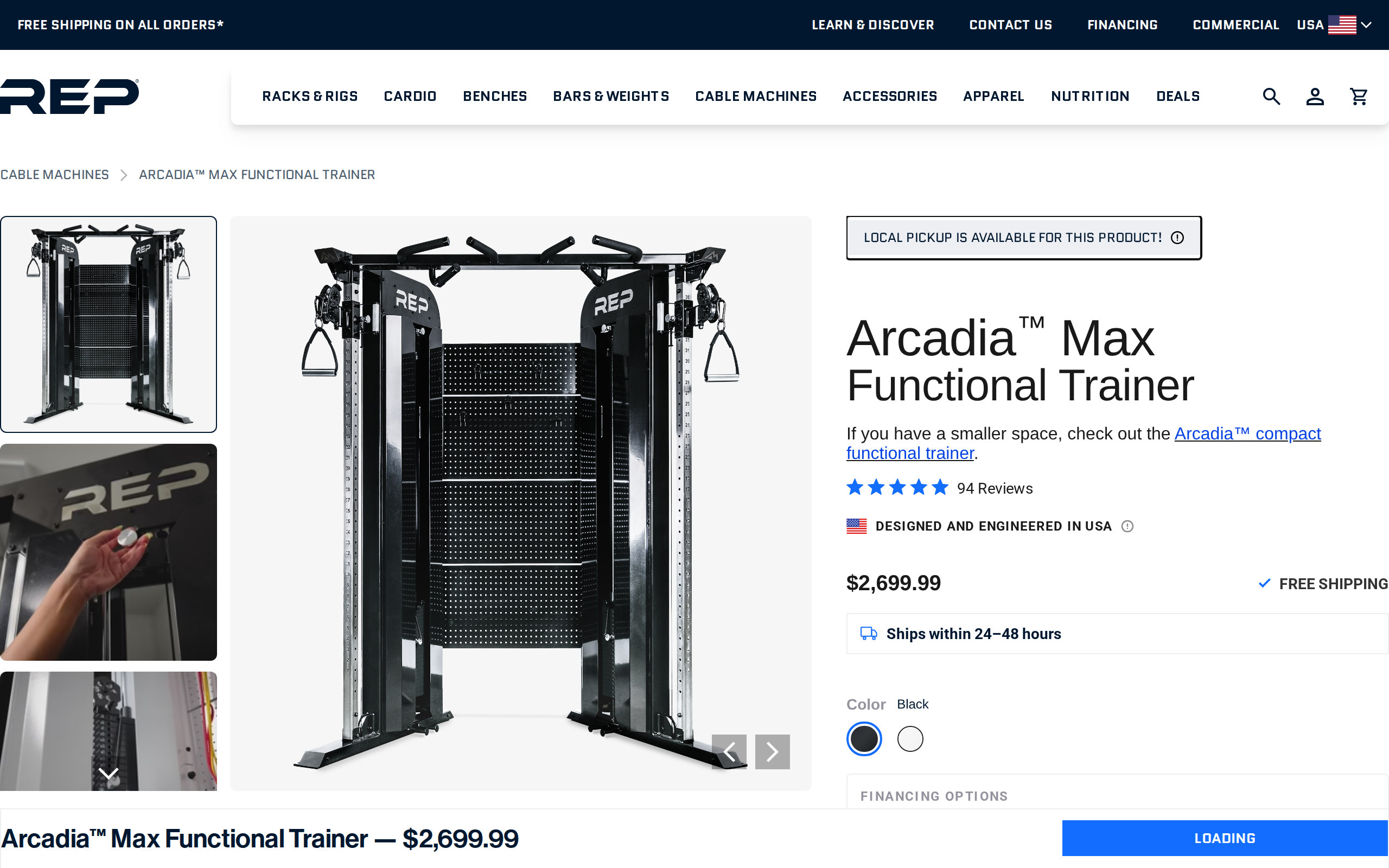
Compare it with the Arcadia Max if you are tall, strong or sharing the machine with someone who lifts heavy.
The larger Arcadia Max at $2,699.99; REP's page points smaller spaces back to the compact Arcadia.
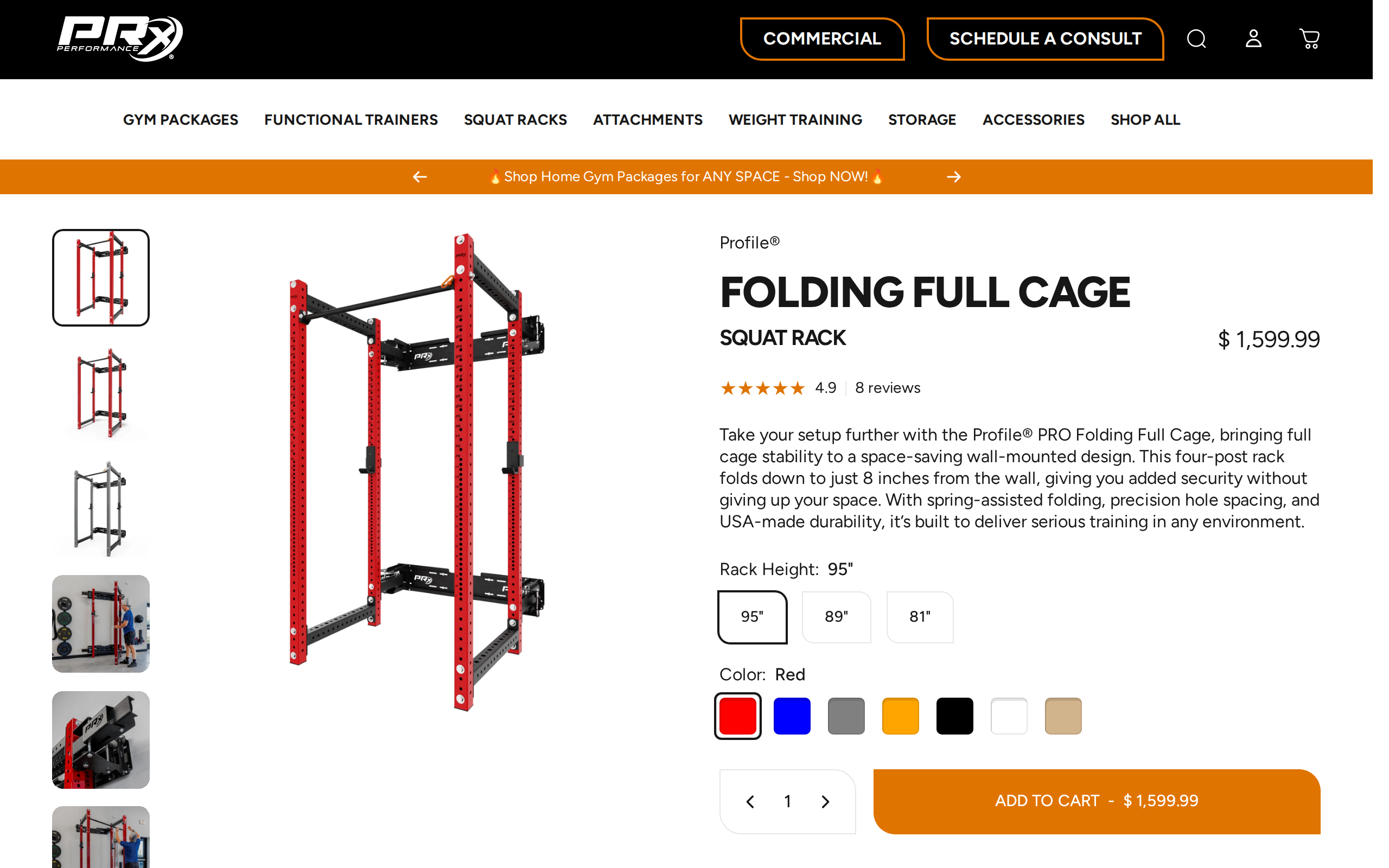
The Profile Folding Full Cage is the best answer we found for a lifter who needs four posts and a car-ready floor. It is stable, made in the USA and folds to 12 in from the wall. The price is the catch: $1,599.99 before safeties, a stud-mounted install and a ceiling of 86 in or more. If the car stays outside, buy a fixed rack for far less.