REP AB-3000 2.0 Bench Review: The First Adjustable Bench to Buy, Gap and All
By The Ironnook Test Desk ·
8.4
repfitness.com
The verdict
The AB-3000 2.0 is the adjustable bench most home gyms should buy first. It is built from 11-gauge steel, rated to 1,000 lb, and offers decline, flat and incline up to 85 degrees for $349.99. The cost is a gap of about 2 inches between seat and back pad, a handle without knurling and no way to stand it upright.
Best for: Home lifters wanting one sturdy flat, incline and decline bench
What we liked
11-gauge steel frame with a 1,000 lb capacity for $349.99
Eight back angles from -12 to 85 degrees cover decline through shoulder press
Squared 36 inch back pad also works as a flat bench on its own
Five seat angles and a six-position leg roller fit different body sizes
Rubber base covers and a wide rear base protect floors and add stability
What could be better
About 2.1 inches of gap between the seat and back pad
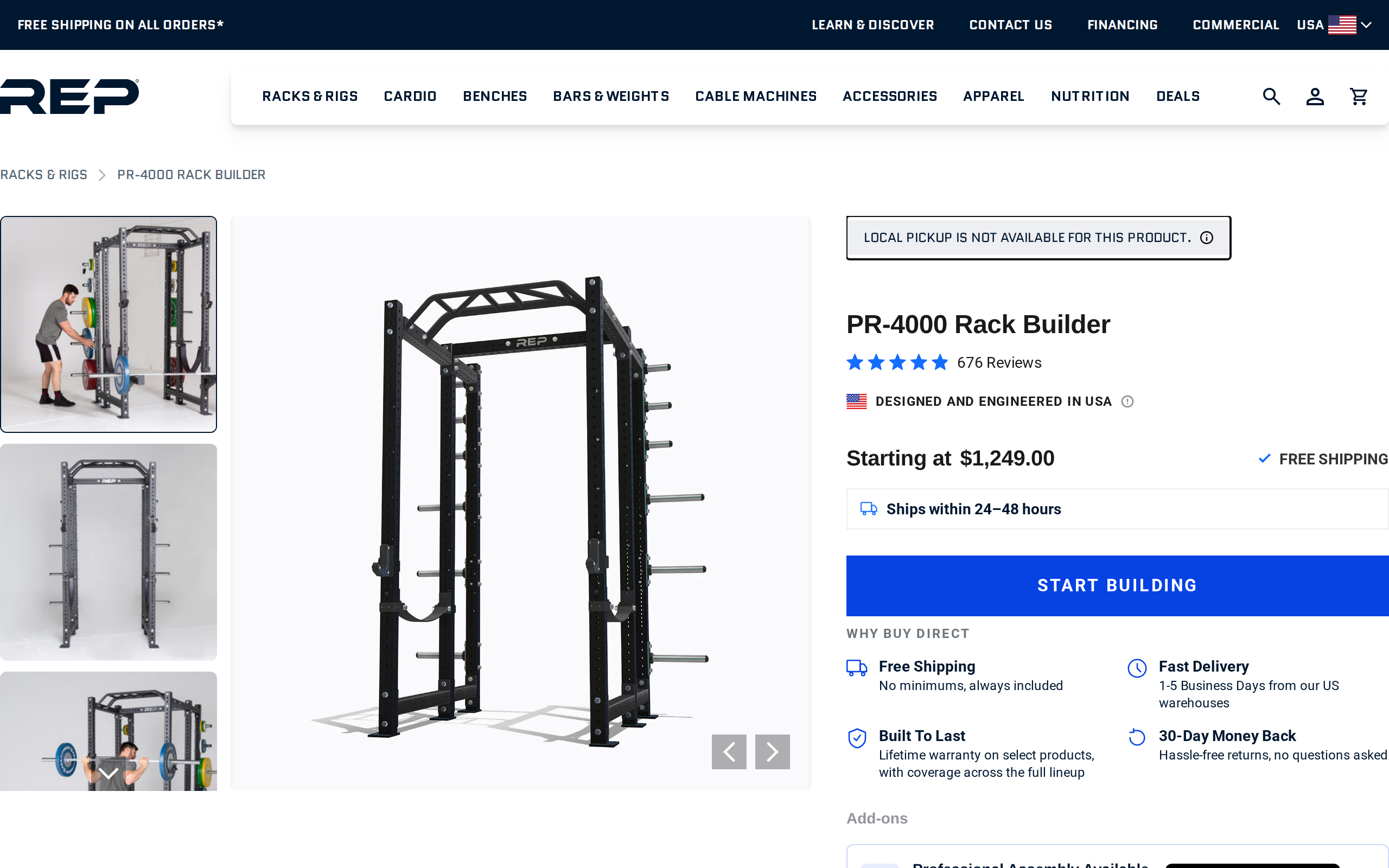
The PR-4000 is the rack we point most garage gym builders to. It uses the same 3 by 3 inch, 11-gauge steel and 5/8 inch hardware as the premium names, adds 1 inch Westside spacing through the bench zone, and costs less than a comparable Rogue. The trade-offs are a hammertone finish that is not perfectly smooth, numbering on one side only, and a four-post build that must be bolted down. Choose the PR-5000 only if you want 1 inch holes everywhere.
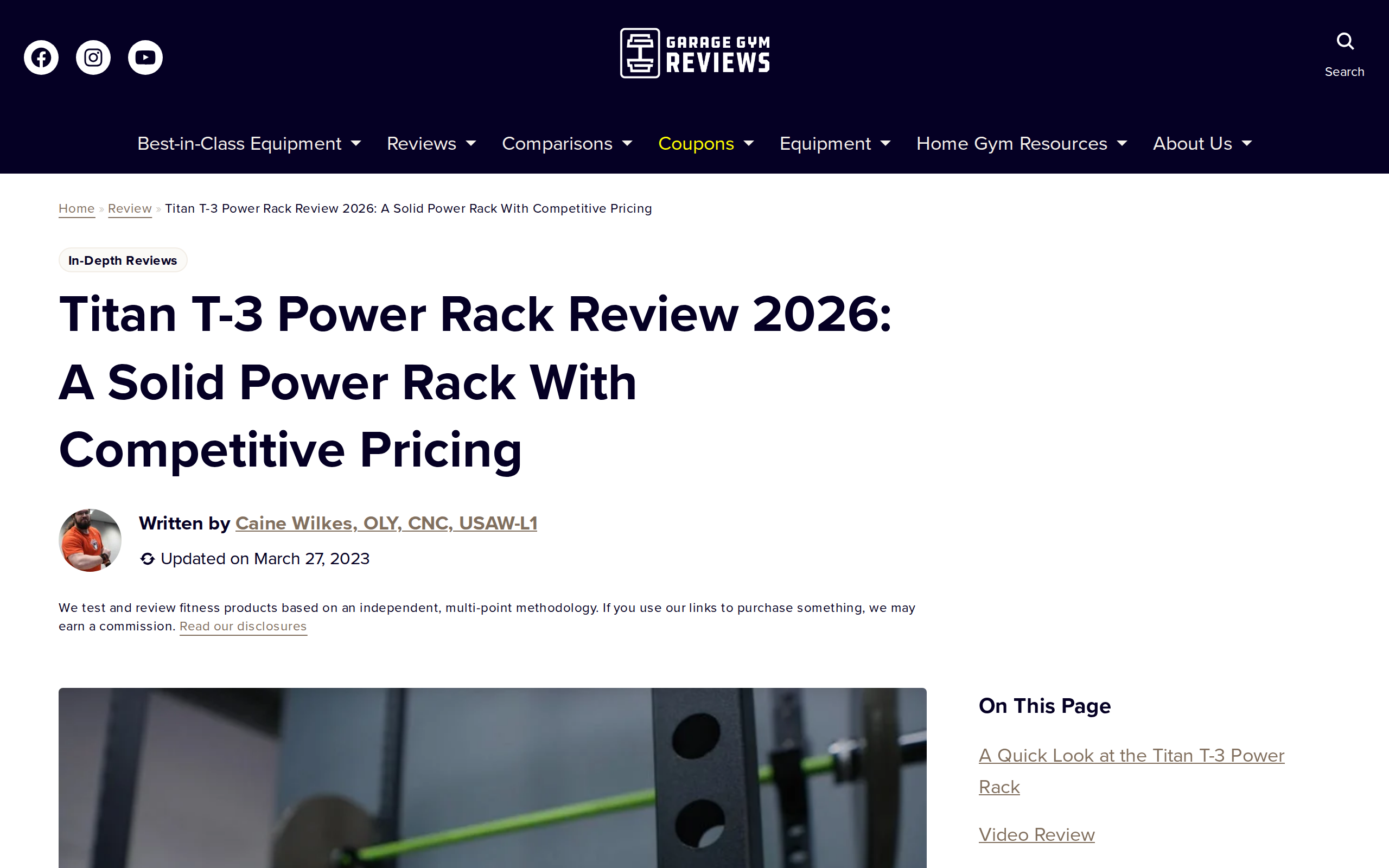
The T-3 is the budget power rack most home lifters should buy. The 2x3 inch, 11-gauge uprights, Westside hole spacing, 1,100 lb bar capacity and two pull-up bars are what a $700 rack gives you at around $520 on sale. The J-cups are average, the bolts are ordinary, the holes are not numbered and the warranty is only one year. Buy it if price decides. Pay more for a REP rack if finish and long-term support matter.
7.9From $519.97
Weighs 89.3 lb and cannot be stored on its end
Handle has no knurling and gets slippery when sweaty
Seat pad reversal means partly taking the bench apart
Back pad is 11.8 inches wide, narrower than premium benches
At $349.99 the AB-3000 2.0 has 11-gauge steel, a 1,000 lb rating and eight back angles from -12 to 85 degrees. The trade is a 2 inch seat gap and no vertical storage.
A bench is the piece of home-gym kit you use on almost every upper-body day, so the cheap one that wobbles costs you more than the money saved. The REP AB-3000 2.0 sits at a price where wobble is usually the trade. Here it mostly is not.
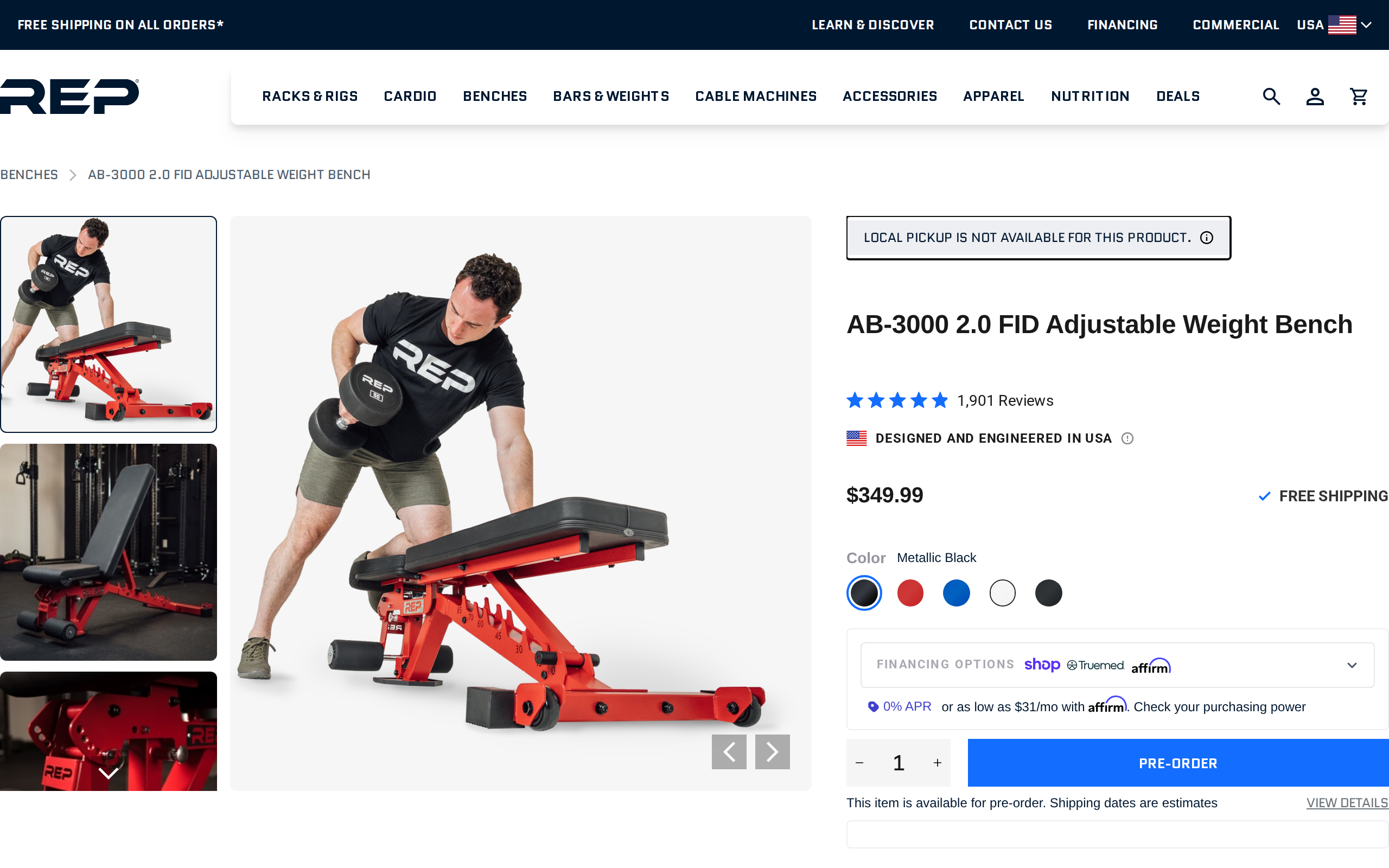
What you get for $349.99
REP's product page lists the bench at $349.99, with a 1,000 lb capacity and an 11-gauge steel frame. It weighs 89.3 lb and measures 56.6 inches long, 25.8 wide and 17.1 tall. That weight matters. A 90 lb bench does not scoot when you shove a dumbbell onto your knee.
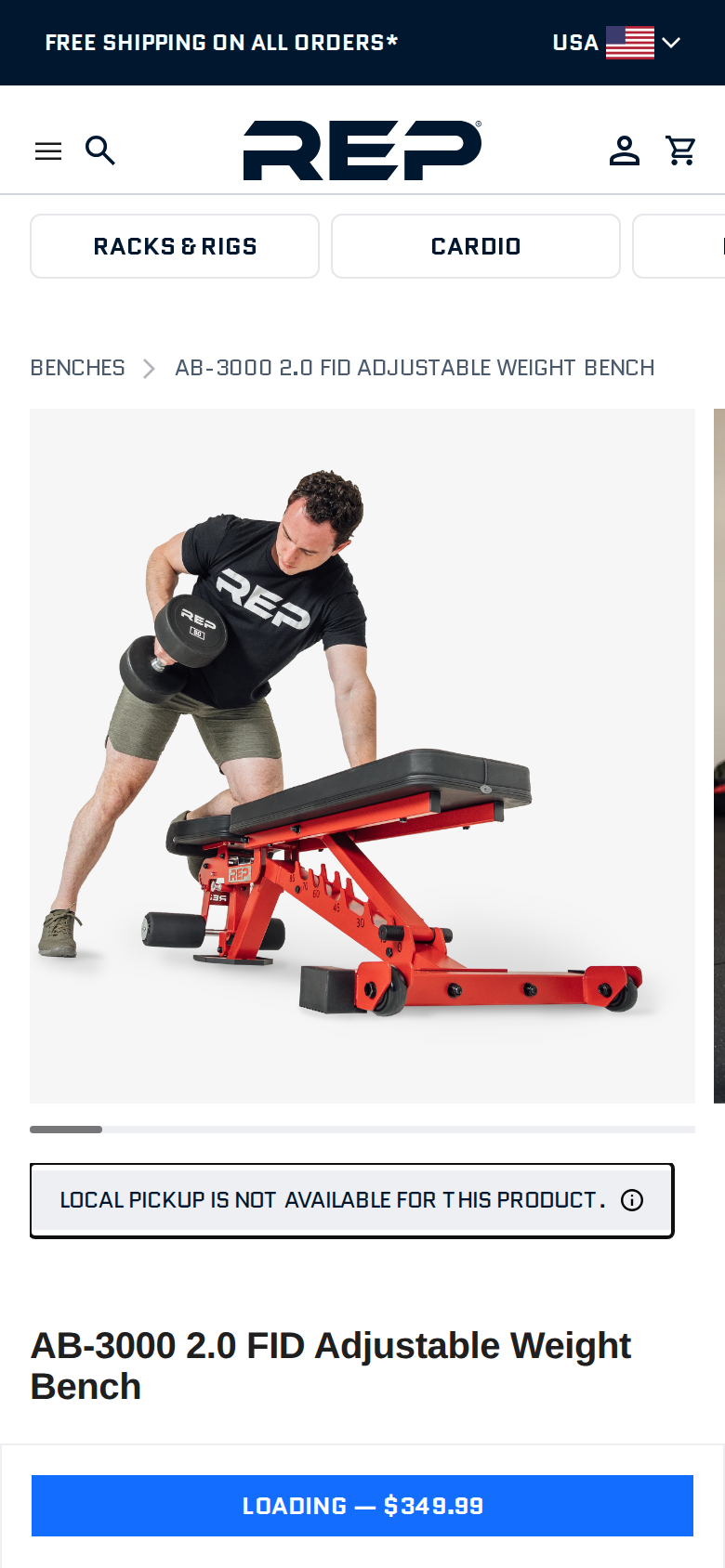
The AB-3000 2.0 listing on a phone, with the $349.99 price and the metallic black and red colour options.
The 2.0 replaced the original with a few changes REP spells out in its own comparison guide: eight back angles instead of seven, a squared-off back pad, a wider rear base, a horizontal leg-attachment bar and rubber covers on the feet.
Eight angles, and which ones you will use
The back pad locks at -12, 0, 15, 30, 45, 60, 70 and 85 degrees. The seat has five positions from flat to 20 degrees, and the leg roller has six.
In practice, three settings do the work. Flat for presses and rows, 30 or 45 for incline dumbbell work, 85 for seated shoulder presses. The -12 decline is the rarest, and its presence is what makes this an FID bench, short for flat, incline, decline. Most buyers use it for decline sit-ups or a few sets of decline press and then forget it.
The 70 degree notch is useful in a way people miss: it is a steep incline that sits between a 60 degree press and a full upright seat, so you can tune a shoulder press to what your joints tolerate.
The gap, honestly
Every adjustable bench trades a seat hinge for something. On this one it is a gap of about 2.1 inches between the seat and the back pad, a figure from Gymcrafter's measurements. Garage Gym Reviews found similar gaps of 1.5 to 3 inches on most REP adjustable models, with only the $600 AB-5000 Zero Gap closing it.
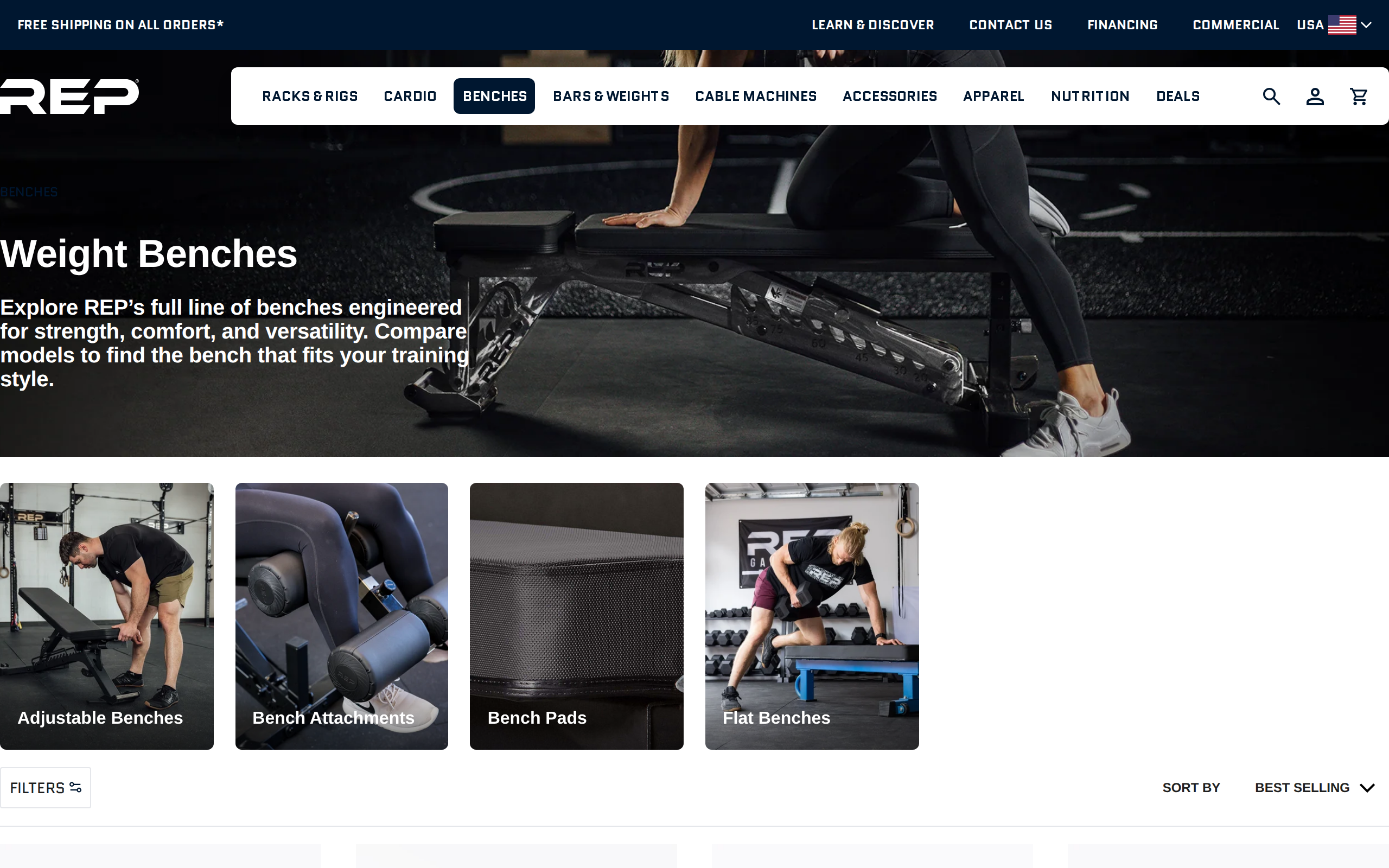
REP's bench category page, where the AB-3000 2.0 sits among the adjustable models.
Does it matter? The back pad is a rectangle about 36 inches long. Lie on it for a bench press and your upper back, not your hips, is on the pad, so you rarely notice the gap. It bites on incline work, where your hips slide toward it. If you are tall, you will feel the seat end sooner than you want.
Where the money is saved
Three things show the price. The handle on the adjustment ladder has no knurling and is slippery with sweaty hands. The back pad is 11.8 inches wide, a little narrower than the 12 inches of REP's pricier benches. And swapping the reversible seat pad needs a part-disassembly.
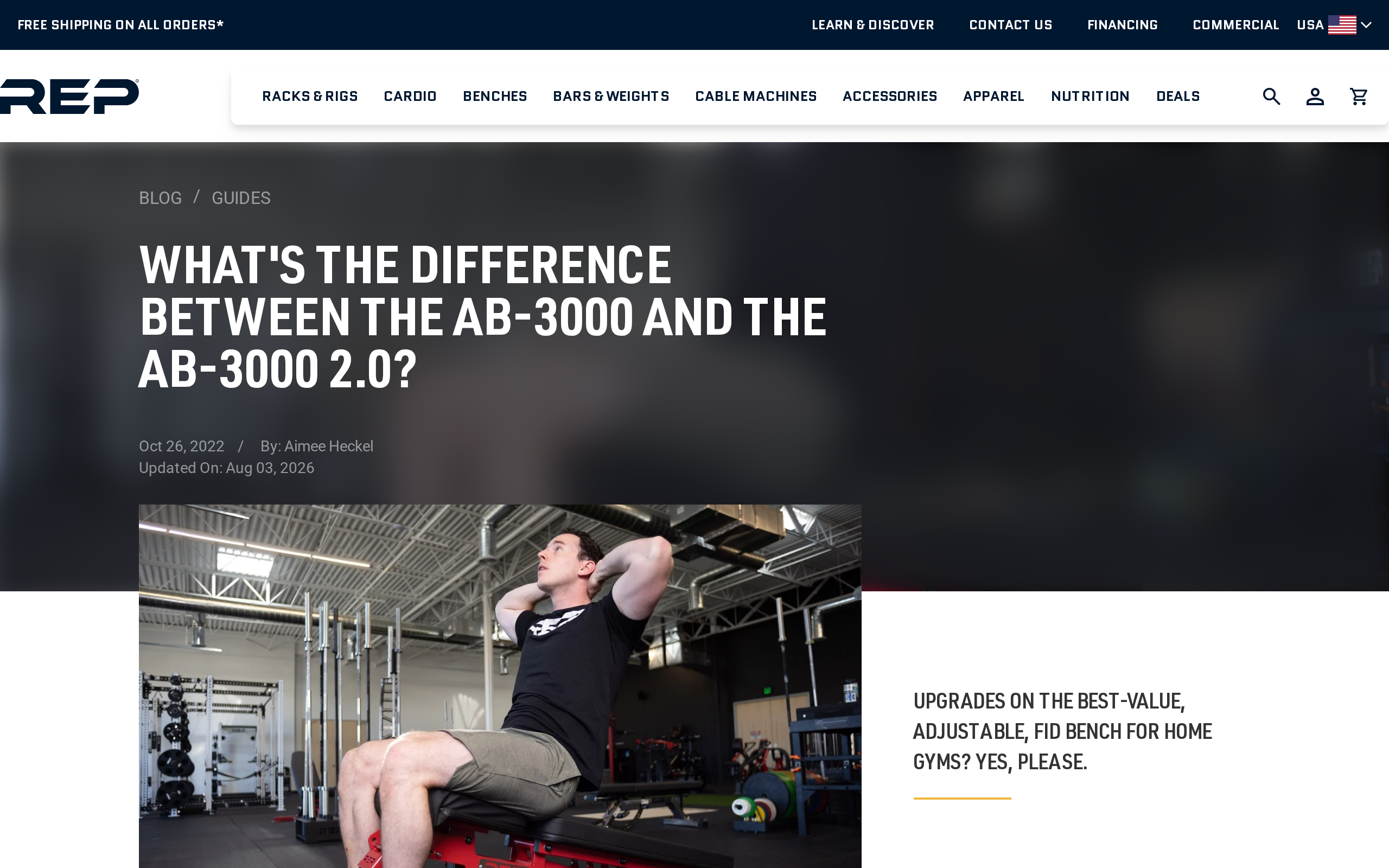
REP's guide to the differences between the original AB-3000 and the 2.0.
REP's page says this bench cannot be stored vertically. If your garage space is tight, that is a real cost, because it has to lie flat or sit against a wall on its long side.
The cheaper and dearer benches around it
The rivals are easy to name. Gymcrafter calls the Get Rx'd FIDB-300, at about $249, the budget alternative, and places the AB-3000 2.0 ahead of the Titan Elite, Bells of Steel FID 3.0 and Fringe Sport benches it was compared against. Going the other way, Rogue's adjustable benches cost roughly three times as much, which buys US manufacture and a smaller gap rather than a benefit most home lifters will feel.
That is the whole case for this bench. The $100 you might save on a budget FID buys thinner steel and a lower rating. The $250 you would add for a premium bench buys polish. The AB-3000 2.0 sits where the extra money stops buying much.
One practical note: with the rubber base covers, the bench is kinder to a garage floor or a rubber mat than the first AB-3000 was. Mark your favourite pin positions with a bit of tape and the setup between lifts takes seconds.
Who should buy it, and who should step up
Buy the AB-3000 2.0 if this is your first adjustable bench, if you press up to a few hundred pounds, or if you share a rack with a partner of a different height. It is the bench we would send most readers to, and it pairs naturally with a rack like the REP PR-4000.
Step up to the AB-5200 or the Zero Gap if you are tall, if you press on a steep incline often, or if you care about the gap. Step down to a flat FB-3000 at about $150 if you never use incline.
For the money, we cannot find a sturdier adjustable bench. It is not perfect, and it does not pretend to be.
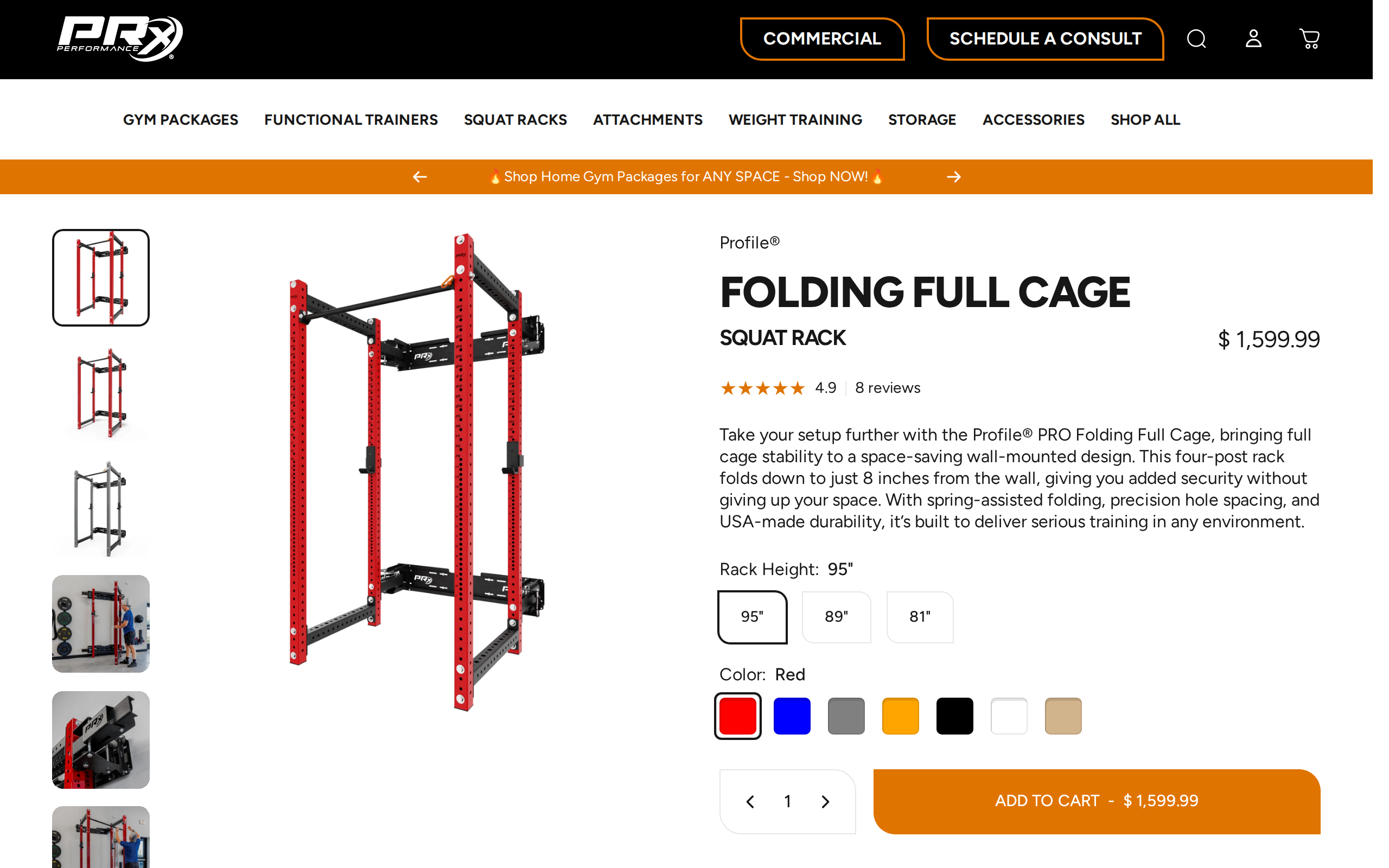
The Profile Folding Full Cage is the best answer we found for a lifter who needs four posts and a car-ready floor. It is stable, made in the USA and folds to 12 in from the wall. The price is the catch: $1,599.99 before safeties, a stud-mounted install and a ceiling of 86 in or more. If the car stays outside, buy a fixed rack for far less.