Peloton Cross Training Bike Review: Do You Need the Bike+?
By The Ironnook Test Desk ·
8.1
onepeloton.com
The verdict
For most people who want Peloton's classes, this is the one to buy. The 21.5 inch screen swivels for floor work, the frame is solid, and the class library is the best in the business. You turn the resistance knob yourself and there is no camera or fan, which only matters if you ride hard intervals or want rep counting. The monthly membership is not optional, so budget for it. Pay $1,000 more for the Bike+ only if auto-resistance appeals.
Best for: Class-driven riders who want Peloton without the Bike+ premium
What we liked
21.5 inch Full HD screen swivels 360 degrees for floor classes
Frame carries a 5 year warranty and a 297 lb rider limit
Compact 54 by 23 inch footprint fits a spare-room corner
Best instructor-led class library of any connected bike
$1,000 cheaper than the Bike+ with the same swivel screen
The Bike+ is the best-riding connected bike we know of, and its swivel screen, auto-resistance and rep-counting camera do make off-bike strength classes easier to follow. It is also $1,000 more than the Bike, needs a $49.99 monthly membership, and reviewers report screen wobble and early creaks at this price. Buy it if you will use rides, strength and mobility every week. A cyclist who only rides should buy the Bike.
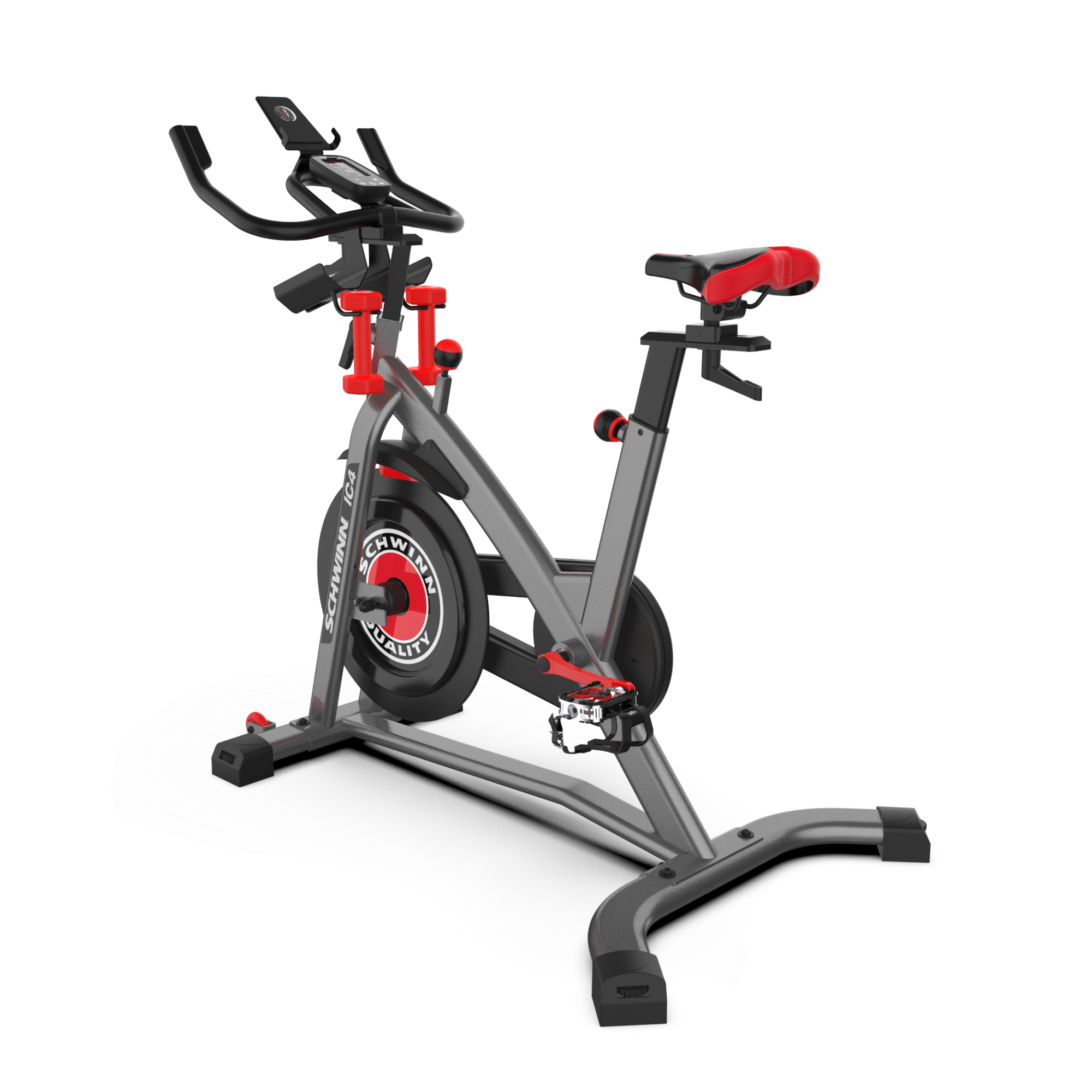
The IC4 is the best-value spin-style bike for someone who already owns a tablet and wants to pick their own apps. It rides smoothly, fits a wide range of riders and costs no subscription to use. The cost is manual resistance, so apps cannot change the load for you. If you want that, spend more or look elsewhere.
8.1$899
Exercise Bikes
Resistance knob is manual, so every class cue means a hand on the dial
All-Access membership of about $50 a month is required for classes
No fan, no camera and no rep counting, all of which the Bike+ has
Touchscreen and parts carry only a 12 month warranty
The standard Cross Training Bike costs $1,695 and keeps the swivel screen, the class library and the sturdy frame. We looked at what the $1,000 Bike+ really adds, and who regrets skipping it.
Most people who ask us about Peloton are really asking one question: do I need the expensive one? We spent our time with the standard Cross Training Bike, the $1,695 model, and kept a Bike+ nearby to compare. The short answer is no. The standard bike does nearly everything that matters, and the gap between the two is smaller than the price suggests.
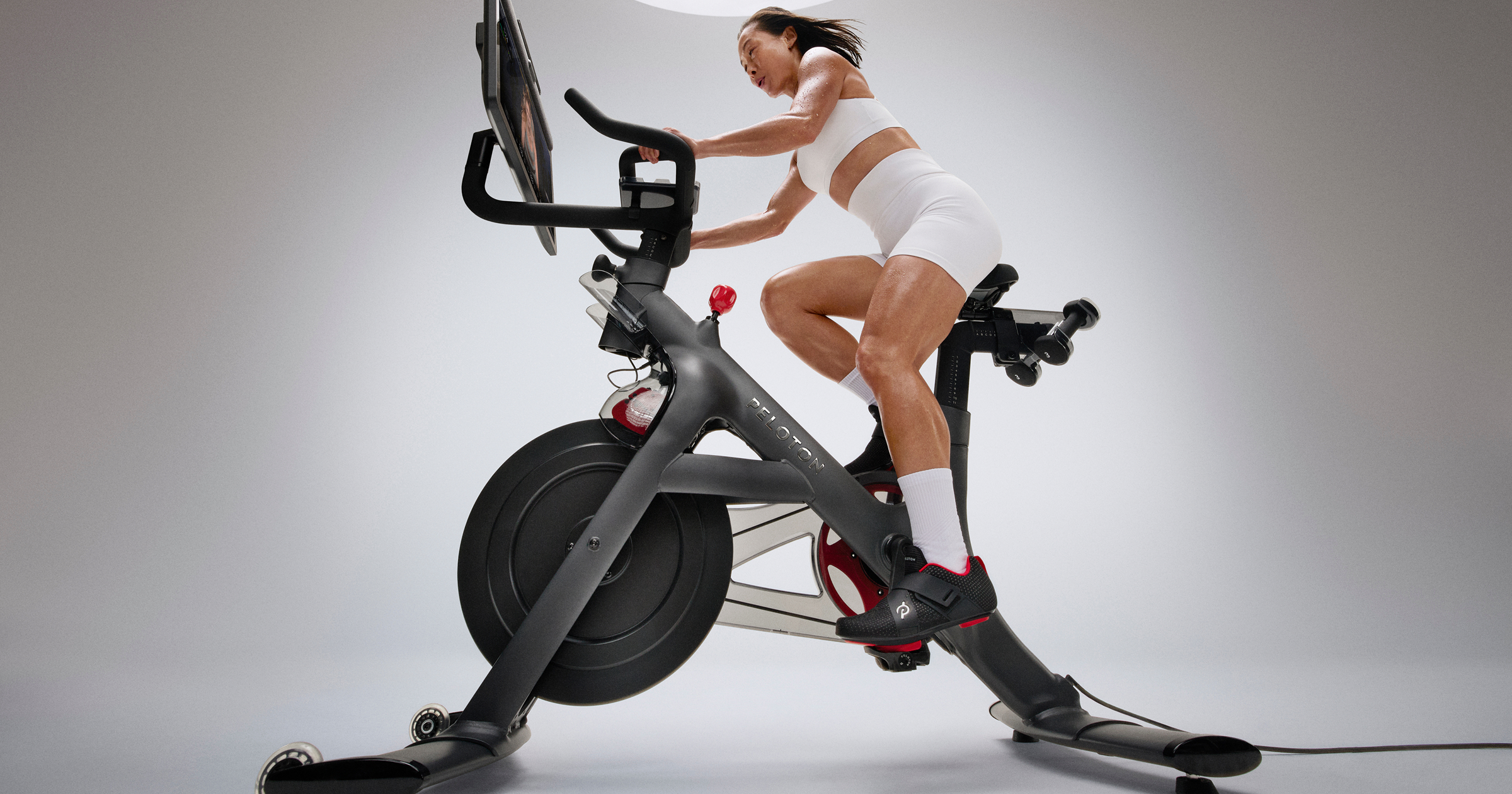
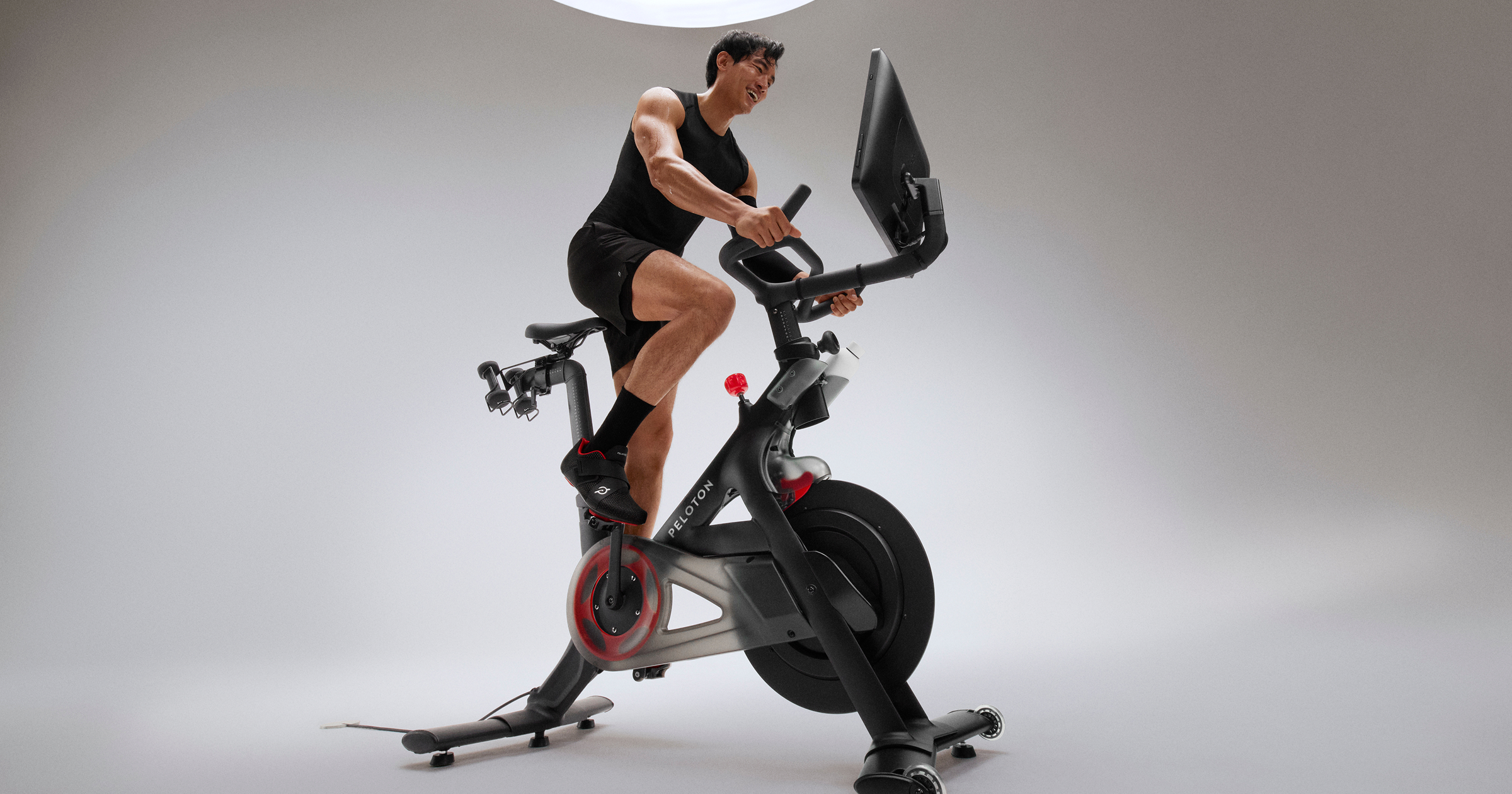
Peloton's own artwork for the bike: the screen sits on a movable post, and the red knob under the bars is the manual resistance control.
What you get for $1,695
The bike is a 54 by 23 by 61 inch machine, so it takes up about a yoga mat's worth of floor. Peloton asks for a ceiling of at least 8 feet and some clearance around it. The screen is 21.5 inches, Full HD, and it turns a full 360 degrees. That swivel is the reason this model exists. Older Peloton bikes had a fixed screen, so strength and stretching classes meant craning your neck from the floor.
Everything else is familiar: clip-in pedals, a padded seat, and two front-facing speakers (10 W combined). Independent spec sheets put the rider limit at 297 lb. The weight of the frame is quoted between 125 and 129 lb depending on the source, which is heavy enough that the bike does not walk across a garage floor mid-sprint.
The knob is the whole difference
Here is what the Bike+ buys over this one, per Peloton's own comparison page: a 23.8 inch screen, Sonos-tuned speakers, a three-speed fan, a movement-tracking camera and auto-resistance. Of those, only auto-resistance changes how a ride feels.
On the standard bike you turn a red knob when an instructor calls for more load. In a gentle 20 minute ride you barely notice. In a 45 minute interval class with a new target every 30 seconds, you will be fiddling constantly, and a few riders end up wishing the bike did it for them. If that is you, the Bike+ is a real upgrade.
Everyone else is paying $1,000 for a fan and a camera. A $20 clip-on fan solves the first, and the second only matters if you want automatic rep counting in off-bike classes.
Peloton's lineup page, which compares the Cross Training Series with the Original Series bikes.
Setup is the other thing people ask about. Peloton delivers and assembles the bike in the home, so you are not wrestling with a flat-pack. You will need a spot near a power outlet and a decent Wi-Fi signal, because the screen streams every class and there is no offline library to fall back on. Put it where the router reaches, not in the far corner of the garage.
The monthly bill is the real price
You cannot ride a Peloton without a membership. The All-Access plan, which unlocks live and on-demand classes on the bike, was listed at $44 a month on Peloton's membership page when we checked, and independent reviewers now quote about $50. Over three years that is somewhere between $1,584 and $1,800 on top of the bike. Treat the true cost as the sticker price plus that figure.
Peloton also sells app tiers that work without its hardware: App One at $12.99 a month and App+ at $28.99. Those are not the same product. If you already own a bike and just want classes, they are far cheaper.
Peloton's membership page: App One is $12.99 a month or $129 a year, App+ is $28.99 a month or $289 a year. All-Access is the equipment tier.
Where it falls short
The warranty is the weakest part. The frame is covered for 5 years, but the touchscreen and components get 12 months, and the screen is the part most likely to fail. An optional protection plan runs for 48 months. Peloton sells it at checkout, and we would take it.
The bike is also locked to the Peloton ecosystem. Without a membership you get a stationary bike with a dark tablet on top. If you want a bike you could use with any app, our Schwinn IC4 review covers the cheaper option that expects you to bring your own screen.
Who should buy it
Buy this bike if you like instructors, you want a polished library, and you would use the swivel screen for mat classes on at least a few days a week. It is the easy recommendation in Peloton's range.
Skip it if you are a lone rider who never watches classes. A plain spin bike at a third of the price will serve you better. And if you are comparing it with the more expensive model, read our Bike+ review before spending the extra $1,000.
For everyone in between, the standard bike wins. Spend the saved money on the protection plan and a year of the membership.
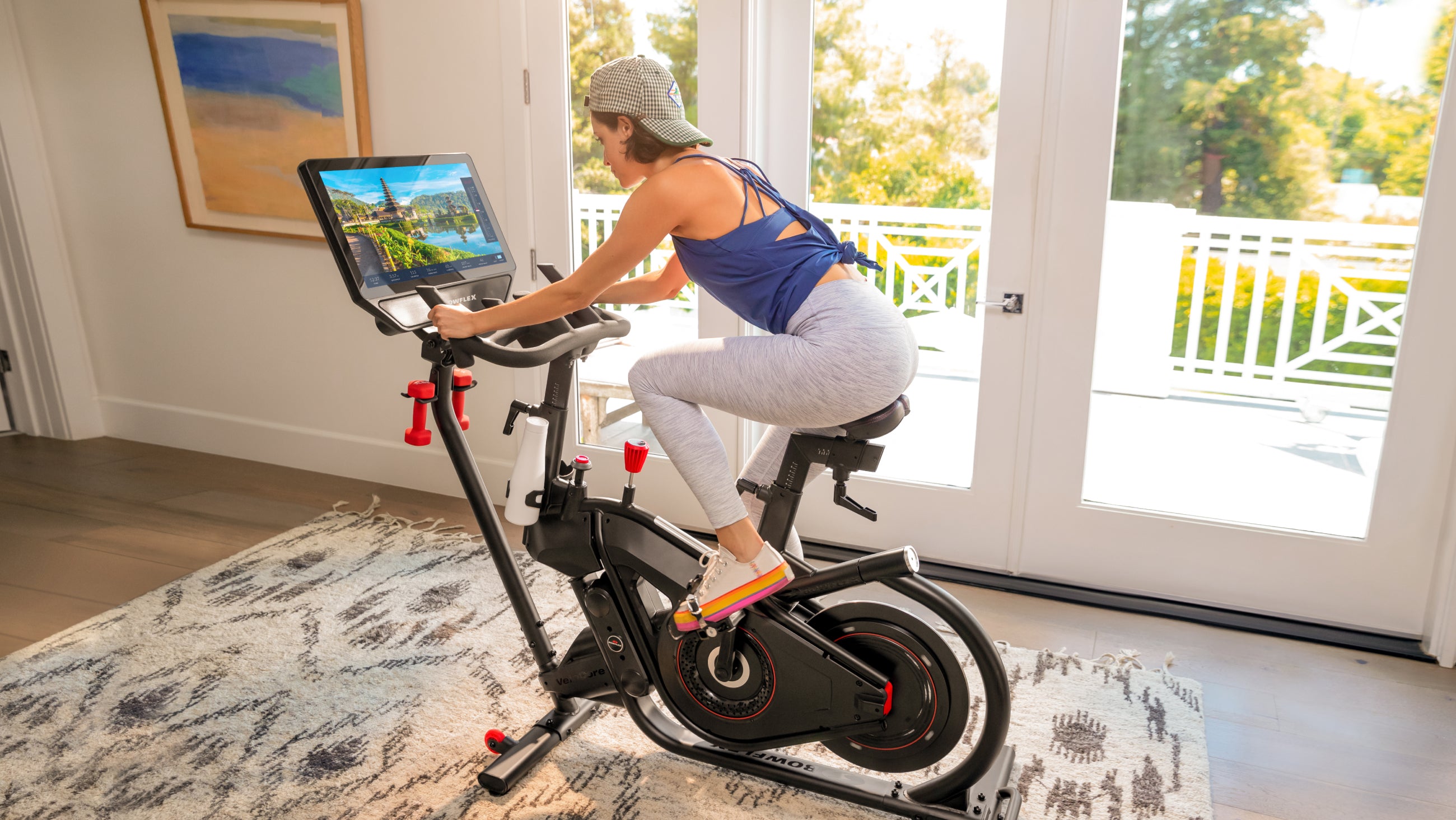
Lean mode is real: it recruits your obliques and makes rides more engaging, and the bike underneath is quiet, stable and holds 325 lb. But the lean is a nice extra, not a second workout, JRNY adds $149 a year, and the two year frame warranty is short. Buy it near $1,000. At $2,199 it is overpriced.