The short version
MetaMask is still the wallet every Ethereum app expects, and the 2025 and 2026 additions of Solana, Bitcoin and Tron make it a real multichain wallet. It also charges 0.875% on in-wallet swaps, which is the high end for the category, and its recovery options need care. Good as a connection layer to apps, poor as a place to leave savings without a hardware wallet behind it.
Best for: DeFi and NFT users who need the widest dApp compatibility
Our score: 7.0 out of 10
Pros and cons
What works
- Free browser extension and mobile app, with the largest dApp compatibility
- One recovery phrase derives EVM, Solana and Bitcoin addresses
- Pairs with Ledger, Trezor, Lattice and QR hardware wallets
- Default transaction alerts flag suspicious requests before you sign
What does not
- 0.875% service fee on swaps, on top of network costs
- Social-login accounts cannot be changed or unlinked once set
- Ledger connections only reach EVM accounts, not Bitcoin or Solana
- Phishing and drainer scams target its huge user base
Open almost any Ethereum app and the first button says "Connect MetaMask". That habit, built over years, is the product's biggest asset, and it explains why a wallet with a notable swap fee still tops usage charts. We looked at whether it deserves to be your first wallet in 2026, or just the one you keep for apps.
Where it started and where it stands
MetaMask began as an Ethereum browser extension from Consensys and has widened its reach in steps. Native Solana arrived in May 2025, Bitcoin in December 2025 and Tron in January 2026, according to one 2026 review. A single recovery phrase now derives an EVM address, a Solana address and a Bitcoin address. EVM networks include Ethereum, Base, Arbitrum, Optimism, Polygon, Avalanche and BNB Chain, plus any custom network you add.
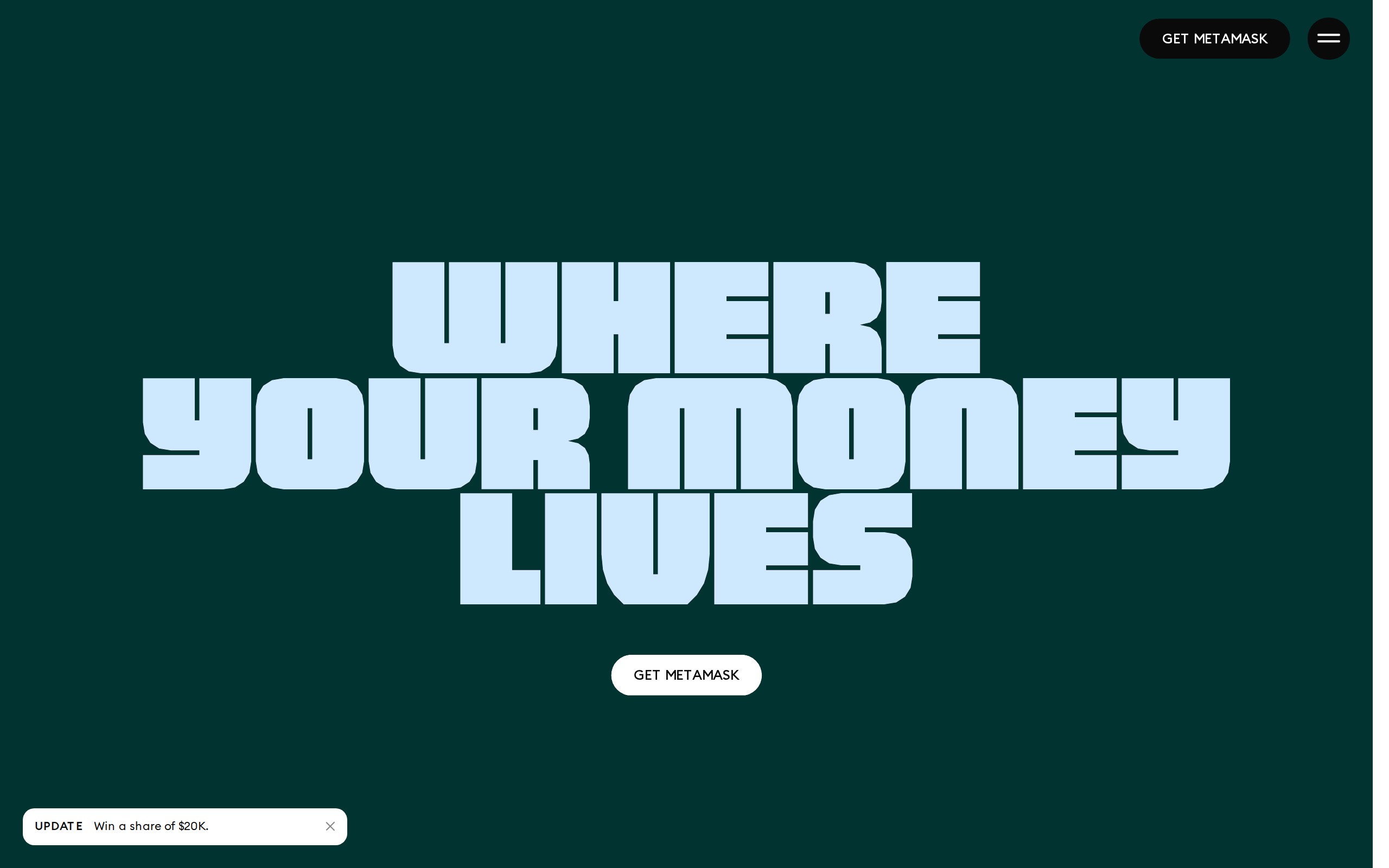
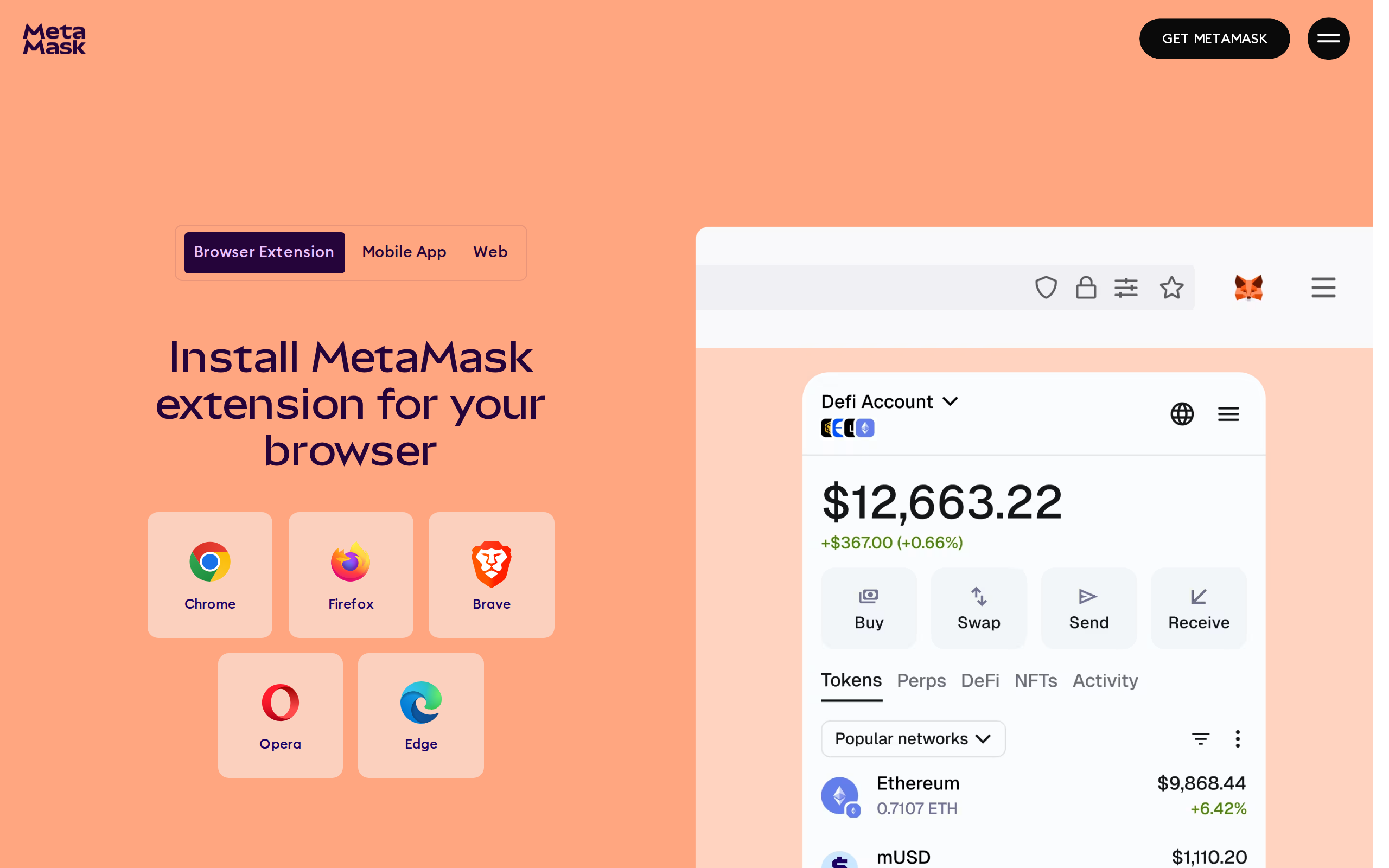
The download page is the cleanest part of the experience: pick your browser, install the extension, write down the phrase, done in minutes. Always start from metamask.io. Fake extensions and ads are a standing problem for wallets with this many users.
The 0.875% question
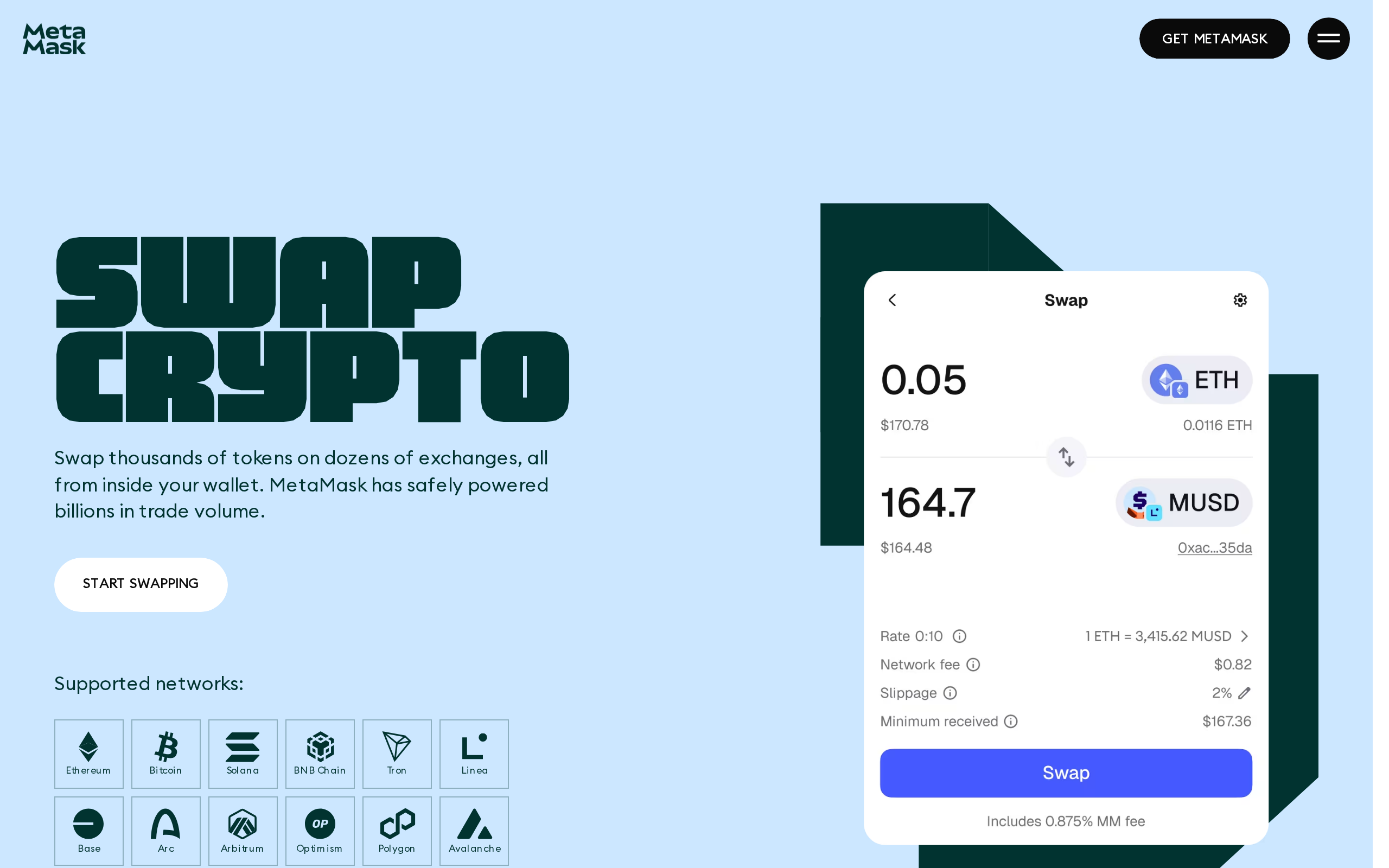
Swaps inside the wallet carry a 0.875% service fee, on top of network gas and execution costs, per CryptoSlate's review and other 2026 write-ups. On a $2,000 swap that is $17.50 before gas. MetaMask's swap page promises "thousands of tokens on dozens of exchanges" from inside the wallet, and the convenience is real. So is the price.
For comparison, a centralized exchange charges 0.10% to 0.60% for a spot trade, and a DEX aggregator used from a separate frontend often adds nothing beyond the pool fee. If you swap rarely, the premium is tolerable. If you swap often, use the wallet to connect to the app and trade there.
Security is mostly about habits
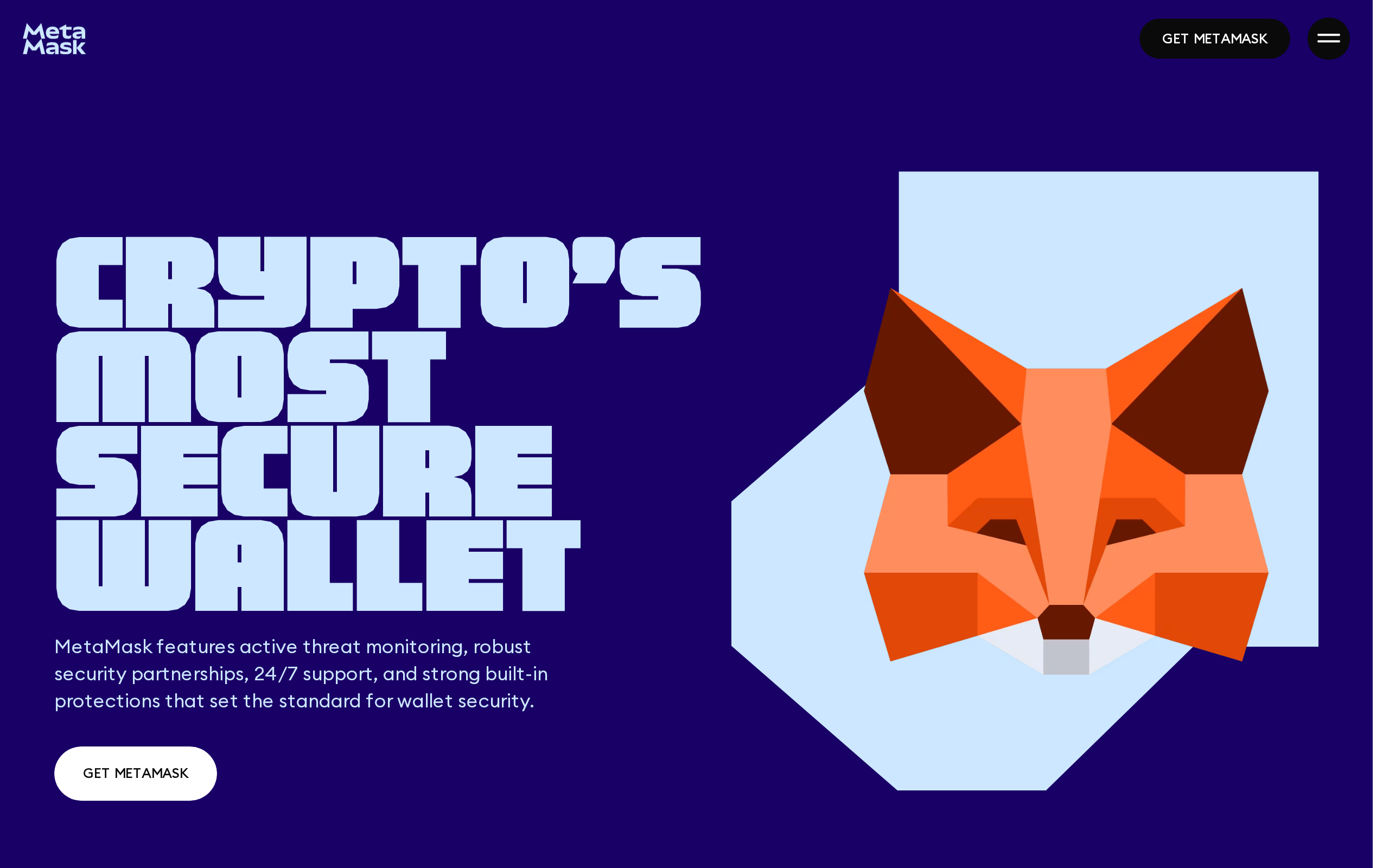
Self-custody means you hold the phrase and carry the blame. MetaMask adds transaction alerts by default, powered by Blockaid and other providers, and the security page lists active threat monitoring and 24/7 support. Those help against known bad contracts and not against a signature you approve yourself.
The record is not clean. A third-party support breach in April 2023 affected roughly 7,000 users who had submitted information, and in 2022 researchers showed that browser wallets could leave recovery material on disk under some conditions. Both are in the public reviews, and neither involved the keys of a properly set-up wallet today.
Two design edges matter. A social-login account cannot be changed or unlinked once chosen, so decide before you fund it. And pairing with a hardware wallet is possible, but Ledger connections only reach EVM accounts, not native Bitcoin or Solana, per the same review. If real money is at stake, put the keys on a Ledger or Trezor and use MetaMask as the interface.
Using it day to day
The extension asks you to approve every connection and every signature, and the habit that protects you is reading each prompt: which contract, which token, which amount, and whether an approval is unlimited. Revoke old token approvals from time to time, since an unlimited approval granted months ago is what drainer contracts look for. On mobile the same wallet runs from the same phrase, which makes recovery simple and loss of the phrase final.
Has anyone overtaken it?
The honest answer depends on the chain. Wallets built around one ecosystem, such as Solana-first or Bitcoin-first apps, can feel tighter on their home turf. Wallets that preview transactions in plain language and simulate results have narrowed the gap on safety. None of them yet matches MetaMask's default status: when a small dApp ships, it tests with MetaMask first, and that compatibility is what you are renting.
The reasons to move on are specific. You swap a lot and mind the 0.875%. You want a Bitcoin experience that goes beyond what a newly added chain offers. Or you want a wallet with built-in hardware-style protection and no browser extension. If none of those describe you, the default is fine.
Our verdict
MetaMask is the right wallet to own if you use dApps. It is the wrong place to leave a large balance, and the wrong tool for frequent swapping at 0.875%. We did not run funded transactions for this review; the assessment draws on the maker's pages and independent write-ups, so confirm the live fee in the swap screen before you trade.
A sensible shape for most users: a small hot wallet in MetaMask for apps, long-term holdings on a hardware device. This is a product opinion, not financial advice.
Specifications
- Price
- Free; swap service fee 0.875%
- Platforms
- Chrome, Firefox, Edge, Brave browser extensions; iOS and Android
- Networks
- Ethereum, Base, Arbitrum, Optimism, Polygon, Avalanche, BNB Chain, Solana, Bitcoin, Tron
- Hardware wallets
- Ledger, Trezor, Lattice, QR devices on the extension
- Custody
- Self-custody with a 12-word recovery phrase
- Security alerts
- Default-on transaction warnings via Blockaid and others
- Maker
- Consensys