Manduka PRO Lite Review: A Dense 4.7 mm Mat That Slips When You Sweat
By The Ironnook Test Desk ·
7.7
manduka.com
The verdict
A dense, stable mat that works well for yoga, stretching and floor strength work at home, and it carries a lifetime guarantee. It is pricey at $140 and gets slippery once you sweat, so hot sessions and fast circuits need a grip towel or a different mat.
Best for: Home yoga, Pilates and floor strength work done at a steady pace
What we liked
At 4.7 mm it is dense and stable on hard floors
Closed-cell surface wipes clean and does not soak up sweat
Lifetime guarantee from Manduka
About 4 lb, much lighter than the 7.5 lb PRO
Ten colours, plus a Long and Wide version for tall users
The HOME2 is the most honest small-space strength tool we know: two straps, a door anchor and no floor footprint. It builds pulling, core and single-leg strength well. It cannot load your legs heavily or train a big press. Buy it as a base, and skip the app fee after the first year if you can.
The Get Lean set is a well-made, quick-swapping pair of weighted ropes that turns a doorway-sized corner into a real conditioning station. It is also an app business: the ropes are the entry fee, and after a free 30 days the workouts cost $99 a year. If you will follow programs, buy it. If you only want to skip for ten minutes a day, a $15 speed rope does the same cardio and you should save the money.
7.6$129
$140 is a lot for a mat, and it was $99 in earlier tests
Still too heavy to be a travel mat
Thinner than the PRO, so knees feel a hard floor sooner
The PRO Lite is the 4 lb version of Manduka's heavy PRO: dense, easy to clean and guaranteed for life. At $140 it is a floor mat for steady work, not for sweaty sessions.
A home workout mat has three jobs: keep you off the floor, keep you from sliding, and stay put for years. The PRO Lite does the first and third well. The second depends on how much you sweat.
Why 4.7 mm is the interesting number
Manduka's flagship PRO is a 6 mm slab that one tester weighed at 7.5 lb. The PRO Lite cuts that to 4.7 mm and about 4 lb, which is the gap between a mat you leave rolled in the corner and a mat you will actually carry to the living room each morning.
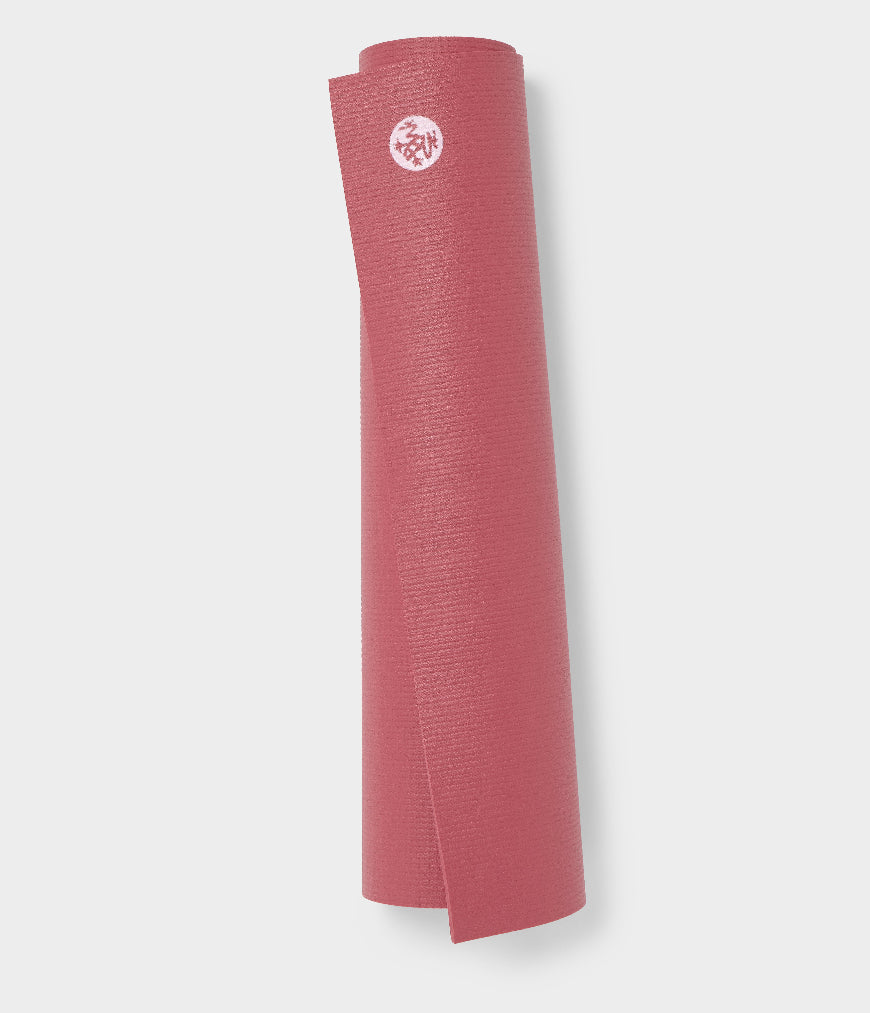
The PRO Lite in Rosewood, one of ten colours Manduka lists.
The material is high-density and closed-cell. Closed-cell means the surface does not absorb sweat or dirt, so you wipe it down instead of washing it, and it will not hold a smell. Manduka also says the mat has a lifetime guarantee, which is the best reason to pay a premium for a thing that costs $20 at a discount store.
Floor stability, the real reason to buy
Cheap mats are soft. You sink into them, and a standing balance pose turns into a wobble contest. A dense mat gives a firm, almost floor-like base, and Manduka's own wording for the PRO Lite is exactly that: floor-like stability.
That matters beyond yoga. For floor strength work (planks, dead bugs, push-ups, split squats) a firm surface lets your hands and feet push into something solid. On a hardwood or tile floor, 4.7 mm is enough cushioning for most knees, though a thicker PRO is kinder if you spend minutes in a kneeling lunge.
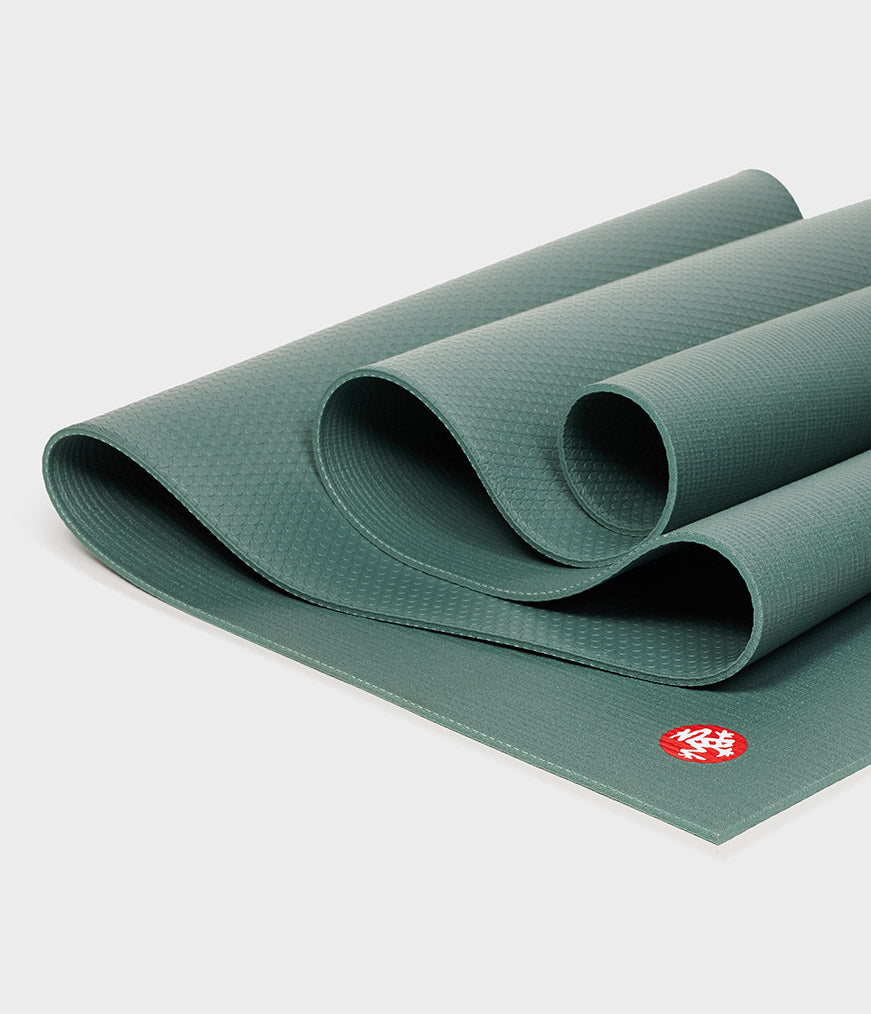
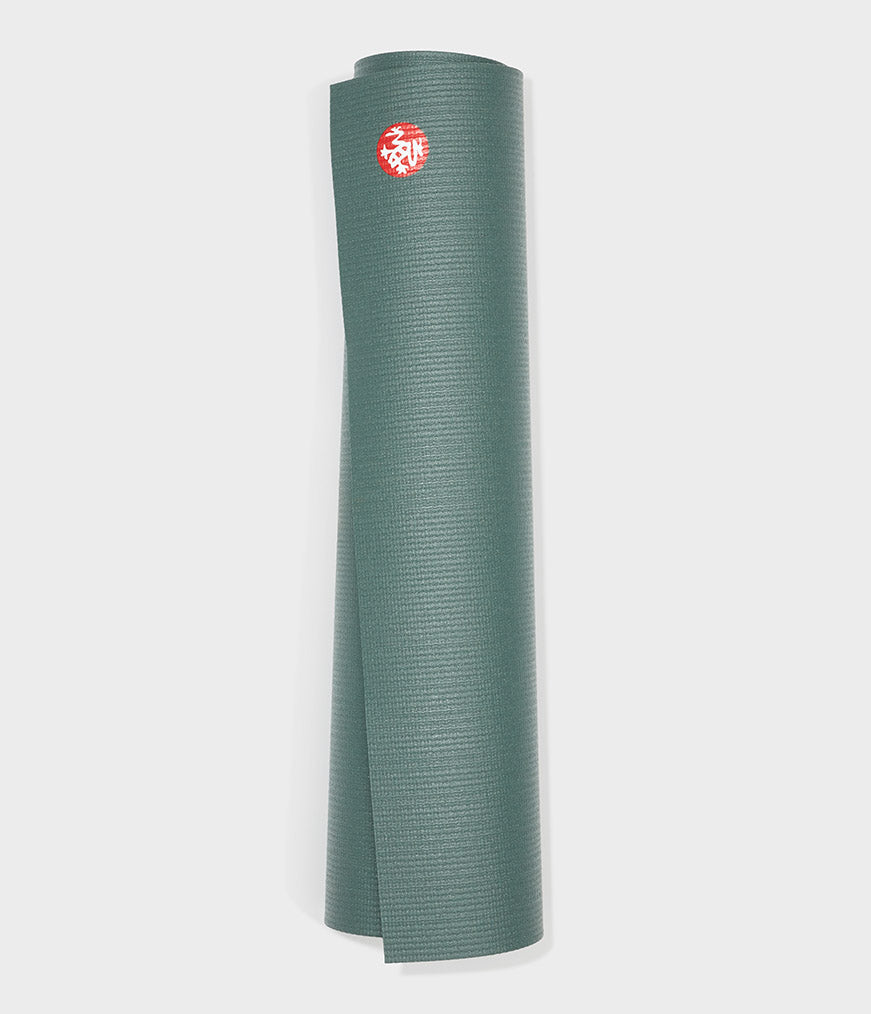
Black Sage, one of the colours shown in the maker's photos.
The grip problem, stated plainly
Here is where we part ways with the marketing. Two independent reviews and a stack of retailer comments make the same point. The mat is slippery when new, and it stays on the slick side when you sweat. Manduka itself advises a break-in period, and reviewers say grip improves with use.
Our advice, from the way closed-cell surfaces behave:
Wipe the surface before the first session and expect to practise on it for a few weeks.
Keep a grip towel nearby for hot rooms and hard intervals.
Do not buy it for hot yoga or sweaty circuits. A mat with an open surface will serve you better.
If your sessions are mobility, Pilates, stretching and calm strength work, this is a non-issue.
Cleaning and the cost of ownership
The care guide on the Manduka site is short: wipe with a mild cleaner and let the mat dry. That simplicity is a point in its favour next to porous mats that soak through.
Manduka's cleaning guide, the page the maker points owners to.
Price is where we hesitate. The Manduka site lists the PRO Lite at $140. Fit and Well quoted $99 in its test, which tells you the price has moved, so check before you buy. At $140 the mat is a considered purchase, not an impulse one.
Another view of the Black Sage PRO Lite from the maker's gallery.
Against the alternatives
The honest competitor is not another premium mat, it is a $30 mat from a sports shop. Those are lighter and grip better out of the box, and they flatten and peel within a couple of years of daily use. The PRO Lite is the reverse: slow to warm up, slow to wear out. Over ten years, a $140 mat that lasts costs less per year than five cheap ones.
The step up is the 6 mm PRO, which is cushier and far heavier. The step down is a travel mat, which folds small and feels thin. The PRO Lite sits in the middle on purpose, and for a single mat that lives at home it is the middle we would pick.
Who should buy it
Buy the PRO Lite if you do yoga, Pilates, stretching or floor strength at home, you have a hard floor, and you want one mat to last a decade. It is also a sensible choice if you are tall, since Manduka sells a Long and Wide version.
Skip it if you travel with your mat, if you sweat heavily, or if you want to spend under $60. A thinner travel mat, or a textured open-surface mat for sweaty work, suits those cases better.
At a fair price and a lifetime guarantee, we rate it 7.7. It is a quality floor mat with one honest weakness.
For $35.97, the Bodylastics Basic set is the nearest thing to a cable machine that fits in a drawer. Five latex tubes with an anti-snap safety cord stack to 190 lb of maximum tension, and the door anchor handles rows, presses and pulldowns. It is no replacement for iron when you get strong, but it covers a beginner's first year.