The short version
Koinly does turn scattered exchange and wallet history into a report you can use, and the free plan lets you see your gains before paying $49, $99 or $199 per tax year. It stops being easy when imports are incomplete: missing Coinbase trades, transfers read as sales and zero cost basis are the recurring complaints. Budget an evening for cleanup, and have a tax professional check the output.
Best for: Multi-exchange holders who want a reviewable tax report
Our score: 7.9 out of 10
Pros and cons
What works
- Free plan covers up to 10,000 transactions with a capital gains preview
- Flat per-tax-year plans: $49, $99 and $199, no subscription
- 1,000+ direct integrations and support for 7,200+ DeFi protocols
- Cost methods include FIFO, LIFO, average cost and wallet-based Spec ID
What does not
- Transaction caps are tight: Newbie covers only 100 transactions
- Users report missing imports and zero cost basis after merges
- Transfers between your own wallets can be misread as sales
- Output still needs a professional's review before it is filed
A tax tool has a simple job: take every trade you ever made, across every place you made it, and produce numbers you can put on a return. We went through Koinly's pricing and integration pages, its security statement, its public tax calculator, and the bug reports and forum threads where users describe what goes wrong. Our conclusion is split: the product is good, the input is the problem.
Pay by transaction count, not by feature
Koinly prices by tax year and by how many transactions you have. The pricing page shows four columns: Free at $0, Newbie at $49 with 100 transactions, Hodler at $99 with 1,000, and Trader at $199 with 3,000 (a selector goes up to 10,000+). Wallets and exchange accounts are unlimited in every plan, and the feature rows are identical across them.
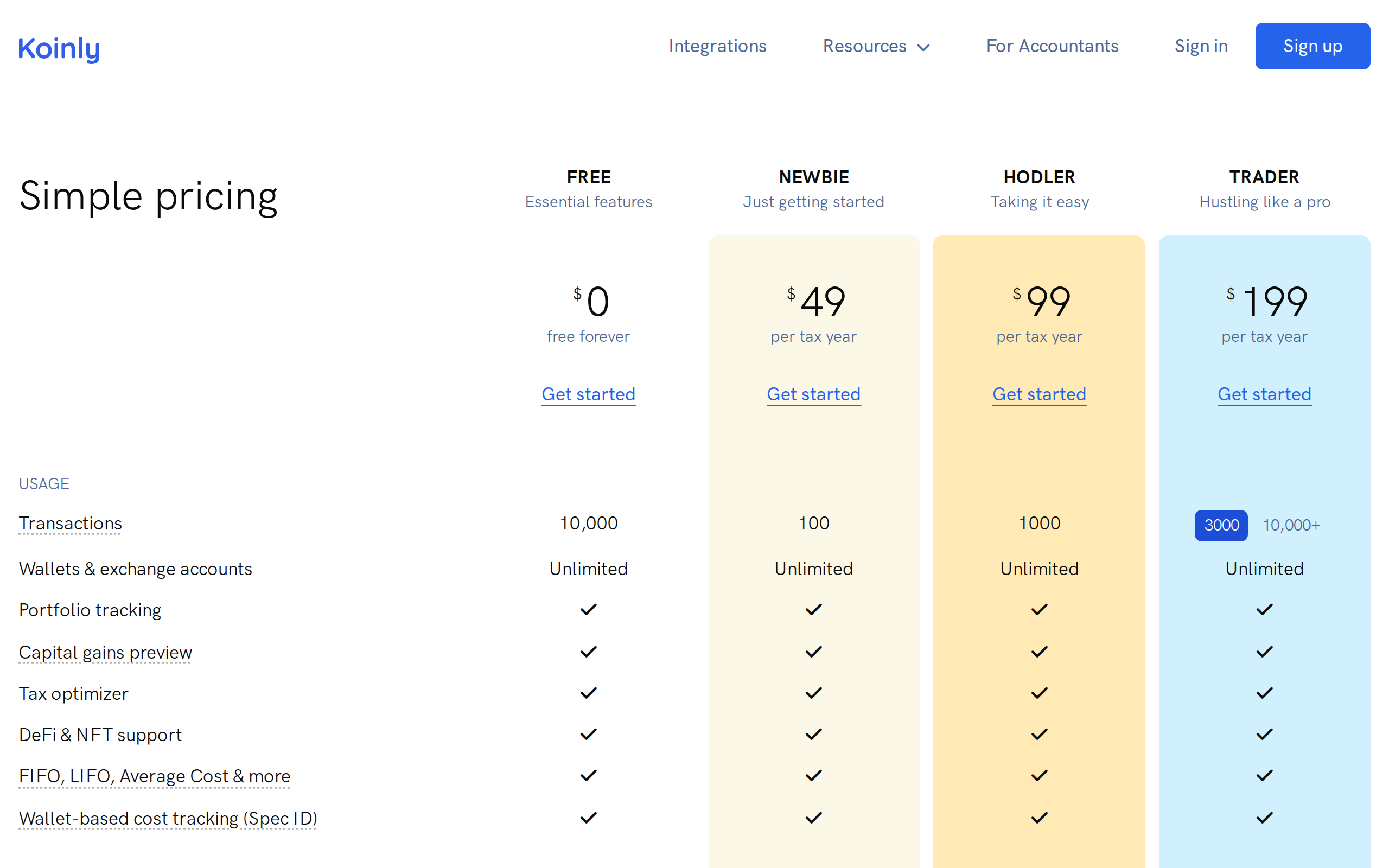
That structure is honest, but 100 transactions is a small box. A single DeFi swap can create several records, and staking rewards, airdrops and transfers between your own wallets all count. A Newbie plan suits someone who bought a few coins on one exchange. Anyone who has traded actively should price the Hodler tier at the least.
The free plan is the best part. It shows a capital gains preview and the tax optimizer for up to 10,000 transactions, so you can find out what you owe before paying. Download of the final report is the paid step.
Imports: where the review is really decided
Koinly says it syncs from 1,000+ direct integrations and 7,200+ DeFi protocols, and accepts wallet addresses and files for anything else.
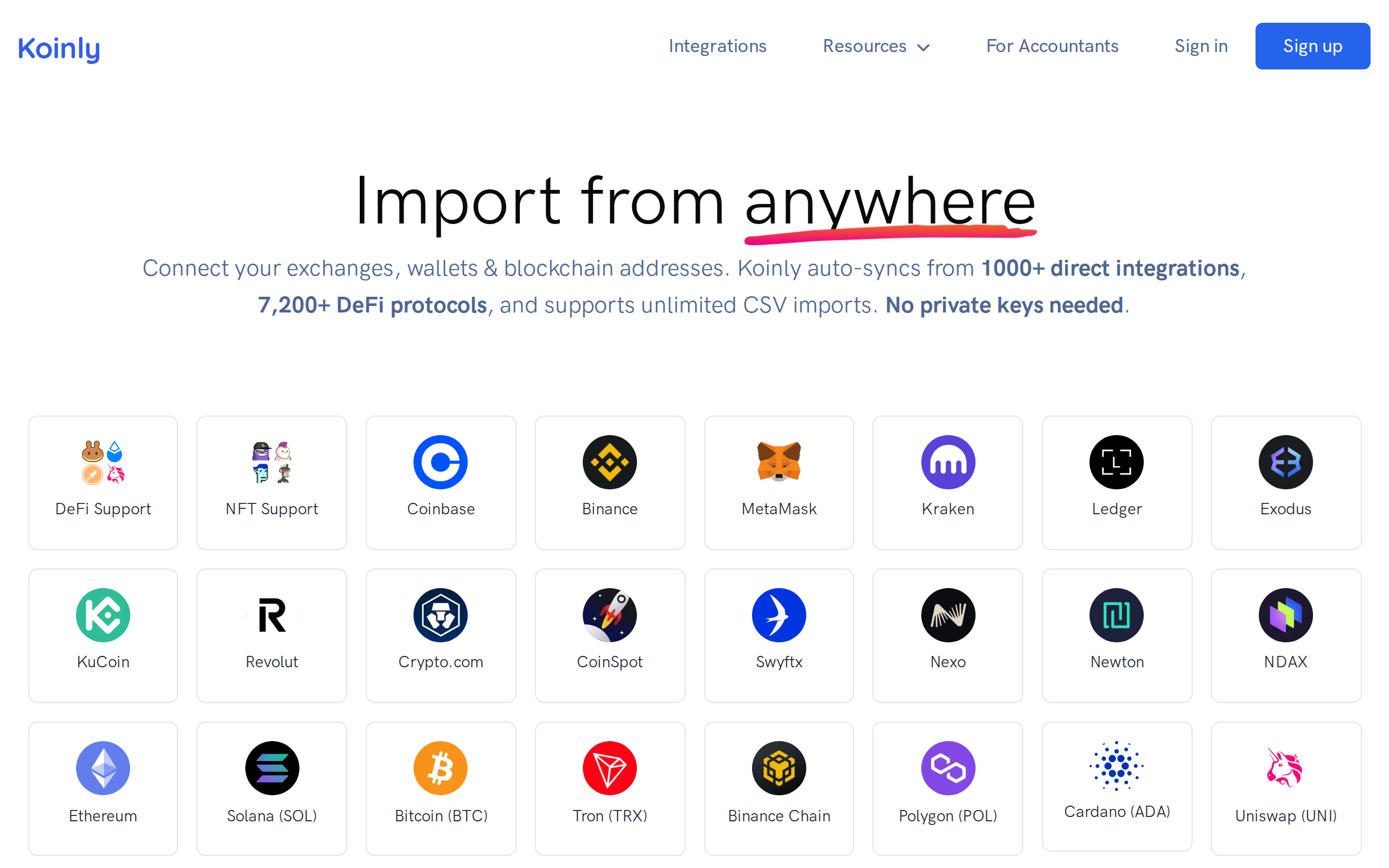
Breadth is not the same as accuracy. Koinly's own bug tracker has a public report about Coinbase imports with missing transactions and lost cost basis, and a user thread describes a BTC cost basis set to zero after a manual merge. A zero cost basis makes a gain look like the full sale price, and that raises the tax figure, as one forum poster complained.
The pattern users describe is consistent. Transfers between your own wallets are sometimes read as sales until you mark them, and a missing deposit leaves a withdrawal with nothing to match. Expect to resolve these by hand, one row at a time, and expect the first pass to take longer than the 20 minutes on the homepage.
A realistic workflow
Start on the free plan. Connect every exchange with read-only keys, add your wallet addresses, and let the import finish. Then work through the flagged items before you look at any total: unmatched withdrawals first, then missing cost basis, then transfers between your own wallets. Only when the preview looks plausible against your own records is it worth paying for the tier your transaction count requires. This order costs nothing until the last step, which is the main reason we rate the free plan so well.
The numbers it can calculate
Koinly's calculation options are strong. The pricing table lists FIFO, LIFO, average cost and wallet-based tracking (Spec ID), and these matter because the method you may use depends on your country.
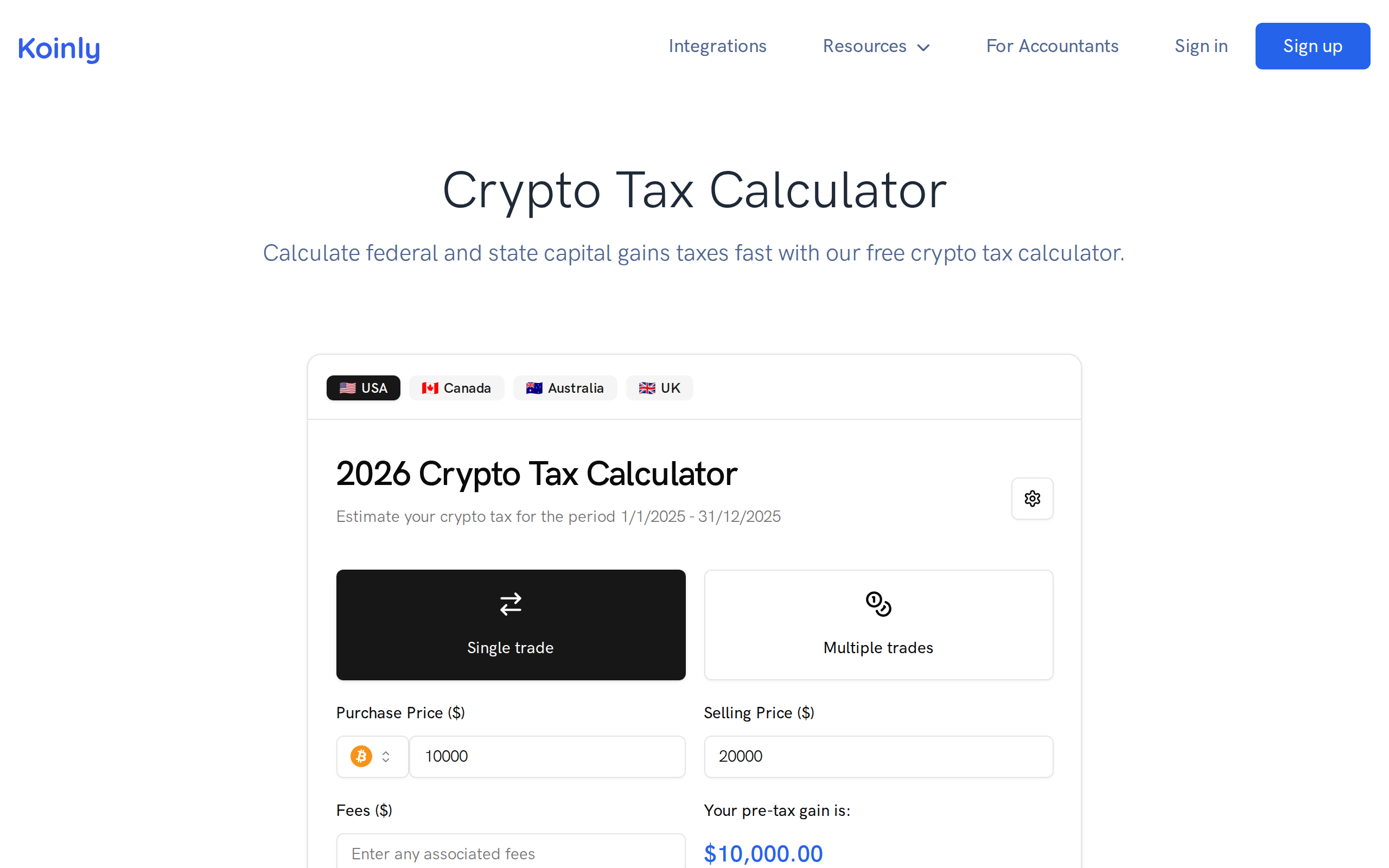
The public calculator is a good first stop for a rough number. It is an estimate, not a filed return, and tax rules differ by country and change by year.
Security and access
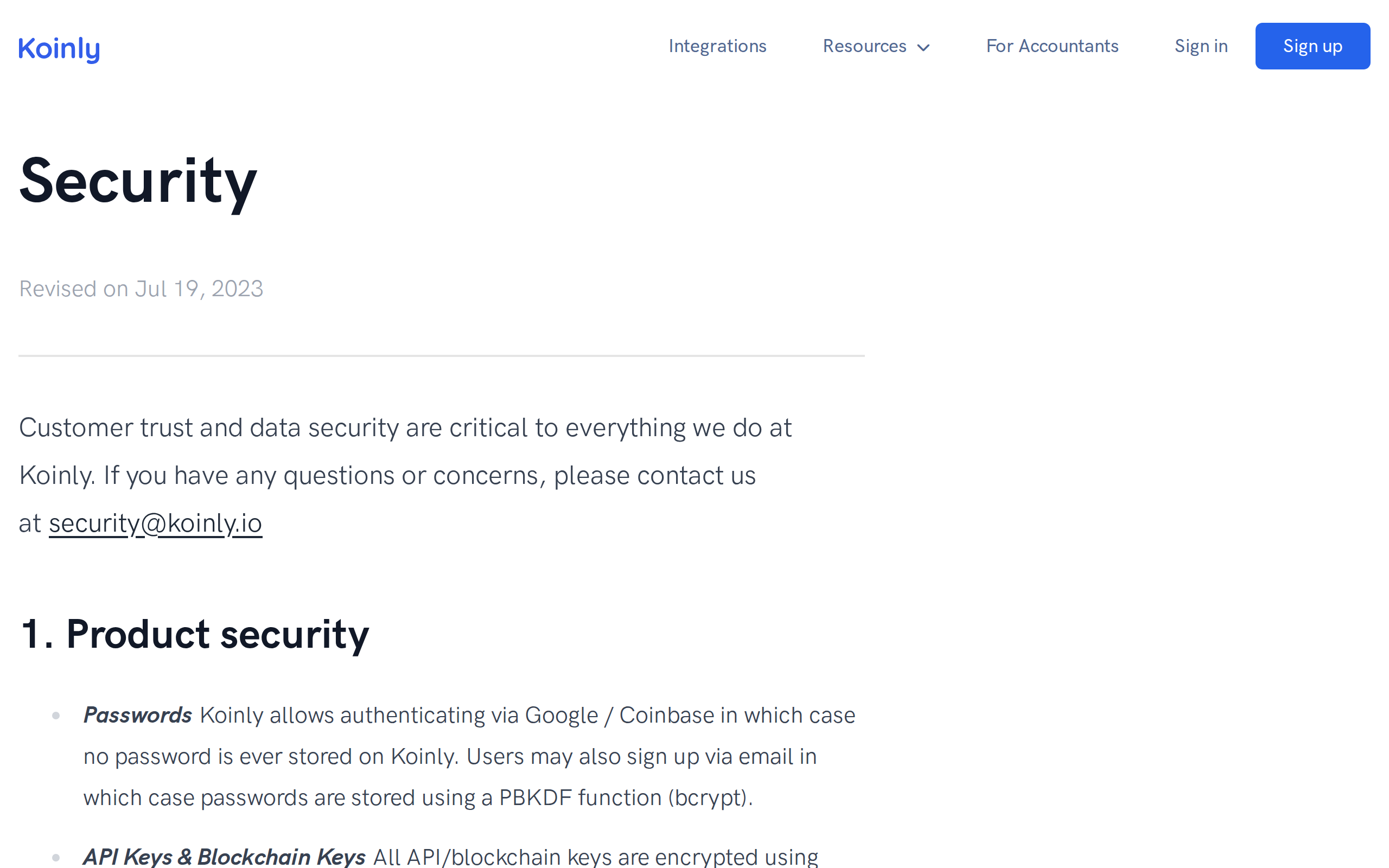
Koinly lets you sign in with Google or Coinbase, in which case no password is stored on its side, or with email and a password. Exchange connections should use read-only API keys, and we would insist on that: a tax tool never needs permission to trade or withdraw.
Who it suits
Koinly suits someone with accounts at three or four exchanges and a couple of wallets, who is willing to read a list of flagged transactions and fix them. It suits a person who wants to see the number first, since the free plan allows that.
It suits a DeFi-heavy user less well: transaction counts rise fast and manual correction takes longer than the marketing line suggests. And it does not replace an accountant. Check every report against your own records, and have a qualified professional review it before you file.
This review is not tax advice. Prices and plan limits can change, so confirm them on Koinly's site.
Specifications
- Free plan
- $0, up to 10,000 transactions, preview only
- Newbie
- $49 per tax year, 100 transactions
- Hodler
- $99 per tax year, 1,000 transactions
- Trader
- $199 per tax year, 3,000 transactions (10,000+ available)
- Integrations
- 1,000+ direct, 7,200+ DeFi protocols
- Countries
- 20+ supported
- Cost methods
- FIFO, LIFO, average cost, Spec ID
- Login
- Email, or Google and Coinbase sign-in