Keiser M3i Review: A $2,985 Studio Bike for Riders Who Bring Their Own Apps
By The Ironnook Test Desk ·
7.6
keiser.com
The verdict
The M3i is the bike for riders who already own a tablet and a favourite app and want the sturdiest, quietest, lowest-maintenance machine to pair with it. Power readings are consistent and the build is commercial. But resistance is manual, there is no screen or content, and $2,985 is a lot to pay for what a $1,000 smart bike partly does for you.
Best for: Serious riders who want a durable, quiet bike and bring their own apps
What we liked
Commercial build with a 92 lb frame and a rear-wheel sweat guard
Poly-V belt drive and magnetic resistance are close to silent
Certified to EN957-10 for power accuracy, so wattage is dependable
Console data goes to Zwift, TrainerRoad, Rouvy and Kinomap over Bluetooth
No subscription, no screen to go obsolete, and very little to maintain
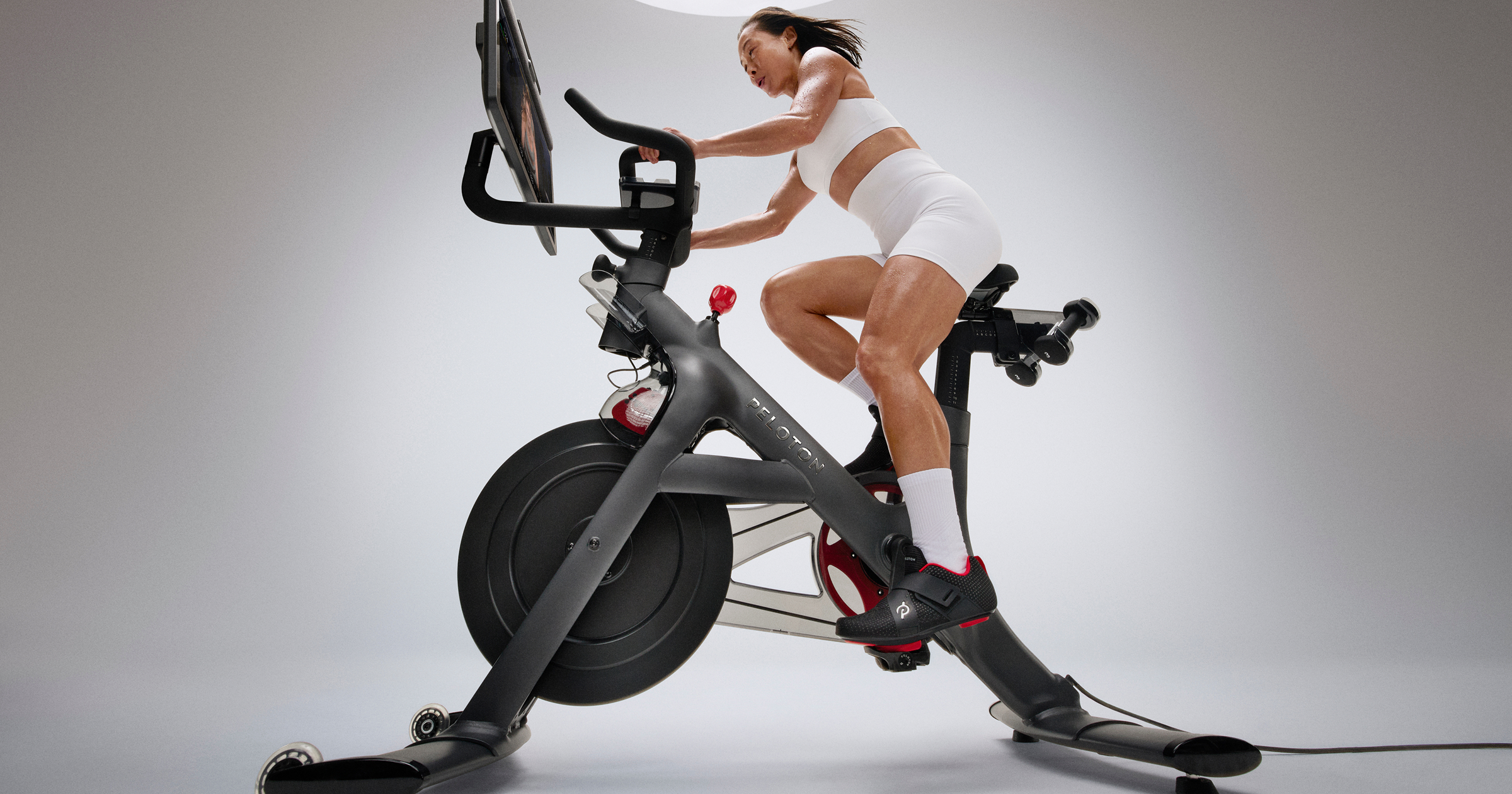
The Bike+ is the best-riding connected bike we know of, and its swivel screen, auto-resistance and rep-counting camera do make off-bike strength classes easier to follow. It is also $1,000 more than the Bike, needs a $49.99 monthly membership, and reviewers report screen wobble and early creaks at this price. Buy it if you will use rides, strength and mobility every week. A cyclist who only rides should buy the Bike.
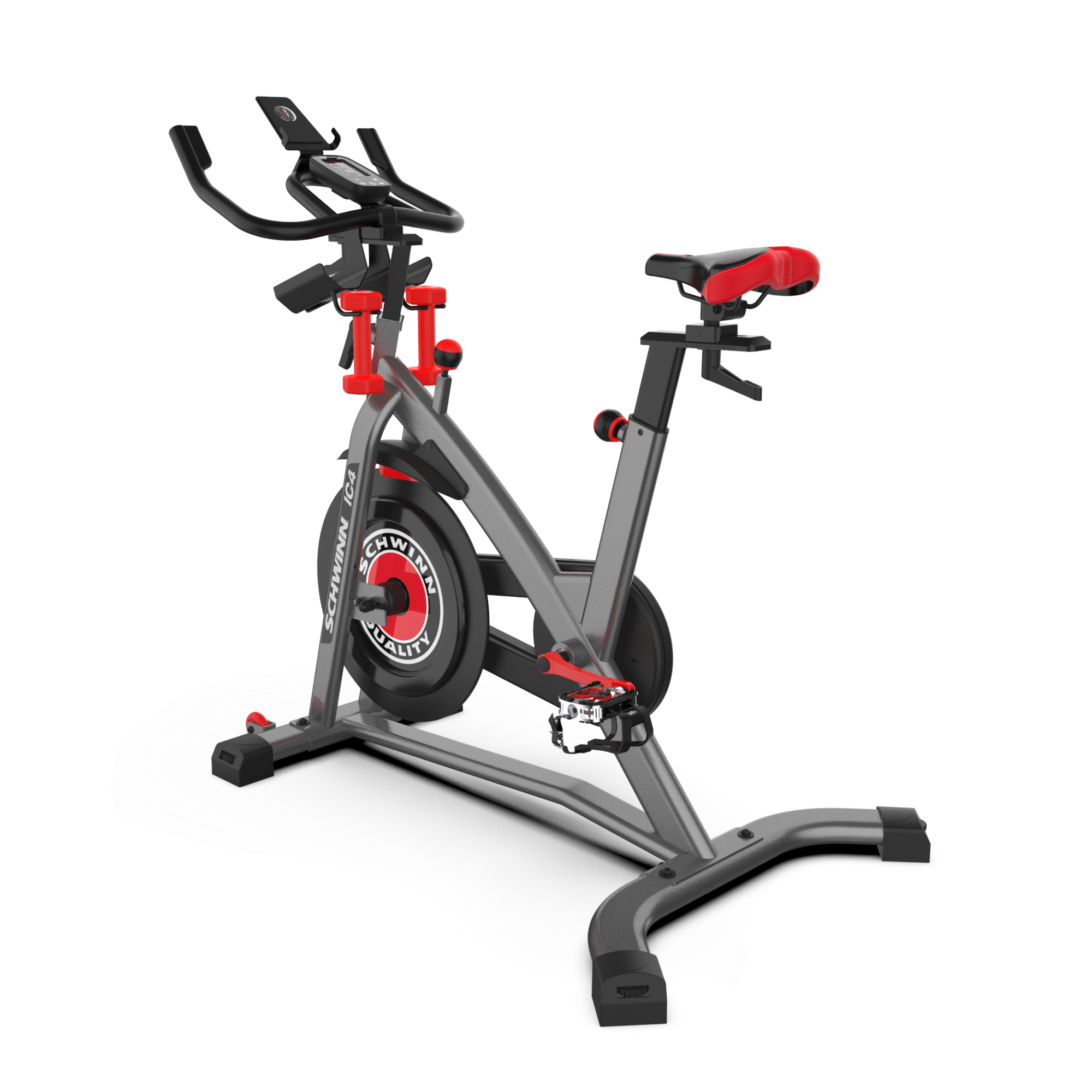
The IC4 is the best-value spin-style bike for someone who already owns a tablet and wants to pick their own apps. It rides smoothly, fits a wide range of riders and costs no subscription to use. The cost is manual resistance, so apps cannot change the load for you. If you want that, spend more or look elsewhere.
8.1$899
Exercise Bikes
Resistance is a manual lever, so apps cannot set it for you in ERG mode
Small LCD console, with no built-in classes or touchscreen
Pedal spacing is wide at about 197 mm for riders used to road bikes
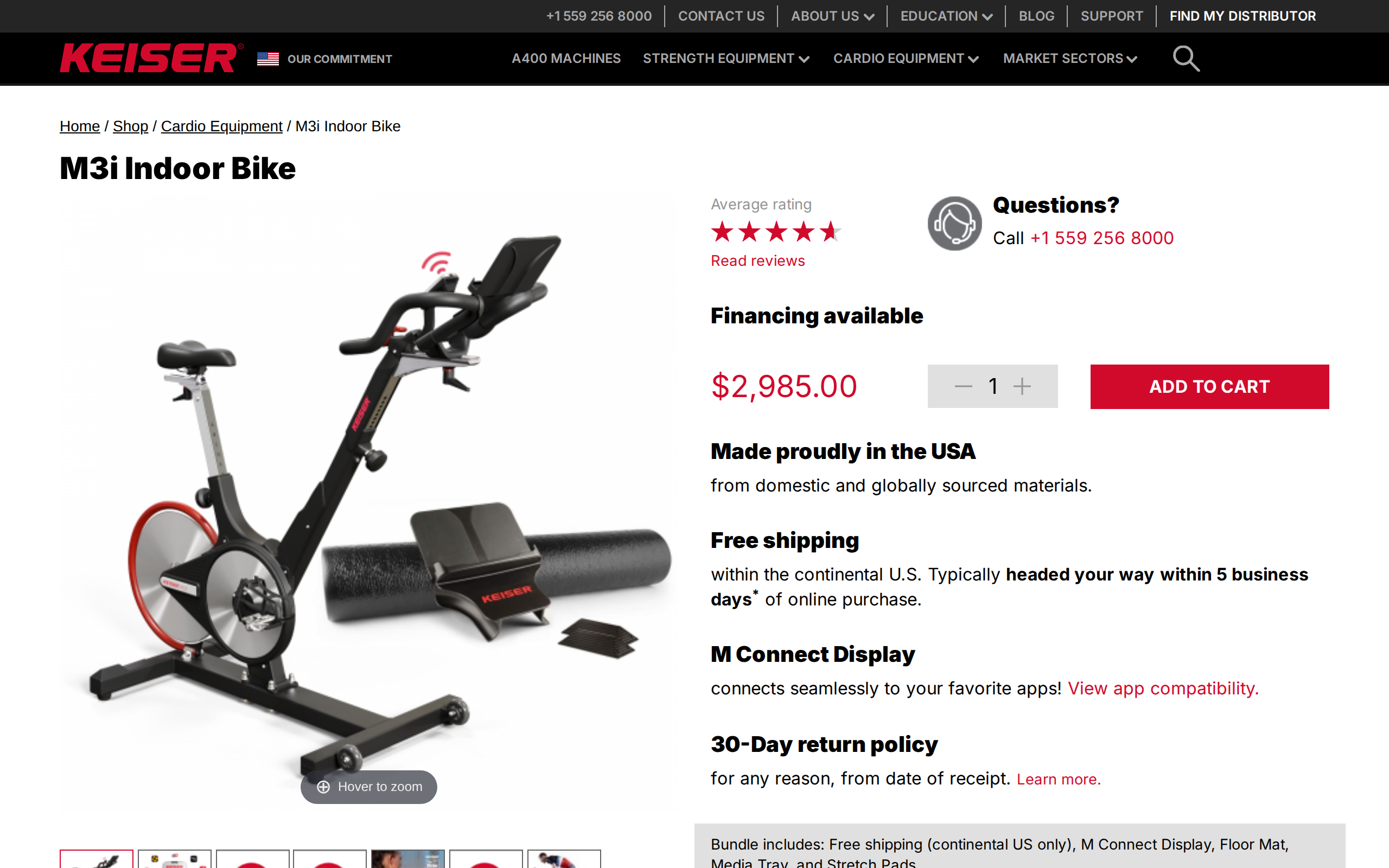
At $2,985 it costs more than several full smart bikes with screens
Power is calculated from cadence and resistance, not read from a strain gauge
The Keiser M3i is a commercial magnetic bike with a trusted power readout, a silent belt drive and no subscription. It is also manual, plain and $2,985.
Most home bikes sell you a screen and rent you the classes. The Keiser M3i sells you a bike. That is the whole pitch, and for a certain kind of rider it is a strong one.
What a studio bike gives you at home
Keiser builds the M Series for gyms and cycling studios, and the M3i is the home-sized member of that family. We looked at it against the usual checklist: frame, drive, noise, data and upkeep. It is a V-shaped steel frame that weighs 92 lb, with a rear-wheel design that keeps sweat away from the working parts. Keiser lists it at 26 in wide, 51 in long and 49 in high.
The drive is a self-tensioning Poly-V belt and the resistance is a magnetic system with no friction pads to wear out. Independent reviewers put the noise under about 40 dB. In a flat or a house with thin floors, that is the difference between riding at 6 am and not riding.
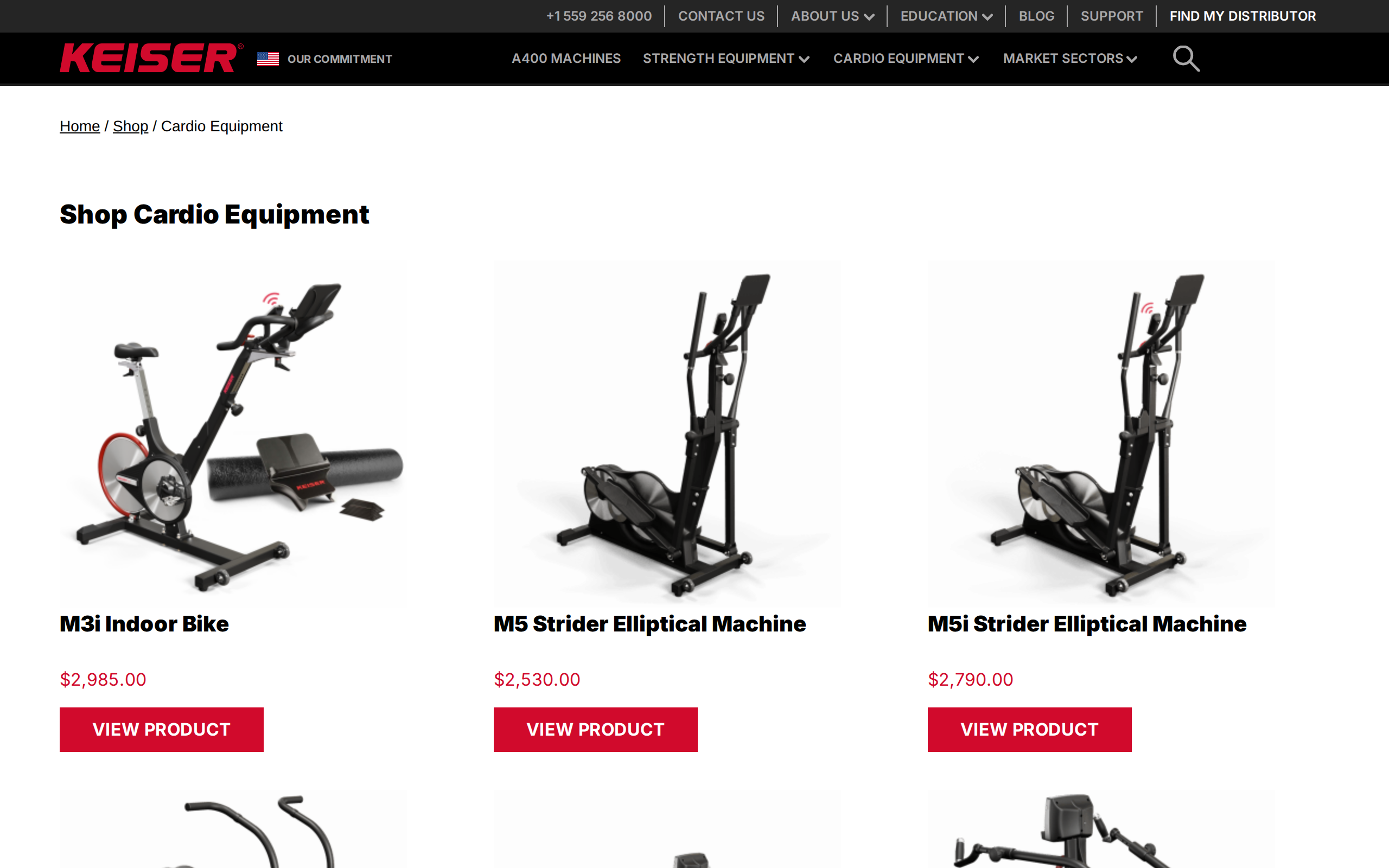
Keiser's cardio shop page, where the M3i sits at $2,985 next to the M5 and M5i Strider ellipticals.
Power numbers you can plan a block around
This is the reason serious riders buy a Keiser. The M3i shows power in watts on a small console, and the bike is certified to the EN957-10 standard for power accuracy. A fair caveat: the figure is calculated from cadence and resistance position, not read from a strain gauge like a pedal power meter. What matters for training is that it is repeatable. Ride the same gear at the same cadence next month and you see the same watts.
Through the M Connect Display, the bike sends power, cadence, speed and heart rate over Bluetooth to a phone or tablet. Keiser lists Sufferfest, Rouvy, TrainerRoad, Kinomap and BKool among the apps that work. Third-party reviews also list Zwift, and the older converter box is gone: Keiser says it was discontinued in 2021.
The catch is the lever
Here is what the spec sheet does not shout. Resistance is manual. You turn a lever and watch the gear number. A smart trainer or a connected bike can change the load for you when an app asks, so a structured session in ERG mode holds your target watts without effort. On the M3i, the app can only tell you where you are, and you do the correcting.
For many riders that is fine, even preferred: you ride by feel and the numbers keep you honest. For anyone who wants a workout to run itself, it is a real gap, and it is the main reason we would point them toward a connected bike. If that is you, our Peloton Cross Training Bike review covers the other approach.
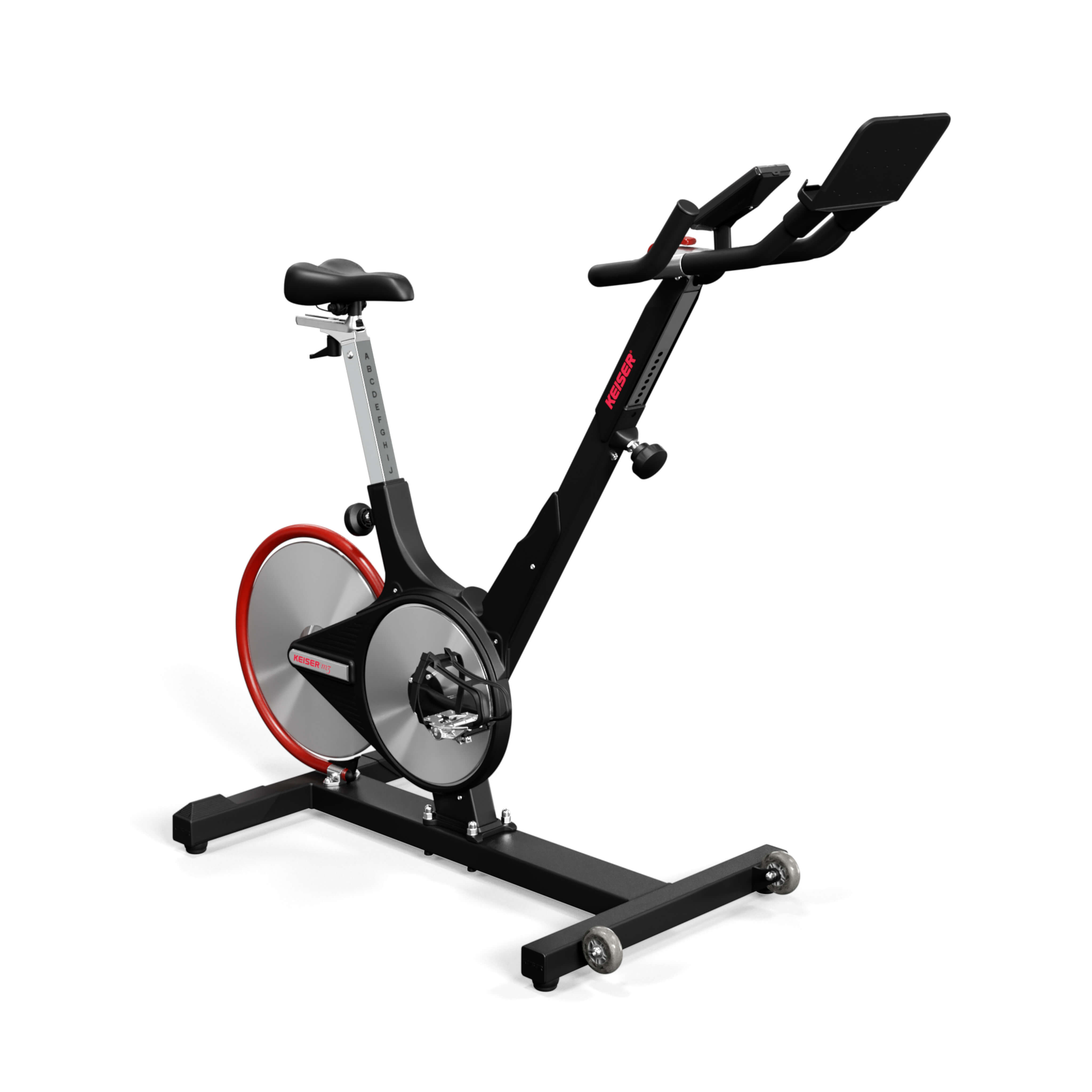
The M3i as Keiser's own product photography shows it, in a right three-quarter view.
Fit, pedals and the wide stance
Keiser says the four-way adjustable seat and bars suit riders from 4 ft 10 in to 7 ft, which is a wider range than most home bikes quote. The seat uses a bolt clamp rather than a quick-release, so sharing the bike between very different riders means a spanner, not a flick.
The pedals are dual-sided: use the built-in toe clips in trainers or flip them for cleats. One independent test measured the pedal spacing at roughly 197 mm, wider than a road bike. If you ride a lot outdoors and are sensitive to your stance, try one in a shop first.
The money
At $2,985 it is the cost that hurts. For that, a connected bike from a big brand bundles a screen and classes, and the Keiser has neither. Remember too that the sticker is the whole story: there is no monthly fee, no screen to age and almost nothing to service, so a decade of use makes the arithmetic kinder. A third-party summary lists a 10-year frame warranty and a 3-year parts warranty, but check the terms Keiser gives you at checkout.
An independent M3i review from Bike Besties, updated October 2025, asking whether the bike is worth the money.
The M Series app is the optional extra if you want classes. We would not buy the bike for it.
Keiser's M Series app page, with a phone mock-up of the app.
Who should buy it
Buy the M3i if you already ride with Zwift, TrainerRoad or similar, you care about repeatable power, the bike will be used daily by more than one person, and you want something quiet that you will not replace in five years. It is also a smart choice for someone who has watched a screen bike go dead after the maker changed its plans.
Skip it if you want the bike to run workouts for you, if you need classes and a coach on a screen, or if $2,985 is stretching the budget. In that case a cheaper bike with a tablet holder will get you most of the way there.
Our score reflects a very good machine with a narrow audience. If the lever does not put you off, it is one of the best-built bikes you can put in a room.
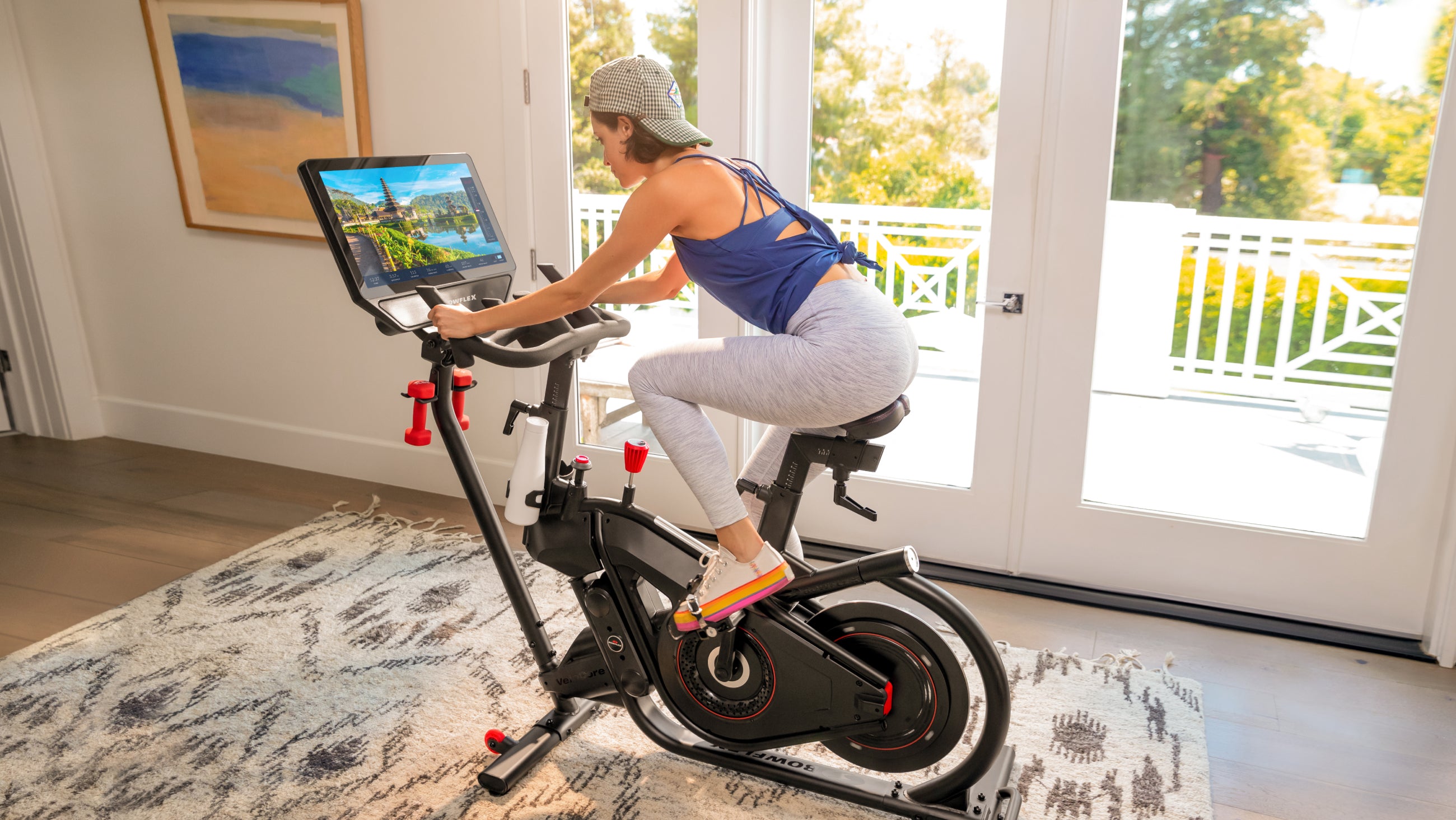
Lean mode is real: it recruits your obliques and makes rides more engaging, and the bike underneath is quiet, stable and holds 325 lb. But the lean is a nice extra, not a second workout, JRNY adds $149 a year, and the two year frame warranty is short. Buy it near $1,000. At $2,199 it is overpriced.