The short version
Hyperliquid is the first onchain derivatives venue that trades like a centralized one: a real order book, fees at 0.045% taker and 0.015% maker, and uptime that held during the October 2025 liquidation crash. You keep your own keys and skip KYC. You also carry smart-contract, bridge and vault risk that no exchange insurance covers. Strong for experienced perp traders, dangerous for anyone new to leverage.
Best for: Experienced perp traders who want CEX-grade depth with self-custody
Our score: 7.8 out of 10
Pros and cons
What works
- Perp fees from 0.045% taker and 0.015% maker, falling to 0% maker at the top tier
- Staking HYPE discounts fees by 5% to 40%
- Order-book trading with leverage, no signup or KYC form
- Held about 73% of perp DEX volume in January 2026, so liquidity is deep for a DEX
What does not
- Self-custody means no password reset and no refund for a bad signature
- Bridge, contract and liquidity-vault risk is not covered by any exchange insurance
- Spot fees of 0.070% taker are less competitive than the perp fees
- Leverage products can wipe a position in seconds during a cascade
For years the pitch for decentralised derivatives was "almost as good as an exchange". Hyperliquid is the first one where the sentence can be dropped. It runs an order book, it posts fees that sit beside the big centralised venues, and it kept running when roughly $19 billion of positions were liquidated across the market on October 10, 2025, per published tallies. The remaining question is whether you want what comes with it.
Fees: a CEX price on a self-custody venue
Fees follow rolling 14-day volume, and the docs count spot volume double. The base perp rate is 0.045% taker and 0.015% maker. At the Diamond tier (over $500 million) it falls to 0.027% taker and 0.009% maker. Over $7 billion, Tier 6 charges 0.024% taker and 0% maker. Rebates of 0.001% to 0.003% exist for very large makers.
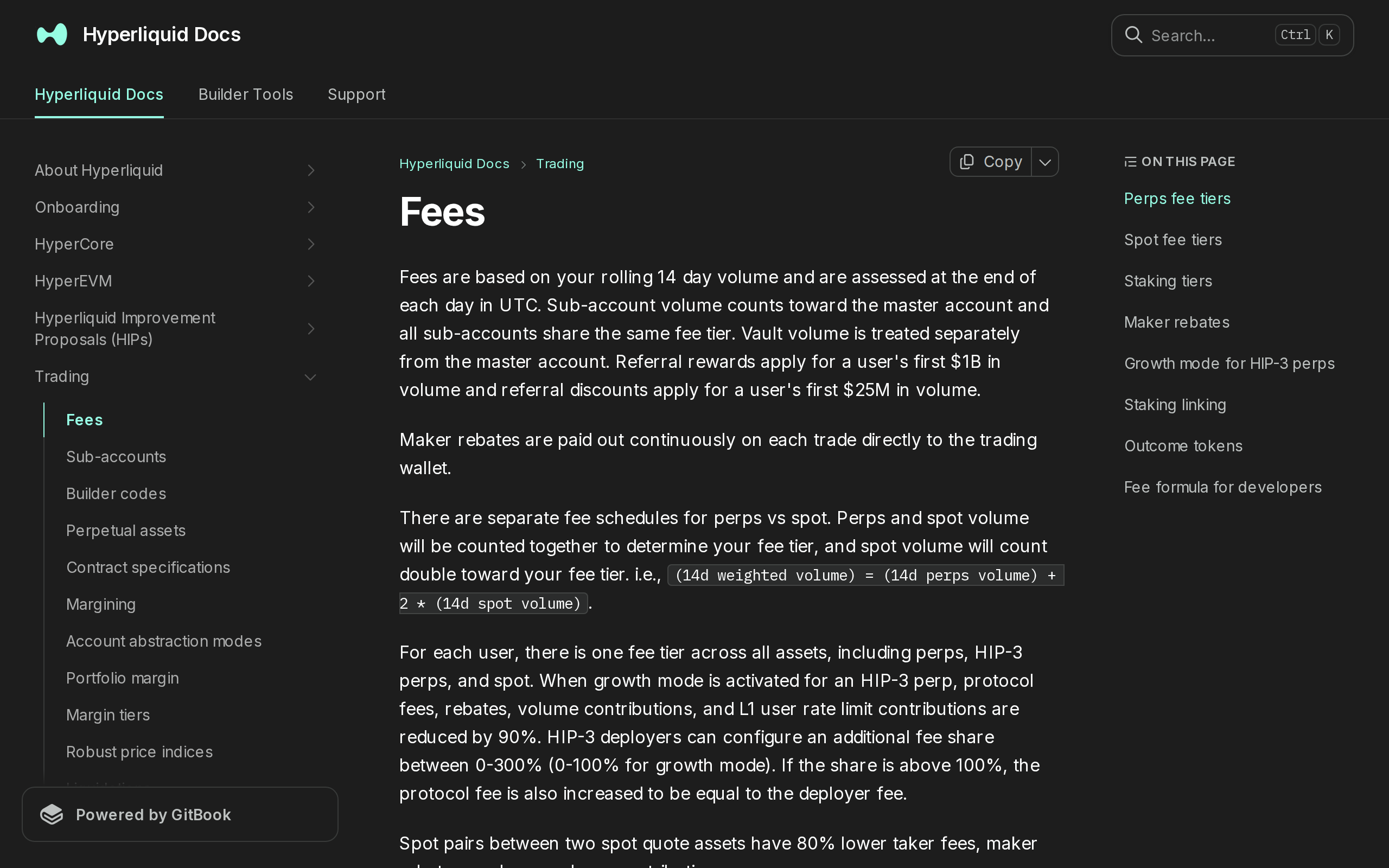
Staking helps. Holding more than 10 HYPE gives a 5% discount, climbing to 40% above 500,000 HYPE. Spot is pricier: 0.070% taker and 0.040% maker at base. Stable-to-stable spot pairs get 80% off, and "aligned" quote assets get 20% lower taker fees. At retail size the headline number is close to what a mid-tier centralised account pays, and it comes without a signup form.
The terminal and why liquidity matters
The trading screen is a conventional perp terminal with chart, book, positions and funding. It is fast enough that a first-time user from a centralised exchange does not feel the chain underneath, which is the point.
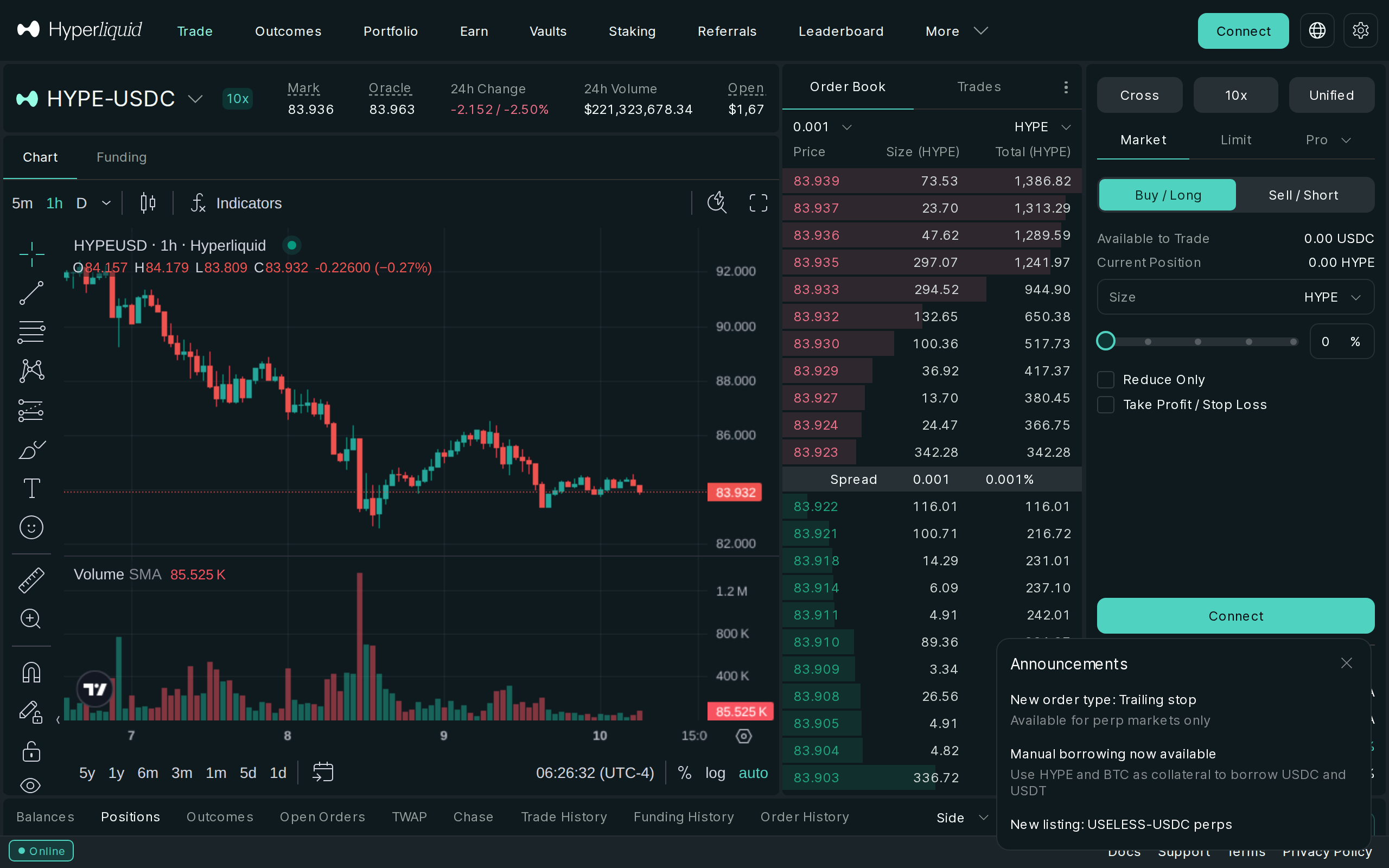
Depth is what separates a usable perp venue from a demo. Research reported in early 2026 put Hyperliquid at about 73% of perp DEX volume with about $9.6 billion of open interest, more than every rival combined. High open interest cuts both ways: big books are tight in calm markets and violent in cascades.
More than crypto perps
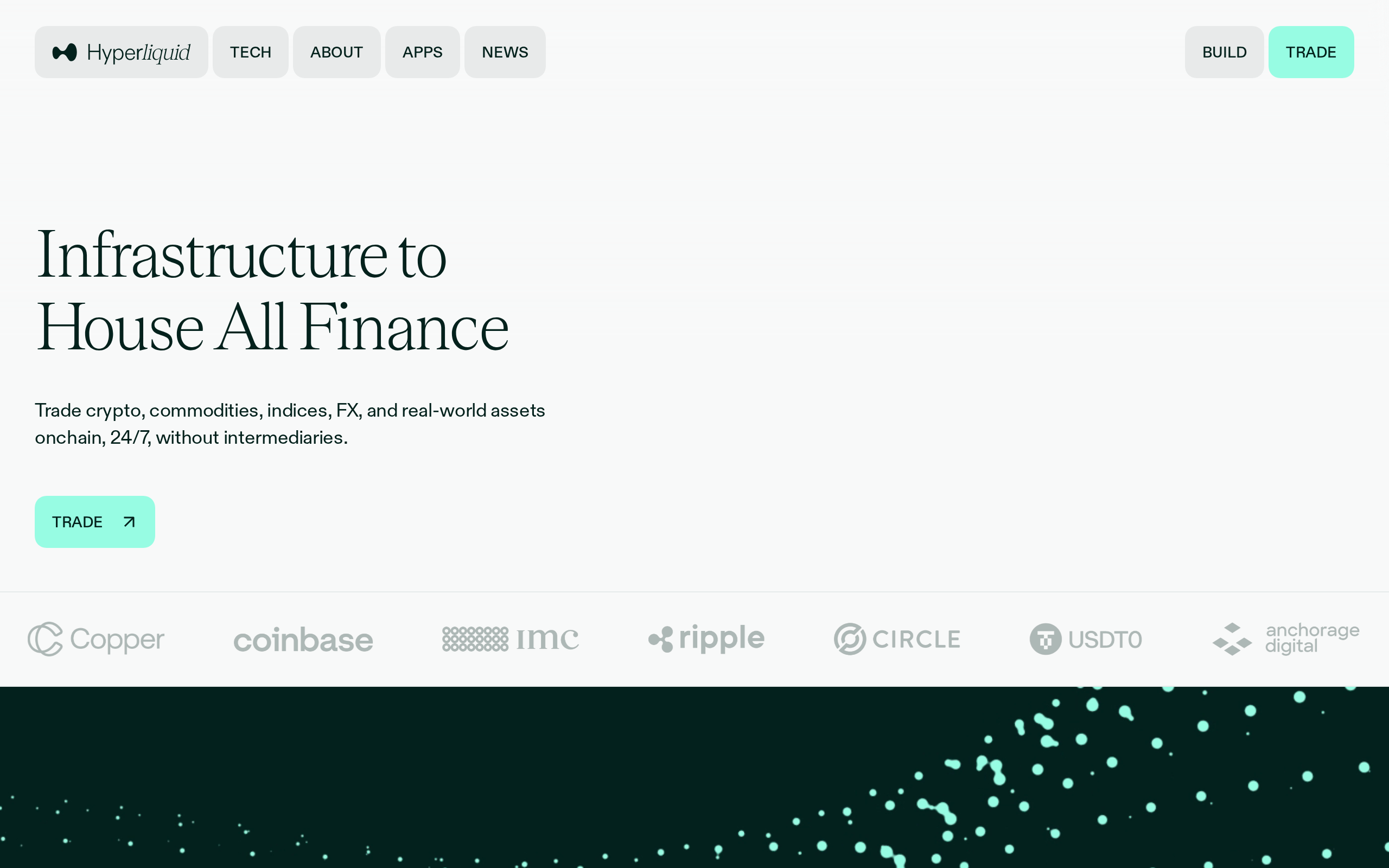
The homepage now describes trading crypto, commodities, indices, FX and real-world assets onchain, around the clock, without intermediaries. Third-party markets launched through the HIP-3 system can be more exotic and thinner than the main books. The docs mention a growth mode that cuts fees by at least 90% for such markets, which is a lure for liquidity and also a reminder that a new market can be illiquid. Check the spread and the book before you size up.
Where the risk lives
An exchange can be hacked, but you can also lose onchain without anyone being hacked. You sign with your own wallet, so a malicious signature request or a lost key is final. Your collateral sits in a protocol and a bridge, not in a regulated broker's segregated account, and nothing here is deposit-insured.
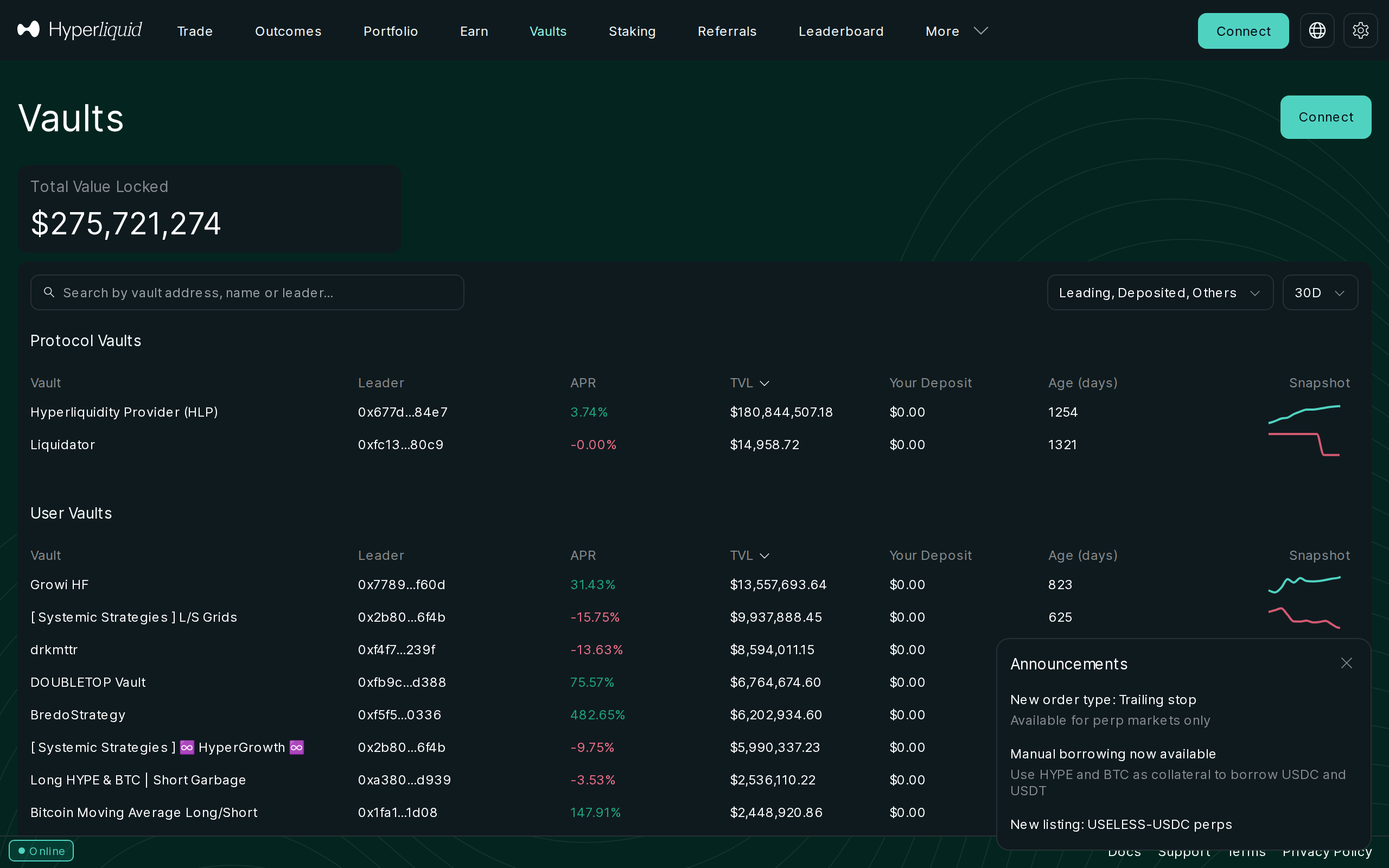
Vaults deserve the same care. The vault page lists the Hyperliquidity Provider (HLP) and third-party strategies with their balances and returns. Past returns say little about future ones, and a vault that took the other side of a crash can lose.
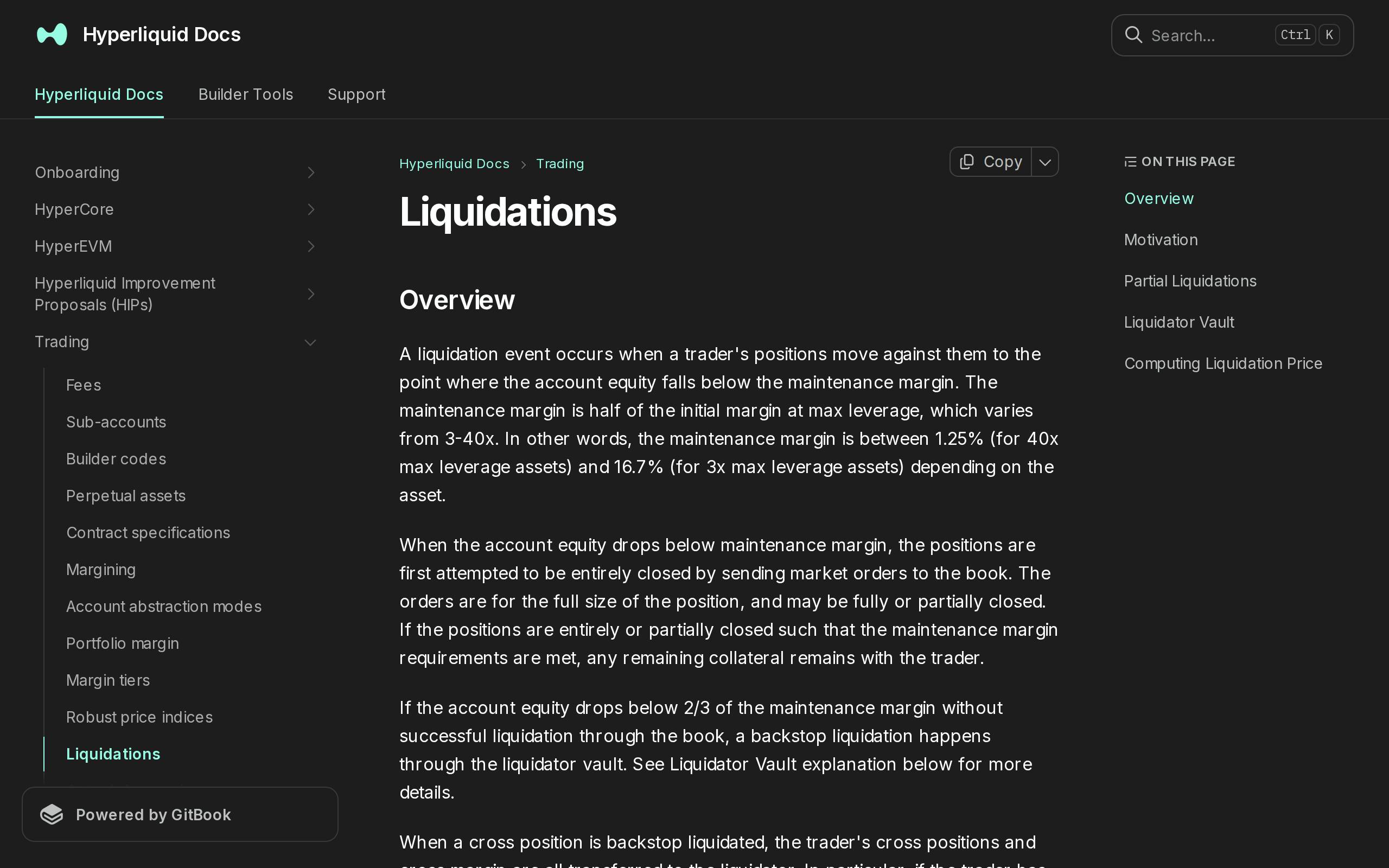
Leverage is the other hazard. The liquidation rules are public, and a position at high leverage can be closed in seconds. Learn them before you place an order, and size positions so a wick does not end you.
A short checklist before the first order
Test the deposit path with a small amount and confirm it arrives before you send more.
Read the margin and liquidation pages, then place one low-leverage trade to see how funding and fees show up on your account.
Use a fresh wallet for trading, separate from your long-term holdings.
Check the fee tier your 14-day volume puts you in, since a staking discount only matters if you actually hold the token.
Verdict
Hyperliquid earns its 7.8 for making onchain perps competitive on fees and depth, and for publishing its tiers plainly. It loses points for risks a new user cannot see from the chart. We did not place funded trades for this review; fees, uptime and share figures come from the docs and published research, so confirm the live numbers in the app.
Compared with a centralised exchange, you give up support desks, chargebacks and account recovery, and you gain control of your own collateral and a public fee table. Many traders will call that a fair swap, and others will not.
Use it if you already trade perps, understand liquidation, and can handle a wallet. Avoid it if you are new to leverage or want a regulated counterparty. This is a product assessment, not financial advice.
Specifications
- Perp fees (base)
- 0.045% taker / 0.015% maker
- Perp fees (Diamond, over $500M)
- 0.027% taker / 0.009% maker
- Perp fees (Tier 6, over $7B)
- 0.024% taker / 0% maker
- Spot fees (base)
- 0.070% taker / 0.040% maker
- Staking discount
- 5% (over 10 HYPE) to 40% (over 500,000 HYPE)
- Volume window
- Rolling 14 days; spot volume counts double
- Markets
- Crypto, commodities, indices, FX and real-world assets
- Custody
- Self-custody wallet, onchain order book