The short version
HTX has done the visible things a distrusted exchange should do: monthly proof-of-reserves reports, a stated move toward EU MiCA rules and compensation after its 2023 incidents. It has not earned the licences that would let a cautious user treat it like Coinbase or Kraken. Fees are ordinary at the entry tier and good only at volume. Use it for altcoin access with money you can afford to lose; keep savings elsewhere.
Best for: Altcoin traders who accept an unlicensed venue
Our score: 6.2 out of 10
Pros and cons
What works
- Monthly proof-of-reserves reports published for 43 consecutive months as of May 2026
- Prime VIP ladder cuts spot fees to 0.08% maker at Prime 4
- Paying fees in HTX or TRX tokens takes about 25% off trading commission
- Spot, perpetual futures and a large altcoin shelf under one account
- Mobile site and trading screens are quick and uncluttered
What does not
- No major US or UK licence, and MiCA alignment is still described as in progress
- September 2023 hot wallet hack of about $7.9M and a reported HECO bridge loss above $100M
- Entry fee of 0.20% maker and taker is no better than larger rivals
- Prime fee cuts need $30,000 of 30-day volume or a $5,000 balance to start
- Ownership ties to Justin Sun and the TRON ecosystem add reputational weight
Rebrands do not wipe a ledger. Huobi became HTX in September 2023, and the same month brought a hot wallet theft. Three years on, the useful question is not whether the exchange works. It does. The question is what has changed in how it proves itself.
The case for HTX: it shows its homework
The best thing HTX does is publish reserves. Press coverage of its annual report says it has issued proof-of-reserves reports for 43 consecutive months as of May 2026, with ratios for major assets above 100% and a Merkle tree so you can check your own balance. The Block's report on the 2025 annual edition covers the 100% claim. A reserve report is not an audit, and it says nothing about liabilities the exchange does not list. It is still more than many offshore rivals bother with.
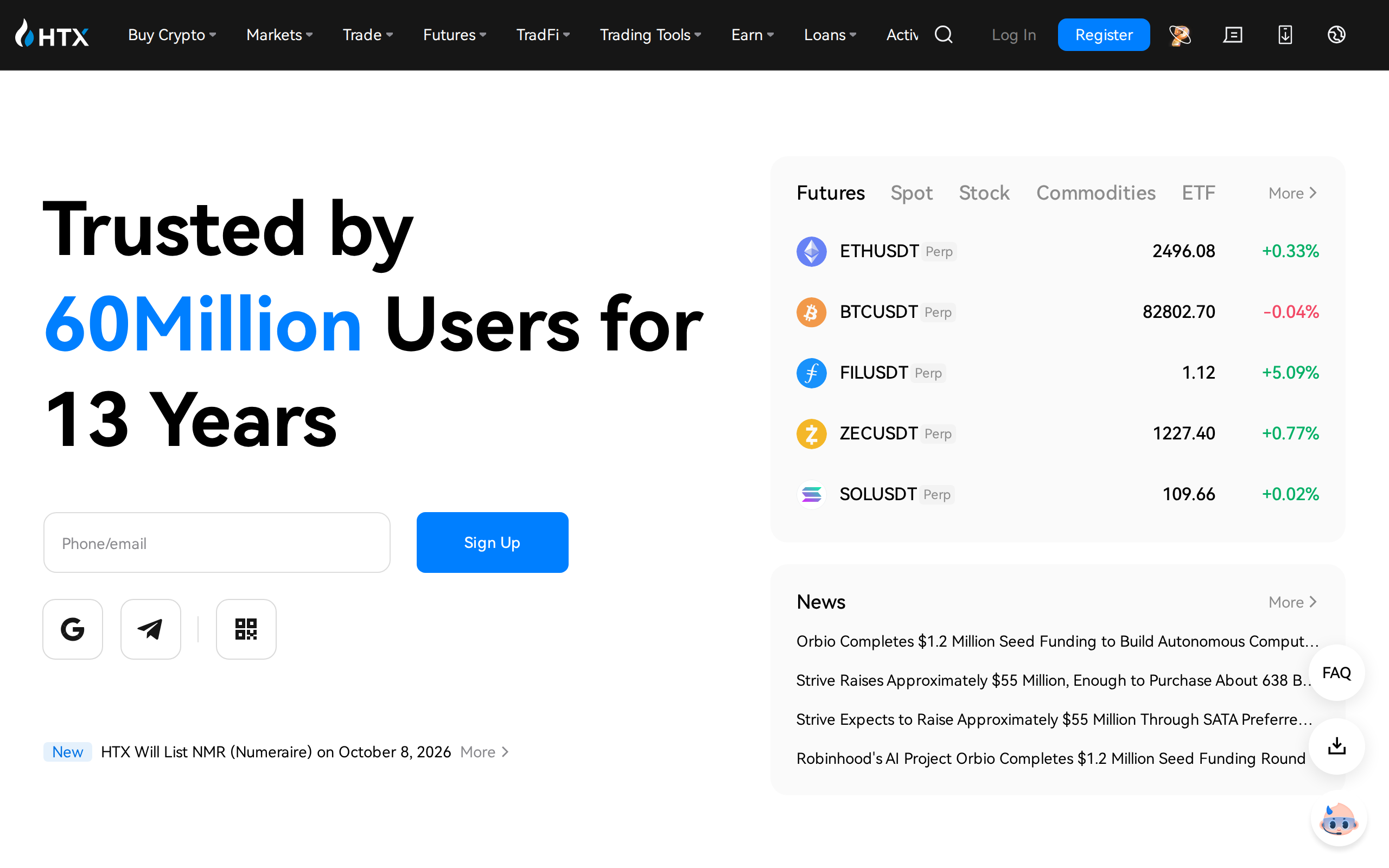
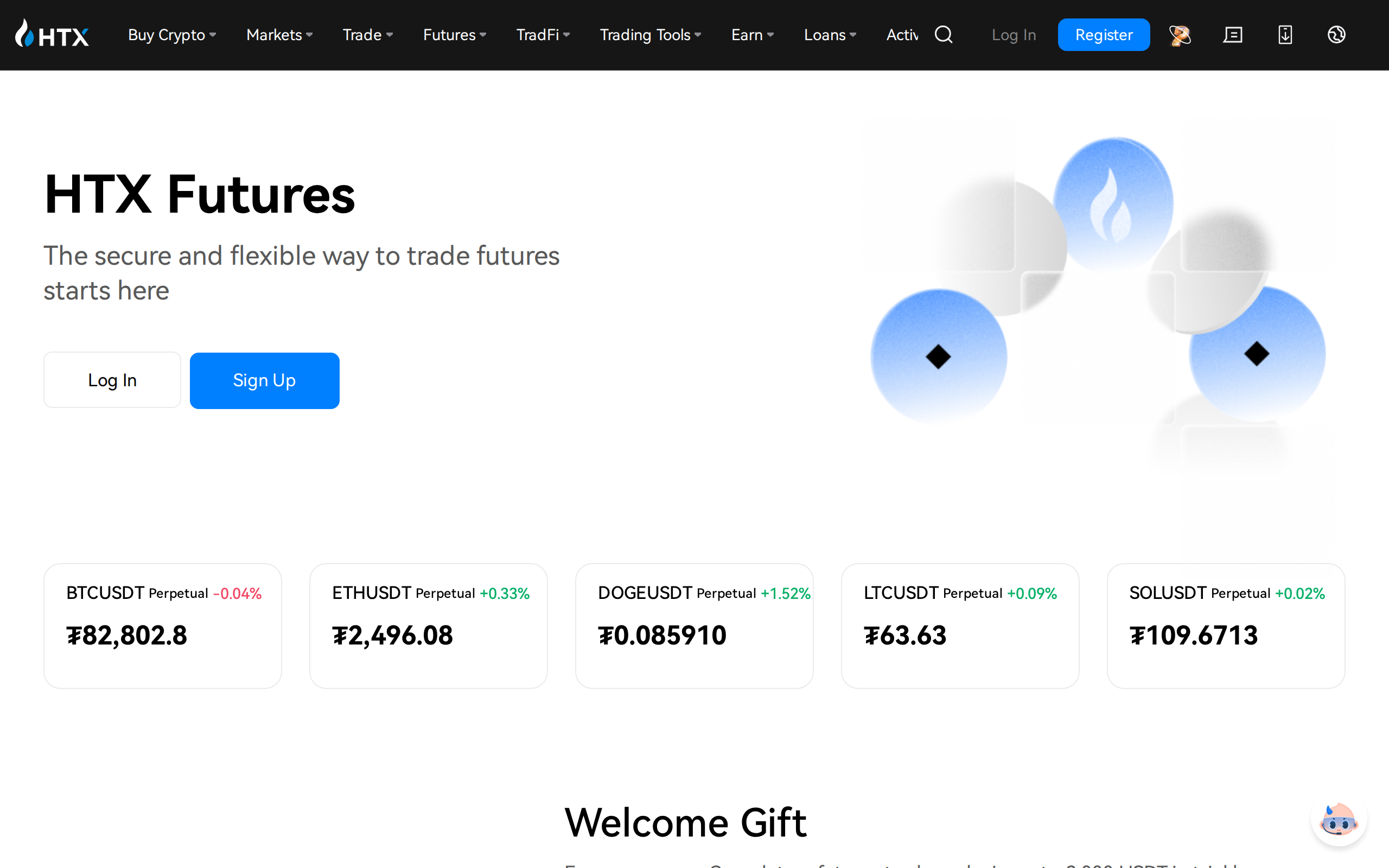
The homepage leans on scale: "Trusted by 60 Million Users for 13 Years", with tabs for Futures, Spot and Stock, and a title that advertises 600+ altcoins. Those are the maker's numbers, not ours, and we treat them as marketing.
What it costs to trade
Entry spot pricing is 0.20% maker and 0.20% taker, per independent fee summaries. That is not cheap next to the rivals people usually compare it with; some venues charge nothing on the maker side. Holding HTX or TRX and paying fees in them takes about 25% off, which brings 0.20% to 0.15%.
Real savings sit behind the Prime ladder, which has 11 levels:
Prime 1: 0.16% maker, 0.17% taker, reached at $30,000 of 30-day volume or $5,000 held.
Prime 4: 0.08% maker, 0.10% taker, which asks for $3M of spot volume, a $100,000 balance or $20,000 of HTX.
Prime 11: 0.0126% maker, 0.0218% taker, at $1.8B monthly spot volume.
For anyone below $30,000 a month, the headline is 0.20%. The tiers are built for desks, not hobbyists.
The trading screen
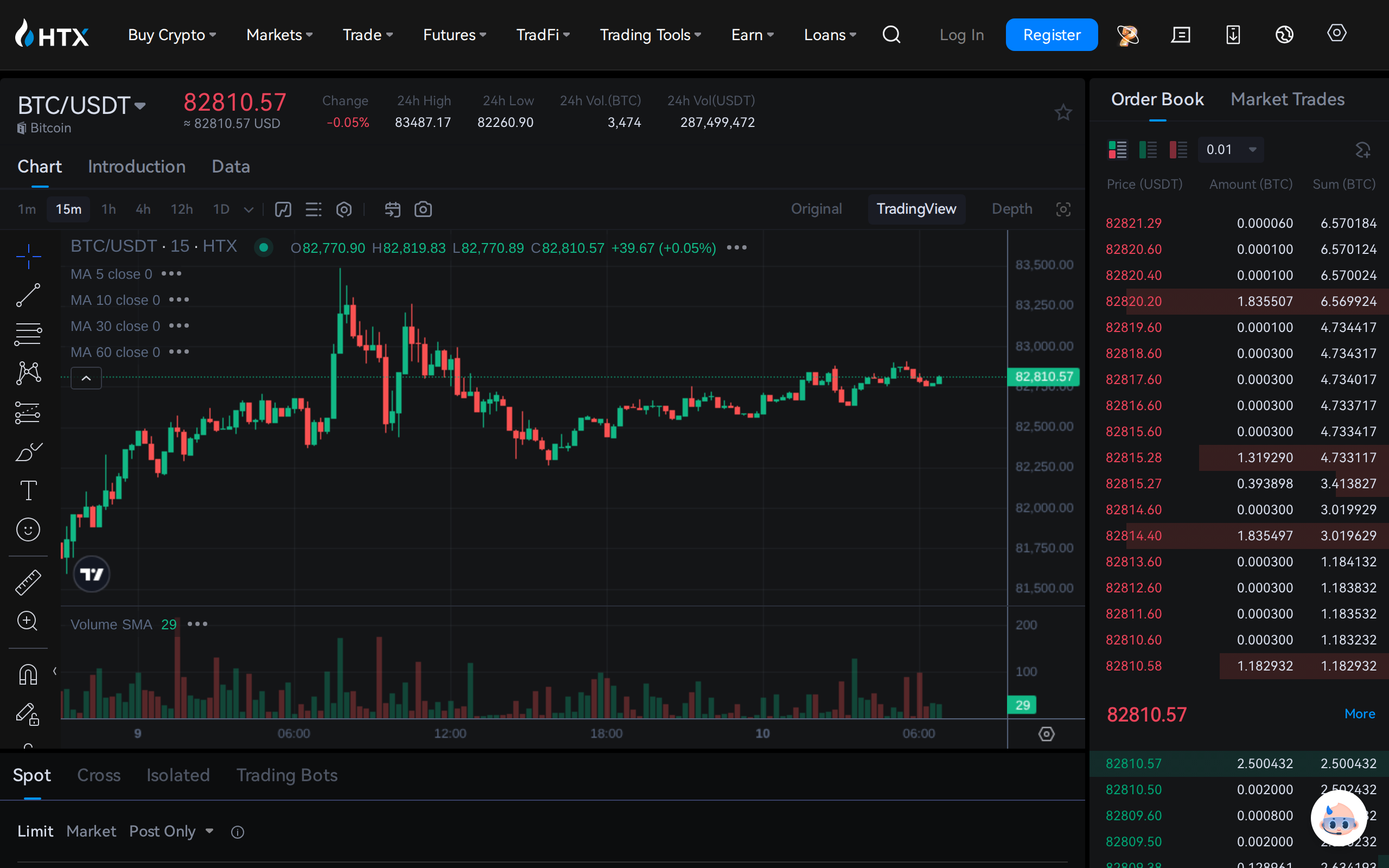
The spot terminal is a conventional order book and chart for the BTC/USDT pair, with live bids and asks listed by price and size. There is little to learn, which is the point: this is built for people who already trade, and it assumes you know what a depth ladder is.
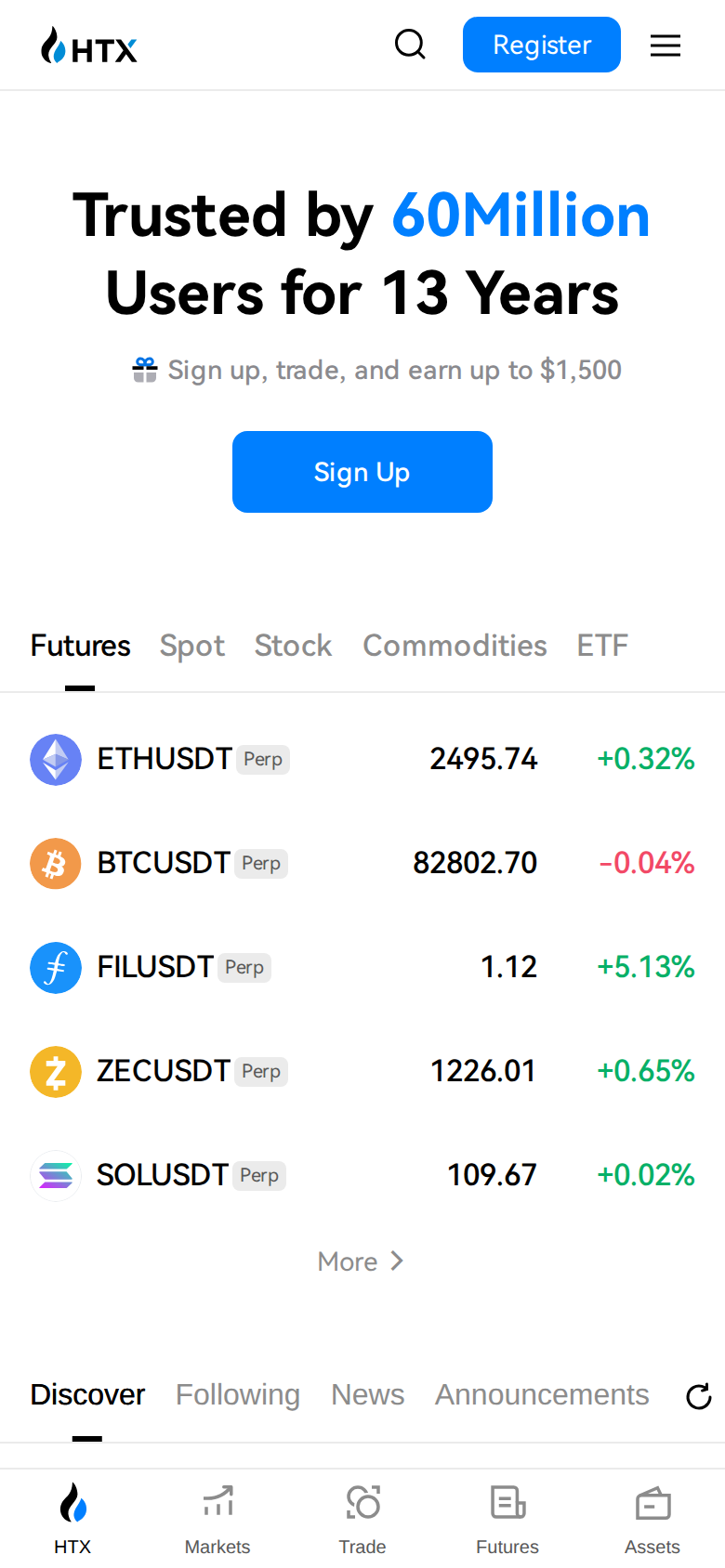
Mobile is a trimmed version of the same site. The pages load quickly and the navigation matches the desktop tabs.
The history you should weigh
Security records matter more than fee tables. In September 2023 an HTX hot wallet lost roughly $7.9M. In November 2023 a bridge exploit on the HECO chain, linked to the exchange's ecosystem, was reported at more than $100M. Press coverage says HTX responded with compensation and kept operating. Even so, two incidents in three months is a pattern a cautious saver cannot ignore, and a reserve report published afterwards does not undo it.
Licensing is the bigger gap. By one 2026 review, HTX was aligning with the EU's MiCA rules as of March 2025 but still lacked major licences in the US and the UK. If you live in either place, you are using a venue its regulators do not supervise. Cointelegraph's review walks through the same points.
Questions to settle before you deposit
Three checks take ten minutes and say more than any review:
Does your country's regulator list HTX as authorised? If it does not, your recourse after a loss is thin.
Can you test a small withdrawal to a wallet you control before funding anything larger?
Do you need the altcoins HTX lists, or does a regulated exchange already carry the assets you want?
If the third answer is no, the case for HTX shrinks to fee tiers you may never reach.
Who it is for
HTX suits an experienced trader who wants altcoin breadth and perpetual futures, accepts the licensing gap, and keeps only working capital on the exchange. The fee ladder rewards volume, so heavier traders get a real discount.
It is a poor fit for first-time buyers, anyone who needs a regulated counterparty, and anyone who wants a deposit protected by a licensed custodian. For those users, a regulated exchange costs more per trade and removes an entire class of risk.
We score it 6.2: improved transparency, ordinary fees, unresolved licensing. This is an assessment of the product, not a recommendation to deposit any amount.
Specifications
- Base spot fee
- 0.20% maker and 0.20% taker
- Token discount
- About 25% when paying fees in HTX or TRX
- Prime 1 spot fee
- 0.16% maker, 0.17% taker
- Prime 4 spot fee
- 0.08% maker, 0.10% taker
- Prime 11 spot fee
- 0.0126% maker, 0.0218% taker
- Product range
- Spot, perpetual futures, copy and earn products
- Listed assets
- 600+ altcoins (homepage title)
- Reserve reporting
- Monthly Merkle tree reports, 100%+ ratios stated
- Licensing
- No major US or UK licence; MiCA alignment under way