The short version
Gemini earns its reputation for process: a New York licence, SOC 2 Type 2 certification and $125 million of custody insurance. You pay for it. The entry ActiveTrader fee is 0.60% maker and 1.20% taker, and the simple app adds a spread on top. The coin list is smaller than rivals', and the company cut 25% and then 30% of staff in 2026 and closed retail accounts in the UK, EU and Australia. Choose it for caution, not for price.
Best for: US buyers who prioritise a regulated custodian over low fees
Our score: 6.6 out of 10
Pros and cons
What works
- Regulated in New York, with SOC 2 Type 2 certification
- $125 million insurance: $25 million for hot wallets, $100 million for cold storage
- ActiveTrader fees fall to 0.00% maker and 0.02% taker at $250 million volume
- Most stablecoin pairs charge 0.00% maker and 0.01% taker
- Hardware-key support and withdrawal-address allowlists
What does not
- Entry ActiveTrader fee of 0.60% maker and 1.20% taker is far above a flat 0.10%
- Simple buy fee is an unpublished mix of charge and spread, hard to compare
- Smaller coin list: over 90 assets against several hundred elsewhere
- Closed UK, EU and Australian retail accounts on 6 April 2026
- Staking keeps up to 35% of protocol rewards
- Paid $37 million and returned $1.1 billion in the 2024 Earn settlement
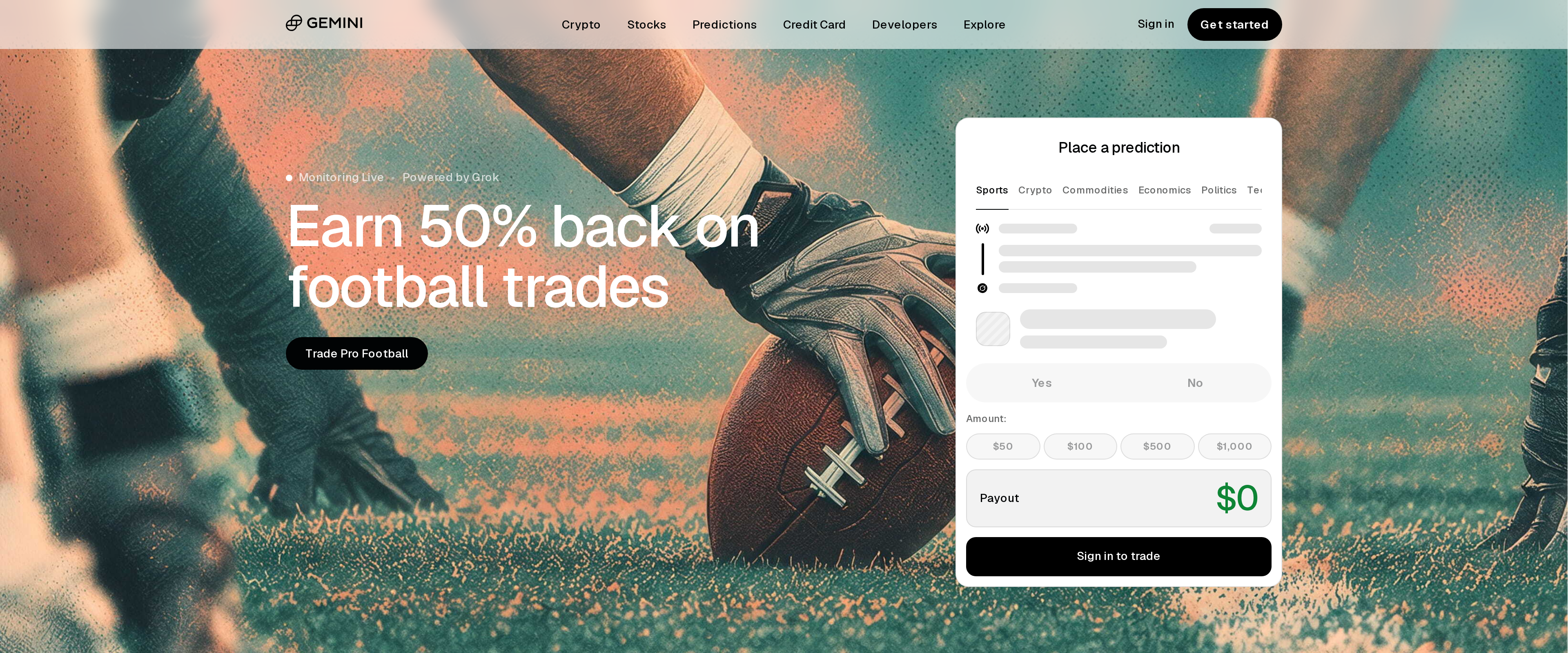
Gemini asks for a premium and offers a reason: it is the exchange most likely to be the grown-up in the room. The Winklevoss-founded company holds a New York licence, publishes security attestations and went public on Nasdaq in September 2025. Our question was whether that reputation is worth higher fees and a shorter coin list. We read the fee schedules, the product pages, the independent reviews and the news around the company, and the answer depends on how you buy.
Two prices, one account
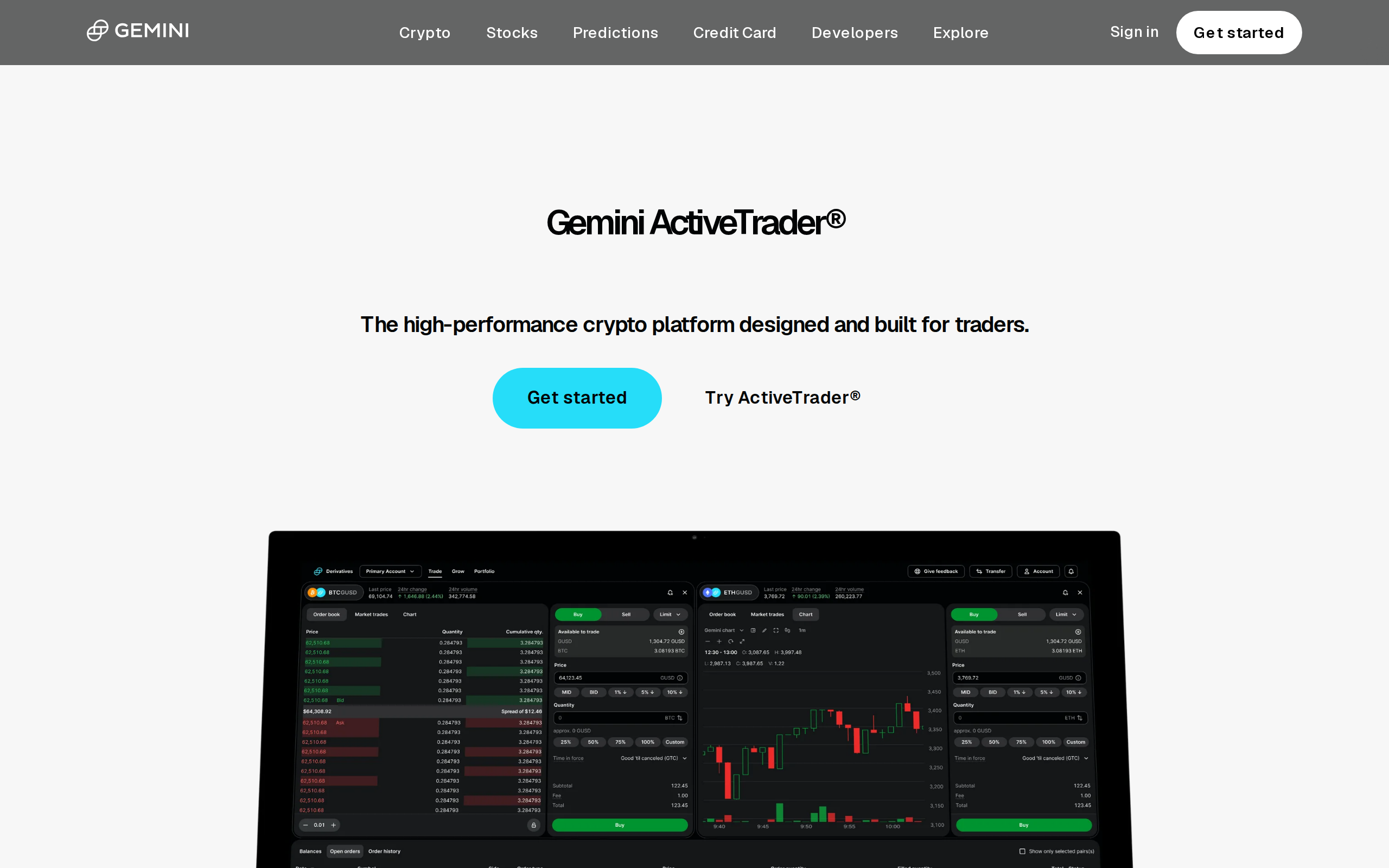
Gemini runs two ways to trade. The simple app is made for buying; ActiveTrader is made for trading. They are priced differently, and mixing them up is how people overpay.
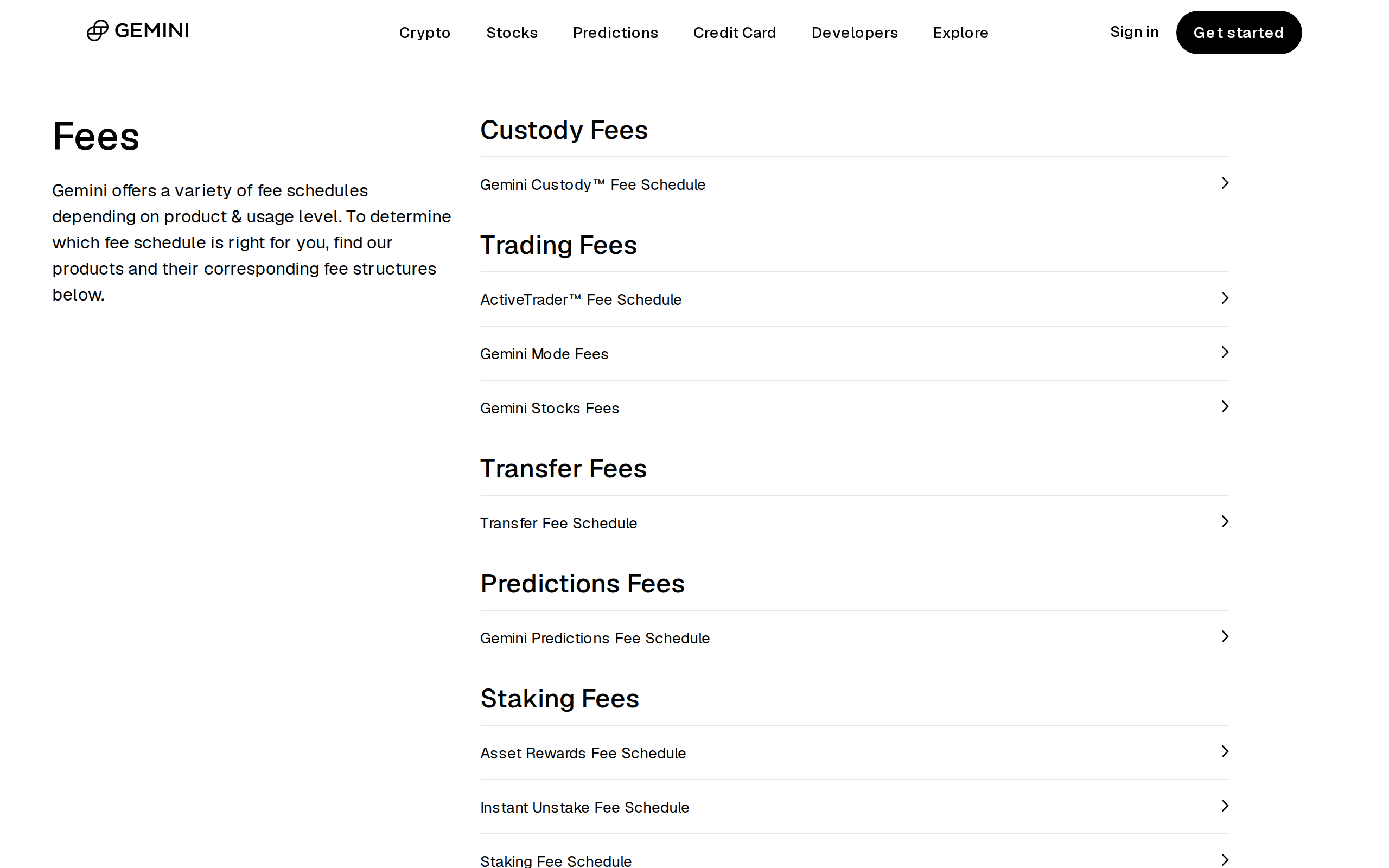
The simple buy shows a fee at checkout, but according to Coin Bureau's 2026 review there is no single published rate: it varies by payment method, order size, asset and location, and a spread is built into the quoted price. That makes the true cost hard to compare. The advice we would give is to price the same order in the simple app and in ActiveTrader before you commit.
ActiveTrader: cheap only at volume
ActiveTrader's published schedule is a ladder driven by 30-day volume or balance. A new account sits on the bottom rung at 0.60% maker and 1.20% taker. Buy $1,000 of bitcoin as a taker and the fee is $12. At $10,000 of volume the rate drops to 0.40% maker and 0.80% taker, and at $250 million a month it reaches 0.00% maker and 0.020% taker.
Almost no individual sits near the top. The realistic experience is the first few rungs, where Gemini is dearer than the flat 0.10% some global rivals charge. Stablecoin pairs are the exception: most charge 0.00% maker and 0.01% taker, so moving between dollar stablecoins is cheap.
What you get for it
Safety features are the real product. Coin Bureau lists hardware security key support, withdrawal-address controls, offline storage for most assets, and SOC 2 Type 2 certification. Custody insurance totals $125 million, split into $25 million for hot wallets and $100 million for cold storage, with exclusions you should read. Insurance caps are not a guarantee that any given customer is made whole.
The history matters too. In 2024 the New York regulator fined Gemini $37 million and required it to return over $1.1 billion to customers of its Earn lending programme, after the firm failed to vet Genesis. The Block's account is worth reading before you treat "regulated" as "risk-free".
The coin list and the prices page
Gemini lists over 90 cryptocurrencies and 655 or more trading pairs, per Coin Bureau, and availability varies by region. That covers bitcoin, ether, solana and the large caps. It does not cover the long tail that global exchanges list.
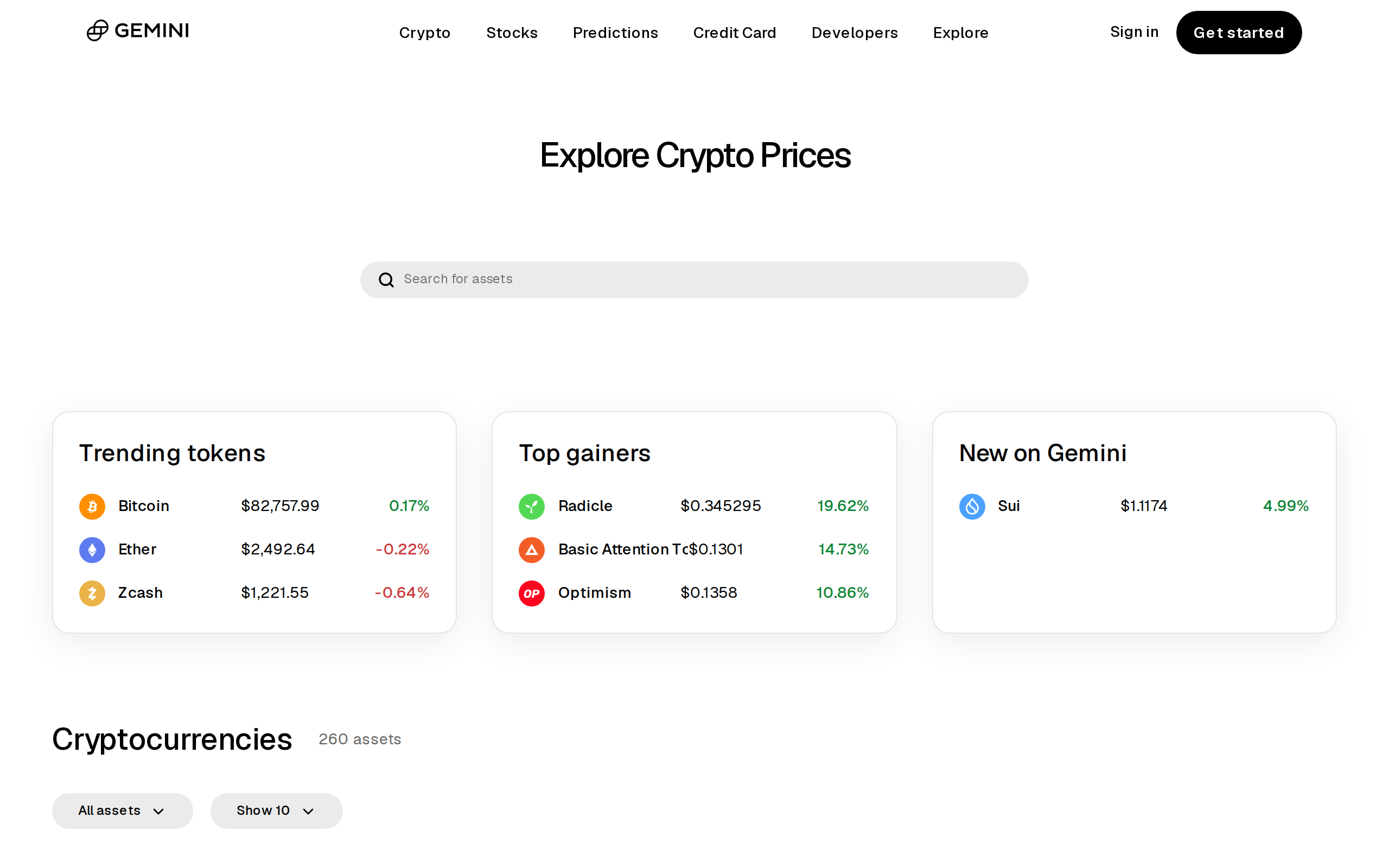
If you want the newest token, you will not find it here first. Some buyers count that as a feature, because the listings are slower and screened.
A company in retrenchment
This is the part to weigh. In February 2026 Gemini said it would cut about 25% of staff and leave the UK, EU and Australia, The Block reported. A second 30% reduction followed in April, tied to an AI pivot. Retail accounts in those regions were closed on 6 April 2026.
None of that says your funds are at risk. It does say the firm is shrinking to its home market, and a smaller team sometimes means slower support and fewer new products. If you live in the US, the effect is limited. Outside it, the product may simply not be available.
The listing and the public-company factor
Gemini trades as GEMI on Nasdaq, which means quarterly filings and scrutiny that private rivals avoid. For a customer that is useful: losses, headcount and legal matters are disclosed on a schedule rather than leaked. It also exposes the company to market pressure, and the 2026 cuts followed large quarterly losses reported in the press. Watch the filings if you plan to keep a large balance on the platform for a long time.
Who it suits
Choose Gemini if you are in the US, buy a few times a year, and care more about a licensed custodian and clear controls than about the last 0.5% of cost. Staking through Gemini keeps up to 35% of rewards, so a self-custody route usually pays more.
Skip it if you trade often, chase small-cap listings or live in a country it has left. This is not advice to buy any asset; it is a description of what the platform charges and what it offers.
Specifications
- ActiveTrader entry fee
- 0.60% maker, 1.20% taker (30-day volume under $10,000)
- ActiveTrader top tier
- 0.00% maker, 0.02% taker at $250M+
- Stablecoin pairs
- Most 0.00% maker, 0.01% taker
- Assets listed
- 90+ coins, 655+ trading pairs (July 2026)
- Staking
- ETH, SOL and MON; up to 35% of rewards retained
- Insurance
- $125M total: $25M hot wallet, $100M cold storage
- Licence
- New York State Department of Financial Services
- Listed
- Nasdaq: GEMI, since 15 September 2025