The short version
eToro is a good place to start if you want to see what other investors hold and copy them, and a poor place to trade crypto by itself. A flat 1% on each side means a round trip costs 2% before the market moves, while spot exchanges charge a fraction of that. The $5 withdrawal fee and the history of a 2024 SEC settlement add friction. Use it for the social features; do your crypto trading elsewhere.
Best for: Beginners who want copy trading across crypto and stocks
Our score: 6.6 out of 10
Pros and cons
What works
- CopyTrader lets you mirror other investors and see what they hold in real time
- Regulated multi-asset platform: crypto, stocks and a free $100,000 demo account
- Fee page is plain: the 1% crypto fee is stated and shown in your P&L
- Higher Club tiers earn reduced crypto fees as monthly volume grows
- More than 50 crypto assets now open to US users after the 2024 cutback
What does not
- 1% on buy plus 1% on sell is a 2% round trip, far above spot exchange fees
- A $5 withdrawal fee applies with a $30 minimum on fiat withdrawals
- Settled with the SEC in 2024 and cut its US crypto list from 74 tokens to 3 at the time
- Crypto is unavailable to residents of several US states, including New York
- Copy and CFD products carry high risk: 51% of retail CFD accounts lose money
Buy $1,000 of bitcoin on eToro and your position opens at roughly $990 of value. Sell it a minute later at the same price and you receive about $980. That is what a flat 1% each way does, and it is the first thing to understand about the platform before anything else on the screen.
The arithmetic that defines it
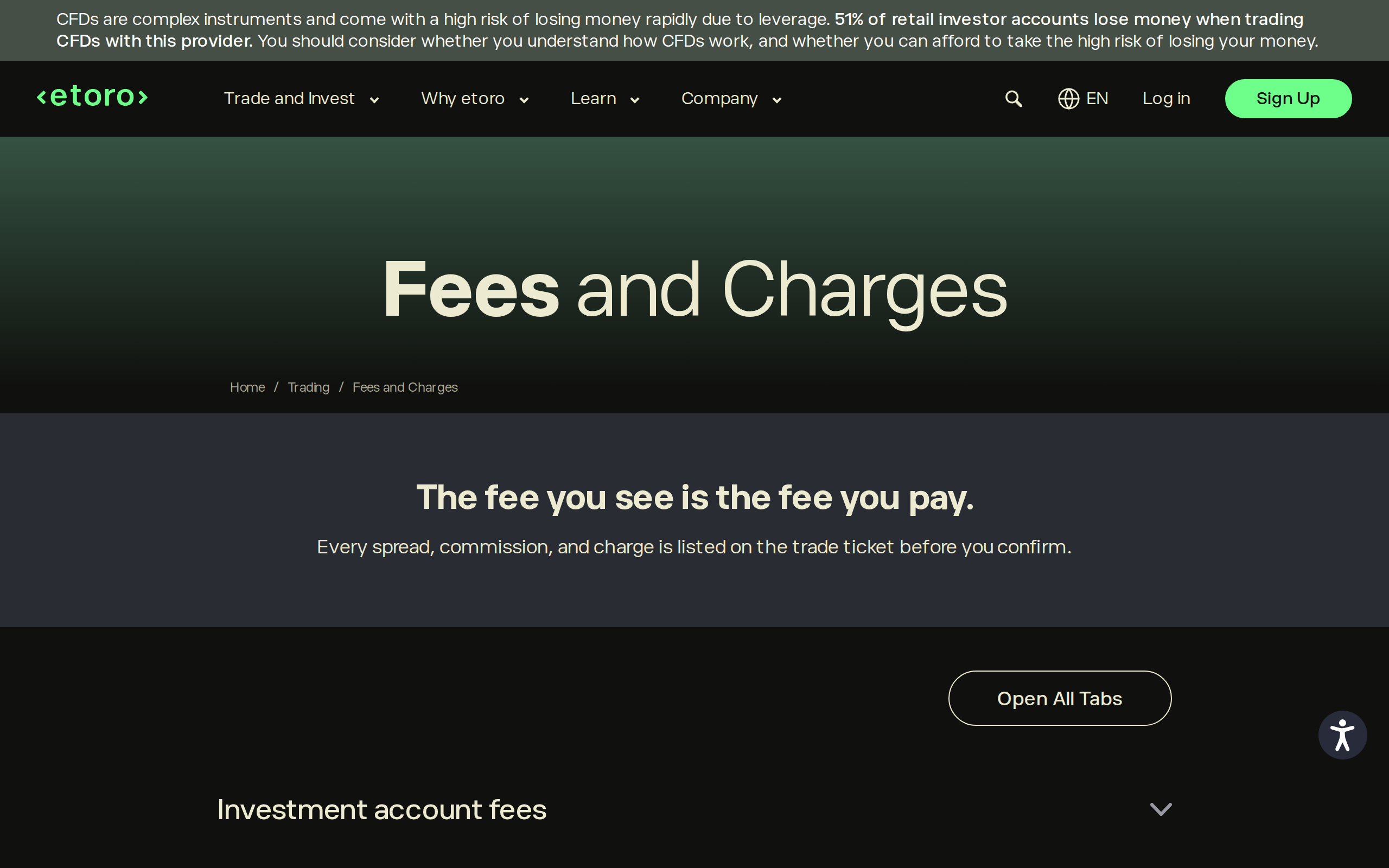
eToro's fee page is blunt about it. Manual crypto trades cost 1.00% per position at the Bronze, Silver and Gold Club levels, with reduced rates for higher tiers that depend on monthly volume. The page heading promises "the fee you see is the fee you pay", and to be fair, the fee does show up straight away in your portfolio's profit and loss.
Compare that with a spot exchange. Coinbase Advanced, Kraken Pro and the offshore venues charge tenths of a percent, and some charge less at volume. A 2% round trip means a position must rise 2% only for you to break even. For a long-term holder who buys once, it is a one-off cost. For anyone who adjusts a portfolio monthly, it eats returns steadily.
Other charges are modest. Withdrawals to a bank cost $5 with a $30 minimum, per the fee page. The fee page says transfers to an external wallet carry blockchain network fees only, and it lists a separate charge for moves into eToro's own money wallet, so read that row before you transfer anything.
What the 1% buys: a social layer
eToro's real product is not the order ticket, it is the people. The CopyTrader page lets you pick an investor and mirror their trades automatically, in proportion to your allocation. Public profiles show holdings and track records, so you can watch what others actually own rather than what they say on social media.
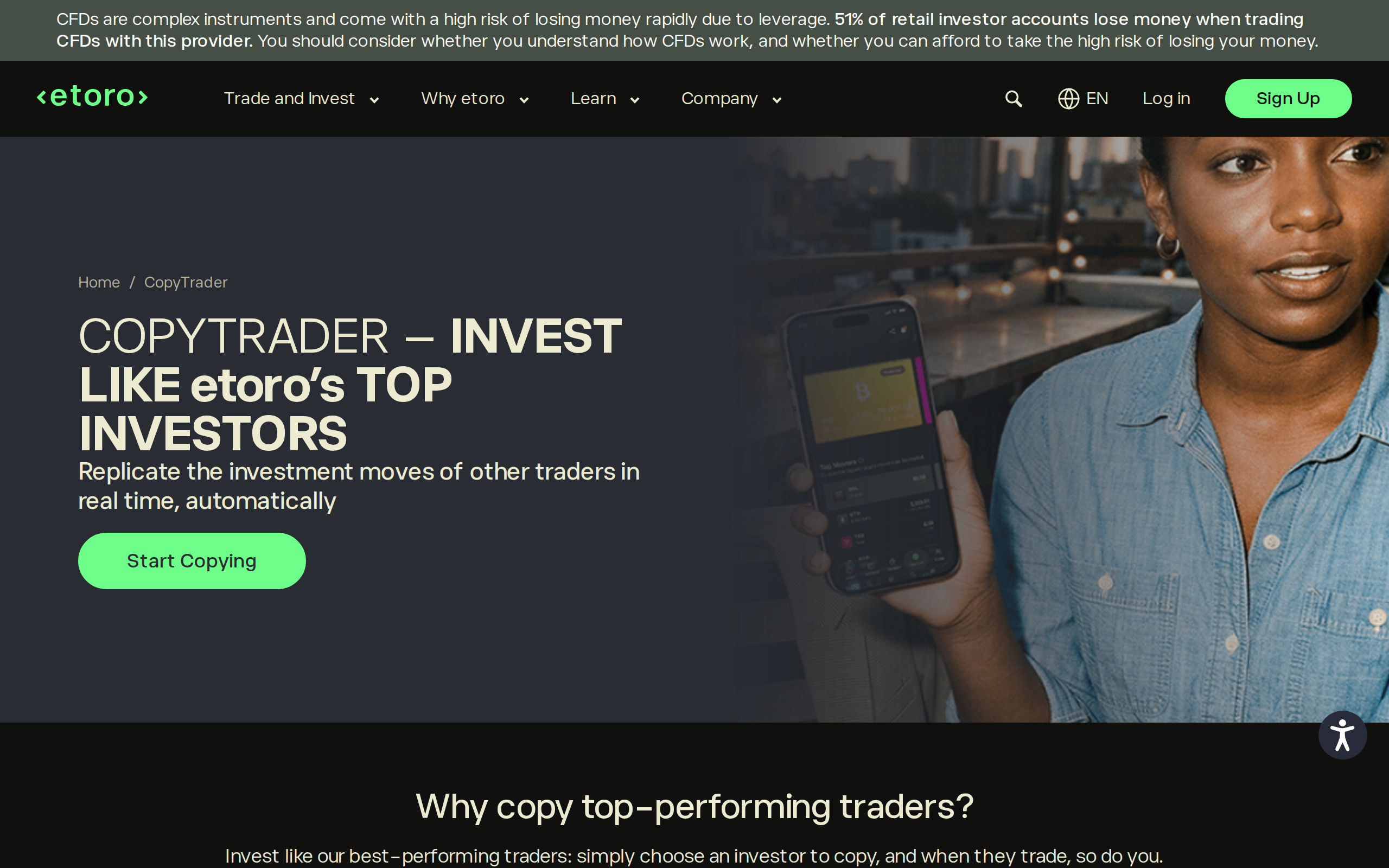
That is valuable for a beginner who does not know where to start. It is also a trap. A strong 12-month record says little about next year, and a copied trader's mistakes become yours at the same percentage. The CopyTrader page carries the CFD warning in plain text: 51% of retail investor accounts lose money when trading CFDs with this provider. Read that line twice before you copy anyone using leverage.
The regulatory record
In September 2024 eToro settled with the SEC, which had accused it of acting as an unregistered broker-dealer and clearing agency. The SEC's press release is the primary source. eToro paid a $1.5 million penalty and cut its US crypto offering from 74 assets to 3. It has since grown the list: Decrypt reported additions such as Dogecoin and XRP, and The Paypers later put the total near 50. Availability still varies by state, and residents of places such as New York cannot trade digital assets.
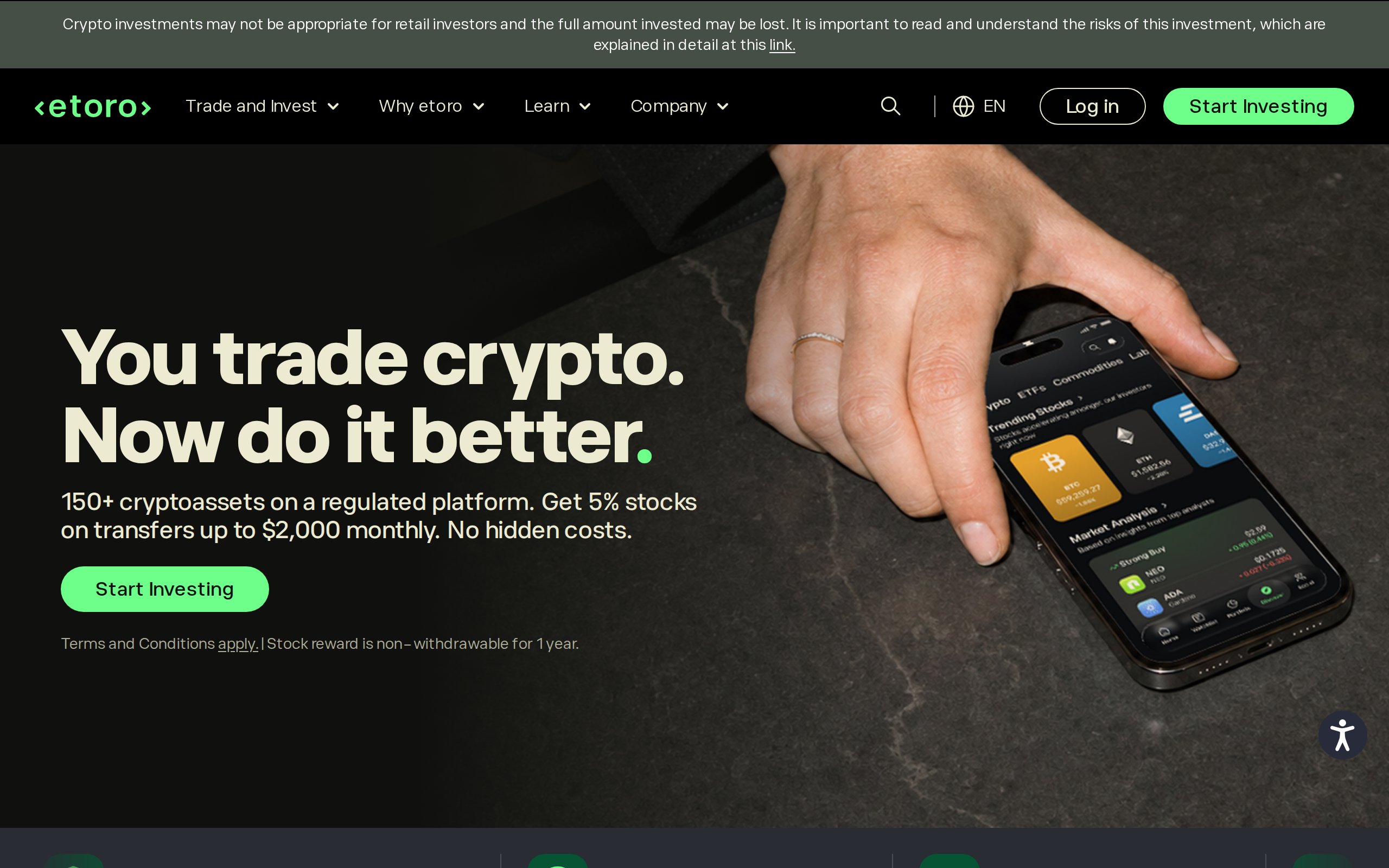
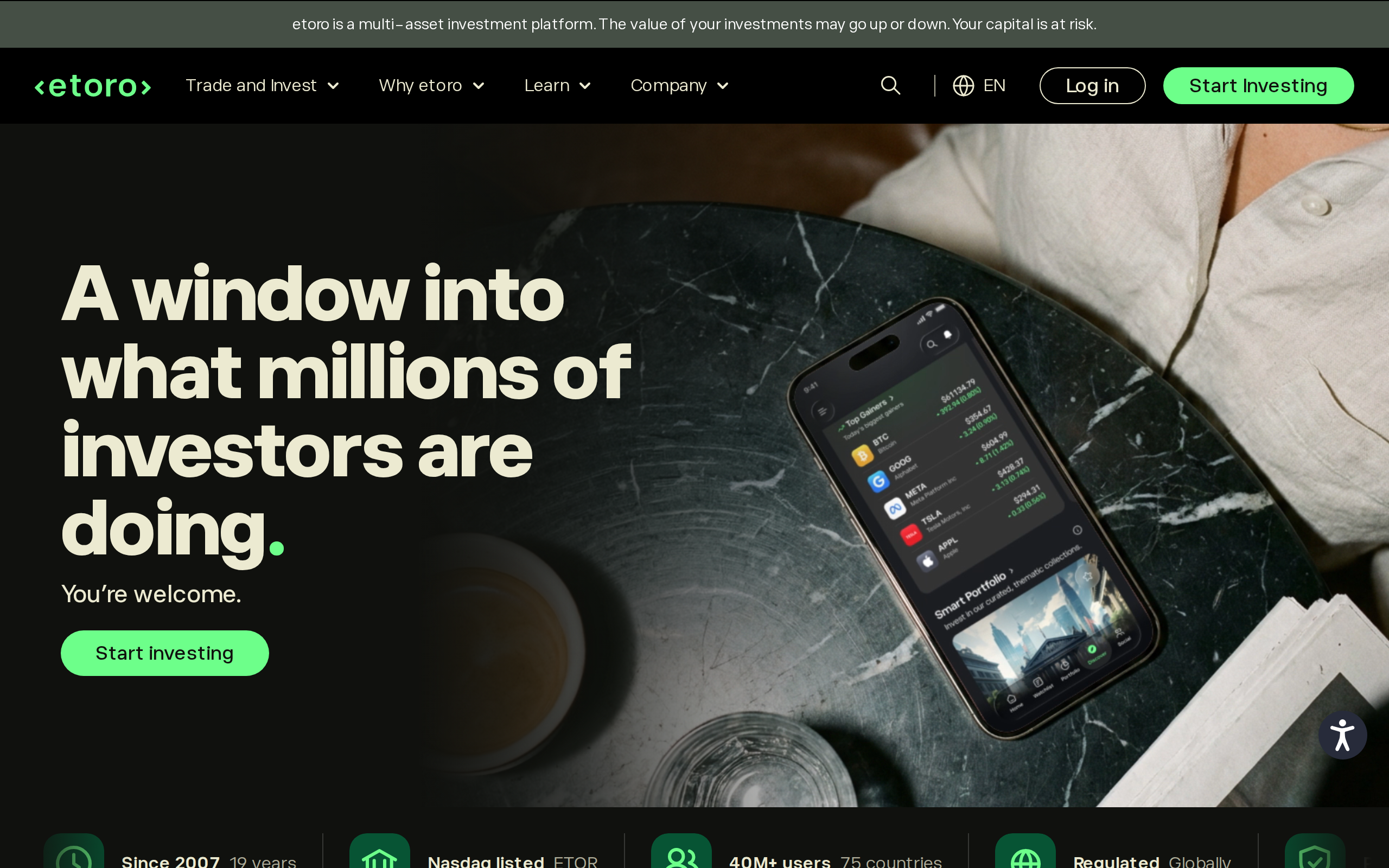
Outside the US the picture is wider. The crypto landing page now claims 150+ cryptoassets on a regulated platform.
Custody and what you actually hold
On a broker like this, the crypto in your portfolio is a position inside eToro's system until you move it out. That is convenient and carries the usual counterparty trade-off: you rely on the platform, not on keys you control. If self-custody matters to you, treat eToro as a place to buy and then withdraw to a wallet, and price in the withdrawal steps. Copy positions and Smart Portfolios are a different matter, since those are exposure products and not coins you can send anywhere.
A cheaper way to test the idea
You do not need to fund the platform to judge whether copy trading suits you. Open the demo account, copy two or three investors with different risk scores, and watch for a month how often they trade and how far their equity swings. If a copied trader churns daily, the fees will matter more than the strategy. If their drawdowns already make you queasy on paper, they will be worse with real money.
Who should use it
eToro makes sense if you want one app for stocks, crypto and copy trading, you invest modest sums, and you value seeing other people's portfolios. The free $100,000 demo account lets you test the copy flow without risk.
It makes little sense if you trade crypto actively, hold large positions, or want to pay exchange-level fees. At $10,000 a month of buying and selling, 1% each way is $200 a month, and a dedicated exchange would charge a fraction of that.
We rate it 6.6: a capable social broker that overcharges for plain crypto. This is a product assessment, not a suggestion about what to buy or copy.
Specifications
- Crypto buy and sell fee
- 1% each way at Bronze, Silver and Gold tiers
- Crypto range
- 150+ cryptoassets (eToro crypto page)
- Withdrawal
- $5 fee, $30 minimum (fee page)
- On-chain transfer out
- Blockchain network fees only
- Social tools
- CopyTrader, Smart Portfolios, public feeds
- Demo account
- Free $100,000 virtual balance
- Regulatory record
- SEC settlement September 2024, $1.5M penalty
- Risk warning
- 51% of retail CFD accounts lose money