
Loading
Source: concept2.com
A simple, sturdy bike that gives repeatable power and time data with no subscription fees. It is a better training tool than most connected spin bikes for riders who follow plans, and a worse entertainment machine for anyone who wants instructors. Its watts read lower than a pedal power meter, so compare it only with itself.
Best for: Data-minded cyclists and rowers who train by numbers, not by class
The Concept2 BikeErg costs $1,100, uses an air flywheel and a PM5 monitor, and needs no membership. It is the better training tool for riders who want honest numbers over classes.
Connected spin bikes sell you a class. The BikeErg sells you a number, and the number does not change depending on which month you subscribed.
That is the comparison buyers are really making, and it is why this bike deserves a hard look from anyone who trains with a plan rather than a playlist.
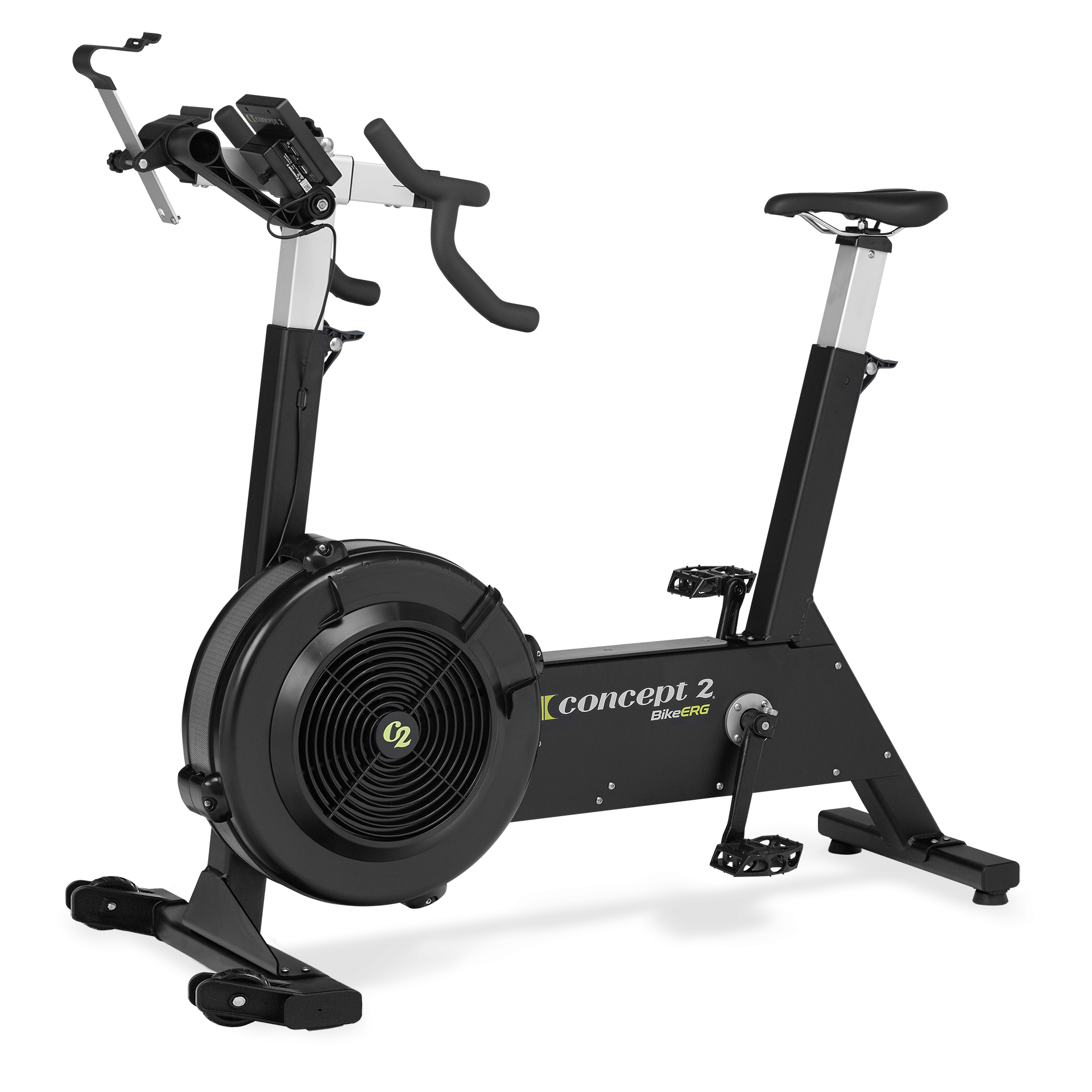
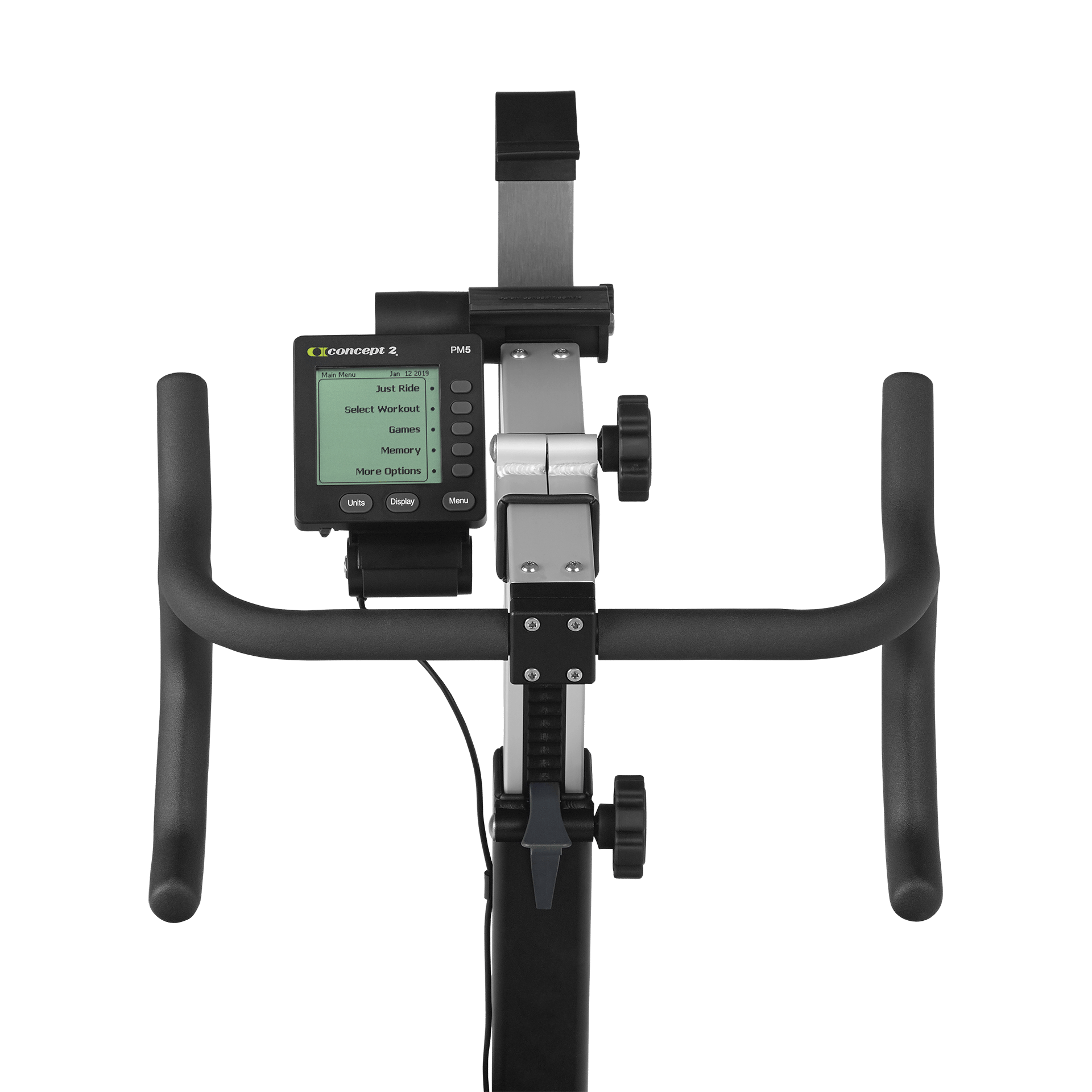
The BikeErg is Concept2's air bike. A flywheel inside a cage spins as you pedal, and a damper slider sets how much air gets in, a bit like picking a gear. Push harder and the resistance climbs with you, so there is no level to outgrow. Concept2 bolts on its PM5 monitor, a small LCD that shows time, distance, pace, watts and cadence, and it ships with a device holder for your phone or tablet.
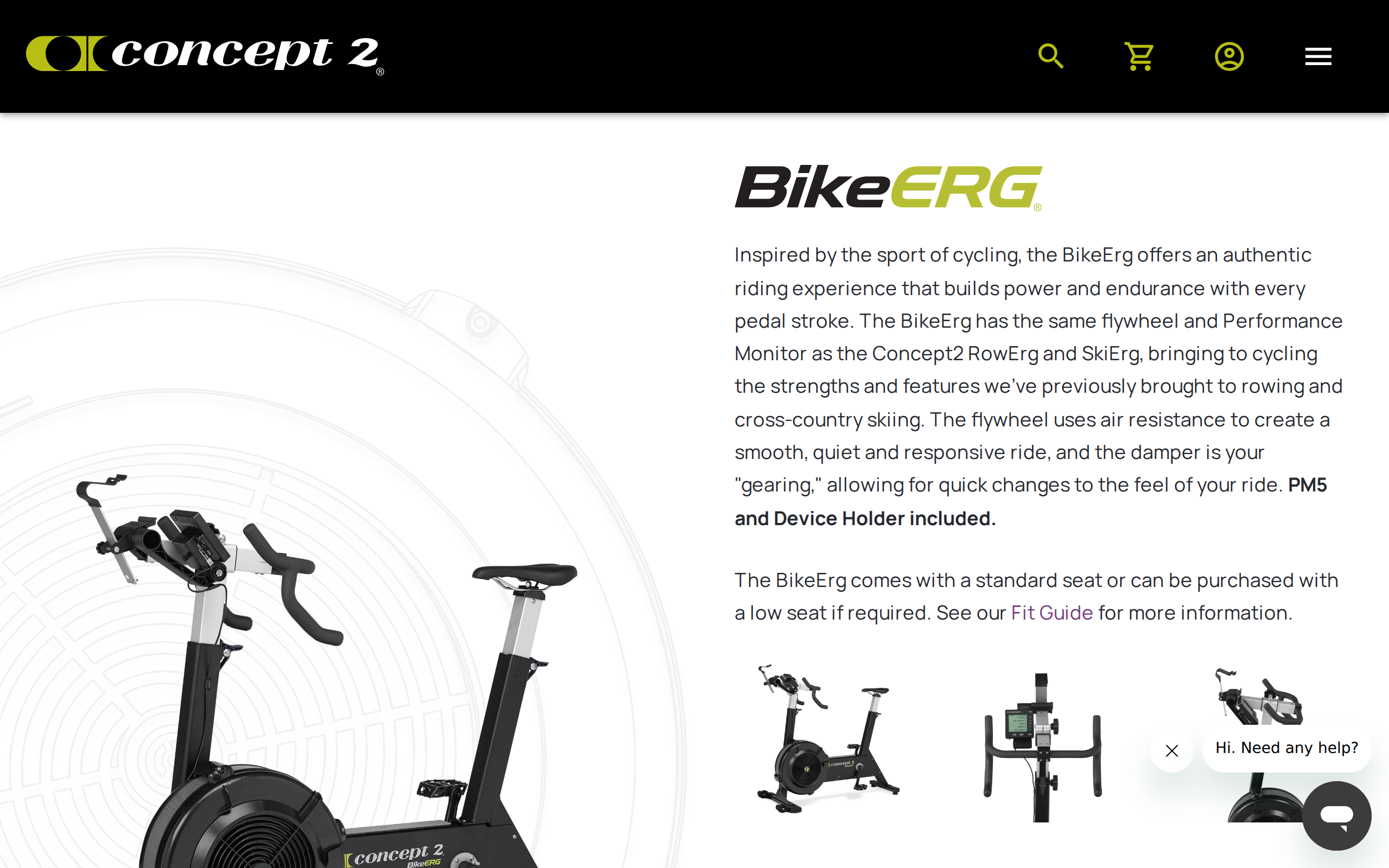
The monitor talks to the free ErgData app by Bluetooth, and Concept2 lists Zwift and other platforms. There is no account fee and no membership tier. Compare that with the Peloton Cross Training Bike, where the hardware is only half the bill.
Here is the part purists argue about. The BikeErg reads power at the flywheel, so some watts are lost before they reach the sensor. One reviewer reports a difference of 15 to 20 percent against pedal power meters. Cycling Weekly says the same thing in softer words: you will not hit the same numbers you would on a dedicated power meter.
Our reading is that this is fine if you treat the BikeErg as its own yardstick. It gives reliable, repeatable data, which is what training needs. Do 20 minutes at a set damper in January and again in April, and the change is real. What you cannot do is paste your FTP from a pedal meter into a BikeErg plan and expect the same intervals to feel right.
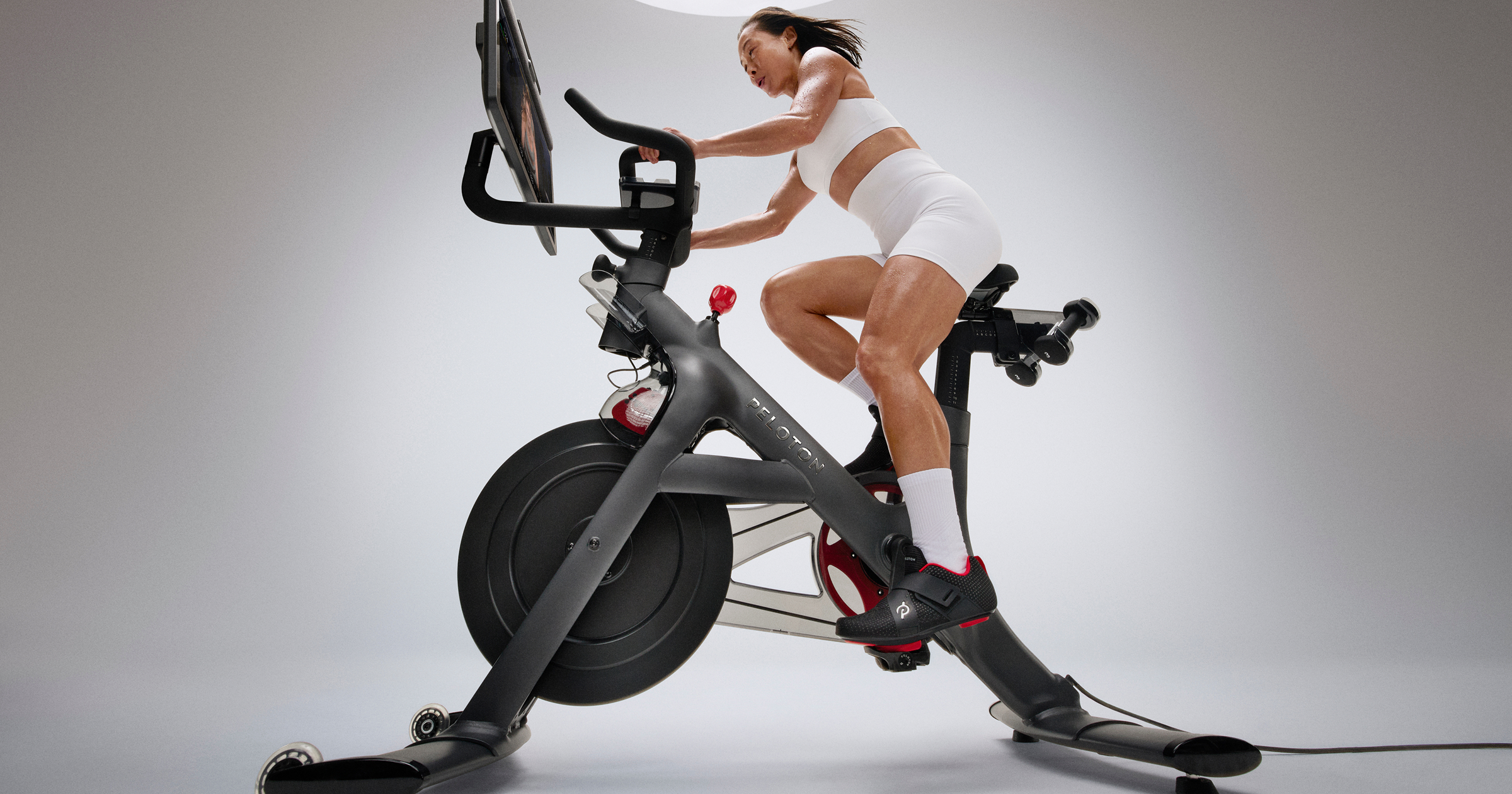
The Bike+ is the best-riding connected bike we know of, and its swivel screen, auto-resistance and rep-counting camera do make off-bike strength classes easier to follow. It is also $1,000 more than the Bike, needs a $49.99 monthly membership, and reviewers report screen wobble and early creaks at this price. Buy it if you will use rides, strength and mobility every week. A cyclist who only rides should buy the Bike.
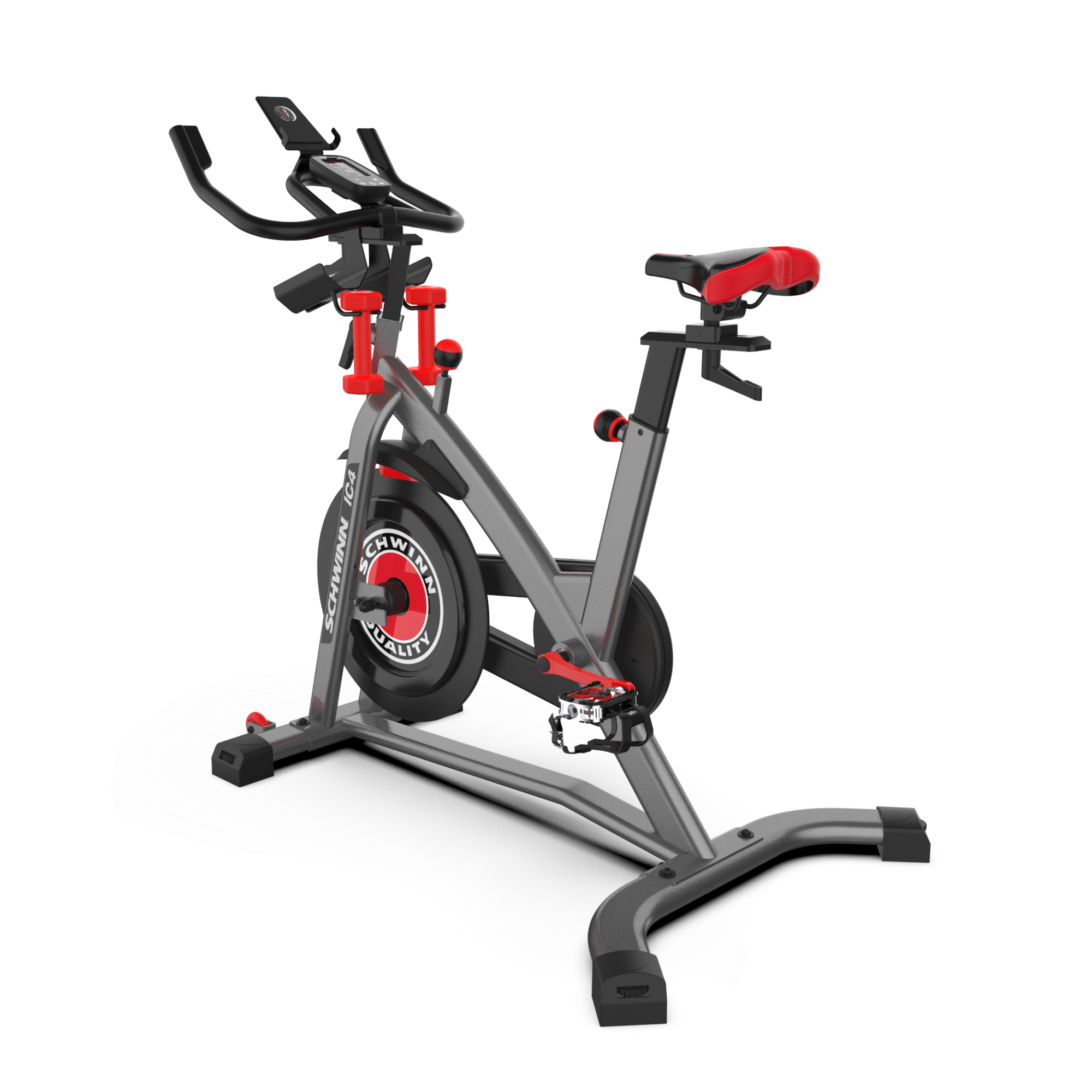
The IC4 is the best-value spin-style bike for someone who already owns a tablet and wants to pick their own apps. It rides smoothly, fits a wide range of riders and costs no subscription to use. The cost is manual resistance, so apps cannot change the load for you. If you want that, spend more or look elsewhere.
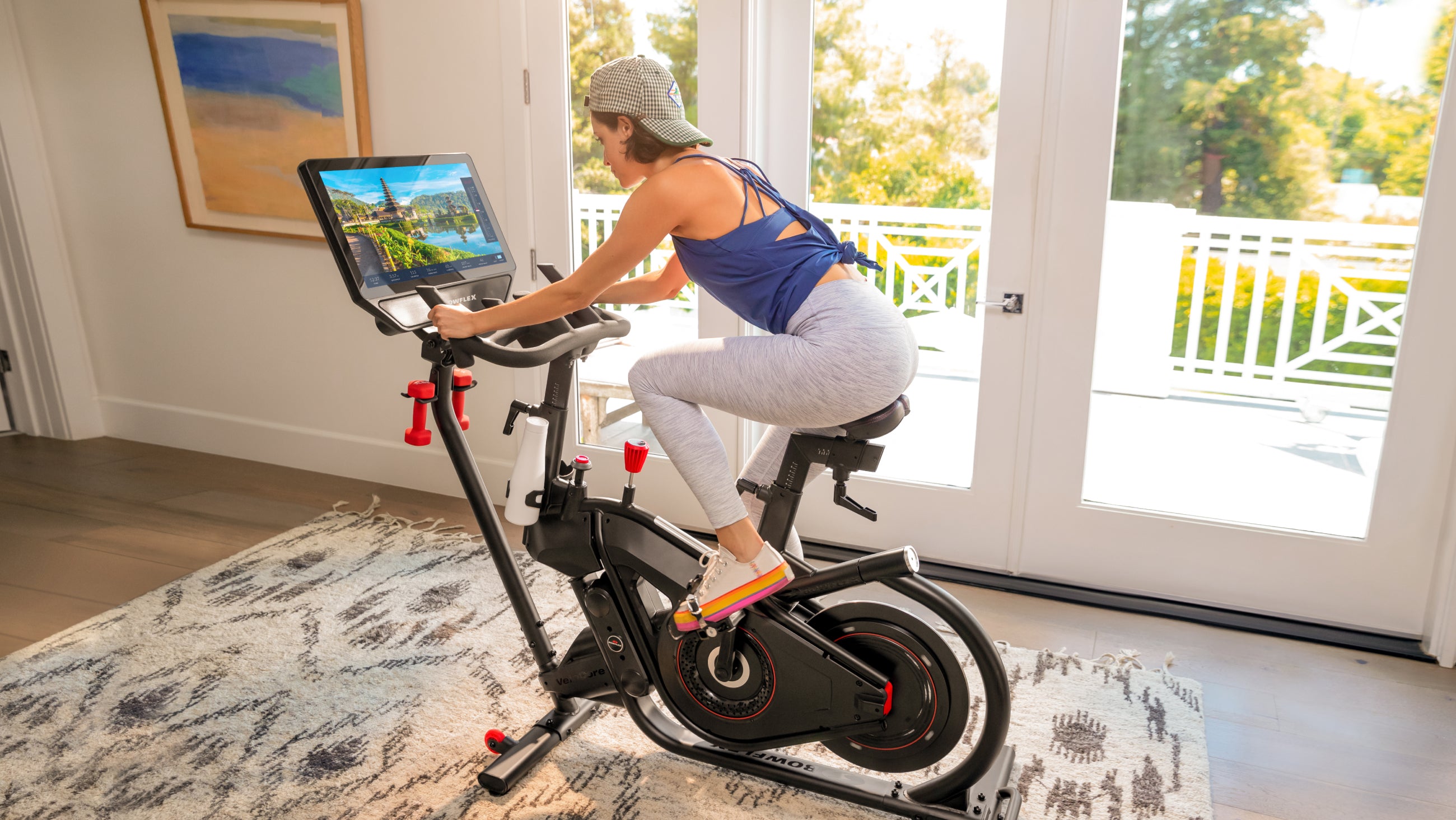
Lean mode is real: it recruits your obliques and makes rides more engaging, and the bike underneath is quiet, stable and holds 325 lb. But the lean is a nice extra, not a second workout, JRNY adds $149 a year, and the two year frame warranty is short. Buy it near $1,000. At $2,199 it is overpriced.
The seat adjusts from 30.75 to 41 in on the standard post, or 28.75 to 38 in with the low seat Concept2 sells for shorter riders. Crank length is 170 mm, pedals are standard, and Concept2 says aftermarket parts fit. That means cycling shoes, your own saddle and a road-style position. Cycling Weekly testers noted how closely it mimics a road bike.
The bike weighs 68 lb with a 48 x 24 in footprint. Concept2 asks for a 60 x 48 in square of floor while you ride, and a 350 lb user limit sits well above most smart bikes. Air flywheels are not quiet, so do not expect to ride at 6 am next to a sleeping partner.
Think about what a connected bike really sells. A subscription bike gives you instructors, a leaderboard and a reason to show up on a cold morning. Those are good things, and for plenty of people they are the whole point of owning a bike. The BikeErg gives you none of that. It gives you a stopwatch with a very good sensor attached, and it asks you to supply the motivation.
If you have a coach, a plan or a race on the calendar, that is a fair trade. If you need a voice telling you to dig deeper, it is not, and the best bike is the one you use.
The BikeErg is a non-controllable bike: Zwift reads your power but cannot change the resistance. You do that yourself with the damper, which means hills on screen are a request, not an order. For racing it works. For structured ERG-mode workouts, where the bike holds you to a target wattage, a smart trainer is the better tool.
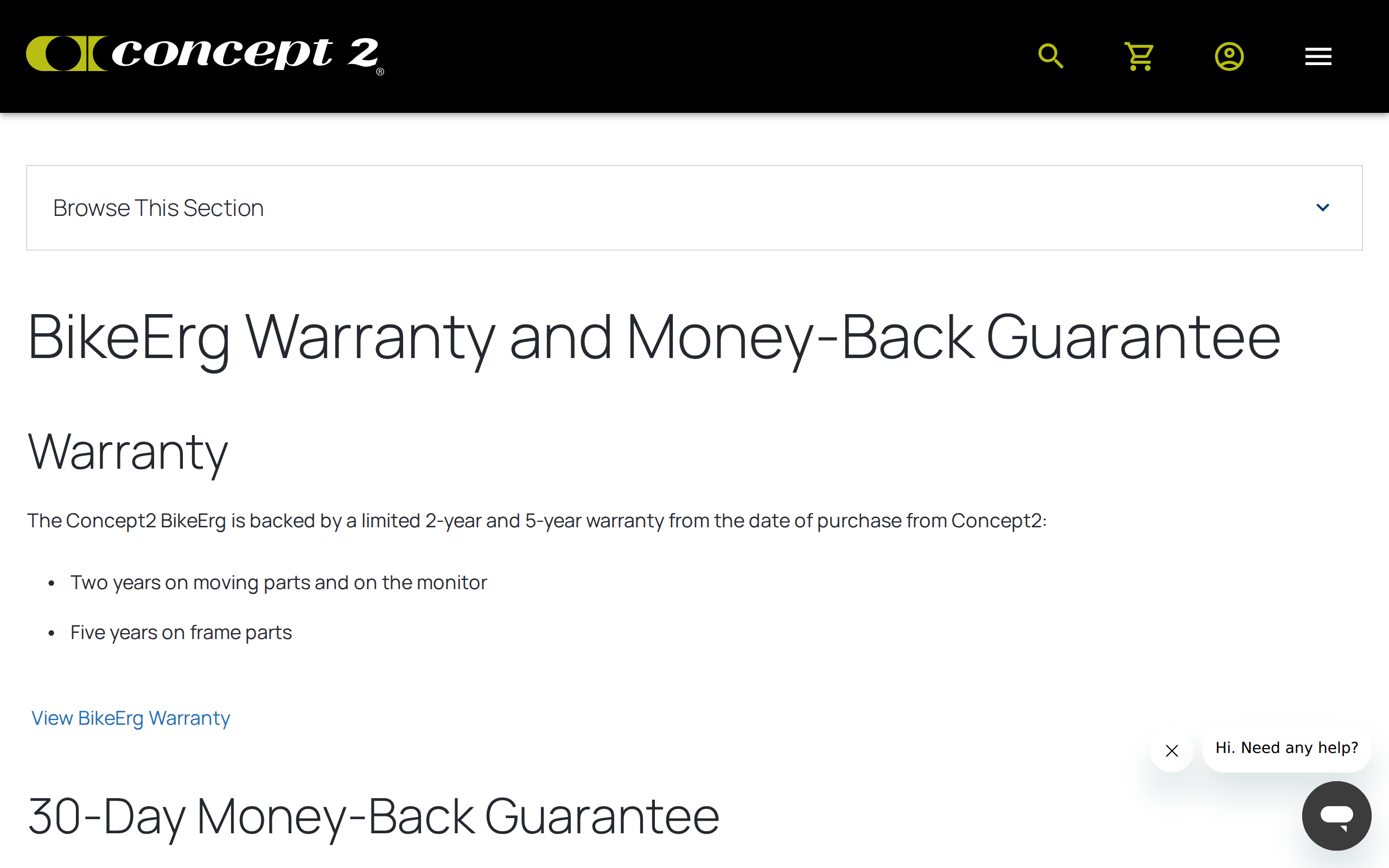
Concept2 backs the bike with a 30-day money-back guarantee and a limited 2-year and 5-year warranty. Two years cover moving parts and the monitor, which is the sort of plain cover we like on a machine with so few parts to fail.
At $1,100 it is not cheap, but it is a one-time cost, and over three years it undercuts any bike with a monthly fee.
Buy the BikeErg if you follow your own plan, care about repeatable data, like air resistance and want no subscription. It is also an excellent second machine for rowers who already know the PM5.
Skip it if you want instructors, a screen or a quiet ride. For a screen-free bike with a more spin-class feel, our Schwinn IC4 review is the better starting point.
We score it 8.5. It is the training tool in a field of entertainment bikes.