The short version
Coinbase Wallet is a free, self-custodial wallet that has dropped its social experiment and repositioned as a trading terminal across 11 networks, with perpetuals, prediction markets and tokenized stocks added. That breadth is useful, and the Coinbase name carries trust. But Coinbase would not disclose its trading and product fees, the pivot is only weeks old and self-custody means nobody can restore funds if you lose access. Good for Coinbase users who want to try onchain trading; not yet a default.
Best for: Coinbase users trying self-custody and onchain trading
Our score: 7.0 out of 10
Pros and cons
What works
- Free to download, with self-custody so Coinbase does not hold your keys
- Eleven networks including Base, Ethereum, Bitcoin, Solana and BNB Chain
- Perpetuals, prediction markets and tokenized stocks inside one wallet
- Backed by a large, listed company with an established security team
- Existing balances were unaffected by the September 2026 rename
What does not
- Coinbase declined to disclose its trading and product fees at the relaunch
- Product direction has swung twice in about 14 months, so the plan is unproven
- Perpetuals are powered by Hyperliquid, adding a separate venue to understand
- Self-custody means lost access cannot be fixed by customer support
- We found no independent review or fee table yet for the relaunched build
On September 10, 2026, Coinbase quietly put an old name back on a product. The app it launched as the Base App in July 2025, a mix of social feed, messaging and wallet, is Coinbase Wallet again. CEO Brian Armstrong said the social push "didn't quite work", The Block reported. So what is left, and is it the easiest self-custody wallet for someone who already uses Coinbase?
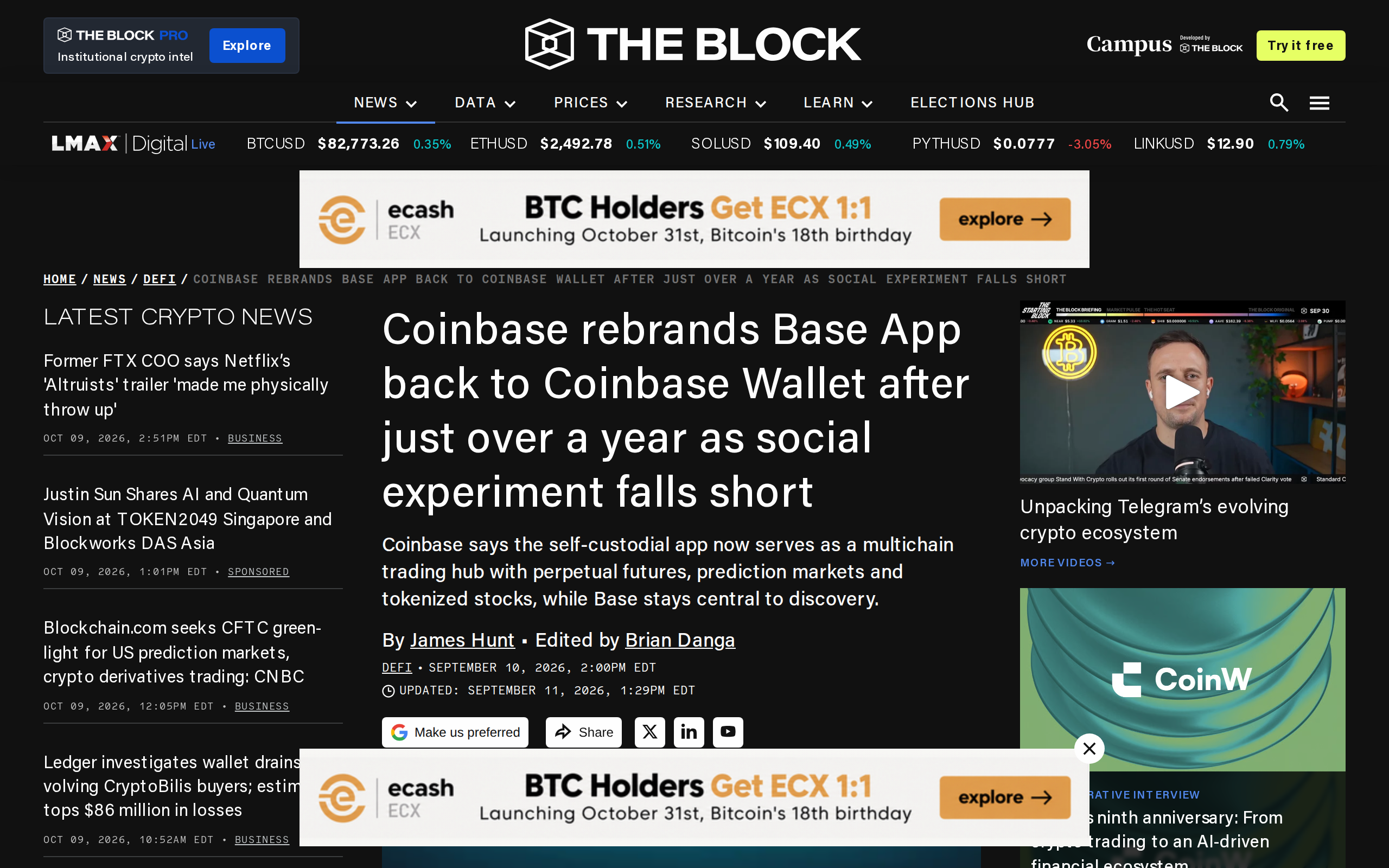
From social app to trading terminal
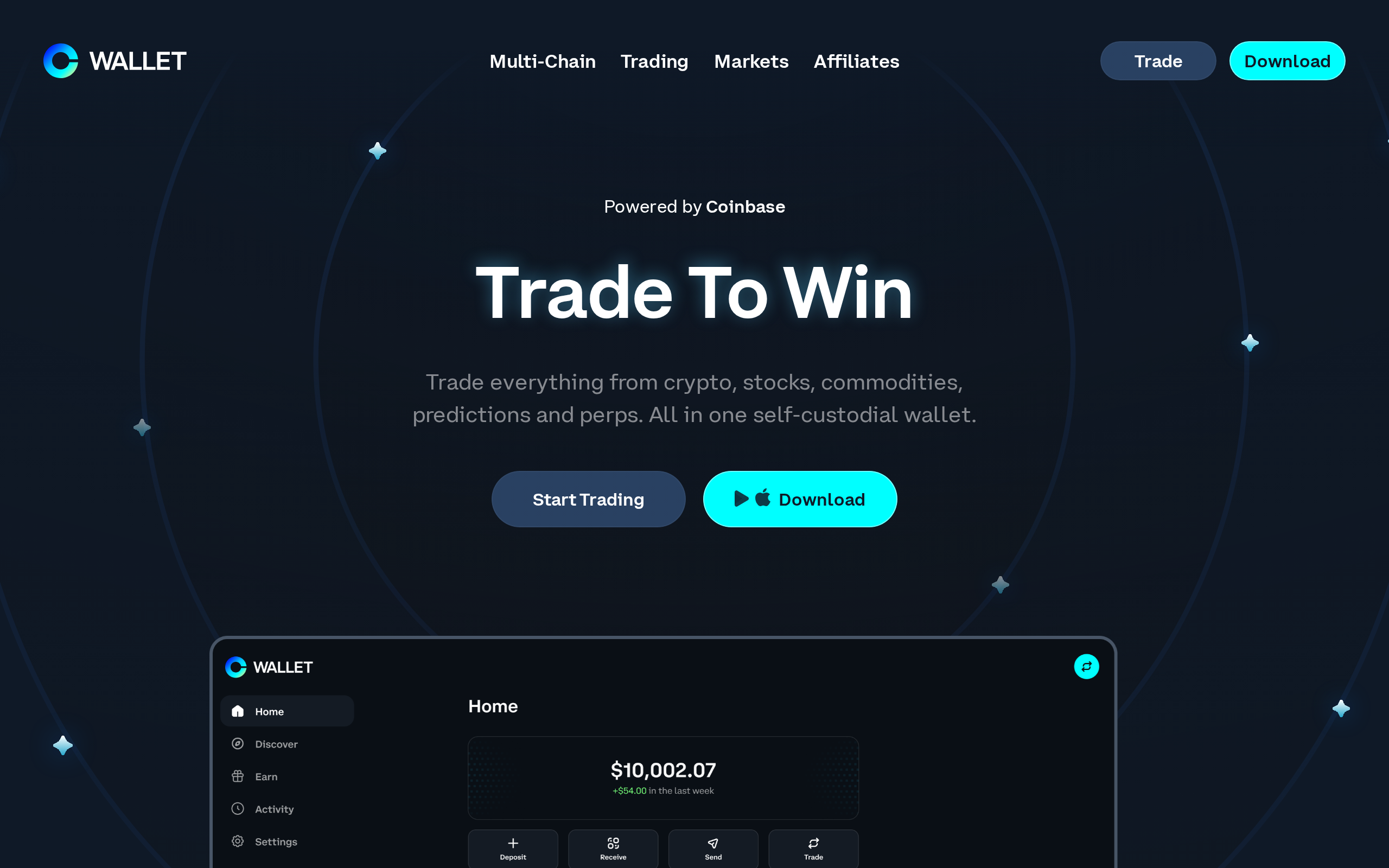
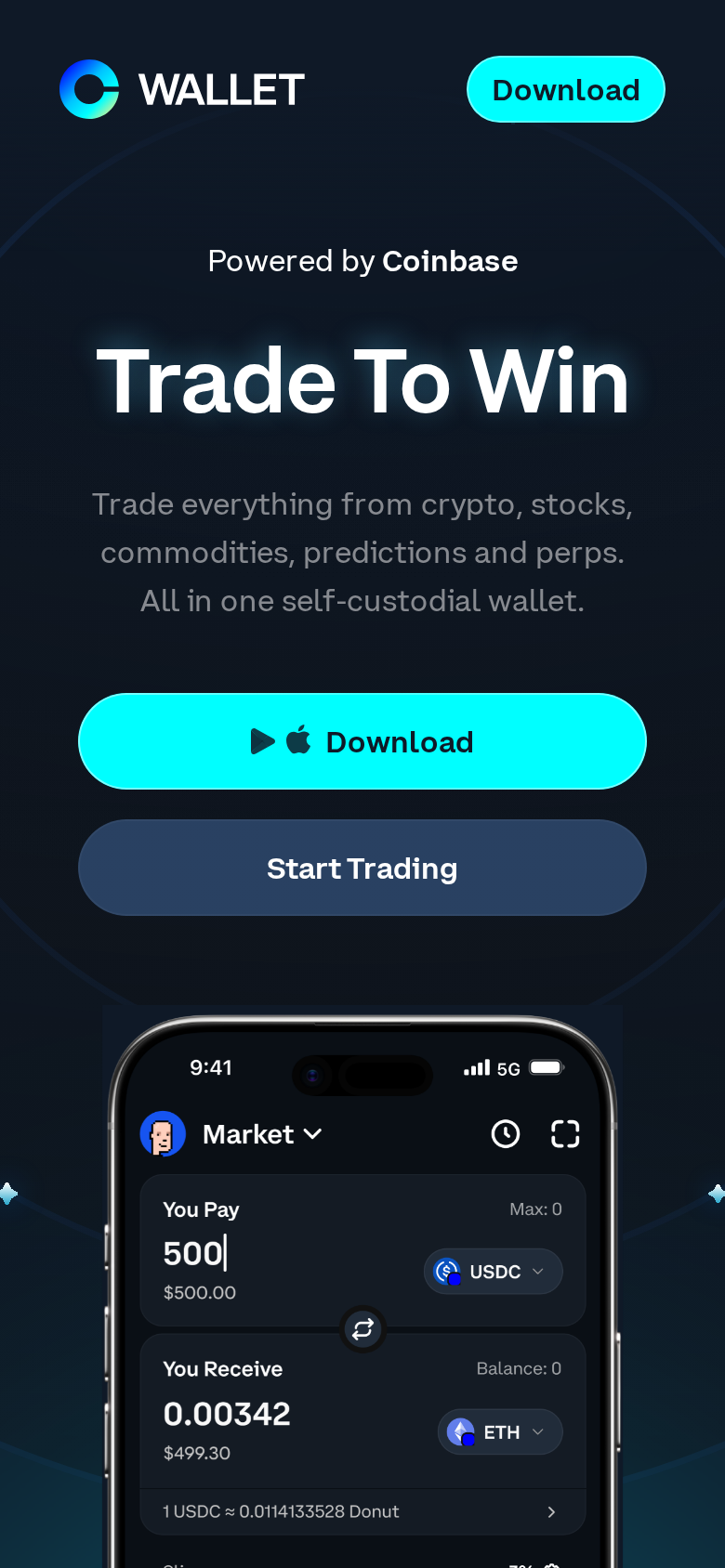
The new pitch on the official page is two words: "Trade To Win". The description reads "Trade everything from crypto, stocks, commodities, predictions and perps. All in one self-custodial wallet." Coinbase product lead Ryan Kass called it an "everything exchange", per Crowdfund Insider.
Underneath, the changes are concrete. According to The Block, the wallet now offers perpetual futures powered by Hyperliquid, prediction markets and tokenized stocks. You can also follow other traders. Social features did not vanish; they became a supporting tool for trading rather than the headline.
That reversal tells you something. A wallet that tried to become a social network and then retreated has changed direction twice in about a year. It is not a reason to avoid the app, but it is a reason not to treat any current feature as permanent.
Networks and what you hold
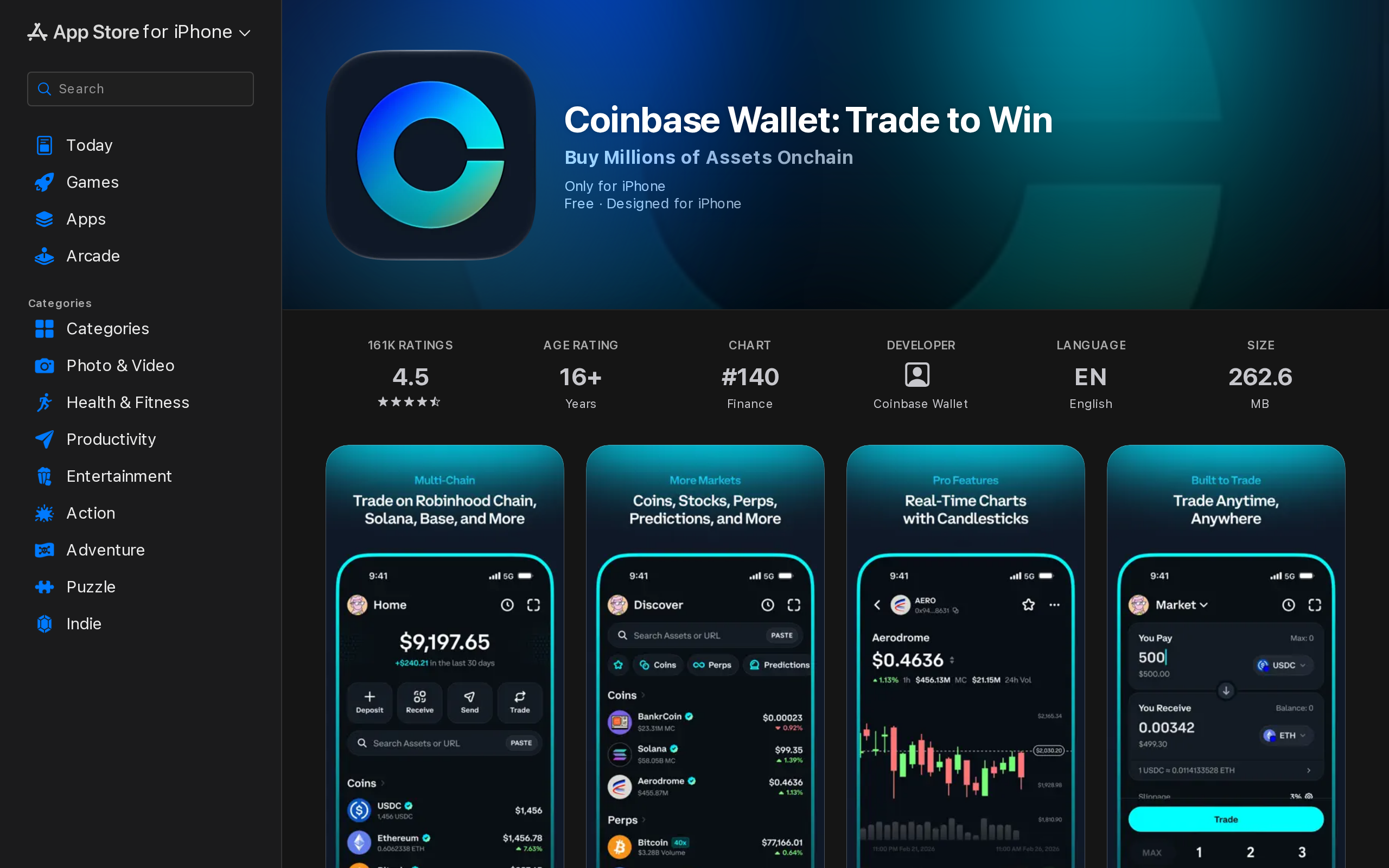
The wallet covers eleven networks: Base, Robinhood Chain, Solana, Bitcoin, Ethereum, BNB Chain, Monad, Optimism, Arbitrum, Polygon and Avalanche. Robinhood Chain and Monad are new. Bitcoin and Solana alongside the EVM chains matter, because many wallets make you pick between them.
Self-custody is the headline benefit and the headline risk. Coinbase does not hold your keys here, which protects you from an exchange failure. It also means nobody at Coinbase can restore access if you lose your recovery method. Coinbase said existing balances were unaffected by the rename, so nothing needs to be moved.
The fee question nobody answered
This is where we hold back on the score. The Block reports that Coinbase earns money through "trading and product fees" but declined to give specifics. We could not find a published fee table for swaps, perpetuals or prediction markets on the pages we read. For a product whose pitch is trading, that is a gap.
Compare it with competitors that publish their swap fees up front. Some self-custody wallets charge a flat percentage on in-app swaps, and MetaMask and Phantom have put numbers on theirs. Until Coinbase does the same, assume that in-app swap prices include a markup, and check the quote against an aggregator before a large trade.
On the phone, the experience mirrors the web pitch: a market swap screen is the centrepiece rather than a feed.
Is it the easiest wallet for Coinbase users?
Easiest to trust, probably. The brand is familiar, the app is free and the interface follows what a Coinbase user already knows. We could not confirm from the sources we read whether the wallet links directly to a Coinbase exchange account, so check that in the app before you rely on it for transfers.
It is not the best wallet for everyone. A plain EVM user may prefer Rabby for signing safety. A Solana user will find Phantom more focused. A person who wants offline storage should look at a hardware wallet. Coinbase Wallet is strongest as a trading front end, particularly for tokenized stocks and prediction markets, which most rivals do not offer.
Before you move real money
Three habits cost nothing. Write down the recovery method on paper and store it away from the phone. Send a small test transfer in before depositing a large amount, and confirm the network matches on both ends, since sending a token over the wrong chain is the classic self-custody loss. And treat perpetuals and prediction markets as separate, higher-risk products from simple holding: they can lose money quickly, and the Hyperliquid link means a second venue sits behind the screen.
Verdict
We rate it 7.0. It is free, broad and backed by a company that has survived a decade. It loses points for fees that are not disclosed, a direction that has already swung once and the permanent burden of self-custody. Try it with a small amount first. This is a product assessment, not a recommendation to trade any particular asset.
Specifications
- Price
- Free
- Custody
- Self-custodial, user holds the keys
- Networks
- 11, including Base, Ethereum, Bitcoin, Solana, BNB Chain
- New networks
- Robinhood Chain and Monad
- Trading
- Spot swaps, perpetuals via Hyperliquid, prediction markets
- Assets
- Crypto, tokenized stocks, commodities
- Platforms
- iPhone app confirmed on the App Store listing
- Rename date
- September 10, 2026, back from Base App