The short version
Bybit is a competent all-round exchange whose spot book is a side dish to its derivatives. The base spot fee is 0.10% maker and taker, Earn covers flexible, fixed and staking products, and reserves are published with Merkle proofs. It loses points for the $1.46 billion theft in February 2025, a feature set that overwhelms newcomers, and a map of banned or restricted countries that includes the US. Skip it if you want to buy a little bitcoin twice a year.
Best for: Active traders outside the US who want spot and futures together
Our score: 7.4 out of 10
Pros and cons
What works
- Flat 0.10% spot fee for new accounts, no volume or token needed
- Spot, perpetuals, options and Earn sit under one account
- Public reserve reports with Merkle-tree proofs, above 100% in recent data
- Fully documented V5 API that unifies spot, derivatives and options
- Covered every customer loss after the 2025 theft and kept withdrawals open
What does not
- Lost about $1.46 billion in ETH in February 2025, a control failure at the top
- Unavailable in the US, and limited or banned in the UK, Canada and Singapore
- Interface is crowded; the spot screen is not where the product's attention goes
- Spot fee is average, not cheap: several rivals start lower with a token discount
- Custodial Earn products carry exchange risk that no quoted yield removes
Most people hear about Bybit through futures: leverage, liquidations, a sponsor logo on a sports shirt. The question for this review is narrower. If you only want to buy coins and park some of them in a yield product, is Bybit a good place to do it, or are you paying for a derivatives machine you never open? We went through its fee tables, its API documentation, its app listing, its reserve data and the record of the February 2025 theft.
The spot fee is average, and that is fine
A new account pays 0.10% maker and 0.10% taker on spot, according to Coin Bureau's current review. No volume threshold, no token to hold. Buy $1,000 of ETH and the fee is $1. In Bybit's EU entity the taker side is 0.25%, so check which entity your country lands in before you compare.
That is the same flat number several rivals charge. It is not a reason to pick Bybit, and it is not a reason to avoid it. Perpetual futures start at 0.02% maker and 0.055% taker, which is where the exchange tries to win you. A spot buyer who never touches leverage gets a normal fee and a screen designed for someone else.
Earn: three kinds of risk in one tab
Earn covers flexible and fixed-term savings, on-chain staking and structured products. Treat them as three different bets. Flexible savings is an unsecured loan to the exchange with same-day redemption. Fixed terms lock the coins for a stated period in return for a higher quoted rate. Structured products embed an option payoff, and the headline rate on those can mask a real chance of getting back less of the coin you wanted.
We are not quoting yields: Bybit's own pages refused to load from our location, and the rates move daily anyway. What the tab does well, going by Coin Bureau's description, is breadth: you can leave USDT idle in a flexible product without opening a second platform. What it cannot do is remove counterparty risk, which brings us to the part you came to read.
The $1.46 billion question
On 21 February 2025 attackers took roughly $1.46 billion, mostly ETH and staking derivatives, during what looked like a routine cold-to-warm transfer. Onramp's write-up traces it to a compromised developer machine at the Safe multi-sig provider, where malicious code changed what Bybit's signers saw on screen. They approved a transaction that displayed one thing and did another. The theft was attributed to North Korea's Lazarus Group.
The response is what separates this from a failure. Bybit kept withdrawals open, borrowed and bought ETH to close the gap, and told CNBC it had fully replenished reserves. Customers did not lose money. Nor was it a code bug in Bybit's own systems, which makes it harder to dismiss: the people holding the keys relied on an interface they could not independently verify.
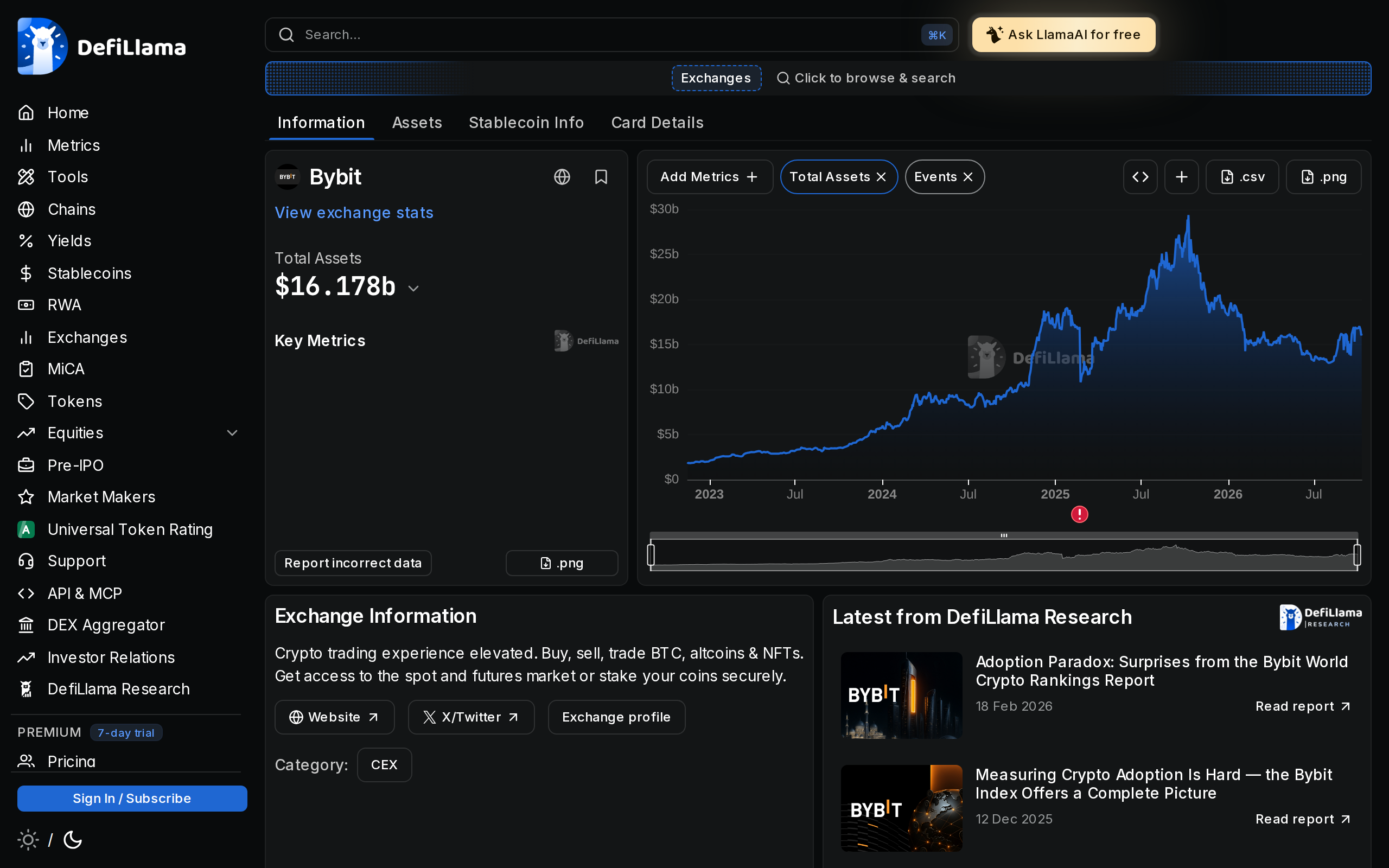
Bybit now publishes proof of reserves with Merkle-tree checks and an outside assessment, and Coin Bureau reports reserves above 100% in its latest data. Read that as a better-than-average disclosure from an exchange that learned an expensive lesson. It is not insurance.
Who cannot use it
This is where a lot of readers stop. Bybit is unavailable in the United States. Per Coin Bureau, Canada, Singapore, Hong Kong and mainland China are restricted, and the UK gets spot and peer-to-peer only, with retail derivatives off. It holds MiCAR authorisation from Austria's financial regulator (28 May 2025), which is the clearest regulatory footing it has in Europe. Wikipedia's legal-status section runs through the country-by-country mess.
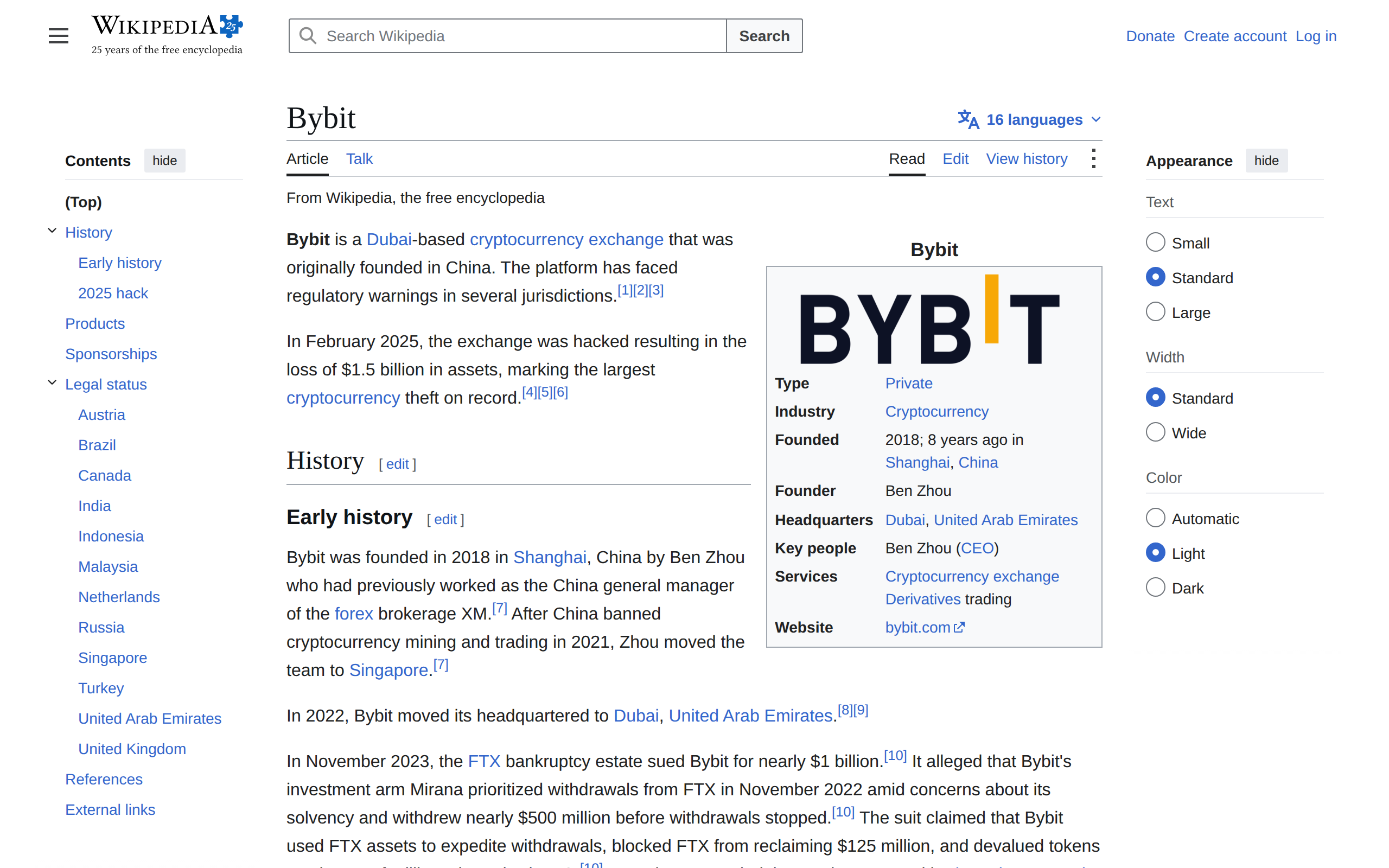
KYC matters too. Without verification you can withdraw up to 20,000 USDT a day; at standard verification the limit is 1,000,000 USDT. Do the ID check first, because you will want it before a deposit rather than after a problem.
The API is the quiet strength
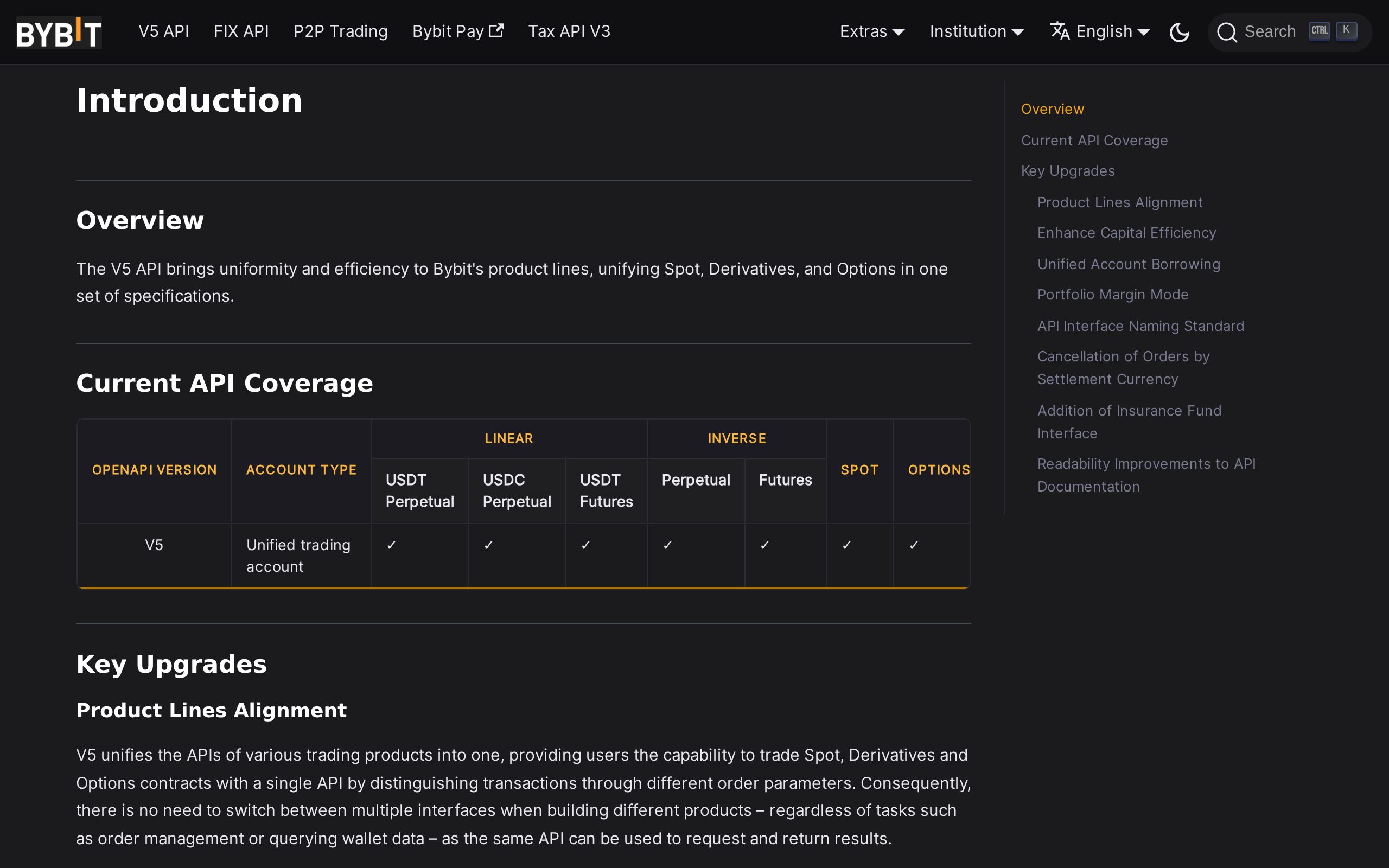
If you run bots or a spreadsheet that pulls prices, Bybit's V5 API documentation is excellent. Spot, derivatives and options share one specification, so a single client handles every product. For a programmer this is a better reason to open an account than any promotional bonus.
Who should use it, and who should not
Use it if you are outside the US, you trade more than you hold, and you want spot and futures in one login with a clean API. Think twice if you keep large balances on an exchange for long periods: a custodian that lost $1.46 billion once has to earn a longer record. Avoid it if you are a first-time buyer who wants one button and a short coin list. A regulated local app is a calmer start. Nothing here is personal financial advice, and every product on the Earn tab can lose money.
The score reflects a capable platform with a credible repair job and a banned-country list that excludes a large share of readers. It would be higher without the theft and lower without the reserve reports.
Specifications
- Spot fee (base)
- 0.10% maker, 0.10% taker (EU: 0.10% / 0.25%)
- Perpetual fee (base)
- 0.02% maker, 0.055% taker
- Products
- Spot, perpetuals, futures, options, margin, Earn
- Founded
- 2018
- EU licence
- MiCAR authorisation from Austria's FMA, 28 May 2025
- Unverified withdrawal limit
- 20,000 USDT per day
- Standard KYC withdrawal limit
- 1,000,000 USDT per day
- US availability
- Not available
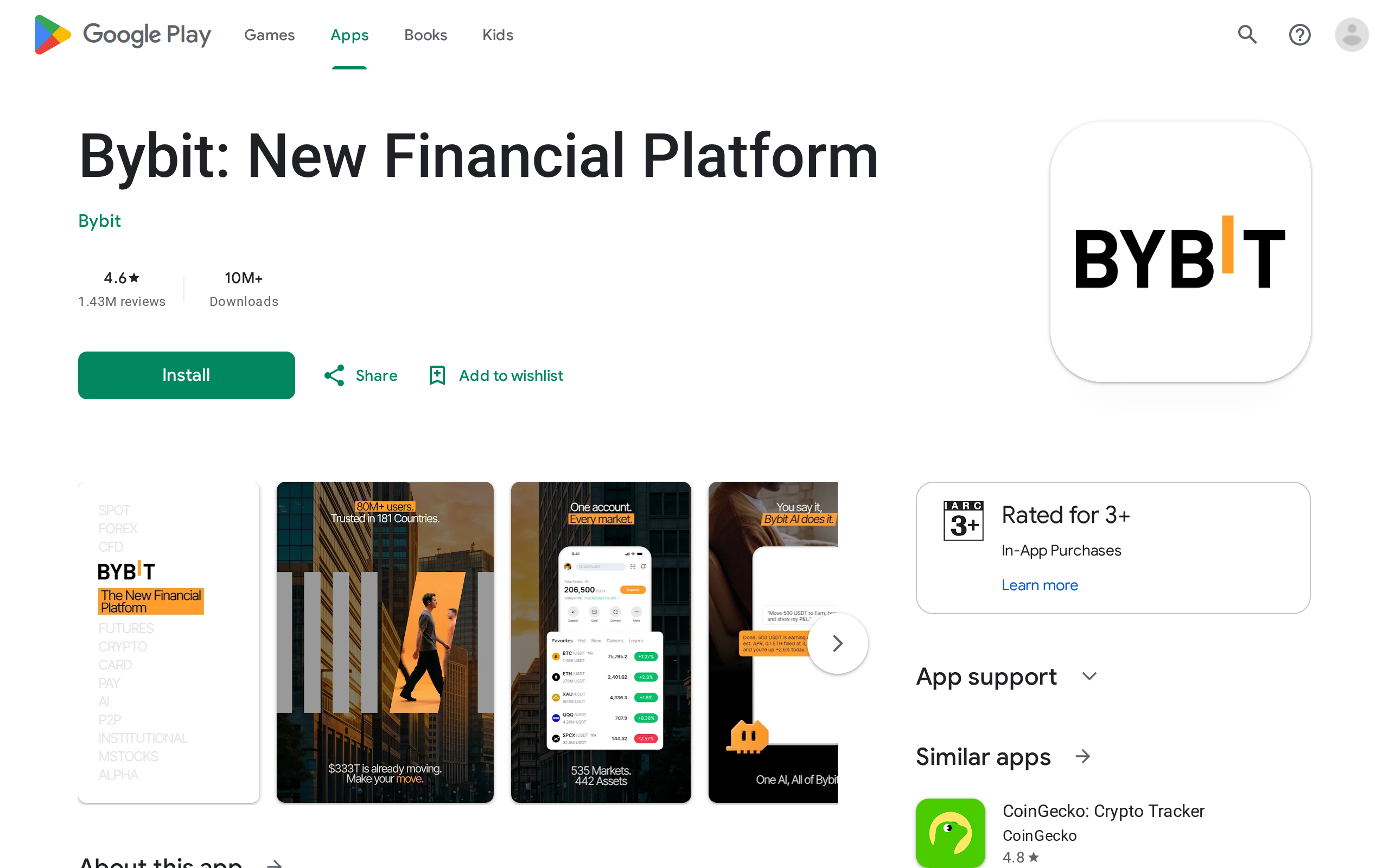
- Mobile app
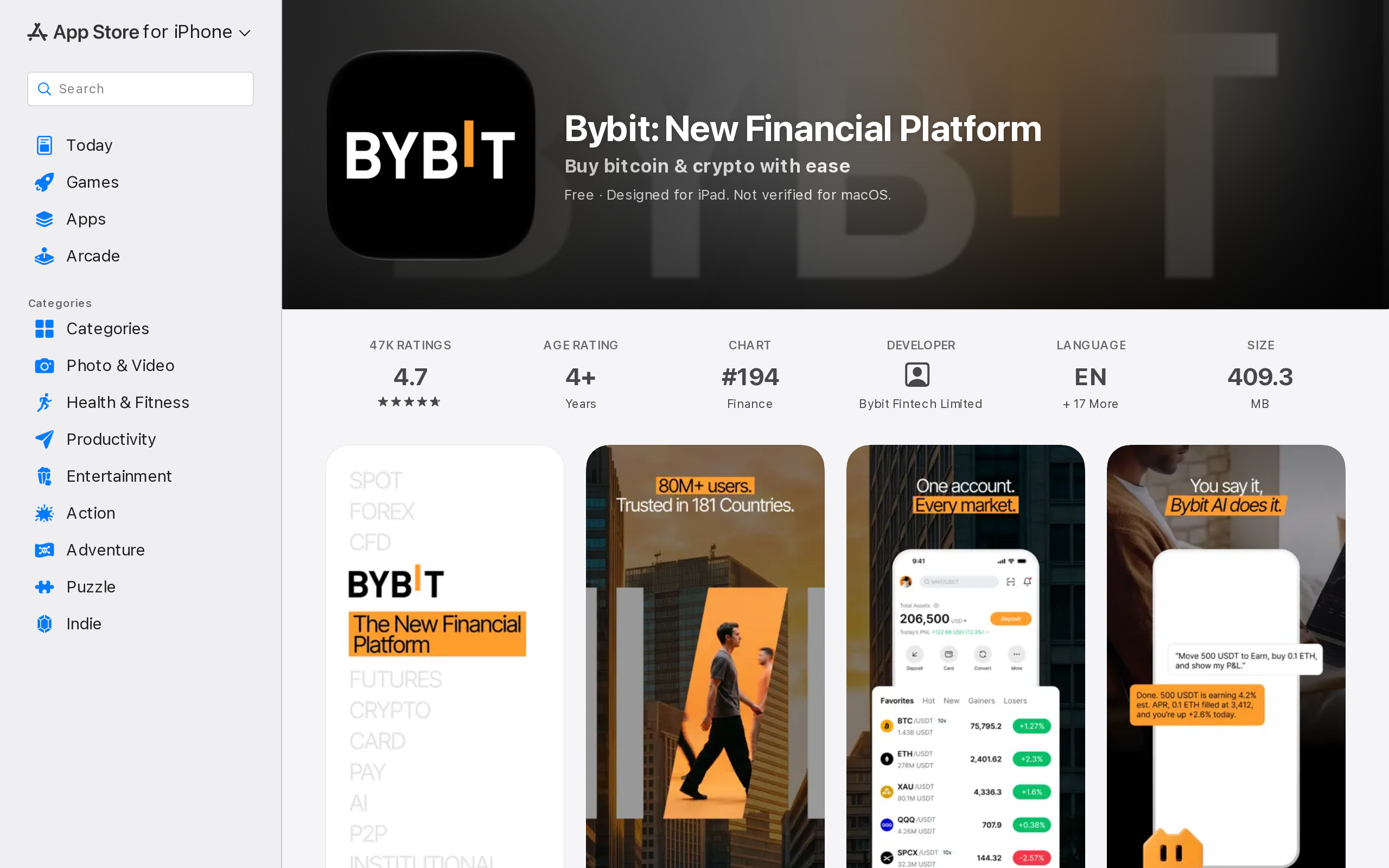
- iOS and Android, free