The short version
For a European who wants to buy crypto with euros, Bitvavo is hard to beat among licensed venues on cost: 0.15% maker and 0.25% taker at the entry tier, free SEPA and iDEAL deposits, and a MiCA licence from the Dutch regulator. It lacks derivatives and advanced tooling, charges 1% on card deposits, and draws steady complaints about slow support on complicated cases. Best for plain spot buyers; active traders will want more.
Best for: Euro-based spot buyers who want low fees and a licence
Our score: 8.0 out of 10
Pros and cons
What works
- 0.15% maker and 0.25% taker at the entry tier, falling with volume
- SEPA, iDEAL and Wero deposits cost nothing
- MiCA licence from the Dutch AFM, passported across the EU and EEA
- Over 400 assets can be bought directly with euros
- Crypto deposits are free and withdrawal fees are listed per asset
What does not
- Card, Apple Pay, Google Pay and PayPal deposits cost 1%
- Spot only: no futures or options, and few pro-level tools
- Support speed on complex cases is a recurring complaint
- Stablecoin pairs do not count toward your 30-day fee volume
- Custody insurance is held by providers, not by you directly
Most European crypto buyers do the same thing: send euros from a bank account, buy bitcoin or a few large coins, and leave. For that job, the only numbers that matter are the deposit fee, the trading fee and whether the company is licensed where you live. Bitvavo is built for exactly that job.
We went through Bitvavo's fee page line by line, read its security page and the MiCA announcement, and checked outside coverage for complaints. We did not fund an account for this review, so what follows rests on published schedules and third-party reports.
The fee table, read properly
On euro pairs the entry tier charges 0.15% for makers and 0.25% for takers, based on your trading volume over the previous 30 days. At 100,000 euros the rates fall to 0.10% and 0.20%. They keep falling in steps, reaching 0.00% maker and 0.02% taker at 100 million.
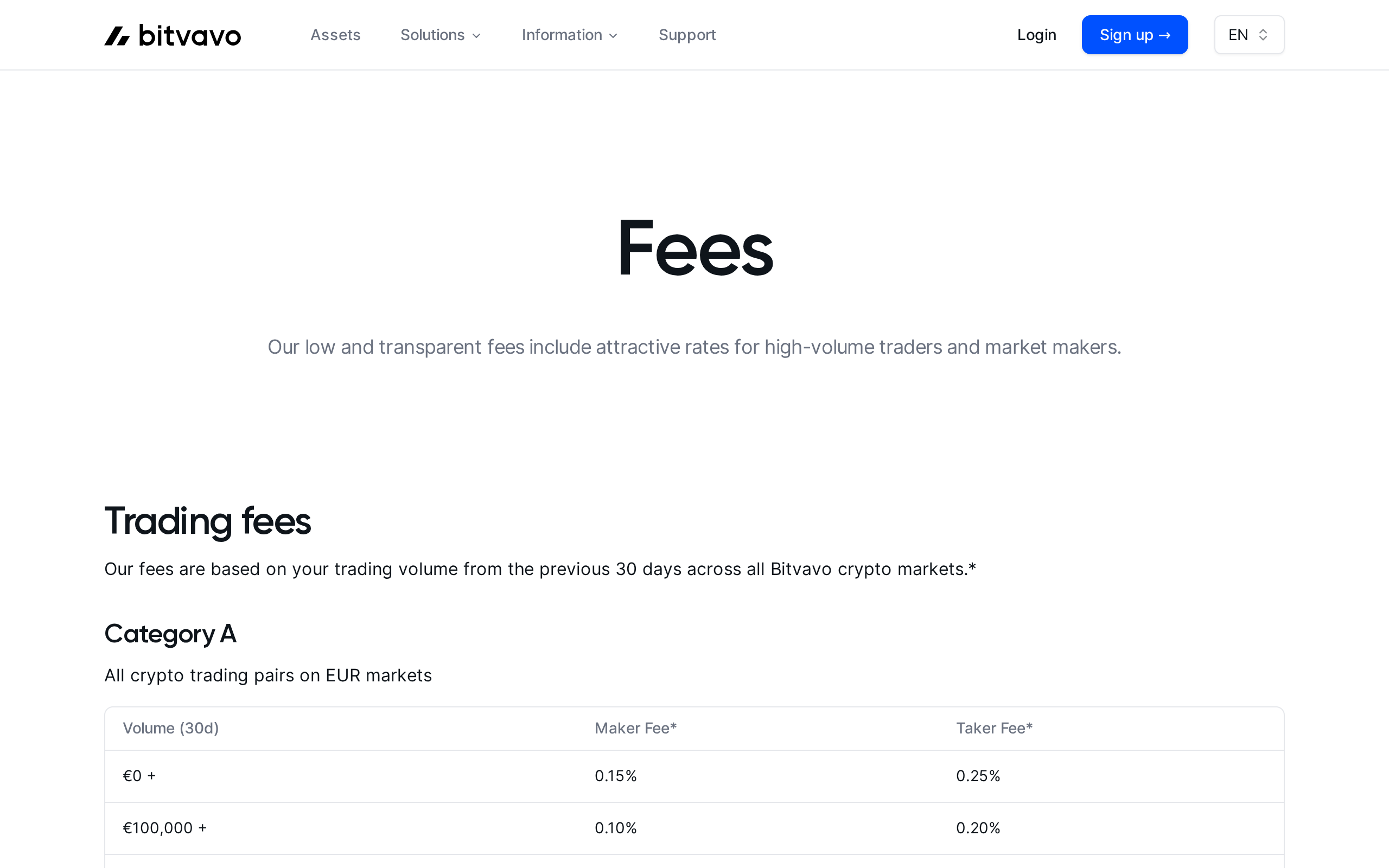
A small buyer lives in the first row. A 1,000 euro market buy costs about 2.50 euros in taker fees, and a limit order that rests on the book costs 1.50. Binance advertises a flat 0.10% on spot, so Bitvavo is not the absolute cheapest in the world. Our own review of Kraken puts that exchange's entry tier at 0.40% maker and 0.80% taker, and a new Bitvavo user pays well under that. The honest summary is "cheap among licensed euro venues", not "cheapest anywhere", and you should compare the live schedules before moving money.
Two quirks in the small print deserve attention. Stablecoin pairs do not count toward the 30-day volume that lowers your fees, and USDC markets use a separate table that starts at 0.05%.
Getting money in and out
SEPA transfers are free, and so are iDEAL and Wero payments (up to 50,000 euros) and Bancontact. Cards, Apple Pay, Google Pay and PayPal cost 1.00% and cap at 10,000 euros. EPS costs 1.75%, with a 1,000 euro limit. If you pay by card, that 1% can exceed the trading fee on the purchase itself, so the bank transfer route is the cheap one.
Crypto deposits are free. Withdrawals cost a flat network fee per asset, such as 0.000017 BTC for bitcoin. The page warns that depositing on the wrong network or an unsupported asset can lose funds, which is true of every exchange but worth repeating.
Breadth without bloat
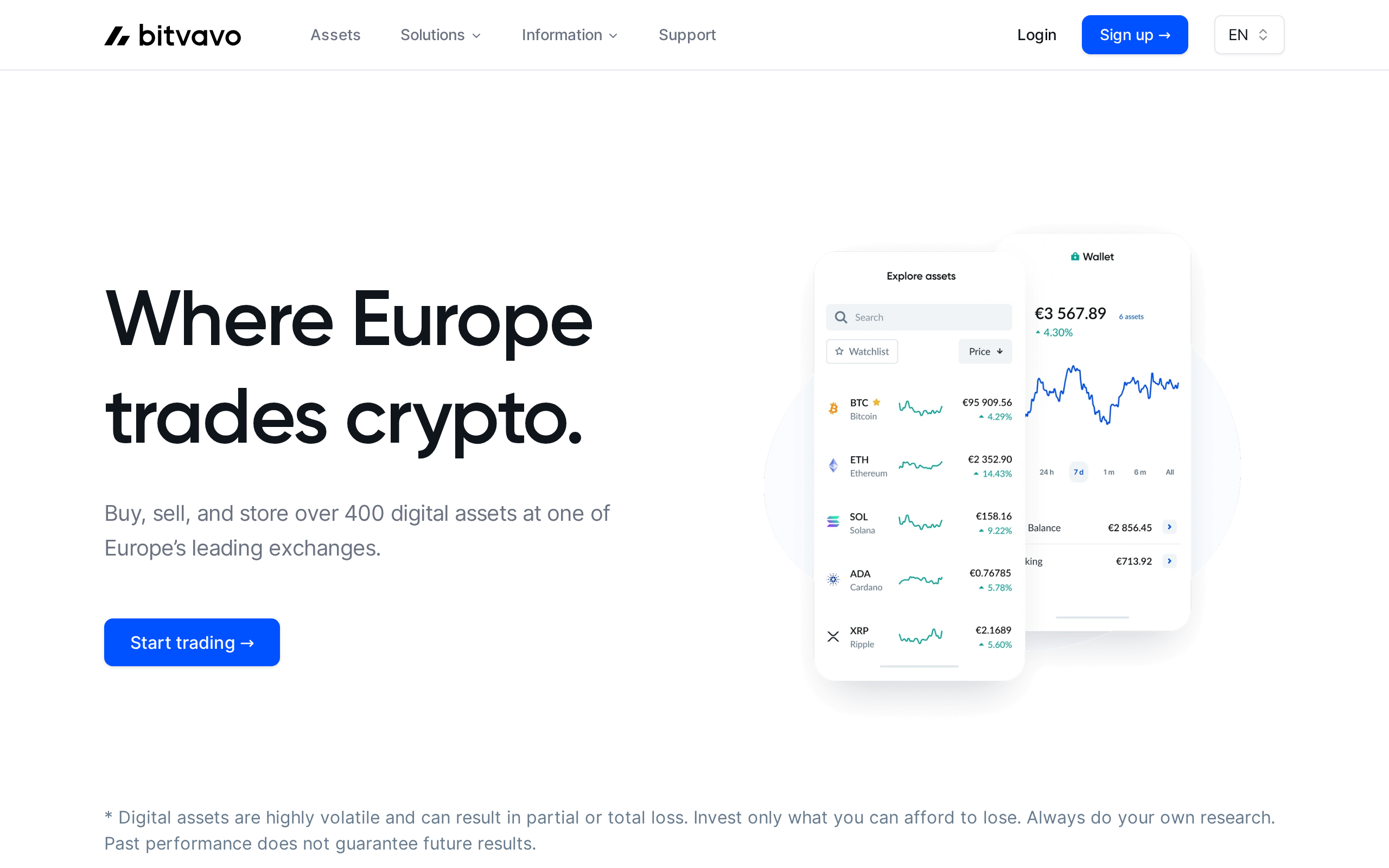
The markets page says buyers can purchase more than 400 digital assets with euros.
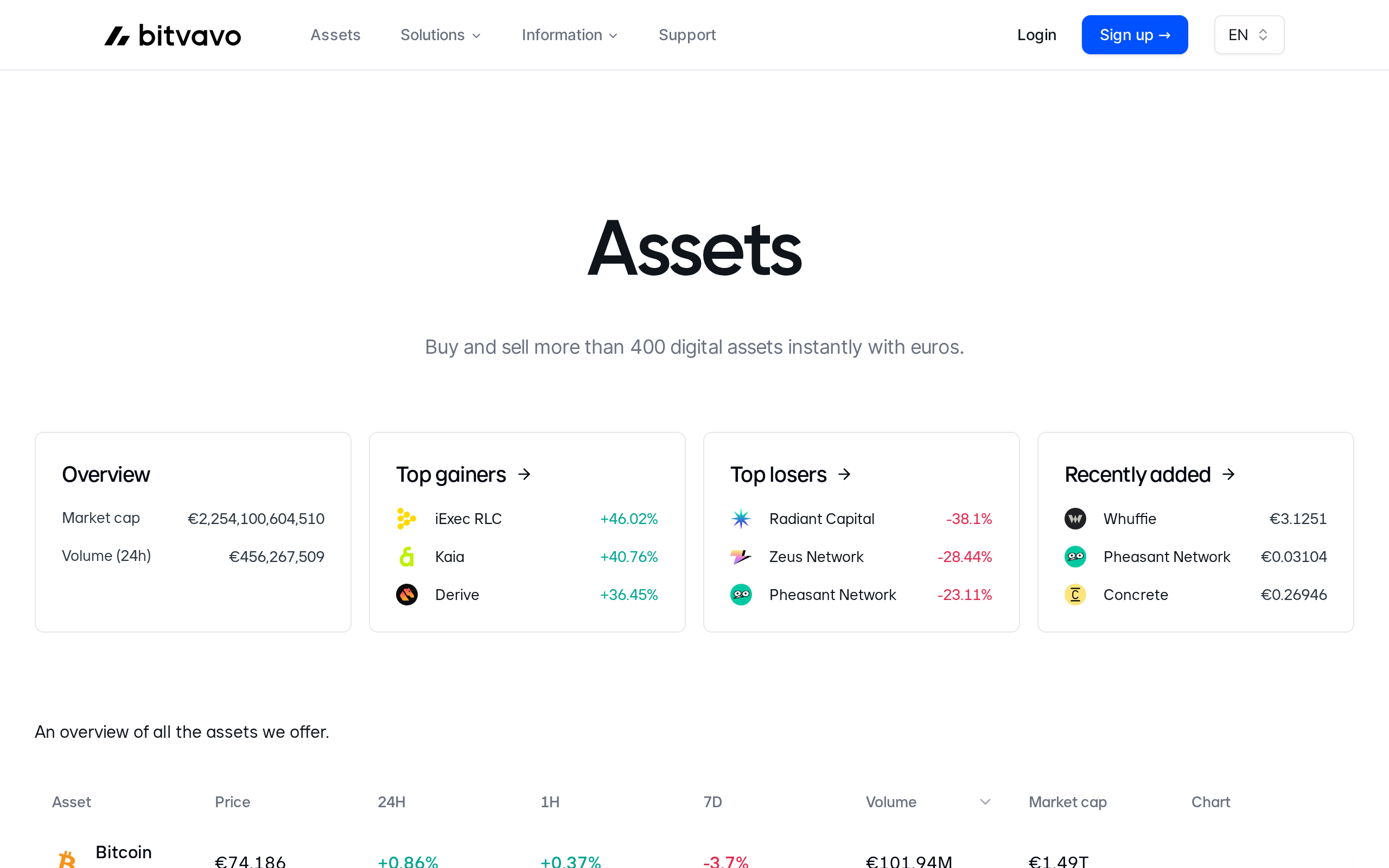
That is a long list for a regulated venue, though far shorter than the offshore exchanges. There are no futures or options. Bitvavo also offers flexible and fixed-term staking, with the advertised APY shown up front, and the usual caution applies that protocol rewards can change.
Licence and custody
In June 2025, Bitvavo announced a MiCA licence from the Dutch Authority for the Financial Markets. The Block reported that it was the largest euro spot exchange to receive one. The licence lets it serve clients across the EU and in Norway, Iceland and Liechtenstein under one framework.
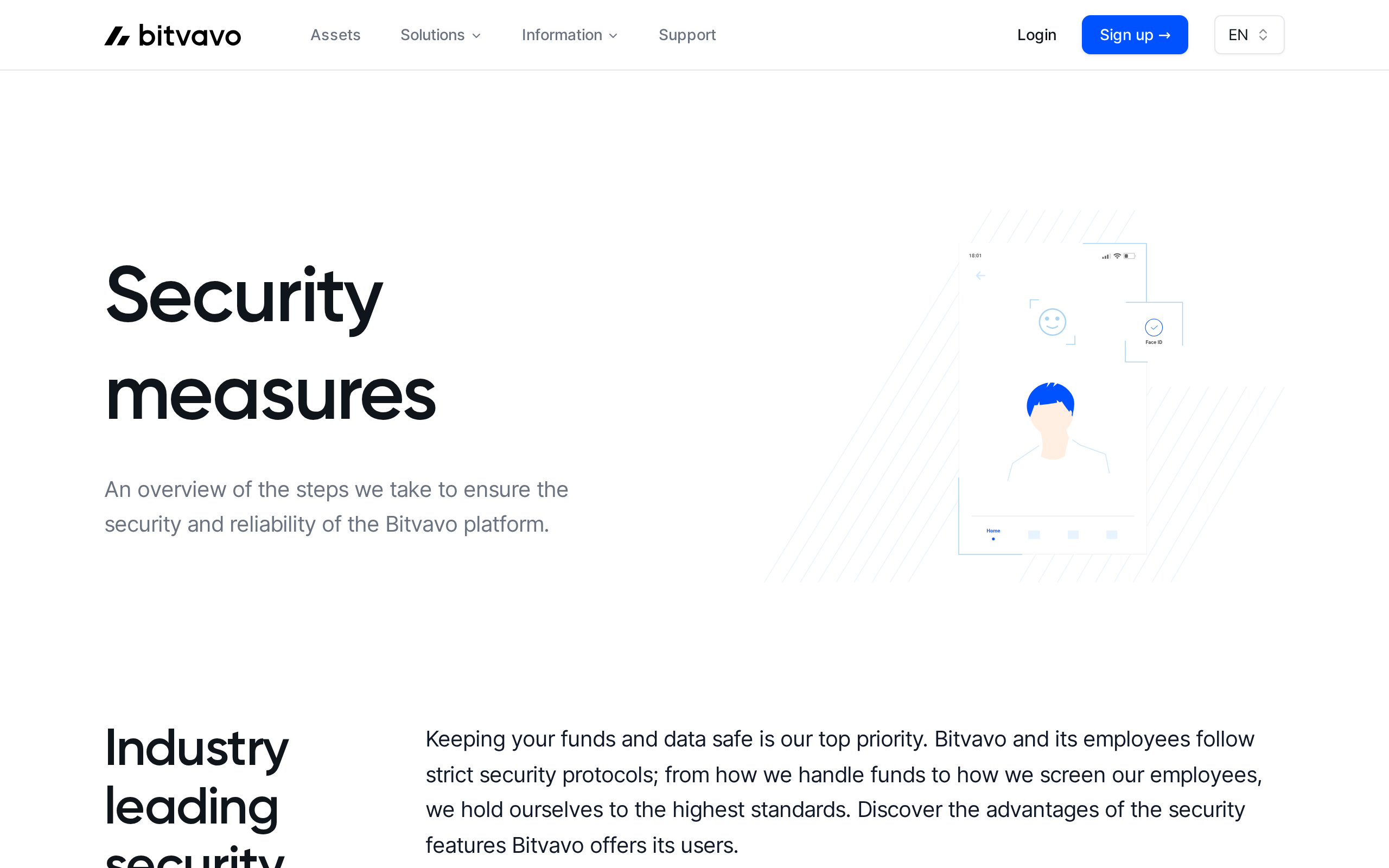
On custody, the security page says most assets sit in offline cold wallets with two custody providers, which it says are insured up to $755 million. A foundation named Bitvavo Payments acts as a bankruptcy-remote vehicle for client funds. These are Bitvavo's own statements, and the insurance sits with the custodians, so it is not a deposit guarantee for you.
Where it disappoints
Complaints on review sites cluster around slow support, frozen accounts and delayed withdrawals when a case is not routine. Those threads show only the unhappy minority, but the theme is persistent enough to plan for. Keep your verification documents tidy, and do not keep funds on the exchange that you may need on short notice.
Active traders will find little here: no derivatives, no deep charting stack and no copy trading. That is a trade-off, not a flaw, since it keeps the app plain.
Who it fits
Bitvavo fits euro-based spot buyers who want low fees, a recognised licence and simple deposits. It is a weak fit for leverage traders and for anyone who needs live human support in a crisis. This is not advice to buy any asset: licensing reduces some risks and leaves price risk fully intact.
Specifications
- Base trading fee (EUR pairs)
- 0.15% maker, 0.25% taker
- Top tier (EUR 100M+ volume)
- 0.00% maker, 0.02% taker
- USDC markets
- 0.05% maker and taker at the base tier
- SEPA and iDEAL deposits
- Free; iDEAL up to 50,000 euros
- Card and wallet deposits
- 1.00%, up to 10,000 euros
- Bitcoin withdrawal fee
- 0.000017 BTC
- Assets
- More than 400
- Regulation
- MiCA licence from the Dutch AFM, announced June 2025
- Custody
- Cold storage with two custodians, insured up to $755 million