The short version
Bitstamp is a sound, conservative home for buyers in the EU, UK and US who want a regulated venue with free bank deposits and a short list of liquid coins. The base spot fee of 0.30% maker and 0.40% taker is no bargain, card purchases are costly, and there is no public proof of reserves. Skip it for altcoin hunting or small high-frequency trading.
Best for: Cautious EU, UK and US buyers of major coins
Our score: 7.2 out of 10
Pros and cons
What works
- Regulated across the EU (MiCA licence), UK and US, with a clean record since 2015
- Fee table drops to 0.10% maker and 0.20% taker above $100,000 a month
- Cheaper rates for USDT and stablecoin pairs than for standard pairs
- Free bank-transfer deposits in the main regions, per third-party reviews
- Curated list of roughly 100 to 130 coins with no meme-token noise
What does not
- Base spot fees of 0.30% and 0.40% are high for a pro-style order book
- Card and instant purchases were reported at about 4%
- No user-checkable Merkle proof of reserves
- Staking is not offered to US customers
- Short asset list leaves out most new and small-cap tokens
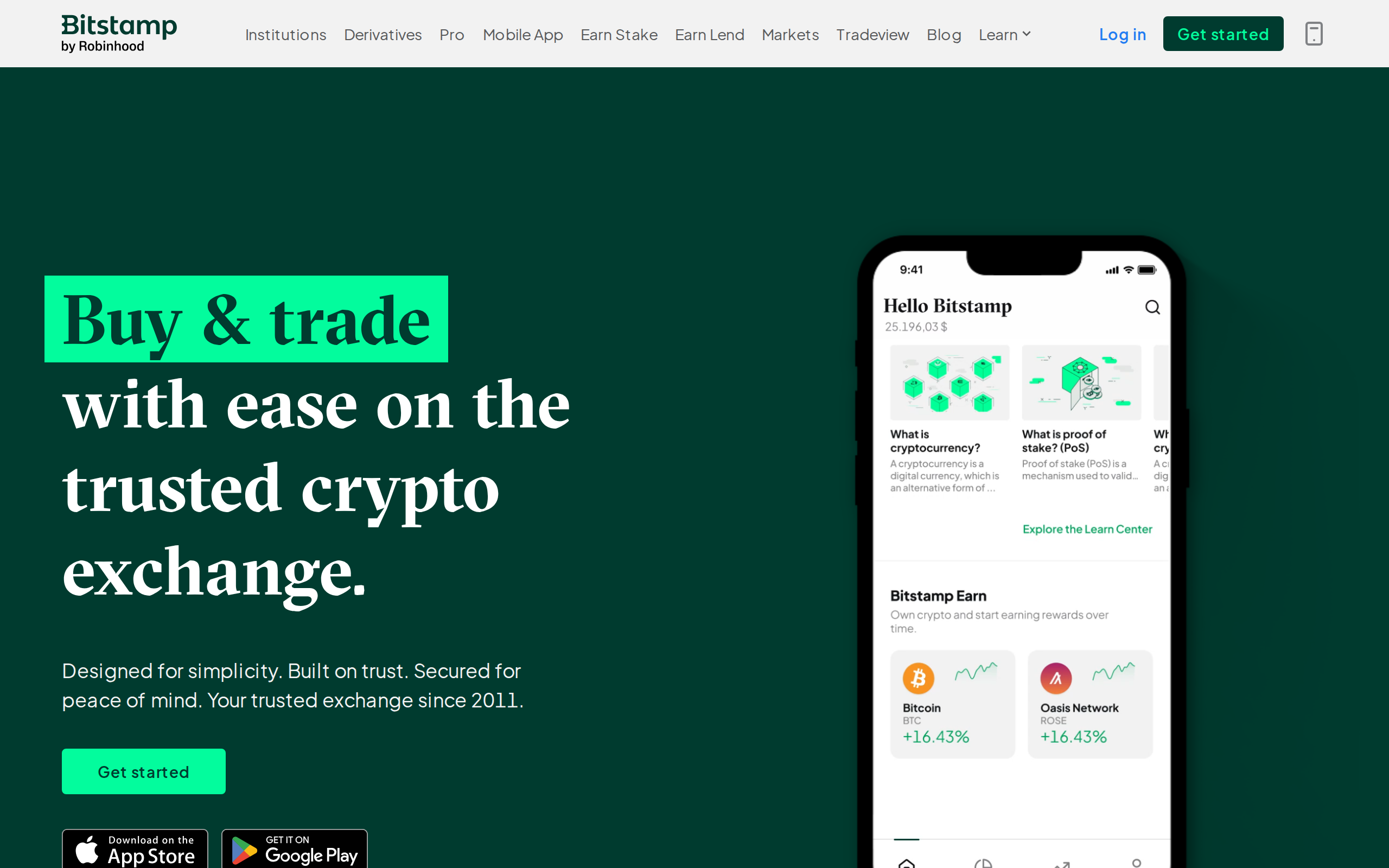
Bitstamp has been around since 2011, which makes it older than most of its regulators' crypto rulebooks. Robinhood bought it for $200 million and closed the deal on 2 June 2025, and the exchange now trades as Bitstamp by Robinhood. The brand survived. The useful question is whether a European, British or American buyer should open an account there instead of at Kraken or Coinbase.
The fee table, read line by line
The current schedule is valid from 1 September 2026 and is the first thing we checked, because older reviews still quote 0.50% on both sides and are out of date. Under $10,000 of 30-day volume you pay 0.30% maker and 0.40% taker on standard pairs. Cross $10,000 and it falls to 0.20% and 0.30%. At $100,000 it is 0.10% and 0.20%, and at $5 million it reaches 0.03% and 0.12%.
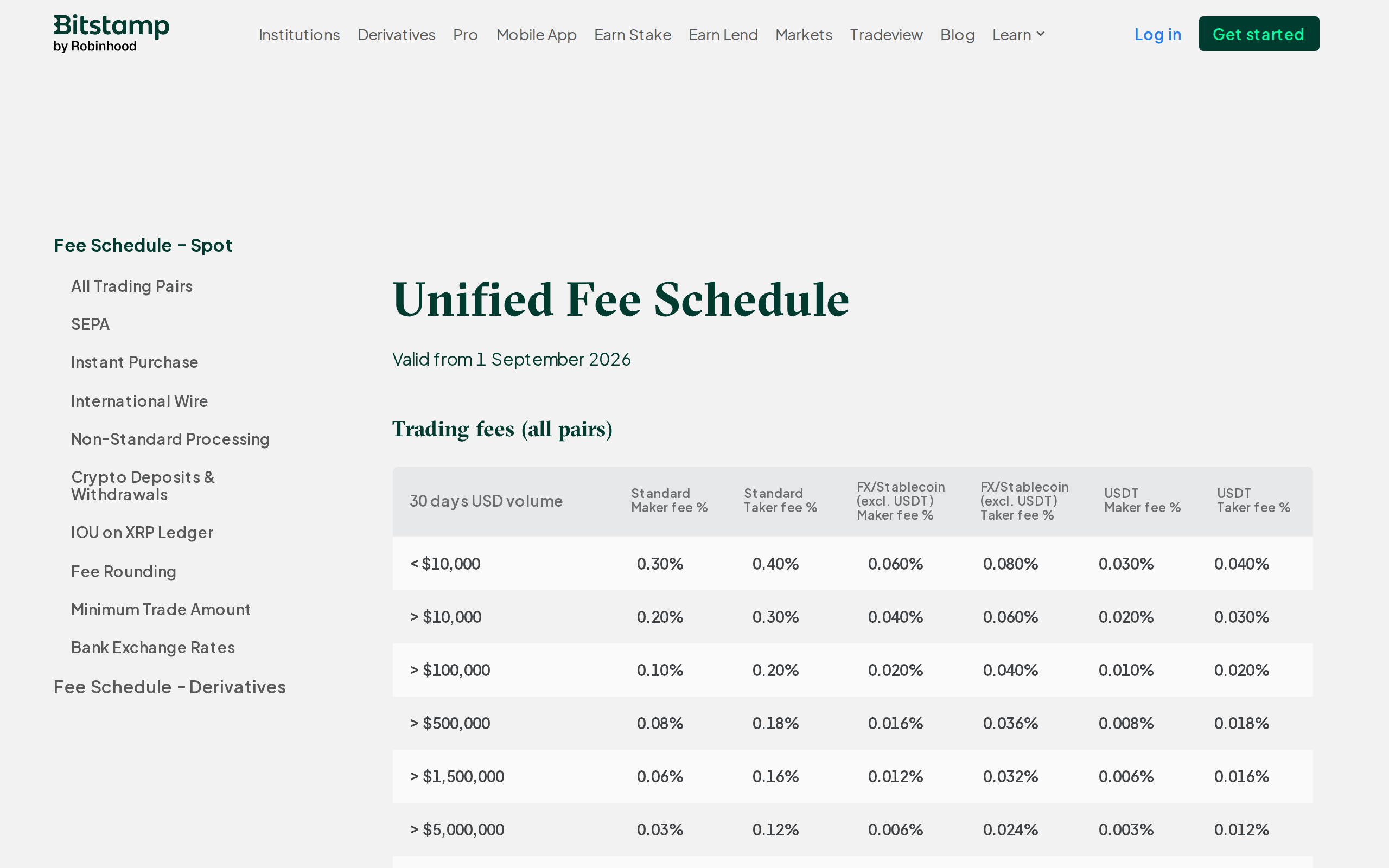
Two columns change the picture. Stablecoin and FX pairs start at 0.060% maker and 0.080% taker, and USDT pairs start at 0.030% and 0.040%. A buyer swapping between stablecoins pays a fraction of a standard-pair fee. A buyer opening a position in BTC with a small balance pays 0.40% to take liquidity, which is higher than the big offshore venues and similar to the regulated rivals.
Funding is the other cost. CoinCodeCap lists SEPA, ACH and Faster Payments deposits as free, and instant card purchases at about 4%. We could not confirm the card figure on the live page, so check the Instant Purchase section before you pay with a card. Bank transfer plus a limit order is the cheap route.
What the licences buy you
Bitstamp holds a MiCA crypto-asset service provider licence from Luxembourg's regulator, secured in May 2025, which can be passported across the EU. It also reports licences in the UK and the US, including New York's BitLicense, and describes itself as holding 50 or more licences worldwide through the Robinhood deal. That coverage is the product. It is why institutions and cautious individuals pick Bitstamp, and it is where a buyer in a tightly regulated country gets the least surprise.
The weak spot is transparency. CryptoAdventure's review points out there is no user-checkable Merkle-tree proof of reserves. The exchange relies on audits and compliance instead. Many big rivals publish on-chain reserve proofs; this one does not.
A short list, on purpose
Bitstamp lists roughly 100 to 130 coins, with the large caps and a selection of DeFi and layer-2 tokens, and none of the meme-coin churn. The markets page shows live prices with an earn rate beside each asset.
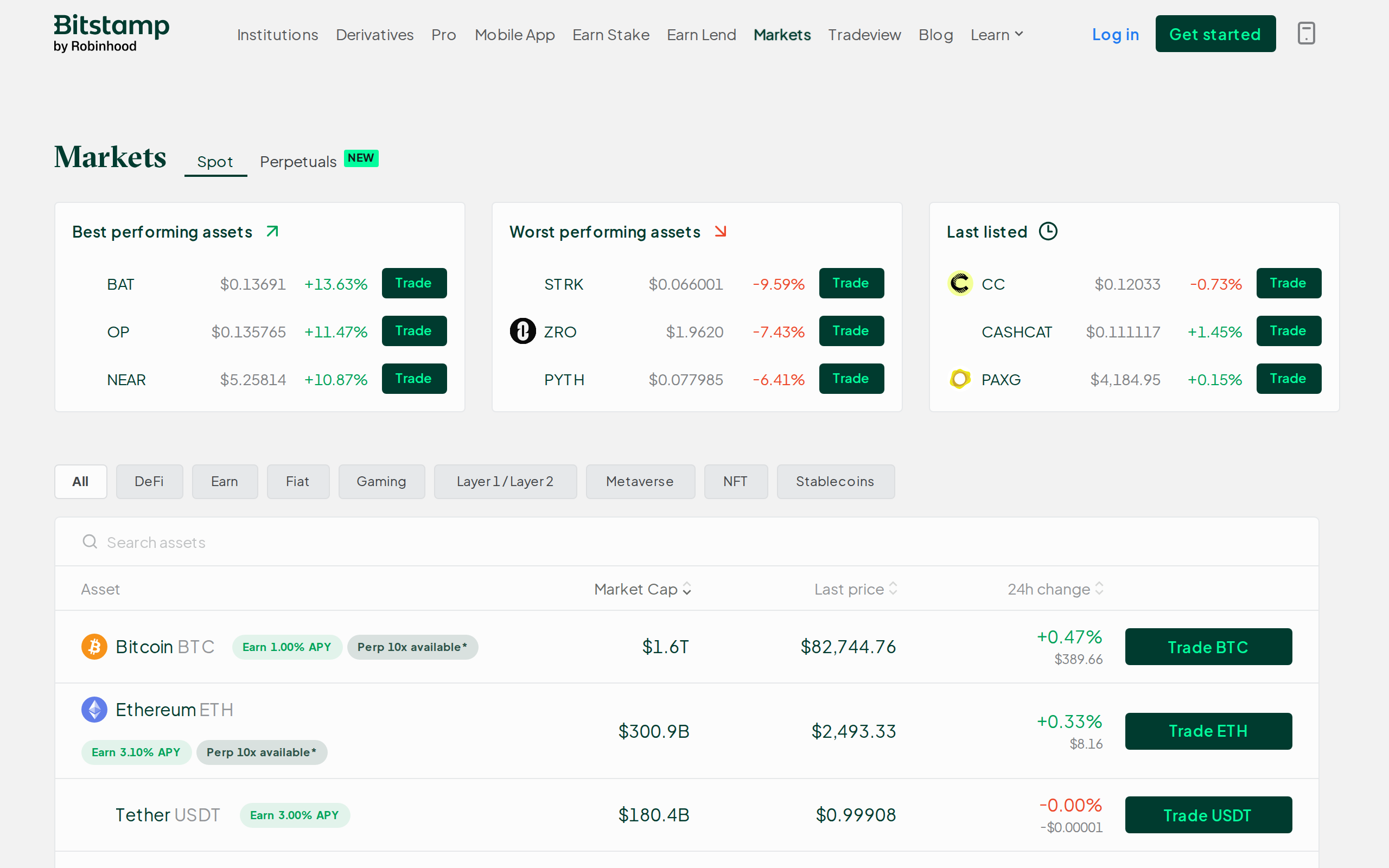
If you buy Bitcoin, Ether and a handful of large altcoins, the list is enough. If you want a token launched last month, it is not here. Staking depends on where you live: it reopened in the UK in May 2025, and it is not offered to US customers.
Perps, Pro and who they are for
The markets page also flags perpetual futures at up to 10x on some pairs, marked with an asterisk for eligible users only. That is modest next to the 100x menus offshore, and we read it as a sign Bitstamp wants regulated derivatives, not leverage tourism. Professional traders get the Pro interface and the order-book depth that has been the exchange's calling card for a decade, and lower tiers apply as volume builds.
Learning material and the Robinhood question
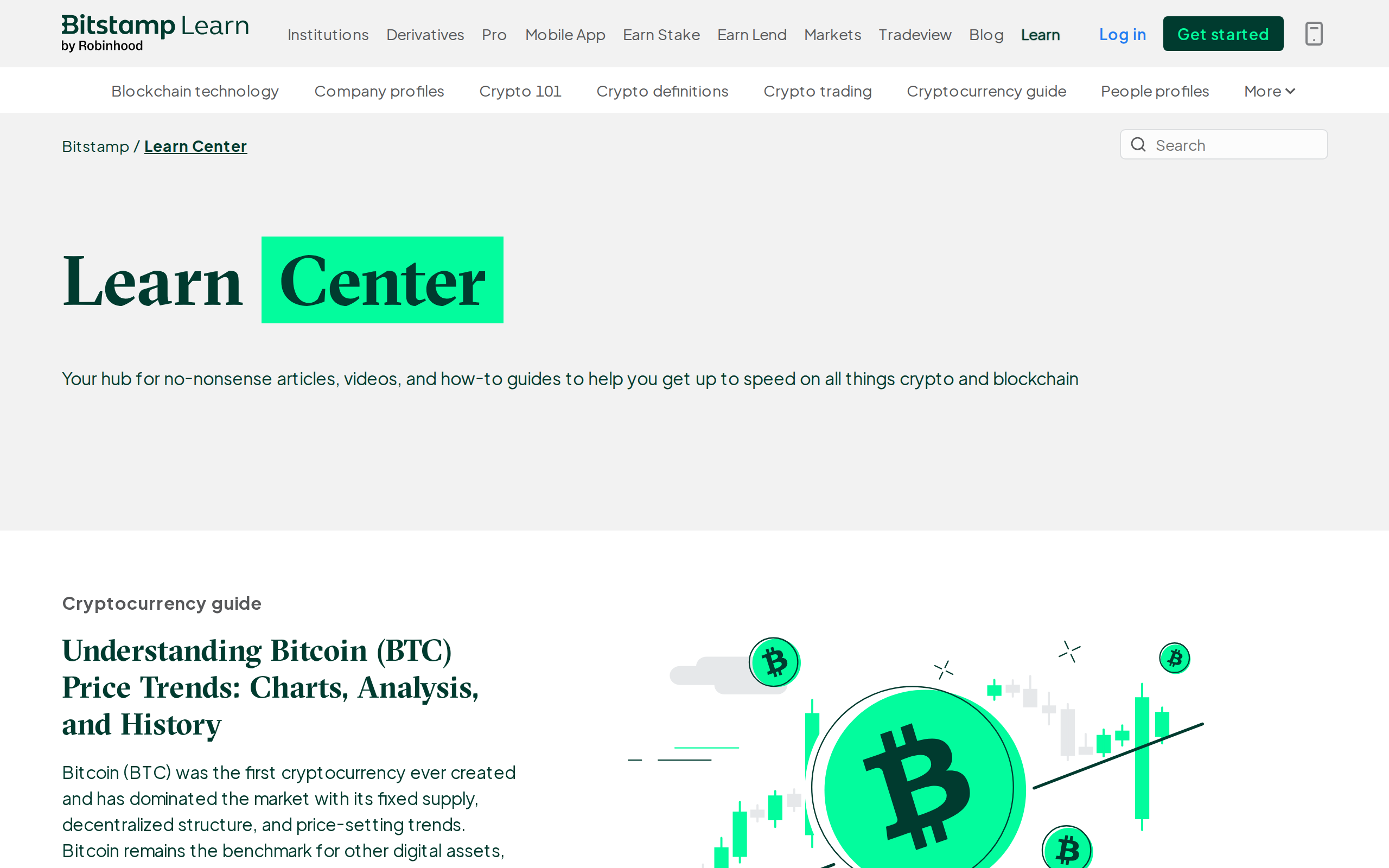
Bitstamp keeps a Learn Center with explainers and how-to guides, which suits a first-time buyer who wants plain text without an influencer attached.
Robinhood ownership could pull Bitstamp toward a retail app and away from its order-book roots. So far the pro tools and the Bitstamp name remain. We would watch whether the fee table keeps improving, since a 0.30% base is the part that looks least like a Robinhood-priced product.
Who should open an account
Open one if you are in the EU, UK or US, want a regulated venue with bank rails and a short list of liquid coins, and will trade with limit orders. Avoid it if you chase new listings, trade small sizes often, or want a proof of reserves you can verify yourself. None of this is a recommendation to buy any asset; it is a read of the venue and its price list.
Specifications
- Price
- Free to join; spot fees from 0.30% maker
- Owner
- Robinhood Markets, deal closed 2 June 2025
- Base spot fee
- 0.30% maker, 0.40% taker under $10,000 a month
- Top tier shown
- 0.03% maker, 0.12% taker above $5,000,000
- Stablecoin pairs
- 0.060% and 0.080% base for FX and stablecoin pairs
- Licences
- MiCA CASP (Luxembourg), plus UK and US state licences
- Listed coins
- About 100 to 130
- Staking examples
- ETH 3.10%, USDT 3.00%, BTC 1.00% earn rates on the markets page
- Derivatives
- Perpetuals with up to 10x leverage in eligible regions