The short version
Bitget is a capable exchange with ordinary spot fees (0.10%, or 0.08% paying with BGB) and a copy-trading product that is easy to start and easy to misuse. Following a lead trader transfers the decisions, not the risk: losses land in your account, and lead traders earn a profit share of 10% to 20% only on winning trades. The $300 million Protection Fund and proof of reserves help. Beginners should treat copy trading as a leveraged bet on a stranger.
Best for: Experienced traders who want to study copy strategies, not beginners
Our score: 6.9 out of 10
Pros and cons
What works
- Spot fee of 0.10%, or 0.08% when paying with BGB
- Spot copy trading exists as well as futures, so you can follow without leverage
- Profit share is charged only when a copied trade closes in profit
- A $300 million Protection Fund and Merkle-tree proof of reserves
- Earn tab with flexible products and task-based APR boosts
What does not
- Copy trading invites beginners to pick on past performance, which does not persist
- Lead traders can close first, so followers get worse fills than the leader
- Profit share of 10% to 20% is paid on top of trading fees and funding
- Futures fees of 0.02% maker and 0.06% taker punish heavy turnover
- Availability and account rules depend on your country of residence
Copy trading sounds like the fairest deal in crypto: pick someone who is winning, mirror their trades, share the profit. Bitget popularised it, and it is the reason many people open an account there. We read the fee tables, the copy-trading pages, the Earn tab and independent reviews to decide whether it helps beginners or just speeds up their losses. Our answer is narrower than the marketing: it helps people who already know how to size risk.
What the exchange is, before the copying
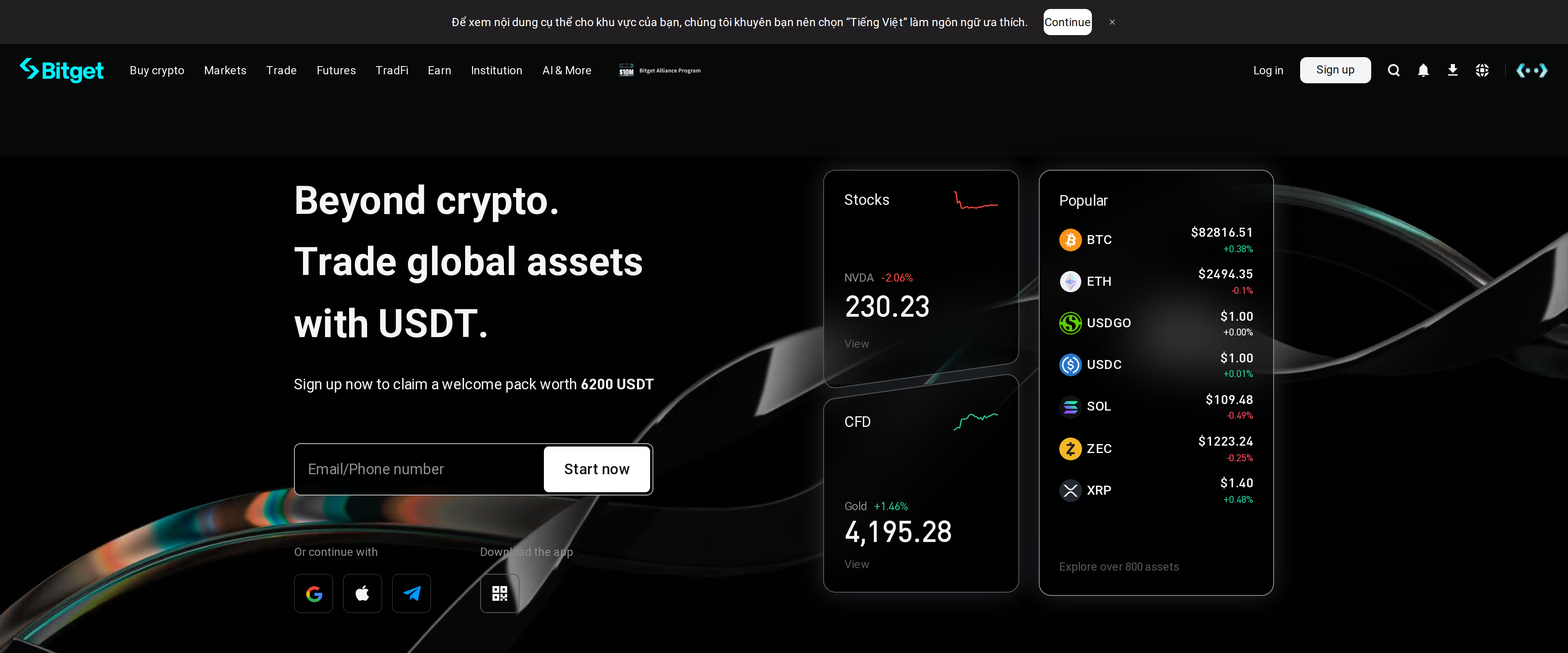
Bitget's home page now frames it as more than a crypto venue: "Beyond crypto. Trade global assets with USDT." Stocks, gold and forex trade alongside coins, all settled in a dollar stablecoin. That breadth is new, and it makes the account feel like a broker. It also means more ways to lose money in one login.
The basics are ordinary. According to Coin Bureau's fee analysis, spot costs 0.10% maker and 0.10% taker, falling to 0.08% if you pay fees in the BGB token. Futures cost 0.02% maker and 0.06% taker. Buy $1,000 of a coin and the fee is $1, or 80 cents with BGB. Nothing here is a reason to pick or reject Bitget.
How copy trading actually works
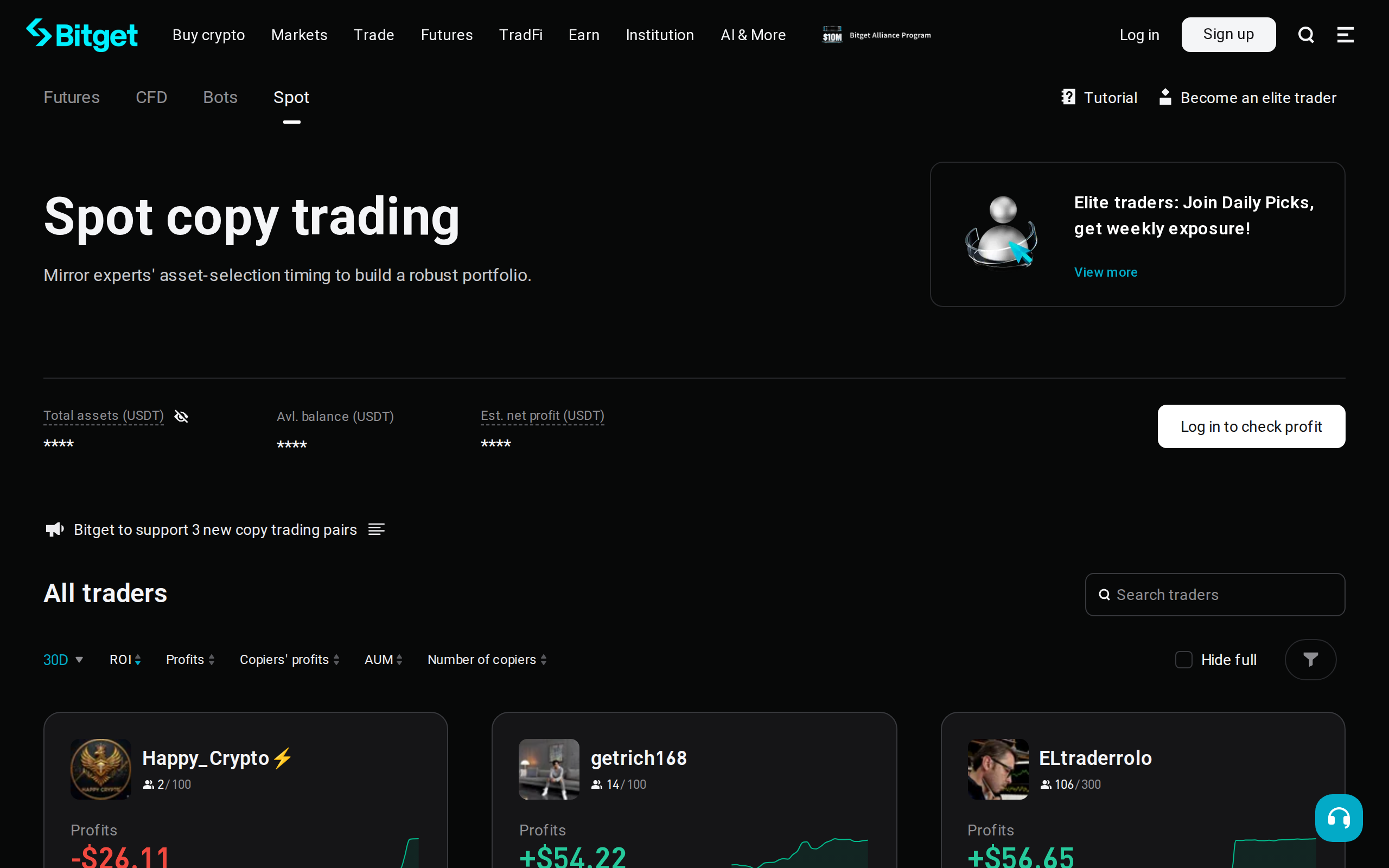
On the futures side you choose a lead trader, set how much money to allocate, and the exchange copies each position in proportion.
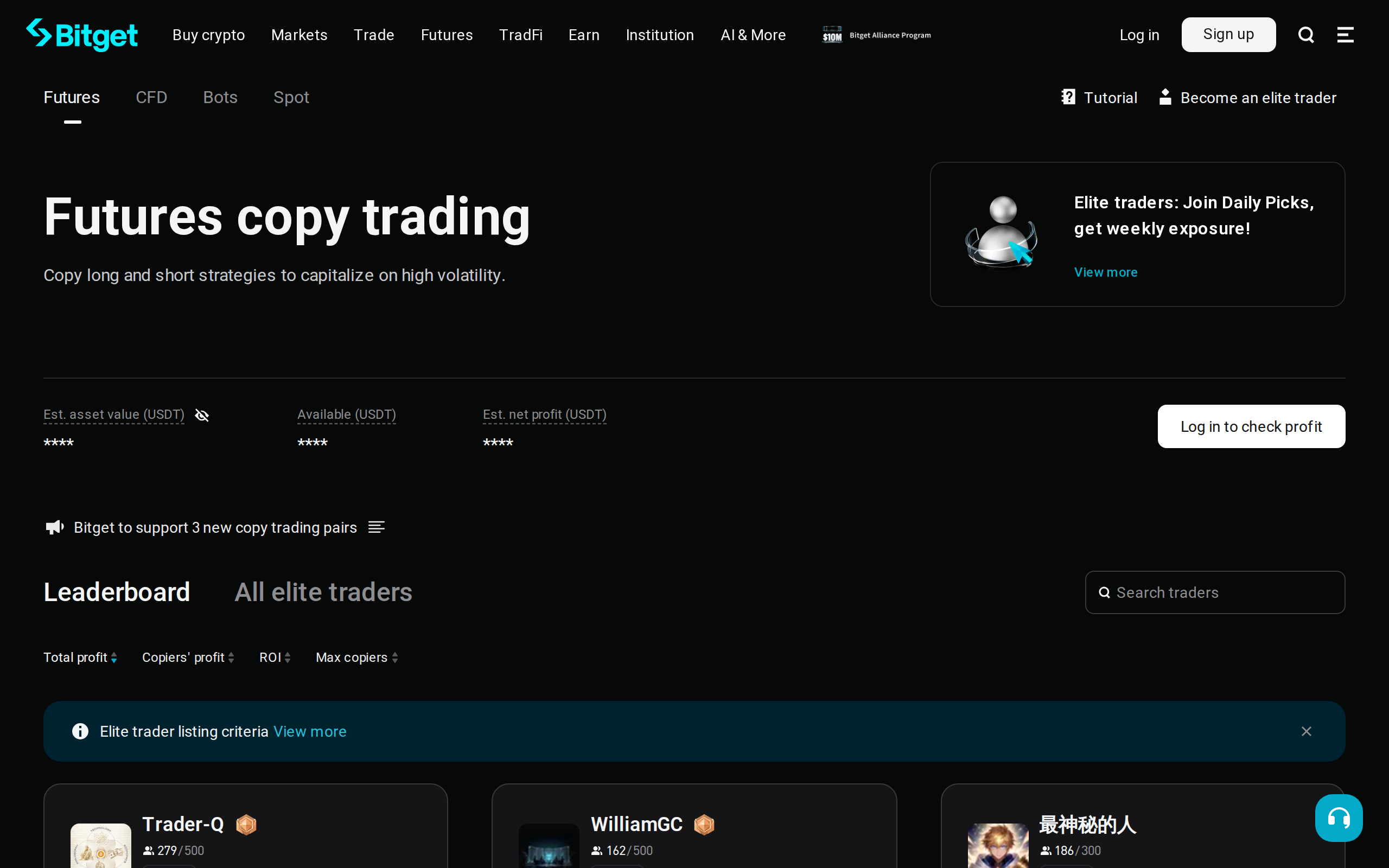
Followers pay a profit share to the lead trader, typically 10% to 20% of realised profit, set by the leader and charged only when a copied trade closes in a gain. That is on top of normal trading fees and funding costs. A follower who copies a leader's winning month therefore keeps less than the leader's headline return, and a losing month has no matching refund.
Spot copy trading exists too, and it is the sensible entry point. No leverage means a bad run cannot liquidate you in an afternoon.
Why a good track record misleads
A leaderboard shows who won, not who will. Three problems show up in every independent write-up of the category.
First, selection. A trader with a stellar 30-day record may have taken one oversized bet that worked. Second, execution. A leader can close a position before followers do, so you buy later and sell later at worse prices. Third, incentives: a leader paid on follower profit gains from big swings and does not share the loss. Some critics also describe leaders hedging in other accounts, which a follower cannot see.
Bitget's own marketing quotes high success rates from the first half of 2023, with more than 109,000 profitable followers and 74 million USDT in cumulative profit. Those numbers come from the platform, cover six months of 2023, and tell you nothing about a different market. Copying shifts the decisions to someone else, not the losses. Nothing here is advice to copy anyone.
Earn: yields with conditions
The Earn tab offers flexible products, launchpool and promotions such as an APR voucher that boosts a rate by up to 30%.
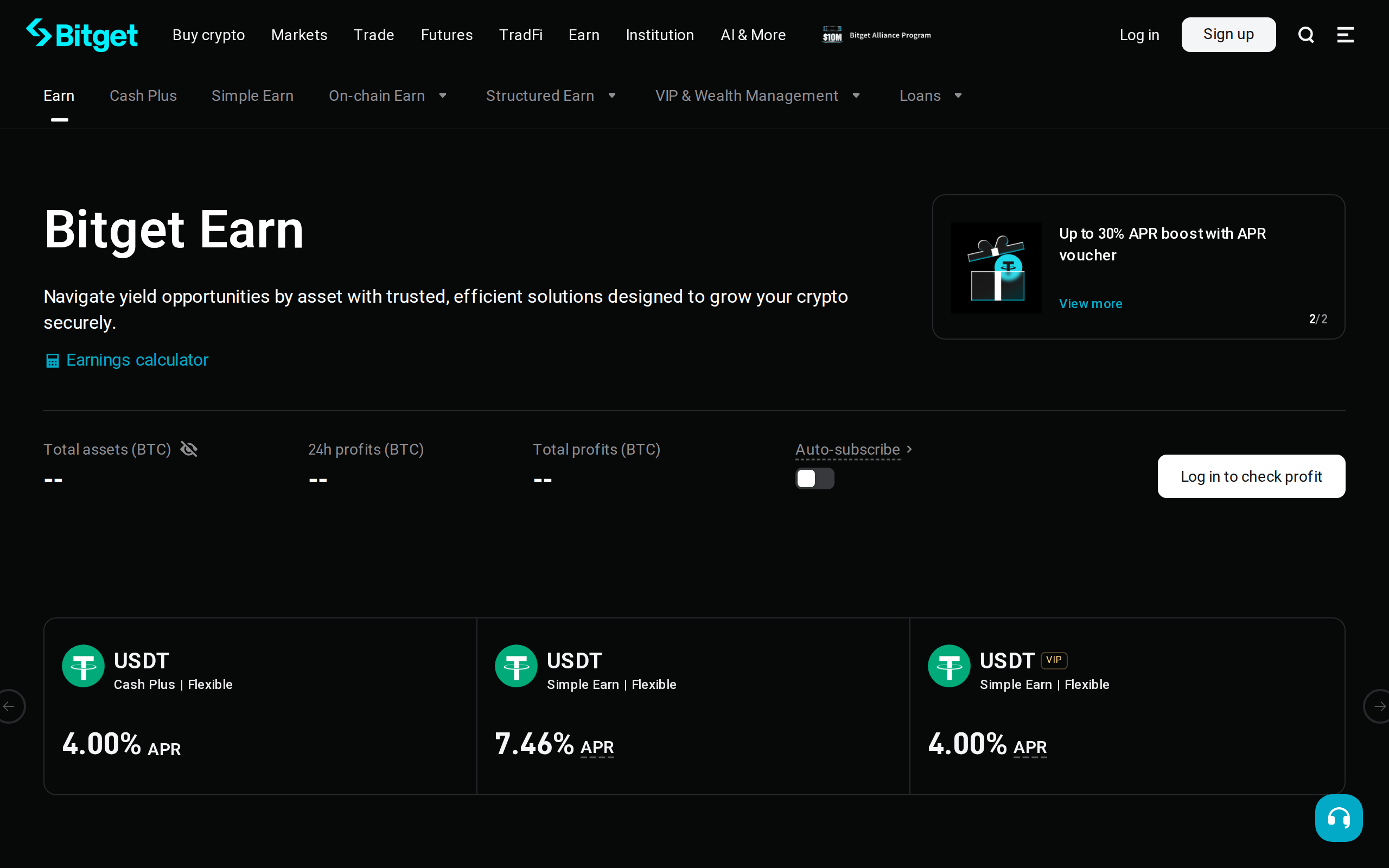
Read the conditions. A boosted rate usually applies to a capped amount for a short period, and the base rate is what you hold afterwards. Custodial Earn is a loan to the exchange, so it adds counterparty risk to your coins.
Safety and reserves
Bitget says it keeps a $300 million Protection Fund and publishes Merkle-tree proof of reserves, per Investing.com's review. Both are better than nothing. A protection fund is a promise, not insurance, and a reserve proof shows assets at a moment in time. Withdraw what you do not need on the exchange. Identity checks and country rules vary, so confirm your own country is served before you deposit.
Who should use it
Use Bitget if you already trade futures, want to study how other traders manage risk, and will cap each copied position at an amount you can lose. Use spot copy trading rather than futures if you try it at all. Avoid it if you are new to crypto, see the leaderboard as a shortcut, or plan to allocate savings. A plain spot buy on a regulated exchange costs a little more, and it will not liquidate you.
The score reflects a solid exchange whose best-known feature is the one most likely to hurt the people it attracts.
Specifications
- Spot fee
- 0.10% maker, 0.10% taker; 0.08% paying with BGB
- Futures fee
- 0.02% maker, 0.06% taker
- Copy trading
- Futures and spot, with bots
- Profit share
- Typically 10% to 20% of follower profit, set by each lead trader
- Protection Fund
- $300 million
- Assets beyond crypto
- Stocks, gold and forex traded with USDT
- Earn
- Flexible products, launchpool, APR vouchers
- Reserve proof
- Merkle-tree proof of reserves