The short version
BingX has a large copy-trading plaza and a wide derivatives menu, and spot fees of 0.10% are ordinary. It also lost roughly $44 million in a 2024 hot-wallet hack, it publishes reserve data without the clarity of the biggest rivals, and it bars the US, UK, Canada and others. Copy trading with leverage loses money for many followers. Treat it as a small, high-risk satellite account.
Best for: Experienced traders who want copy trading outside the US and UK
Our score: 6.2 out of 10
Pros and cons
What works
- Copy Trading Plaza covers futures and spot, with a leaderboard of ROI and drawdown
- Spot fees of 0.10% match the mainstream tier, with futures near 0.02% and 0.05%
- Proof-of-reserves page claims 100% backing and a monthly Merkle tree
- Compensated users from its own reserves after the 2024 hot-wallet theft
What does not
- Lost about $44.7 million in a September 2024 hot-wallet hack
- Not available in the US, UK, Canada, Singapore, the Netherlands or China
- Leverage up to 1000x on some markets invites losses, and copiers inherit them
- Reserve auditors and Shield Fund size are less clear than top-tier rivals
Start with the question BingX makes you ask: if the pitch is "copy the best traders", who is copying whom, and with how much leverage? The platform's strength is the size of its copy-trading plaza. Its weakness is that the same plaza concentrates risk in places beginners rarely look.
What BingX actually sells
The homepage lists spot trading, perpetual futures in USD-M, Coin-M and USDC-M form, standard futures, CFDs and copy trading across futures, CFD and spot. Automated bots include futures grid, Martingale, spot grid and infinity grid. It also advertises leverage up to 1000x on some TradFi perpetual markets, such as a 24/7 silver contract.
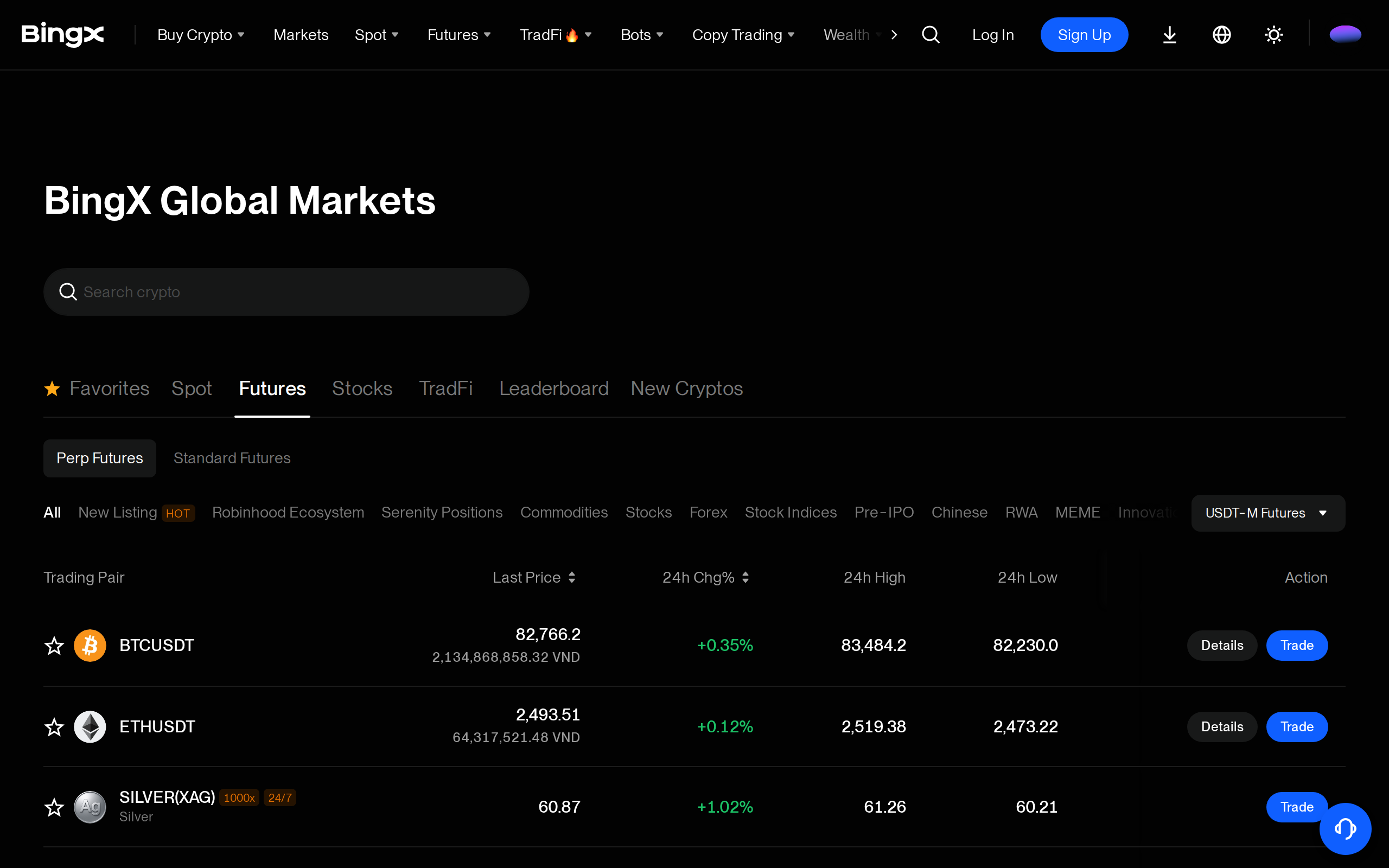
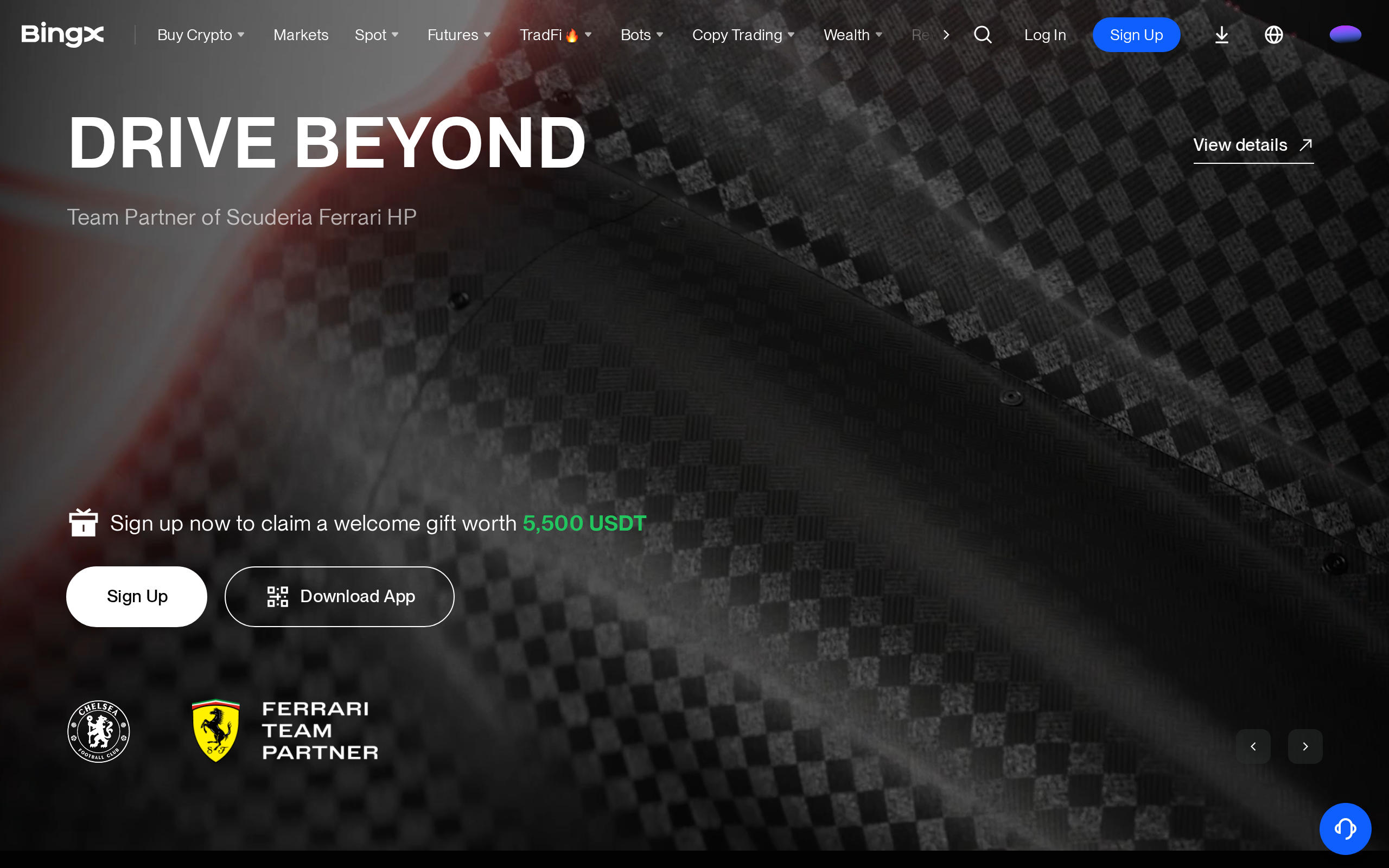
The homepage leads with a Ferrari partnership and a sign-up gift. Those are marketing choices, not product facts, and we looked past them for fees, reserves and rules.
Copy trading: how it works and what it costs
The Copy Trading Plaza has separate futures and spot tabs and a leaderboard. Its listed metrics are ROI, PnL, win ratio, maximum drawdown, Sharpe ratio, risk level, assets under management, copiers and copiers' earnings.
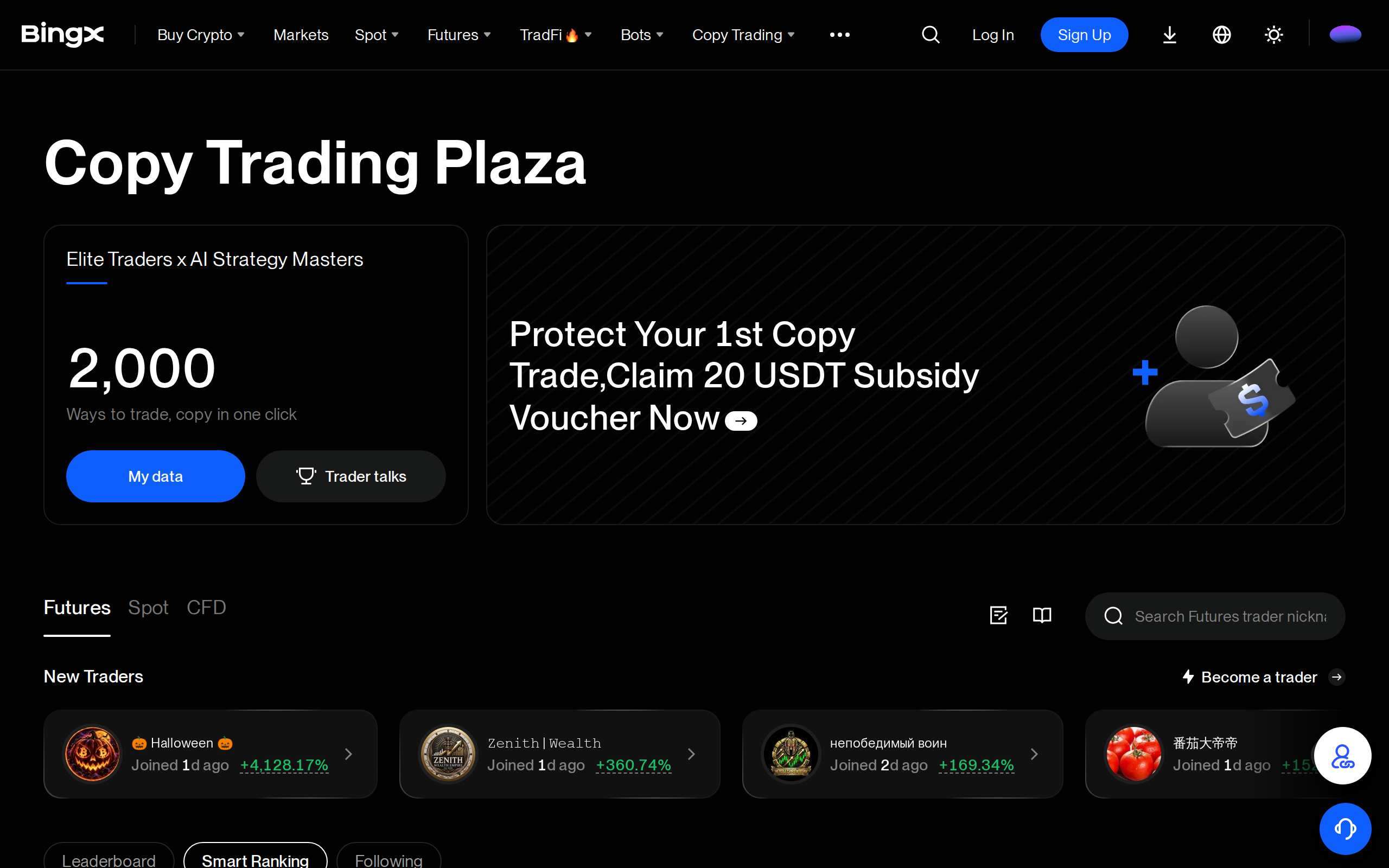
Lead traders earn a share of follower profit. Third-party summaries of BingX's trader programme list a ladder: Bronze at 10%, Silver 16%, Gold 20% and Diamond 32%, with the upper tiers also paying a monthly salary and requiring copier counts in the hundreds or thousands. Settlement is weekly. That structure matters for you: a trader paid a cut of profit but not charged for losses has a reason to take large risks.
Our rules for using any copy feature are simple. Read maximum drawdown before ROI. Distrust a new trader with a very high return over a short window. Cap the amount you allocate to what you could lose in full, because a copied account can liquidate in minutes if the leader is leveraged.
Fees
Spot trading costs 0.10% on both sides, and futures run at 0.02% maker and 0.05% taker, according to a third-party review summarised in search results. We could not load the official fee table, so check it in your own account before sizing a trade. Compared with the cheapest big spot venues, 0.10% is average, not a draw. Spreads, funding rates on perpetuals and withdrawal network fees come on top, and on a leveraged copy position funding can cost more than the headline trading fee over a few days.
Note also the bonus culture. A welcome gift worth thousands of USDT, as the banner advertises, normally comes with trading-volume conditions. Read them first, because chasing a bonus is how new users end up overtrading.
The 2024 hack and the reserve claims
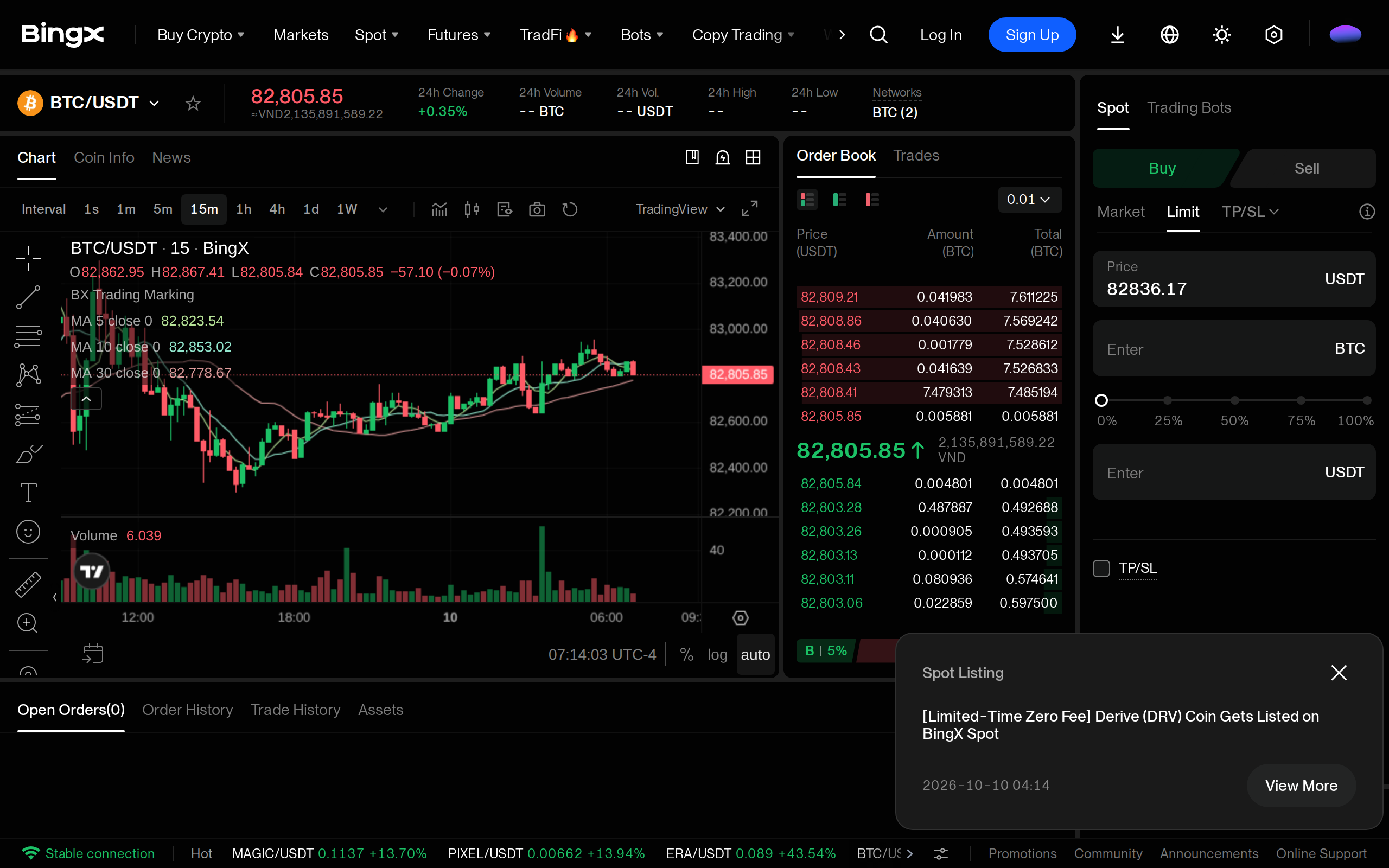
On 20 September 2024 BingX detected abnormal activity on a hot wallet, moved assets to cold storage and paused withdrawals. PeckShield estimated about $43 million lost; SlowMist, working with BingX, put it near $44.7 million, with roughly $1 million frozen, per Security Affairs. The exchange said it would cover all losses from its own reserves, and the available reporting shows it did reopen withdrawals.
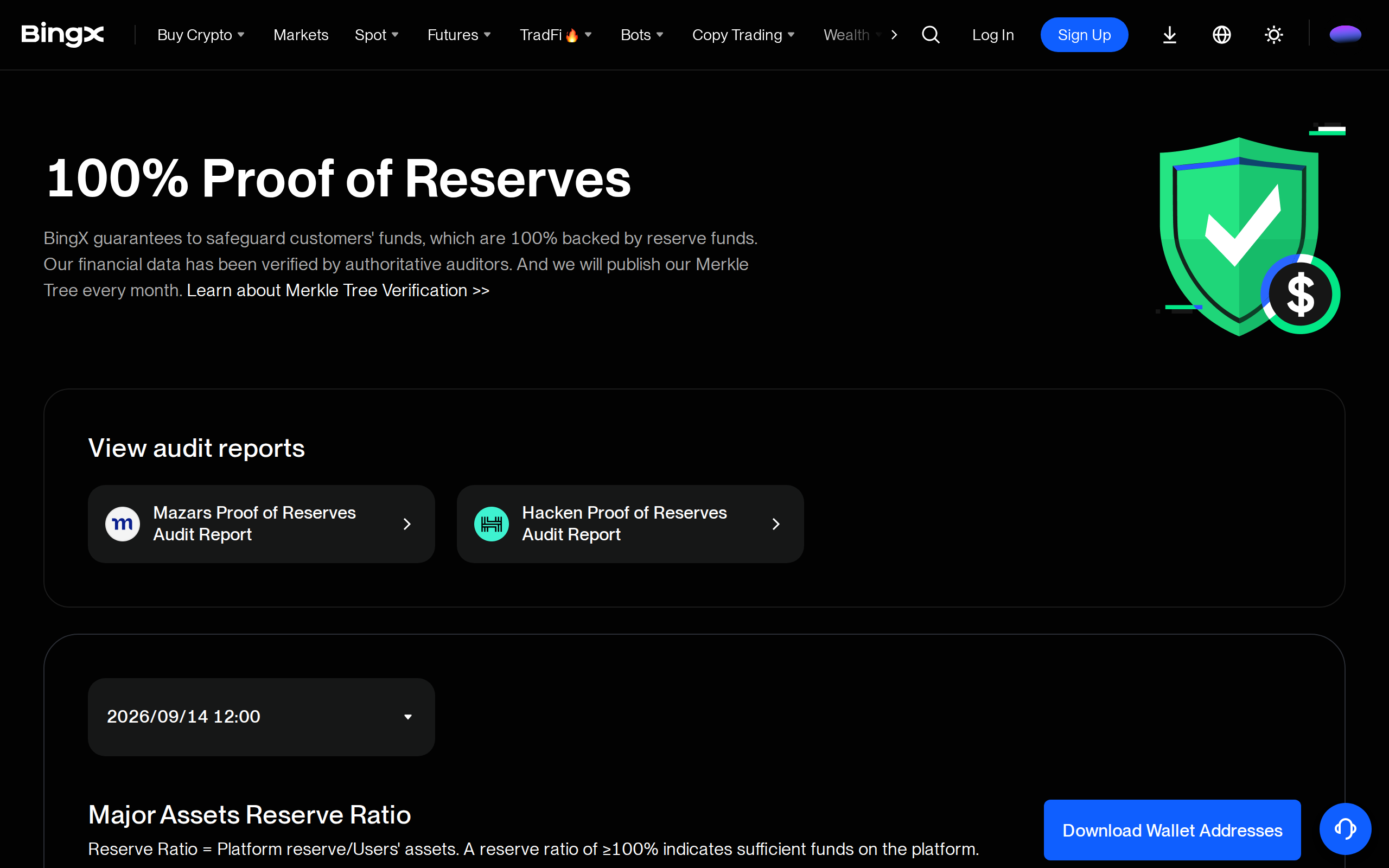
The reserve page promises that assets are 100% backed and that a Merkle tree is published monthly, with a reserve-ratio table. That is better than nothing. Still, it links reports labelled Mazars and Hacken without dates we could confirm, and independent reviewers say the Shield Fund's size is not disclosed. Weigh that against Kraken or Coinbase, which are regulated more heavily.
Where you cannot use it
The terms exclude residents of the United States, Canada, mainland China, Hong Kong, Macau, the Netherlands, Singapore, the United Kingdom and any country restricted under its AML policy. If you live in one of those places, using a VPN to get around the block is a way to lose your account and your money together.
Better-known rivals, same question
Bybit, Bitget and OKX all run copy-trading products with similar leaderboards, and we cover each on this site. None of them removes the central risk, which is that past returns on a leveraged leader say little about next month. What separates them is the record around the product: licences, reserve reporting and how they handled past incidents. BingX is not worse on every count, but it does not lead on any, which is why it sits lower in our ranking.
Who should use it
Use BingX only if you are an experienced trader, live somewhere it is permitted, understand that copy trading amplifies leverage, and keep the balance small and withdrawable. Skip it if you want a regulated home for savings, if you are new to derivatives, or if you live in an excluded country. Nothing here is advice on what to trade.
Specifications
- Spot fee
- 0.10% maker and taker
- Futures fee
- 0.02% maker, 0.05% taker (third-party figure)
- Copy trading
- Futures, CFD and spot, with a leaderboard
- Trader profit share
- 10% to 32% by tier, settled weekly
- Max leverage
- Up to 1000x on selected TradFi perpetuals
- Bots
- Futures grid, Martingale, spot grid, infinity grid
- Reserves
- Claims 100% backing; Merkle tree published monthly
- Restricted
- US, UK, Canada, Singapore, Netherlands, China
- Past incident
- $44.7M hot-wallet theft, 20 Sept 2024